Leek Orchid
Prasophyllum colensoi
Last updated:
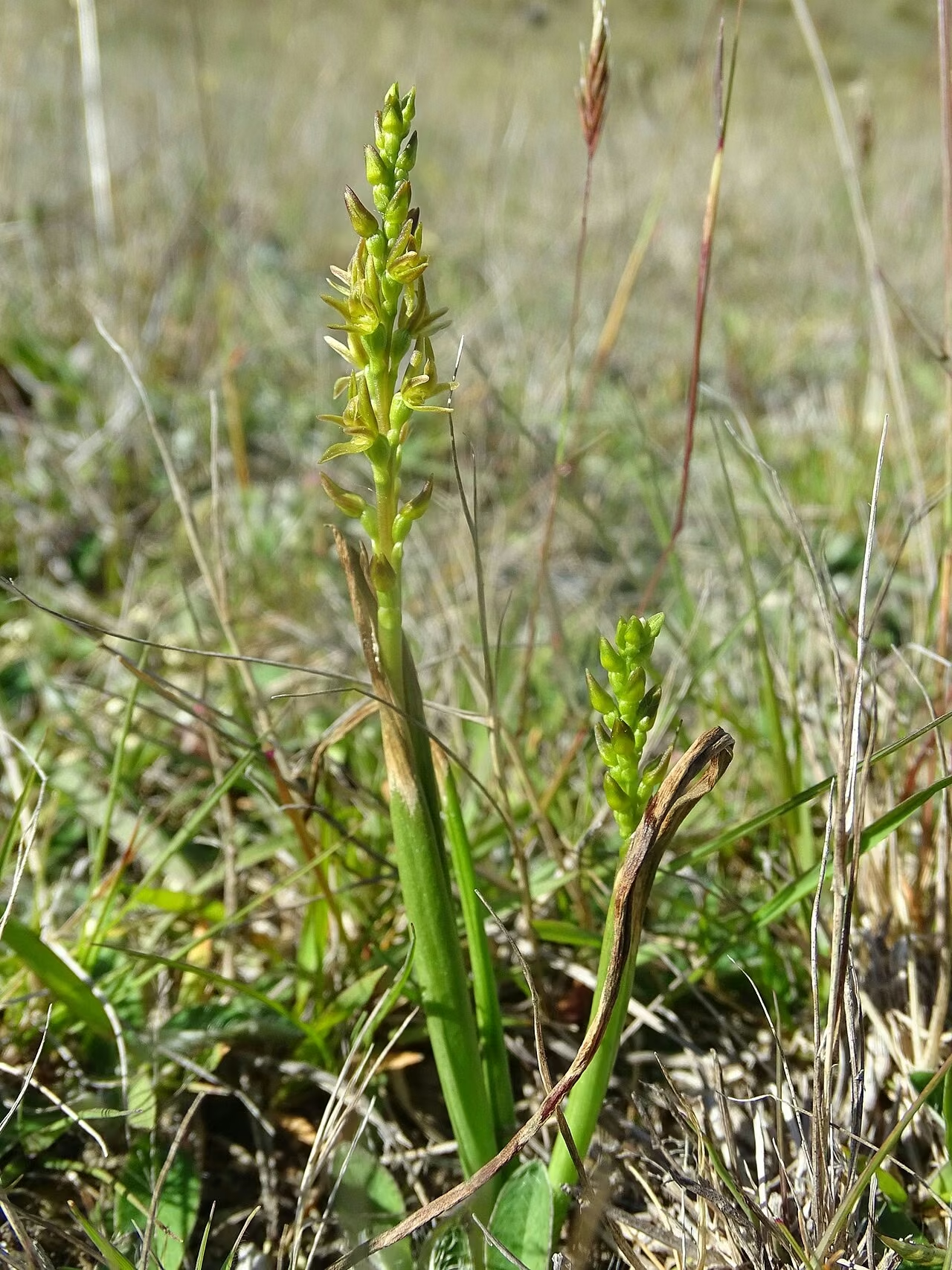
Leek orchid (Prasophyllum colensoi) is a small endemic ground orchid that grows to about 30 cm tall from an underground tuber. Each plant has a single hollow, tubular leaf like a leek and a spike of 5 to 20 lightly scented flowers in green, yellow or reddish brown, held upside down so the lip sits uppermost. It is widespread from the coast to the alpine zone on the North, South, Stewart, Chatham, Auckland and Antipodes Islands, in places such as bog margins, gumland, tussock grassland and fellfield. It is ranked Not Threatened, but it is easily overlooked because its flowers are small and green. Explore more native flowering plants in our native plant guide.
Plant Description
Prasophyllum colensoi is a deciduous terrestrial orchid that grows from fleshy underground tubers and stands up to about 30 cm tall when flowering. The stem is dark green or reddish, and the plant has a single dark green, terete, hollow leaf that sheathes the flowering stem.
The flowers, usually 5 to 20 per spike, are either evenly spaced or clumped together and are green, yellow or reddish. They are about 10 to 11 mm long and lightly scented. As in all Prasophyllum, the flowers are inverted, so the labellum (lip) sits above the column rather than below it. The dorsal sepal ends in an acute point.
It is most easily confused with the recently named Prasophyllum elegantissimum, which differs in having an apiculate rather than acute dorsal sepal tip. The swamp leek orchid, P. hectorii, is much stouter, up to 1 m tall with 10 to 80 flowers, and grows partly submerged in wetland pools and streams.
Quick Facts
| Scientific Name | Prasophyllum colensoi |
|---|---|
| Height | Up to 0.3 m in flower |
| Spread | Single stems, a few centimetres across |
| Water Needs | Moist in the growing season, drier when dormant |
| Light | Full sun to light shade |
| Frost Tolerance | High; grows up into the alpine zone |
| Salt Tolerance | No information available |
| Growth Rate | Seasonal; leaf and flower spike grow quickly each spring |
| Lifespan | Perennial; deciduous, dying back to a tuber |
Climate Best Suited to
Tolerates a very wide range of climates, from mild coastal lowlands to cold subalpine and subantarctic islands. It needs a cool, moist growing season and a dry-ish dormant period for the tuber.
Regional Suitability
| City | Climate Suitability |
|---|---|
| Auckland | Medium |
| Wellington | Medium |
| Christchurch | Medium |
| Dunedin | High |
Plant Habitat
Leek orchid is endemic to New Zealand and occurs on the North, South and Stewart Islands, the Chatham Islands and the subantarctic Auckland and Antipodes Islands. Regional assessments rate it Data Deficient in Northland and Auckland but Not Threatened in Wellington and Otago, so it appears more frequent in the south and in the mountains.
It grows from coastal to alpine elevations in wetlands, gumland, subalpine scrub, successional forest, tussock grassland and fellfield, often in grassland among herbs and around the edges of bogs. Its wetland indicator status is facultative, meaning it grows both in and out of wetlands.
Growing Requirements
Soil Requirements
It is found on low-fertility soils, from peaty bog margins to gumland clays and stony fellfield, usually where competition from taller plants is limited.
- Low-fertility, free-draining mix in cultivation
- Tolerates peaty and acidic ground
- Avoid rich soils that encourage competing weeds
Light Requirements
It grows in open grassland, scrub margins and herbfield, so it prefers good light.
- Full sun is best
- Tolerates light shade among low scrub
Water Requirements
Moisture is needed while the leaf and flower spike are growing, but the tuber should not sit in stagnant water during dormancy.
- Keep evenly moist from winter to flowering
- Reduce watering once the plant dies back after fruiting
Planting and Establishing
Leek orchid is not sold widely, and wild plants should never be dug up: terrestrial orchids depend on soil fungi and rarely survive transplanting. Growers who obtain legally propagated tubers should plant them about 3 to 5 cm deep in a sunny, free-draining mix.
A pot is often the easiest way to grow it, as NZPCN notes it is excellent in pots. Use a gritty, low-fertility mix, keep it in full sun, and leave the pot undisturbed so the tuber can replace itself each year.
Ecological Role
Like other terrestrial orchids, Prasophyllum colensoi relies on mycorrhizal fungi in the soil to germinate its dust-like seed and to supply nutrients to young plants. Each year the plant produces a new tuber, which carries it through the dormant season.
The lightly scented flowers suggest insect pollination, but the specific pollinators of this species are not documented in the sources consulted. Its tiny seed is released from dry capsules between January and June and is dispersed by wind.
Uses & Significance
Garden Uses
It is a plant for orchid enthusiasts and wetland or tussock restoration rather than general gardens.
- Pot culture in a sunny alpine house or cold frame
- Bog garden margins with low, non-competitive plants
- Native grassland plantings where it may appear on its own
Ecological Value
It is part of the native orchid flora of open, low-statured habitats, from gumland to subantarctic herbfield.
- Endemic and widespread across many island groups
- An indicator of intact, low-fertility open habitats
- Contributes to the diversity of tussock and bog communities
Landscaping Uses
Leek orchid is too small and inconspicuous to carry a landscape design, and its leaf dies away for part of the year. It is best enjoyed as a surprise among low tussocks, sedges and mosses in a natural-style planting.
In a pot, group it with other small native orchids or alpine herbs on a sunny bench where the slender green spikes can be seen up close.
Seasonal Care Calendar
Spring
The hollow leaf emerges and the flower spike develops inside it, with the first flowers opening in October.
- Keep the mix moist
- Watch for slugs on emerging shoots
Summer
Flowering continues through summer, and capsules begin to ripen from January.
- Look for flowering plants on bog margins and in tussock
- Avoid trampling wild colonies
Autumn
Seed is released from ripe capsules until about June, and the leaf withers as the plant goes dormant.
- Reduce watering of pots
- Leave the dead leaf until it pulls away easily
Winter
The plant survives as an underground tuber, with no visible growth.
- Keep pots barely moist
- Do not disturb the tuber
When to Prune and How Much
No pruning is needed. Leave the flower spike in place after flowering so the capsules can ripen and release seed.
Once the leaf has yellowed and died back, it can be removed gently, but cutting it while green deprives the new tuber of energy.
How to Grow Leek Orchid
Prasophyllum colensoi is grown from tubers in cultivation, and NZPCN describes it as easily grown in a sunny, free-draining soil and excellent in pots, while discouraging any collection from the wild. Its seed is dust-like and depends on specific soil fungi to germinate, so seed raising is a specialist task rather than a practical home method. The most reliable approach for a grower who already has a legally obtained plant is to keep it healthy so that it produces a replacement tuber each year, and to allow any extra tubers or self-sown seedlings to develop in the same pot.
By Tuber Division
Established plants sometimes form more than one tuber. These can be separated while the plant is dormant.
- Wait until the leaf has fully died back in late autumn
- Tip out the pot and gently locate the tubers
- Separate any well-formed extra tubers by hand
- Replant each 3-5 cm deep in a fresh, gritty, low-fertility mix
- Keep barely moist until new shoots appear
From Seed
Seed must germinate with a compatible mycorrhizal fungus. The simplest method is to let seed fall onto the surface of pots that already hold healthy plants, where the fungus is present.
- Allow capsules to ripen on the plant from January
- Shake the dust-like seed over pots containing established orchids
- Leave the surface undisturbed and free of moss
- Watch for tiny seedlings over the following one to two seasons
Pests & Diseases
Slugs and snails can eat the emerging leaf and flower spike, and are the most common cause of damage in cultivation.
In the wild the main pressures are habitat loss through drainage and weed invasion of open bog and grassland sites, and competition from taller vegetation.
Cultural Significance
No traditional Māori name or use is recorded for Prasophyllum colensoi in the sources consulted.
The species was described by Joseph Dalton Hooker in 1853 in the botany of the Antarctic voyage of the Erebus and Terror, and honours William Colenso (1811-1899), the Cornish missionary, printer, botanist, explorer and politician who collected widely in the North Island.
Bonus Tip
To spot leek orchids in the wild, scan bog margins and short tussock in early summer for what looks like a single stiff rush leaf with a bump partway up. That bump is the flower spike breaking out of the leaf, and the plant is otherwise almost invisible among grasses.
Related Plants
Explore other native plants that share similar characteristics or habitats with Leek Orchid (Prasophyllum colensoi), offering further insights into New Zealand's diverse flora. These related species provide context and opportunities for complementary planting in your garden.
Small Poranthera
Poranthera microphylla
Mud Pondweed
Potamogeton suboblongus
Argentina anserinoides
Argentina anserinoides
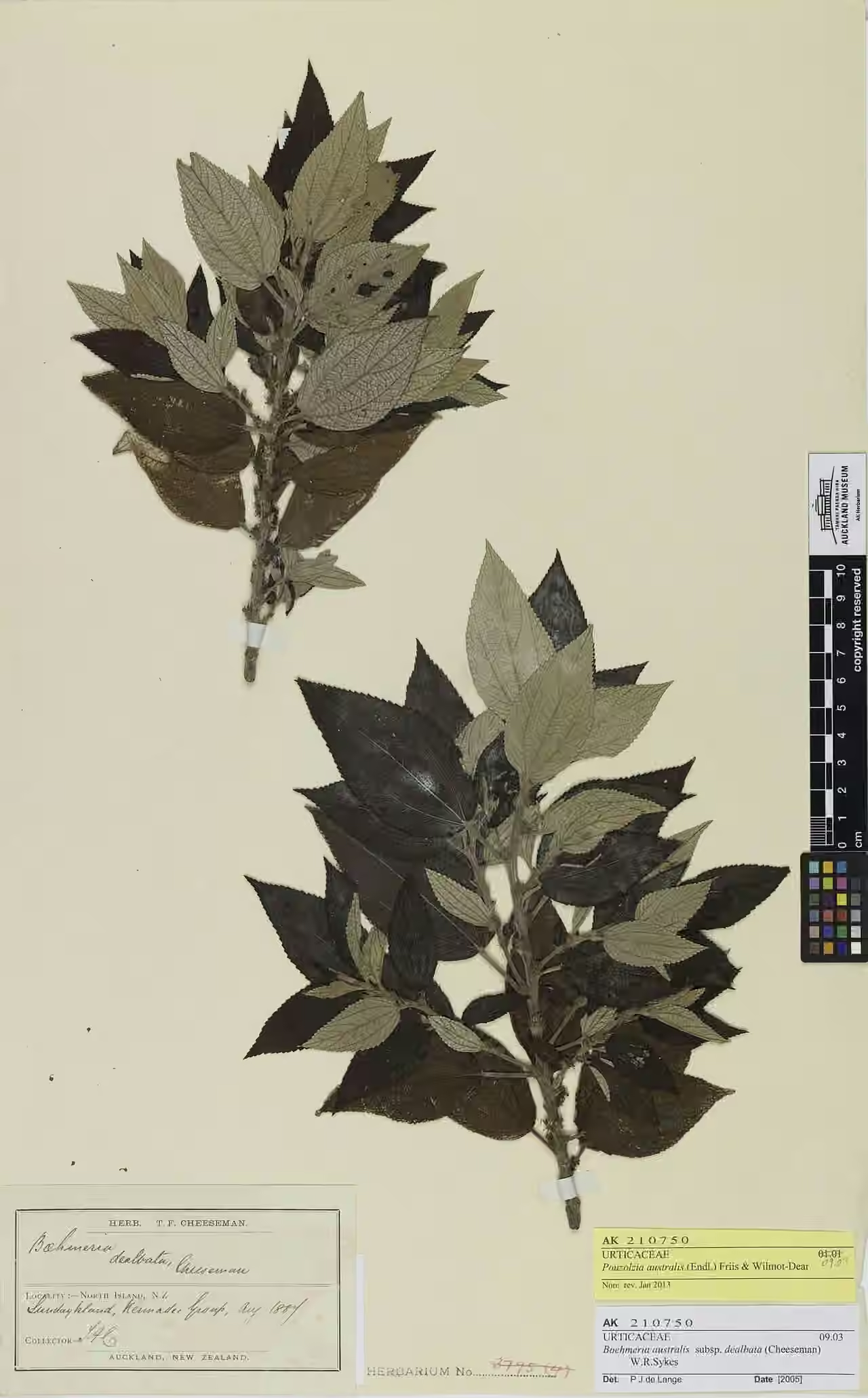
Kermadec Nettle-Tree
Pouzolzia australis
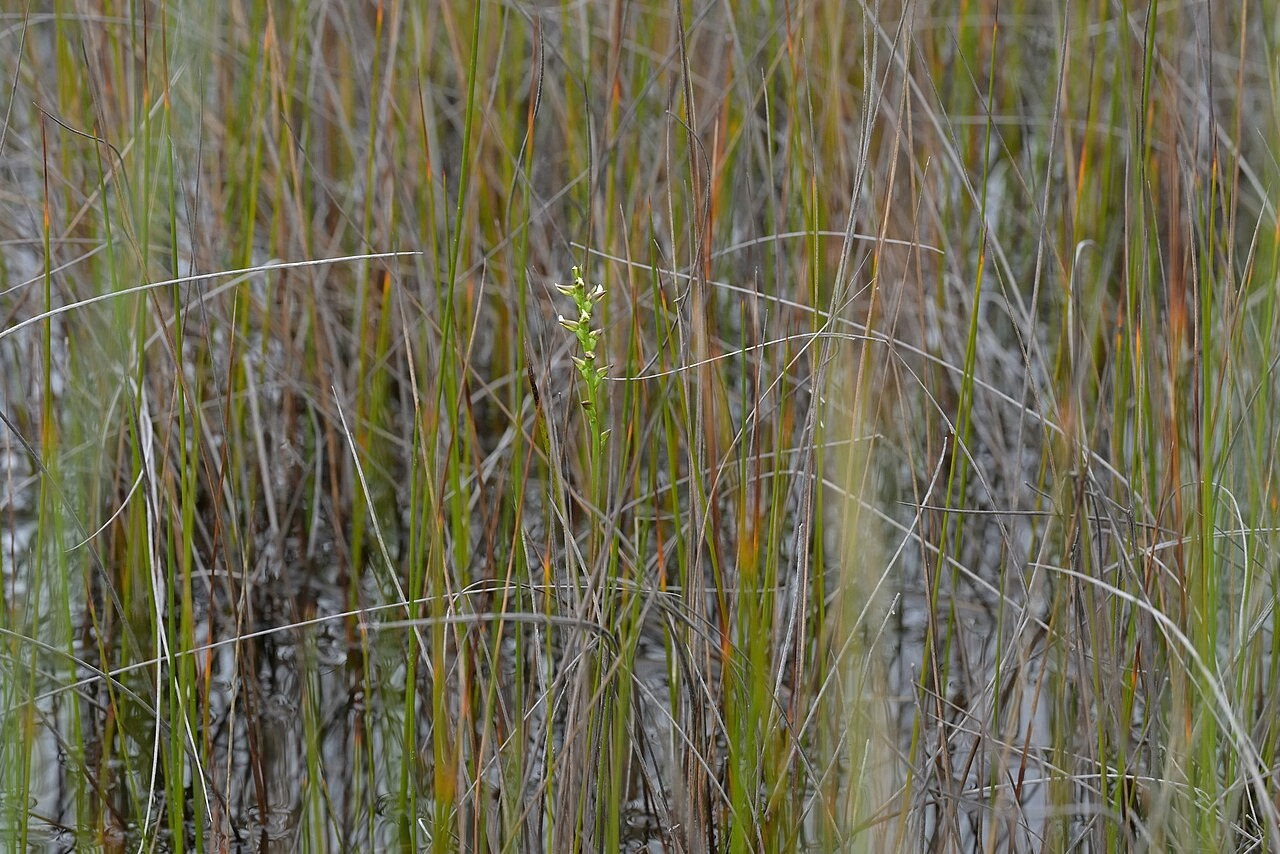
Swamp Leek Orchid
Prasophyllum hectorii
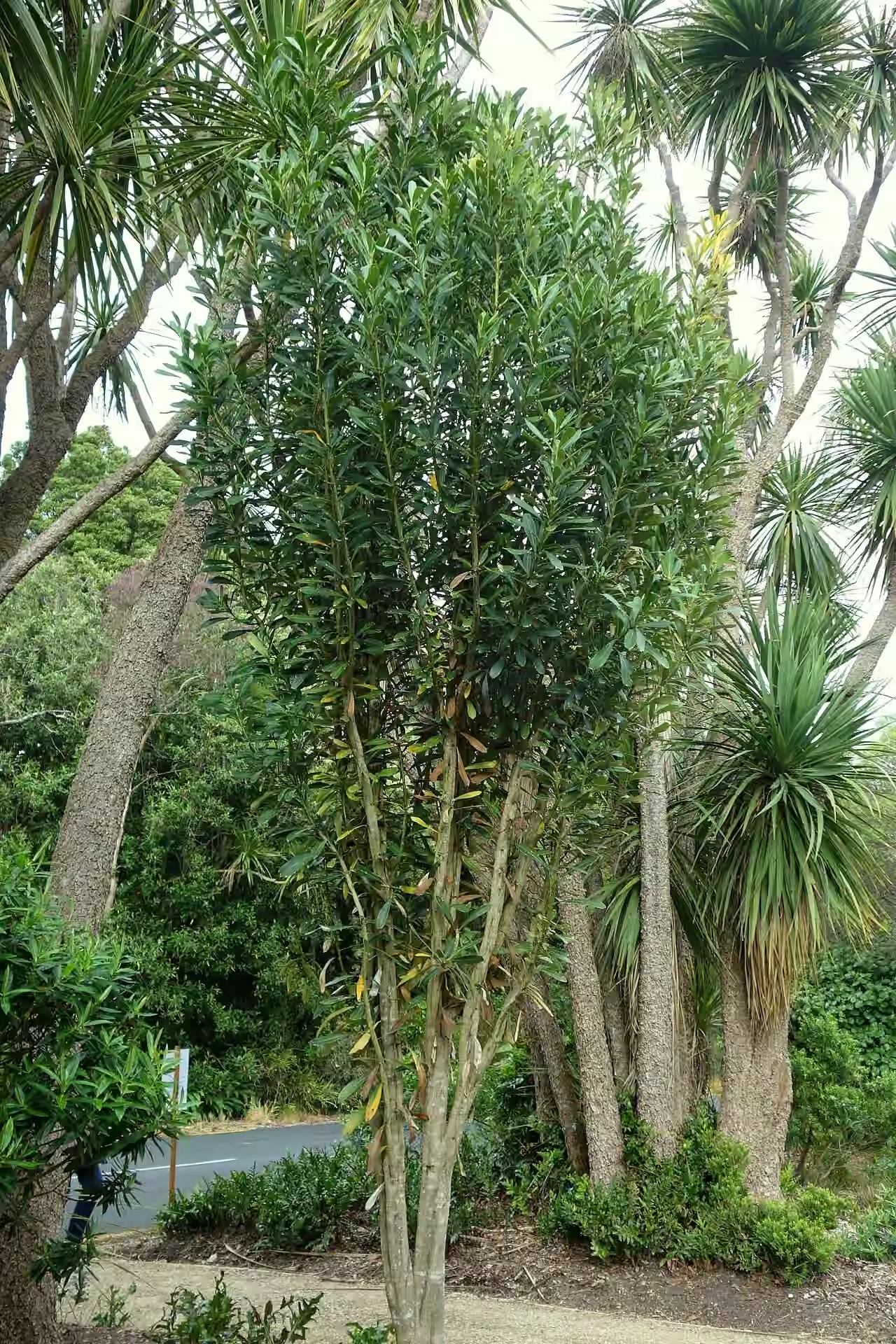
Chatham Island Lancewood
Pseudopanax chathamicus
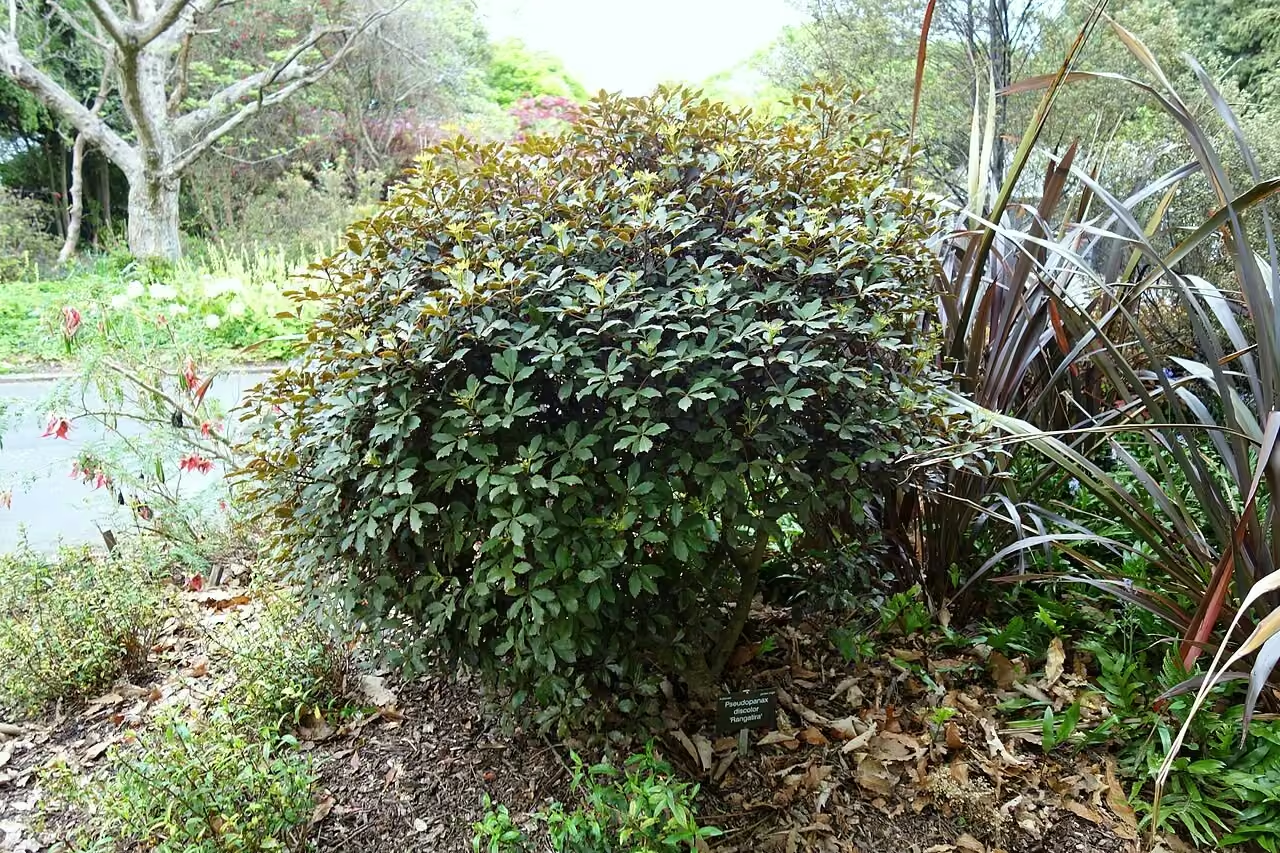
Pseudopanax discolor
Pseudopanax discolor
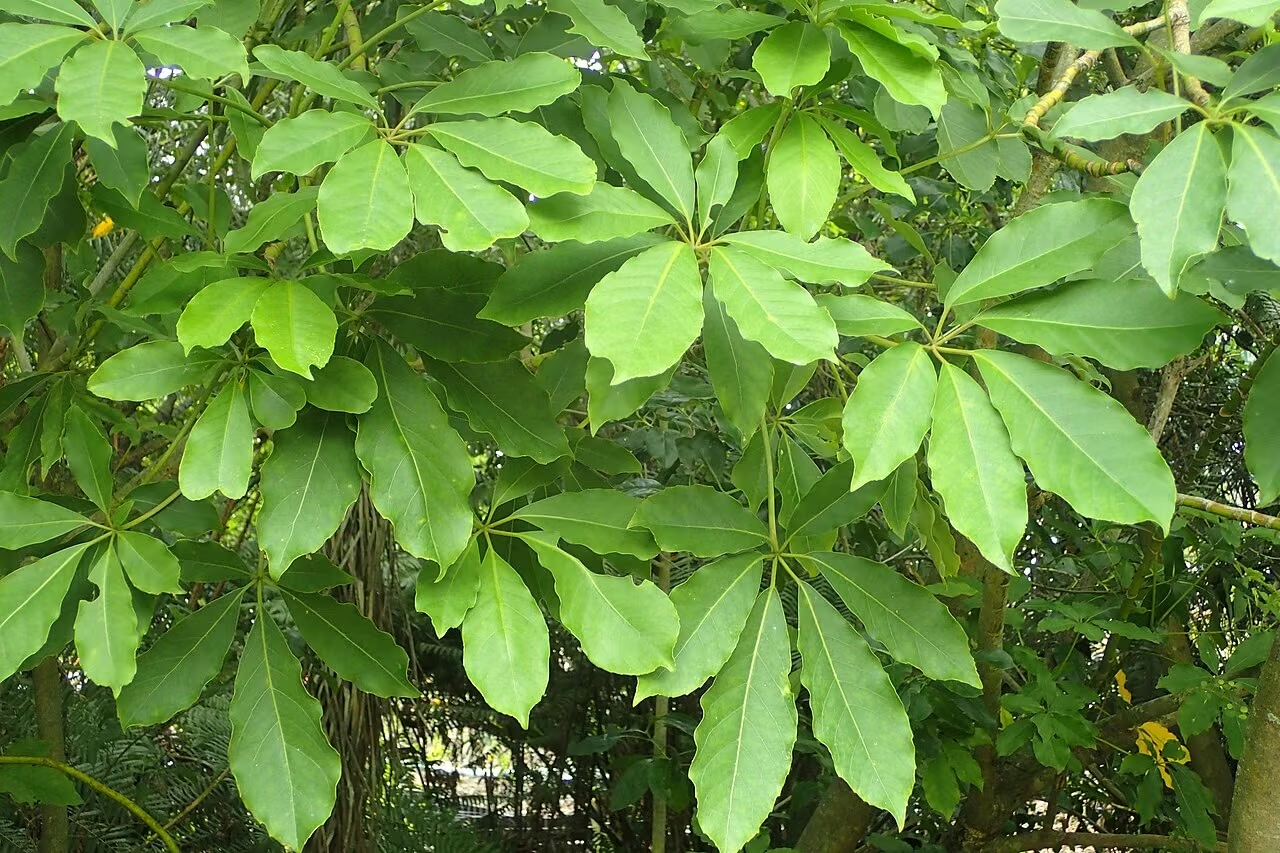
Kermadec Five Finger
Pseudopanax kermadecensis
Plant Conservation
Prasophyllum colensoi is ranked Not Threatened (2023) nationally, and regionally Not Threatened in Wellington and Otago but Data Deficient in Northland and Auckland. Because its taxonomy has recently changed, with P. elegantissimum split off in 2024, the true distribution of each species is still being clarified.
Protecting bogs, gumlands and tussock grasslands from drainage and weeds helps this orchid. Recording sightings on iNaturalist also helps botanists map the species after the recent taxonomic changes.
Frequently Asked Questions
Why is it called the leek orchid?
The genus name Prasophyllum comes from the Greek prasos, leek, and phyllon, leaf, because the single hollow tubular leaf looks like a leek or onion leaf.
When does Prasophyllum colensoi flower?
It flowers from October to March, with seed capsules ripening between January and June. Flowering is later at higher altitudes.
How do you tell Prasophyllum colensoi from Prasophyllum hectorii?
Prasophyllum colensoi is smaller with fewer flowers and grows in a wide range of habitats. P. hectorii is a stout plant of open water and stream margins with up to 80 flowers.
Can you grow leek orchid in a pot?
NZPCN says it is easily grown in a sunny, free-draining soil and does well in pots, but plants should never be dug from the wild.
Sources and Further Reading
The botanical, growing, and conservation details for Leek Orchid (Prasophyllum colensoi) on this page draw on the New Zealand plant references below. Consult them for full technical records and the latest distribution data.