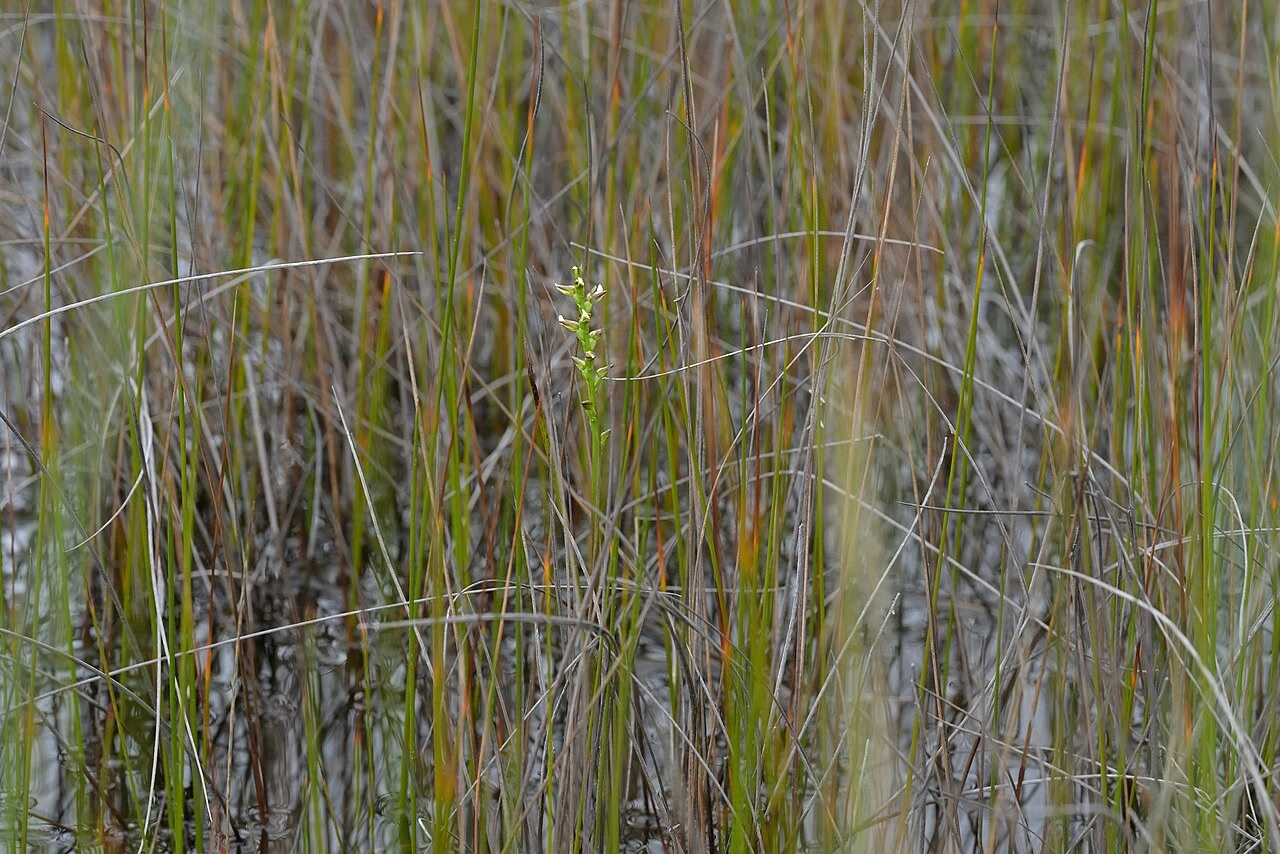
Swamp Leek Orchid
Prasophyllum hectorii
Last updated:
Swamp leek orchid (Prasophyllum hectorii) is New Zealand's largest leek orchid, a stout endemic wetland orchid 0.15 to 1 m tall when flowering. A single rush-like hollow leaf usually overtops a spike of 10 to 80 fleshy, scented yellow-green flowers. It grows partly submerged at the margins of pools and slow-flowing streams among sedges, and its tubers can sometimes be seen floating just above the sediment. Once found from Te Paki to near Waiouru, it now survives at Te Paki, in Waikato, on the Central Volcanic Plateau and at one site on Rēkohu/Chatham Island. Wetland drainage has made it Threatened - Nationally Vulnerable. Explore more native flowering plants in our native plant guide.
Plant Description
Prasophyllum hectorii is a stout orchid of wetlands, 0.15 to 1 m tall at flowering. It grows from paired ovoid tubers and has an erect, fleshy stem. The single leaf is terete, hollow and rush-like, dark green to yellowish green, and usually rises above the flower spike.
The raceme carries 10 to 80 more or less evenly spaced flowers that are fleshy and succulent in texture and scented. Sepals and petals are yellow to green, 6 to 8 mm long, often with red or brown markings. The labellum is yellow, white or black, bent sharply at a right angle from its base, and has wavy margins. As in all leek orchids, the flowers are held upside down so the lip is uppermost.
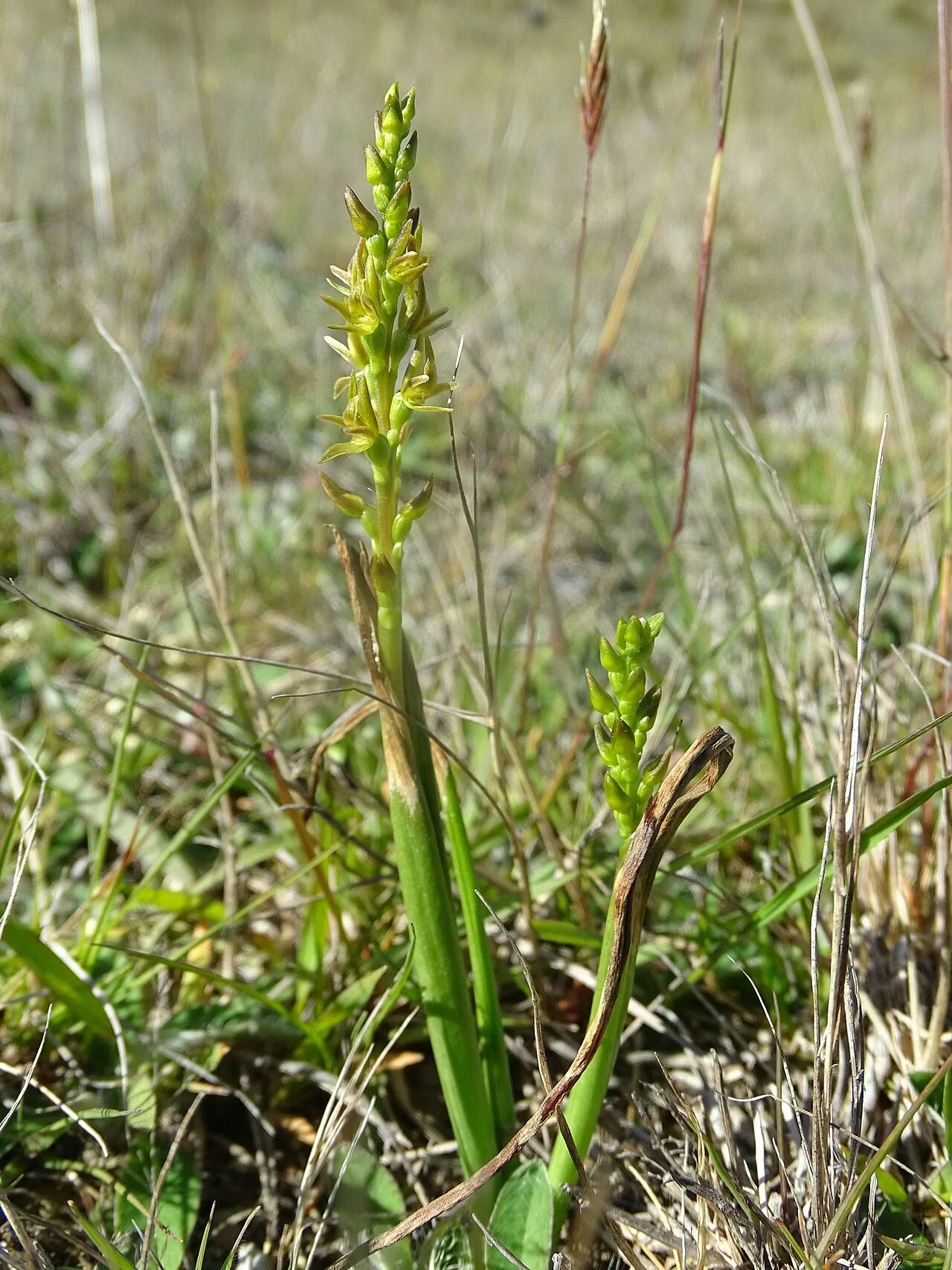
The only other similar species is Prasophyllum colensoi, whose wetland forms are shorter with fewer, often reddish flowers. The two can be told apart by the callus on the labellum: in P. hectorii it is confined to the basal part of the lip, while in P. colensoi it extends almost to the tip.
Quick Facts
| Scientific Name | Prasophyllum hectorii |
|---|---|
| Height | 0.15-1 m in flower |
| Spread | Single stems |
| Water Needs | Very high; grows partly submerged |
| Light | Full sun in open wetland |
| Frost Tolerance | Moderate to high; grows up to 1100 m |
| Salt Tolerance | No information available; a freshwater wetland plant |
| Growth Rate | Seasonal; dies back to tubers after fruiting |
| Lifespan | Perennial; deciduous with paired tubers |
Climate Best Suited to
Grows in warm northern lowland wetlands as well as cold, frosty wetlands on the Central Volcanic Plateau up to 1100 m. The key requirement is permanent shallow water rather than any particular temperature range.
Regional Suitability
| City | Climate Suitability |
|---|---|
| Auckland | Low |
| Wellington | Low |
| Christchurch | Low |
| Dunedin | Low |
Plant Habitat
Swamp leek orchid is endemic to New Zealand. Its historical range ran from Te Paki in the far north south to near Waiouru, but it is now known only from Te Paki, Waikato and the Central Volcanic Plateau, with a single site on Rēkohu/Wharekauri/Chatham Island. It is ranked Regionally Critical in Northland and is regionally extinct in Auckland.
It grows from the coast to the subalpine zone, from sea level to about 1100 m, in wetlands and associated slow-flowing streams. Plants usually stand partly submerged in or at the edges of pools and streams, often among sedges of the genera Machaerina and Eleocharis. Its wetland indicator status is obligate wetland.
Growing Requirements
Soil Requirements
It roots into soft, permanently wet sediment and peat at the edges of pools and streams.
- Saturated peat or fine sediment
- Low-nutrient wetland conditions
- Open ground among sedges, not dense vegetation
Light Requirements
It grows in open wetlands where it is not shaded by shrubs or tall weeds.
- Full sun
- Shading by invasive royal fern or willows is a threat
Water Requirements
This is an obligate wetland plant that needs a permanently high water table and slow-moving or still shallow water.
- Shallow standing or slow-flowing water year round
- Drainage or lowered water tables eliminate it
Planting and Establishing
Swamp leek orchid should not be planted or transplanted by home gardeners. NZPCN describes it as difficult to grow and states plainly that it should not be removed from the wild, and transplanted terrestrial orchids rarely survive without their associated soil fungi.
The most useful planting for this species is wetland restoration around known sites, such as controlling weeds and re-establishing native sedges like Machaerina and Eleocharis, carried out under advice from the Department of Conservation.
Ecological Role
Swamp leek orchid is part of open sedge wetland communities, growing with Machaerina and Eleocharis at the edges of pools and slow streams. Like other terrestrial orchids it relies on mycorrhizal fungi for germination of its dust-fine seed.
Its scented, fleshy flowers suggest insect pollination, but the specific pollinators are not recorded in the sources consulted. The plant renews itself each year from paired tubers, which sometimes float just above the sediment.
Uses & Significance
Garden Uses
It has no place in home gardens because it is threatened, difficult to cultivate and must not be collected from the wild.
- Conservation and research collections only
- Wetland restoration near existing populations under expert guidance
Ecological Value
It is a rare endemic of open freshwater wetlands, one of New Zealand's most depleted ecosystems.
- Nationally Vulnerable, with populations reduced to a few regions
- A flagship species for protecting lowland and volcanic plateau wetlands
- Indicator of intact, open sedge wetlands with stable water levels
Landscaping Uses
This orchid is not used in landscaping. Restoration of the wetlands where it grows should focus on keeping water levels stable and open sedge margins free of weeds, rather than adding ornamental plants.
Gardeners wanting a wetland theme can instead plant common native sedges and rushes in a home bog garden, which supports wetland insects without risking a threatened species.
Seasonal Care Calendar
Spring
The tall hollow leaf emerges from the wetland margin and the flower spike begins to develop.
- Avoid trampling pool and stream edges at known sites
- Weed control around sites is best done before flowering
Summer
The main flowering season is December to February, sometimes starting in November.
- Look for tall yellow-green spikes among sedges
- Photograph rather than pick
Autumn
Capsules ripen and release seed, with fruit present until about May, and the leaf dies back.
- Leave capsules to disperse seed
- Monitor water levels at wetland sites
Winter
Plants survive as tubers in the wet sediment.
- No visible growth
- Maintain stable wetland water levels
When to Prune and How Much
No pruning applies to this orchid. Flower spikes should be left so seed can ripen.
At wetland sites the relevant management is cutting back or removing invasive plants such as royal fern that overgrow the open sedge margins.
How to Grow Swamp Leek Orchid
Prasophyllum hectorii is rated difficult by NZPCN, which states it should not be removed from the wild. No reliable published propagation method for this species was found in the sources consulted, so the notes below describe the general approaches used for terrestrial orchids by specialist conservation growers, not proven techniques for this species. Its seed is dust-fine and needs a compatible mycorrhizal fungus to germinate, which in practice means laboratory culture. Any propagation should be done only by authorised growers working with the Department of Conservation, using material collected under permit.
From Seed (laboratory Culture)
Specialist orchid laboratories raise terrestrial orchids by sowing seed on sterile media, either with or without the fungus isolated from the parent plant's roots.
- Collect a small amount of ripe seed under permit, leaving most to disperse
- Surface sterilise and sow on nutrient or fungal culture media
- Grow protocorms on in sterile flasks until small tubers form
- Deflask into a wet, peaty medium kept in shallow standing water
- Harden off before any return to restoration sites
By Tuber Division
The plant forms paired tubers, and in some terrestrial orchids extra tubers can be separated. For this species it is only appropriate for plants already held in conservation collections.
- Wait until the plant is dormant after fruiting
- Separate any well-formed additional tuber
- Replant in saturated peat with a shallow water level
- Keep in full sun and record the origin of every plant for conservation purposes
Pests & Diseases
No specific insect pests are recorded. The main biological threat is invasive weeds, and NZPCN singles out royal fern (Osmunda regalis) as a problem in Waikato wetlands, where it overgrows the open margins the orchid needs.
The overriding threat is wetland drainage, both historical and ongoing, which removes the permanent shallow water the species depends on. Collection by botanists and plant collectors has also contributed to its decline.
Cultural Significance
No traditional Māori name or use is recorded for Prasophyllum hectorii in the sources consulted.
The species was first described as Gastrodia hectorii by John Buchanan in 1887, and was moved to Prasophyllum in 2005 by Brian Molloy, David Jones and Mark Clements. The epithet honours Sir James Hector, the nineteenth century New Zealand geologist and botanist who led the Geological Survey.
Bonus Tip
If you find this orchid, record it on iNaturalist with an obscured location and let the Department of Conservation know, but do not reveal the site publicly. Over-collection has already contributed to its decline, so protecting the location is as important as reporting it.
Related Plants
Explore other native plants that share similar characteristics or habitats with Swamp Leek Orchid (Prasophyllum hectorii), offering further insights into New Zealand's diverse flora. These related species provide context and opportunities for complementary planting in your garden.
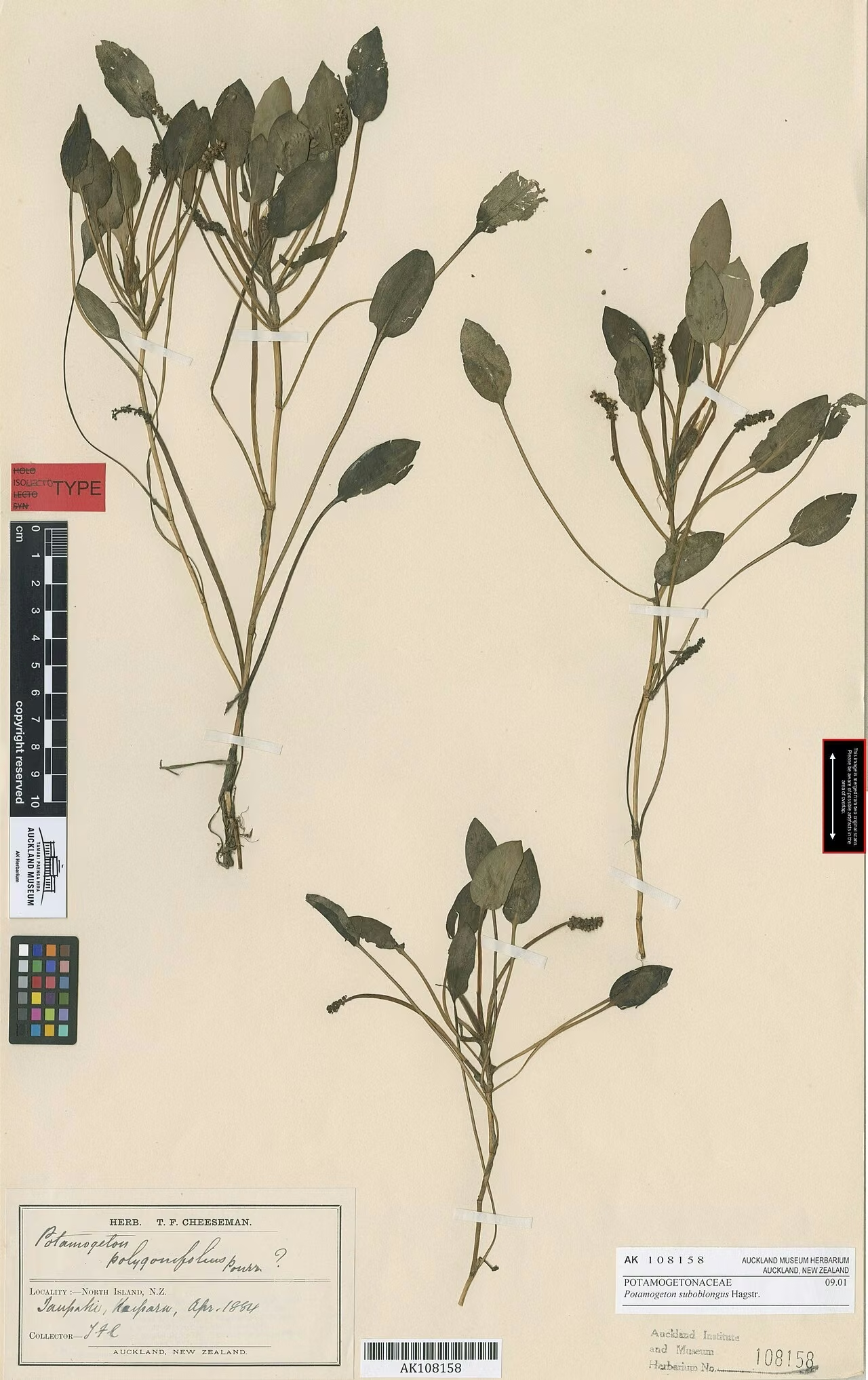
Mud Pondweed
Potamogeton suboblongus
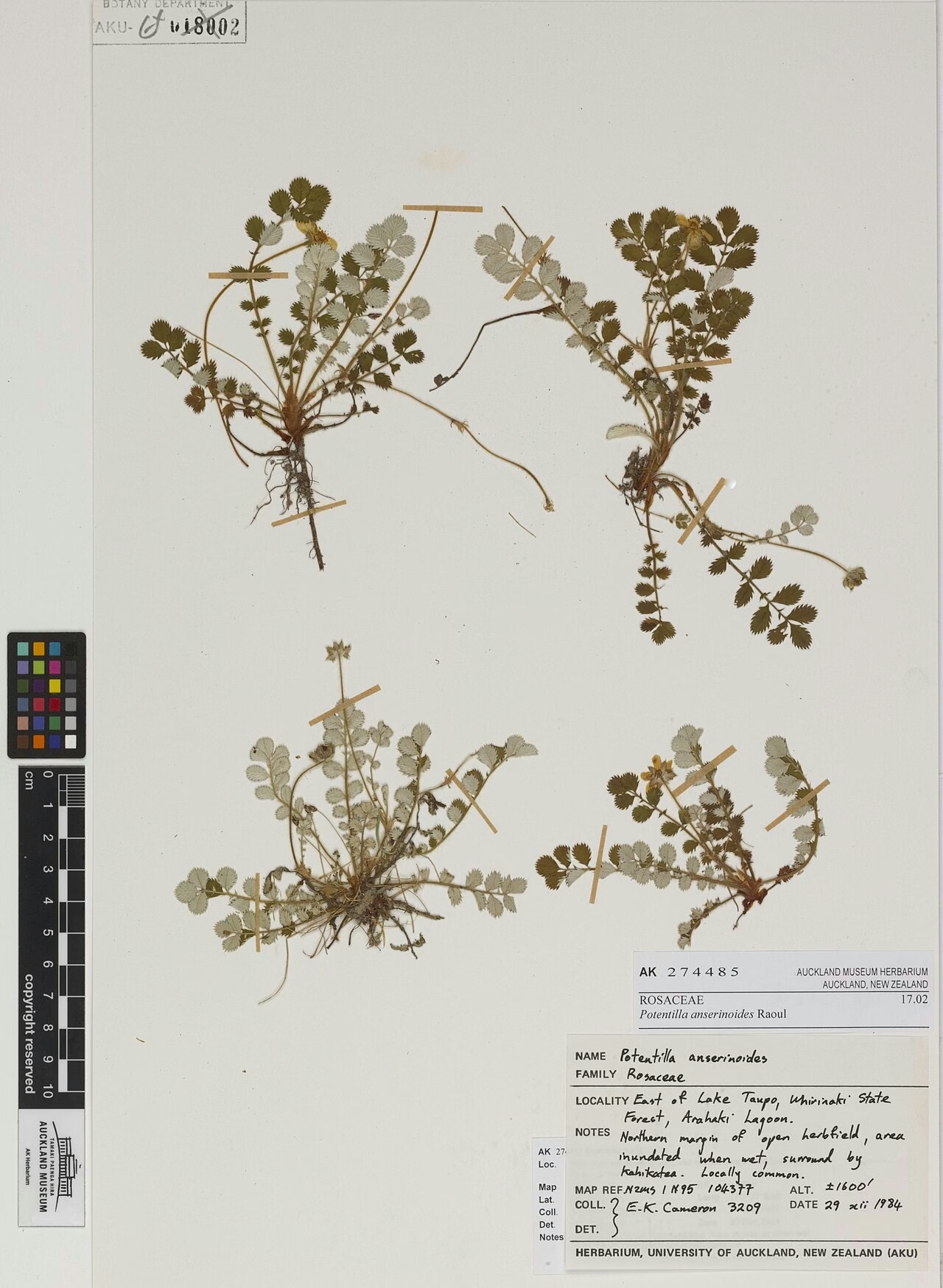
Argentina anserinoides
Argentina anserinoides
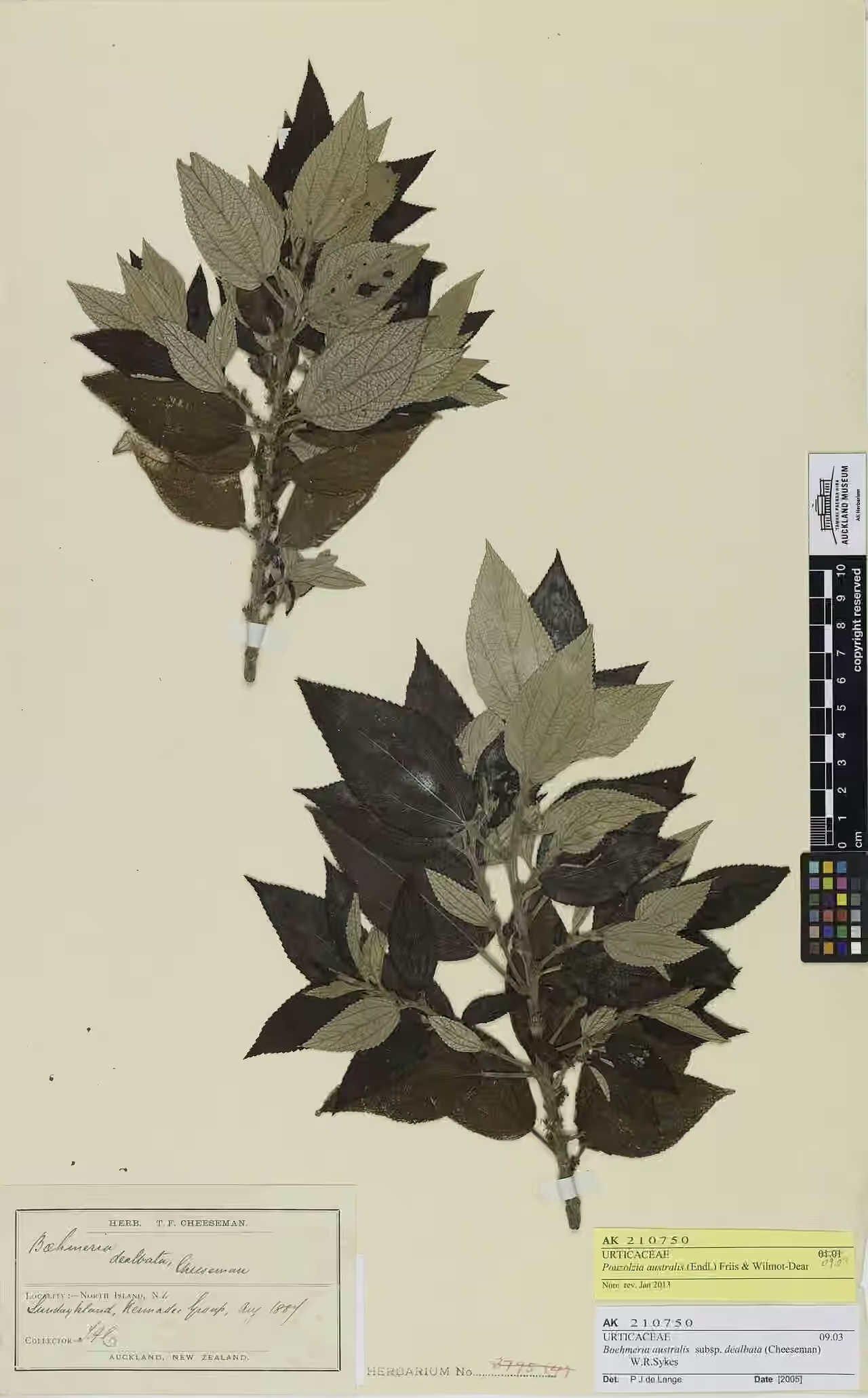
Kermadec Nettle-Tree
Pouzolzia australis
Prasophyllum colensoi
Prasophyllum colensoi
Chatham Island Lancewood
Pseudopanax chathamicus
Pseudopanax discolor
Pseudopanax discolor
Kermadec Five Finger
Pseudopanax kermadecensis
MacIntyre's Panax
Pseudopanax macintyrei
Plant Conservation
Prasophyllum hectorii is ranked Threatened - Nationally Vulnerable (2023) with the qualifiers DPT, PF and RR (data-poor trend, population fragmentation and range restricted). It has disappeared from its former coastal and lowland wetland haunts and is now regionally extinct in Auckland and Regionally Critical in Northland.
Its survival depends on keeping the remaining wetlands wet and open: preventing drainage, controlling invasive weeds such as royal fern, and keeping sites confidential to prevent collection. Protecting wetlands at Te Paki, in Waikato and on the Central Volcanic Plateau protects most of the remaining population.
Frequently Asked Questions
Where can you find swamp leek orchid?
It now grows at Te Paki in the far north, in Waikato wetlands, on the Central Volcanic Plateau and at a single site on Rēkohu/Chatham Island. It is regionally extinct in Auckland.
Why is Prasophyllum hectorii threatened?
Drainage of lowland wetlands has removed most of its former habitat, invasive weeds such as royal fern crowd it out in Waikato, and over-collection has also contributed to its decline.
Can you grow swamp leek orchid?
NZPCN rates it difficult to grow and says it should not be removed from the wild. It is a plant to protect in its wetland habitat rather than cultivate.
When does Prasophyllum hectorii flower?
Mainly from December to February, occasionally starting in November, with fruit capsules forming from November to May.
Sources and Further Reading
The botanical, growing, and conservation details for Swamp Leek Orchid (Prasophyllum hectorii) on this page draw on the New Zealand plant references below. Consult them for full technical records and the latest distribution data.