Mud Pondweed
Potamogeton suboblongus
Last updated:
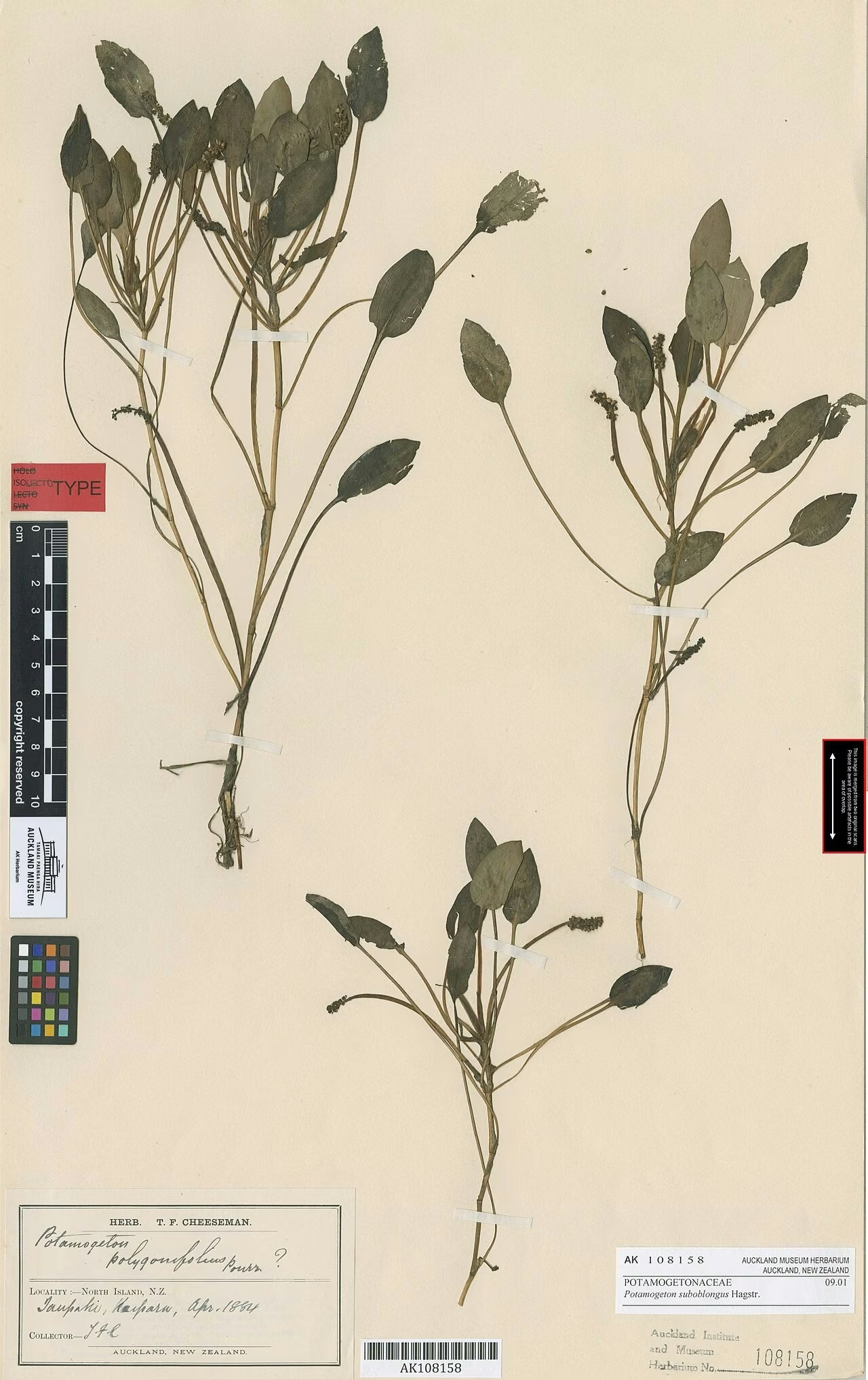
Mud pondweed (Potamogeton suboblongus) is an endemic aquatic perennial that spreads by rhizomes through shallow, muddy water. Its leaves float on the surface or sit on wet mud: broadly elliptic, 15-60 mm long, with many fine parallel veins, and it has almost no fully submerged leaves. Dense flower spikes 10-20 mm long rise above the water in summer, followed by small reddish fruits. It grows from the coast to the subalpine zone on the North, South and Stewart Islands, in tarns, alpine soaks, pools that partly dry out and muddy hollows in forest, and is mostly upland in the north. Explore more native flowering plants in our native plant guide.
Plant Description
Potamogeton suboblongus is a rhizomatous aquatic perennial that grows submerged or floating. Its stipules are conspicuous, membranous and 20-30 mm long. The leaves are only weakly dimorphic and true submerged leaves are almost absent; the floating or emergent leaves are broadly elliptic and slightly pointed, 15-60 mm long and 8-35 mm wide, with 11-21 longitudinal nerves.
Flowers are borne in dense spikes 10-20 mm long held above the water from December to March. The fruits (achenes) are about 2 mm by 1.5 mm, swollen, weakly keeled and reddish when ripe, appearing from January to April.
The species most likely to be confused with it is Potamogeton cheesemanii, a widespread pondweed with distinct submerged and floating leaves. Mud pondweed's scarcely dimorphic foliage, broadly elliptic floating leaves with six or more nerves on each side of the midrib, and red, swollen fruits separate it.
Quick Facts
| Scientific Name | Potamogeton suboblongus |
|---|---|
| Height | Aquatic; leaves float at or lie on the water surface |
| Spread | Spreads by rhizomes through shallow water and mud |
| Water Needs | Shallow water or saturated mud; tolerates partial drying |
| Light | Sun to light shade |
| Frost Tolerance | High; grows to subalpine tarns |
| Salt Tolerance | Low; a freshwater plant |
| Growth Rate | Moderate |
| Lifespan | Perennial |
Climate Best Suited to
Mud pondweed suits cool, wet climates and is most at home in montane and subalpine areas, though it also grows near the coast in the south. In warm lowland districts it needs a cool, shaded spot.
Regional Suitability
| City | Climate Suitability |
|---|---|
| Auckland | Low |
| Wellington | Medium |
| Christchurch | Medium |
| Dunedin | High |
Plant Habitat
Mud pondweed is endemic to New Zealand and occurs on the North, South and Stewart Islands. It ranges from coastal to subalpine elevations, but in the northern part of its range it is mostly found in upper montane and subalpine areas.
Its habitats are shallow, muddy hollows in forest, tarns, alpine soaks and pools that may partially dry out during the year. It is rated an obligate wetland plant, almost always found in water or saturated ground.
Growing Requirements
Soil Requirements
It roots into soft mud and organic sediment at the bottom of shallow pools and hollows.
- Soft, muddy or peaty substrate
- Shallow water or saturated ground
- Low-nutrient upland pools
Light Requirements
It grows in open tarns and soaks as well as in shaded forest hollows, so it tolerates both sun and shade.
- Open alpine pools
- Damp, shaded forest hollows
- Shade helps keep water cool in warm districts
Water Requirements
It needs permanently wet conditions in shallow water or saturated mud, and tolerates pools that partly dry out in summer.
- Shallow, still water
- Copes with seasonal drawdown
- Not suited to deep or fast-flowing water
Planting and Establishing
Plant rooted pieces into the muddy margin or bottom of a small, shallow pond, or into a damp, shaded hollow. In lowland gardens choose a cool, shaded position to mimic its upland habitat.
Weigh pieces down with a stone or plant them into a basket of heavy soil so they root before the leaves reach the surface.
Ecological Role
Like other pondweeds, mud pondweed flowers on emergent spikes, and Potamogeton flowers are generally wind pollinated. Its floating leaves provide shade and shelter for aquatic invertebrates in small pools.
Its ability to persist in pools that partially dry out allows it to occupy ephemeral wetland habitats in the mountains. No specific studies of its seed dispersal were found, though pondweed fruits are commonly eaten and spread by waterbirds.
Uses & Significance
Garden Uses
A small-scale native aquatic for shallow wildlife ponds, especially in cooler districts.
- Small, shallow ponds
- Damp, shaded hollows
- Native wetland and bog gardens
Ecological Value
It contributes to the plant cover of upland tarns and soaks, which are distinctive and often fragile wetlands.
- Habitat for aquatic invertebrates
- Shade and cover in shallow pools
- Part of montane and subalpine wetland communities
Landscaping Uses
Its neat oval floating leaves soften the surface of a small pond without the vigour of larger water plants. It is best used in a naturalistic native pond rather than a formal water feature.
Combine it with native marginal plants such as sedges and rushes to create a small upland-style wetland.
Seasonal Care Calendar
Spring
New leaves grow from the rhizomes as water warms.
- Plant rooted pieces
- Clear excess debris from the pond
Summer
Dense flower spikes appear above the water from December to March.
- Top up shallow ponds in dry spells
- Keep the pond shaded in warm districts
Autumn
Reddish fruits ripen from January to April.
- Collect ripe fruit for sowing
- Thin crowded plants
Winter
Growth slows and leaves may die back in cold water.
- No action required
- Allow natural dieback
When to Prune and How Much
No pruning is needed. If it spreads too far in a small pond, pull out excess rhizomes and replant or compost them.
Remove dead leaves in autumn if they accumulate, to keep the water clean.
How to Grow Mud Pondweed
NZPCN describes mud pondweed as easily grown from rooted pieces and fresh seed, and recommends it for a small, shallow pond or a damp, shaded hollow. In warmer lowland areas it does best in a cool site. Because it is regionally extirpated in Auckland and uncommon or vulnerable in several other regions, take material only from cultivated plants or with permission, and avoid moving plants between catchments where local genetic stock matters. Never release pond plants or water into natural waterways, as this can spread pest species hidden among the material. Young plants establish best in still, clear water only a few centimetres deep.
From Rhizome Pieces
Rooted pieces of rhizome with a few leaves establish quickly. This is the simplest and most reliable method.
- Lift a section of rhizome with roots and leaves attached in spring
- Plant it into a basket or pot of heavy, muddy soil
- Topdress with gravel to hold it in place
- Submerge in shallow water so leaves can reach the surface
- Keep in a cool, lightly shaded spot until new growth appears
From Seed
Fruits ripen from January to April and turn reddish when mature. NZPCN notes fresh seed grows easily.
- Collect ripe reddish fruits in late summer or autumn
- Sow fresh into a pot of muddy soil
- Stand the pot in a tray so the surface is just covered by water
- Raise the water level gradually as seedlings grow
- Plant into a shallow pond once established
Pests & Diseases
No specific pests or diseases of mud pondweed are recorded. In ponds, the main problems are overgrowth by vigorous introduced aquatic weeds and nutrient-rich water that favours algae.
In the wild, drainage of wetlands, trampling and pugging by stock, and invasion by exotic aquatic plants are likely pressures, especially in lowland parts of its range.
Cultural Significance
The Flora of New Zealand lists the Māori names mānihi and rērēwai for this species. No traditional Māori use specific to mud pondweed was found in the sources consulted.
The species was named by the Swedish pondweed specialist Johan Hagström. Potamogeton means river dweller, and suboblongus means nearly oblong, describing its leaf shape.
Bonus Tip
In a warm lowland garden, site a mud pondweed pond under the light shade of a tree or on the south side of a building: it naturally grows in cool upland tarns, and NZPCN recommends a cool site in warmer areas.
Related Plants
Explore other native plants that share similar characteristics or habitats with Mud Pondweed (Potamogeton suboblongus), offering further insights into New Zealand's diverse flora. These related species provide context and opportunities for complementary planting in your garden.
Polystichum wawranum
Polystichum wawranum
Pomaderris amoena
Pomaderris amoena
Pomaderris edgerleyi
Pomaderris edgerleyi
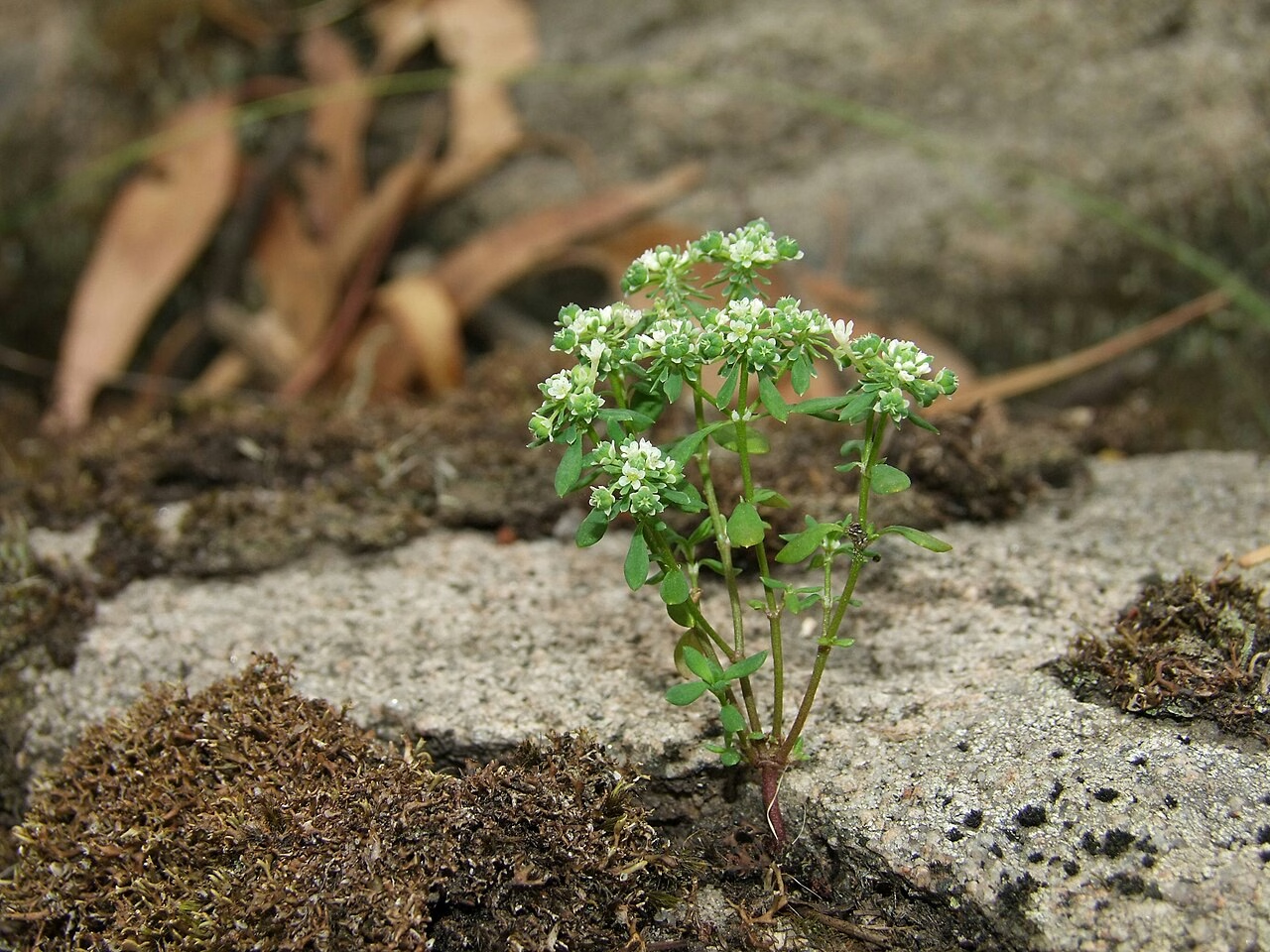
Small Poranthera
Poranthera microphylla
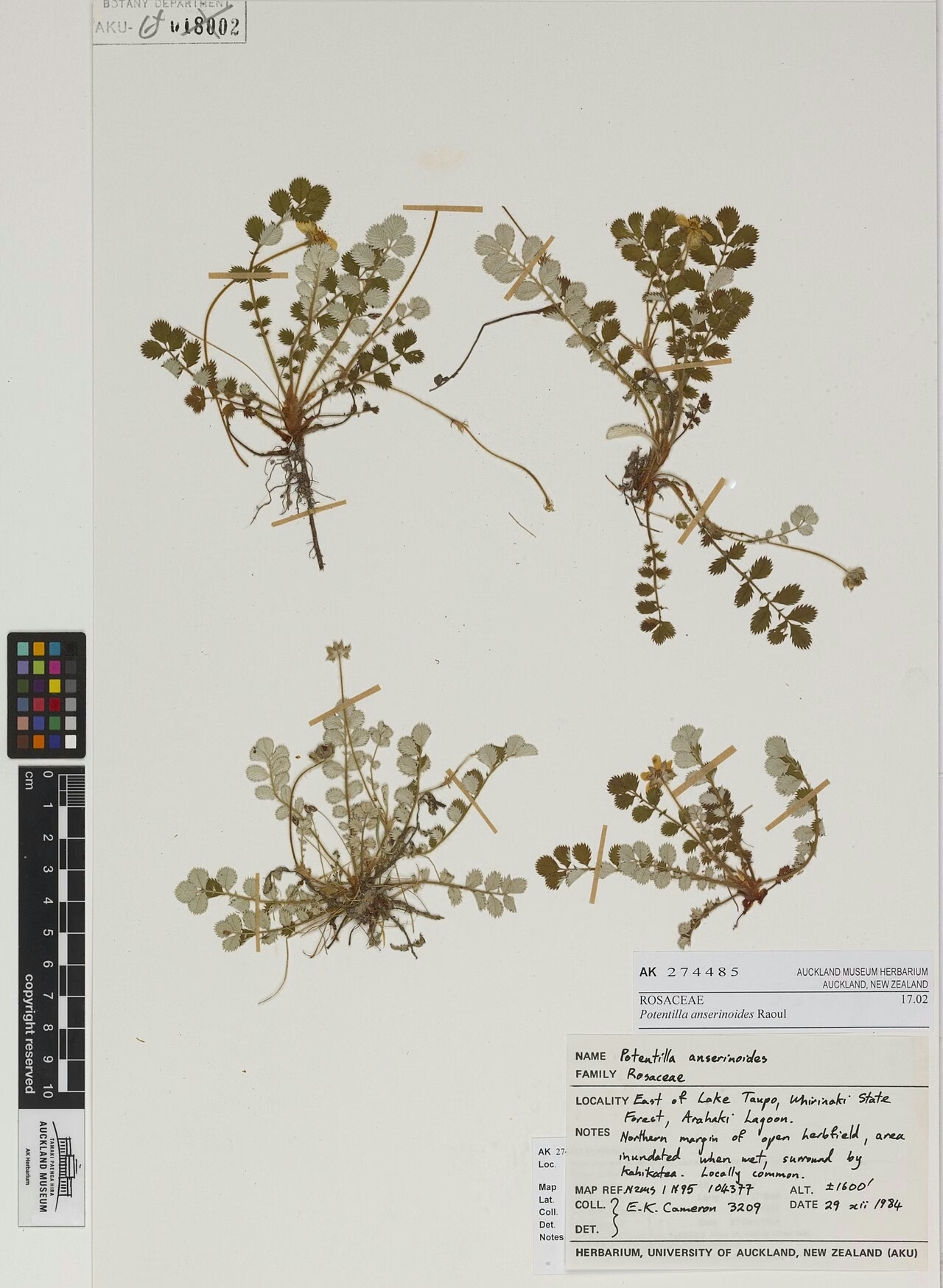
Argentina anserinoides
Argentina anserinoides
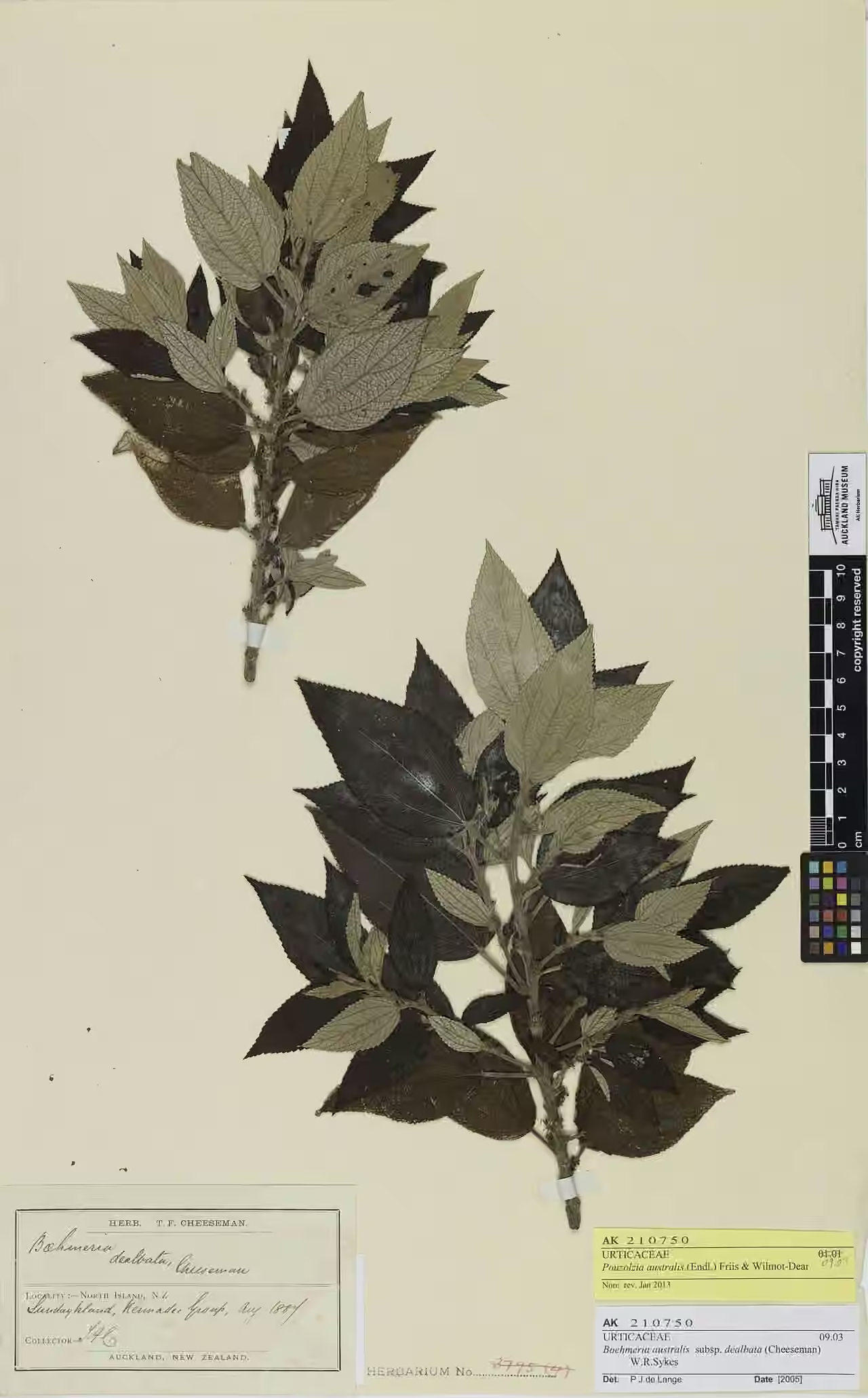
Kermadec Nettle-Tree
Pouzolzia australis
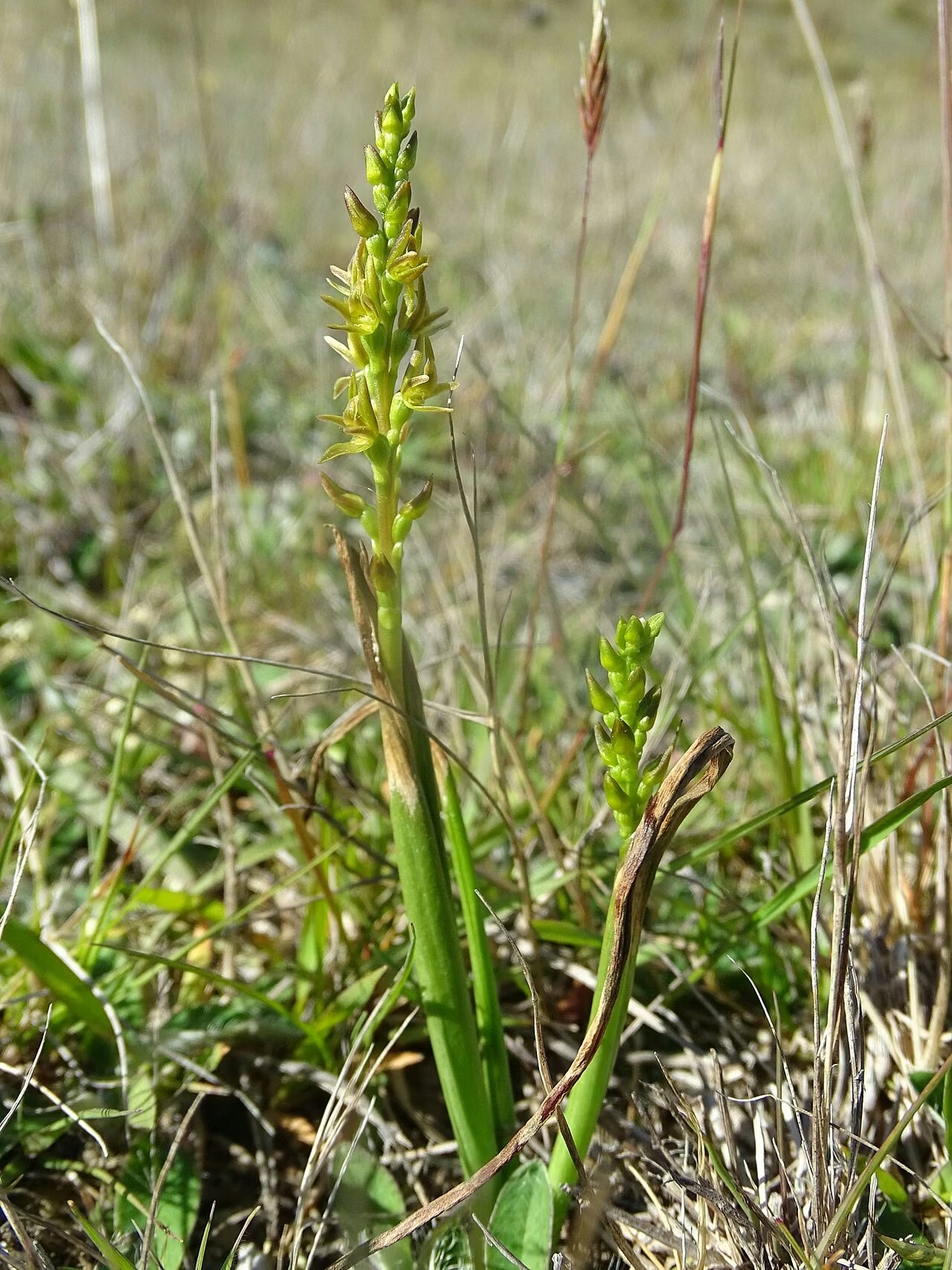
Prasophyllum colensoi
Prasophyllum colensoi
Swamp Leek Orchid
Prasophyllum hectorii
Plant Conservation
Potamogeton suboblongus is ranked Not Threatened nationally (2023). Regionally, it is extirpated from Auckland, Regionally Vulnerable in Wellington, and Regionally Naturally Uncommon in Northland and Otago.
Its upland tarn and soak habitats are generally secure, but lowland populations are vulnerable to wetland drainage and weeds. Protecting small forest pools and alpine wetlands, and keeping exotic aquatic weeds out of them, helps it persist.
Frequently Asked Questions
Where does mud pondweed grow?
It is found on the North, South and Stewart Islands from the coast to the subalpine zone, in shallow muddy forest hollows, tarns, alpine soaks and pools that may partly dry out. In the north of its range it is mostly upper montane and subalpine.
How do you tell mud pondweed from Potamogeton cheesemanii?
Mud pondweed has barely dimorphic foliage with few or no submerged leaves, broadly elliptic floating leaves with usually six or more nerves each side of the midrib, and swollen, reddish, weakly keeled fruits.
Can I grow mud pondweed in a garden pond?
Yes. NZPCN says it grows easily from rooted pieces and fresh seed and suits a small, shallow pond or damp shaded hollow, preferring a cool site in warmer lowland districts.
Is Potamogeton suboblongus rare?
Nationally it is Not Threatened, but it is regionally extirpated in Auckland, Regionally Vulnerable in Wellington and Regionally Naturally Uncommon in Northland and Otago.
Sources and Further Reading
The botanical, growing, and conservation details for Mud Pondweed (Potamogeton suboblongus) on this page draw on the New Zealand plant references below. Consult them for full technical records and the latest distribution data.