Shield Fern
Polystichum wawranum
Last updated:
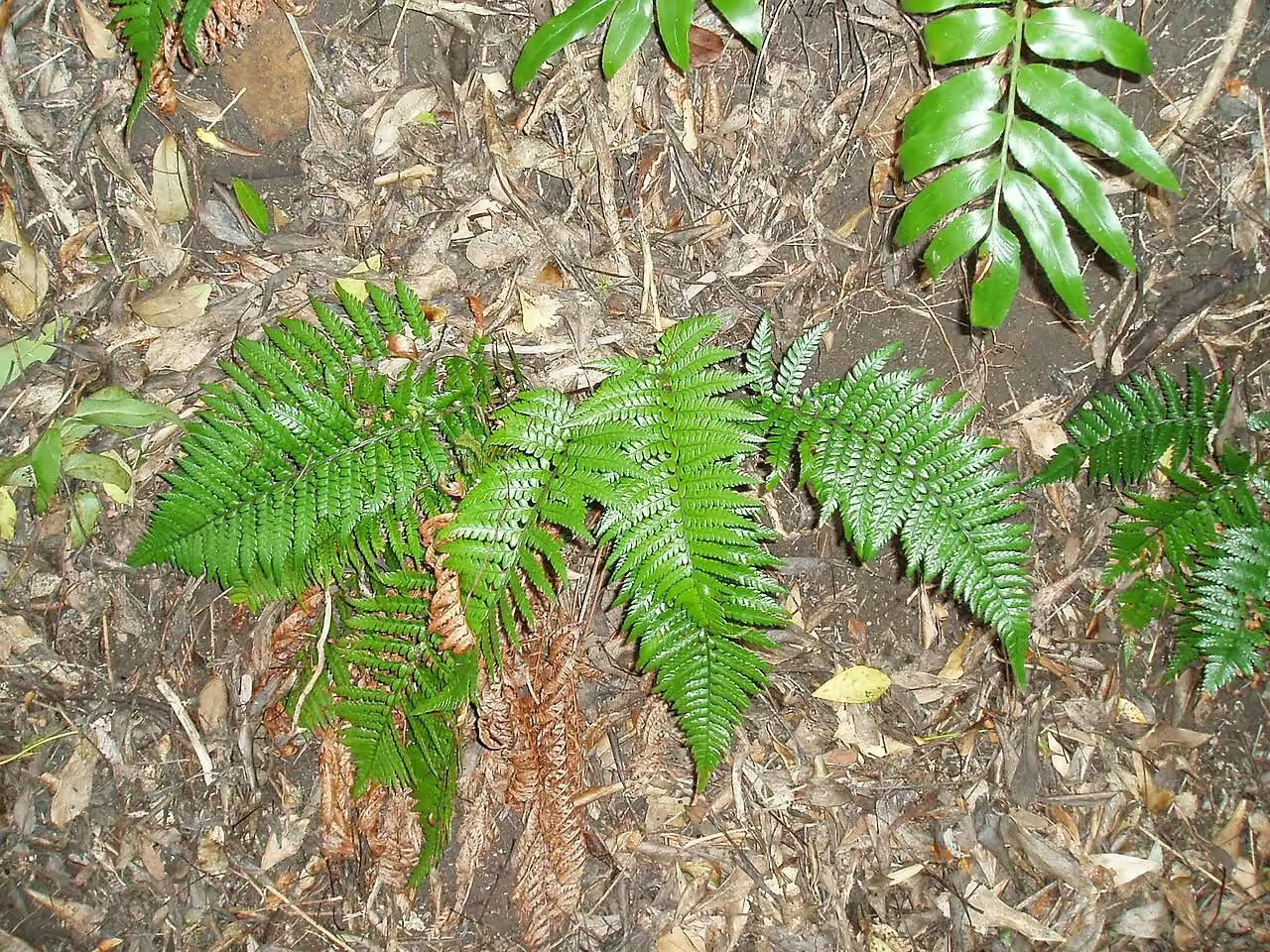
Polystichum wawranum is an endemic shield fern of the northern half of the North Island, the Three Kings Islands and the Chatham Islands. It forms a tuft of olive-green to blue-green, bipinnate fronds about 40-110 cm long, including the stipe, from a short, erect rhizome. It favours drier, more open sites than many ferns: coastal cliffs, hillsides, stream banks, gorges and scrub, especially on limestone, calcareous sandstone, basalt and other base-rich rock, from sea level to 880 m. It also colonises roadside banks and cuttings in towns. Once lumped with Polystichum richardii, it is still often sold under that name. Explore more native ferns in our native plant guide.
Plant Description
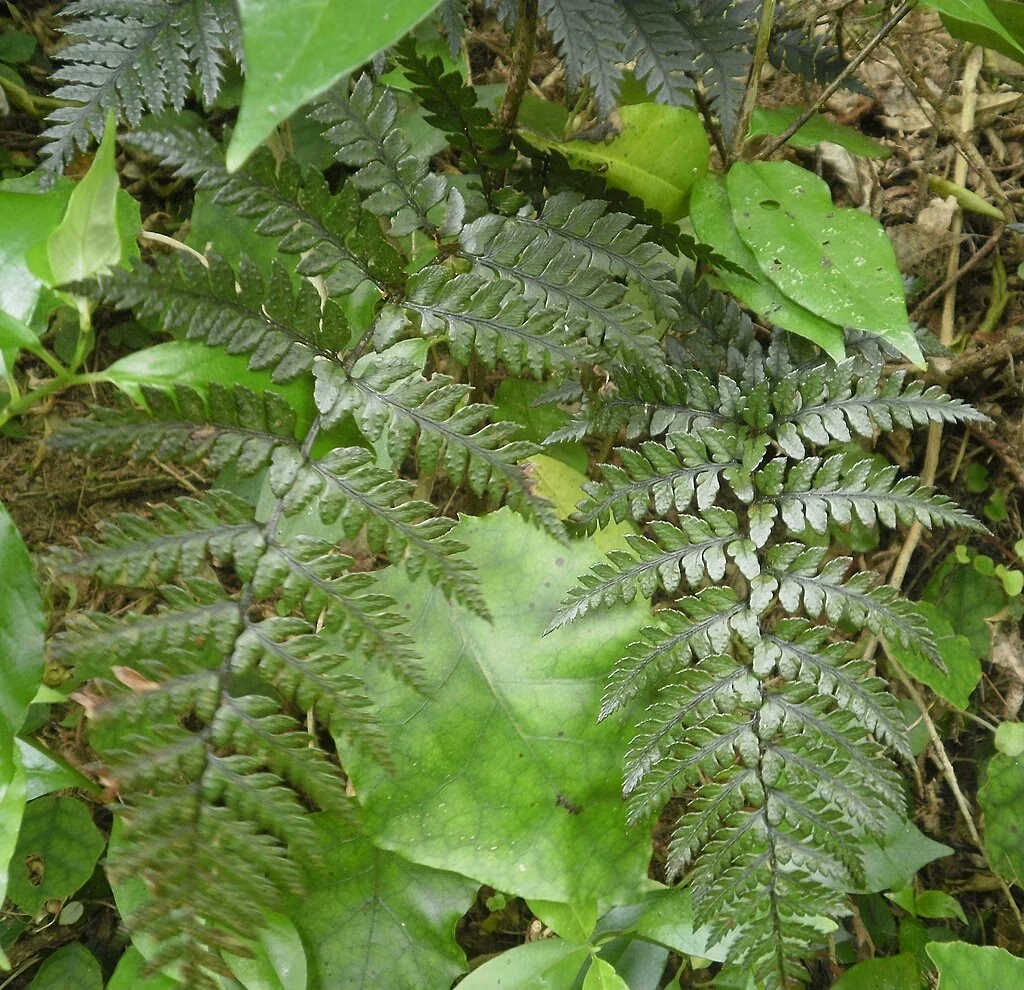
Polystichum wawranum has a short, erect rhizome producing a tuft of fronds. The stipes are 150-550 mm long and the bipinnate blade is 270-590 mm long and 110-280 mm wide, olive-green to blue-green, with closely inserted, relatively long and narrow pinnae.
The scales at the junction of the stipe and rachis are very narrow, blackish-brown and hair-like with fringed bases. The sori are covered by round, peltate indusia with entire margins, which mostly lack obvious dark centres. Unlike some introduced shield ferns, it bears no bulbils and its scales are one colour.
Its closest look-alike is Polystichum neozelandicum, which often grows with it in northern New Zealand. P. neozelandicum has wider scales, indusia with larger dark centres and larger spores. Hybrids with P. neozelandicum and P. vestitum have been reported.
Quick Facts
| Scientific Name | Polystichum wawranum |
|---|---|
| Height | Fronds about 0.4-1.1 m long including the stipe |
| Spread | A single tufted crown with arching fronds; does not spread by runners |
| Water Needs | Moderate; tolerates drier sites than most ferns |
| Light | Shade to semi-shade; tolerates open banks |
| Frost Tolerance | Light frosts; a lowland to montane northern fern |
| Salt Tolerance | Moderate; grows on coastal cliffs |
| Growth Rate | Slow to establish |
| Lifespan | Long-lived perennial |
Climate Best Suited to
A fern of warm temperate northern New Zealand and the Chatham Islands, suited to mild, frost-light climates. It copes with drier, more exposed conditions than many ferns.
Regional Suitability
| City | Climate Suitability |
|---|---|
| Auckland | High |
| Wellington | Medium |
| Christchurch | Low |
| Dunedin | Low |
Plant Habitat
Polystichum wawranum is endemic to New Zealand, ranging through the North Island from Te Paki south to about Ōtaki, with outlying populations on the Three Kings Islands and the Chatham Islands. It is absent from the South Island. It grows from sea level to about 880 m, the highest records being in the Raukūmara Range. It is regionally Not Threatened in Northland and Auckland but Regionally Endangered in the Wellington region, near its southern limit.
It occurs from coastal to montane sites, often on cliff faces of base-rich rock such as calcareous sandstone, limestone, basalt and schist. It also grows in coastal shrubland, kauri, podocarp and beech forest, under mānuka and kānuka, in gorges and riparian forest, and on grassy slopes and stream banks, generally in drier and more open conditions. In towns it can be a feature of roadside banks and cuttings.
Growing Requirements
Soil Requirements
It prefers humus-rich, free-draining soils and does especially well over lime-rich rock.
- Free-draining, humus-rich soil
- Base-rich or limestone substrates
- Add lime in acidic garden soils
Light Requirements
Shaded sites suit it best in gardens, though it also grows on open banks and cliffs in the wild.
- Shade to semi-shade
- Tolerates brighter, drier banks once established
Water Requirements
It handles drier conditions than many ferns, but young plants need steady moisture while establishing.
- Water regularly in the first year
- Avoid waterlogged soil
Planting and Establishing
Plant in a shaded spot with humus-rich, free-draining soil, ideally among rocks or on a bank. NZPCN notes it benefits from lime, so add garden lime or limestone chips where soils are acidic.
It is often slow to establish, so be patient and keep it watered and mulched with leaf litter through its first summer.
Ecological Role
As a fern, it reproduces by spores rather than flowers or seed. Its ability to colonise cliffs, cuttings and roadside banks shows it can establish on bare, disturbed ground where wind-blown spores land.
It forms part of the ground and cliff flora of northern forests and scrub, and hybridises occasionally with Polystichum neozelandicum and P. vestitum. No specific insect associations were found in the sources consulted.
Uses & Significance
Garden Uses
A tough, attractive fern for northern shade gardens, banks and rockeries.
- Shaded banks and retaining walls
- Limestone rock gardens
- Under-planting beneath trees
Ecological Value
It helps cover cliffs, banks and forest floors in the northern North Island and Chatham Islands.
- Colonises bare cuttings and banks
- Part of coastal cliff and forest understorey communities
Landscaping Uses
Its blue-green, finely divided fronds make a soft contrast with stone, so it suits retaining walls, rockeries and shaded steps. Group several plants to cover a bank.
Combine it with other drought-tolerant northern natives that like shade, and position it where its preference for lime can be met.
Seasonal Care Calendar
Spring
New fronds unfurl from the crown.
- Apply lime or leaf-litter mulch
- Protect new fronds from slugs
Summer
Fronds mature and sori form under the round indusia.
- Water young plants in dry spells
- Check for indusia without dark centres when identifying
Autumn
Spores ripen and are released from the sori.
- Collect ripe fronds for spore sowing
- Good time to plant in the north
Winter
Growth slows but fronds remain green in mild areas.
- Remove damaged fronds
- Shelter from hard frosts in cooler districts
When to Prune and How Much
Only remove old, brown or damaged fronds, cutting them at the base in late winter before new growth begins.
Leave green fronds in place, as they shade and protect the crown.
How to Grow Shield Fern
NZPCN describes Polystichum wawranum as easily grown from fresh spores and transplants, though often slow to establish. Because it is often sold as Polystichum richardii, check plant labels if you want this species specifically, and when collecting spores from the wild in the north, be aware that P. neozelandicum and hybrids may grow nearby. Transplants should only come from your own property or from sites where removal is permitted, such as plants on roadside cuttings due for works, with landowner approval. Sporelings take a year or more to reach planting size.
From Spores
Fresh spores germinate readily. Collect a frond when the sori under the round indusia have turned brown and are about to shed.
- Place a mature, fertile frond on clean paper for a few days
- Sow the released spores thinly on sterilised fine potting mix
- Cover with glass or clear plastic and keep moist and shaded
- Prick out sporelings into small pots once true fronds form
- Grow on in shade and add a little lime to the potting mix
By Division and Transplanting
NZPCN notes transplants succeed. Small plants that have self-sown in garden crevices can be lifted with a good root ball and moved, though they may take a season to settle.
- Lift small plants in autumn or early spring with soil intact
- Replant at the same depth in humus-rich, free-draining soil
- Water thoroughly and mulch with leaf litter
- Keep moist and shaded until new fronds appear
Pests & Diseases
No serious pests or diseases are recorded for this fern. Slugs and snails can damage emerging fronds in damp gardens.
Planting in heavy, waterlogged soil can cause crown rot, so free drainage is important.
Cultural Significance
No Māori name or traditional Māori use specific to this fern was found in the sources consulted.
The species honours Heinrich Wawra von Fernsee, the Austrian botanist who collected the type specimen in 1872-73. It was described as Aspidium wawranum by Szyszyłowicz and transferred to Polystichum by Leon Perrie.
Bonus Tip
If your garden soil is acidic, scatter crushed limestone or a little garden lime around this fern: in the wild it favours limestone and other base-rich rocks, and NZPCN notes it benefits from lime in cultivation.
Related Plants
Explore other native plants that share similar characteristics or habitats with Shield Fern (Polystichum wawranum), offering further insights into New Zealand's diverse flora. These related species provide context and opportunities for complementary planting in your garden.
Plant Conservation
Polystichum wawranum is ranked Not Threatened (2023). It is regionally Not Threatened in Northland and Auckland, but Regionally Endangered in the Wellington region, where it reaches its southern limit.
Its ability to colonise roadside banks and cuttings helps it persist in modified landscapes. Protecting coastal cliff and forest habitats in the south of its range is the main conservation need.
Frequently Asked Questions
Where does Polystichum wawranum grow?
It is found from Te Paki south to about Ōtaki in the North Island, on the Three Kings Islands and on the Chatham Islands, from sea level to about 880 m. It does not occur naturally in the South Island.
Is Polystichum wawranum the same as Polystichum richardii?
It was formerly included in the broad Polystichum richardii concept. It is now recognised as a separate endemic species, but specialist nurseries usually still sell it as P. richardii.
How do you tell Polystichum wawranum from Polystichum neozelandicum?
P. wawranum has very narrow, blackish-brown, hair-like scales where the stipe meets the rachis, closely set long narrow pinnae, indusia mostly without obvious dark centres, and smaller spores.
Does Polystichum wawranum like lime?
Yes. It often grows on limestone, calcareous sandstone and other base-rich rocks, and NZPCN notes that it benefits from lime when grown in gardens.
Sources and Further Reading
The botanical, growing, and conservation details for Shield Fern (Polystichum wawranum) on this page draw on the New Zealand plant references below. Consult them for full technical records and the latest distribution data.