Bristle Fern
Polyphlebium venosum
Veined bristle fern
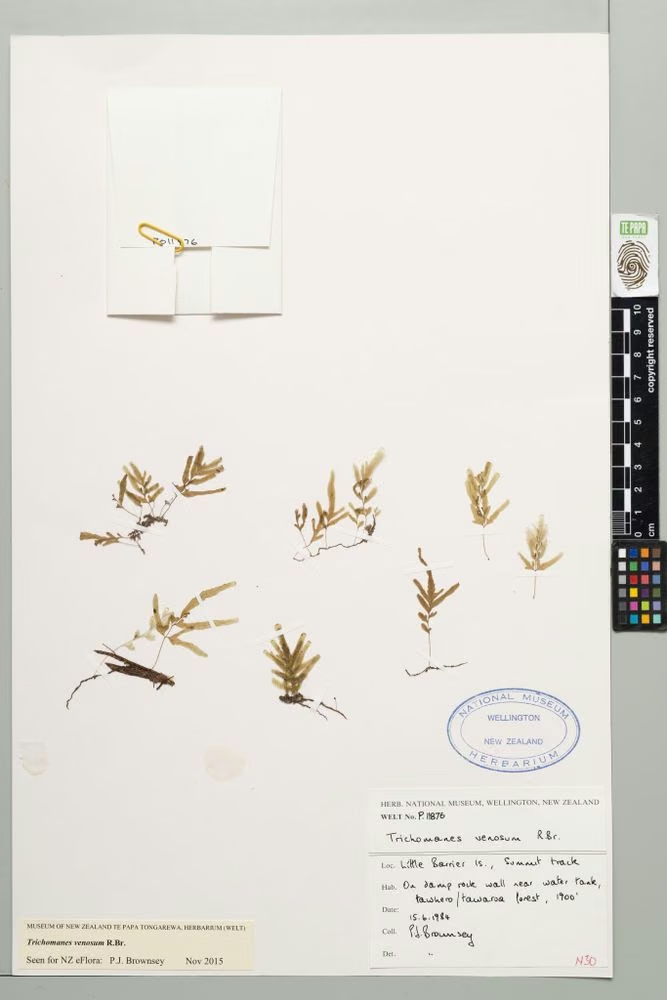
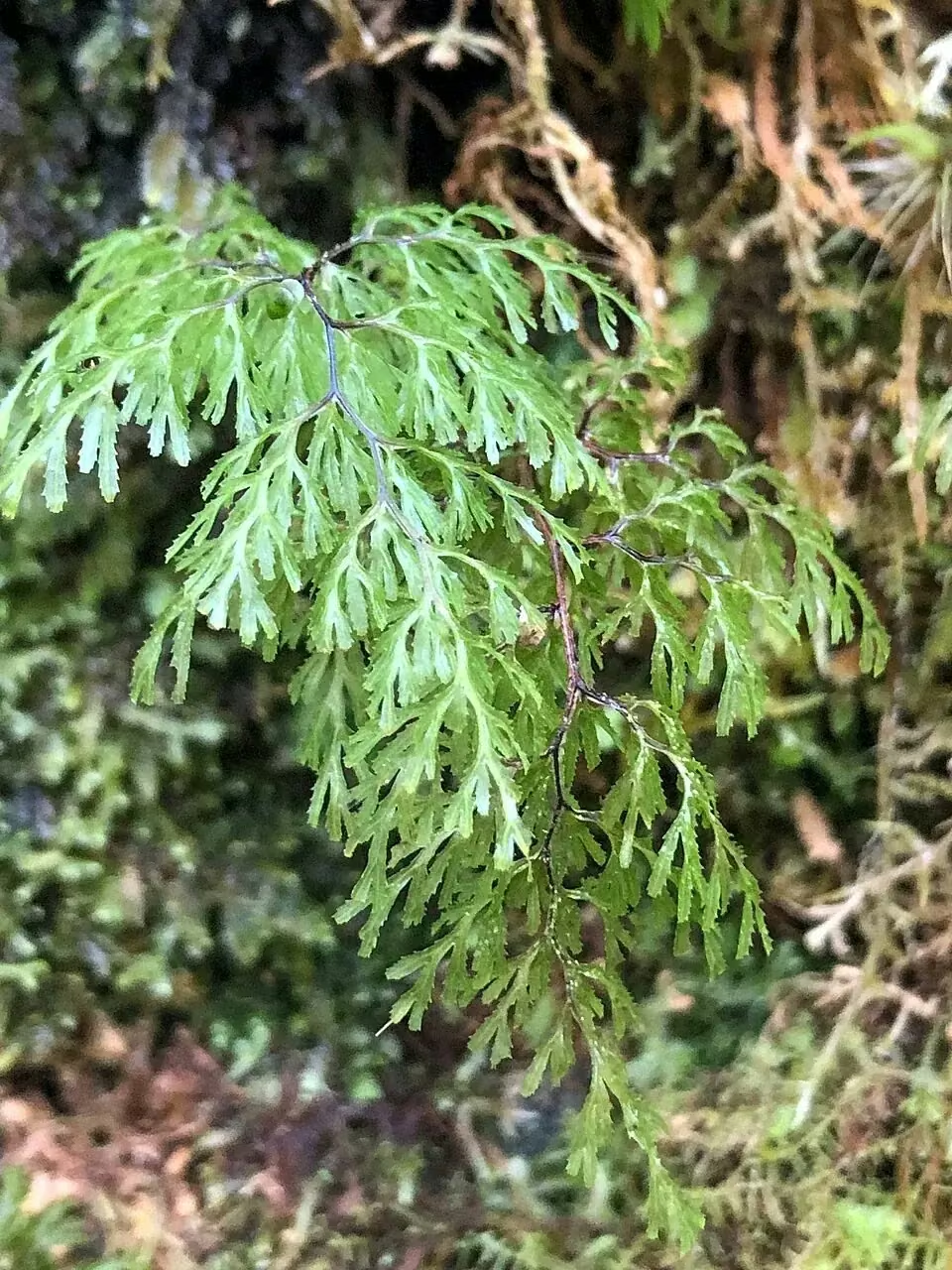
Polyphlebium venosum is a delicate native filmy fern with translucent light-green fronds and conspicuous branching veins. It often forms carpets on tree fern trunks in wet New Zealand forest. The fronds are about 25-165 mm long, with an irregular, light-green translucent blade.
Identification
The fronds are about 25-165 mm long, with an irregular, light-green translucent blade. The slender stalk is not winged, and the segments have prominent veins that fork repeatedly. A thread-like, long-creeping rhizome bears dense reddish-brown hairs and gives rise to widely spaced fronds.
Quick facts
| Scientific Name | Polyphlebium venosum (R.Br.) Copel. |
|---|---|
| Alternative name | Trichomanes venosum |
| Common names | Veined bristle fern; veined filmy fern |
| Family | Hymenophyllaceae |
| Origin | Indigenous to New Zealand and Australia |
| Habit | Creeping, usually epiphytic fern |
| Frond length | 25-165 mm |
| National status | Not Threatened (2023), Secure Overseas |
| Height | Fronds 2-18 cm long |
| Water Needs | Wet forest habitat; a cultivation watering interval is not documented |
| Light | Closed forest in its characteristic natural habitat |
| Spread | Carpets formed by branched, interwoven rhizomes; width unquantified |
| Frost Tolerance | Minimum tolerated temperature is not documented |
| Salt Tolerance | Salt tolerance is not documented |
| Growth Rate | Annual extension is not quantified in the cited accounts |
| Lifespan | Rhizomatous filmy fern |
Natural range
Flora of New Zealand records the species throughout much of the North and South Islands, as well as the Kermadec and Chatham Islands, Rakiura / Stewart Island and Solander Island. It is indigenous rather than endemic: it also occurs in eastern Australia and Tasmania.
| City | Climate Suitability |
|---|---|
| Auckland | Not assessed |
| Wellington | Not assessed |
| Christchurch | Not assessed |
Habitat
In wet lowland and montane forest it most commonly grows on tree fern trunks, particularly ponga, kātote and whekī. It also occurs on other tree trunks, fallen timber, damp banks and wet rocks or overhangs.
Natural growing conditions
This fern is generally epiphytic, growing on the trunks of tree ferns in wet forest. Its creeping rhizomes can interweave into dense carpets; it is occasionally found on wet rock or other damp substrates.
Planting considerations
NZPCN describes propagation as difficult and advises against removing plants from the wild. The species usually grows on tree fern trunks in wet closed forest, rather than as an ordinary groundcover.
Life on tree ferns
The long-creeping rhizomes branch and interweave on suitable hosts, sometimes forming dense carpets. Flora records the fern on ponga, kātote and whekī trunks in podocarp, beech, broadleaved and kānuka forest.
Field identification
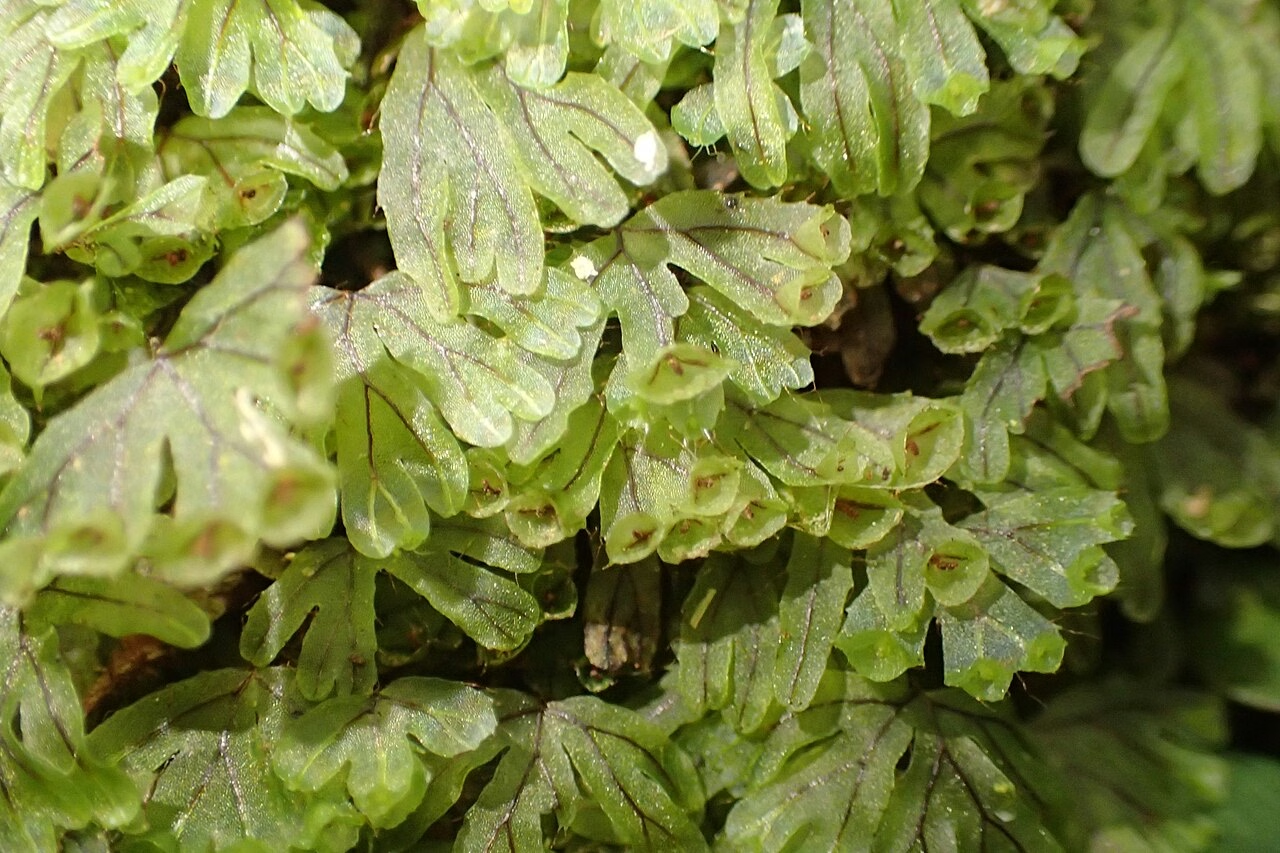
Look for pale translucent fronds with conspicuous veins that fork repeatedly within each final segment. The stalk lacks wings, and the blade margins are shallowly lobed or rounded-toothed without a distinct border.
Garden context
The fern’s natural setting is wet forest, commonly on tree fern trunks. NZPCN describes propagation as difficult and advises leaving wild plants in place; the cited profiles do not give a tested garden-growing method.
Spores and sori
The tubular sori sit near the bases of the primary pinnae, sometimes partly immersed in the blade and sometimes free on a stalk. A fine receptacle bearing sporangia projects well beyond the widened mouth at maturity.
Rhizome and fronds
The fine creeping rhizome carries dense reddish-brown hairs, while the translucent blades have widely spaced pinnae. These are normal features of the plant; the cited profiles do not prescribe a pruning routine.
How to Grow Bristle Fern (Polyphlebium venosum)
Spores and a creeping epiphyte
NZ Plant Conservation Network describes propagation of Polyphlebium venosum as difficult and advises against removing wild plants. Its account does not specify a spore-sowing method. The fern forms carpets from extensively branching, interwoven rhizomes only about 0.2-0.8 mm thick, clothed in long golden-brown hairs. This delicate network is an important part of an established patch.
Tree fern trunks as a natural support
The characteristic substrate is a tree fern trunk in closed forest, particularly in wetter parts of New Zealand. Both Cyathea and Dicksonia are recorded hosts. Other suitable trees, rock faces, mossy boulders and cavities in trees are also occupied. Growth directly on damp, moss- and liverwort-covered ground is described as very rare.
Watching the translucent blades
Fronds measure approximately 2-18 cm long and are bright green, with conspicuous veins visible through the translucent blade. The leaf stalk is slender and lacks a wing, while the frond axis is winged. This combination helps distinguish the species from other small filmy ferns before observations are assigned to a cultivated specimen.
Recognising fertile growth
Spore-bearing structures occur in short lobes near the bases of the pinnae. Each narrow cylindrical covering has an expanded mouth, and its receptacle may project as much as 10 mm beyond it. These thread-like projections are reproductive structures. The species profile provides no seasonal spore-collection calendar, annual extension measurement or verified transplantation success rate.
Plant health
The pale translucent blade and repeatedly branching veins are diagnostic characteristics rather than signs of damage. The cited botanical profiles do not identify species-specific pests or prescribe disease treatments.
Names and classification
NZPCN uses Polyphlebium venosum, while Flora of New Zealand uses Trichomanes venosum for the same fern. The epithet means veined, referring to the prominent branching veins visible within its delicate fronds.
Compare the veins
Polyphlebium endlicherianum usually grows on soil or rock and has darker fronds with one unbranched vein per final segment. Veined bristle fern is usually epiphytic and has light translucent fronds with repeatedly forked veins.
Related ferns
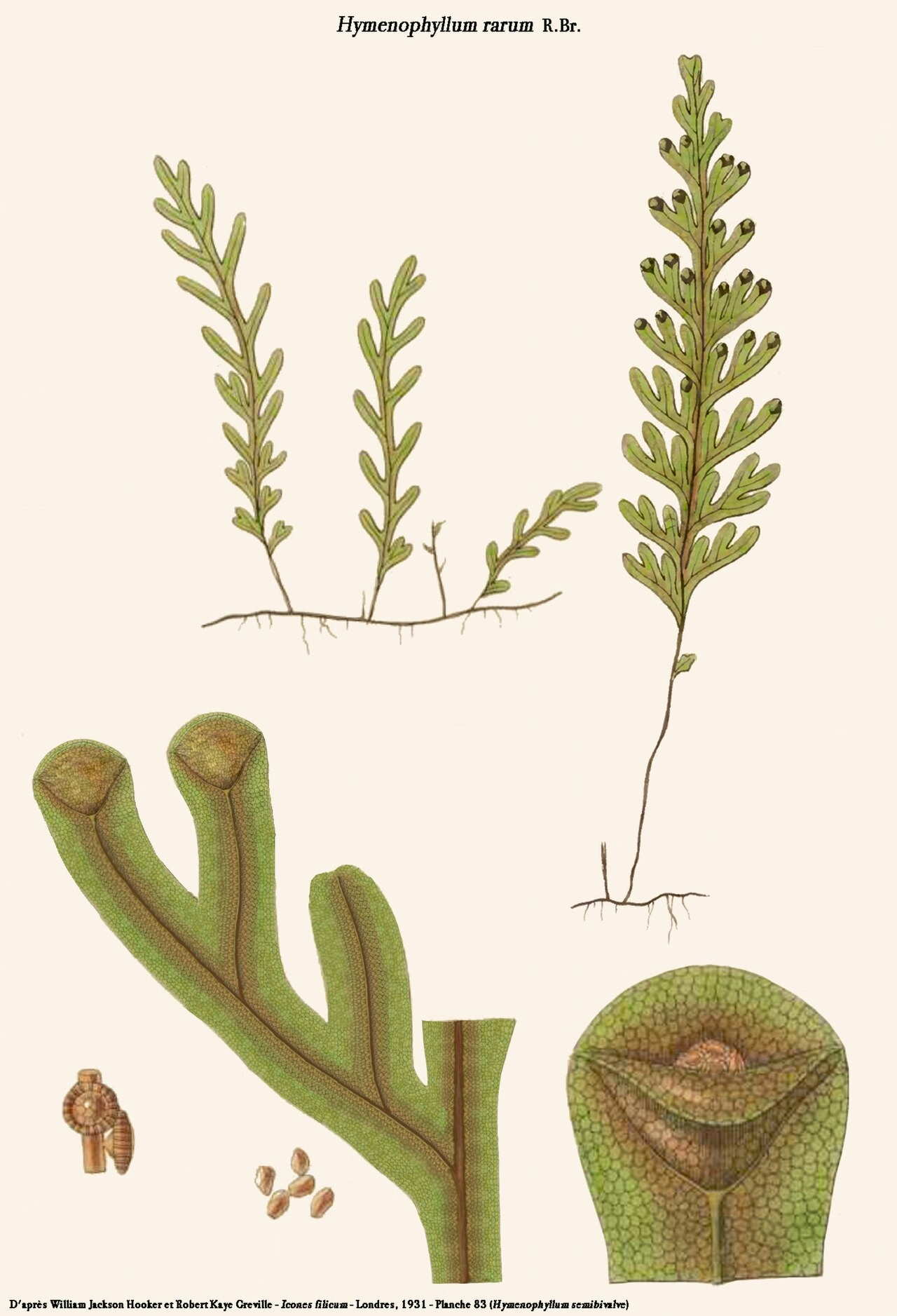
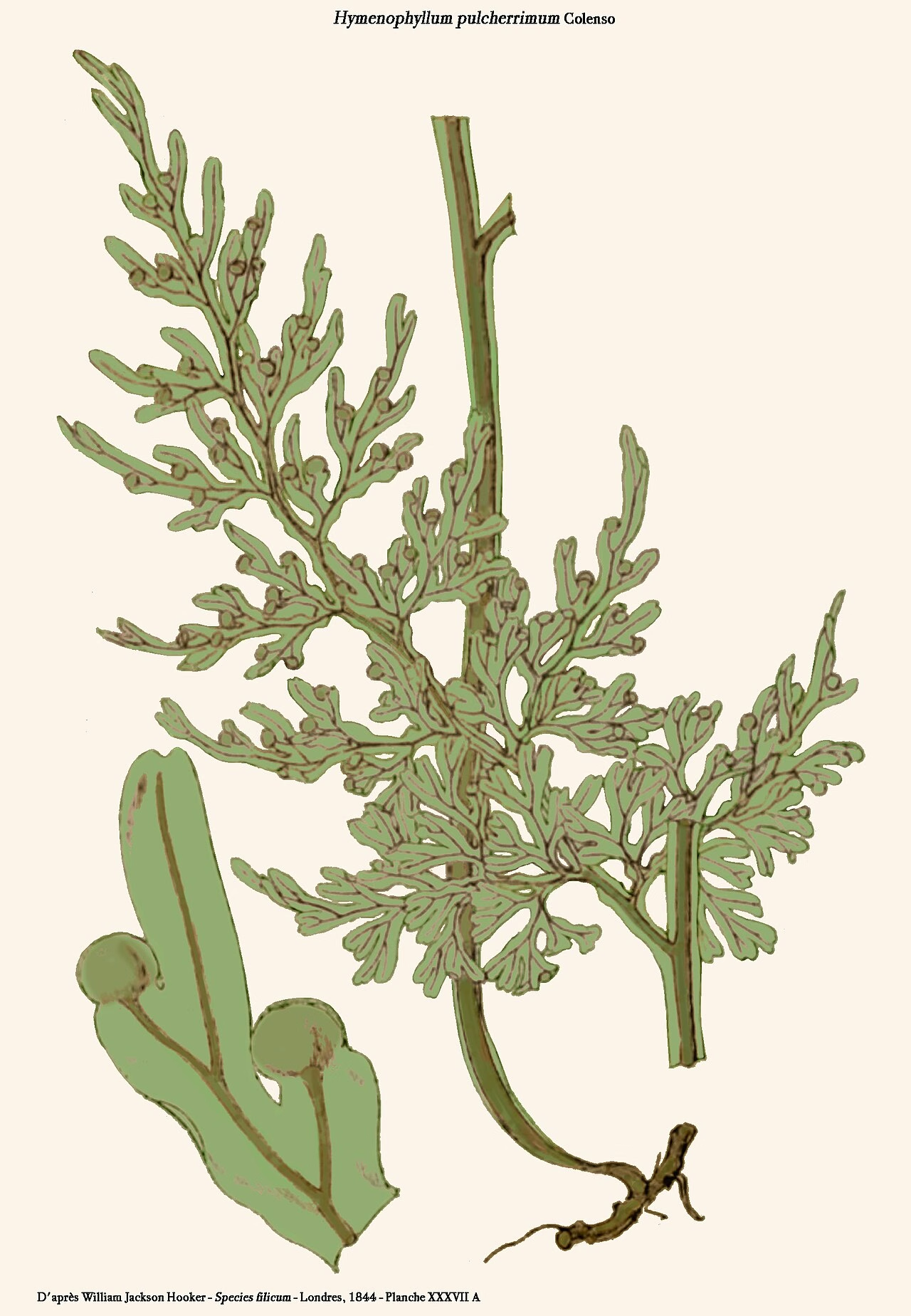
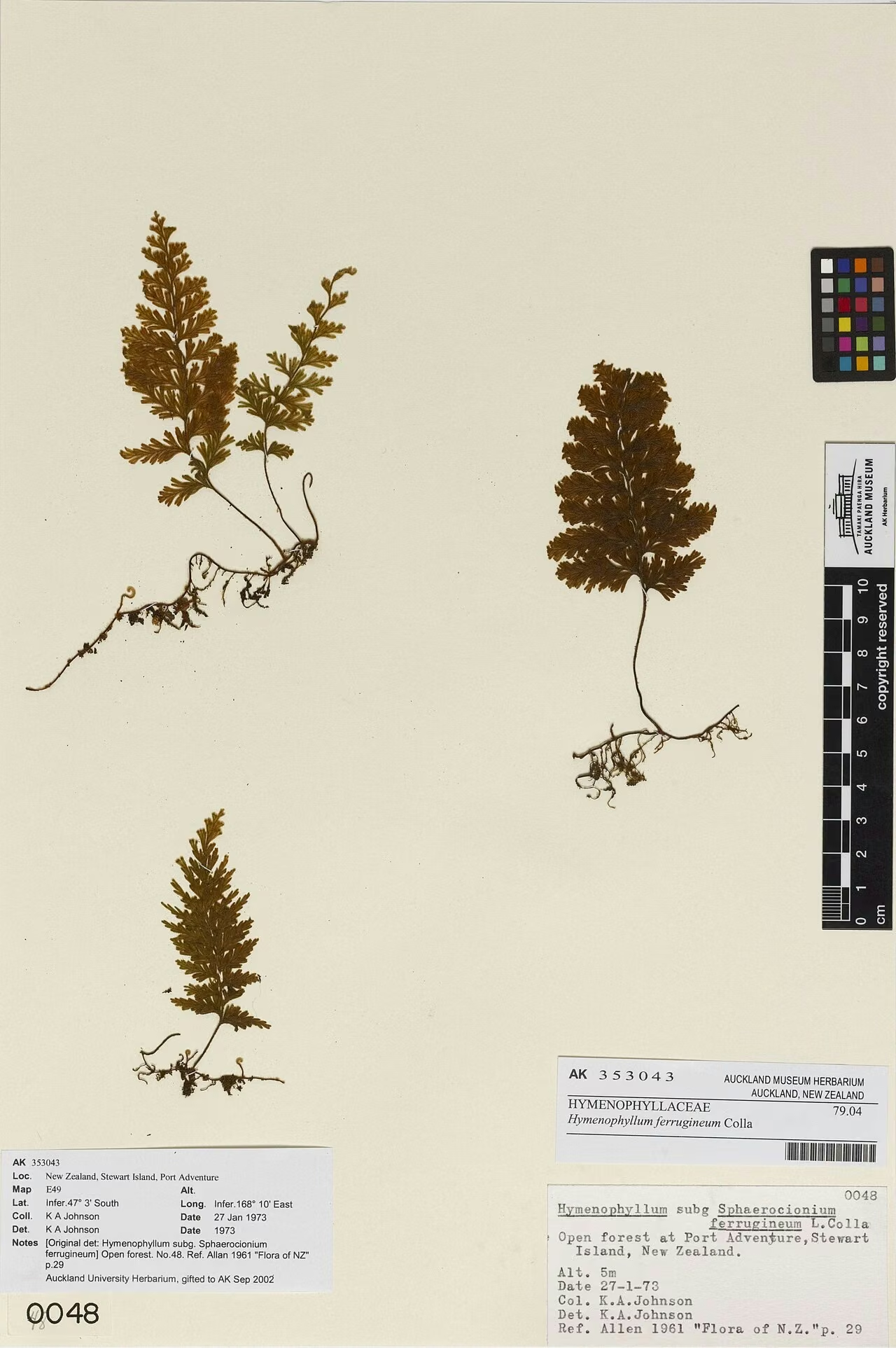
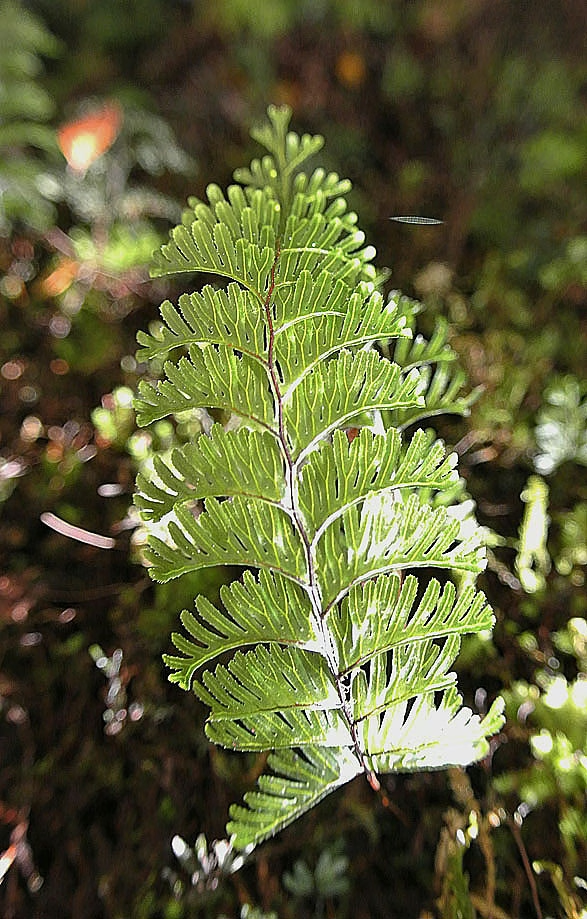
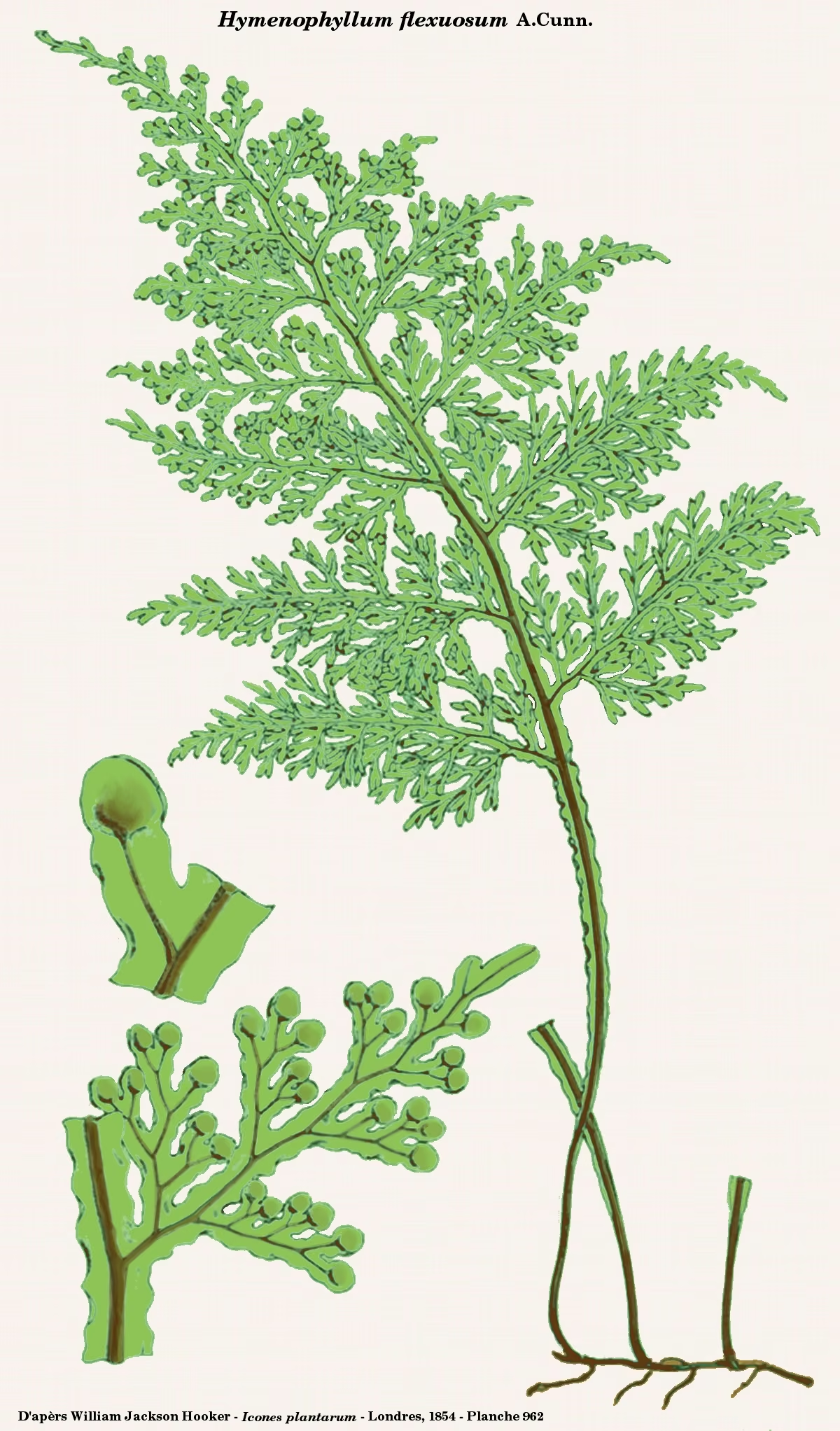
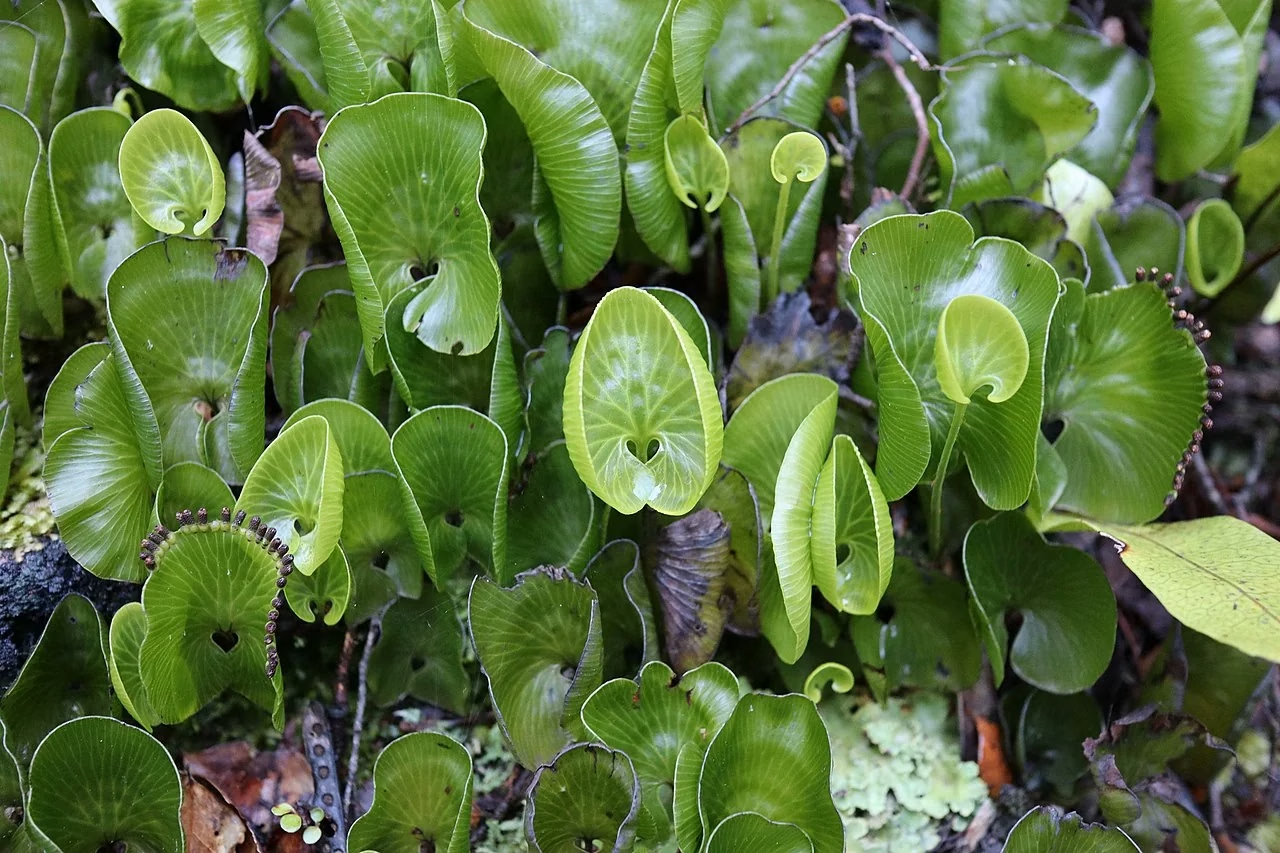
These filmy ferns belong to the same family, Hymenophyllaceae, as bristle fern.
Conservation
The 2023 national assessment lists Polyphlebium venosum as Not Threatened, with the Secure Overseas qualifier. NZPCN describes it as widespread and common in wetter parts of New Zealand; it is also native to Australia.
Frequently asked questions
What makes the veins so conspicuous?
The bright green blade is translucent, making its branching venation especially easy to see.
Which supports does it usually occupy?
Tree fern trunks are its characteristic support, although other trees and several damp rocky substrates are also recorded.
What are the long projections from fertile fronds?
They are the receptacles associated with spore production and can extend up to 10 mm beyond the covering of each sorus.
Sources
Detailed identification, geographic distribution and natural habitat: Flora of New Zealand: Trichomanes venosum.
Names, conservation, propagation and habitat: NZPCN.
Its translucent blade, repeatedly forked veins and reddish-haired creeping rhizome are distinctive identification points.
Last updated: