Rusty Filmy Fern
Hymenophyllum frankliniae
Last updated:
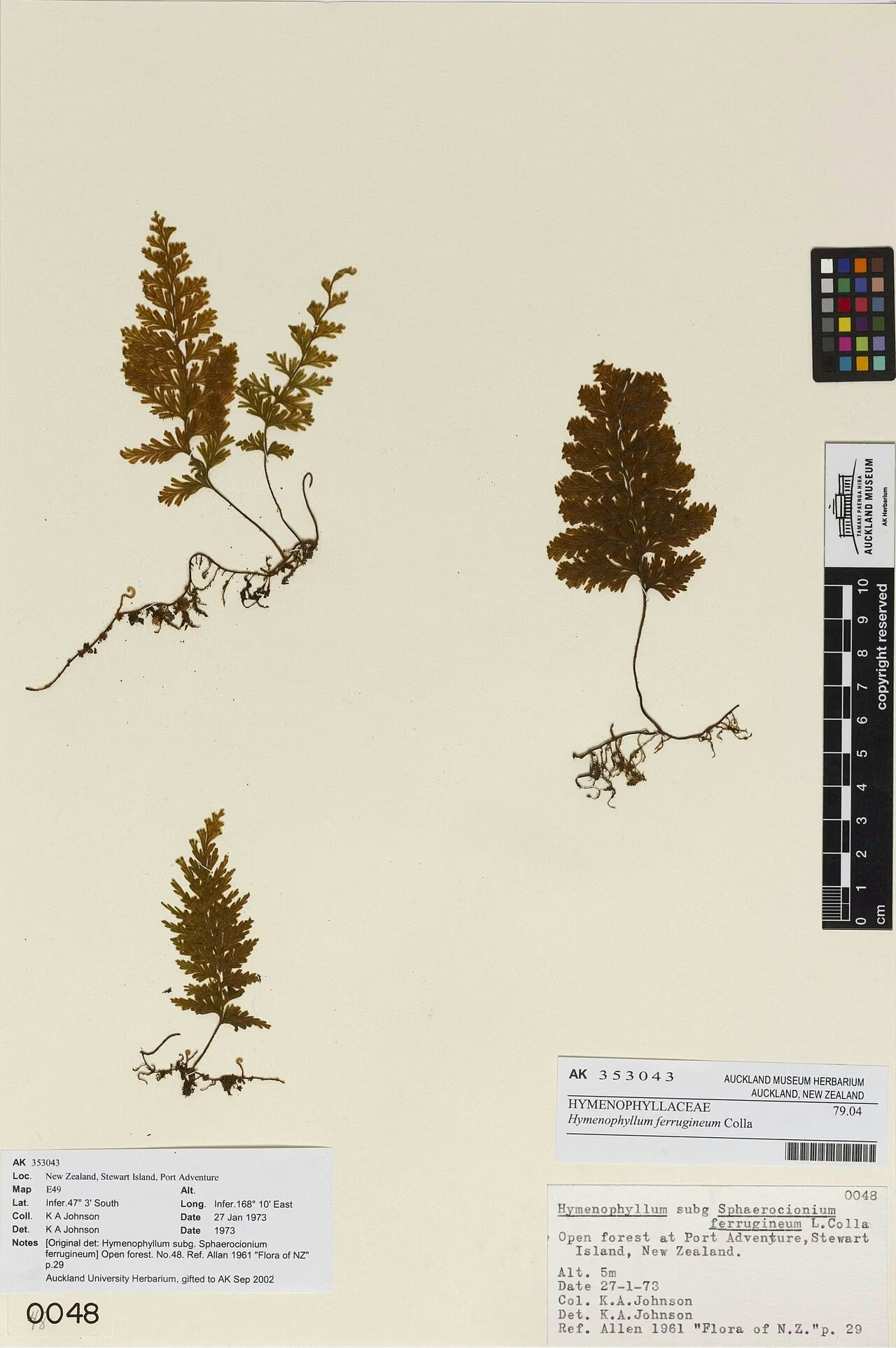
Rusty filmy fern (Hymenophyllum frankliniae) is an endemic filmy fern instantly recognised by the dense covering of tawny to rusty-brown star-shaped hairs over its olive-green fronds. The fronds are 4-30 cm long and hang from the trunks of tree ferns, especially Dicksonia squarrosa and Cyathea smithii, and from kāmahi and other trees in wet forest. It grows throughout the North Island from the Maungataniwha Range south, and in lowland South Island forest from the Marlborough Sounds to Fiordland and on Stewart Island. It was long known in New Zealand as H. ferrugineum, and is ranked Not Threatened. Explore more native ferns in our native plant guide.
Plant Description
Hymenophyllum frankliniae is an epiphytic filmy fern with finely hairy, long-creeping, slender rhizomes. The stipes are 20-90 mm long, thin, brittle, unwinged and covered in minute stellate hairs. The fronds are about 40-295 mm long overall.
The blades are narrowly elliptic to narrowly ovate, two to three (rarely four) times divided, 25-230 mm long and 15-78 mm wide, with 5-30 pairs of primary pinnae. They are dull olive-green to brown-green and densely clothed in yellow-brown to red-brown star-shaped hairs. The ultimate segments are oblong, crowded and smooth-edged. The sori terminate the segments and are slightly embedded in the blade; the indusial flaps have smooth margins and are stellate-hairy on the outside.
The rusty hair covering separates it from all hairless filmy ferns. Its closest hairy relative, H. malingii, grows on kaikawaka (mountain cedar) rather than tree ferns and has narrow, tubular ultimate segments.
Quick Facts
| Scientific Name | Hymenophyllum frankliniae |
|---|---|
| Height | Fronds 4-30 cm long |
| Spread | Patches on long-creeping hairy rhizomes |
| Water Needs | High humidity |
| Light | Shade within forest |
| Frost Tolerance | Moderate; recorded to 925 m |
| Salt Tolerance | Low |
| Growth Rate | Slow |
| Lifespan | Perennial |
Climate Best Suited to
It needs wet, humid forest climates and is most common in lowland and lower montane districts with high rainfall; it is absent from the dry eastern interior of the South Island.
Regional Suitability
| City | Climate Suitability |
|---|---|
| Auckland | Medium |
| Wellington | Medium |
| Christchurch | Low |
| Dunedin | Low |
Plant Habitat
Hymenophyllum frankliniae is endemic. In the North Island it occurs from the Maungataniwha Range southward, from 70 m along the Whanganui River to 925 m in the Kaitake Range, Taranaki. In the South Island it is confined to lowland forest from the Marlborough Sounds to Fiordland and is absent from interior eastern areas. It also grows on Stewart Island/Rakiura.
It inhabits wet kauri, podocarp, beech and broadleaved forest, mainly as an epiphyte. It is most often found on the trunks of Dicksonia squarrosa and Cyathea smithii, also on other Cyathea species, kāmahi and mataī (Prumnopitys taxifolia). Occasionally it grows on clay banks or among mosses on damp boulders.
Growing Requirements
Soil Requirements
It is mostly epiphytic and needs no soil, rooting into the fibrous trunks of tree ferns and mossy bark.
- Tree fern trunks, especially wheki
- Mossy bark of kāmahi and other trees
- Occasionally clay banks and mossy boulders
Light Requirements
It grows in the shade of closed, wet forest.
- Shade to deep shade
- No direct sun
- Sheltered forest interior
Water Requirements
Its hairy fronds may hold a little moisture, but like all filmy ferns it depends on high, steady humidity.
- Constantly humid air
- Regular rain and mist
- Shrivels in drought and revives when wet
Planting and Establishing
Rusty filmy fern is not a garden plant. NZPCN says it is difficult to grow and should not be removed from the wild.
Gardens in wet districts that have established wheki or other tree ferns under a closed canopy may occasionally be colonised naturally. Protecting such tree ferns is the best way to keep it.
Ecological Role
This fern is a familiar member of the epiphyte community on tree fern trunks, sharing them with mosses, liverworts and other filmy ferns. The dense mats help trunks hold moisture.
It reproduces by minute wind-dispersed spores and spreads along trunks by its creeping rhizomes. Its strong preference for tree ferns links its fortunes to the health of the tree fern understorey.
Uses & Significance
Garden Uses
It has no planned garden use, but is a pleasing find on tree fern trunks in bush gardens and remnants.
- Natural epiphyte on wheki trunks
- Distinctive rusty colour for nature study
- Indicator of humid forest conditions
Ecological Value
As an endemic epiphyte it adds diversity to tree fern trunk communities.
- Endemic to New Zealand
- Part of moisture-holding epiphyte mats
- Associated with tree fern understoreys
Landscaping Uses
It is not used in landscaping. Where it occurs, keep tree ferns intact and the canopy closed so the trunks stay humid.
Avoid moving or stripping tree fern trunks in gardens, as this destroys their epiphytes.
Seasonal Care Calendar
Spring
Fronds are fully hydrated in wet spring weather.
- Rusty hairs look tawny in fresh growth
- Good time to look on wheki trunks
Summer
Dry spells may curl the fronds, which recover after rain.
- Look for hairy indusia on segment tips
- Leave tree fern trunks undisturbed
Autumn
Rain returns and spores are released.
- Fronds revive
- Record host tree species
Winter
Persists in cool, wet lowland forest.
- No action needed
- Rusty fronds stand out on dark trunks
When to Prune and How Much
No pruning is needed. Leave fronds and rhizomes untouched on their host trunk.
Do not trim or scrape tree fern trunks where this fern grows.
How to Grow Rusty Filmy Fern
NZPCN states that Hymenophyllum frankliniae is difficult to propagate and should not be removed from the wild, and it is not sold commercially. No propagation protocol specific to this species was found. The methods below summarise general filmy fern techniques and should be used only with plants already in legal cultivation, or with material on a tree fern trunk that has fallen naturally and been salvaged with permission. A fallen trunk section kept upright in a humid, shaded fernery is often the simplest way to keep the epiphytes on it alive, since the plant stays on its natural host.
By Division of Rhizomes
The slender, hairy rhizomes can be divided with their substrate, ideally a piece of tree fern fibre.
- Take a rhizome section with fronds from a cultivated plant
- Keep it attached to its tree fern fibre or moss
- Tie it onto a tree fern slab in a humid fernery or terrarium
- Mist with rainwater regularly so it never dries
- Keep in shade until new growth appears
From Spores
Filmy fern spores are green and short-lived, so they must be sown fresh. No success with this species is documented.
Tree fern fibre is a natural substrate for this species, so a fine, sterilised layer of it may suit sown spores.
- Collect a fertile frond with mature sori
- Sow spores immediately on sterile, moist sphagnum or tree fern fibre
- Seal and keep cool and shaded
- Keep saturated for many months while waiting for growth
Pests & Diseases
No pests or diseases are recorded for rusty filmy fern. Desiccation is its main risk.
In the wild, loss of tree ferns, canopy opening and browsing animals that damage the forest understorey reduce its habitat.
Cultural Significance
No Māori name or traditional use specific to this species was found in the sources consulted.
The species honours Lady Jane Franklin (1791-1875), wife of Sir John Franklin, Governor of Tasmania. The genus name Hymenophyllum means membranous leaf, from the Greek humen and phullon.
Bonus Tip
When walking through wet lowland bush, check the trunks of wheki (Dicksonia squarrosa) at head height: a fern that looks rusty brown rather than green, and feels slightly furry, is almost certainly rusty filmy fern, the easiest of the hairy filmy ferns to identify.
Related Plants
Explore other native plants that share similar characteristics or habitats with Rusty Filmy Fern (Hymenophyllum frankliniae), offering further insights into New Zealand's diverse flora. These related species provide context and opportunities for complementary planting in your garden.
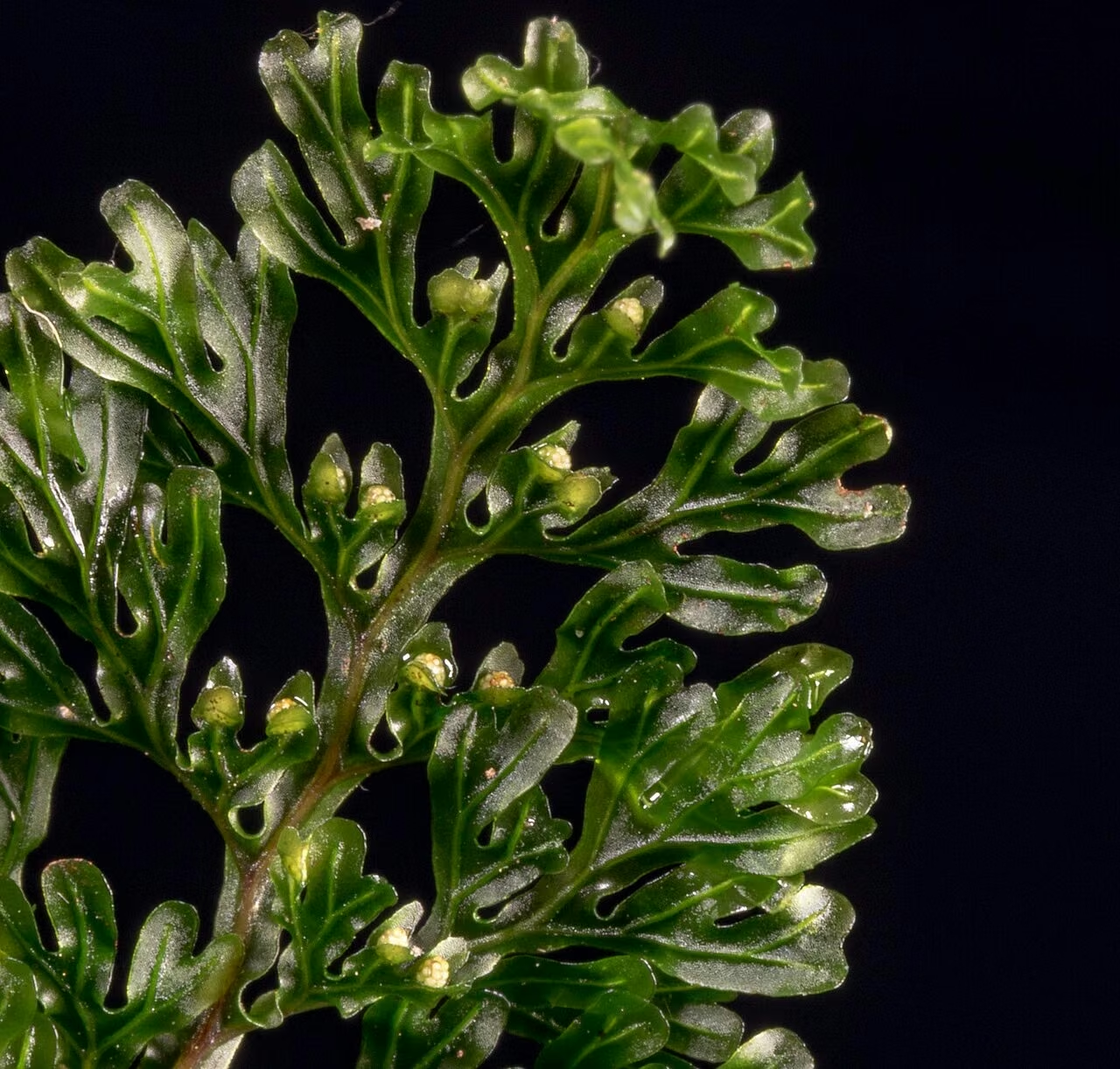
Hymenophyllum australe
Hymenophyllum australe
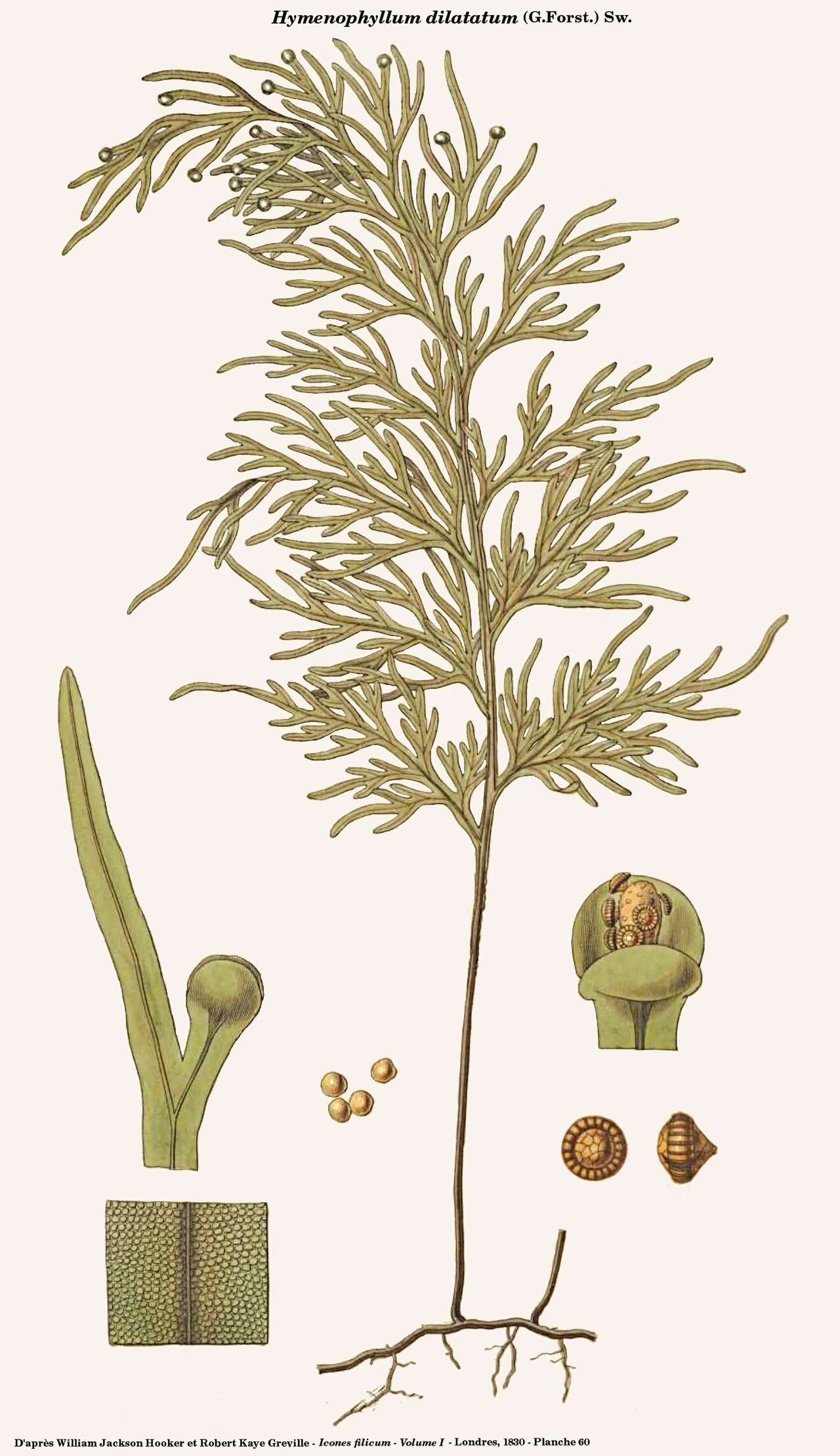
Matua Mauku
Hymenophyllum dilatatum
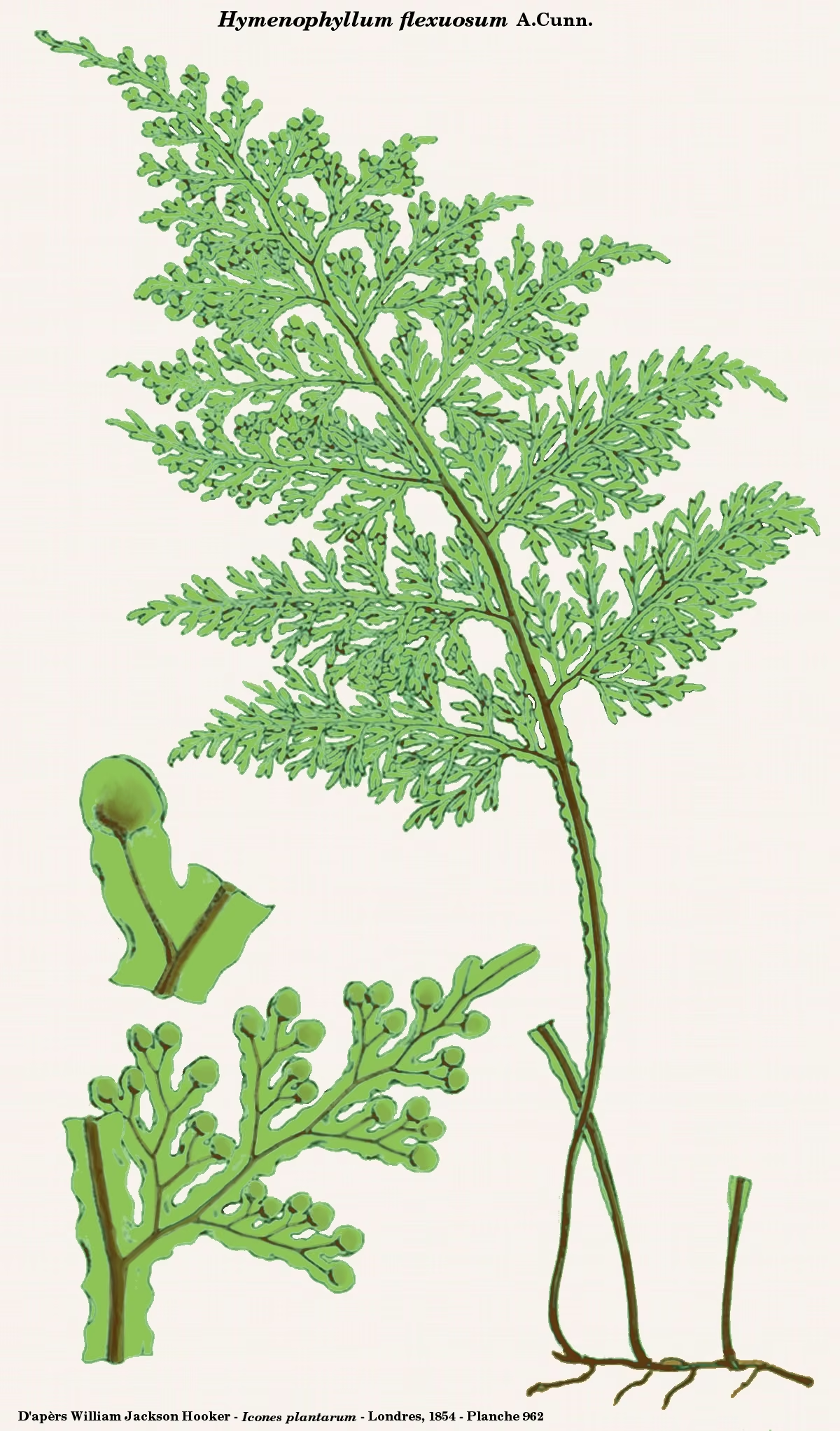
Hymenophyllum flexuosum
Hymenophyllum flexuosum
Hymenophyllum lyallii
Hymenophyllum lyallii
Hymenophyllum minimum
Hymenophyllum minimum
One-Sided Filmy Fern
Hymenophyllum peltatum
Tufted Filmy Fern
Hymenophyllum pulcherrimum
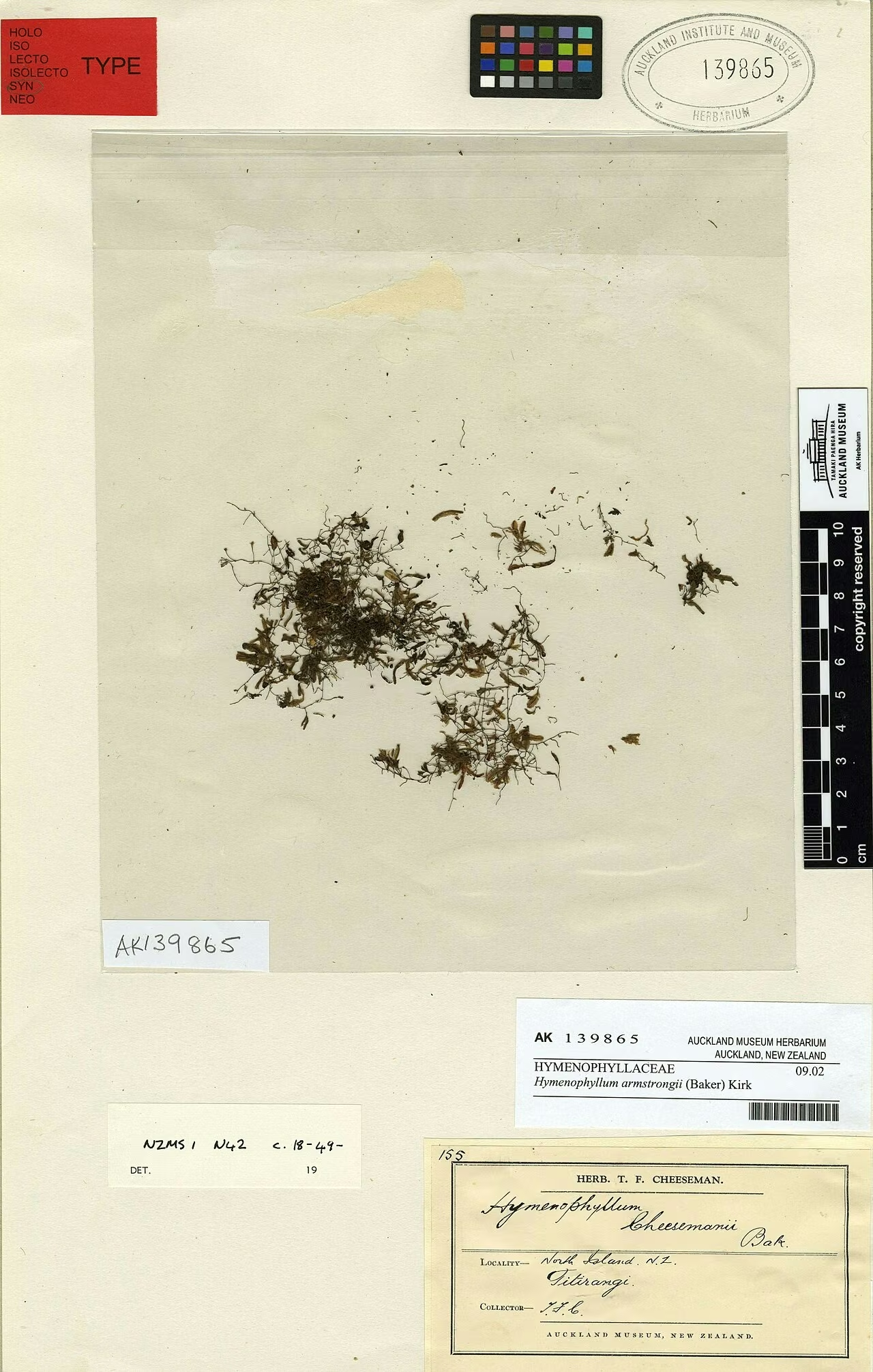
Hymenophyllum armstrongii
Hymenophyllum armstrongii
Plant Conservation
Hymenophyllum frankliniae is ranked Not Threatened (2023) and is Regionally Not Threatened in Northland, Auckland, Otago and Wellington.
It remains secure wherever wet forest with healthy tree fern understoreys persists. Protecting forest remnants and controlling browsing animals help maintain its habitat.
Frequently Asked Questions
Why is it called the rusty filmy fern?
Its olive-green fronds are densely covered in tiny yellow-brown to red-brown star-shaped (stellate) hairs, giving the whole plant a rusty-brown appearance unlike most hairless filmy ferns.
Is Hymenophyllum frankliniae the same as Hymenophyllum ferrugineum?
No. New Zealand plants were long misidentified as H. ferrugineum, but that species is now regarded as confined to southern South America and the Juan Fernández Islands, and New Zealand plants are H. frankliniae.
What does the rusty filmy fern grow on?
It is mainly an epiphyte on tree fern trunks, especially wheki (Dicksonia squarrosa) and Cyathea smithii, and on kāmahi, occasionally on clay banks or mossy boulders.
Who is Hymenophyllum frankliniae named after?
It honours Lady Jane Franklin (1791-1875), wife of Sir John Franklin, who was Governor of Tasmania.
Sources and Further Reading
The botanical, growing, and conservation details for Rusty Filmy Fern (Hymenophyllum frankliniae) on this page draw on the New Zealand plant references below. Consult them for full technical records and the latest distribution data.