Bristle Fern
Polyphlebium endlicherianum
Polyphlebium endlicherianum
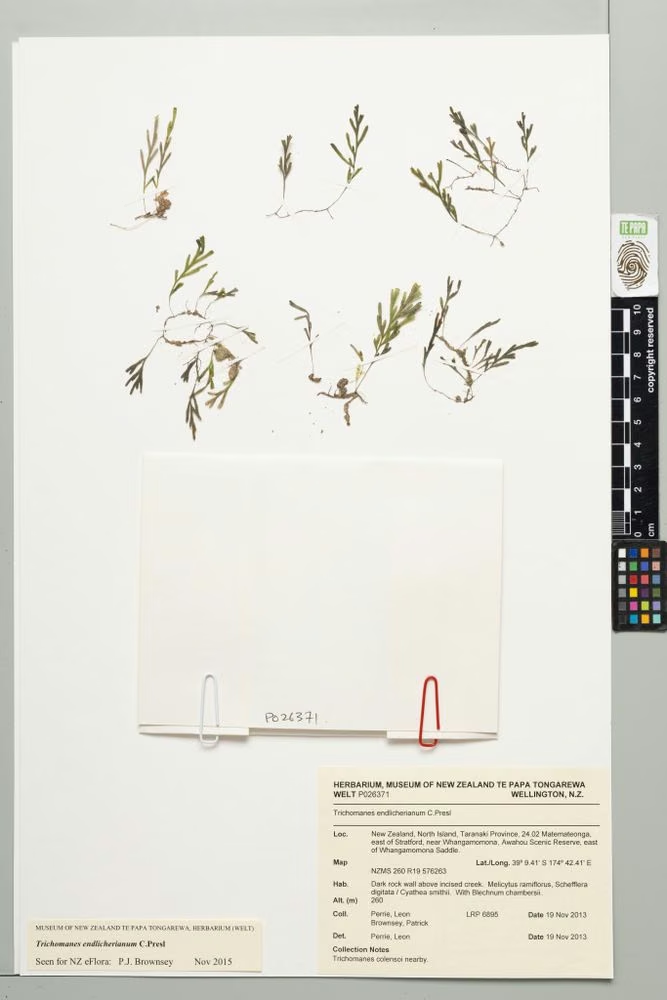
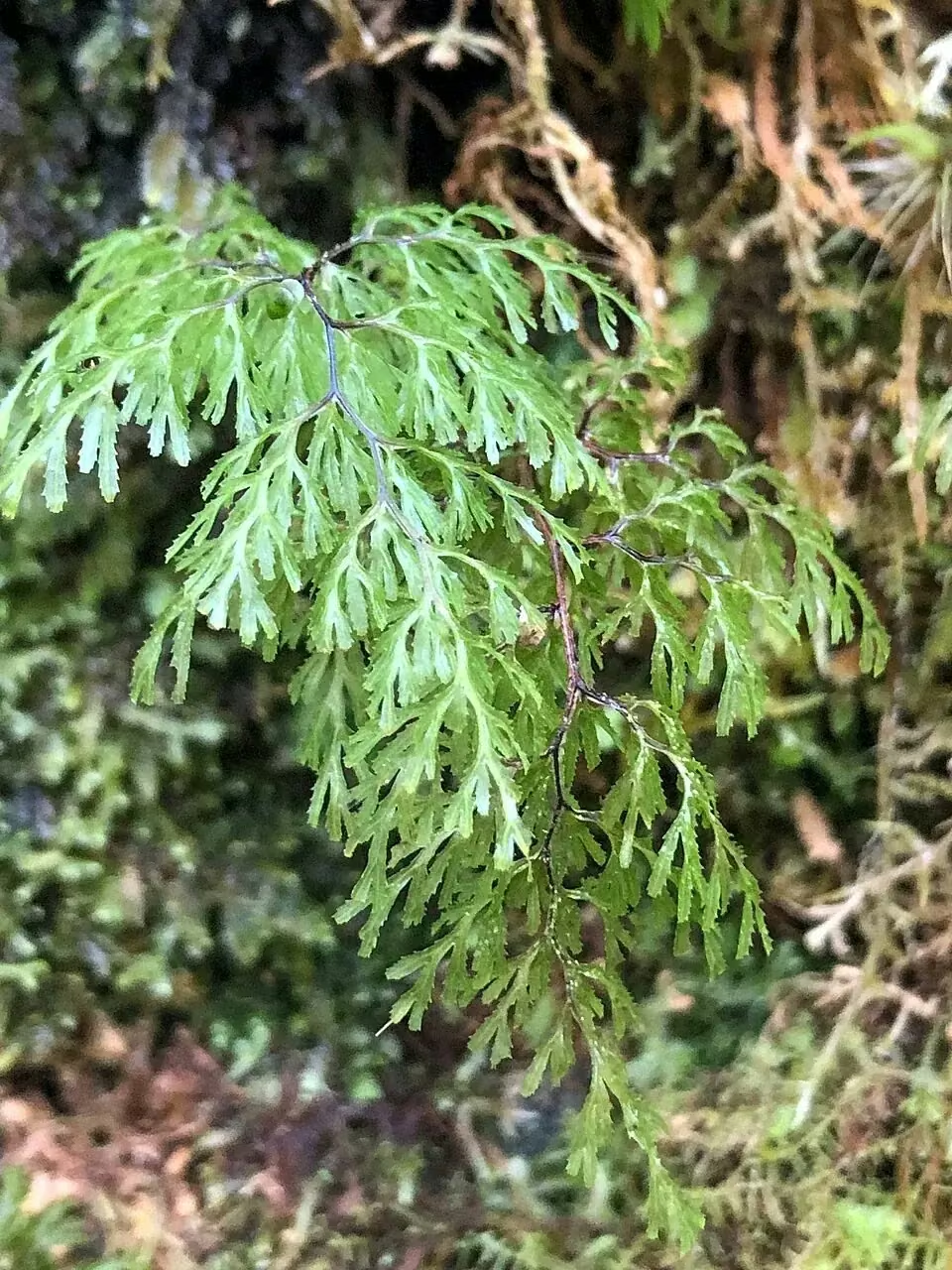
Polyphlebium endlicherianum is a small native filmy fern of dark, damp forest. It usually grows on soil or rock, producing dark green divided fronds from a fine creeping rhizome. The fronds are 22-130 mm long, with a dark green, thin blade divided into narrow segments.
Identification
The fronds are 22-130 mm long, with a dark green, thin blade divided into narrow segments. The stalk is winged for at least half its length, and the central axis is winged throughout. Each final segment has one unbranched vein; the thread-like creeping rhizome bears dense brown hairs.
Quick facts
| Scientific Name | Polyphlebium endlicherianum (C.Presl) Ebihara & K.Iwats. |
|---|---|
| Alternative name | Trichomanes endlicherianum |
| Family | Hymenophyllaceae |
| Origin | Indigenous to New Zealand; also overseas |
| Habit | Small creeping filmy fern |
| Habitat | Damp shaded rock, soil and forest |
| Frond length | 22-130 mm |
| National status | Not Threatened (2023) |
| Height | Fronds usually 1.3-4 cm long, occasionally 10 cm |
| Water Needs | Shaded streamside surfaces are recorded; a cultivation watering schedule is not given |
| Light | Deep shade in its characteristic forest habitat |
| Spread | Dense carpets from long-creeping rhizomes; maximum width unquantified |
| Frost Tolerance | Minimum tolerated temperature is not documented |
| Salt Tolerance | Salt tolerance is not documented |
| Growth Rate | Annual extension is not quantified in the cited accounts |
| Lifespan | Rhizomatous filmy fern |
Natural range
Flora of New Zealand records this fern in the North and South Islands, Kermadec and Three Kings Islands and the Chatham Islands, from near sea level to about 830 metres. It also occurs outside New Zealand, including Norfolk Island and parts of the Pacific.
| City | Climate Suitability |
|---|---|
| Auckland | Not assessed |
| Wellington | Not assessed |
| Christchurch | Not assessed |
Habitat
It grows on damp rocks, under overhangs, at the base of nīkau trunks, beneath fallen logs and beside streams in dark wet broadleaved forest, rarely in beech forest. It can occur alongside Trichomanes colensoi and Loxogramme dictyopteris.
Natural growing conditions
The fern is usually terrestrial or grows on rock, occasionally at the base of trunks. Its described sites are shaded and damp, including rock overhangs and the undersides of fallen trunks in wet forest.
Planting considerations
Wild plants occupy dark, wet forest habitats, usually on soil or rock. The Flora profile describes those sites and the fern’s structure, but does not provide a tested planting or nursery protocol for this species.
Forest microhabitats
Its slender, hairy rhizome creeps over damp surfaces and produces small divided fronds. The fern grows on sheltered rocks and soil, under fallen timber or beside streams, often among other filmy ferns.
Field identification
Look for dark green fronds with a winged stalk and central axis, and a single unbranched vein in each final segment. A lens is needed to see the distinct border and the immersed tubular sori.
Garden context
This diminutive fern is adapted to sheltered, wet forest microhabitats rather than open dry ground. The cited Flora account records wild sites but does not report garden trials or a species-specific cultivation method.
Spores and sori
The fern produces spores rather than flowers. Each primary pinna may bear a sorus immersed in a short segment near its base; the tubular covering widens at its mouth and the fine receptacle projects beyond it at maturity.
Rhizome and fronds
The long-creeping rhizome is about 0.2 mm in diameter and carries dense brown hairs. Its delicate fronds have a winged axis and stalk; the cited Flora account does not prescribe pruning.
How to Grow Bristle Fern (Polyphlebium endlicherianum)
Spore propagation evidence
The NZ Plant Conservation Network assessment describes propagation as difficult and advises against taking this fern from the wild. Its account provides no species-specific culture medium or spore-germination timetable. A carpet of fronds is linked by very fine creeping rhizomes, approximately 0.1 mm thick, densely covered with short red-brown hairs.
Finding the deeply shaded microsite
Polyphlebium endlicherianum is most frequent in lowland closed forest, although its range extends from coastal to montane sites. Rocks beside streams, overhangs and crevices in deep shade are characteristic substrates. Its preference for these recesses helps explain why it is readily overlooked. The source describes a chiefly terrestrial fern, with epiphytic occurrences being unusual.
Examining a small frond
Most fronds are only about 1.3-4 cm long, with occasional examples reaching 10 cm. The dark green blade is narrowly ovate to linear and deeply divided. Its leaf stalk carries a wing almost to the base, and the central axis is also winged. These details help distinguish it from Polyphlebium colensoi, which lacks those wings.
Checking the reproductive structures
The funnel-shaped coverings around the sori are approximately 1.5-2 mm long and have expanded mouths. Their receptacles can project up to 4 mm beyond the opening. These measurements concern normal fertile fronds. Observing such structures in an established population can document maturity, although the cited account does not show that removing fertile fronds or rhizome fragments will produce successful cultivated plants.
Plant health
The brown hairs on the creeping rhizome and the dark green membranous fronds are normal features of this fern. The cited Flora account does not list a species-specific pest or disease treatment.
Names and classification
Flora of New Zealand uses Trichomanes endlicherianum, while the 2023 conservation assessment uses Polyphlebium endlicherianum. The epithet honours Austrian botanist Stephan Endlicher, who published early work on Australian and Norfolk Island flora.
Distinguishing related filmy ferns
Compared with Trichomanes venosum, this fern is usually terrestrial, has darker green fronds and a single unbranched vein in each final segment. Trichomanes colensoi has more divided fronds and differs in its stalk and sorus features.
Related ferns
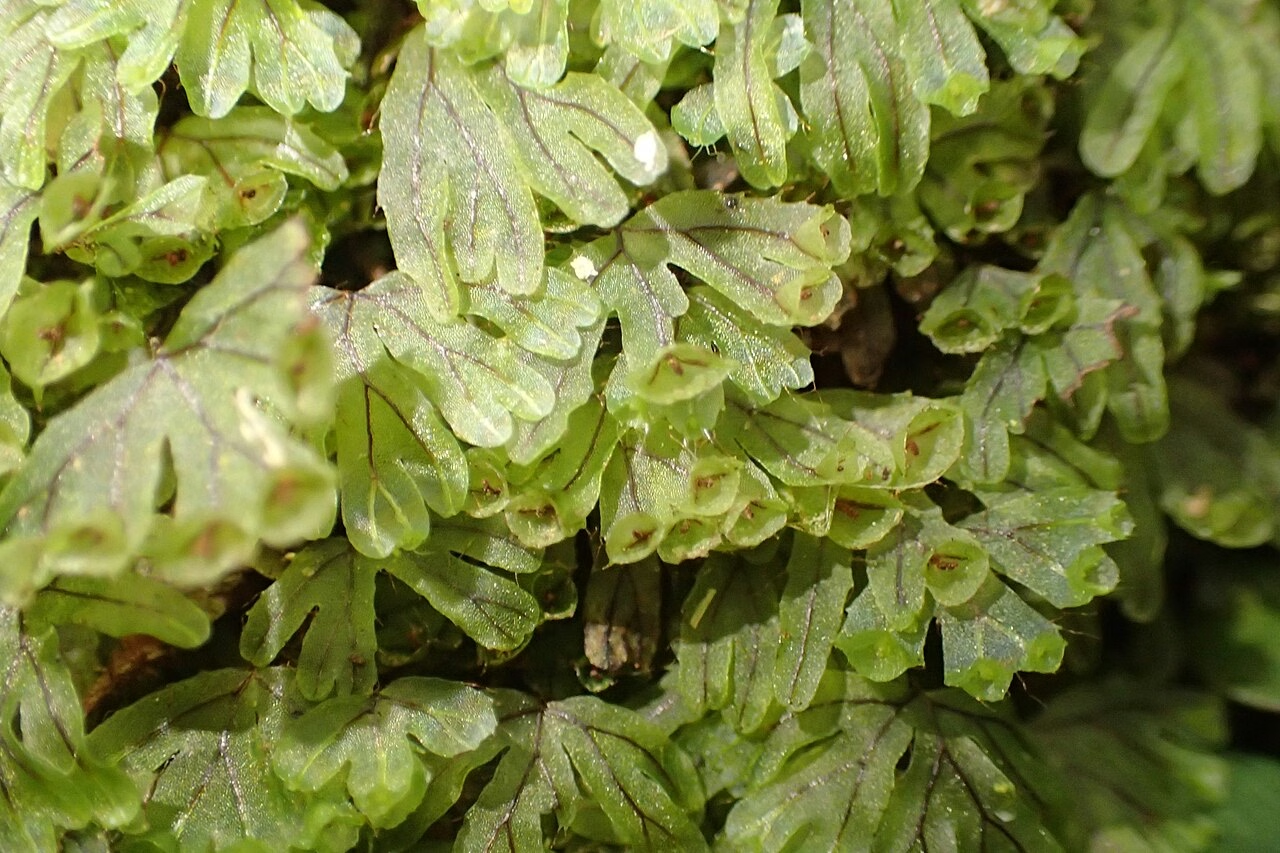
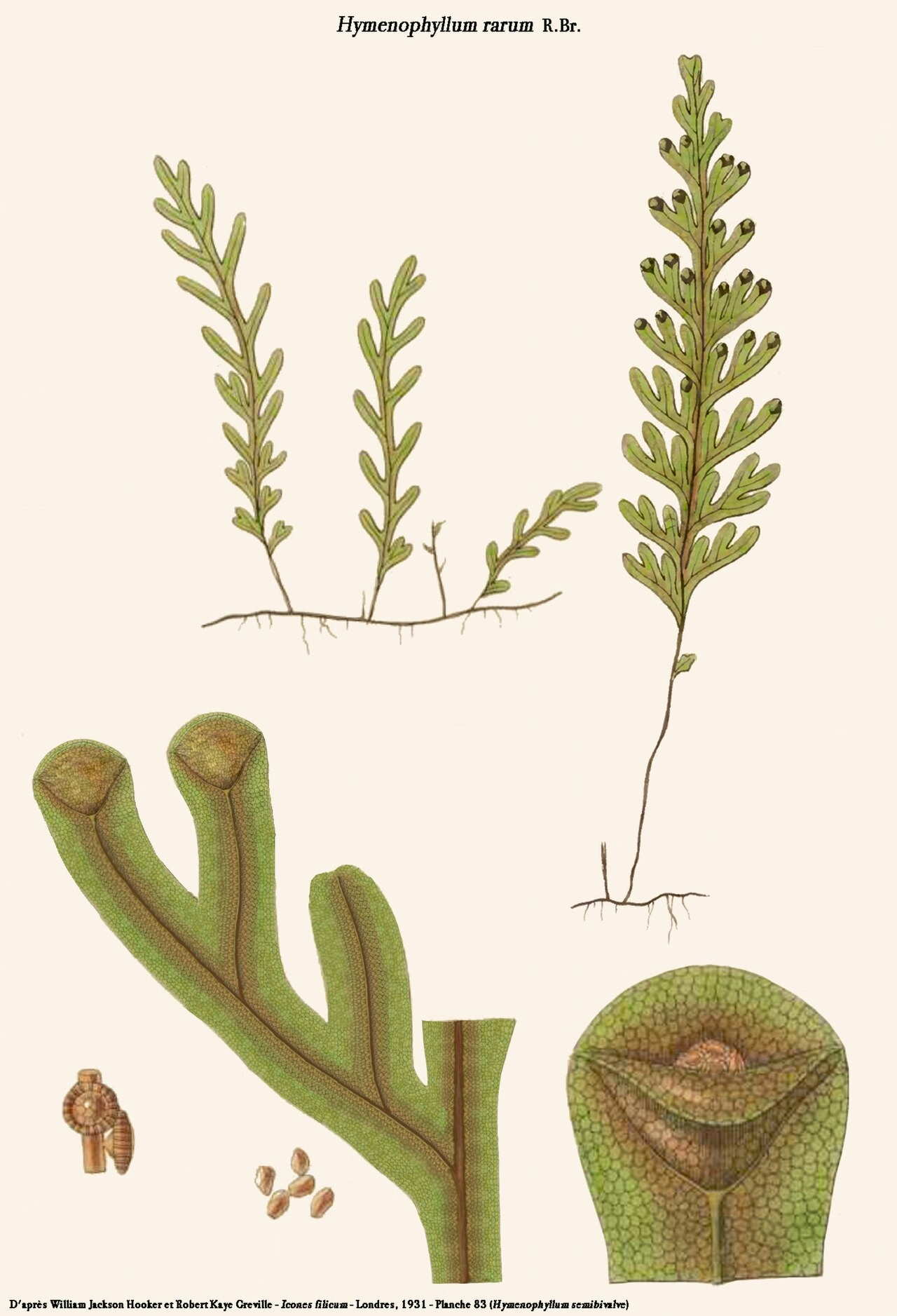
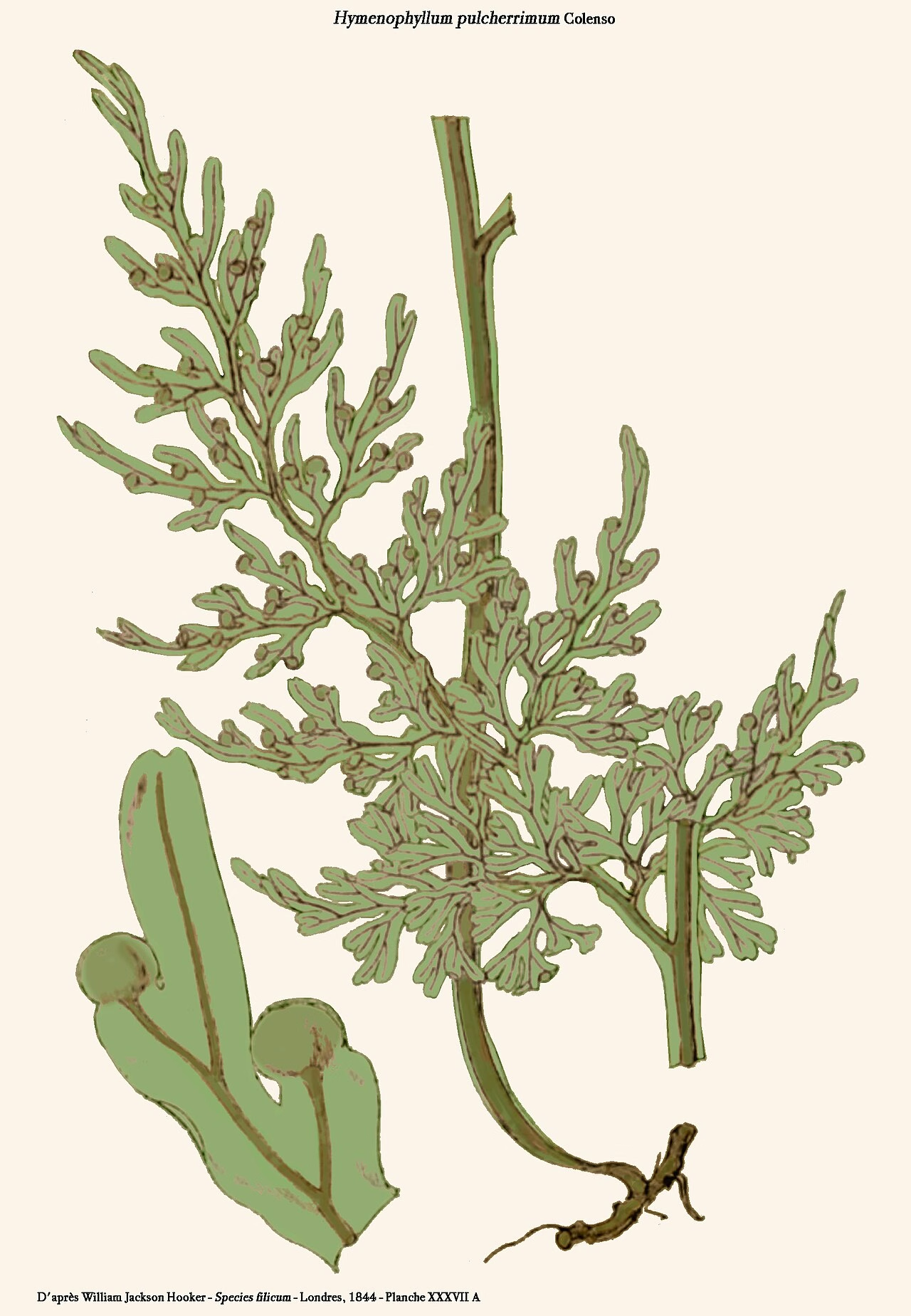
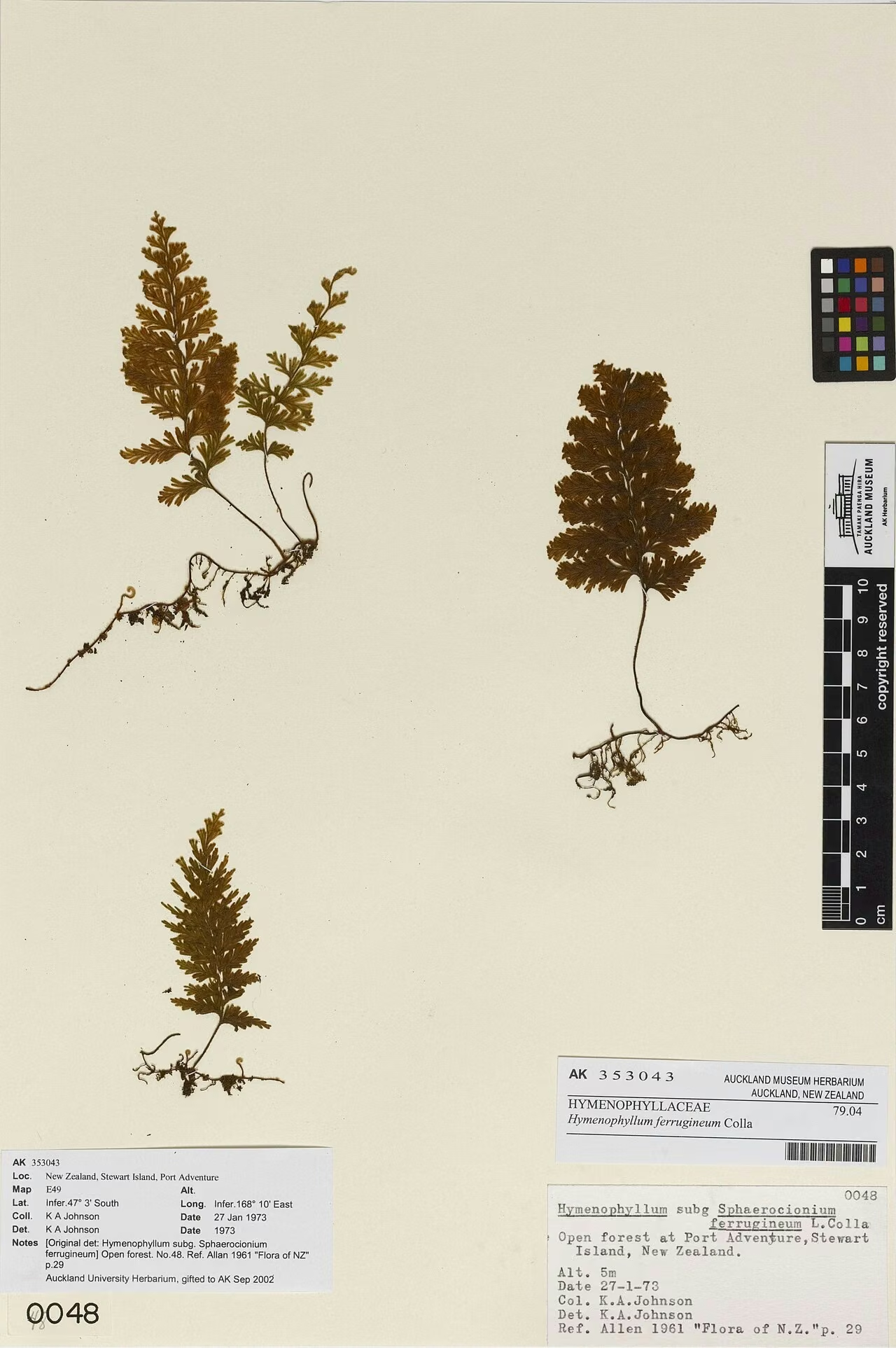
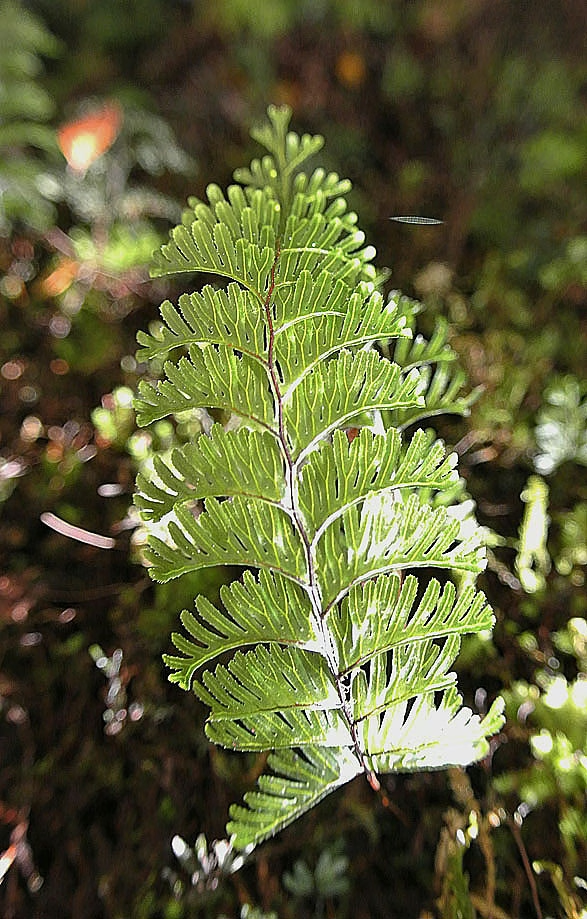
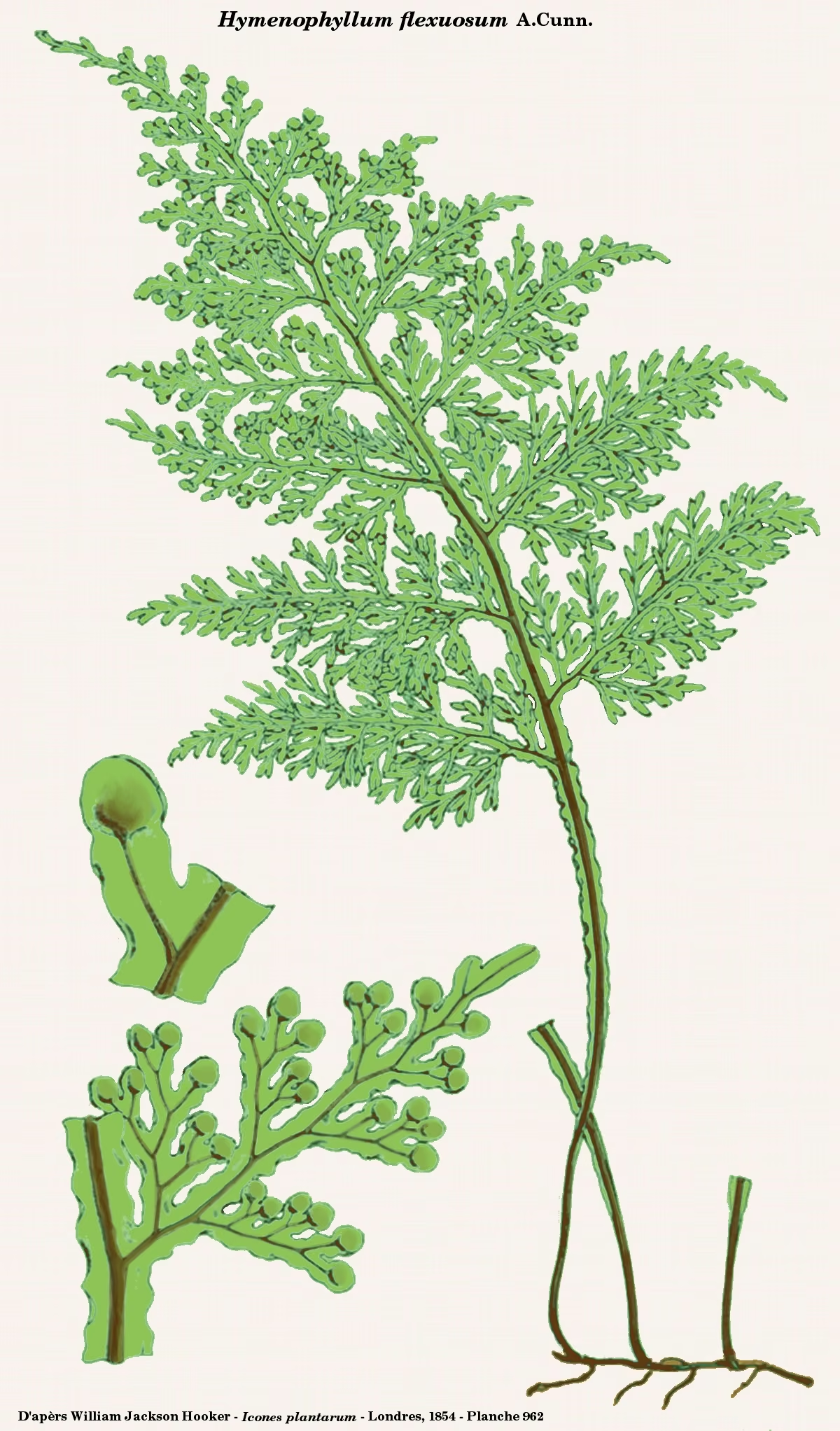
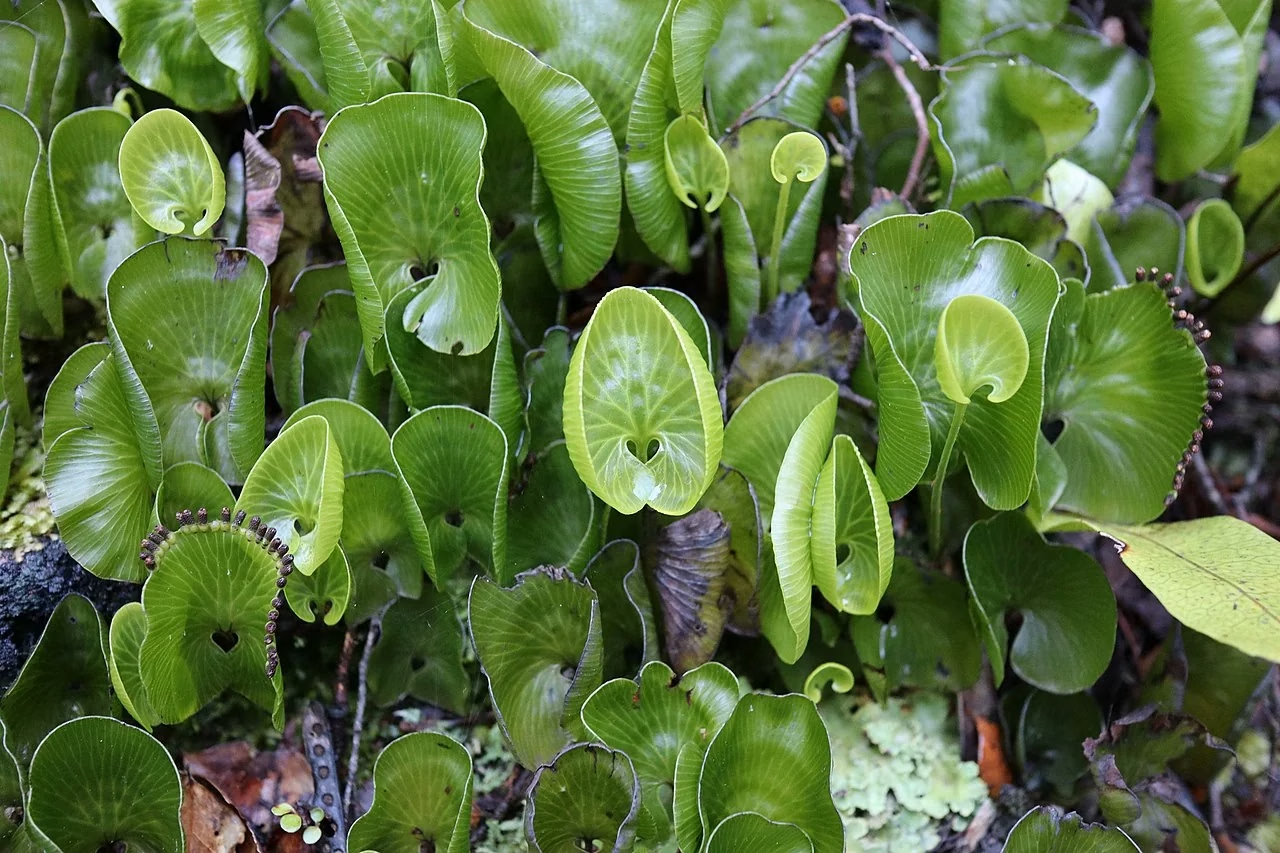
These filmy ferns belong to the same family, Hymenophyllaceae, as bristle fern.
Conservation
The 2023 national assessment lists Polyphlebium endlicherianum as Not Threatened. It is indigenous but not endemic, with occurrences beyond New Zealand; Flora notes that relationships between some Pacific populations need further investigation.
Frequently asked questions
Why is this fern easily overlooked?
Its small fronds often grow in deeply shaded streamside crevices and overhangs, where a carpet can be difficult to see.
Does the leaf stalk have a wing?
Yes. A narrow wing extends nearly to the stalk's base, and the frond's central axis is winged too.
Is it usually a tree-trunk epiphyte?
No. The account describes it as mainly terrestrial on shaded rocky surfaces, with epiphytic growth recorded only rarely.
Sources
Identification, habitat, range and naming: Flora of New Zealand: Trichomanes endlicherianum.
National conservation assessment: Conservation status of vascular plants in Aotearoa New Zealand, 2023.
Last updated: