Filmy Fern
Hymenophyllum flexuosum
Last updated:
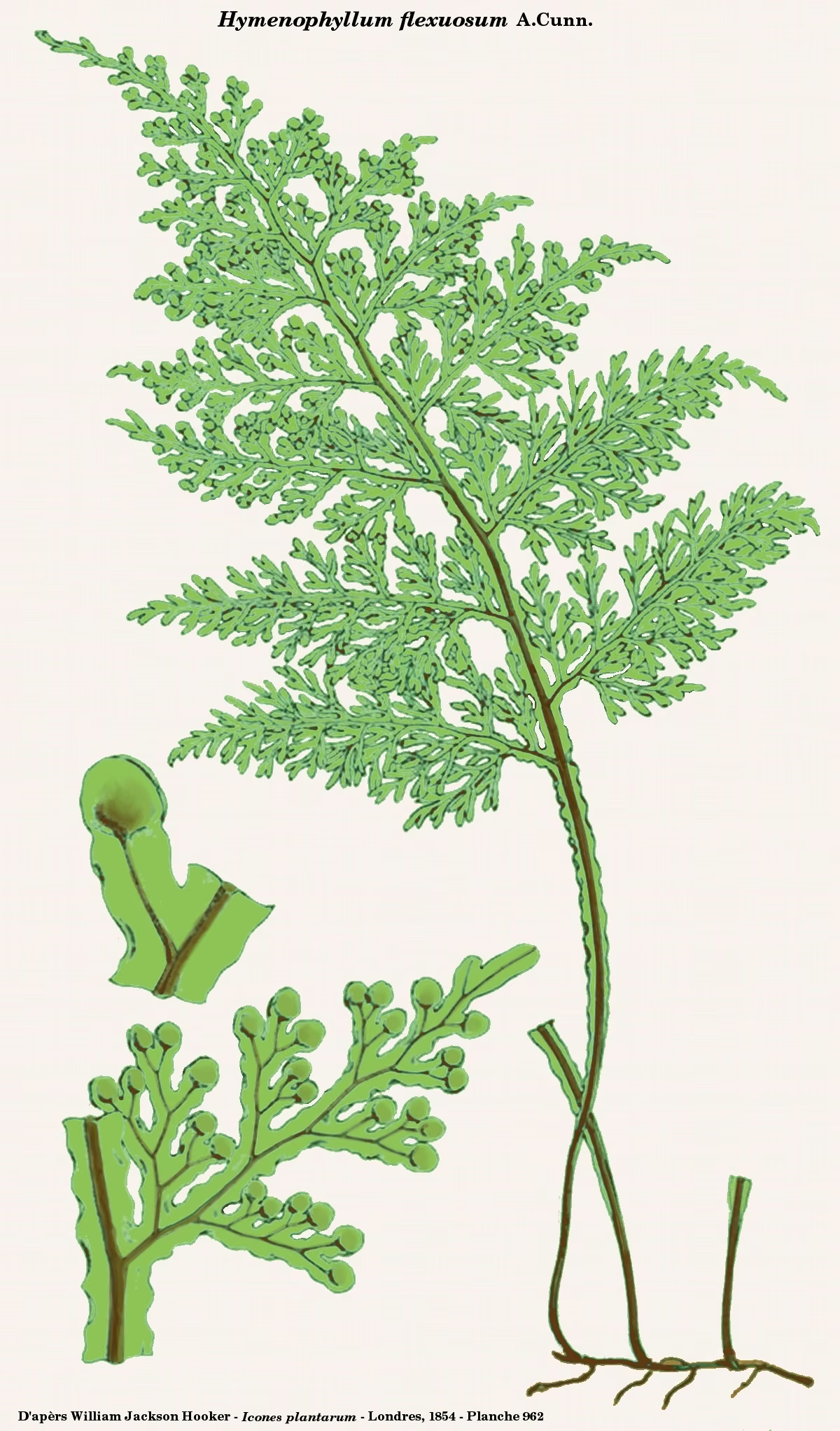
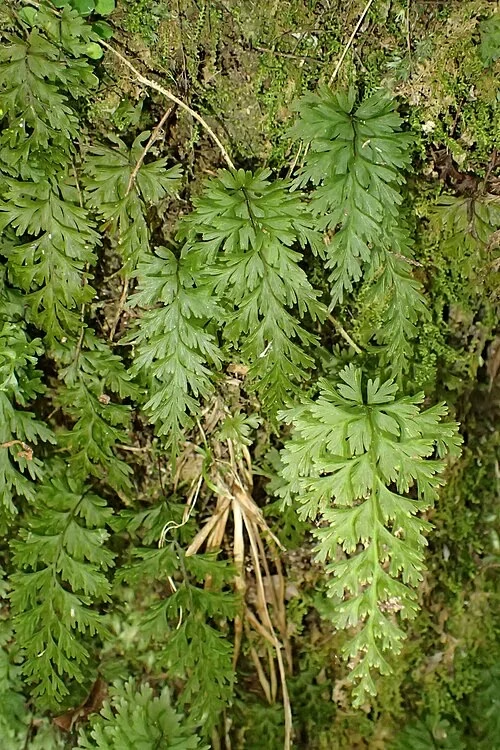
Hymenophyllum flexuosum is an endemic filmy fern with bright to yellow-green, finely divided fronds 7-39 cm long. Its best feature is the broad, wavy, crinkled wing running down the stipe and rachis, which gives the frond a ruffled look. It forms diffuse patches on damp banks, boulders, roots and rotting logs, or low on tree trunks, in coastal to montane forest from the Maungataniwha Range in Northland to Fiordland and the Chatham Islands, up to 975 m. It is locally common, especially in riparian forest, and ranked Not Threatened. Explore more native ferns in our native plant guide.
Plant Description
Hymenophyllum flexuosum is a terrestrial or low epiphytic filmy fern with long-creeping, thin, brittle rhizomes that bear widely spaced fronds. The hairless stipes are 30-110 mm long and slender, and both stipe and rachis carry a prominent broad wing that is wavy, undulating and crisped, running almost to the stipe base.
The blades are ovate, three to five times divided, with 9-17 pairs of primary pinnae, bright to yellow-green and hairless, about 60-300 mm long and 30-140 mm wide. The ultimate segments are oblong, up to 5 mm long and 0.6-1.3 mm wide, with smooth margins. Sori terminate the segments, solitary or paired and not sunken, and the indusial flaps have smooth margins.
H. pluviatile is the most similar species, but it has smaller blades and narrower stipe wings. H. australe is superficially alike but has dark green to black-green, strongly triangular fronds and grows on rock in flowing water. H. dilatatum has a flat, not crinkled, wing and much broader segments.
Quick Facts
| Scientific Name | Hymenophyllum flexuosum |
|---|---|
| Height | Fronds 7-39 cm long |
| Spread | Diffuse patches on long-creeping rhizomes |
| Water Needs | Moist, humid sites, often near streams |
| Light | Shade |
| Frost Tolerance | Moderate; recorded to 975 m |
| Salt Tolerance | Low |
| Growth Rate | Slow |
| Lifespan | Perennial |
Climate Best Suited to
It suits mild, humid lowland to montane forest climates and is most common in wetter districts; it is scarce in drier eastern areas.
Regional Suitability
| City | Climate Suitability |
|---|---|
| Auckland | Medium |
| Wellington | Low |
| Christchurch | Low |
| Dunedin | Low |
Plant Habitat
Hymenophyllum flexuosum is endemic. It occurs through most of the North Island from the Maungataniwha Range south, in the South Island from the Marlborough Sounds to Fiordland, and on the Chatham Islands. It ranges from sea level to 975 m, the highest record being on Mt Pihanga near Taupō.
It is locally common in closed coastal to montane forest, in podocarp, beech and broadleaved forest and under mature kānuka. It grows in damp hollows, on rocks and boulders along waterways, on banks and shaded rubble slopes, on rotten logs and tree roots, and as a low epiphyte on trunks such as Cyathea dealbata and Metrosideros. In riparian forest it is often found on the buttress roots of pukatea and maire tawake.
Growing Requirements
Soil Requirements
When terrestrial it roots into moist humus, moss and rotting wood; it does not need deep mineral soil.
- Damp, humus-rich banks and hollows
- Rotting logs and tree roots
- Mossy boulders beside streams
Light Requirements
It is a fern of closed forest, growing in shade under the canopy.
- Shade
- No direct sun
- Sheltered riparian forest
Water Requirements
It needs constantly humid air and moist ground, which is why it is so often found near streams and in damp hollows.
- High humidity
- Moist but not waterlogged substrate
- Curls up in dry weather and recovers after rain
Planting and Establishing
NZPCN says it is difficult to grow and should not be removed from the wild. It is not sold commercially and is not suited to ordinary gardens.
Where it already grows on a property, the best approach is to protect the shaded streamside forest, retain fallen logs and keep stock out.
Ecological Role
Hymenophyllum flexuosum contributes to the low fern and moss layer of damp forest floors and stream banks. Its patches help bind humus on banks and logs.
It reproduces by minute wind-dispersed spores and spreads vegetatively along its creeping rhizomes. Its association with buttress roots of swamp-tolerant trees such as pukatea and maire tawake makes it a feature of lowland riparian forest.
Uses & Significance
Garden Uses
It is not grown in gardens, but it may persist in native bush remnants on rural or lifestyle properties.
- Bush remnant interest
- Indicator of damp, shaded forest
- Attractive ruffled fronds for photography
Ecological Value
As a common endemic of damp forest it adds diversity to the ground layer.
- Endemic filmy fern
- Groundcover on banks and logs
- Part of riparian forest plant communities
Landscaping Uses
It is not used in landscaping. Retaining logs, mossy banks and canopy shade in native bush remnants is the best way to keep it.
Riparian restoration plantings that rebuild closed canopy along streams may eventually create suitable conditions for it to colonise naturally.
Seasonal Care Calendar
Spring
New fronds unroll in the moist spring forest.
- Wings on new stipes are clearly crinkled
- Good time to compare with H. pluviatile
Summer
Fronds may shrivel temporarily in dry spells.
- Look for sori at segment tips
- Avoid trampling streamside patches
Autumn
Rain revives fronds and spores are released.
- Note host roots and logs when recording
- Fronds look fresh again
Winter
Persists in cool, wet forest conditions.
- No action needed
- Patches remain green under canopy
When to Prune and How Much
No pruning is needed. Dead fronds break down in place and add to the humus layer.
Avoid clearing logs or tidying banks in bush where it grows.
How to Grow Filmy Fern
NZPCN describes Hymenophyllum flexuosum as difficult to propagate and states that it should not be removed from the wild. It is not available commercially and no tested propagation protocol for it was found. The methods below summarise the general techniques used for filmy ferns, and are suitable only for material already held in legal cultivation or salvaged with permission. Its brittle rhizomes break easily, so any handling should keep the plant on its substrate. A sealed, shaded and constantly humid environment is essential, since the fronds dry out within minutes in open air.
By Division of Rhizomes
Division of the creeping rhizome is the most practical approach, keeping each piece attached to a patch of moss or rotting wood.
Because it often grows on rotting logs near streams, a small section of log carrying the fern, kept damp and shaded, can be easier to maintain than a bare rhizome cutting.
- Cut a rhizome section with several fronds from a cultivated plant
- Keep it on its moss or rotting-wood base
- Set it on moist humus in a closed terrarium
- Mist with rainwater so it never dries
- Keep in shade and cool conditions until new fronds unroll
From Spores
Filmy fern spores are green and short-lived. No successful spore raising of this species is documented.
Sow thinly so that any gametophytes that do develop have room, and avoid opening the container more than necessary.
- Collect a fertile frond with mature sori
- Sow spores immediately on sterile, moist sphagnum
- Seal and keep cool and shaded
- Maintain saturation for many months while gametophytes develop
Pests & Diseases
No pests or diseases are recorded for this fern. Drying out and physical disturbance are the main risks.
In the wild, stock trampling of stream banks, clearance of riparian forest and canopy loss from browsing animals degrade its habitat.
Cultural Significance
No Māori name or traditional use specific to this species was found in the sources consulted.
The epithet flexuosum comes from the Latin flexuosus, meaning wavy or bending, a reference to the flexuous wing on the stipe and rachis. Its author citation, (A.Cunn.) Copel., records that it was first described by Allan Cunningham and later recombined by Edwin Copeland; it has also been treated as a variety of H. australe.
Bonus Tip
Run a fingertip gently down the stalk of a filmy fern on a stream bank: if the green wing along it is broad and ruffled like a crinkled ribbon rather than flat, you are most likely looking at H. flexuosum.
Related Plants
Explore other native plants that share similar characteristics or habitats with Filmy Fern (Hymenophyllum flexuosum), offering further insights into New Zealand's diverse flora. These related species provide context and opportunities for complementary planting in your garden.
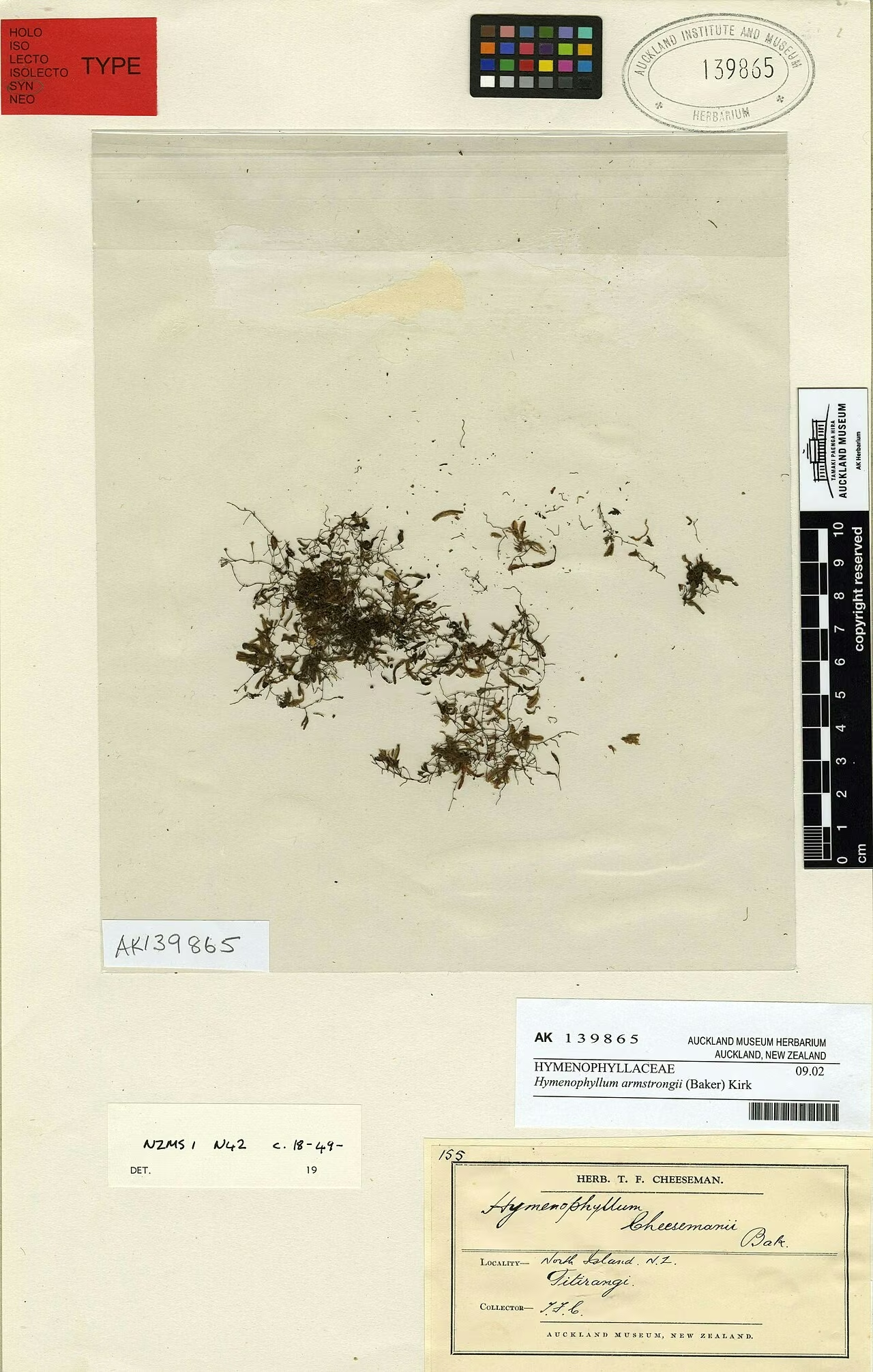
Hymenophyllum armstrongii
Hymenophyllum armstrongii
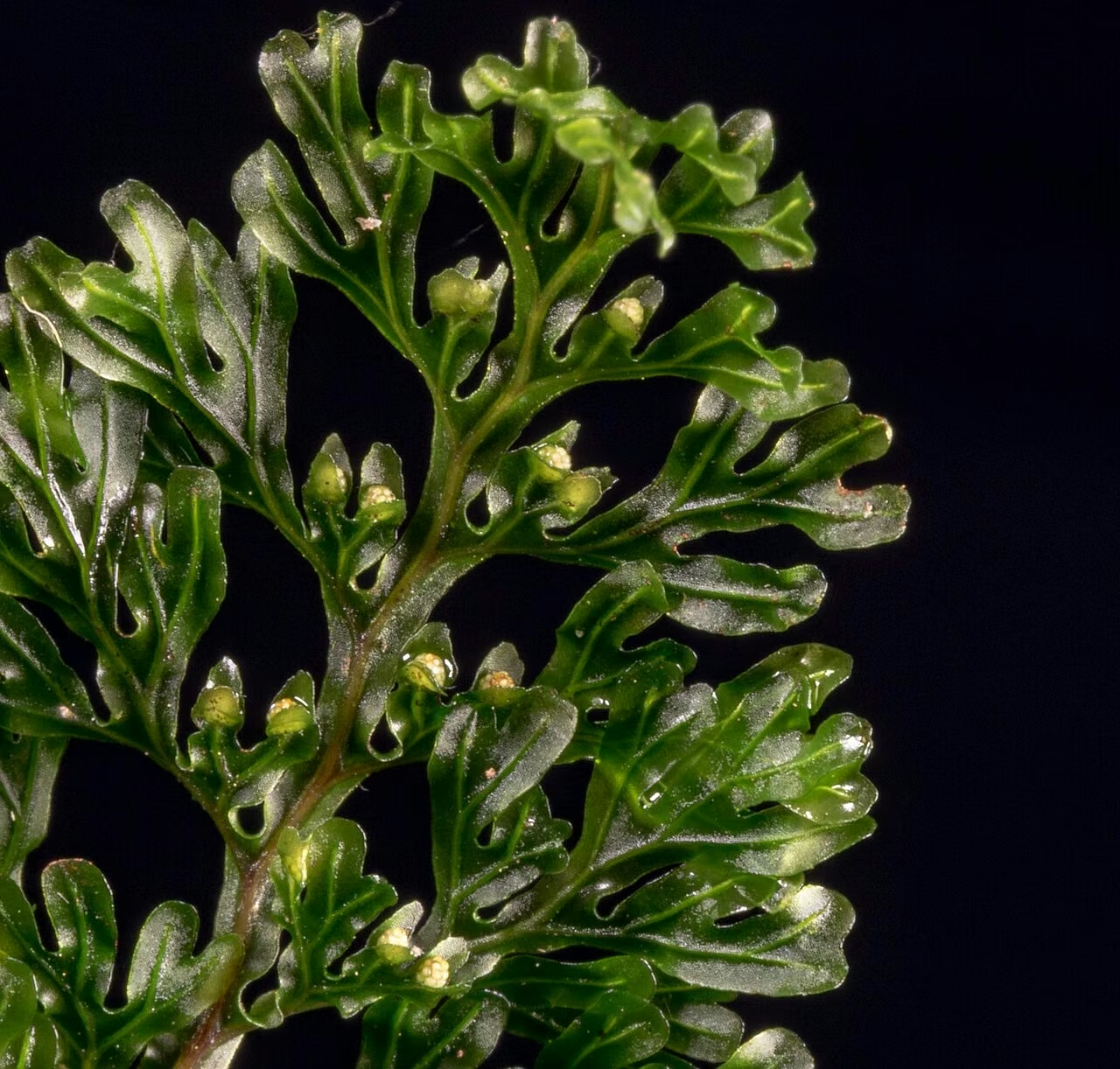
Hymenophyllum australe
Hymenophyllum australe
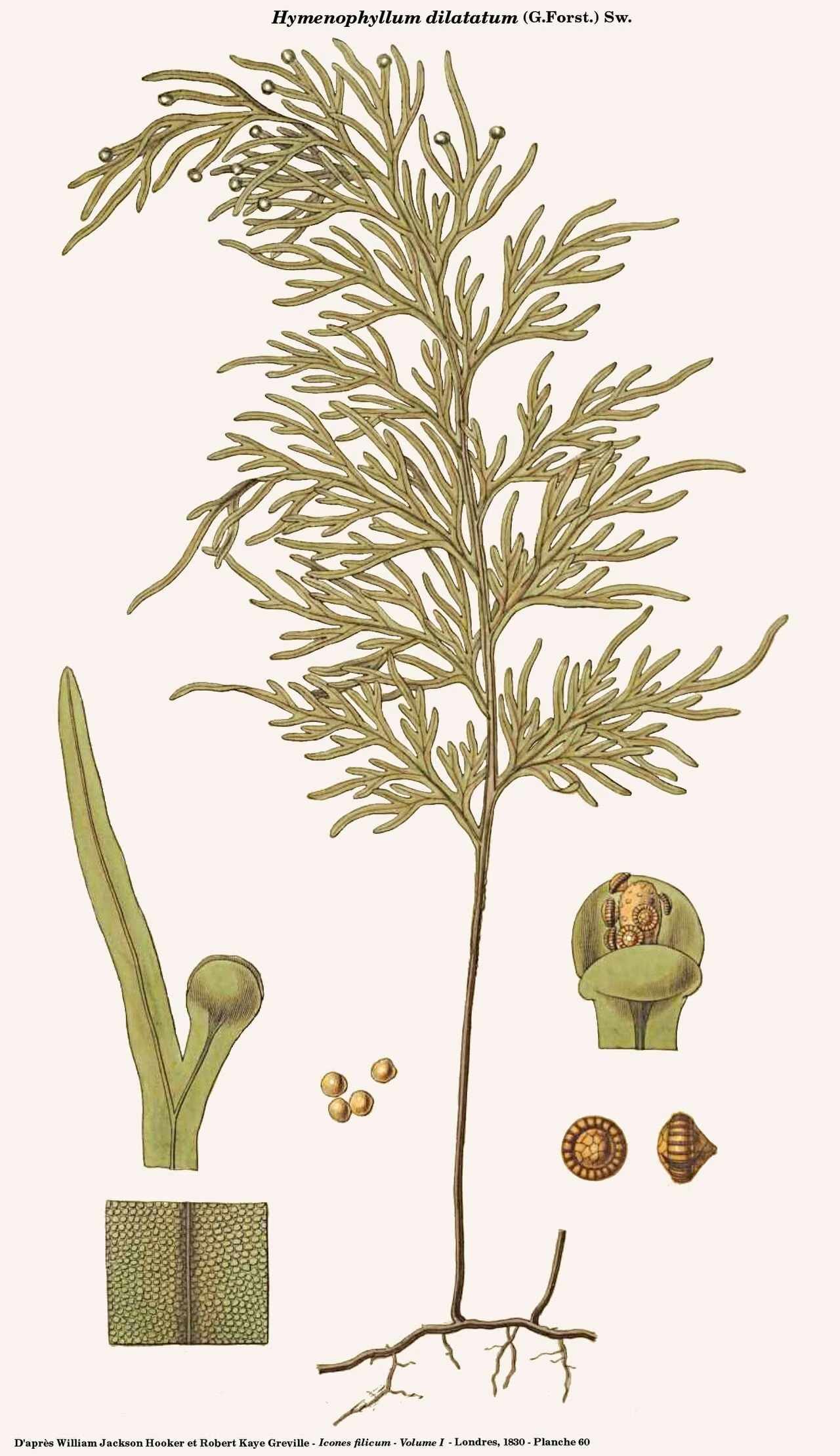
Matua Mauku
Hymenophyllum dilatatum
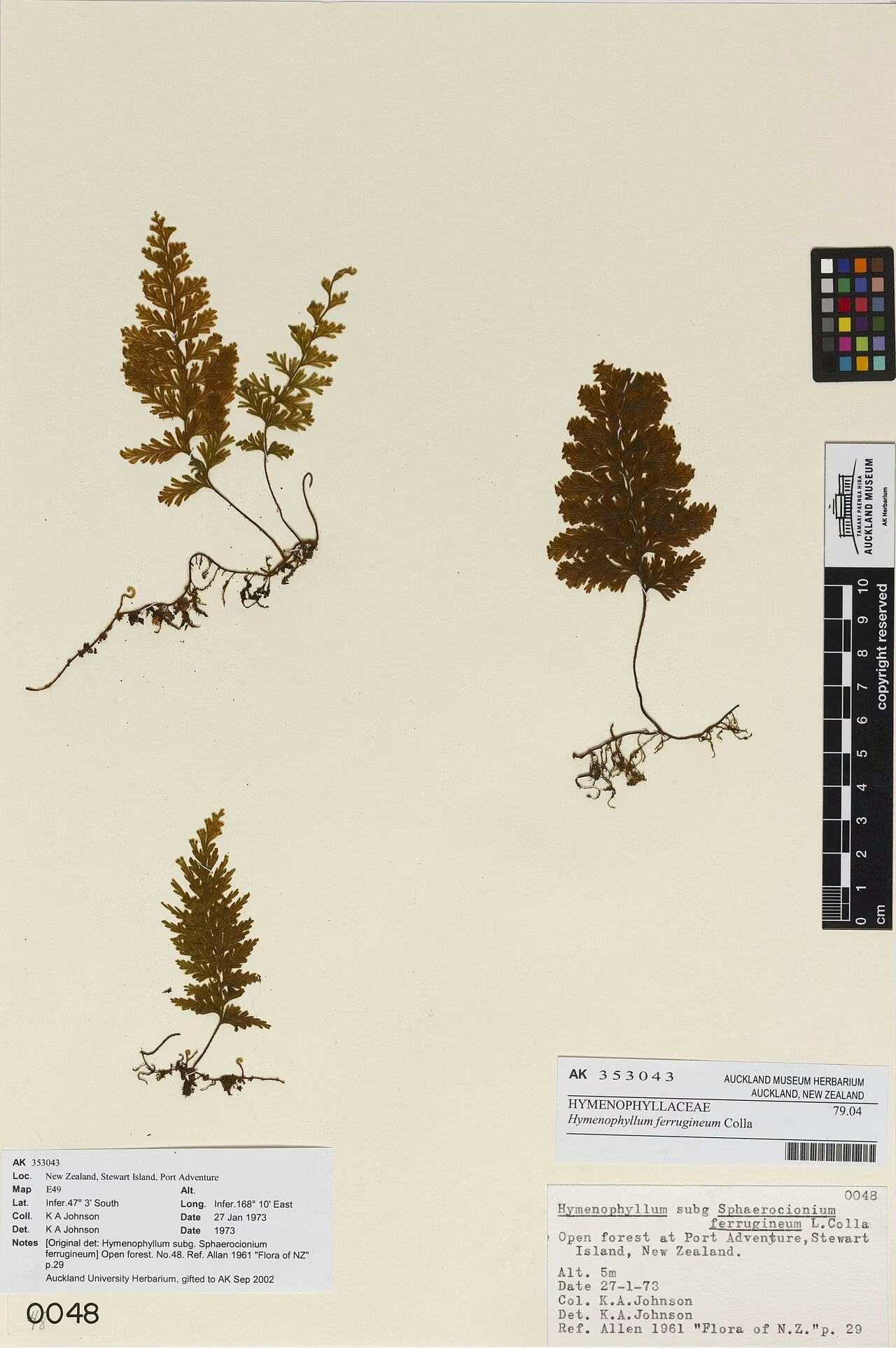
Rusty Filmy Fern
Hymenophyllum frankliniae
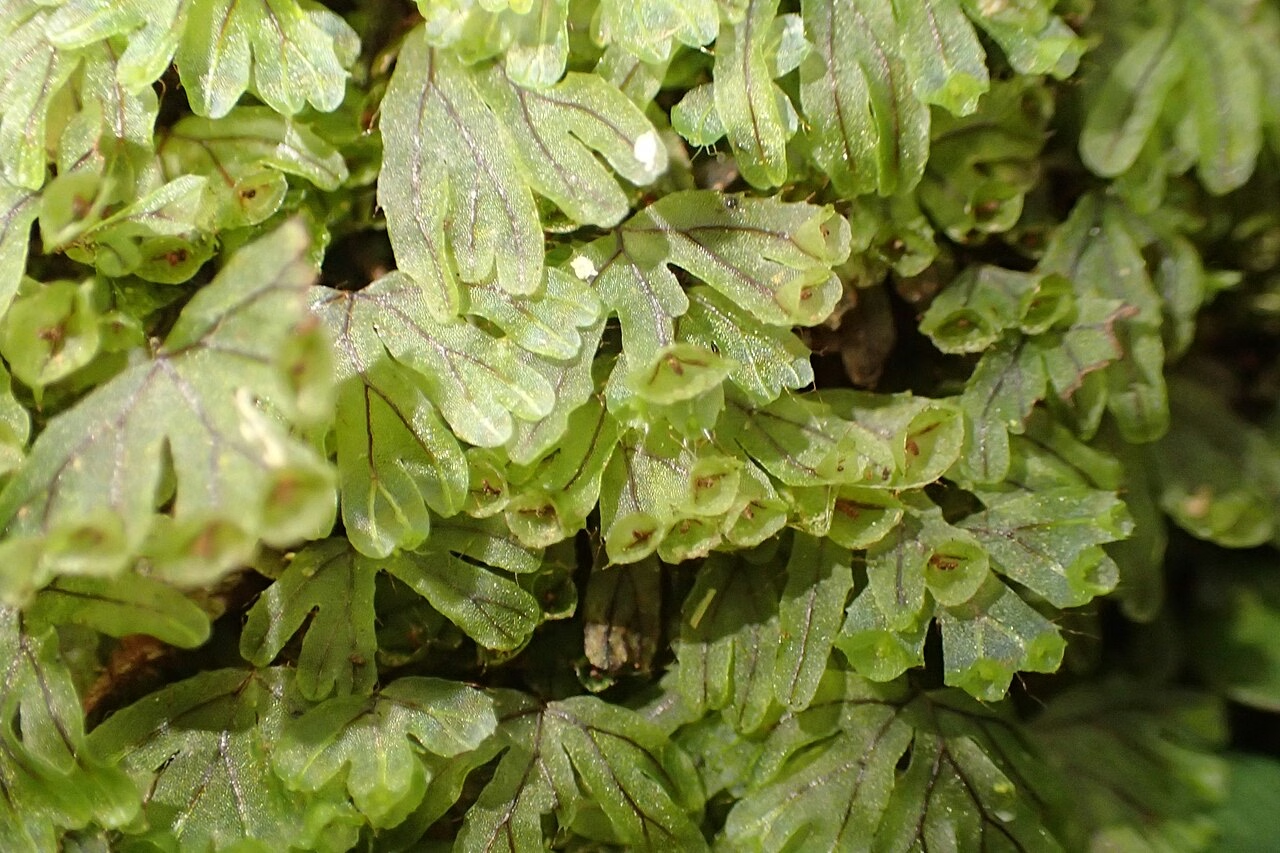
Hymenophyllum lyallii
Hymenophyllum lyallii
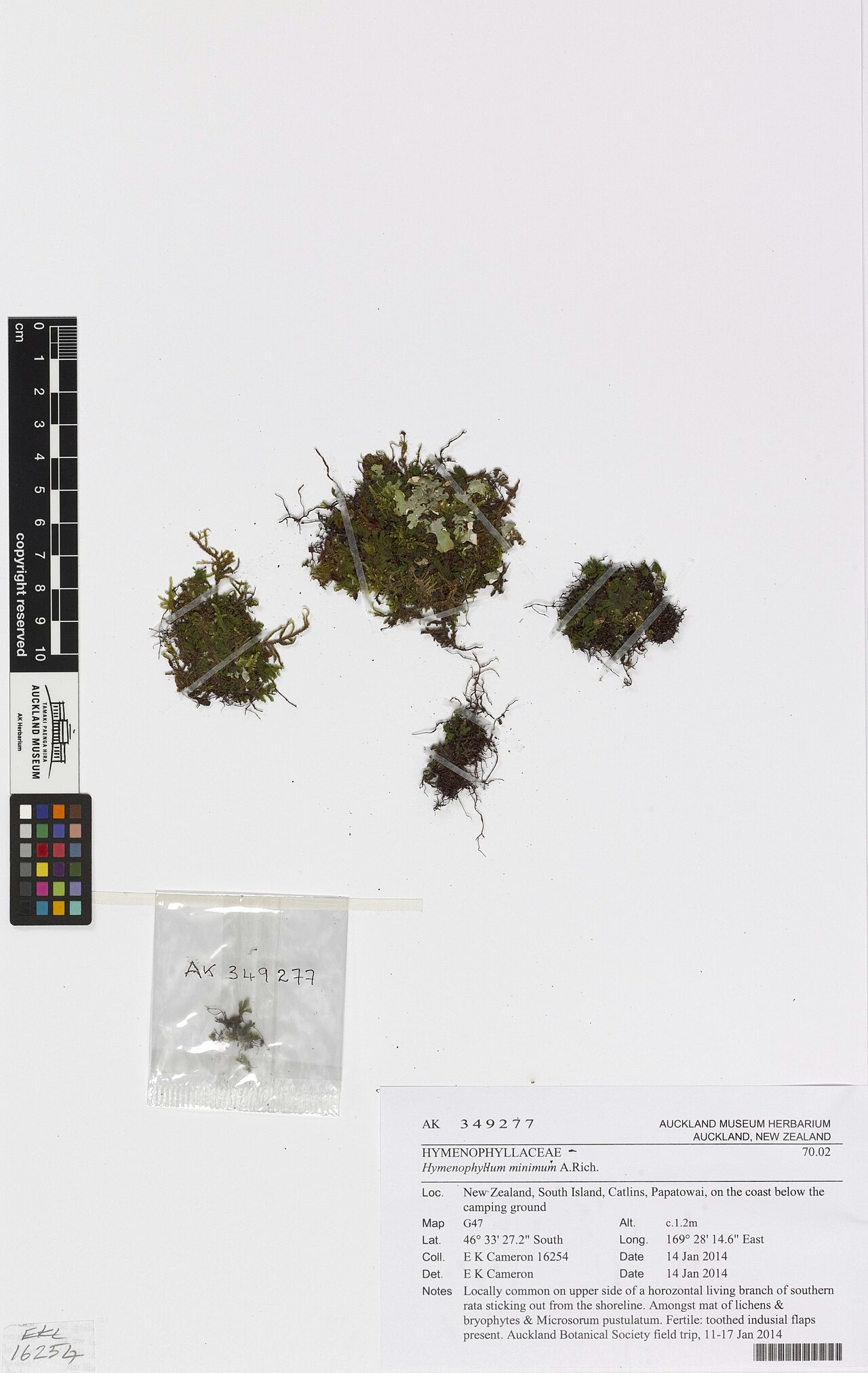
Hymenophyllum minimum
Hymenophyllum minimum
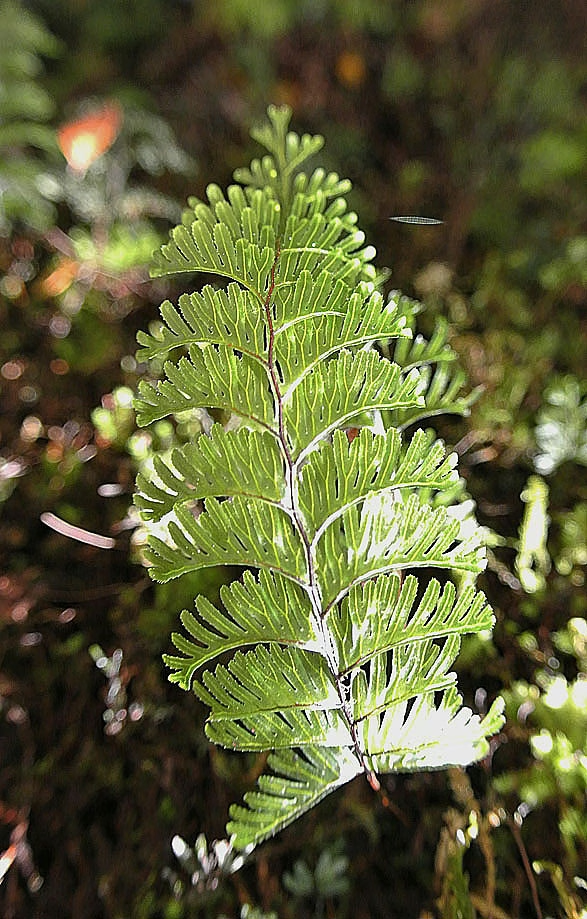
One-Sided Filmy Fern
Hymenophyllum peltatum
Drooping Filmy Fern
Drooping Filmy Fern
Plant Conservation
Hymenophyllum flexuosum is ranked Not Threatened (2023) and has held that rank since 2004. Regionally it is Not Threatened in Northland and Auckland, but Regionally Naturally Uncommon in Otago and Wellington.
Protecting riparian and lowland forest, fencing streams from stock and controlling browsing animals help keep the shaded, damp conditions it depends on.
Frequently Asked Questions
How do you recognise Hymenophyllum flexuosum?
Look for light yellow-green, crinkly filmy fronds four to five times divided, with a broad, wavy, crisped wing running along the stipe, rachis and primary pinnae.
What is the difference between Hymenophyllum flexuosum and Hymenophyllum pluviatile?
They are easily confused where they overlap, but H. flexuosum has lighter green, consistently crinkly fronds, larger blades and a broader, prominently crinkled stipe wing.
Where does Hymenophyllum flexuosum grow?
It grows in podocarp, beech and broadleaved forest and under mature kānuka, on damp banks, boulders, rotting logs and tree roots, often near streams, from sea level to 975 m.
Does Hymenophyllum flexuosum grow on trees?
Sometimes. It is mostly terrestrial, but it can grow low on trunks, and NZPCN notes it often grows on the buttress roots of pukatea and maire tawake in riparian forest.
Sources and Further Reading
The botanical, growing, and conservation details for Filmy Fern (Hymenophyllum flexuosum) on this page draw on the New Zealand plant references below. Consult them for full technical records and the latest distribution data.