One-Sided Filmy Fern
Hymenophyllum peltatum
Last updated:
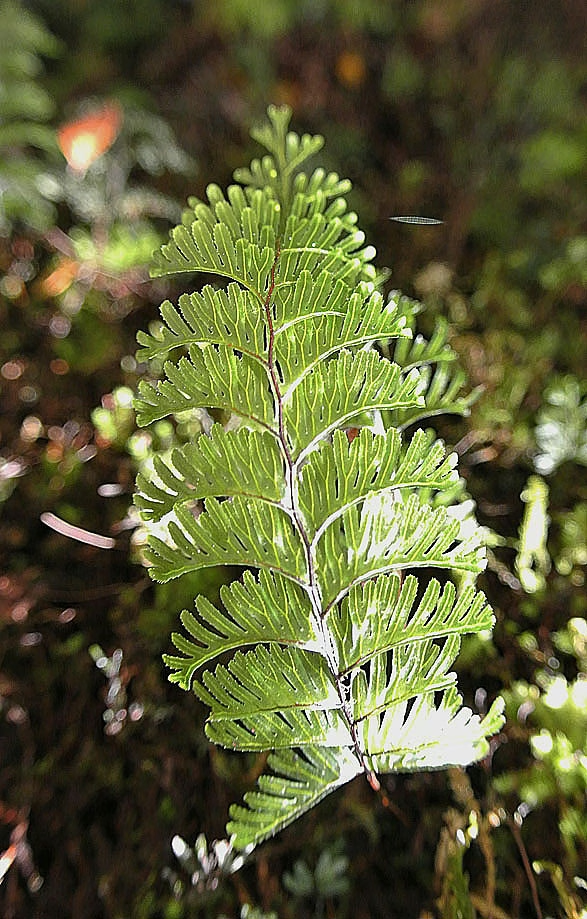
One-sided filmy fern (Hymenophyllum peltatum) is a small filmy fern whose dark green, often red-tinged fronds, 2-14 cm long, carry their narrow toothed segments only on the upper side of each pinna, giving the frond a one-sided look. It forms thick patches on mossy logs, hummocks, rocks and tree trunks in beech, podocarp and kāmahi forest and subalpine scrub, from 150 m to 1700 m on Aoraki/Mt Cook. It grows from Mt Pirongia and Mt Te Aroha south to Stewart Island and Macquarie Island, and also in Australia. It is ranked Not Threatened. Explore more native ferns in our native plant guide.
Plant Description
Hymenophyllum peltatum is a terrestrial or epiphytic filmy fern forming thick patches of slender, thread-like, long-creeping and much-branched interwoven rhizomes. The fronds are dark green and often tinged red. The stipes are 3-30 mm long, thin, hairless, dark brown and unwinged, but the rachis is narrowly winged throughout.
The hairless blades are elliptic to narrowly ovate, 20-100 mm long and 10-25 mm wide, twice (rarely three times) divided, with 6-15 pairs of primary pinnae. The ultimate segments are linear, 3-6 mm long and 0.5-1 mm wide, toothed, and arise only on the upper side of each pinna. One to three (rarely up to five) sori sit on short branches of each primary pinna; the involucre is ovate to almost round, usually broader than the segment, with entire or rarely finely crenate flaps.
It most resembles H. revolutum, which has toothed indusial flaps and segments on both sides of the pinnae. H. cupressiforme also differs in its toothed flaps, and the subantarctic H. falklandicum is smaller with a single sorus at the frond tip.
Quick Facts
| Scientific Name | Hymenophyllum peltatum |
|---|---|
| Height | Fronds 2-14 cm long |
| Spread | Thick patches on interwoven rhizomes |
| Water Needs | Constantly moist and humid |
| Light | Shade to filtered light |
| Frost Tolerance | High; recorded to 1700 m |
| Salt Tolerance | Low |
| Growth Rate | Slow |
| Lifespan | Perennial |
Climate Best Suited to
It suits cool, wet montane and subalpine climates and is confined to higher altitudes in the North Island; it is very frost hardy.
Regional Suitability
| City | Climate Suitability |
|---|---|
| Auckland | Low |
| Wellington | Low |
| Christchurch | Low |
| Dunedin | Low |
Plant Habitat
In the North Island it occurs from Mt Pirongia and Mt Te Aroha southward, confined to montane and subalpine zones, for example about 450 m in the Ruahine and Kaweka Ranges and up to 1500 m on Mt Taranaki. It is widespread in the South Island, reaching 1700 m on Aoraki/Mt Cook, and also grows on Solander Island, Stewart Island/Rakiura and Macquarie Island, as well as in Australia. The overall altitudinal range is about 150-1700 m.
It grows in lowland to montane, rarely subalpine, forest and scrub, especially beech, podocarp and Weinmannia forest, terrestrially on mossy logs, hummocks and rocks or as an epiphyte. Recorded hosts include Dracophyllum traversii, kōtukutuku (Fuchsia excorticata), pāhautea (Libocedrus bidwillii), silver beech (Lophozonia menziesii), southern rātā (Metrosideros umbellata) and Olearia colensoi, but not tree ferns.
Growing Requirements
Soil Requirements
It needs no deep soil, rooting through moss on logs, hummocks, rock and bark.
- Moss-covered logs and hummocks
- Mossy rocks
- Bark of beech, rātā and other trees
Light Requirements
It grows in the shade and filtered light of montane forest and subalpine scrub.
- Shade to filtered light
- Sheltered from direct sun and wind
- Forest floor to low trunks
Water Requirements
It depends on the cool, constantly moist conditions of high-rainfall montane forest.
- High humidity
- Frequent rain and cloud
- Moist moss substrate
Planting and Establishing
NZPCN says it is difficult to grow and should not be removed from the wild. It is not commercially available and is not a garden plant.
Protecting montane beech and podocarp forest, where it forms patches on mossy logs and trunks, is the best way to support it.
Ecological Role
One-sided filmy fern is part of the dense moss and filmy fern carpet of wet montane forest floors and logs, where these mats store water and shelter invertebrates.
It reproduces by minute wind-dispersed spores and spreads by its interwoven rhizomes. Its wide range, extending to Macquarie Island and Australia, reflects effective long-distance spore dispersal.
Uses & Significance
Garden Uses
It has no practical garden use and is best enjoyed on montane and subalpine walks.
- Feature of mossy beech forest
- Red-tinged fronds for photography
- Identification interest among filmy ferns
Ecological Value
It contributes to the ground and low-trunk epiphyte layer of cool, wet forest.
- Indigenous, shared with Australia
- Part of moisture-holding moss mats
- Reaches subalpine scrub to 1700 m
Landscaping Uses
It is not used in landscaping. Leaving fallen logs and mossy hummocks in place in montane forest preserves its habitat.
On high-country properties with forest remnants, keeping stock out and retaining canopy cover help maintain the moist conditions it needs.
Seasonal Care Calendar
Spring
Fronds are fully hydrated after snowmelt and spring rain.
- Red tints are often visible
- Good time to examine one-sided pinnae
Summer
The main growing season in montane forest.
- Look for rounded sori on the pinnae
- Avoid trampling mossy logs
Autumn
Spores are shed as conditions cool.
- Record host trees and altitude
- Fronds remain green
Winter
Persists under snow and frost at higher altitudes.
- No action needed
- Very frost hardy
When to Prune and How Much
No pruning is required. Leave patches undisturbed on their logs and trunks.
Do not remove mossy logs from forest areas where it grows.
How to Grow One-Sided Filmy Fern
NZPCN states that Hymenophyllum peltatum is difficult to propagate and should not be removed from the wild, and it is not commercially available. No propagation method specific to this species was found. The notes below outline general filmy fern techniques that would apply only to material already in legal cultivation. Because it is a montane to subalpine plant, it would need cool conditions as well as constant humidity, which makes it especially hard to keep in warm lowland districts. A cool, shaded, sealed terrarium with a moss and rotting wood base would be the minimum requirement.
By Division of Rhizome Patches
Its thick patches of interwoven rhizomes can be separated into small clumps kept together with their moss.
Pieces that come away on fallen mossy logs in the forest are best left where they lie, in shade, rather than taken home.
- Take a small clump with rhizomes and fronds from a cultivated plant
- Keep it bedded in its moss
- Set it on moist moss over rotting wood in a terrarium
- Mist with cool rainwater and keep sealed
- Keep shaded and as cool as possible until new fronds appear
From Spores
Filmy fern spores are short-lived and must be sown fresh. No success with this species is documented.
Keep the sowing container in a cool spot such as a shaded south-facing windowsill, away from heat sources.
- Collect a frond with mature sori
- Sow immediately on sterile, moist sphagnum
- Seal and keep cool and shaded
- Keep saturated for many months while waiting for growth
Pests & Diseases
No pests or diseases are recorded for this fern.
In the wild, browsing by deer, goats and possums that opens up the forest understorey, and canopy loss from storms or clearance, can dry out the moss layer it depends on.
Cultural Significance
No Māori name or traditional use specific to this species was found in the sources consulted.
The epithet peltatum comes from the Latin peltatus, shield-shaped or attached by the centre, referring to the way the indusia are attached to the pinnae. Its former name H. unilaterale described the one-sided arrangement of its segments. Its chromosome number, 2n = 52, differs from the 2n = 72 found in many other New Zealand Hymenophyllum species.
Bonus Tip
To pick this fern from similar small filmy ferns in beech forest, turn a frond over and look at one pinna: if all the little segments rise from its upper edge and none from the lower edge, and the indusial flaps are smooth rather than toothed, it is H. peltatum.
Related Plants
Explore other native plants that share similar characteristics or habitats with One-Sided Filmy Fern (Hymenophyllum peltatum), offering further insights into New Zealand's diverse flora. These related species provide context and opportunities for complementary planting in your garden.
Hymenophyllum flexuosum
Hymenophyllum flexuosum
Rusty Filmy Fern
Hymenophyllum frankliniae
Hymenophyllum lyallii
Hymenophyllum lyallii
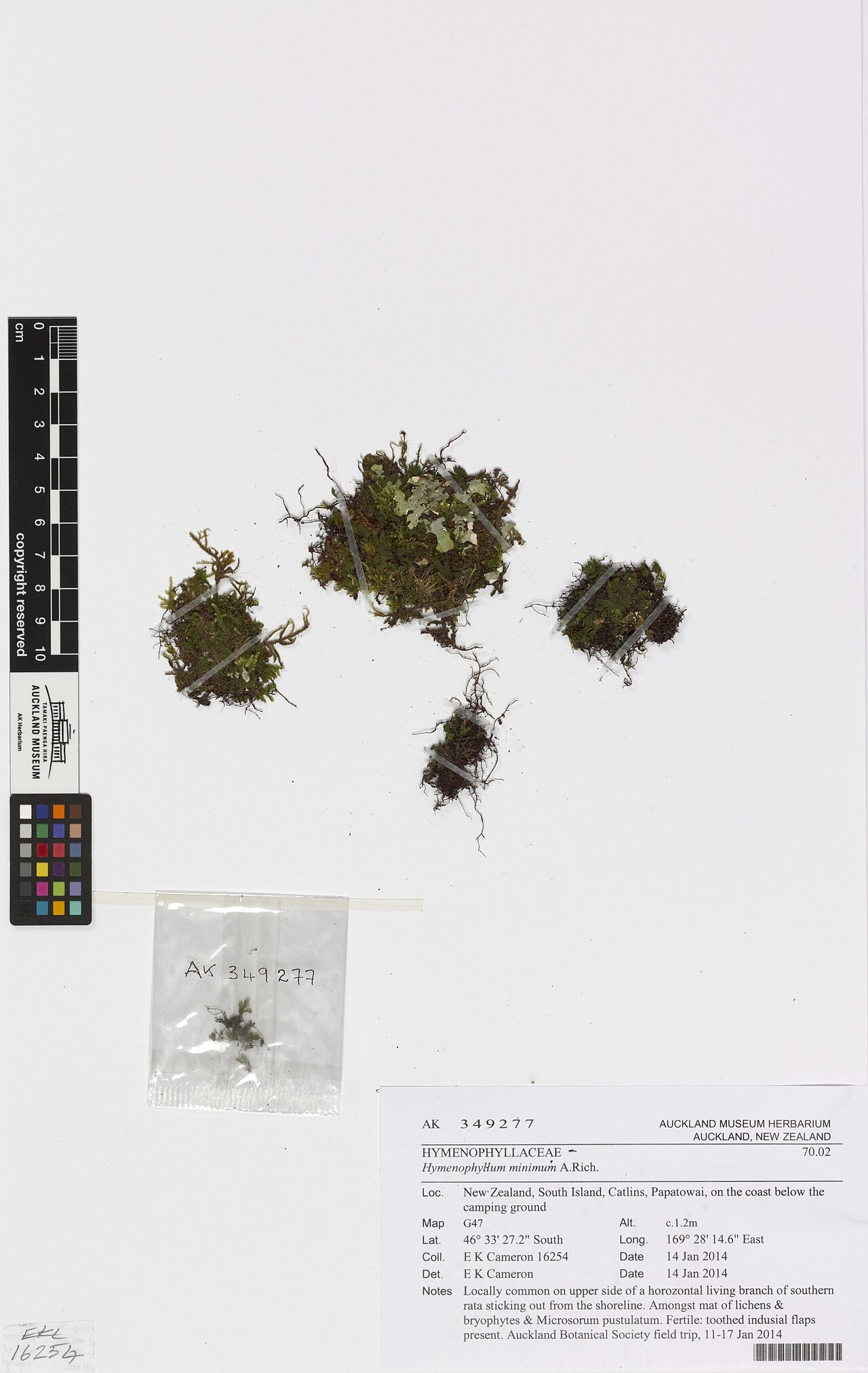
Hymenophyllum minimum
Hymenophyllum minimum
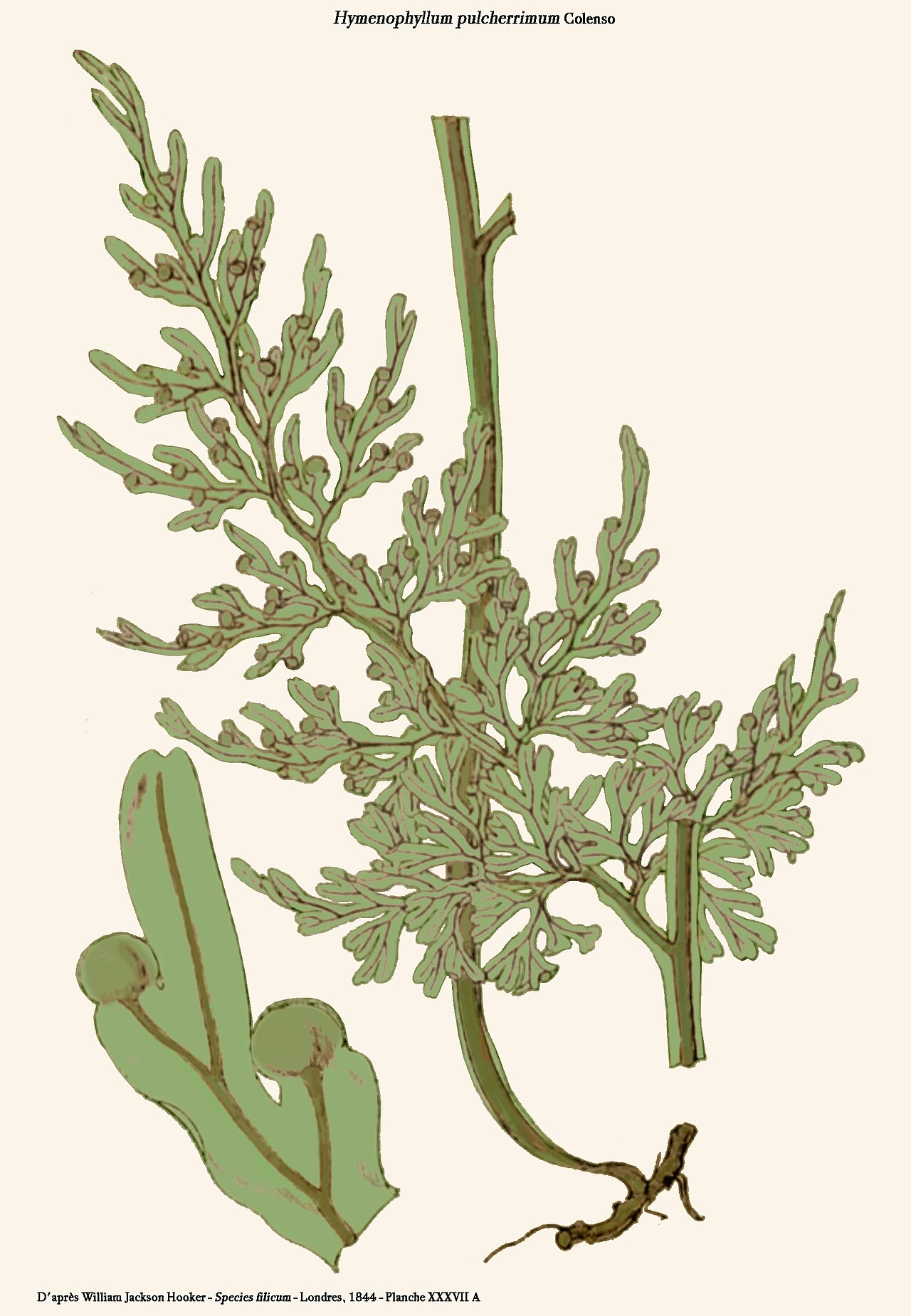
Tufted Filmy Fern
Hymenophyllum pulcherrimum
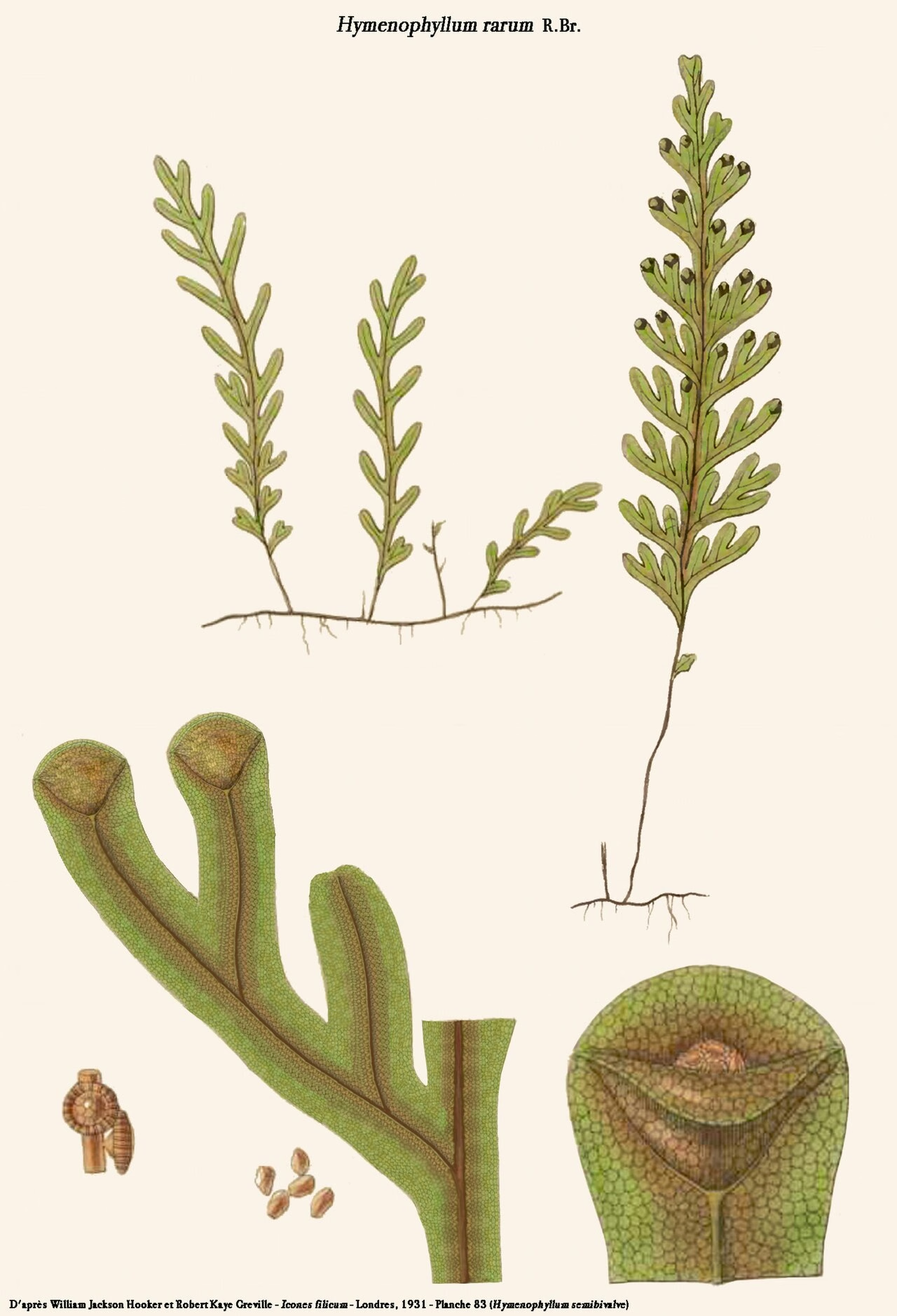
Hymenophyllum rarum
Hymenophyllum rarum
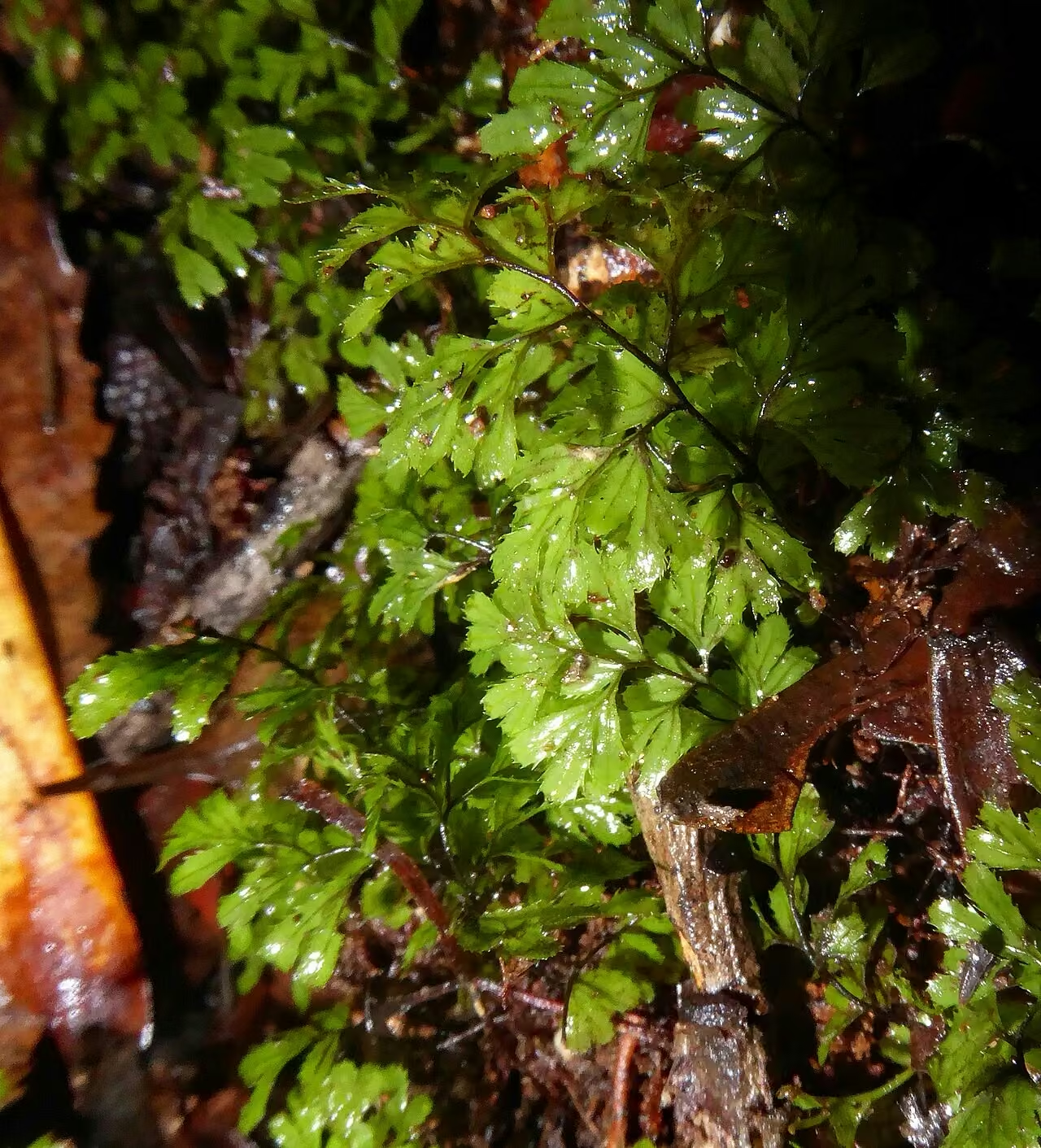
Hymenophyllum revolutum
Hymenophyllum revolutum
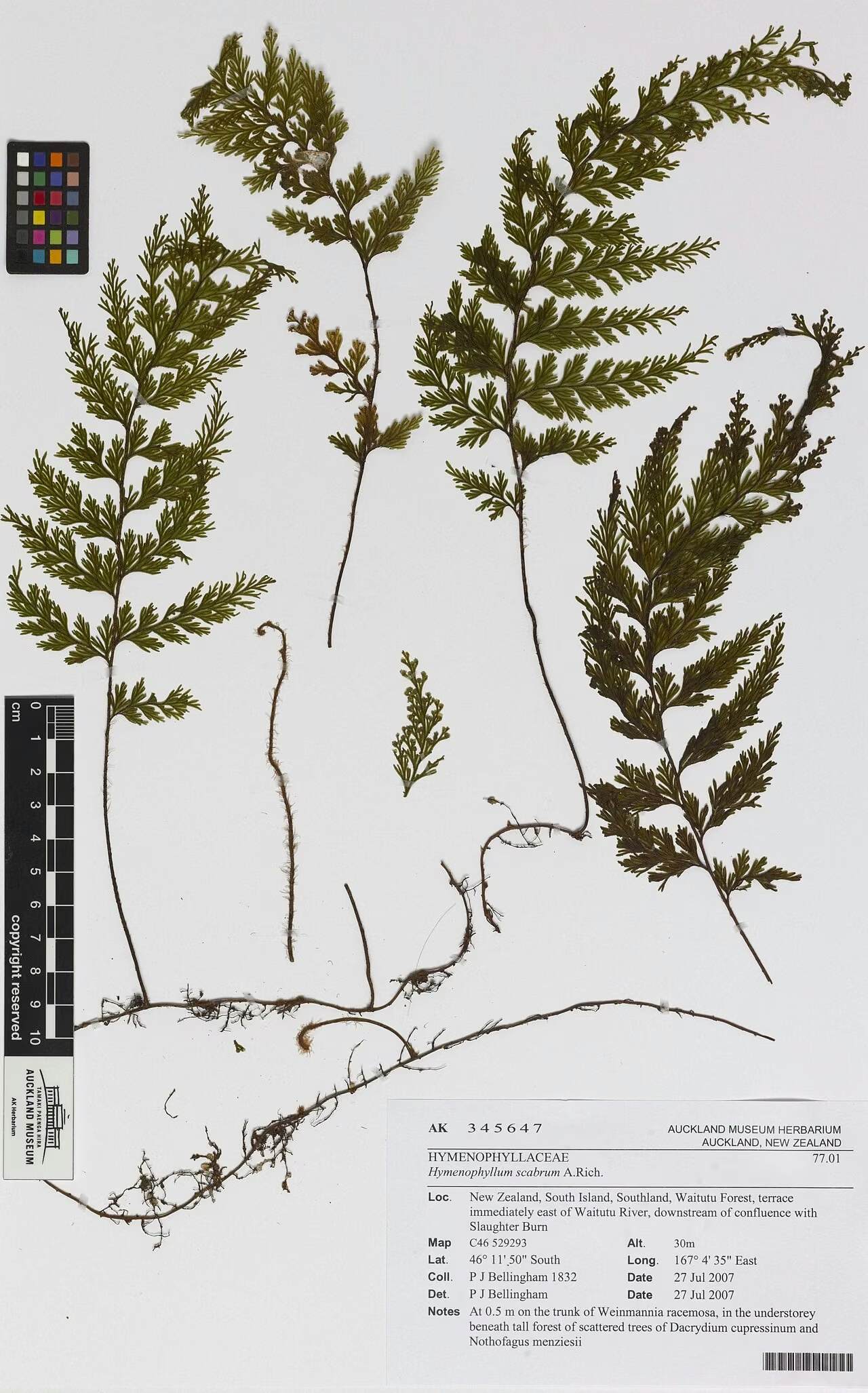
Rough Filmy Fern
Hymenophyllum scabrum
Plant Conservation
Hymenophyllum peltatum is ranked Not Threatened (2023) with the qualifier SO (secure overseas). It is Regionally Not Threatened in Otago but Regionally Naturally Uncommon in Wellington.
It is widespread in South Island montane forest. Controlling browsing animals and protecting montane and subalpine forest are the most useful actions.
Frequently Asked Questions
Why is Hymenophyllum peltatum called the one-sided filmy fern?
The ultimate segments arise only on the upper (acroscopic) side of each primary pinna, so the pinnae look one-sided. This feature also gave it the old name H. unilaterale.
How do you tell Hymenophyllum peltatum from Hymenophyllum revolutum?
H. peltatum has a rachis winged throughout, segments only on the upper side of the pinnae, and one to three (rarely five) sori with smooth-edged indusial flaps on each primary pinna.
Where does the one-sided filmy fern grow?
It grows in beech, podocarp and kāmahi forest and subalpine scrub, on mossy logs, hummocks, rocks or as an epiphyte, from about 150 m to 1700 m; in the North Island it is mainly montane to subalpine.
Does Hymenophyllum peltatum grow on tree ferns?
The Flora of New Zealand notes it has not been recorded on tree fern trunks. Recorded hosts include Dracophyllum traversii, fuchsia, pāhautea, silver beech, southern rātā and Olearia colensoi.
Sources and Further Reading
The botanical, growing, and conservation details for One-Sided Filmy Fern (Hymenophyllum peltatum) on this page draw on the New Zealand plant references below. Consult them for full technical records and the latest distribution data.