Filmy Fern
Hymenophyllum lyallii
Last updated:
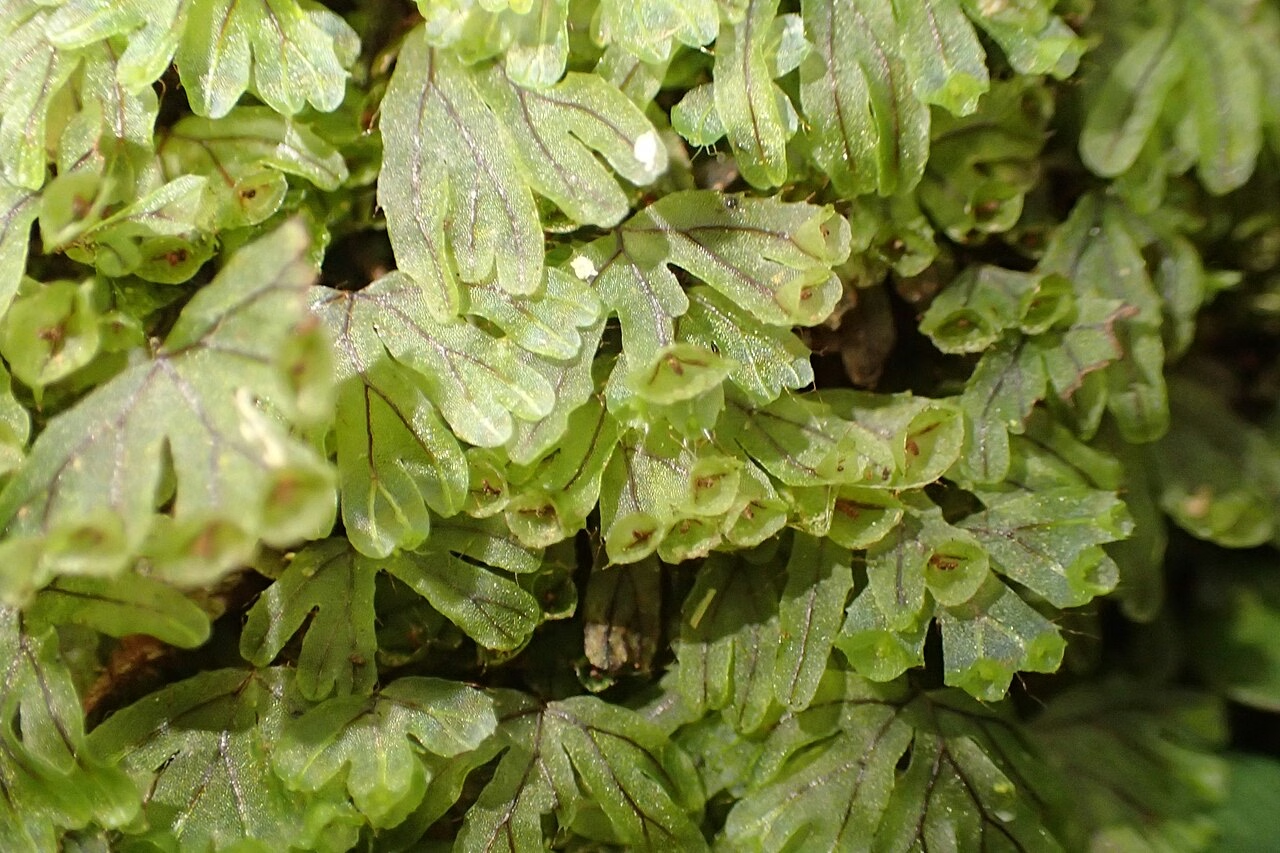
Hymenophyllum lyallii is a small filmy fern with fan-shaped (flabellate) fronds just 1-9 cm long, divided into narrow forking segments whose margins carry minute teeth tipped with tiny forked hairs. It usually grows as an epiphyte on tree fern trunks and the bases of trees in cloud forest, or in root and trunk hollows, from the Mangamuka Range and Ahipara southward to Stewart Island, the Chatham Islands and the Auckland Islands. It is mainly montane in the north of its range and also occurs in Australia. Sterile plants are easily mistaken for liverworts. It is Not Threatened. Explore more native ferns in our native plant guide.
Plant Description
Hymenophyllum lyallii has long-creeping, much-branched, thread-like rhizomes 0.1-0.2 mm across, dark brown to black and glossy, clothed in red-brown simple or once-forked hairs. The wiry stipes are 10-70 mm long, widely spaced, and carry similar hairs, tufted near the base and scattered above.
The blades are fan-shaped to almost round, 5-40 mm long and 10-30 mm wide, dull green-black to glaucous-black (described as pale green in the Flora of New Zealand), and divided into 1-20 ascending, forking segments. The segments are 0.8-1.8 mm wide (to 2.4 mm in the Flora treatment), hairless on the surface, with small persistent marginal teeth carrying short-lived simple or forked hairs. Sori sit at segment tips, solitary or rarely paired and deeply sunken; the involucre is obcordate to obconical, with a notched or toothed apex whose teeth bear reddish forked hairs.
It is occasionally confused with reduced forms of H. flabellatum, which also has fan-shaped fronds but has rhizomes and stipe bases copiously covered in yellow to yellow-white simple hairs and yellow-green to emerald-green pinnae.
Quick Facts
| Scientific Name | Hymenophyllum lyallii |
|---|---|
| Height | Fronds 1-9 cm long |
| Spread | Mats on much-branched thread-like rhizomes |
| Water Needs | Constantly humid; cloud forest conditions |
| Light | Shade |
| Frost Tolerance | Moderate; recorded to 925 m |
| Salt Tolerance | Low |
| Growth Rate | Slow |
| Lifespan | Perennial |
Climate Best Suited to
It suits cool, cloudy, high-rainfall forest, especially montane cloud forest; in the north it is largely confined to higher ranges.
Regional Suitability
| City | Climate Suitability |
|---|---|
| Auckland | Low |
| Wellington | Low |
| Christchurch | Low |
| Dunedin | Low |
Plant Habitat
In New Zealand it occurs from the Mangamuka Range and Ahipara southward, mainly in the west, and is uncommon in the southern North Island. The Flora of New Zealand records it from Northland, Auckland, the Volcanic Plateau, Taranaki and the southern North Island, and in the South Island from Western Nelson, Sounds-Nelson, Westland, Southland and Fiordland, plus the Chatham Islands, Stewart Island/Rakiura and the Auckland Islands. Its altitudinal range is 0-925 m, though it has rarely been recorded below 250 m in most areas. It also grows in Australia.
It is usually epiphytic, on tree fern trunks or at the base of trees in cloud forest, or in root and trunk caves, and rarely on rocks or mossy banks. Recorded hosts include Cyathea dealbata, C. smithii, Dicksonia squarrosa and rimu (Dacrydium cupressinum), in kauri, podocarp, beech and broadleaved forest.
Growing Requirements
Soil Requirements
It needs no soil, growing on fibrous tree fern trunks and mossy bark.
- Tree fern trunks
- Bases of trees and root hollows
- Rarely mossy rock or banks
Light Requirements
It grows in shaded, often misty forest interiors.
- Shade
- No direct sun
- Cloud forest and sheltered hollows
Water Requirements
It relies on the near-constant humidity of cloud forest and sheltered root and trunk hollows.
- Persistent mist and cloud
- High rainfall
- Will not tolerate drying air for long
Planting and Establishing
NZPCN describes it as difficult to grow, not commercially available and not to be removed from the wild. It is not a garden plant.
Its survival depends on intact montane and cloud forest with healthy tree fern understoreys, so habitat protection is the only practical way to support it.
Ecological Role
Hymenophyllum lyallii is part of the tree fern trunk epiphyte community in cloud forest, intermingled with liverworts it closely resembles. These mats help trunks retain water.
It reproduces by minute wind-dispersed spores and spreads by its much-branched rhizomes, gradually forming small mats on its host.
Uses & Significance
Garden Uses
It has no practical garden use; it is of interest to fern enthusiasts exploring montane forest.
- A test of identification skills against liverworts
- Indicator of cloud forest conditions
- Macro photography subject
Ecological Value
It adds to the diversity of epiphytes on tree ferns and trees in humid montane forest.
- Indigenous fern shared with Australia
- Part of epiphyte mats in cloud forest
- Characteristic of high-humidity forest
Landscaping Uses
It is not used in landscaping. Protecting tree ferns and closed forest where it grows is the only way to maintain it.
On private land in montane districts, retaining old tree ferns and avoiding canopy clearance keeps the humid microclimate it needs.
Seasonal Care Calendar
Spring
Fronds are well hydrated in wet spring weather.
- Good time to search tree fern trunks
- Check margins for hair-tipped teeth with a hand lens
Summer
In dry spells fronds may shrivel and darken.
- Look for sunken sori at segment tips
- Avoid handling plants
Autumn
Rain and cloud revive fronds; spores are released.
- Note host species when recording
- Compare with nearby liverworts
Winter
Persists through cold, wet montane winters.
- No action needed
- Fronds remain on trunks year round
When to Prune and How Much
No pruning is needed. Leave plants undisturbed on their host trunks.
Do not strip mosses or liverworts from tree fern trunks, as this fern grows among them.
How to Grow Filmy Fern
NZPCN states that Hymenophyllum lyallii is difficult to propagate, is not commercially available and should not be removed from the wild. No propagation method specific to this species was found, so the notes below describe general filmy fern techniques that would apply only to material already in legal cultivation. Its fine, thread-like rhizomes are easily damaged, and it naturally grows in cloud forest, so any attempt needs a cool, sealed environment that stays close to saturation at all times, with low light and no drying draughts. Growth would be slow even in ideal conditions.
By Division of Rhizomes
Small mats can be divided while keeping the rhizomes embedded in their moss or tree fern fibre, so the fine roots are not disturbed.
- Take a small piece of mat with live rhizome and fronds from a cultivated plant
- Keep it on its original substrate
- Fix it onto a tree fern slab in a closed terrarium
- Mist with rainwater and keep cool and shaded
- Wait for new fronds before allowing any ventilation
From Spores
The spores are minute and, as in other filmy ferns, likely short-lived. Raising this species from spore is not documented.
A hand lens helps confirm that the sunken sori at the segment tips are mature and dark before collecting.
- Collect a fertile frond with mature sori
- Sow immediately on sterile, moist sphagnum
- Seal the container and keep it cool and shaded
- Keep the surface saturated for many months
Pests & Diseases
No pests or diseases are recorded for this fern. Desiccation is the main risk.
Loss of tree ferns, canopy opening and changes to forest humidity from clearance or browsing animals threaten its habitat.
Cultural Significance
No Māori name or traditional use specific to this species was found in the sources consulted.
The species honours David Lyall (1817-1895), a Scottish surgeon and naturalist who visited New Zealand on HMS Terror during Ross's Antarctic Voyage (1839-1843) and later served on HMS Acheron. It was named by Joseph Dalton Hooker.
Bonus Tip
If you think you have found a tiny lobed liverwort on a tree fern trunk, look closer with a hand lens: H. lyallii has distinct veins running into each segment and minute hair-tipped teeth on the margins, features a liverwort lacks.
Related Plants
Explore other native plants that share similar characteristics or habitats with Filmy Fern (Hymenophyllum lyallii), offering further insights into New Zealand's diverse flora. These related species provide context and opportunities for complementary planting in your garden.
Matua Mauku
Hymenophyllum dilatatum
Hymenophyllum flexuosum
Hymenophyllum flexuosum
Rusty Filmy Fern
Hymenophyllum frankliniae
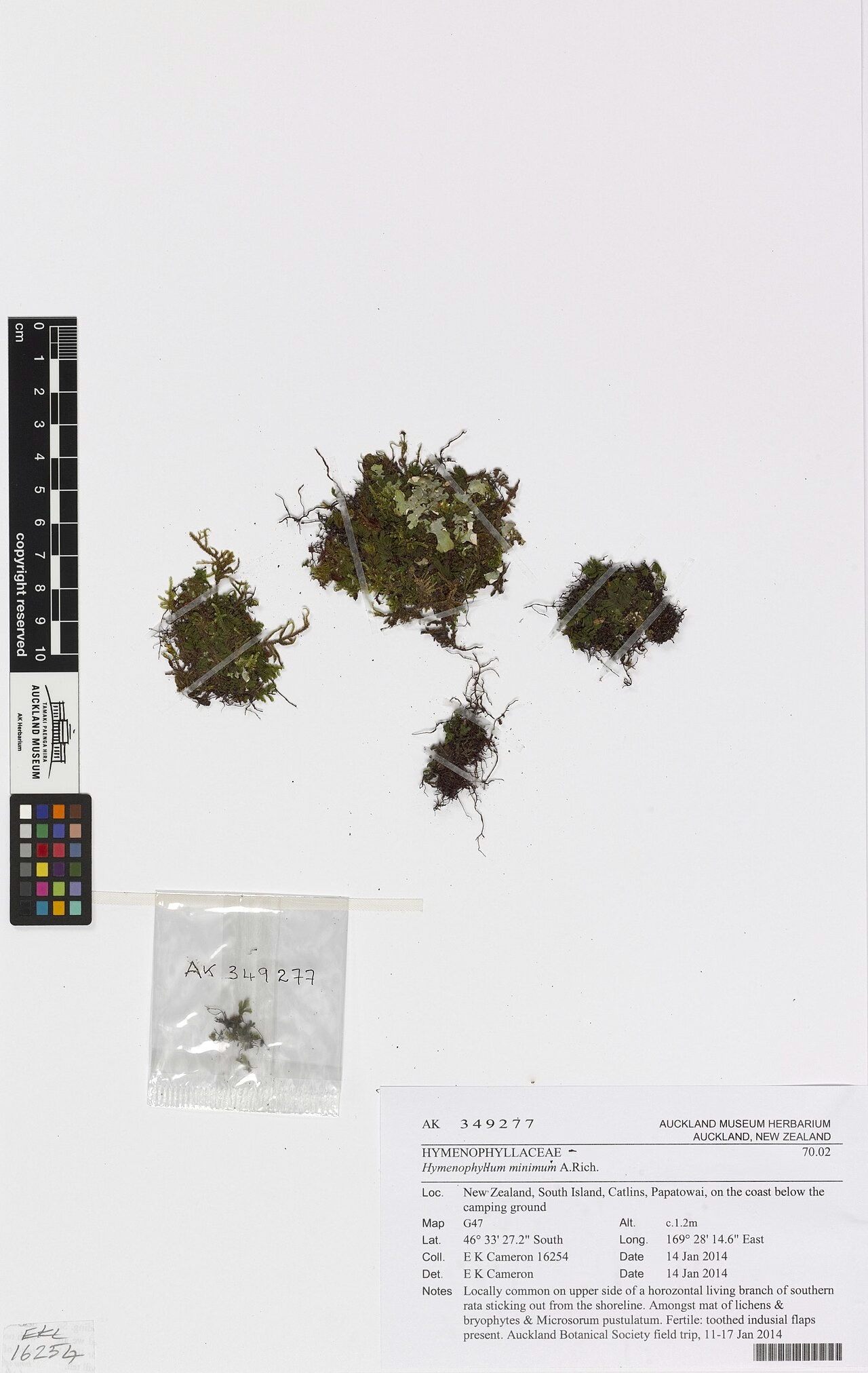
Hymenophyllum minimum
Hymenophyllum minimum
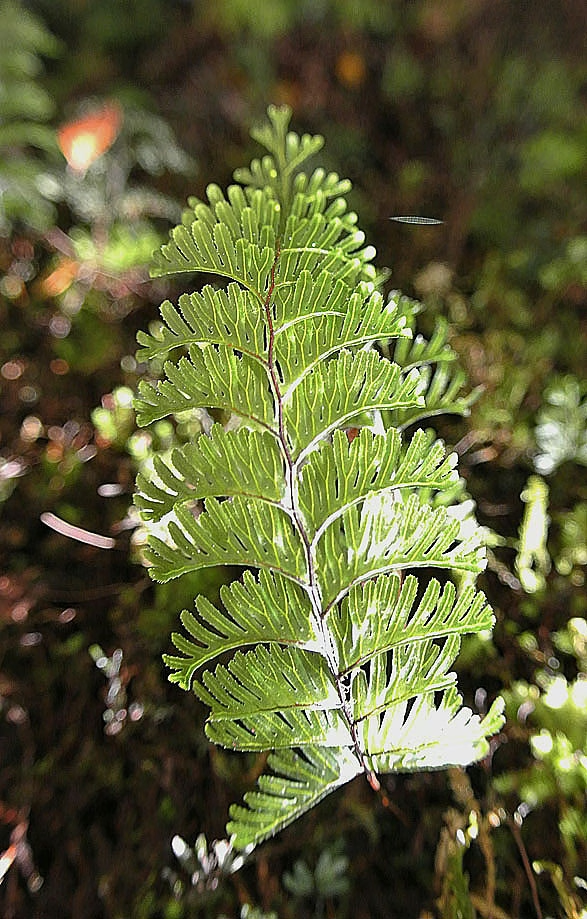
One-Sided Filmy Fern
Hymenophyllum peltatum
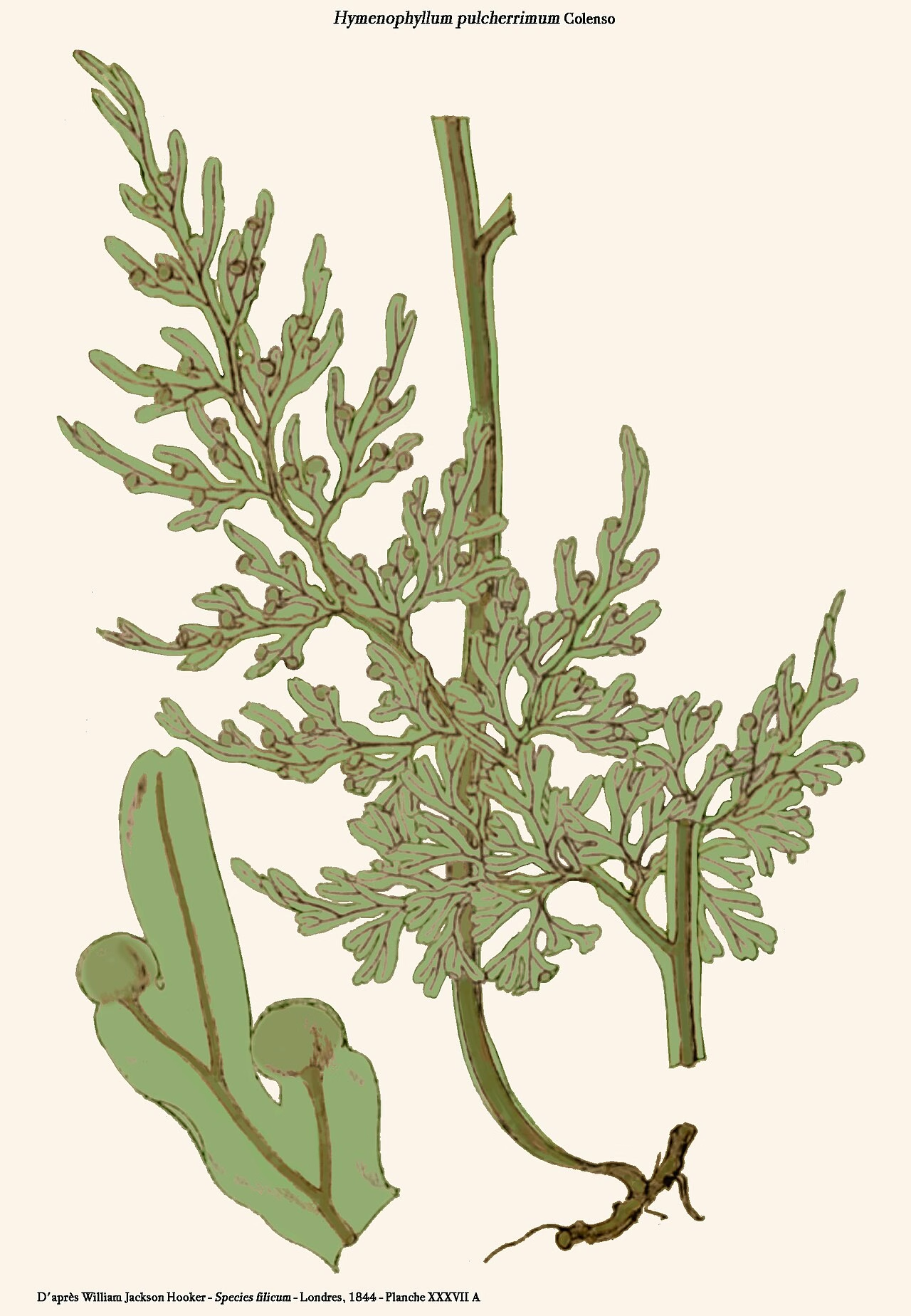
Tufted Filmy Fern
Hymenophyllum pulcherrimum
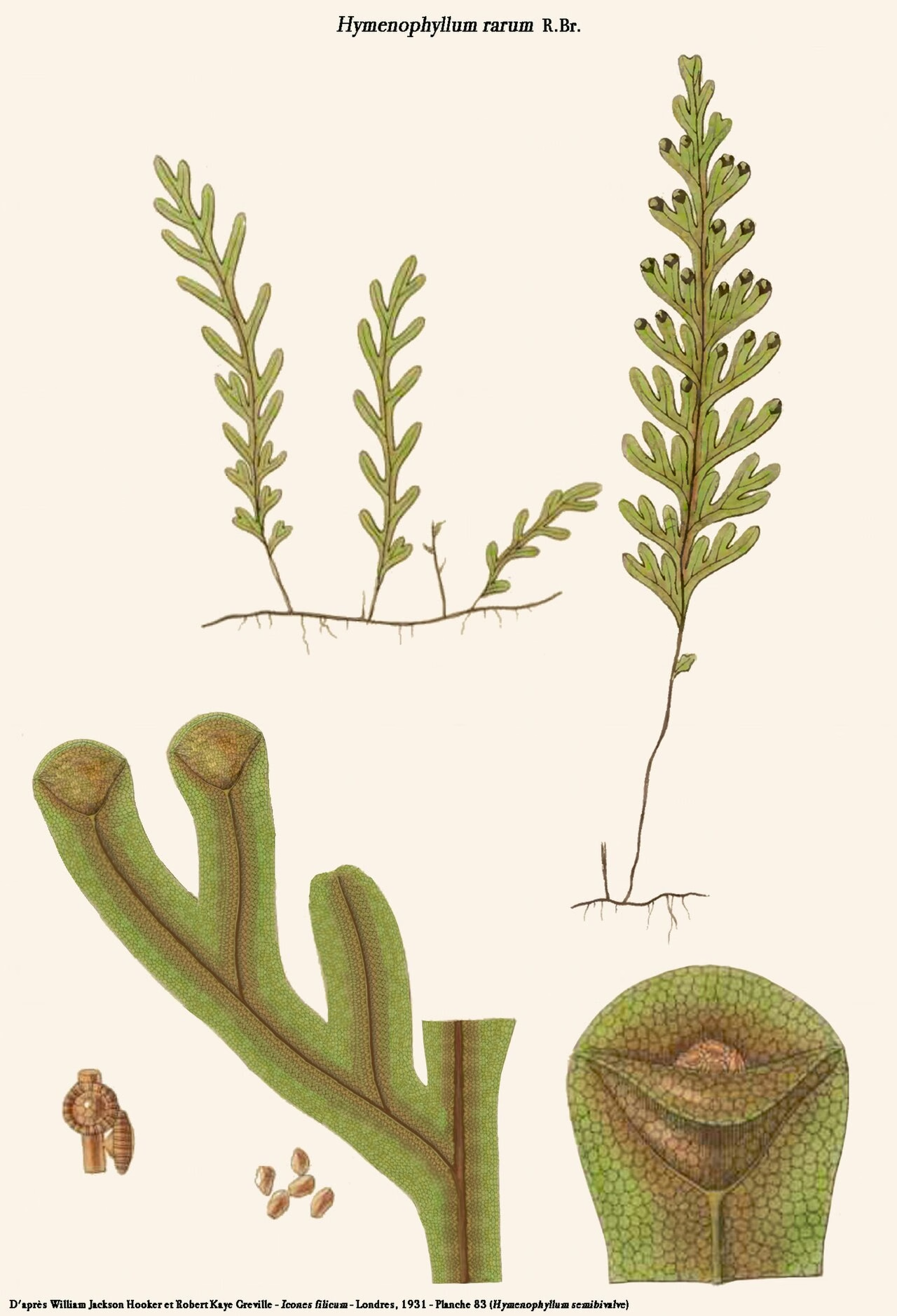
Hymenophyllum rarum
Hymenophyllum rarum
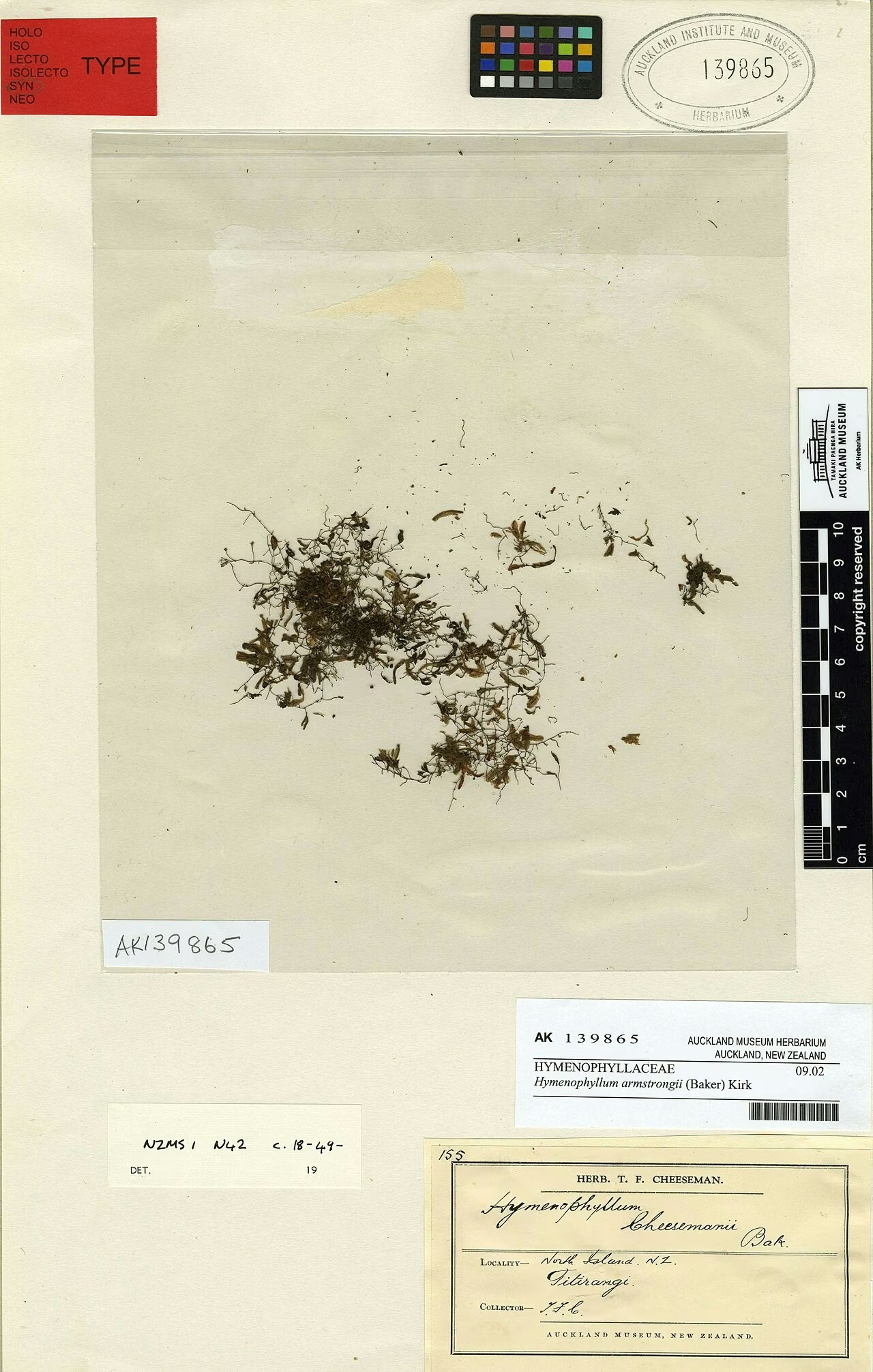
Hymenophyllum armstrongii
Hymenophyllum armstrongii
Plant Conservation
Hymenophyllum lyallii is ranked Not Threatened (2023) with the qualifier SO (secure overseas). It is Regionally Naturally Uncommon in Northland and Auckland, where it is confined to higher ranges.
Protecting montane forest and tree fern understoreys, and controlling browsing animals, are the most useful actions for this fern.
Frequently Asked Questions
How do you identify Hymenophyllum lyallii?
Look for small fan-shaped filmy fronds divided into forking segments, with minute teeth along the margins that bear tiny forked hairs, on wiry, hairy stalks arising from a dark, glossy, hairy rhizome.
Can Hymenophyllum lyallii be mistaken for a liverwort?
Yes. The Flora of New Zealand notes that sterile fronds are often confused with a group of common liverworts, because of their small size and flat, lobed shape.
Is Hymenophyllum lyallii endemic to New Zealand?
No. It is indigenous to New Zealand but also grows in Australia, which is why its 2023 Not Threatened ranking carries the qualifier SO, secure overseas.
Who is Hymenophyllum lyallii named after?
It honours David Lyall (1817-1895), a Scottish naval surgeon and naturalist who visited New Zealand on HMS Terror during Ross's Antarctic Voyage of 1839-1843.
Sources and Further Reading
The botanical, growing, and conservation details for Filmy Fern (Hymenophyllum lyallii) on this page draw on the New Zealand plant references below. Consult them for full technical records and the latest distribution data.