Tufted Filmy Fern
Hymenophyllum pulcherrimum
Last updated:
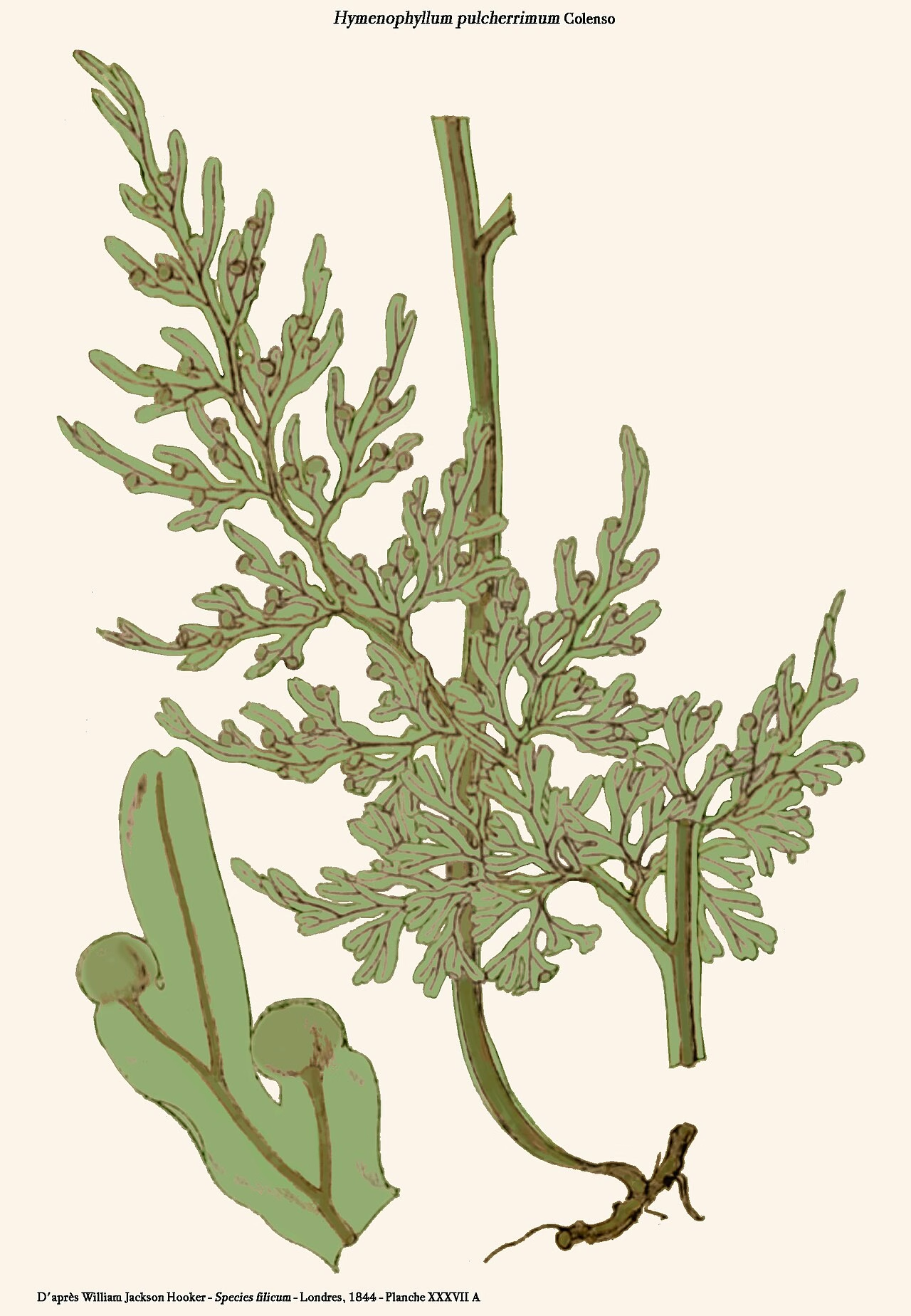
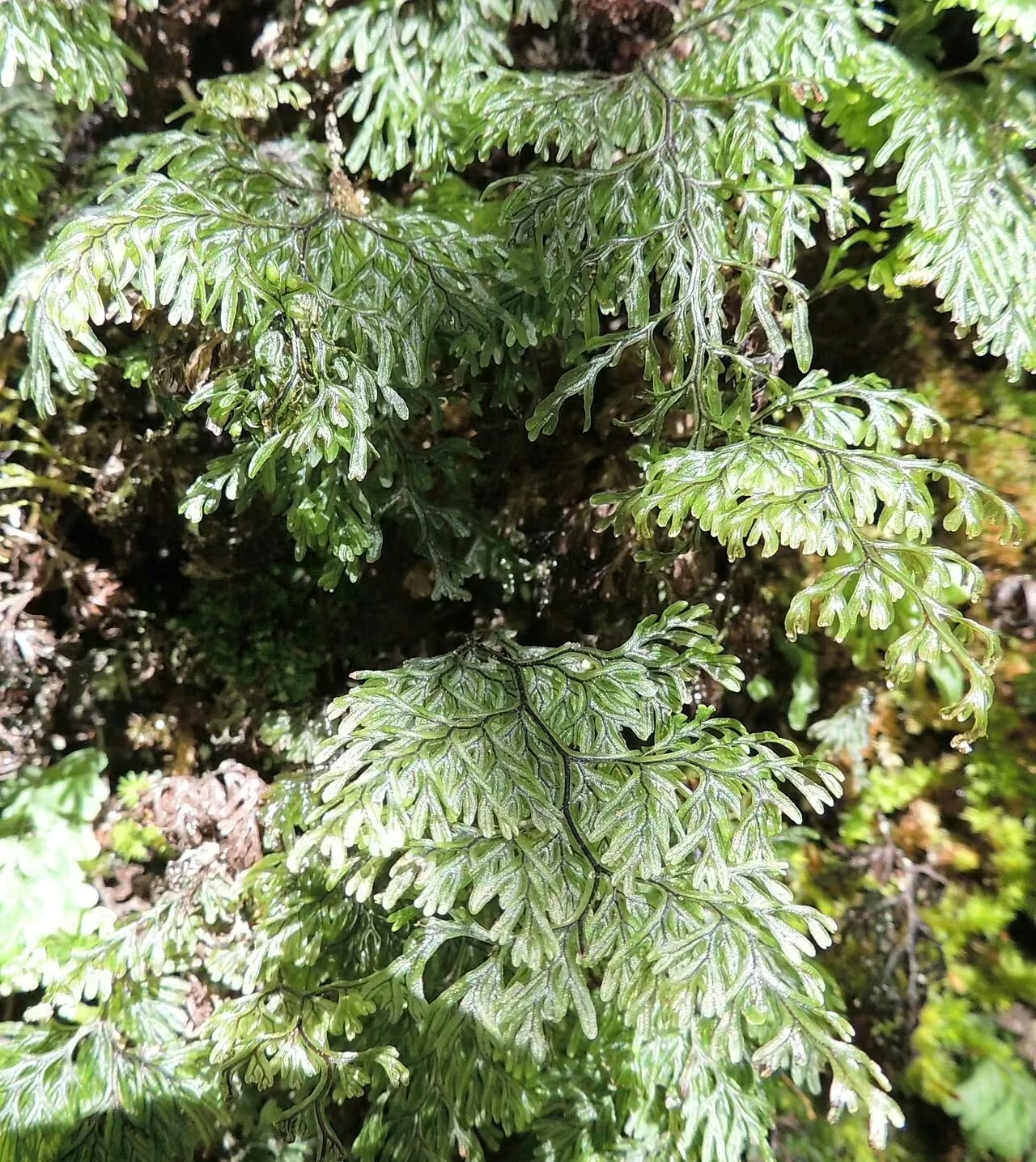
Tufted filmy fern (Hymenophyllum pulcherrimum) is one of the largest and most graceful of New Zealand's filmy ferns. Endemic to New Zealand, it grows in tufts from a short, erect rhizome clothed in long red-brown hairs, and its pale green, hairless, finely divided fronds hang down to 60 cm long, with a crinkled, wavy look. It is mainly an epiphyte on forest trees in wet lowland to montane forest, from Te Moehau and Mt Pirongia south through the western South Island to Stewart Island/Rakiura and the Auckland Islands. Its epithet means 'very beautiful', and it is ranked Not Threatened. Explore more native ferns in our native plant guide.
Plant Description
Hymenophyllum pulcherrimum is a tufted, mostly epiphytic fern. Its rhizome is short and erect to short-creeping and is covered in abundant red-brown bristly hairs up to 7 mm long. The stipes are 30-150 mm long, fairly robust and almost smooth, and the rachis and upper stipe are winged.
The fronds are pale green, hairless and pendulous, 100-600 mm long and 40-150 mm wide, ovate to elliptic, and three to four times pinnate. The oblong ultimate segments have characteristically wavy margins, which give the whole frond a crinkled, rather flexuous appearance. Like all filmy ferns, the blade is only one cell thick between the veins. Numerous sori sit near the ends of segments on short branches, with ovoid to ellipsoid involucres whose flaps have smooth, untoothed margins.
It is easily recognised by its tufted habit combined with large, drooping, pale green and crinkled fronds with smooth margins. The similar Hymenophyllum flexuosum also has long hanging fronds but a long-creeping rhizome without the dense red-brown hairs.
Quick Facts
| Scientific Name | Hymenophyllum pulcherrimum |
|---|---|
| Height | Pendulous fronds 10-60 cm long |
| Spread | Compact tufts from a short rhizome |
| Water Needs | Constant high humidity |
| Light | Deep to moderate forest shade |
| Frost Tolerance | Moderate; recorded to 1170 m |
| Salt Tolerance | Low; an interior forest fern |
| Growth Rate | Slow |
| Lifespan | Perennial |
Climate Best Suited to
It needs a cool, wet and very humid forest climate with frequent mist, and in the north it is largely confined to montane forest where cloud is common.
Regional Suitability
| City | Climate Suitability |
|---|---|
| Auckland | Low |
| Wellington | Low |
| Christchurch | Low |
| Dunedin | Low |
Plant Habitat
Tufted filmy fern is endemic to New Zealand. In the North Island it ranges from Te Moehau, Mt Te Aroha, Mt Pirongia and East Cape southwards, reaching 1170 m on Mt Taranaki. In the South Island it is concentrated west of the main divide, from 40 m near Haast to 975 m in the Paparoa Ranges. It also grows on Stewart Island/Rakiura and the Auckland Islands, over a total range of about 40-1170 m.
It lives in closed podocarp, beech and broadleaf forest, usually as an epiphyte on trunks and branches of trees such as Coprosma, broadleaf (Griselinia littoralis), black maire (Nestegis cunninghamii), Podocarpus laetus, kāmahi (Weinmannia racemosa) and southern beeches. It also grows on rock faces, banks, rotting logs and tree bases, but not on tree ferns.
Growing Requirements
Soil Requirements
It is not a soil plant. Its short rhizome anchors in moss and humus on bark, logs or rock.
- Moss-covered bark of forest trees
- Rotting logs and tree bases
- Shaded rock faces and banks
Light Requirements
It grows in the dim light of the closed forest interior, where the canopy keeps the air still and moist.
- Shade to deep shade
- No direct sun
- Sheltered, windless sites
Water Requirements
Its large, one-cell-thick fronds lose water quickly, so it depends on rain, mist and near-saturated forest air.
- Very high humidity year round
- Frequent rain and cloud
- Fronds shrivel in drought and recover when wet
Planting and Establishing
This is not a garden plant. NZPCN states that it is difficult to propagate and should not be removed from the wild, and it is not sold by nurseries.
Its survival depends on protecting wet, closed-canopy forest with mature host trees. Anyone wishing to see it should visit montane forest such as on Mt Taranaki, the Paparoa Ranges or Stewart Island, where the drooping tufts hang from moss-laden trunks.
Ecological Role
Tufted filmy fern is part of the rich epiphyte layer of wet New Zealand forest, alongside mosses, liverworts and other filmy ferns. Its tufts trap water and organic matter, adding to the moist microhabitats used by small invertebrates.
It reproduces by minute spores dispersed by wind. Because its rhizome is short, it does not spread into wide mats like most Hymenophyllum species, so each tuft represents an individual plant that may persist for many years on its host.
Uses & Significance
Garden Uses
It has no practical place in gardens, but it is one of the most attractive ferns to look for on bush walks.
- Botanical interest in native forest
- Nature photography subject
- Indicator of humid, intact forest
Ecological Value
It adds to the diversity and water-holding capacity of the epiphyte community on forest trees.
- Endemic filmy fern
- Contributes to moisture-retaining epiphyte mats
- Shows high forest humidity
Landscaping Uses
Tufted filmy fern is not used in landscaping. On private land the best approach is to keep mature trees and the surrounding canopy intact so its humid microclimate is maintained.
Avoid clearing understorey or creating openings near host trees, since extra wind and light dry out the epiphyte layer it relies on.
Seasonal Care Calendar
Spring
Fronds are fresh and fully expanded in the wet spring forest.
- Good time to photograph hanging tufts
- Look for young croziers emerging from the tuft
Summer
Dry spells can shrivel fronds, which revive once rain returns.
- Leave shrivelled plants alone
- Sori may be visible near segment tips
Autumn
Rain and cloud return and spores continue to be released.
- Check fronds for ovoid involucres
- Record host tree species
Winter
It persists through cold, wet montane winters.
- No intervention needed
- Fallen branches may bring tufts within reach
When to Prune and How Much
No pruning is needed. Dead fronds are shed naturally and wild plants should be left untouched.
If a host branch falls, the tuft can be left on the forest floor in shade where humidity remains high.
How to Grow Tufted Filmy Fern
NZPCN describes Hymenophyllum pulcherrimum as difficult to propagate and states that it should not be removed from the wild. No published propagation method specific to this species was found. The approaches below are the general methods used by fern specialists for filmy ferns, and they should only be tried with material that is already in legal cultivation or salvaged from naturally fallen branches with landowner permission. Because this species grows as a tuft from a short rhizome, division is less straightforward than for mat-forming filmy ferns, and losses are likely without a sealed, constantly humid environment.
By Division of the Tuft
Large tufts with more than one growing point can sometimes be separated, keeping fronds and the hairy rhizome together on each piece.
- Work only with a cultivated plant or a tuft on a fallen branch
- Gently tease apart separate growing points with their own rhizome and fronds
- Tie each piece onto damp bark or a sphagnum pad without burying the rhizome
- Keep in a sealed terrarium in low, indirect light
- Mist with rainwater so the fronds never dry
- Wait for new fronds before introducing any ventilation
From Spores
Filmy fern spores are green and short-lived, so they need to be sown immediately after collection. Success with this species is not documented.
- Collect fronds with mature sori near the segment tips
- Sow spores at once on sterile, moist sphagnum or fine peat
- Seal the container and keep it cool and shaded
- Expect many months before gametophytes become visible
Pests & Diseases
No pests or diseases are recorded for tufted filmy fern. Drying out is its greatest risk.
In the wild, loss of forest canopy through browsing animals, windthrow, logging or edge effects reduces humidity and threatens it along with the wider epiphyte community.
Cultural Significance
No Māori name or traditional use specific to this species was found in the sources consulted.
The epithet pulcherrimum is Latin for 'very' or 'most beautiful', reflecting the appeal of its long, drooping, crinkled fronds. The genus name Hymenophyllum means membranous leaf, from the Greek humen and phullon.
Bonus Tip
To tell tufted filmy fern from the similar Hymenophyllum flexuosum, look where the fronds join the host: tufted filmy fern has all its fronds arising together from one point, with a cluster of long red-brown hairs at the base, while H. flexuosum has fronds spaced along a creeping rhizome.
Related Plants
Explore other native plants that share similar characteristics or habitats with Tufted Filmy Fern (Hymenophyllum pulcherrimum), offering further insights into New Zealand's diverse flora. These related species provide context and opportunities for complementary planting in your garden.
Rusty Filmy Fern
Hymenophyllum frankliniae
Hymenophyllum lyallii
Hymenophyllum lyallii
Hymenophyllum minimum
Hymenophyllum minimum
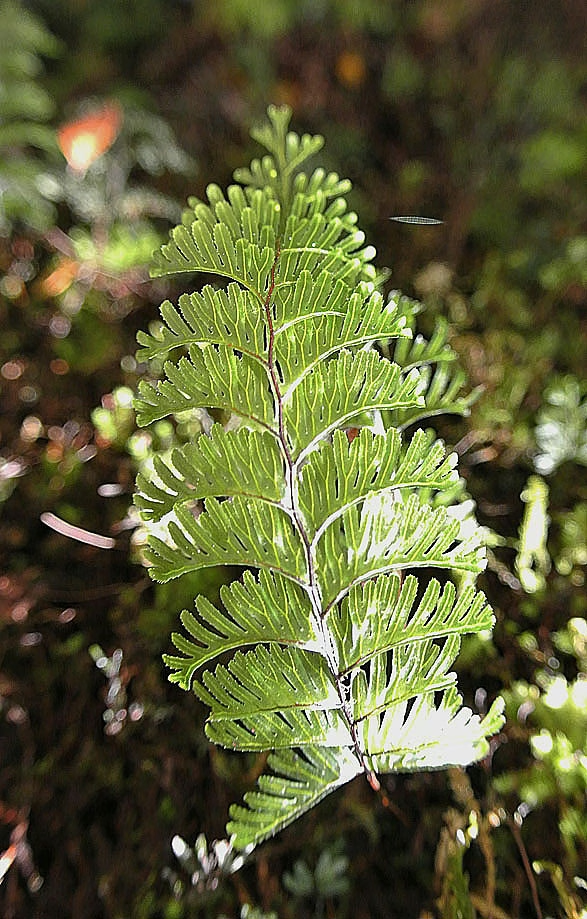
One-Sided Filmy Fern
Hymenophyllum peltatum
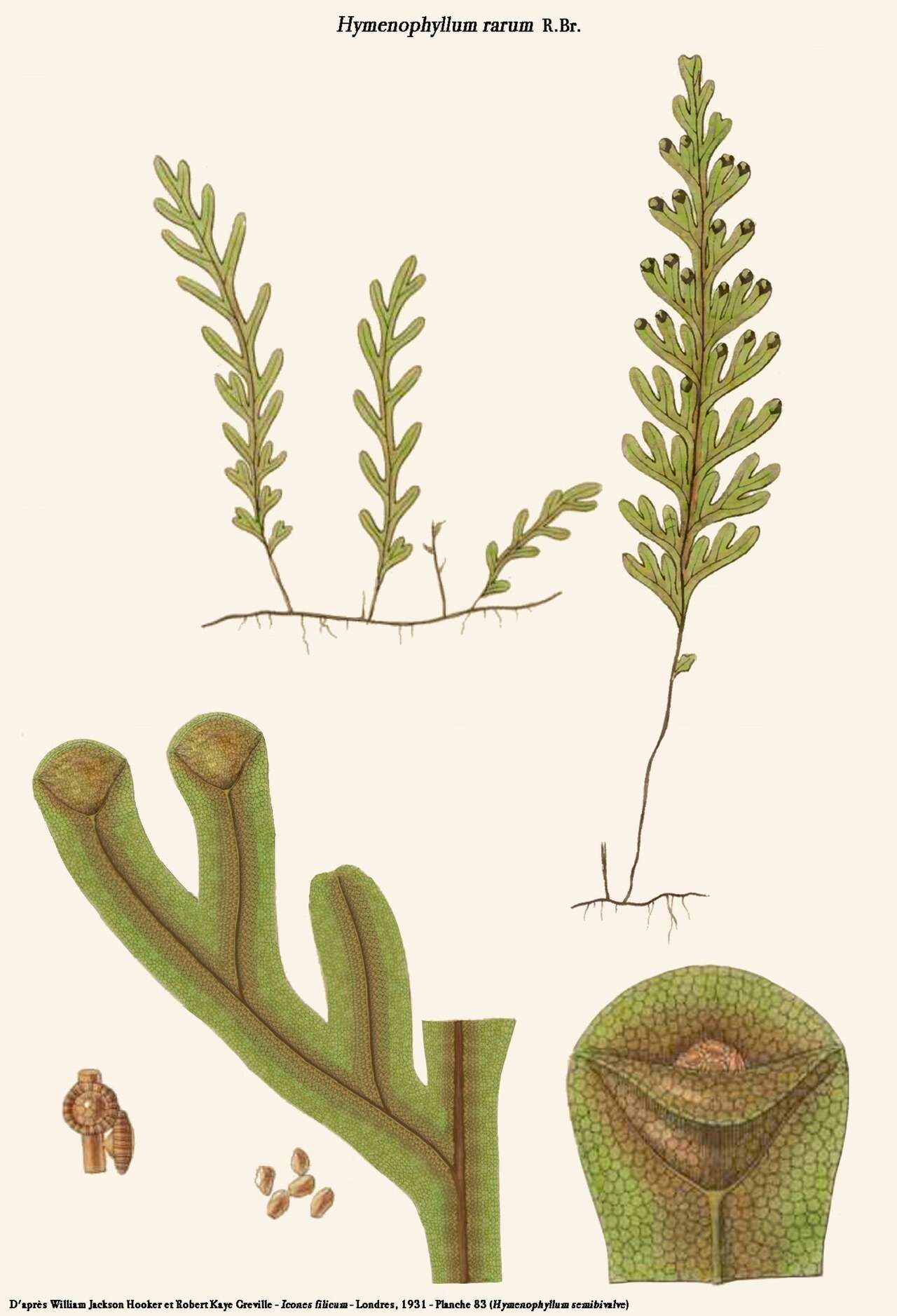
Hymenophyllum rarum
Hymenophyllum rarum
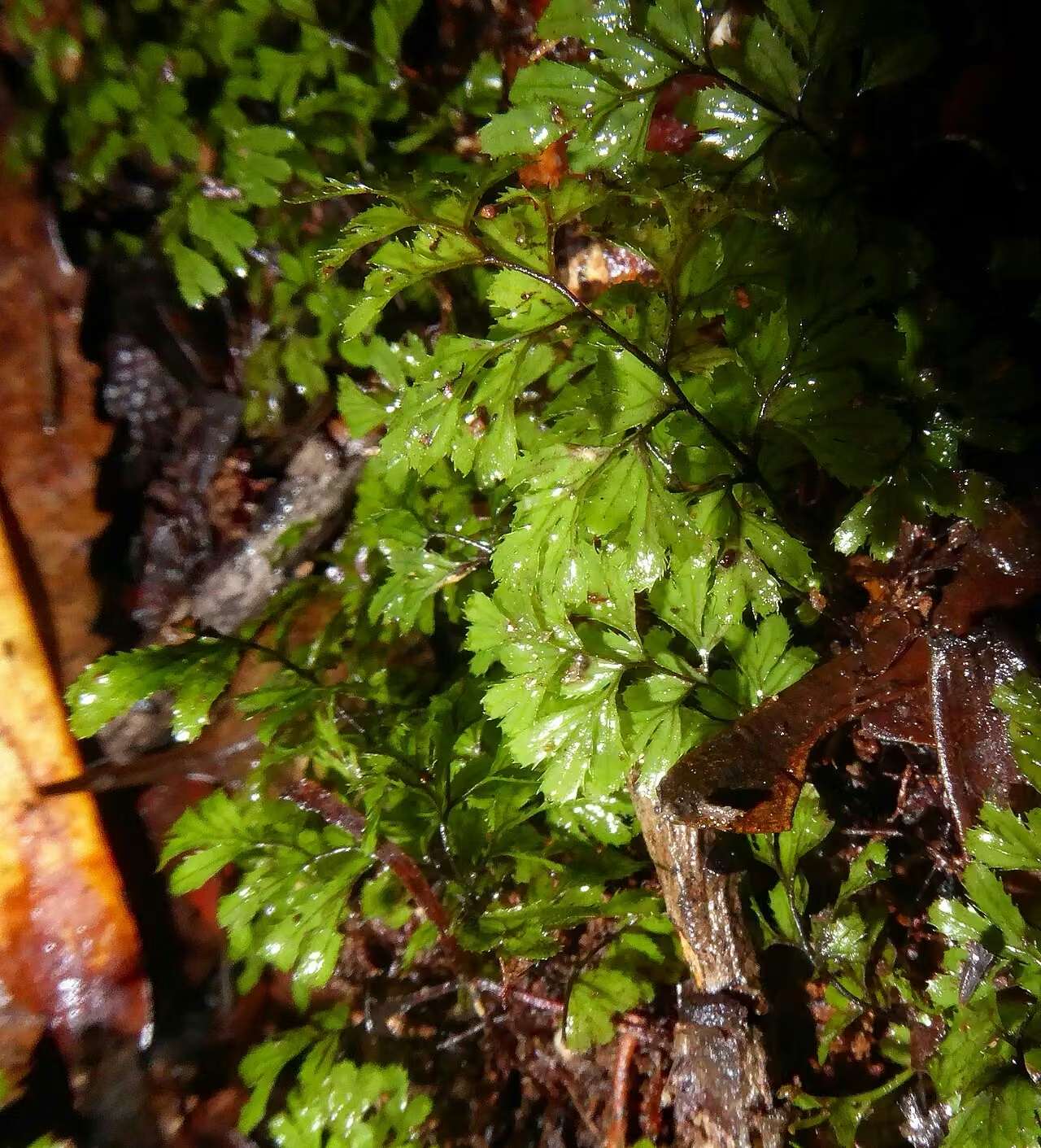
Hymenophyllum revolutum
Hymenophyllum revolutum
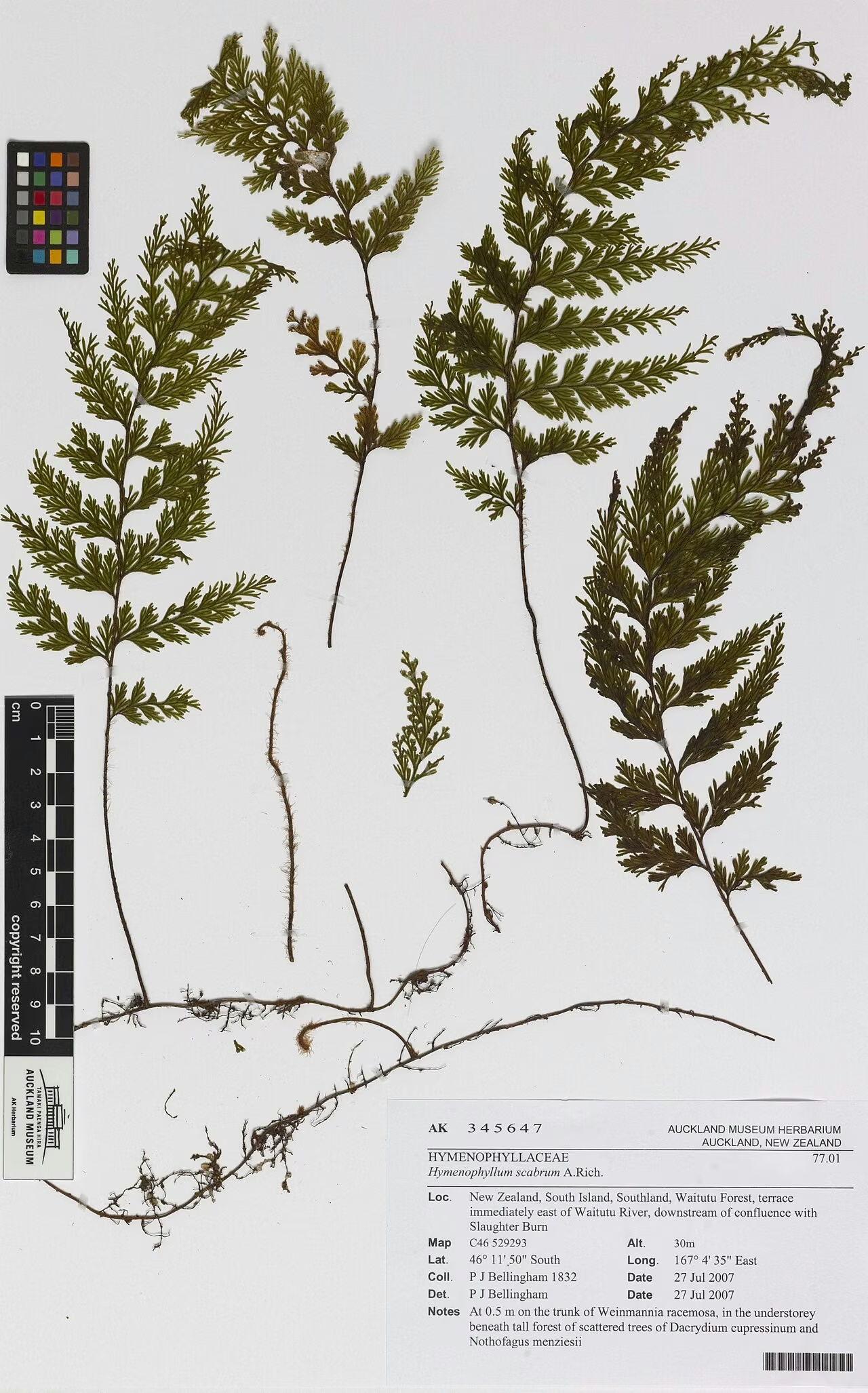
Rough Filmy Fern
Hymenophyllum scabrum
Hairy Filmy Fern
Hymenophyllum villosum
Plant Conservation
Hymenophyllum pulcherrimum is ranked Not Threatened nationally (2023). It is Regionally Naturally Uncommon in the Wellington region and Regionally Not Threatened in Otago.
Protecting mature, closed forest from canopy loss, controlling browsing animals and leaving plants in place are the most useful actions for this species.
Frequently Asked Questions
Why is Hymenophyllum pulcherrimum called the tufted filmy fern?
It is the only New Zealand Hymenophyllum with an erect or short-creeping rhizome, so its fronds arise together in a tuft instead of being spaced along a long creeping rhizome like other filmy ferns.
How big are the fronds of tufted filmy fern?
The pendulous fronds are 100-600 mm long and 40-150 mm wide on stipes 30-150 mm long, which makes it one of the largest filmy ferns in New Zealand.
Does tufted filmy fern grow on tree ferns?
No. The Flora of New Zealand notes that, unusually for a Hymenophyllum, it does not grow on tree fern trunks. It is found on trees such as kāmahi, broadleaf, Coprosma and beech, and on rocks, banks and logs.
Can I grow tufted filmy fern at home?
NZPCN describes it as difficult to propagate and says it should not be removed from the wild. It needs constantly saturated air that ordinary gardens cannot supply.
Sources and Further Reading
The botanical, growing, and conservation details for Tufted Filmy Fern (Hymenophyllum pulcherrimum) on this page draw on the New Zealand plant references below. Consult them for full technical records and the latest distribution data.