Filmy Fern
Hymenophyllum rarum
Last updated:
Hymenophyllum rarum is a small filmy fern with thin, pale greyish-green fronds 2-12 cm long that grows in creeping patches throughout New Zealand, from the coast to about 1400 m. It is found on tree trunks, stumps, rock faces, clay banks and rubble slopes in forest and scrub, and it is also native to eastern Australia. Unlike most filmy ferns, which shrivel quickly in dry air, it is remarkably drought tolerant and often grows in fairly exposed places. Its smooth-edged segments and grey tone make it one of the easier filmy ferns to recognise. Explore more native ferns in our native plant guide.
Plant Description
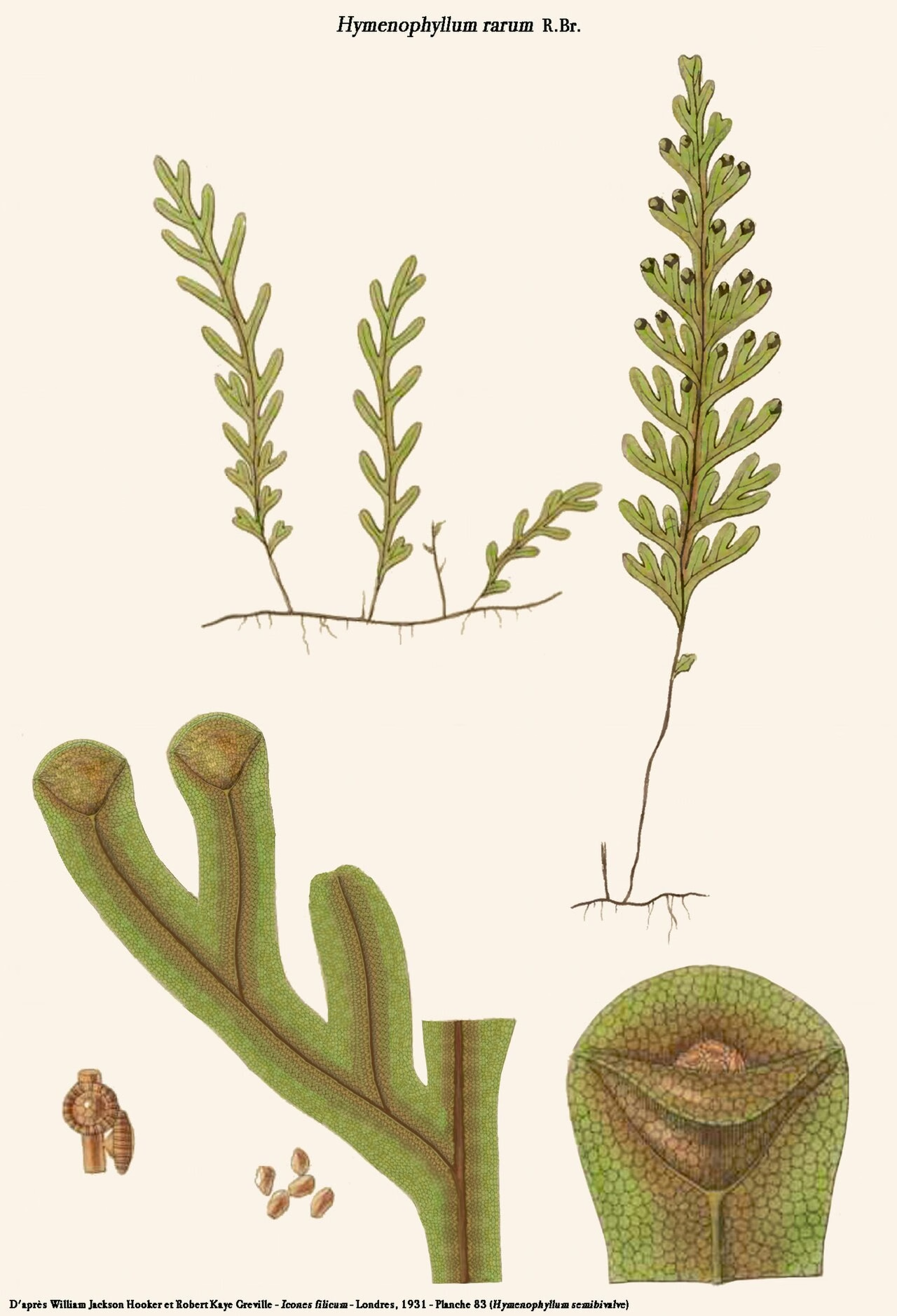
Hymenophyllum rarum is a terrestrial or epiphytic fern forming interconnected creeping patches. Its rhizomes are long, thin and fragile, and the fronds arise singly at intervals along them. The stipes are 20-70 mm long, wiry when fresh and brittle when dry.
The fronds are pale greyish-green, membranous and hairless, 20-120 mm long and 10-30 mm wide, narrowly elliptic to ovate and usually twice pinnate. The margins of the pinnae, ultimate segments and indusia are all smooth. Sori sit at the tips of segments. Some New Zealand botanists report a distinct metallic fragrance from the plants.
Its small, grey-green fronds with entire margins separate it from the many toothed or hairy filmy ferns. Australian plants of the species are darker green, with narrower, more widely spaced pinnae and less sunken sori, and lack the scent.
Quick Facts
| Scientific Name | Hymenophyllum rarum |
|---|---|
| Height | Fronds 2-12 cm long |
| Spread | Creeping patches on long thin rhizomes |
| Water Needs | Moist, but tolerates dry spells |
| Light | Shade to partly open sites |
| Frost Tolerance | Good; recorded to 1400 m |
| Salt Tolerance | Low to moderate; reaches coastal sites |
| Growth Rate | Slow |
| Lifespan | Perennial |
Climate Best Suited to
It suits mild to cool, moist climates across New Zealand, and its drought tolerance lets it persist in drier and more exposed spots than most filmy ferns.
Regional Suitability
| City | Climate Suitability |
|---|---|
| Auckland | Medium |
| Wellington | Medium |
| Christchurch | Low |
| Dunedin | Medium |
Plant Habitat
Hymenophyllum rarum is indigenous to New Zealand and eastern Australia. In New Zealand it occurs throughout the North Island (except the east coast), the South Island, Stewart Island/Rakiura, the Chatham Islands and the Auckland Islands, including many offshore islands, from sea level to about 1400 m.
It is common in closed forest under kauri, podocarps and beech, and in mānuka scrub. It grows epiphytically on many tree species and also on the ground, on dead stumps, at the base of trunks, on shaded cliffs, clay banks, among boulders and on rubble slopes, often in more exposed positions than its relatives.
Growing Requirements
Soil Requirements
It grows on bark, rock or thin humus and clay rather than deep soil, its fine rhizomes threading through moss and debris.
- Tree bark and stumps
- Clay banks and rock faces
- Boulder and rubble slopes
Light Requirements
It is usually found in shade within forest or scrub but tolerates brighter, more exposed sites than most filmy ferns.
- Shade to partial shade
- Tolerates some exposure
- Avoid full, hot sun
Water Requirements
It needs regular moisture but copes with dry periods better than almost any other New Zealand filmy fern, rarely curling up in drought.
- Moist, humid conditions preferred
- Tolerates short dry spells
- Rainwater misting in cultivation
Planting and Establishing
NZPCN advises that it is difficult to propagate and should not be taken from the wild. It is not a standard nursery plant.
Its relative hardiness to drying makes it one of the more likely filmy ferns to survive in a shaded fernery or terrarium, but only plants already in legal cultivation should be used, set on bark or rock in a cool, sheltered and humid spot.
Ecological Role
Hymenophyllum rarum is a common component of the epiphyte and rock-surface flora in New Zealand forest and scrub, sharing trunks, banks and boulders with mosses, liverworts and other filmy ferns.
Its minute spores are spread by wind, and its long creeping rhizomes allow it to spread into patches. Its tolerance of drying lets it occupy rubble slopes, clay banks and exposed rock where few other filmy ferns survive.
Uses & Significance
Garden Uses
It has limited garden use, though it is one of the hardier filmy ferns for specialist fern growers.
- Specialist shade fernery
- Terrarium subject
- Nature study on bush walks
Ecological Value
It helps clothe rock, bark and banks with a living layer that holds moisture and shelters small invertebrates.
- Colonises rock and rubble surfaces
- Part of the forest epiphyte community
- Occurs from coast to montane zone
Landscaping Uses
It is not used in mainstream landscaping. In naturalistic plantings, retaining existing shaded banks, mossy rocks and old stumps can allow it to persist where it already grows.
Keep surrounding vegetation intact so the site stays sheltered and humid, even though this species is more forgiving than its relatives.
Seasonal Care Calendar
Spring
New fronds expand in moist spring conditions.
- Good time to search shaded banks
- Look for the grey-green colour
Summer
It usually stays open even in dry weather, unlike most filmy ferns.
- Compare with curled neighbouring species
- Check for sori at segment tips
Autumn
Spores are released as rain returns.
- Note substrate when recording
- Avoid trampling bank colonies
Winter
It persists through winter from the coast to montane altitudes.
- No intervention needed
- Fronds remain present year round
When to Prune and How Much
No pruning is required. Leave wild patches undisturbed.
In cultivation, dead fronds can be removed gently with fine scissors to keep a patch tidy, taking care not to break the brittle rhizomes.
How to Grow Filmy Fern
NZPCN describes Hymenophyllum rarum as difficult to propagate and asks that it not be removed from the wild. No published propagation protocol for this species was found. The methods below are the general approaches used for creeping filmy ferns and should only be applied to plants already in legal cultivation or rescued from sites about to be destroyed, with permission. Its tolerance of drying gives it a better chance in cultivation than most of its relatives, but humidity still needs to be kept high while new pieces establish, and the fragile rhizomes must be handled with care because they snap easily when dry.
By Division of Rhizome Patches
Its long, creeping rhizomes form patches that can be divided into small pieces, each with several fronds.
- Choose a healthy cultivated patch and moisten it first so the rhizomes are pliable
- Cut a section of rhizome with at least three fronds attached
- Lay it on damp bark, rock or a moss pad without burying the rhizome
- Keep in a closed case or terrarium in shade
- Mist with rainwater and keep humid until new fronds appear
From Spores
Spores must be sown fresh, as filmy fern spores lose viability quickly. Raising this species from spore is not documented.
- Collect fronds with mature sori at the segment tips
- Sow immediately on sterile moist peat or sphagnum
- Seal the container and keep cool and shaded
- Allow many months for gametophytes to develop
Pests & Diseases
No specific pests or diseases are recorded for this species.
Threats in the wild are mainly loss of forest and scrub habitat, and trampling or slips on the banks and rubble slopes it colonises.
Cultural Significance
No Māori name or traditional use specific to this species was found in the sources consulted.
The epithet rarum comes from the Latin rarus, meaning scattered or thin, which the Flora of New Zealand links to the widely spaced fronds along the rhizome.
Bonus Tip
During a dry spell, walk a shaded forest bank and look at the filmy ferns: most will have curled into dark tangles, but any patch that stays flat, open and grey-green is very likely Hymenophyllum rarum.
Related Plants
Explore other native plants that share similar characteristics or habitats with Filmy Fern (Hymenophyllum rarum), offering further insights into New Zealand's diverse flora. These related species provide context and opportunities for complementary planting in your garden.
Hymenophyllum lyallii
Hymenophyllum lyallii
Hymenophyllum minimum
Hymenophyllum minimum
One-Sided Filmy Fern
Hymenophyllum peltatum
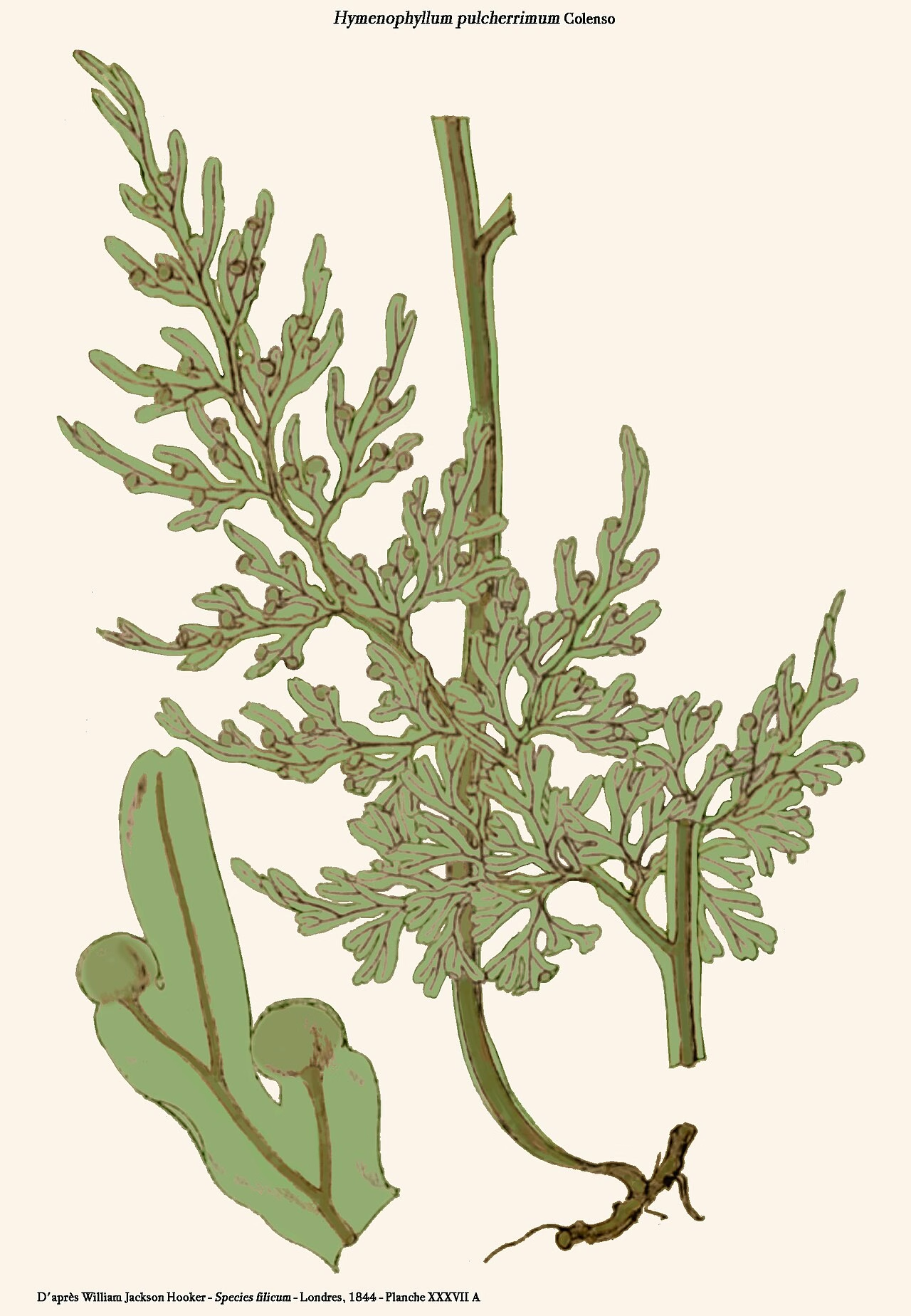
Tufted Filmy Fern
Hymenophyllum pulcherrimum
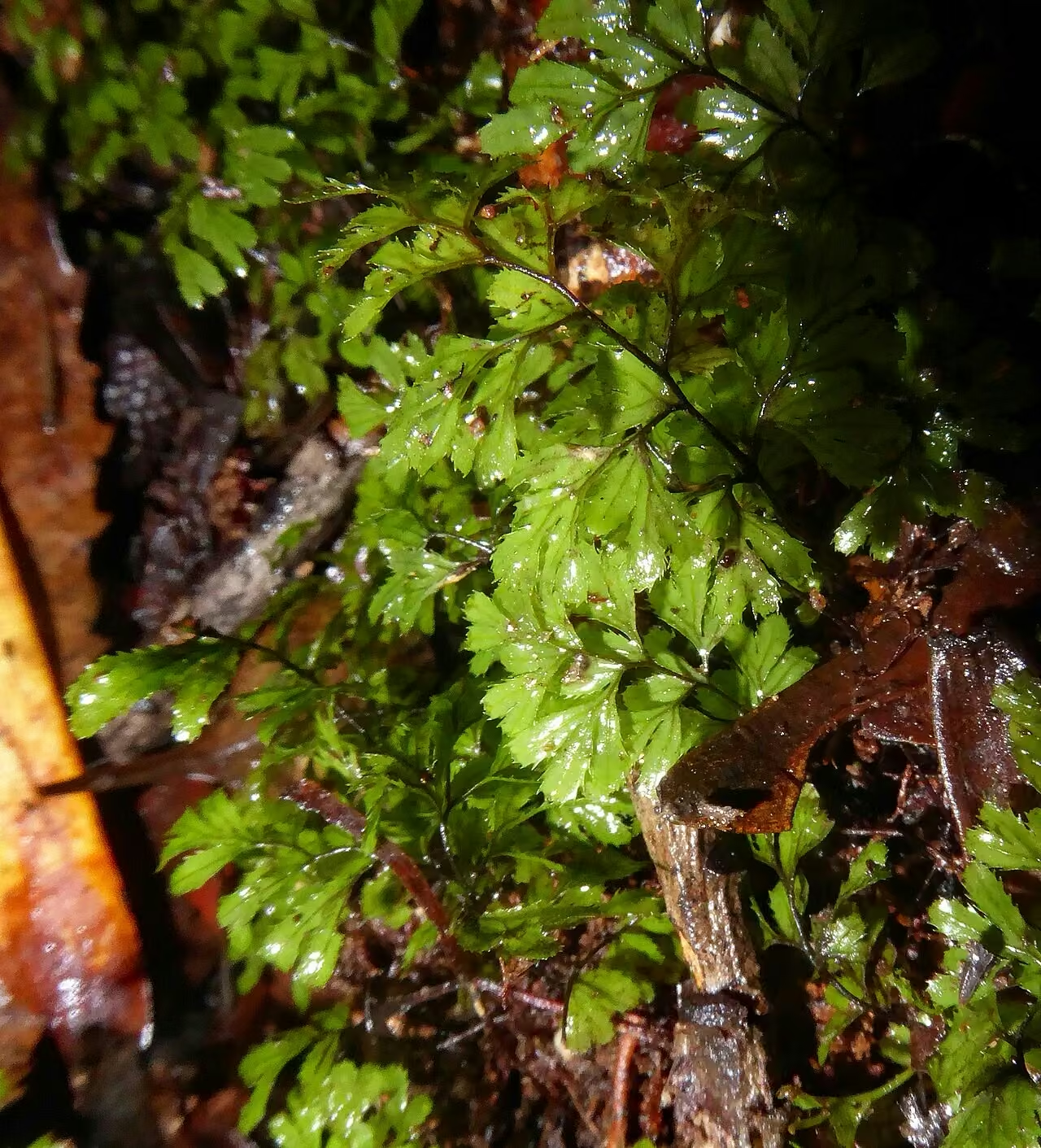
Hymenophyllum revolutum
Hymenophyllum revolutum
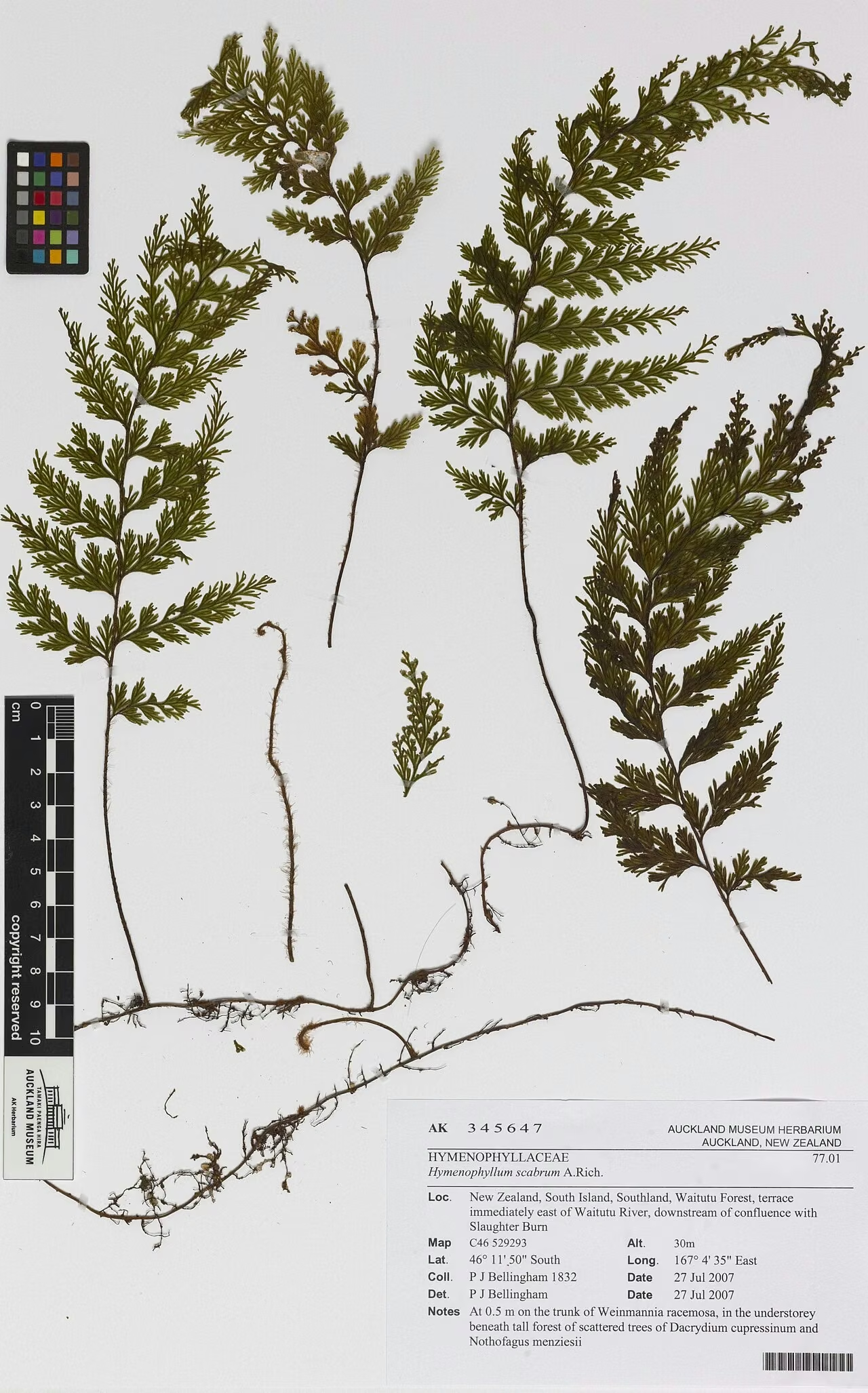
Rough Filmy Fern
Hymenophyllum scabrum
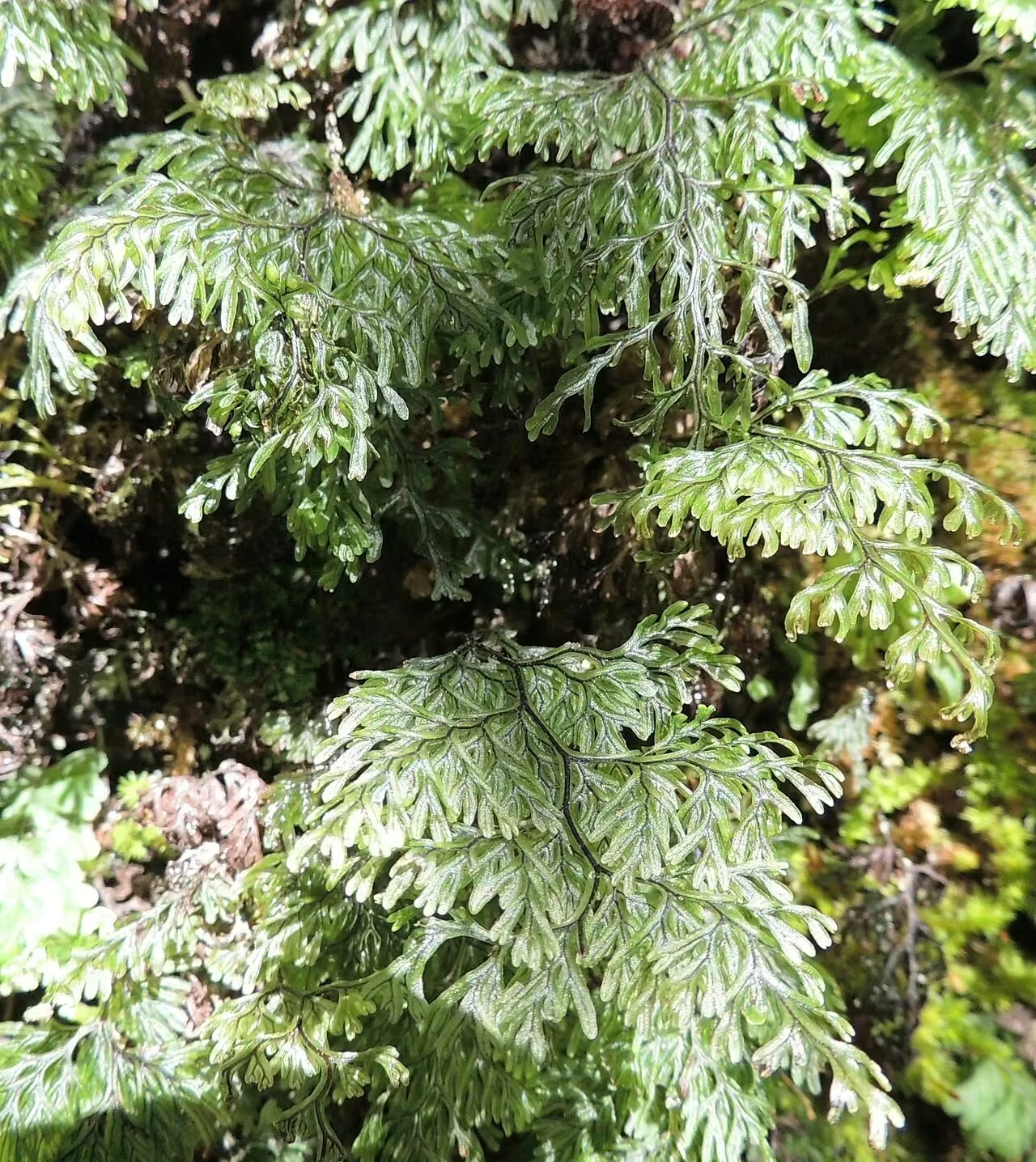
Hairy Filmy Fern
Hymenophyllum villosum
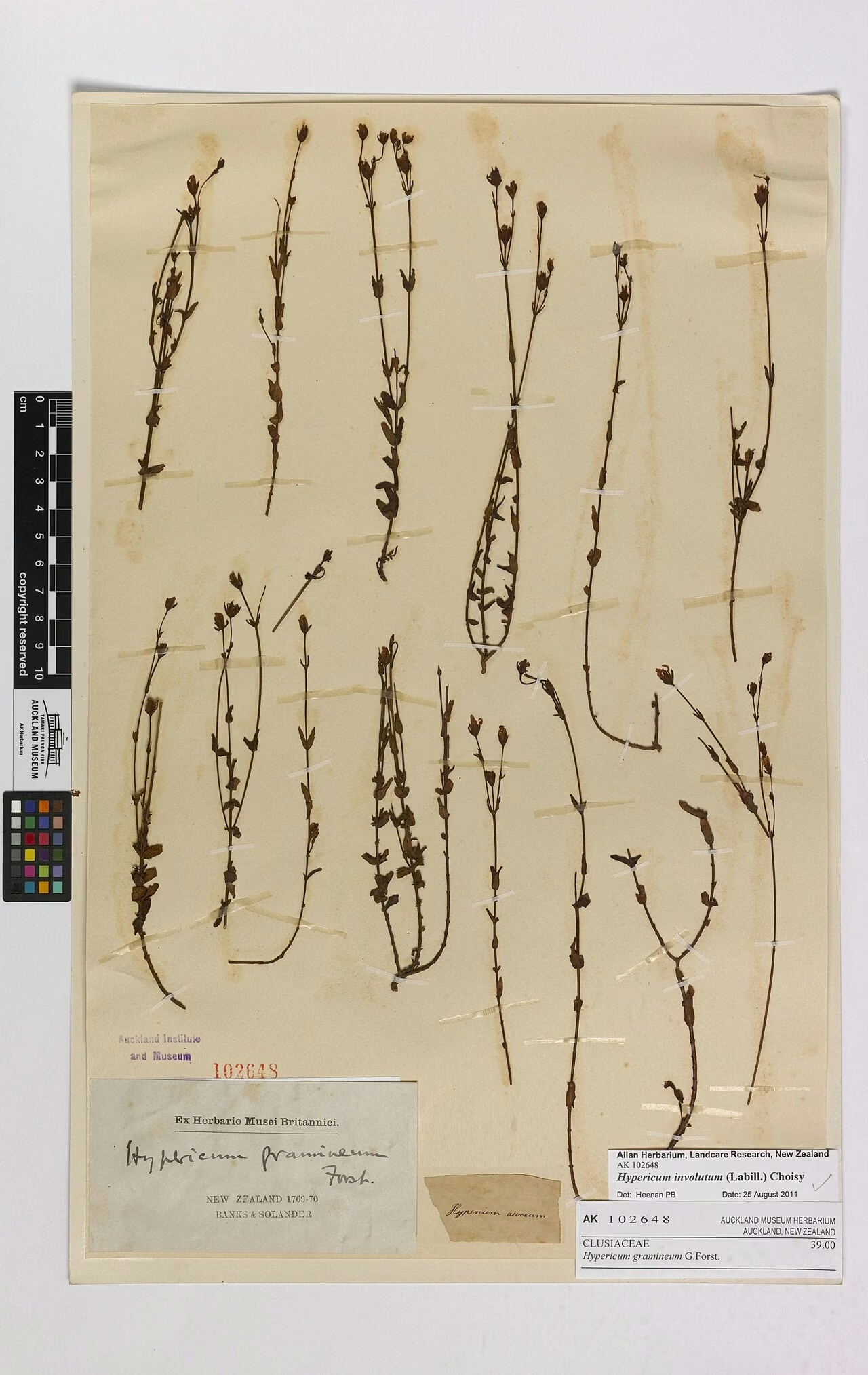
Grassland Hypericum
Hypericum involutum
Plant Conservation
Hymenophyllum rarum was ranked Not Threatened in national assessments from 2004 to 2017; NZPCN lists it as Not Evaluated in 2023. It is Regionally Not Threatened in Auckland and Otago.
Because NZ plants may be a distinct species from the Australian ones, further taxonomic work could change its status. Protecting forest and scrub habitat is the main need.
Frequently Asked Questions
How do you identify Hymenophyllum rarum?
Look for small, twice-pinnate, pale grey-green and hairless fronds with smooth, untoothed margins on the segments and indusia. The grey colour is unusual among New Zealand filmy ferns.
Is Hymenophyllum rarum drought tolerant?
Yes. The Flora of New Zealand notes it shows remarkable resistance to drought and rarely curls up even in dry conditions, which is why it can grow in more exposed sites than other filmy ferns.
Is New Zealand Hymenophyllum rarum the same as the Australian plant?
It is currently treated as one species, but NZ plants have broader, overlapping, grey-green segments, a metallic scent and a different chromosome count, so they may be a distinct species needing further study.
What does the name rarum mean?
The Flora of New Zealand explains that rarum comes from the Latin rarus, meaning scattered, referring to the widely spaced fronds along the rhizome.
Sources and Further Reading
The botanical, growing, and conservation details for Filmy Fern (Hymenophyllum rarum) on this page draw on the New Zealand plant references below. Consult them for full technical records and the latest distribution data.