Small Knotweed
Polygonum plebeium
Last updated:
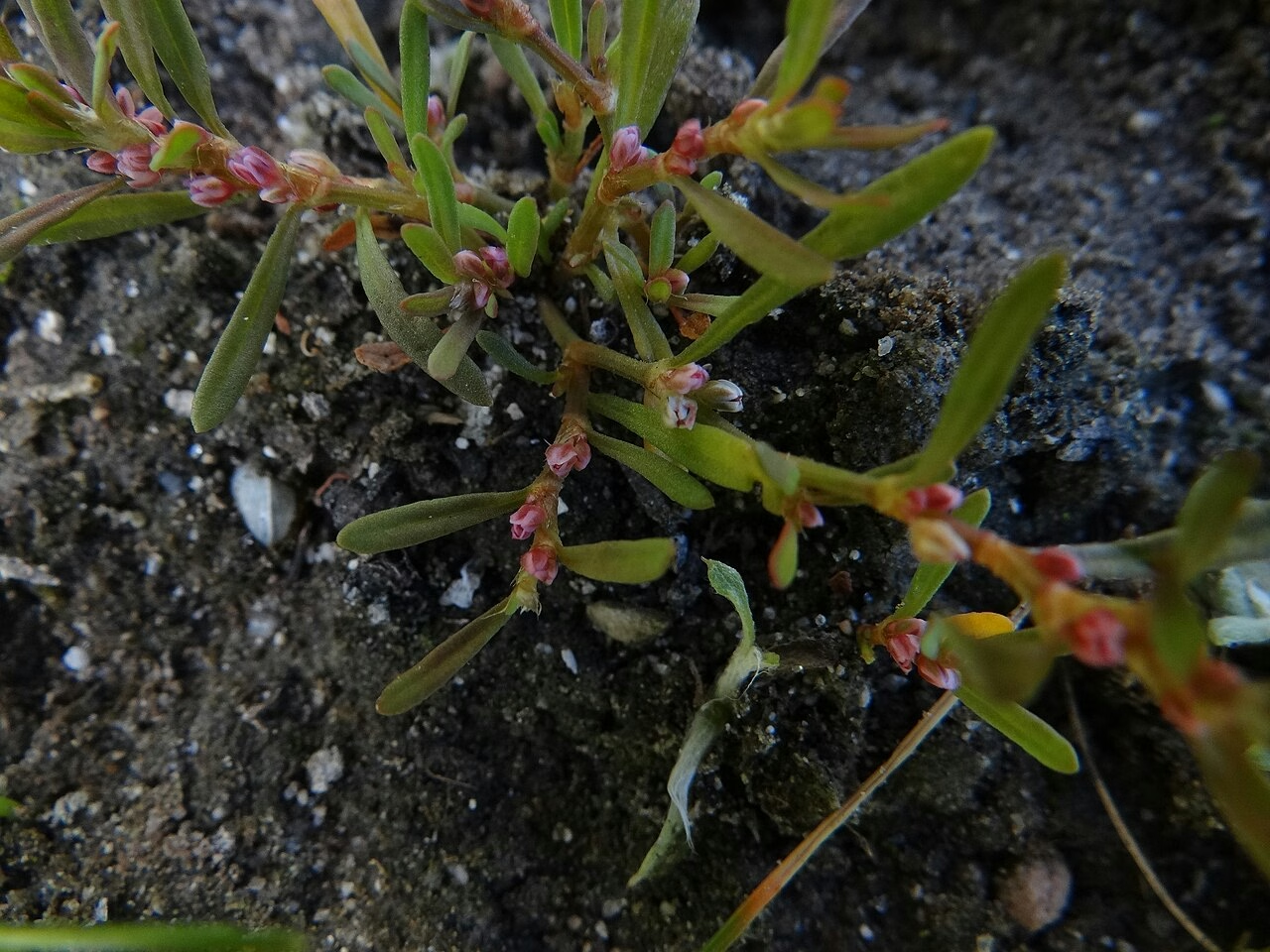
Small knotweed (Polygonum plebeium) is a prostrate annual or short-lived perennial herb whose stems rarely exceed 15 cm, carrying tiny grey-green to blue-green leaves and clusters of pink flowers. It grows on dried lake, pond and river beds, salt and clay pans and occasionally roadside ditches. In New Zealand it was once recorded from Great Barrier Island, the Ruamahanga River, Lake Waikaremoana and Lake Whangape, but it is now nearly gone from the North Island and is mainly known from Central Otago, where it has been found since 1995. It also grows in Africa, India, Asia and Australia, and is ranked At Risk - Declining. Explore more native ground covers in our native plant guide.
Plant Description
Polygonum plebeium is a low, prostrate herb with slender stems usually less than 15 cm long, occasionally reaching 30 cm. The leaves are unstalked, grey-green to blue-green and very small, 3-9 mm long and 0.5-1.5 mm wide, and lack obvious lateral veins.
Small pink flowers are held in clusters in the leaf axils from October to April. The fruit is a three-angled nut 1.2-1.7 mm long that is dark brown to black, smooth and glossy, ripening from November to May.
The plant most likely to be confused with it is the introduced wireweed (Polygonum aviculare), which is much more common on roadsides and in gardens. Wireweed has more obvious lateral leaf veins and dull nuts, whereas small knotweed has veinless-looking leaves and smooth, shiny nuts.
Quick Facts
| Scientific Name | Polygonum plebeium |
|---|---|
| Height | Prostrate; stems usually under 15 cm long (rarely 30 cm) |
| Spread | Small mats a few tens of centimetres across |
| Water Needs | Seasonally wet ground that dries out in summer |
| Light | Full sun on open ground |
| Frost Tolerance | Tolerates Central Otago frosts as an annual or short-lived plant |
| Salt Tolerance | Grows on salt pans, so some tolerance of saline soils |
| Growth Rate | Fast; flowers in its first season |
| Lifespan | Annual to short-lived perennial |
Climate Best Suited to
Small knotweed suits places with a wet season followed by a dry, warm summer that exposes lake and pond beds. In New Zealand its stronghold is the dry, continental climate of Central Otago.
Regional Suitability
| City | Climate Suitability |
|---|---|
| Auckland | Low |
| Wellington | Low |
| Christchurch | Medium |
| Dunedin | Low |
Plant Habitat
In New Zealand the species has a scattered history. North Island records include Great Barrier Island and the Ruamahanga River (historical), Lake Waikaremoana in the 1940s and 1950s, and Lake Whangape in the early 1990s. It is now nearly extirpated from the North Island. In the South Island it has been recorded in Central Otago from 1995 onwards and is now common there in places.
NZPCN describes its habitat as dried lake, pond and river beds, salt and clay pans, and sometimes roadside ditches. These are open, seasonally flooded sites where competition from taller plants is low once the water recedes.
Growing Requirements
Soil Requirements
It grows on bare mud, silt, clay and saline soils exposed as water levels drop.
- Clay pans and salt pans
- Silty or muddy beds of dried lakes and ponds
- Little competition from other vegetation
Light Requirements
A plant of fully open ground with no shade.
- Full sun
- Does not tolerate being overgrown by taller weeds
Water Requirements
It needs ground that is wet or flooded for part of the year and then dries out, exposing bare beds where it can germinate and flower.
- Seasonally flooded, then drying
- Not suited to permanently wet or permanently dry sites
Planting and Establishing
Small knotweed is not grown in gardens and is not offered by nurseries. Its value lies in conserving the few wild populations rather than in cultivation.
If grown for conservation, it would need a shallow tray or depression of bare silty or saline soil that can be kept wet over winter and allowed to dry in summer, in full sun and kept free of weeds.
Ecological Role
Small knotweed is a colonist of ephemeral wetland margins and pans, completing its life cycle quickly while the ground is exposed. Its small pink flowers are likely visited by small insects, though no specific pollinator studies for New Zealand populations were found.
The small hard nuts are shed onto the drying mud. Like other plants of ephemeral wetlands, it depends on a regular cycle of flooding and drying that keeps taller vegetation from closing over the site.
Uses & Significance
Garden Uses
It has no real garden use and is of interest mainly to botanists working on ephemeral wetland plants.
- Conservation collections
- Ephemeral wetland restoration in Central Otago
Ecological Value
It is part of the specialised flora of seasonally dry lake beds and saline pans, a habitat type that is uncommon and easily damaged.
- Member of ephemeral wetland and salt pan communities
- Indicator of intact seasonal flooding regimes
Landscaping Uses
This is not a landscaping plant. Its tiny stature, short life and need for seasonally flooded bare ground mean it would be lost in a planted landscape.
Where restoration projects include ephemeral pans or lake margins in Central Otago, the best approach is to keep those sites open and weed-free rather than to plant them.
Seasonal Care Calendar
Spring
Plants establish on exposed mud as water levels fall, and flowering begins in October.
- Look for prostrate grey-green plants on drying beds
- Avoid driving or trampling across pans
Summer
Flowering continues and the first glossy nuts ripen from November.
- Peak period for finding and recording plants
- Watch for competing weeds such as wireweed
Autumn
Flowering tails off by April and fruiting continues until May.
- Seed is shed onto the mud
- Note population sizes for monitoring
Winter
Many plants die back or are flooded, with the population persisting as seed in the soil.
- No action required
- Avoid disturbing flooded beds
When to Prune and How Much
No pruning is needed. Small knotweed is a short-lived herb that flowers and sets seed within a season.
In conservation plantings the only maintenance is removing taller weeds that would shade or smother the plants.
How to Grow Small Knotweed
Polygonum plebeium is not commercially propagated. NZPCN suggests it is probably easy to grow from fresh seed and cuttings, but no detailed propagation protocol for New Zealand material was found in the sources consulted, so the steps below follow general practice for small annual knotweeds. Given its At Risk - Declining ranking and uncertain status, any collection of wild seed should only be done with permission and for conservation purposes, and plants should be kept separate from the introduced wireweed so the two are not confused. Label any plants clearly with their origin.
From Seed
Fruit ripens from November to May. The small, glossy, three-angled nuts can be gathered once they darken and sown fresh, which NZPCN suggests is likely to succeed.
- Collect a small number of dark, glossy nuts from ripe plants
- Sow fresh onto the surface of a silty or sandy mix
- Stand the tray in shallow water or keep it constantly moist
- Grow in full sun and allow the surface to dry slowly as plants mature
From Cuttings
NZPCN also suggests cuttings are likely to work. Because the plant is short-lived, cuttings are mainly useful for bulking up a few plants to produce more seed.
- Take short stem tips from a healthy plant in late spring or summer
- Insert into a moist, free-draining mix
- Keep humid and out of hot direct sun until rooted
- Move rooted plants into full sun on bare, moist soil
Pests & Diseases
No specific pests or diseases of small knotweed are documented. The main pressure is competition from introduced weeds and grasses that close over the bare ground it needs.
Habitat change, such as draining or permanently flooding lake beds, ditch maintenance and vehicle damage, is a greater threat than any pest.
Cultural Significance
No Māori name or traditional Māori use is recorded for small knotweed in the sources consulted.
Its botanical history is tangled. Colonial botanist John Buchanan reported it from some sites, but NZPCN notes his records lack herbarium verification, and the plant was once treated as a variety of wireweed (Polygonum aviculare var. dryanderi).
Bonus Tip
If you botanise around dry lake beds or salt pans in Central Otago, check prostrate knotweeds carefully: look for leaves without obvious side veins and for smooth, shiny black nuts. Photographs of both features, uploaded to iNaturalist NZ, help track this declining species.
Related Plants
Explore other native plants that share similar characteristics or habitats with Small Knotweed (Polygonum plebeium), offering further insights into New Zealand's diverse flora. These related species provide context and opportunities for complementary planting in your garden.
Plant Conservation
Polygonum plebeium was ranked At Risk - Declining in 2023 with qualifiers DPR, DPS, DPT and SO. It was Data Deficient in earlier assessments. Regionally it is listed as extirpated in Auckland and Data Deficient in Otago and Wellington.
Its habitats of dried lake beds, pans and ditches are vulnerable to drainage, changed water regimes, weed invasion and disturbance. Protecting ephemeral wetlands and salt pans in Central Otago and recording new sightings are the most useful actions.
Frequently Asked Questions
Where does small knotweed grow in New Zealand?
It is now mainly found in Central Otago, where it has been recorded since 1995 and is common in places. Older North Island records came from Great Barrier Island, the Ruamahanga River, Lake Waikaremoana and Lake Whangape, and it is regarded as regionally extirpated from Auckland.
How do you tell Polygonum plebeium from wireweed?
Wireweed (Polygonum aviculare) is a common introduced weed. Small knotweed differs in having leaves without obvious lateral veins and smooth, glossy dark brown to black nuts.
Is small knotweed native to New Zealand?
NZPCN lists it as indigenous but not endemic, as it also occurs in Africa, India, Asia and Australia. NZPCN also notes it is unclear whether it is truly indigenous here or naturalised.
Why is Polygonum plebeium ranked At Risk - Declining?
It appears genuinely scarce, has been nearly lost from the North Island, and depends on seasonally dry lake beds, pans and ditches that are easily modified or overrun by weeds.
Sources and Further Reading
The botanical, growing, and conservation details for Small Knotweed (Polygonum plebeium) on this page draw on the New Zealand plant references below. Consult them for full technical records and the latest distribution data.