Meadow Grass
Poa ramosissima
Last updated:
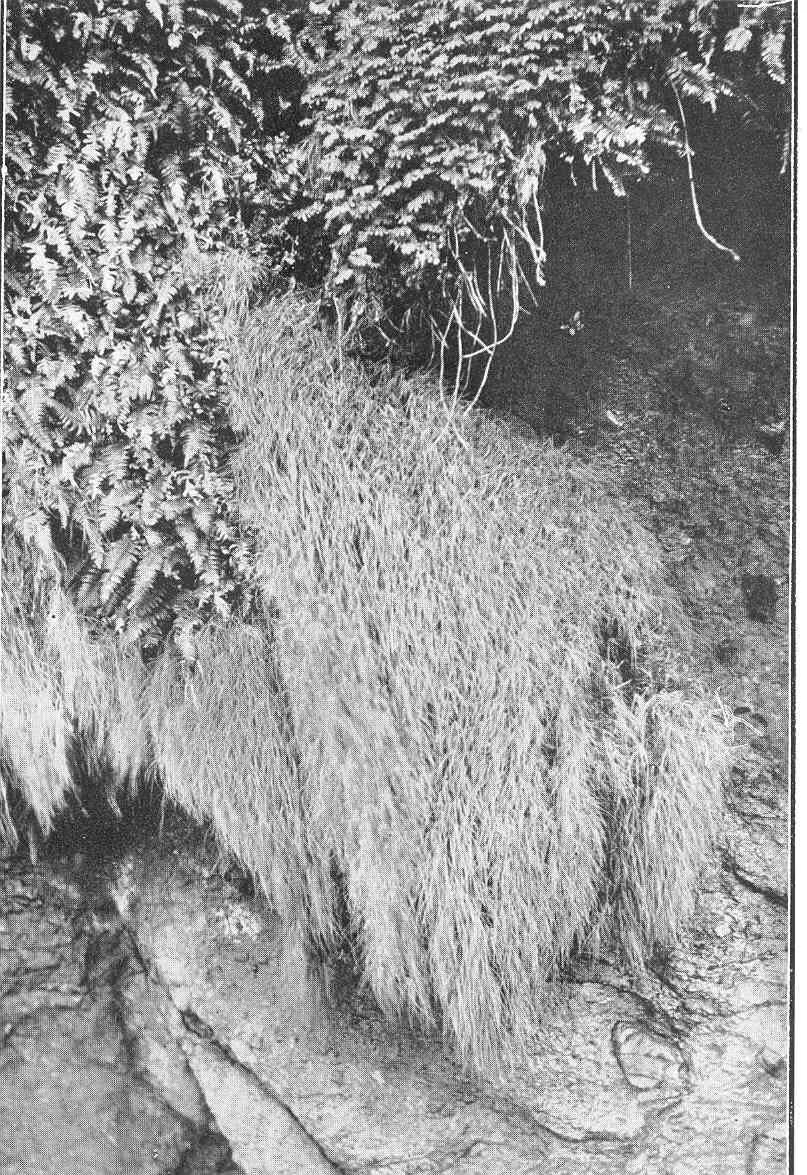
Poa ramosissima is a soft, bright green, turf-forming grass endemic to New Zealand's subantarctic Auckland Islands and Campbell Island/Motu Ihupuku. It spreads from long, bare stems that lie along the ground before turning upright, branching repeatedly to build leafy patches 10 to 30 cm tall. It grows on coastal cliffs, usually close to seabird colonies. Its name means 'most branched'. It is ranked At Risk - Declining (2023) and is range restricted. It is hard to cultivate on the mainland because it will not flourish in warm or dry climates and dislikes humid conditions. Explore more native grasses and flaxes in our native plant guide.
Plant Description
Poa ramosissima forms soft, turfy, bright green patches. These arise from long, bare stems that lie flat along the ground and then turn upward at their tips. The shoots are leafy and much branched, with new branches forming inside the leaf sheaths, and the patches reach about 10 to 30 cm tall.
The ligule is torn or jagged and 1.5 to 4 mm long. The leaf blades are thin, flat and weak, 40 to 150 mm long and 1 to 2 mm wide, with prominent ribs. The contracted panicle is 20 to 100 mm long and carries spikelets 4.5 to 7.5 mm long with three to five florets. Each spikelet contains both bisexual and female florets, an arrangement known as gynomonoecy.
Its closest relative is Poa cookii, another seabird-cliff grass of the southern islands. Poa ramosissima differs in being more slender and turf-forming rather than a large tufted plant, and its leaf surfaces and spikelets are rough and finely papillose.
Quick Facts
| Scientific Name | Poa ramosissima |
|---|---|
| Height | 0.1-0.3 m |
| Spread | Forms spreading turfy patches from prostrate stems |
| Water Needs | Constantly moist, cool conditions |
| Light | Full sun to light shade on open cliffs |
| Frost Tolerance | Good; subantarctic climate with frequent frost and snow |
| Salt Tolerance | High; grows on salt-spray-exposed coastal cliffs |
| Growth Rate | Moderate in cool climates |
| Lifespan | Perennial |
Climate Best Suited to
Suited to the cold, wet, windy and cloudy subantarctic climate, with cool summers and little temperature variation. It does not thrive in warm or dry mainland conditions.
Regional Suitability
| City | Climate Suitability |
|---|---|
| Auckland | Low |
| Wellington | Low |
| Christchurch | Low |
| Dunedin | Low |
Plant Habitat
Poa ramosissima is endemic to New Zealand's subantarctic islands, occurring on the Auckland Islands and on Campbell Island/Motu Ihupuku. Both island groups lie far to the south of the South Island in the Southern Ocean.
It grows on coastal cliffs, usually in association with bird colonies. Seabirds fertilise these cliff sites with guano and disturb the soil, creating rich, open ground where the turf-forming grass can spread.
Growing Requirements
Soil Requirements
Its cliff habitat has peaty, wet soils enriched by seabird guano.
- Moist, organic-rich mix in cultivation
- Good drainage despite constant moisture
- Moderate to high fertility, reflecting bird-colony soils
Light Requirements
Subantarctic skies are usually overcast, so the plant is used to bright but diffuse light.
- Bright, cool position
- Shade from hot afternoon sun in mainland gardens
Water Requirements
Rain, drizzle and sea mist keep its habitat damp throughout the year.
- Never allow it to dry out
- Good air movement to offset its dislike of humid, still conditions
Planting and Establishing
On the mainland it is a plant for specialist growers in the coolest districts, such as coastal Southland or Otago. Grow it in a pot or a cool, shaded bed with moist, organic-rich soil and plenty of air movement.
Avoid warm, sheltered corners and glasshouses that become hot and humid, as NZPCN notes the plant dislikes humid conditions and will not flourish in warm or dry climates.
Ecological Role
Poa ramosissima flowers in November and December and fruits from December to March. It is wind-pollinated, and its mixture of bisexual and female florets favours some cross-pollination.
As a grass of seabird colonies, it is part of the vegetation that develops on nutrient-rich, disturbed cliff soils. Its turf helps bind these soils, which are constantly worked by burrowing and nesting birds.
Uses & Significance
Garden Uses
Its garden value is mainly as a rarity for collectors of subantarctic plants.
- Specialist collections of subantarctic flora
- Cool, coastal gardens in the far south
- Educational displays on island endemism
Ecological Value
It is one of the endemic grasses that make up the distinctive cliff vegetation of the Auckland and Campbell Islands.
- Stabilises soils around seabird colonies
- Contributes to the endemic flora of the subantarctic islands
- Part of a World Heritage-listed island ecosystem
Landscaping Uses
In a cool garden its bright green, soft turf contrasts with the grey and silver foliage of other southern coastal plants. Let it drape over the edge of a low wall or large pot where the prostrate stems can hang down.
It is not suitable as a lawn substitute, as it needs constant moisture and cool air to stay healthy.
Seasonal Care Calendar
Spring
New shoots develop as days lengthen.
- Divide rooted pieces
- Refresh potting mix
Summer
Flowering occurs in November and December, with seed ripening from December.
- Keep cool and moist
- Collect seed when panicles dry
Autumn
Fruiting continues until about March, then growth slows.
- Sow fresh seed
- Watch for fungal problems in humid spells
Winter
It is hardy to cold but should not sit in stagnant wet.
- Ensure drainage
- Keep in a cool, airy position
When to Prune and How Much
Little pruning is needed. Clip back spent flowering stems after seed fall and remove any patches of dead turf to keep the plant fresh.
Long prostrate stems can be shortened if they extend beyond the pot or bed, and any pieces with roots can be potted up.
How to Grow Meadow Grass
NZPCN describes Poa ramosissima as difficult to propagate and grow, although it can be raised from fresh seed and from rooted pieces. The main challenge is climate rather than technique: the plant will not flourish in warm or dry climates and dislikes humid conditions. Collecting from the Auckland Islands or Campbell Island requires a Department of Conservation permit, as both are nature reserves and part of a World Heritage Area, so material should come from existing cultivated stock.
From Seed
Seed ripens from December to March and should be sown fresh. Keep seed trays cool throughout germination, as warm conditions are poorly tolerated.
- Collect panicles as they dry in late summer
- Sow on a moist, free-draining seed mix and cover lightly
- Place in a cool, shaded spot outdoors with good air movement
- Keep the mix moist but avoid enclosing the tray in a humid cover
- Pot seedlings on once they have several leaves
From Rooted Pieces (Division)
The prostrate stems produce roots along their length, so pieces with roots can be detached from established plants with little harm to the parent. Pieces taken in spring, when cool moist weather favours root growth, establish most reliably, and a single healthy plant can supply several new ones.
- In spring, select a rooted section of stem with an upright tip
- Cut it free and pot into a moist, organic-rich mix
- Keep cool, shaded and ventilated
- Grow on until well established before planting out
Pests & Diseases
No specific pests or diseases are recorded. In cultivation it is prone to decline in warm, dry or humid conditions, and still, humid air may encourage fungal rot in the dense turf.
On the islands, introduced mammals such as pigs and cattle historically damaged vegetation on parts of the Auckland and Campbell Islands; cattle, sheep and rats have since been removed from several islands.
Cultural Significance
No Māori name or traditional use for Poa ramosissima is recorded in the sources consulted. The species bears the authority of Joseph Dalton Hooker, who botanised on the subantarctic islands during the 1839 to 1843 Ross Antarctic expedition, and an early variety name, Poa ramosissima var. beta, is now treated as a synonym.
The species is part of the subantarctic flora that drew botanists to the Auckland and Campbell Islands, which are now protected as nature reserves.
Bonus Tip
If you try it on the mainland, grow it in a clay pot plunged in damp sand in the coolest, airiest spot you have. This keeps the roots cool and moist without the stagnant humidity that the species dislikes.
Related Plants
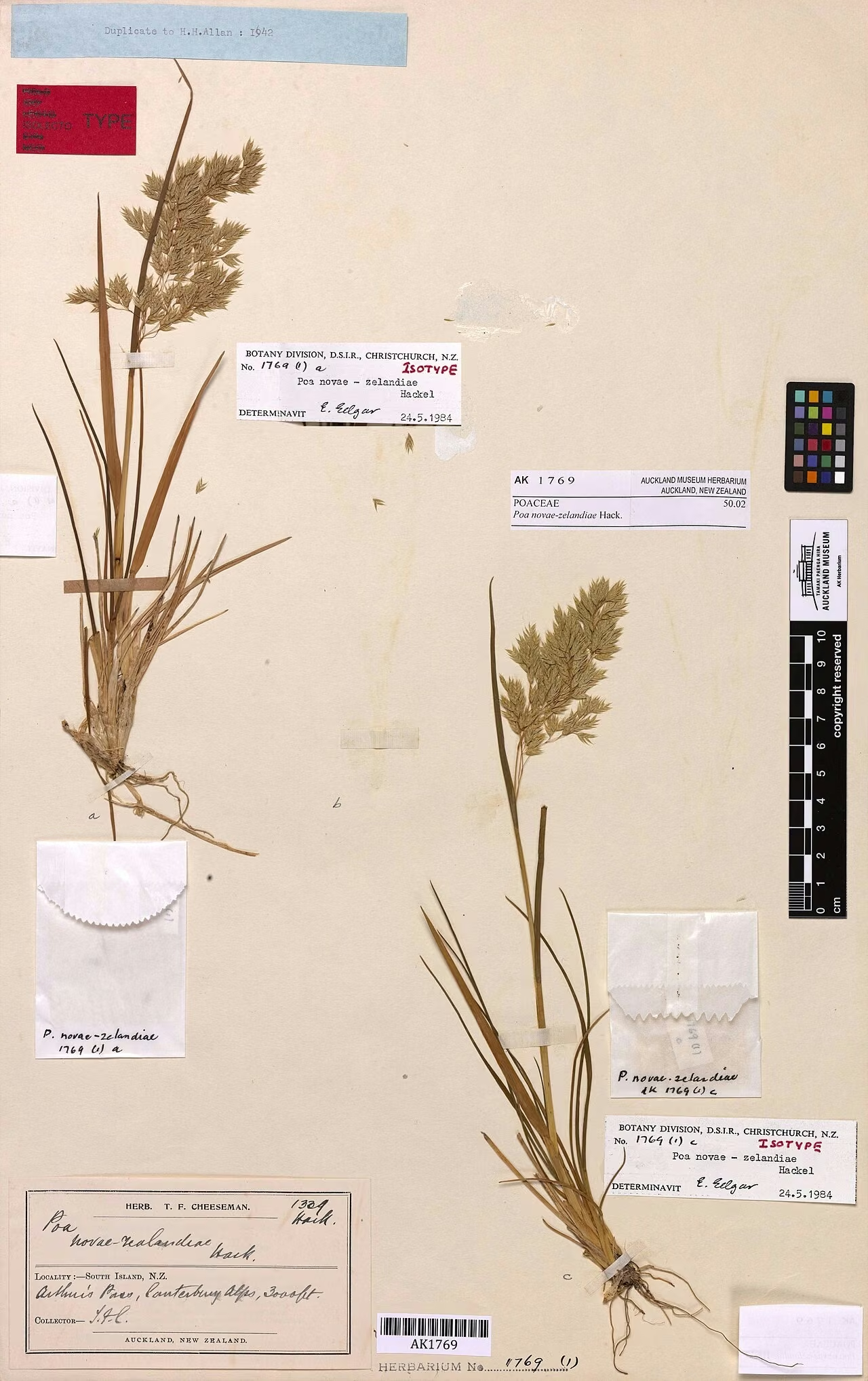
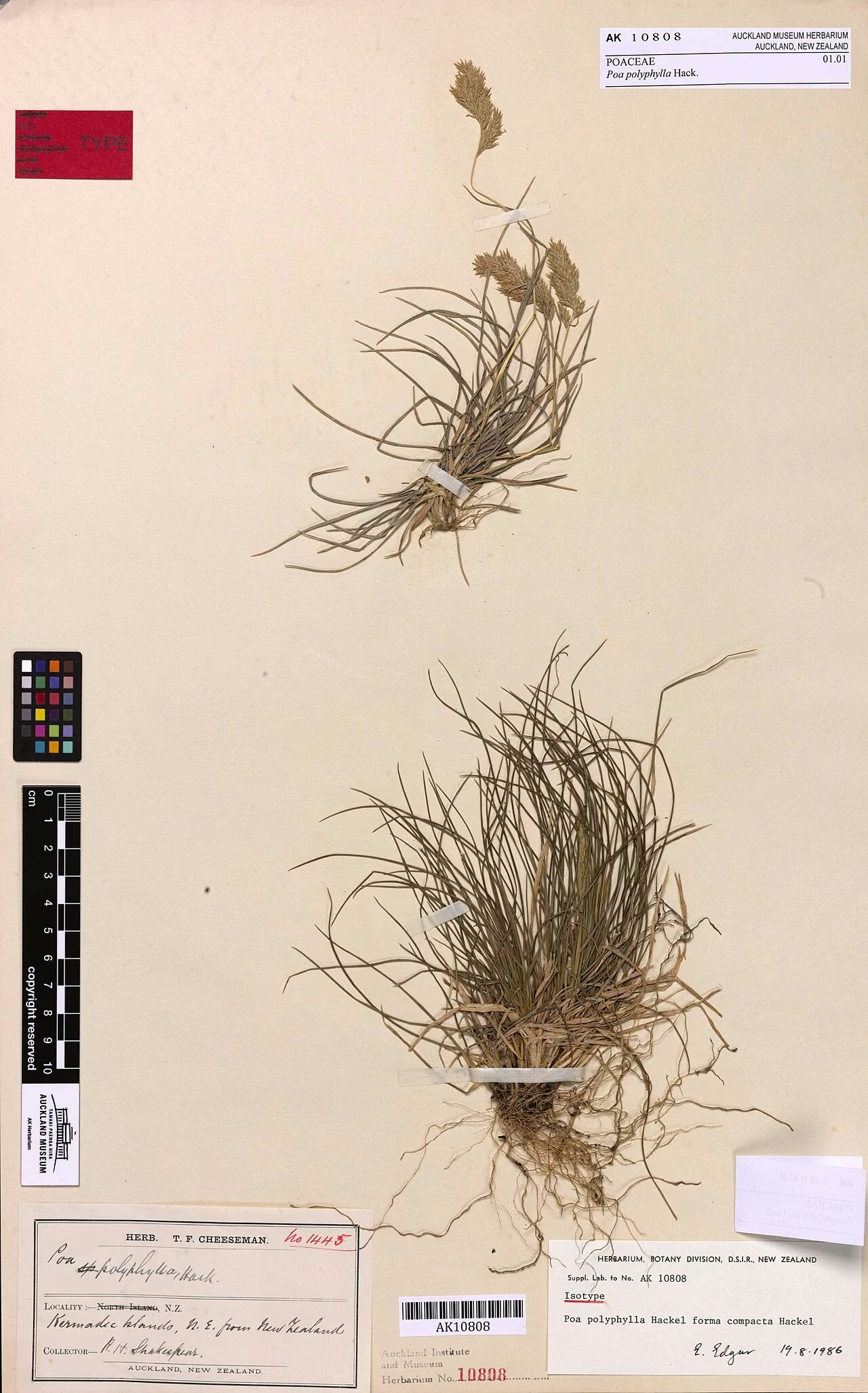
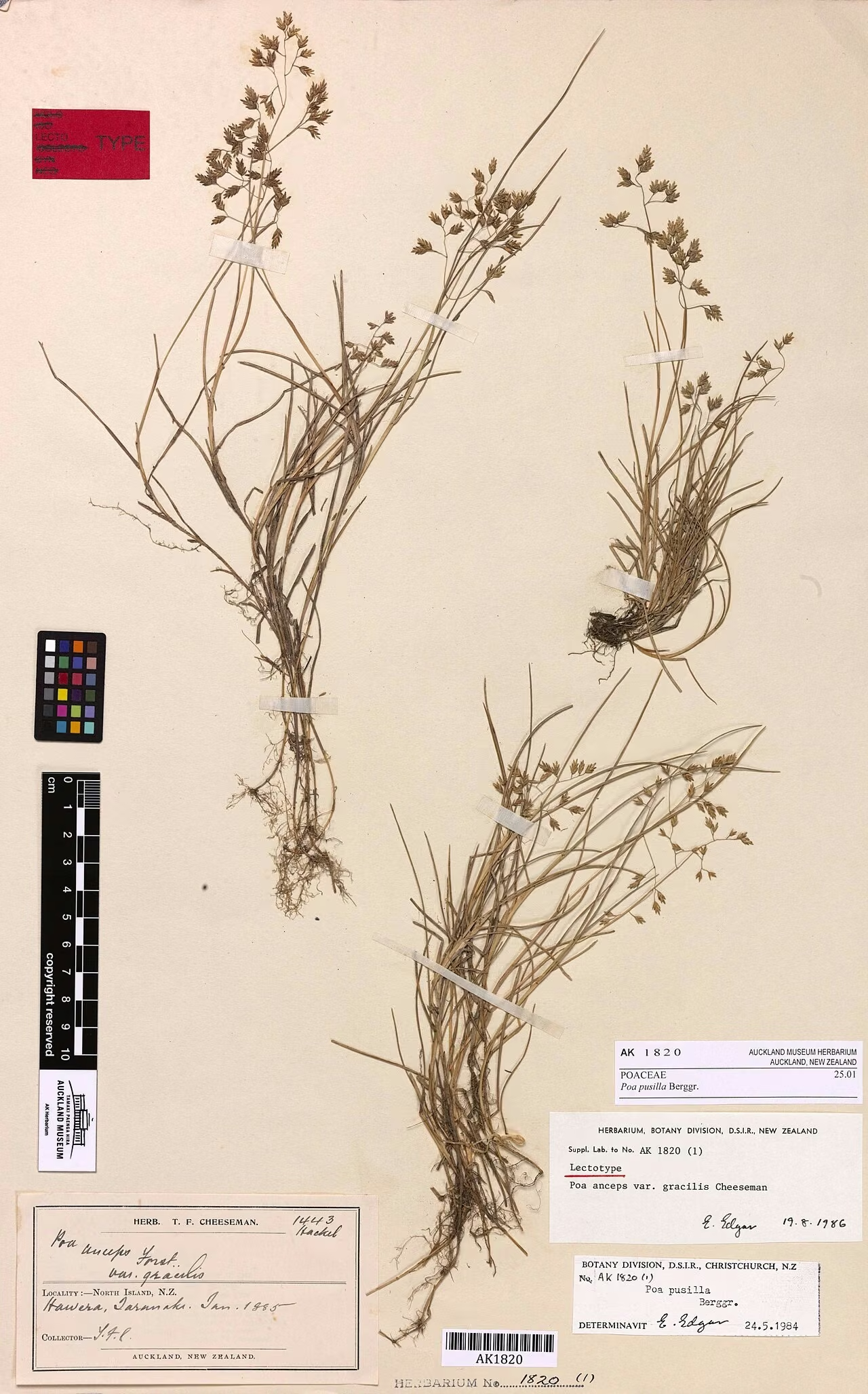
Explore other native plants that share similar characteristics or habitats with Meadow Grass (Poa ramosissima), offering further insights into New Zealand's diverse flora. These related species provide context and opportunities for complementary planting in your garden.
Plant Conservation
Poa ramosissima is ranked At Risk - Declining (2023) with the qualifier RR (Range Restricted). It was previously classed as Naturally Uncommon. The sources consulted do not explain the cause of the decline.
Its entire range lies within the subantarctic nature reserves, where pest eradication has helped native vegetation recover. Continued biosecurity to keep new pests off the islands is the most important protection.
Frequently Asked Questions
Where does Poa ramosissima grow?
It is found only on the subantarctic Auckland Islands and Campbell Island/Motu Ihupuku, on coastal cliffs usually associated with seabird colonies.
How do you tell Poa ramosissima from Poa cookii?
Both grow on subantarctic seabird cliffs, but Poa ramosissima is a more slender, turf-forming plant rather than a large tufted one, and its leaf surfaces and spikelets are rough with tiny papillae.
Can Poa ramosissima be grown on the mainland?
NZPCN describes it as difficult. It can be grown from fresh seed and rooted pieces, but it will not flourish in warm or dry climates and dislikes humid conditions.
What does the name ramosissima mean?
It is Latin for 'most branched', referring to the many-branched, leafy shoots that build up its soft turf.
Sources and Further Reading
The botanical, growing, and conservation details for Meadow Grass (Poa ramosissima) on this page draw on the New Zealand plant references below. Consult them for full technical records and the latest distribution data.