Meadow Grass
Poa schistacea
Last updated:
Poa schistacea is a grey-green to yellow-green grass endemic to the mountains of western Otago and north-eastern Southland. It spreads by long rhizomes through scree and piles of rock debris derived from schist or ultramafic rock, sending up stiff, narrow, inrolled leaves 10 to 30 cm tall, occasionally 60 cm. Its name means 'schist-coloured', a grey bordering on blue that matches the rock it grows in. Plants are dioecious, with male and female flowers on separate plants. It is ranked Not Threatened nationally but is regarded as Regionally Naturally Uncommon in Otago. Explore more native grasses and flaxes in our native plant guide.
Plant Description
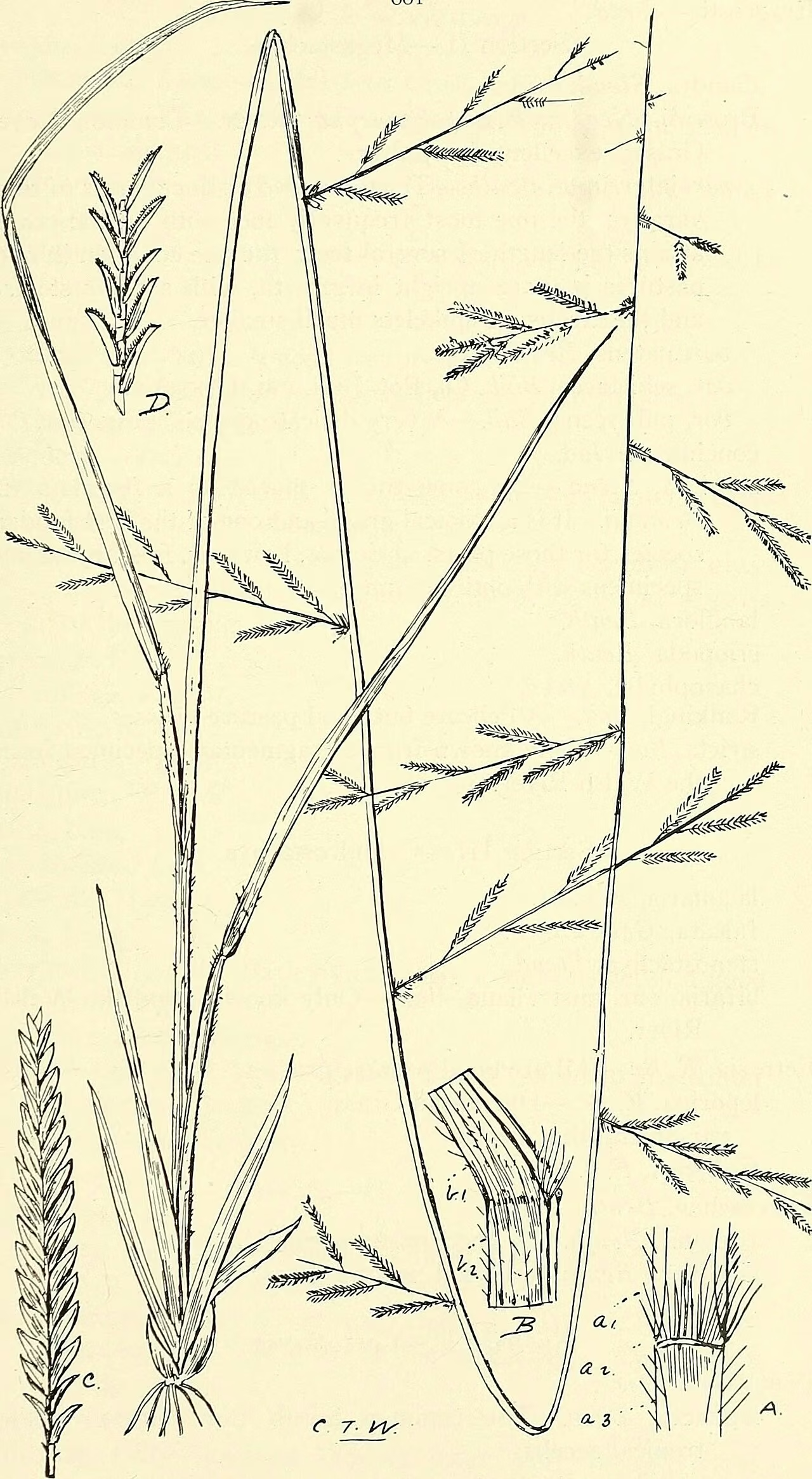
Poa schistacea is a perennial grass with long rhizomes that run through loose rock, sending up shoots at intervals so that plants appear scattered across a scree rather than forming one clump. In some areas plants are only shortly rhizomatous and instead form dense, erect tufts. Shoots are 10 to 30 cm tall, rarely up to 60 cm.
The leaves are narrow, rolled inward (involute) and greyish-green to yellow-green, held stiffly erect or curving. The plant is dioecious: male plants carry florets with anthers, while female plants carry florets with stigmas and ovaries.
NZPCN highlights a combination of features that make it distinctive: its eroding rock or scree habitat, diffusely rhizomatous habit, narrow inrolled leaves, laterally compressed spikelets, pointed (acute) glumes, and a lemma with obvious tufts of hairs at its base.
Quick Facts
| Scientific Name | Poa schistacea |
|---|---|
| Height | 0.1-0.3 m, occasionally to 0.6 m |
| Spread | Spreads by long rhizomes through scree |
| Water Needs | Moist; often in damp parts of screes |
| Light | Full sun on open scree |
| Frost Tolerance | High; a mountain scree species |
| Salt Tolerance | None recorded; an inland mountain plant |
| Growth Rate | Slow |
| Lifespan | Perennial |
Climate Best Suited to
Adapted to the continental mountain climate of western Otago and Southland, with cold winters, snow, frost and dry, sunny spells in summer.
Regional Suitability
| City | Climate Suitability |
|---|---|
| Auckland | Low |
| Wellington | Low |
| Christchurch | Low |
| Dunedin | Medium |
Plant Habitat
Poa schistacea is endemic to the South Island, in north-eastern Southland and western Otago. It occurs on ultramafic and schist mountains from the Livingstone Range in the south to the Otago Lakes District. Allan Herbarium collections come from the Remarkables, the Harris Mountains, the Pisa Range and the Richardson Mountains.
Its habitat is scree and rock debris piles derived from schist or ultramafic rock, often in damp areas. Herbarium labels also record it from schist cliffs and rock ledges. These mobile, sparsely vegetated slopes favour plants that can creep through the stones by rhizomes.
Growing Requirements
Soil Requirements
It grows in loose rock debris with very little soil, on schist or ultramafic parent rock.
- Deep, stony scree mix in cultivation
- Very free drainage combined with moisture below the surface
- Low fertility
Light Requirements
Screes are open and unshaded.
- Full sun
- Open, airy sites
Water Requirements
NZPCN notes it is often found in damp areas of scree, where moisture seeps beneath the stones.
- Keep the lower root zone moist
- Surface stones should dry quickly after rain
Planting and Establishing
Grow it in a deep scree bed made from crushed rock and a little grit-based mix, ideally 30 cm or more deep so the rhizomes have room to run. Planting in autumn or spring in a cool southern garden gives it the best chance.
As plants are not sold commercially, it is a species for specialist alpine growers working from cultivated or legally collected material.
Ecological Role
As a dioecious grass, it needs both male and female plants nearby for seed to be set, with wind carrying pollen between them.
Its creeping rhizomes allow it to survive the constant movement of scree, re-emerging between shifting stones. It is one of a group of specialised plants that colonise the schist and ultramafic screes of the southern lakes mountains.
Uses & Significance
Garden Uses
It is best suited to specialist scree gardens in cool southern districts.
- Scree and moraine gardens
- Collections of Otago mountain plants
- Demonstration plantings of scree flora
Ecological Value
It contributes to the sparse plant cover of unstable mountain screes.
- Rhizomes help knit loose rock debris
- Part of the specialised schist and ultramafic scree flora
- Regionally uncommon in Otago, adding to local biodiversity value
Landscaping Uses
Its blue-grey, schist-coloured foliage blends naturally into a planting of grey Otago schist, creating a muted, authentic mountain scene. Scatter shoots through the scree rather than planting in tight clumps.
Contrast it with bright green cushion plants or the silver rosettes of scree daisies for a more varied effect.
Seasonal Care Calendar
Spring
Shoots resume growth as snow clears from the screes.
- Check rhizomes have not been dislodged
- Topdress with fresh rock chips
Summer
The main growing season; flowering times are not documented in the sources consulted.
- Water in prolonged drought
- Note which plants are male and which are female when flowers appear
Autumn
Growth slows as temperatures drop.
- Collect any seed set on female plants
- Plant new divisions
Winter
Dormant and often under snow in the wild.
- Avoid waterlogging
- No intervention needed
When to Prune and How Much
No pruning is needed. Dead leaves and old flowering stems can be pulled away by hand in spring.
Do not dig around the plant, as this can sever the running rhizomes.
How to Grow Meadow Grass
Poa schistacea is not commercially available, and no species-specific propagation notes are published by NZPCN or the Flora. Its biology points to two approaches. Because it is dioecious, seed is only set where male and female plants grow together, so a mixed group is needed for seed. Its long rhizomes make division of established cultivated plants the more reliable method. Do not dig plants from the wild, particularly as it is regionally uncommon in Otago, and seek permission before collecting any seed on public conservation land.
From Seed
Seed comes only from female plants that have been pollinated by a nearby male. Like many mountain grasses, a period of winter cold may help germination.
- Collect ripe seed heads from female plants when they dry
- Sow on a gritty seed mix and cover with a thin layer of fine grit
- Leave pots outdoors over winter in a cool, exposed place
- Keep moist and prick out seedlings into deep pots
- Grow on until rhizomes begin to form before planting into scree
By Rhizome Division
Shoots arising along the rhizome can be separated with a section of rhizome and roots. Spring division gives a full growing season for establishment.
- Carefully excavate the stones around a shoot to expose its rhizome
- Cut a section of rhizome with roots and at least one shoot
- Pot into a deep pot of gritty mix
- Keep cool and moist until new growth shows, then plant into scree
Pests & Diseases
No pests or diseases are recorded for this species. In cultivation, poor drainage leading to rot is the most likely problem.
In the wild, browsing by introduced mammals and the spread of weeds onto disturbed slopes are general pressures on mountain flora, although no specific threats are documented for Poa schistacea.
Cultural Significance
No Māori name or traditional use for Poa schistacea is recorded in the sources consulted. It was described by the New Zealand grass specialist Elizabeth Edgar, whose work underpins the modern treatment of New Zealand grasses.
Its name links it directly to the schist landscape of Central and western Otago, one of the defining rocks of the region.
Bonus Tip
When searching for it on a schist scree, look in the damper parts of the slope, such as below snowbanks or where seepage darkens the stones; NZPCN notes it is often found in damp areas.
Related Plants
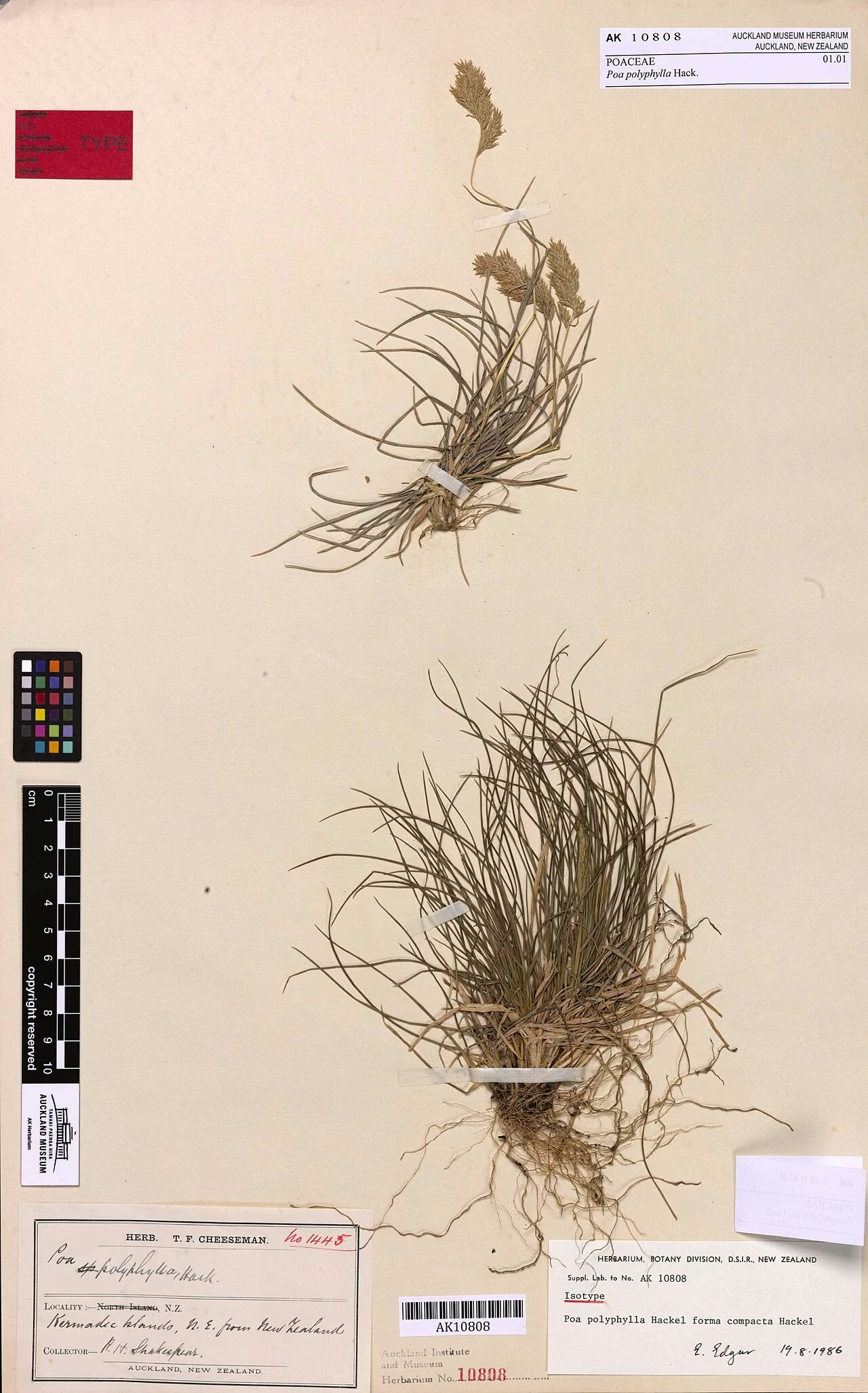
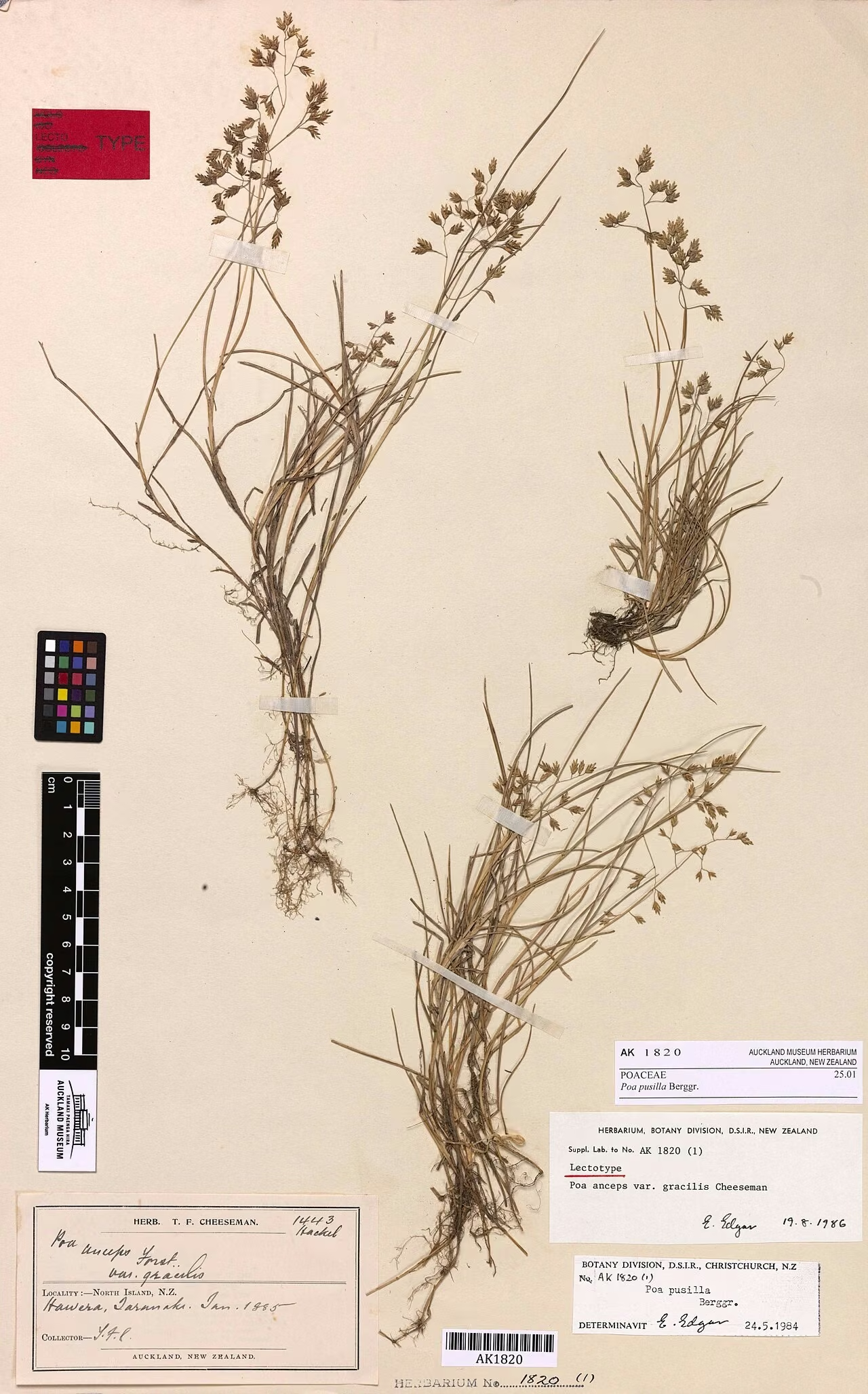
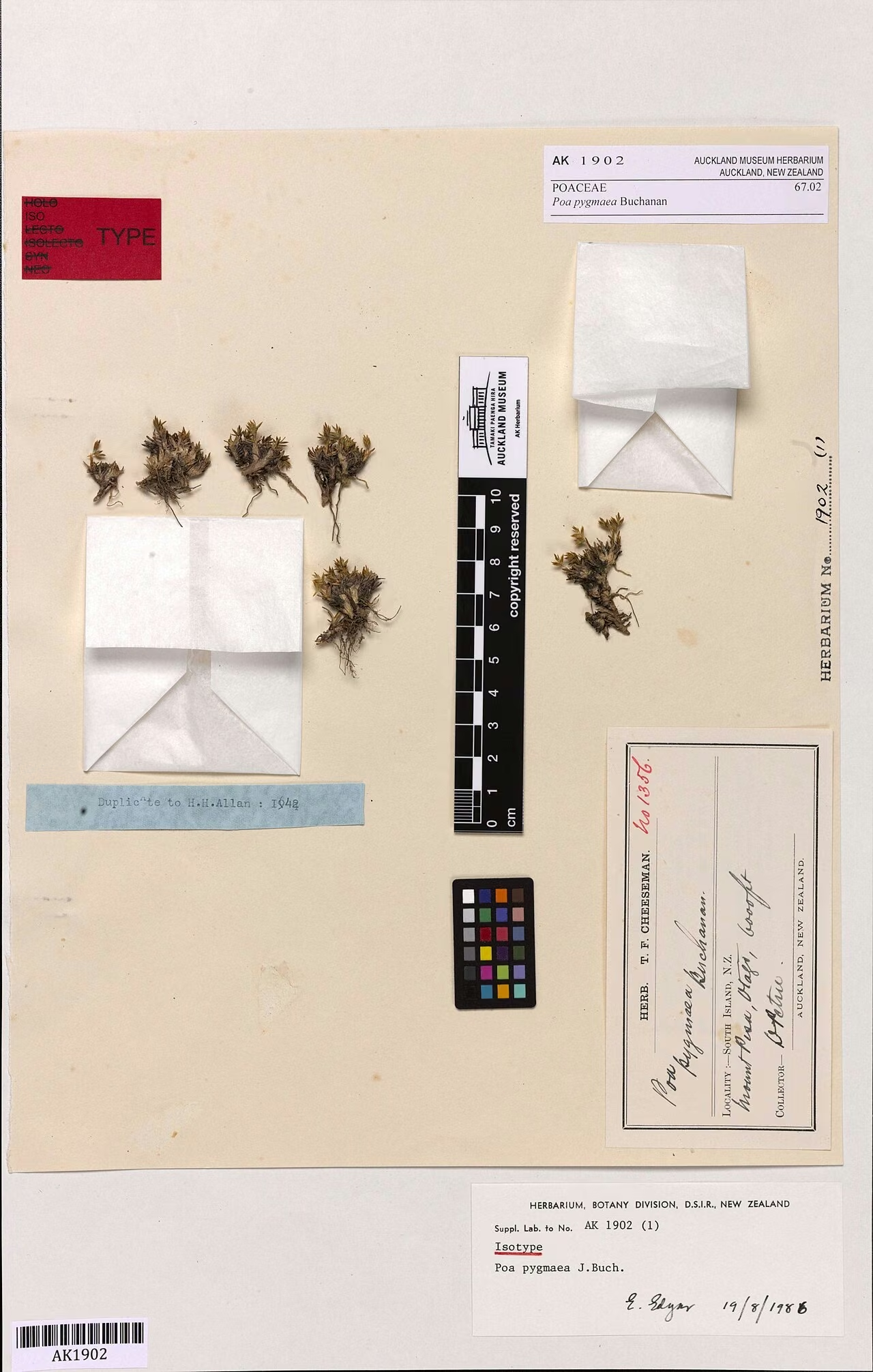
Explore other native plants that share similar characteristics or habitats with Meadow Grass (Poa schistacea), offering further insights into New Zealand's diverse flora. These related species provide context and opportunities for complementary planting in your garden.
Plant Conservation
Poa schistacea is ranked Not Threatened nationally (2023). In the 2025 Otago regional assessment it is listed as At Risk - Regionally Naturally Uncommon, with several qualifiers reflecting its restricted range and sparse occurrence in the region.
Its screes are mostly in high, rugged country, some of it within conservation land. Avoiding disturbance of scree habitats and controlling browsing animals help maintain it.
Frequently Asked Questions
What does schistacea mean?
The epithet schistacea means 'schist-coloured', a grey bordering on blue, which describes the colour of the plant and the schist screes it grows on.
Where does Poa schistacea grow?
It grows on schist and ultramafic mountains from the Livingstone Range to the Otago Lakes District, with herbarium records from the Remarkables, Harris Mountains, Pisa Range and Richardson Mountains.
How do you recognise Poa schistacea?
Look for a scree grass that spreads by rhizomes, with narrow inrolled grey-green leaves, laterally compressed spikelets, pointed glumes and obvious tufts of hair at the base of the lemma.
Is Poa schistacea threatened?
Nationally it is Not Threatened (2023), but the 2025 Otago regional assessment lists it as Regionally Naturally Uncommon.
Sources and Further Reading
The botanical, growing, and conservation details for Meadow Grass (Poa schistacea) on this page draw on the New Zealand plant references below. Consult them for full technical records and the latest distribution data.