Drooping Poa
Poa novae zelandiae
Last updated:
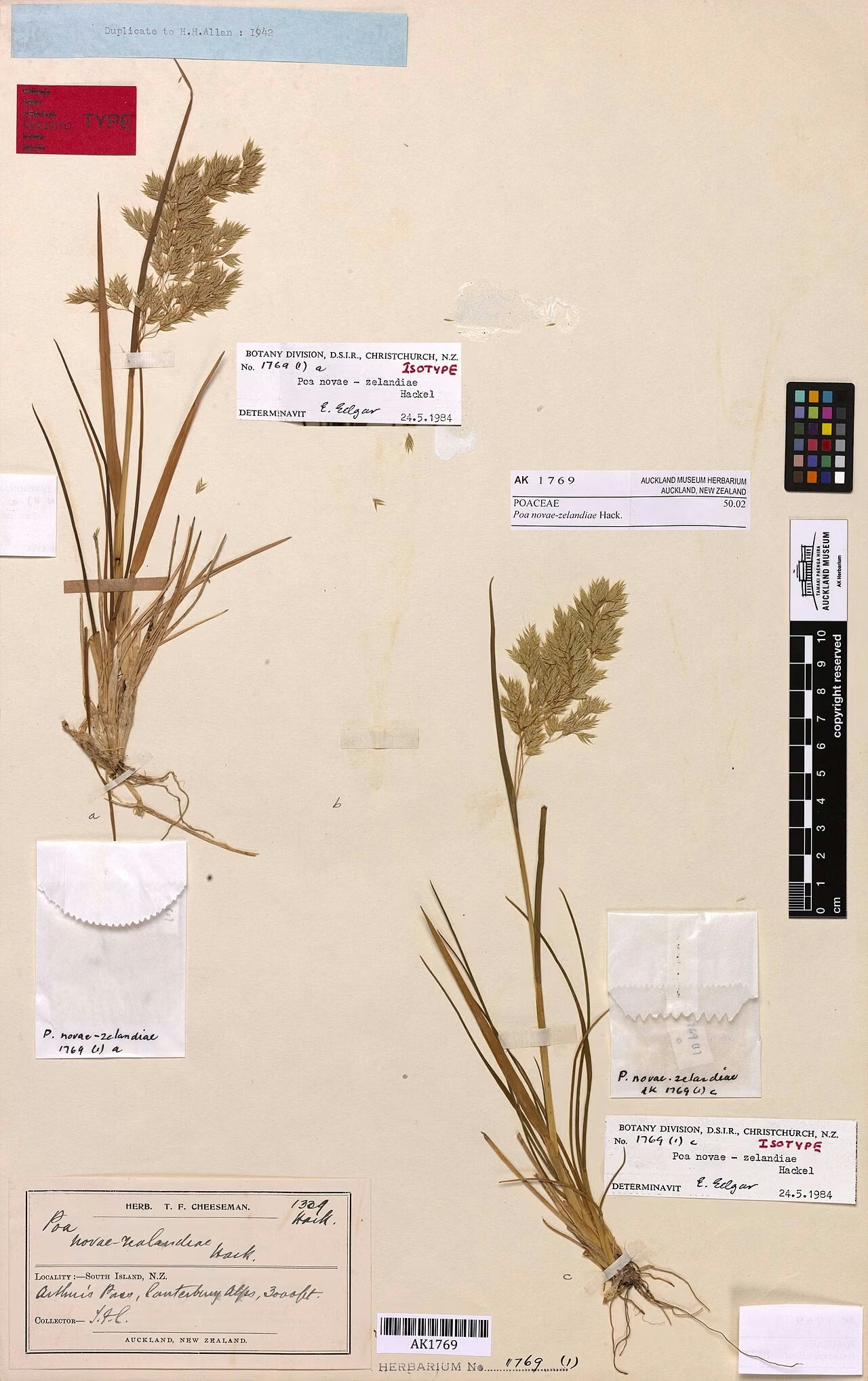
Drooping poa (Poa novae-zelandiae) is a stout, bright green tufted grass endemic to New Zealand's mountains. Tufts vary greatly in size but reach about 30 cm, with erect leaves that taper sharply towards the tip and dense flower heads that often droop at the top, the feature behind its common name. It grows from the Raukumara Range southwards in the North Island, throughout the South Island mountains (especially along and west of the Main Divide) and on Mount Anglem on Stewart Island/Rakiura. It is ranked Not Threatened and is a characteristic grass of montane to alpine scree, rock and fellfield. Explore more native grasses and flaxes in our native plant guide.
Plant Description
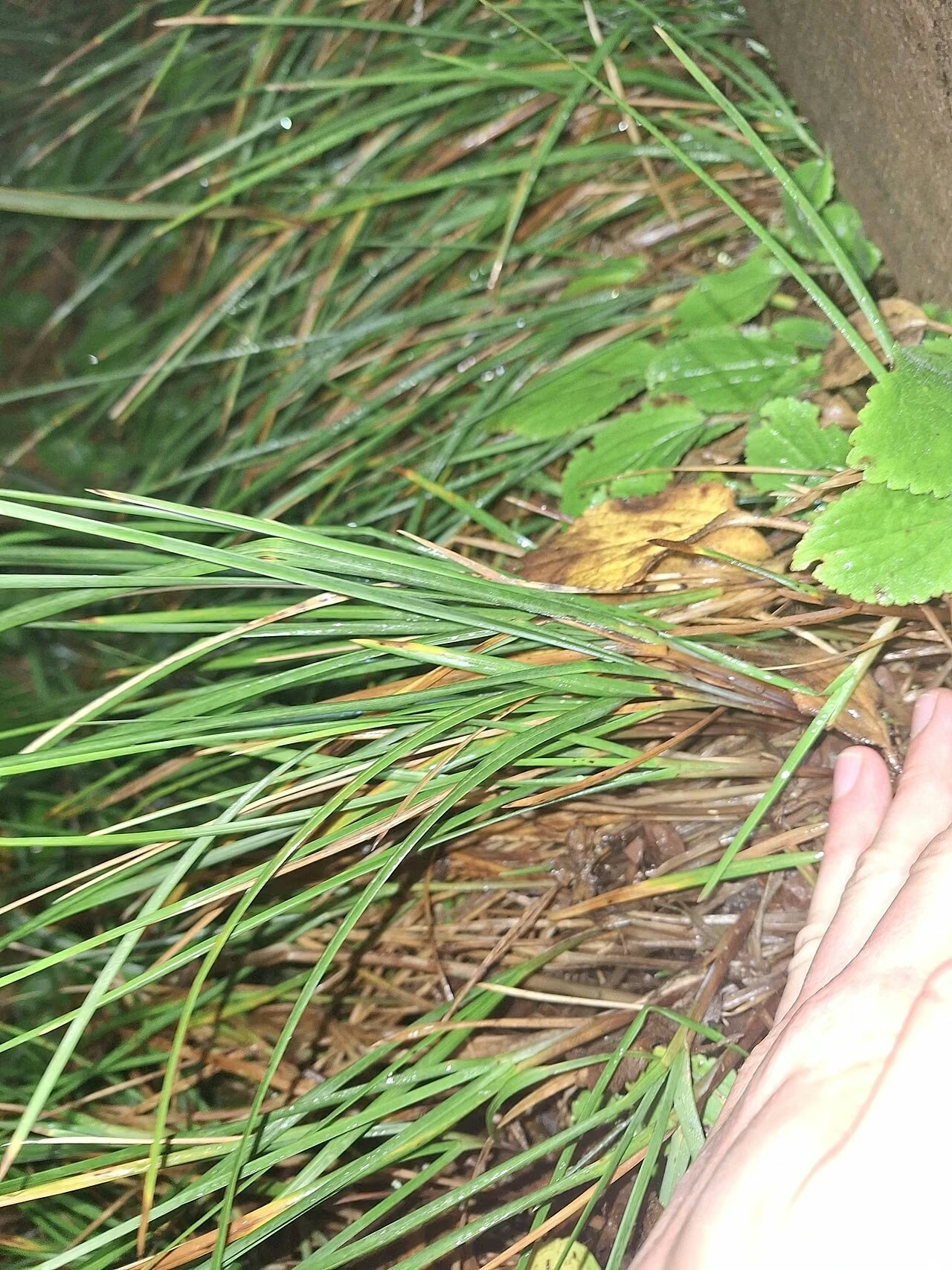
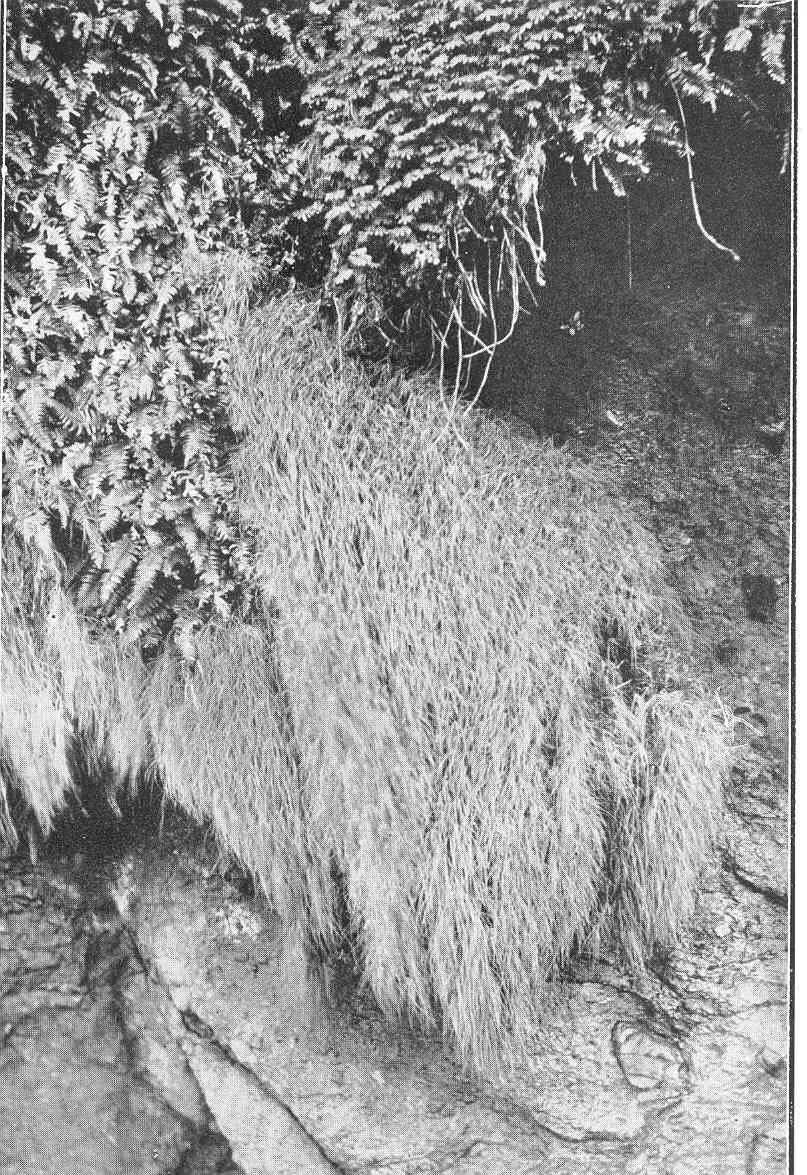
Poa novae-zelandiae forms stout, bright green tufts that vary a lot in size, up to about 30 cm tall. New shoots branch inside the old leaf sheaths, so the plant stays as a tight tuft rather than spreading by runners. The leaf sheaths are light green and the leaf blades, 5 to 15 cm long and 1 to 3 mm wide (rarely 5 mm), are folded with inrolled margins and narrow markedly towards the tip. Old leaf blades persist on the plant rather than breaking away.
The flowering stems are usually 5 to 15 cm tall but can reach 30 cm. They carry a dense panicle 3 to 10 cm long, either with erect branches or more spreading and often drooping above. The numerous slender branches end in large, elliptic, pointed spikelets 6 to 12 mm long, each holding five to eight florets and coloured light green to purplish. The species is gynomonoecious, meaning each spikelet carries both bisexual and female florets.
The large spikelets on a dense, nodding panicle help separate it from the many small alpine poas. The Flora notes that it frequently grows alongside Poa subvestita, which is dioecious (separate male and female plants), so examining the florets is helpful where the two meet. The species is quite variable, and several historical varieties and forms are now treated as part of one species.
Quick Facts
| Scientific Name | Poa novae zelandiae |
|---|---|
| Height | Tufts to about 0.3 m; flowering stems 5-30 cm |
| Spread | Compact tufts, size varies widely |
| Water Needs | Moist but freely drained |
| Light | Full sun, open sites |
| Frost Tolerance | High; montane to alpine |
| Salt Tolerance | Low; an inland mountain species |
| Growth Rate | Slow to moderate |
| Lifespan | Perennial |
Climate Best Suited to
Suits the cool to cold, wet climate of New Zealand's ranges, with winter snow and frost and cool summers. It is poorly suited to warm lowland gardens.
Regional Suitability
| City | Climate Suitability |
|---|---|
| Auckland | Low |
| Wellington | Low |
| Christchurch | Low |
| Dunedin | Medium |
Plant Habitat
Drooping poa is endemic to New Zealand. In the North Island it occurs on the mountains from the Raukumara Range southwards. In the South Island it is found in mountains throughout, and is especially common along and west of the Main Divide, where rainfall is high. On Stewart Island/Rakiura it is recorded from Mount Anglem (Hananui).
It grows from the montane to the alpine zone on scree, in rocky places, in grassland, on riverbeds and in fellfield. These are open, often unstable sites with thin soils, where low-growing tufted grasses can establish between stones.
Growing Requirements
Soil Requirements
Its natural substrates are stony and gritty: scree, rock debris, river gravels and thin alpine soils.
- Gritty, free-draining mix with plenty of stone chips
- Low to moderate fertility; rich soil encourages soft growth
- Avoid heavy clay that stays waterlogged in winter
Light Requirements
It is a plant of open, treeless country above or beyond the forest, so it expects full light.
- Full sun in cool districts
- In warmer gardens, light afternoon shade keeps roots cool
Water Requirements
The western ranges where it is most common are wet, so it is used to frequent rain but sharp drainage.
- Keep evenly moist through summer
- Never let water sit around the crown
Planting and Establishing
Plant in autumn or early spring into a raised scree bed, rock garden or deep trough filled with a gritty, free-draining mix. Set the crown slightly proud of the surface and topdress with stone chips so the base of the tuft stays dry while the roots run down into moister material.
Space tufts about 20 to 30 cm apart to allow air movement around each plant, and keep competing weeds and taller plants away. Because it is not sold commercially, any plants will usually come from seed raised by specialist growers.
Ecological Role
Like other grasses it is wind-pollinated, releasing pollen from the anthers of its bisexual florets. Its mixture of bisexual and female florets in each spikelet is a breeding system common among New Zealand poas and favours some outcrossing.
On scree, riverbeds and fellfield its tufts help stabilise loose stones and trap fine material, giving other alpine herbs a foothold. It commonly forms mixed stands with Poa subvestita in these habitats.
Uses & Significance
Garden Uses
In cultivation it is best treated as a specimen for alpine and scree gardens in cool districts.
- Scree beds and rock gardens
- Alpine troughs with other mountain natives
- Educational plantings of New Zealand alpine grasses
Ecological Value
As a common component of mountain scree and grassland, it contributes to ground cover and soil stability in fragile habitats.
- Helps hold loose scree and gravel
- Provides cover and seed in alpine grass communities
- Part of natural recolonisation on riverbeds and fellfield
Landscaping Uses
Its bright green colour contrasts well with grey stones, silver-leaved celmisias and the brown of tussocks. Plant it in small drifts of three to five tufts among rocks so the nodding flower heads can be seen against a plain background.
In a mixed alpine planting, pair it with other mountain grasses of different colours, such as blue-grey species, to show off the range of New Zealand poas.
Seasonal Care Calendar
Spring
New leaf growth resumes as snow melts and soils warm.
- Topdress with fresh grit
- Remove weeds before they establish
Summer
The main growing and flowering period in the mountains, when panicles appear above the leaves.
- Water in dry spells
- Collect ripe seed when spikelets turn straw coloured
Autumn
Growth slows and seed finishes ripening.
- Sow fresh seed outdoors
- Tidy spent flowering stems
Winter
It is dormant and fully frost hardy, often under snow in the wild.
- Protect from prolonged winter wet
- No feeding required
When to Prune and How Much
Little pruning is needed. Cut away spent flowering stems once seed has been collected, and comb out dead leaves by hand in spring to keep the tuft open.
Avoid cutting the tuft hard down, as the persistent old leaf bases help protect the growing points in cold weather.
How to Grow Drooping Poa
Drooping poa is not commercially available, according to NZPCN, and no specific propagation notes are published for it. The methods below are those that work for other tufted alpine poas and follow from its biology: it produces abundant seed from bisexual florets and grows as a tuft with branching inside the leaf sheaths, so established cultivated plants can be split. Collect seed only from cultivated plants or with appropriate permission, and never dig plants from the wild, particularly within conservation land.
From Seed
Seed is the best way to raise numbers of plants. Mountain grasses often germinate better after a period of cold, so sowing fresh seed in autumn and leaving the pots outside over winter mimics natural conditions.
- Collect panicles when the spikelets have dried and the grains fall when tapped
- Sow thinly on the surface of a gritty seed mix and cover with a thin layer of fine grit
- Stand pots outdoors in a cool, bright place through winter and keep them moist
- Prick out seedlings into deep individual pots when they have three or four leaves
- Grow on in full light and plant out once a small tuft has formed
By Division
Large cultivated tufts can be divided in early spring as growth begins. Each piece needs a good portion of roots and several shoots to recover quickly.
- Lift the tuft and shake off loose mix
- Pull or cut it into sections with roots attached
- Trim long roots and old dead leaves
- Pot divisions into a gritty mix and keep them cool and lightly shaded until new growth appears
Pests & Diseases
No specific pest or disease problems are recorded for this species. In cultivation the main risk is rot at the crown in heavy, wet soil or humid, still air, so sharp drainage and good air movement matter more than any spray.
In the wild, browsing by introduced deer, chamois, hares and rabbits affects many alpine grasses, and invasive weeds can compete in disturbed riverbed and scree habitats.
Cultural Significance
No Māori name or traditional use specific to Poa novae-zelandiae is recorded in the sources consulted. The species was described by the Austrian botanist Eduard Hackel, and its epithet novae-zelandiae simply means 'of New Zealand'.
It belongs to a large group of endemic poas that make up much of the grass cover of New Zealand's high country.
Bonus Tip
If you are trying to identify a nodding, bright green poa on a western South Island scree, check the florets: drooping poa has bisexual and female florets in the same spikelet, while the often co-occurring Poa subvestita has separate male and female plants.
Related Plants
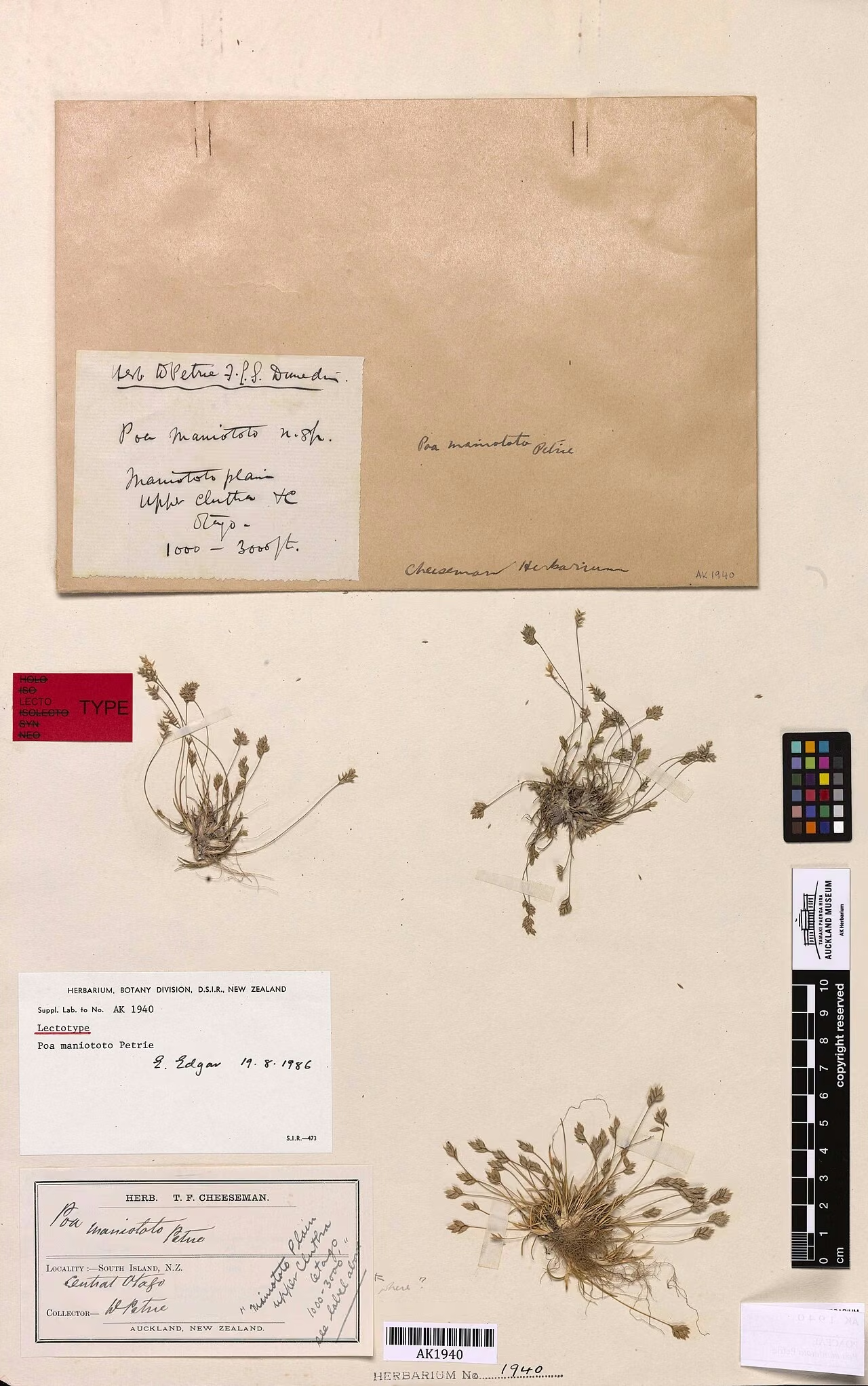
Explore other native plants that share similar characteristics or habitats with Drooping Poa (Poa novae zelandiae), offering further insights into New Zealand's diverse flora. These related species provide context and opportunities for complementary planting in your garden.
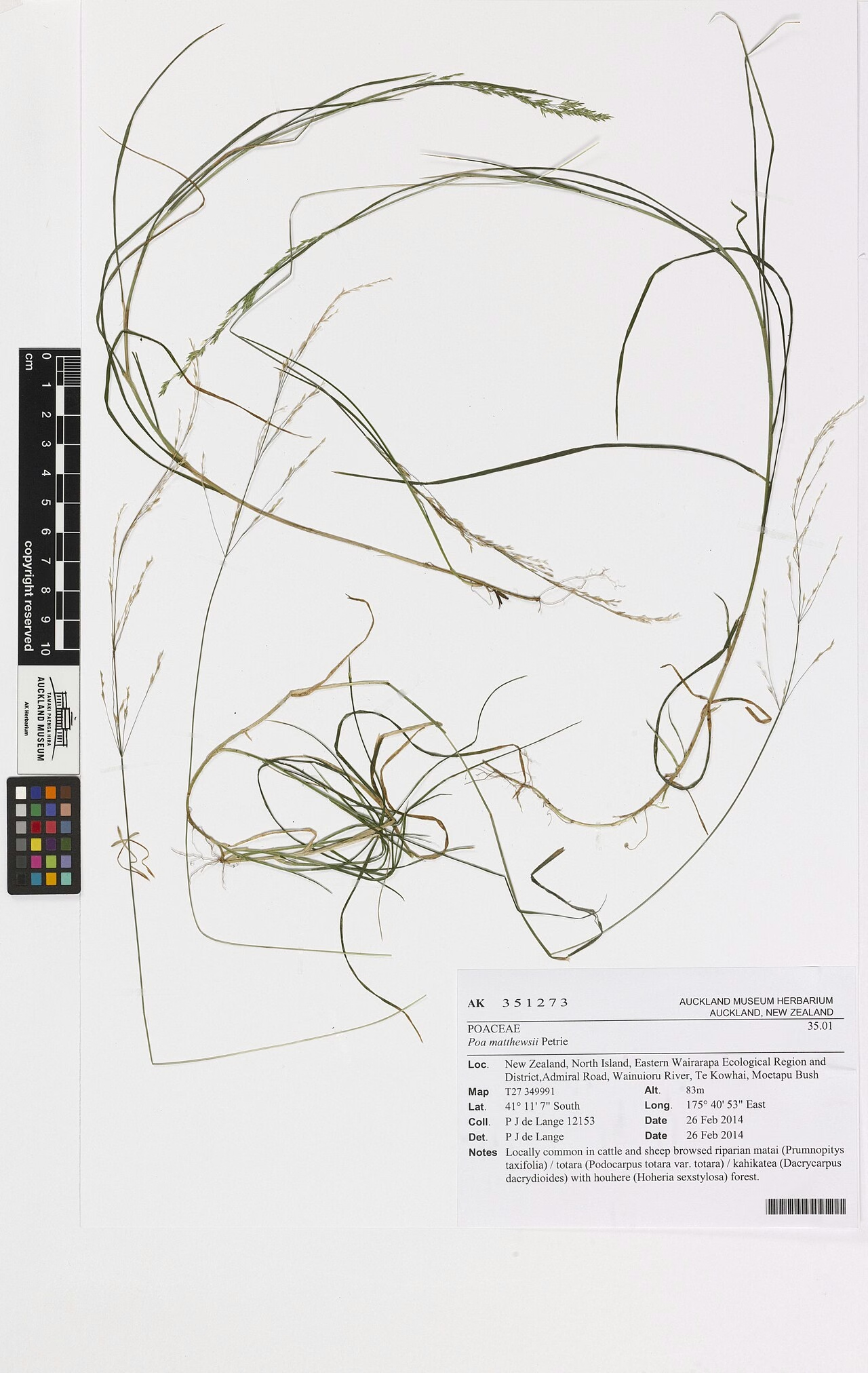
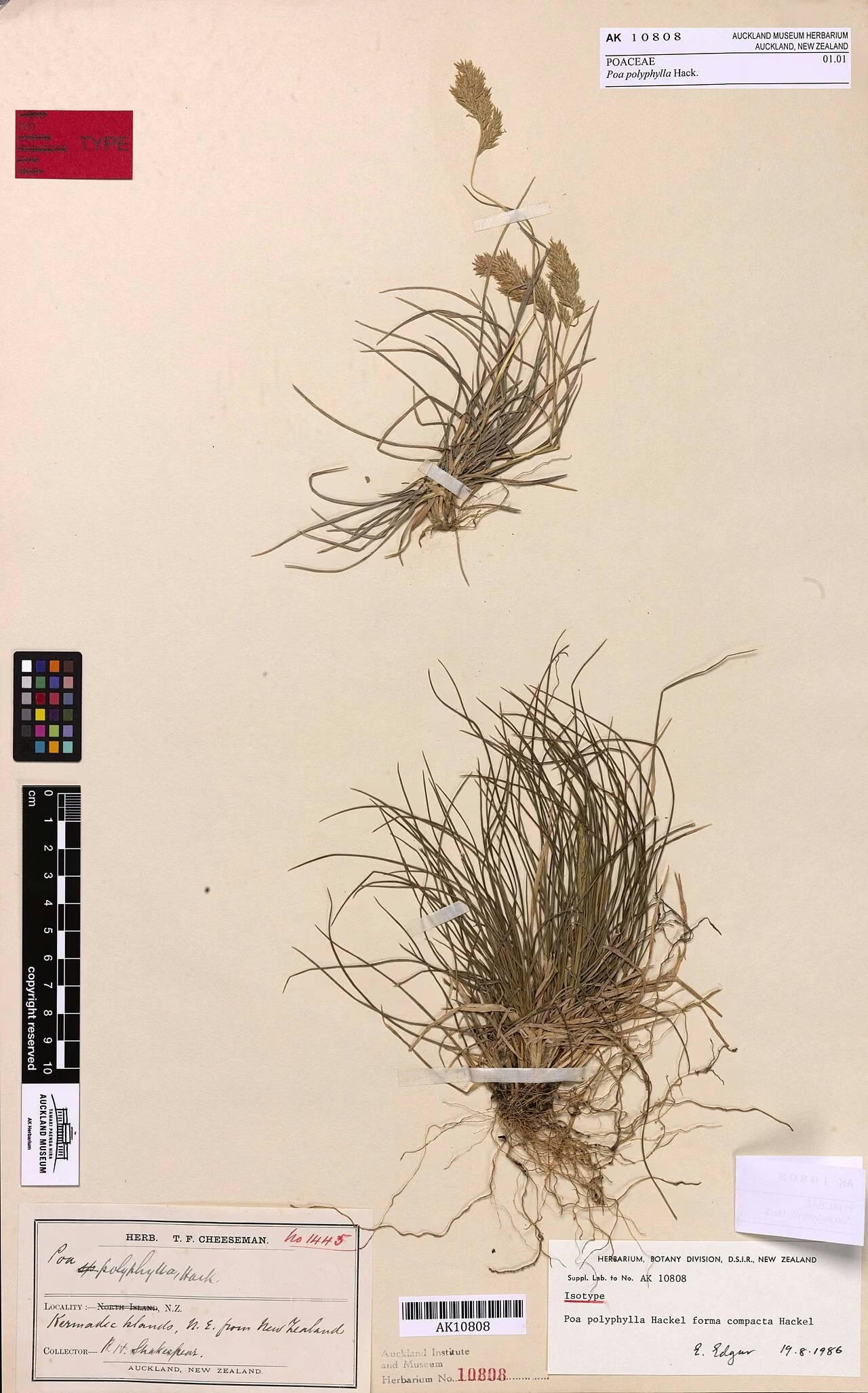
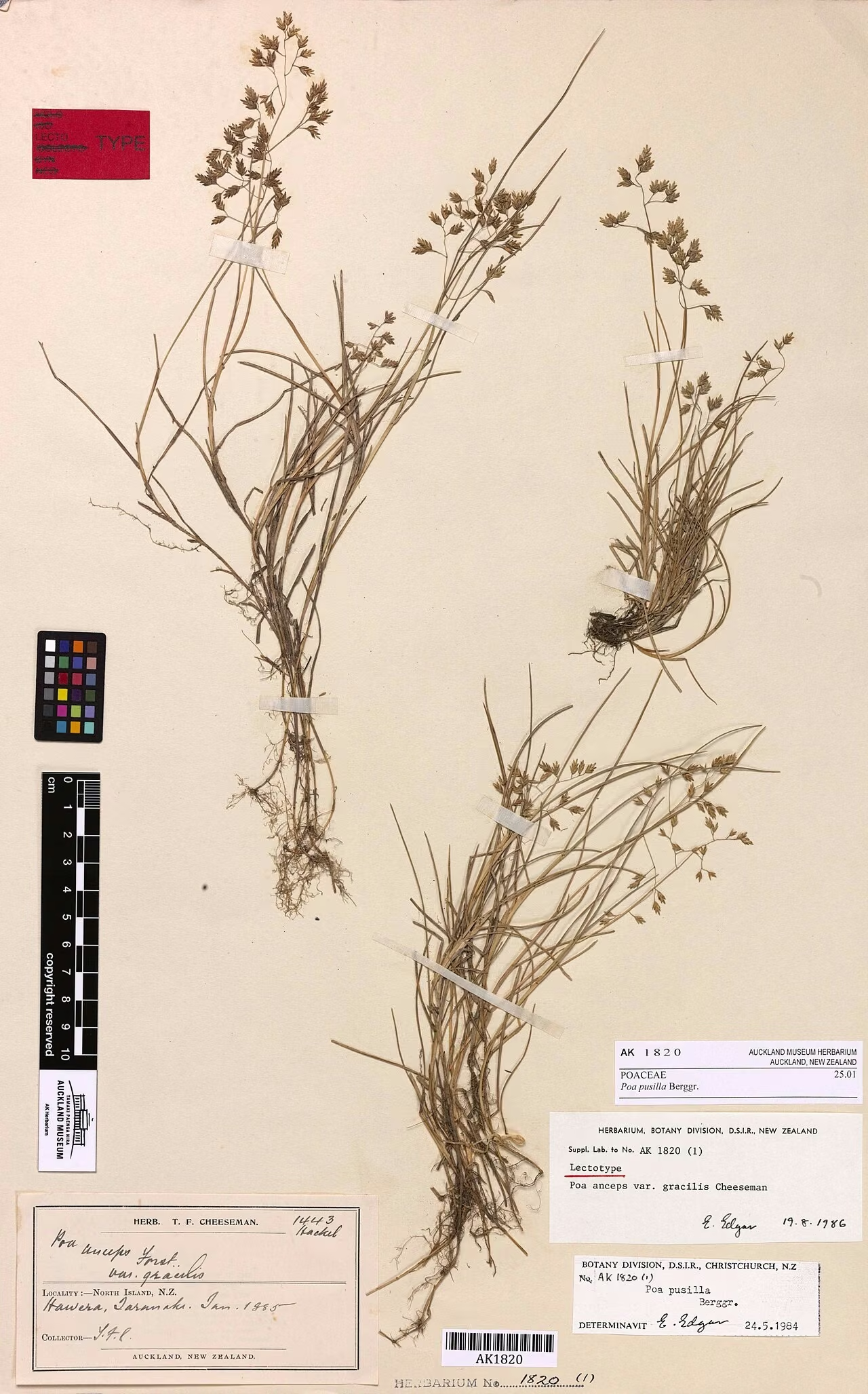
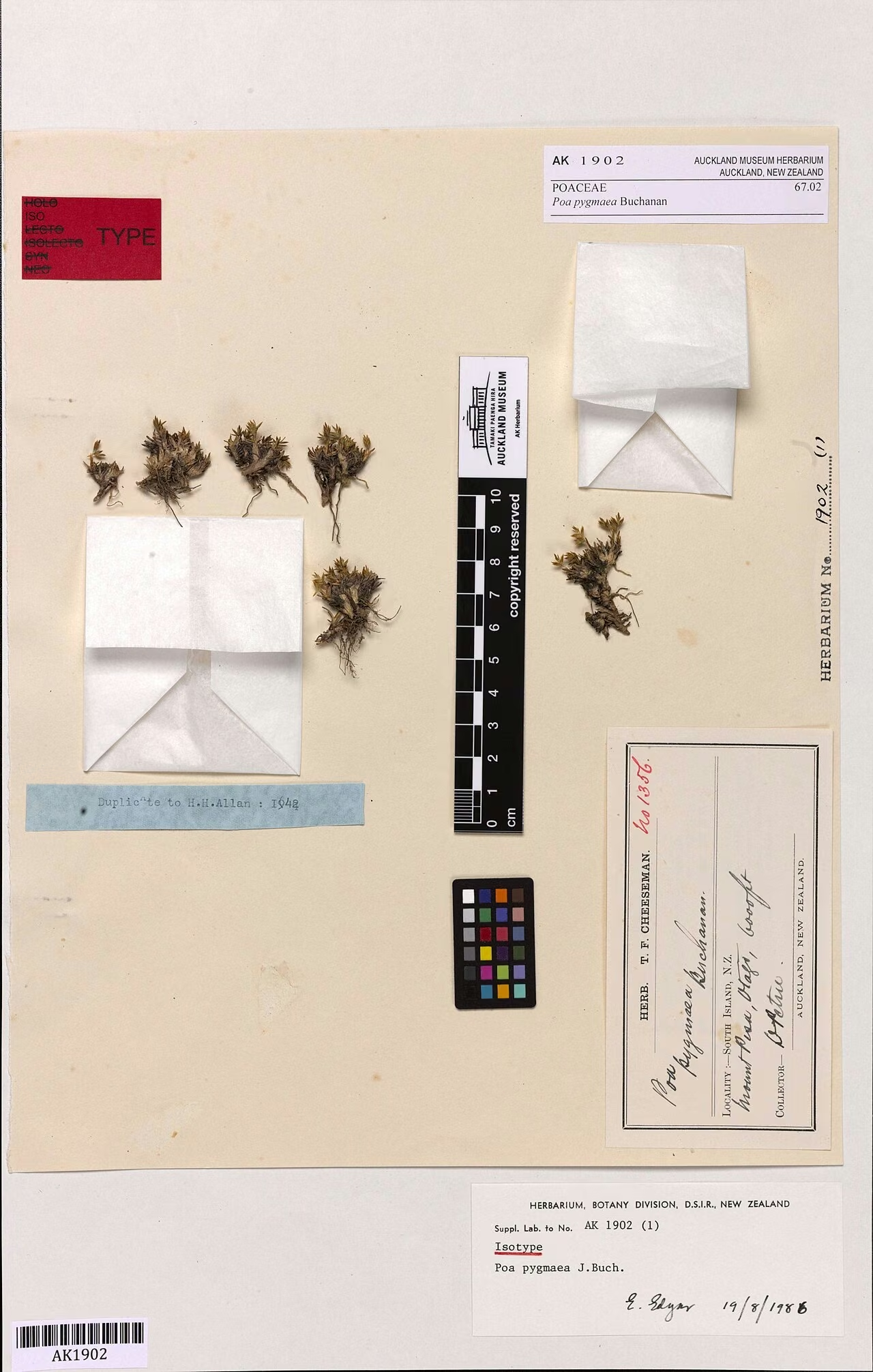
Plant Conservation
Poa novae-zelandiae is ranked Not Threatened (2023) and has held that status in every assessment since 2004. Regionally it is listed as Not Threatened in Otago and Data Deficient in the Wellington region.
Its mountain habitats are largely within conservation land, but browsing animals and weed invasion of riverbeds can affect local populations. Controlling browsers and weeds supports it and the wider alpine grass community.
Frequently Asked Questions
Why is Poa novae-zelandiae called drooping poa?
Its dense panicle of large, light green to purplish spikelets often bends over and droops near the tip, giving the grass its common name.
Where does drooping poa grow in New Zealand?
It grows in mountains from the Raukumara Range southwards in the North Island, throughout the South Island mountains, especially along and west of the Main Divide, and on Mount Anglem on Stewart Island.
Is drooping poa threatened?
No. It is ranked Not Threatened in the 2023 assessment and has held that ranking since 2004.
Can you buy drooping poa for a garden?
NZPCN lists it as not commercially available, so it is a plant for alpine enthusiasts who raise it from seed rather than a nursery item.
Sources and Further Reading
The botanical, growing, and conservation details for Drooping Poa (Poa novae zelandiae) on this page draw on the New Zealand plant references below. Consult them for full technical records and the latest distribution data.