Kirk's Poa
Poa kirkii
Last updated:
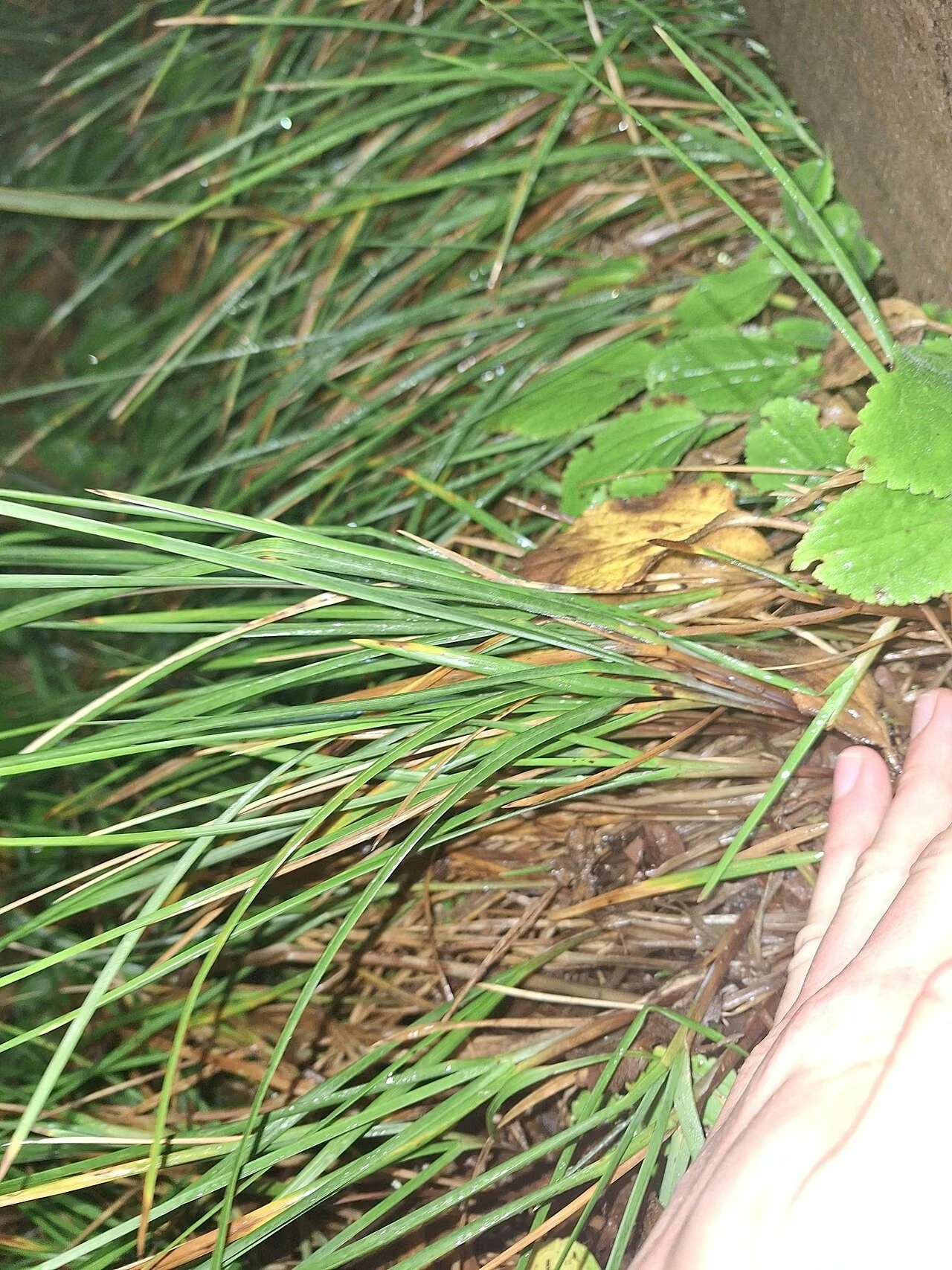
Kirk's poa (Poa kirkii) is a slender, tufted perennial grass endemic to New Zealand, usually 20 to 50 cm tall with brownish green leaves and reddish purple leaf sheaths, its flowering stems standing well above the foliage. It occurs almost throughout the South Island and on Stewart Island, and in the North Island only on the Ruahine and Tararua Ranges. It grows from montane to alpine levels in grassland, scrub and open forest, sometimes on rock. It is ranked Not Threatened nationally and is named after the botanist Thomas Kirk. Explore more native grasses and flaxes in our native plant guide.
Plant Description
Poa kirkii usually forms slender perennial tufts about 20 to 50 cm tall and is occasionally stoloniferous. Its brownish green leaves are much overtopped by the erect flowering stems. The leaf sheaths are often reddish purple, ageing to grey-brown, with conspicuous ribs. The leaf blades are usually 7.5 to 20 cm long and about 1 to 3 mm wide, slightly leathery and often flat.
The flowering stems are usually 15 to 35 cm tall, occasionally up to 65 cm. The panicle is 5 to 10 cm long and loosely spreading, with rather large spikelets carried at the tips of fine branches. Spikelets are 3 to 6.5 mm long with usually three or four florets, light green and often purplish.
Flora of New Zealand records regional variation in the hairs on the lemma: North Island plants from the Ruahine and Tararua Ranges usually have short hairs on the lower midnerve, while South Island and Stewart Island plants usually have hairless nerves. The difference was judged too slight to recognise separate species or subspecies. The chromosome number is 2n = 28.
Quick Facts
| Scientific Name | Poa kirkii |
|---|---|
| Height | 0.2-0.5 m, flowering stems occasionally to 0.65 m |
| Spread | Slender tufts, occasionally spreading by stolons |
| Water Needs | Moderate; montane grassland and forest margins |
| Light | Full sun to partial shade |
| Frost Tolerance | High; montane to alpine species |
| Salt Tolerance | Low; an inland mountain grass |
| Growth Rate | No information available |
| Lifespan | Perennial |
Climate Best Suited to
It suits cool, moist mountain climates with cold winters and mild summers. It is better suited to southern and upland gardens than to warm northern lowlands.
Regional Suitability
| City | Climate Suitability |
|---|---|
| Auckland | Low |
| Wellington | Medium |
| Christchurch | Medium |
| Dunedin | High |
Plant Habitat
Kirk's poa is endemic to New Zealand. It is found almost throughout the South Island and on Stewart Island, while in the North Island it is confined to the Ruahine and Tararua Ranges.
It grows from montane to alpine altitudes in grassland, scrub and open forest, and sometimes on rock. Its North Island populations make it regionally Naturally Uncommon in the Wellington region.
Growing Requirements
Soil Requirements
It grows in mountain soils from grassland to open forest, typically well drained and of modest fertility.
- Free-draining loam or gritty soil
- Some humus is beneficial, as in open forest
- Avoid heavy, waterlogged clay
Light Requirements
Its range from open grassland to open forest means it handles both sun and light shade.
- Full sun in cool districts
- Partial shade where summers are warmer
Water Requirements
Montane and alpine sites receive reliable rainfall, so regular moisture is best.
- Water during dry spells
- Do not let the root zone stay waterlogged
Planting and Establishing
Plant in autumn or spring into a well-drained spot, in groups so the fine flowering stems make a show. It is not commercially available, so material would need to come from seed collected with permission.
In restoration of montane grassland or forest margins within its range, use locally sourced plants.
Ecological Role
Kirk's poa is a component of montane and alpine grasslands, scrub and open forest. Like other Poa it is wind pollinated.
Its seeds and foliage are likely eaten by native invertebrates and birds of the high country, but no specific associations are documented in the sources consulted.
Uses & Significance
Garden Uses
A delicate native grass for cool rock gardens and naturalistic plantings.
- Rock gardens in southern or upland areas
- Woodland edge plantings
- Native grass collections
Ecological Value
It adds to the diversity of native grass cover in mountain habitats.
- Native cover in montane grassland and scrub
- Regionally significant populations in the Ruahine and Tararua Ranges
- Part of open forest ground flora
Landscaping Uses
Its slender tufts and airy panicles held well above the leaves give a light, see-through effect. Use it between larger tussocks or along a path where the reddish sheaths can be seen up close.
It is a subtle plant suited to naturalistic plantings rather than formal borders.
Seasonal Care Calendar
Spring
New leaves emerge and the reddish purple sheaths are at their most visible.
- Plant or divide
- Comb out dead leaves
Summer
Loose purplish panicles stand above the tufts during the mountain growing season. Exact months are not given in the sources consulted.
- Water in dry spells
- Note when seed ripens
Autumn
Seed is shed from the panicles.
- Collect and sow seed
- Cut back spent stems if desired
Winter
Tufts remain but growth stops in cold weather.
- Little maintenance needed
When to Prune and How Much
No pruning is needed. Remove spent flowering stems and comb out old leaves to keep tufts neat.
Avoid shearing the whole plant, which spoils its natural form.
How to Grow Kirk's Poa
Specific propagation records for Kirk's poa were not found in the sources consulted, and NZPCN lists it as not commercially available. As a tufted grass that occasionally produces stolons, it should be possible to raise from seed or from divisions, following practice for comparable native Poa species. Use seed for restoration projects so that plantings carry a broad genetic base, and division for multiplying a single garden plant.
From Seed
Seed ripens in the loose panicles after flowering. Fresh seed of montane grasses usually germinates readily when sown in autumn and given a cool winter, or sown in spring.
Because the flowering stems stand well clear of the leaves, ripe heads are easy to spot and gather by hand, and a paper bag slipped over a few heads catches seed as it falls.
- Collect panicles when the spikelets dry and seed begins to drop
- Sow thinly on a free-draining seed mix
- Cover lightly with fine grit or sand
- Keep moist in a cool, bright place
- Prick out seedlings when about 3 cm tall
- Grow on in pots for a season before planting out
By Division
Mature tufts can be divided in early spring, and stoloniferous plants may produce rooted shoots that can be detached.
Slender tufts give fewer divisions than large tussocks, so aim for two or three good pieces from each clump rather than many small ones.
- Lift the clump and shake off loose soil
- Split into pieces each with several shoots and roots
- Trim leaves by half
- Replant or pot up and water in well
- Keep moist and lightly shaded for a few weeks
Pests & Diseases
No specific pests or diseases are recorded for Kirk's poa.
In gardens, check for slug damage on young plants and keep vigorous introduced grasses from overrunning its slender tufts.
Cultural Significance
No Māori name or traditional use is recorded for Poa kirkii in the sources consulted.
The species was described by John Buchanan in 1880 in Indigenous Grasses of New Zealand and named for Thomas Kirk (1828 to 1898), who for over three decades was a leader in New Zealand botanical research and wrote The Forest Flora of New Zealand.
Bonus Tip
In the Tararua and Ruahine Ranges, Kirk's poa is a regionally uncommon plant, so any record there is worth logging on iNaturalist NZ with a clear photo of the spikelets to help botanists track its North Island populations.
Related Plants
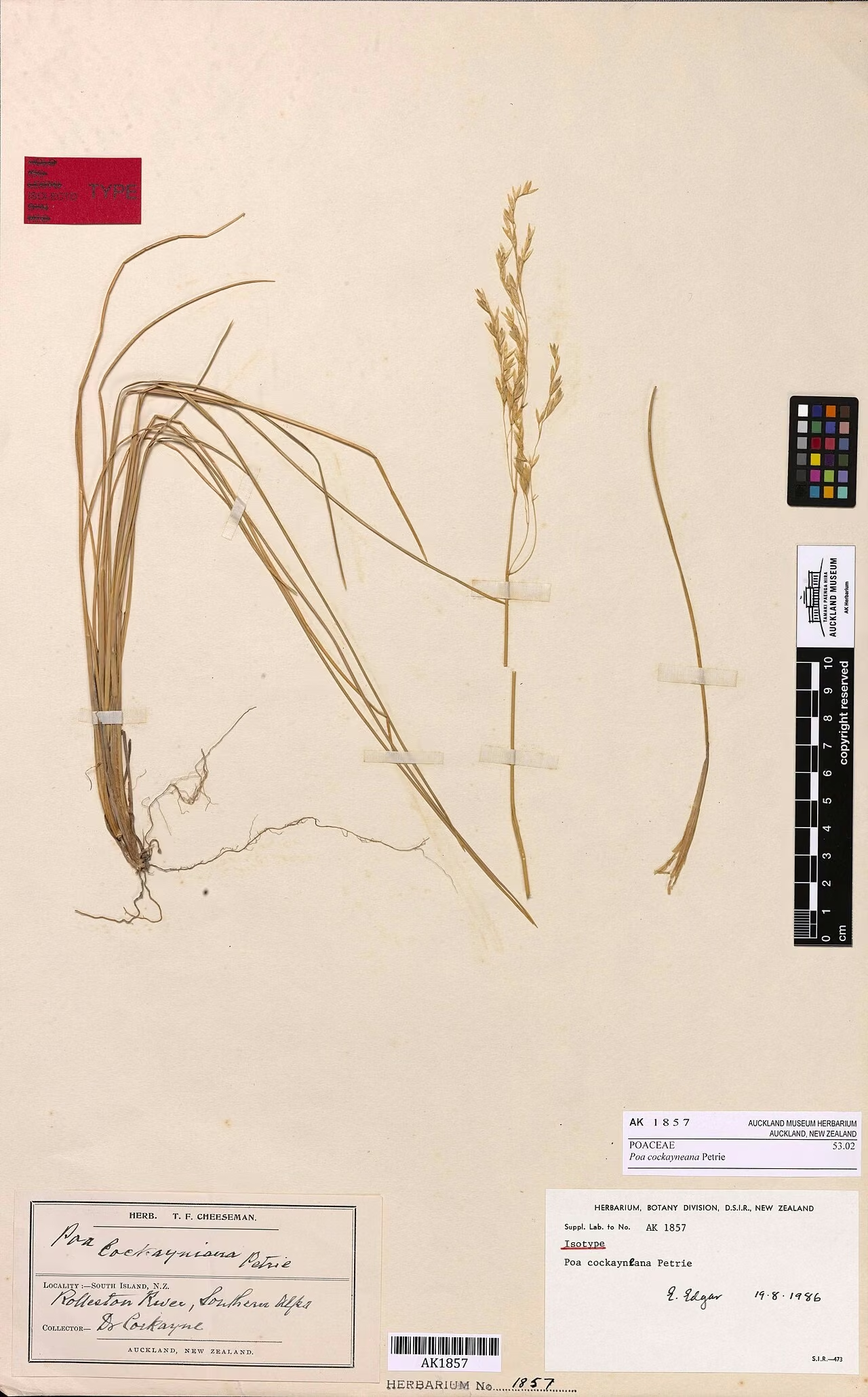
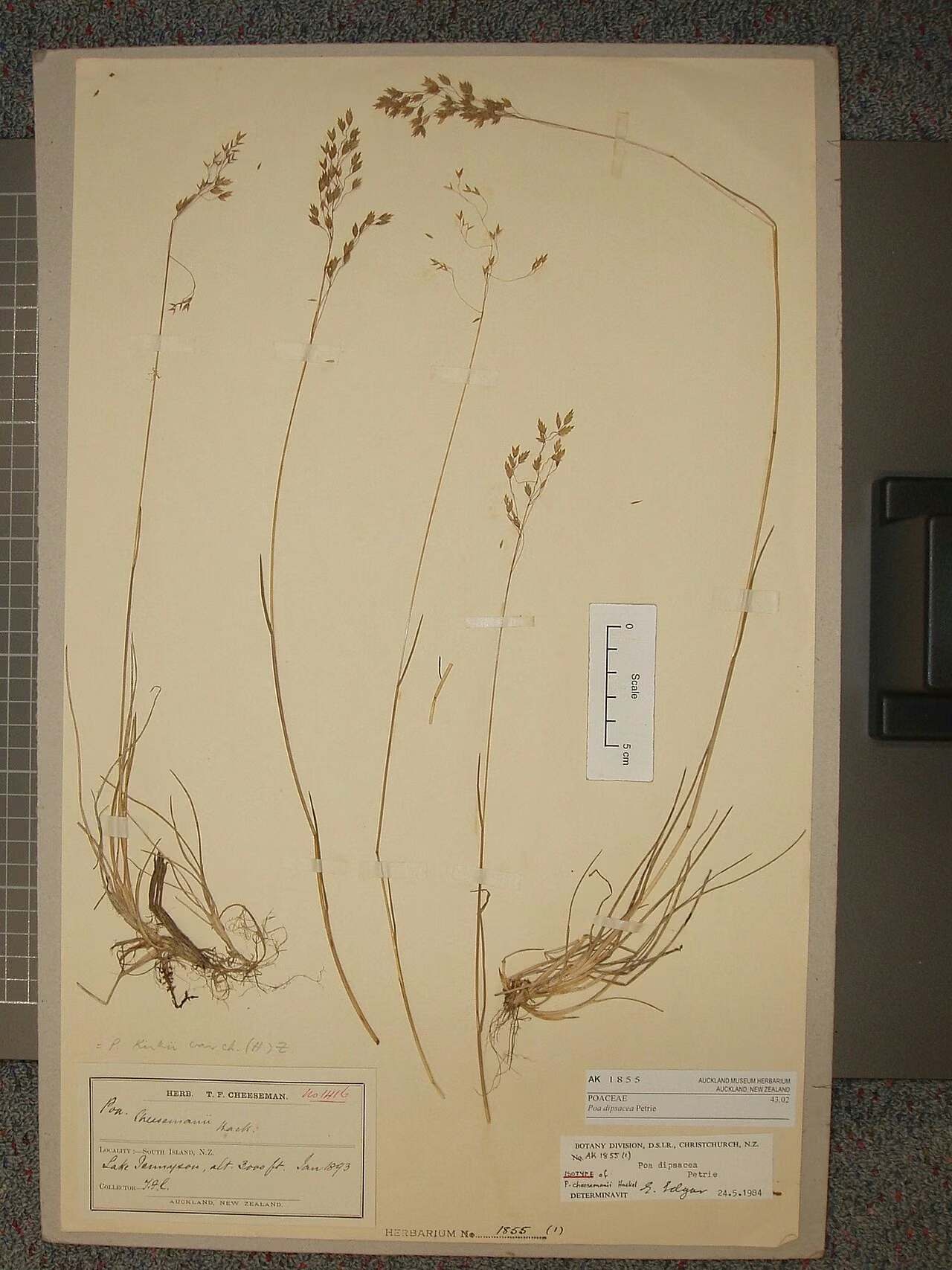
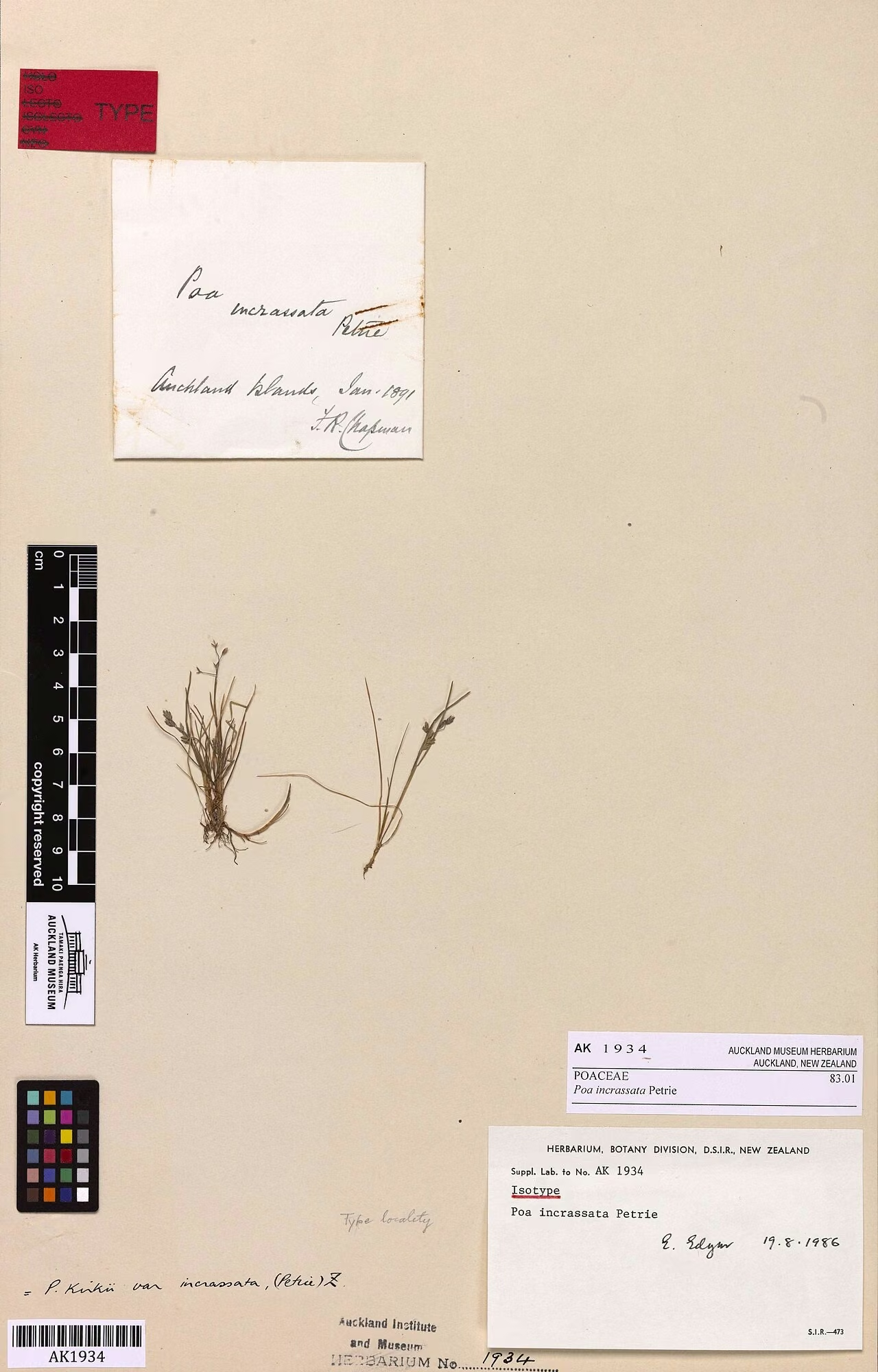
Explore other native plants that share similar characteristics or habitats with Kirk's Poa (Poa kirkii), offering further insights into New Zealand's diverse flora. These related species provide context and opportunities for complementary planting in your garden.
Plant Conservation
Poa kirkii is ranked Not Threatened (2023) nationally and has been in every assessment since 2004. Regionally it is listed as At Risk - Regionally Naturally Uncommon in the Wellington region (2025) and Regionally Not Threatened in Otago.
No specific threats are documented. Protecting montane grassland and forest margins from weeds and browsing animals helps maintain its habitat, particularly in the small North Island populations.
Frequently Asked Questions
Where is Kirk's poa found?
It occurs almost throughout the South Island and on Stewart Island. In the North Island it is known only from the Ruahine and Tararua Ranges, where it is regionally uncommon.
How do you identify Poa kirkii?
Look for slender tufts of brownish green leaves 1 to 3 mm wide, reddish purple leaf sheaths, and erect flowering stems well above the leaves carrying a loose panicle of light green or purplish spikelets 3 to 6.5 mm long.
Who was Poa kirkii named after?
It honours Thomas Kirk (1828 to 1898), a New Zealand botanist and lecturer in natural sciences who wrote The Forest Flora of New Zealand (1889).
Do North and South Island Kirk's poa differ?
Slightly. North Island plants usually have short hairs on the lower midnerve of the lemma, while southern plants usually lack them, but Flora of New Zealand found the difference too small to name separate taxa.
Sources and Further Reading
The botanical, growing, and conservation details for Kirk's Poa (Poa kirkii) on this page draw on the New Zealand plant references below. Consult them for full technical records and the latest distribution data.