Poa
Poa maia
Last updated:
Poa maia is a slender native grass endemic to New Zealand, forming loose, erect, light green to purplish tufts up to about 40 cm tall from short rhizomes, with wiry, often thread-like leaves and flowering stems that rise above the foliage. It has an unusual split distribution: Mt Taranaki (Egmont) in the North Island, and Nelson and the Marlborough Sounds in the South Island. It grows at montane to subalpine levels in wet open forest and occasionally in damp tussock grassland. Described only in 1986, it has no common name and is ranked Not Threatened. Explore more native grasses and flaxes in our native plant guide.
Plant Description
Poa maia forms erect, loosely packed, light green to purplish tufts up to about 40 cm tall, arising from short rhizomes, with the flowering stems overtopping the leaves. The leaf sheaths are green or purplish, becoming light brown, membranous, hairless and distinctly ribbed. The ligule is usually 0.7 to 1.5 mm long.
The leaf blades are 1.5 to 16 cm long and only 0.5 to 1.5 mm wide, usually folded, rather wiry and often almost thread-like. The flowering stems are usually 12 to 35 cm, occasionally up to 50 cm, with hairless internodes. The panicle is 3 to 9 cm long and very lax, its finely roughened branches often in pairs and spreading.
Its fine, wiry, often folded leaves and very open panicle on a loose rhizomatous tuft are the main features to look for. Separating it reliably from other slender native Poa species needs the technical characters in the Flora of New Zealand key.
Quick Facts
| Scientific Name | Poa maia |
|---|---|
| Height | Up to 0.4 m; flowering stems occasionally to 0.5 m |
| Spread | Loose tufts from short rhizomes |
| Water Needs | Moist to wet; grows on wet ground in forest |
| Light | Partial shade to filtered light |
| Frost Tolerance | High; montane to subalpine species |
| Salt Tolerance | No information available |
| Growth Rate | No information available |
| Lifespan | Perennial |
Climate Best Suited to
It grows in cool, very wet mountain environments with high rainfall and frequent cloud. A cool, humid climate with reliable moisture suits it best.
Regional Suitability
| City | Climate Suitability |
|---|---|
| Auckland | Low |
| Wellington | Medium |
| Christchurch | Low |
| Dunedin | Medium |
Plant Habitat
Poa maia is endemic to New Zealand with a disjunct range. In the North Island it is known from Mt Taranaki (Mt Egmont); in the South Island it occurs in Nelson and the Marlborough Sounds. The type locality is a saddle between Mt Owen and the Lookout Range in north-west Nelson.
It grows from montane to subalpine altitudes in wet open forest, including silver beech forest on wet ground, and occasionally in damp places in tussock grassland.
Growing Requirements
Soil Requirements
It grows on wet ground in forest, so a moist, humus-rich soil is likely to suit it.
- Damp, organic forest soil
- Consistent moisture
- Avoid dry, sandy soils
Light Requirements
Its open forest habitat suggests it handles dappled light; it also grows in damp open grassland.
- Filtered light under open canopy
- Sun in cool, moist sites
Water Requirements
As a plant of wet forest ground, it needs constant moisture.
- Keep soil moist year round
- Shelter from drying winds
Planting and Establishing
Poa maia is not commercially available and has no established cultivation record. If grown, place it in a cool, moist, partly shaded spot such as a fernery or woodland garden.
Wild material should only be collected with permission, and much of its range lies within conservation land such as Egmont and Kahurangi National Parks.
Ecological Role
Poa maia is part of the ground layer of wet montane and subalpine forest, including silver beech forest, and of damp tussock grassland.
It is presumably wind pollinated like other Poa, but no specific pollinator, seed disperser or insect associations are documented in the sources consulted.
Uses & Significance
Garden Uses
It is of botanical rather than horticultural interest.
- Native grass collections
- Moist woodland or fernery ground cover
- Restoration of montane forest ground layers within its range
Ecological Value
It adds to the diversity of native grasses in wet mountain forests.
- Ground-layer cover in beech forest
- Part of damp tussock grassland communities
- A distinctive disjunct endemic
Landscaping Uses
In a cool, moist woodland garden, its loose tufts of thread-like leaves and airy panicles could soften the edges of mossy logs or fern plantings.
It is not suited to dry, sunny or exposed landscaping.
Seasonal Care Calendar
Spring
New shoots grow from the short rhizomes.
- Keep moist
- Remove smothering leaf litter
Summer
The lax panicles appear above the leaves; the type specimen was gathered in January. Exact flowering months are not recorded.
- Do not allow to dry out
Autumn
Seed is shed and growth slows.
- Collect seed if growing for restoration
Winter
Plants rest through the cold, wet montane winter.
- No care needed
When to Prune and How Much
No pruning is needed. Spent flowering stems and dead leaves can be removed by hand.
Leave the tuft intact; cutting back fine-leaved grasses hard can set them back.
How to Grow Poa
No propagation information for Poa maia was found in the sources consulted. NZPCN lists it as not commercially available, and it does not appear to be grown in nurseries. The methods below are general practice for slender rhizomatous native Poa species and are offered as a reasonable starting point, not a tested protocol. Any material should be collected with permission, and plants used for restoration should come from the same district, especially given the separate North and South Island populations.
From Seed
Seed would be expected after summer flowering. Small-seeded forest grasses are usually best sown fresh onto the surface of a moist mix and kept cool and humid, mimicking the damp forest floor where the species grows.
- Gather ripe panicles in late summer once the spikelets dry
- Sow seed on the surface of a fine, moist, humus-rich seed mix
- Cover very lightly and place in a cool, shaded, humid spot
- Keep the mix constantly moist
- Pot seedlings individually once they are large enough to handle
- Grow on in shade before planting into a moist site
By Division
Because it has short rhizomes and loosely packed shoots, a tuft can be separated into a few rooted portions in spring when growth begins. Keep divisions moist and shaded while they re-establish.
- Lift the tuft carefully, keeping soil around the roots
- Separate shoots with attached roots and rhizome
- Pot into a moist, organic mix
- Keep in shade and water regularly until new growth appears
Pests & Diseases
No pests or diseases are recorded for Poa maia in the sources consulted.
In wet forest habitats, browsing by introduced deer and goats affects ground-layer plants generally, but there is no specific record of impact on this species.
Cultural Significance
No Māori name or traditional use is recorded for Poa maia in the sources consulted.
It was described by Elizabeth Edgar, the botanist who led the modern revision of New Zealand grasses, from a specimen gathered by the botanist A.P. (Tony) Druce in north-west Nelson in 1972.
Bonus Tip
If you think you have found Poa maia, record the exact site and habitat and photograph the panicle and leaf width, then share it on iNaturalist NZ. Its split range between Taranaki and the top of the South Island makes new locality records useful.
Related Plants
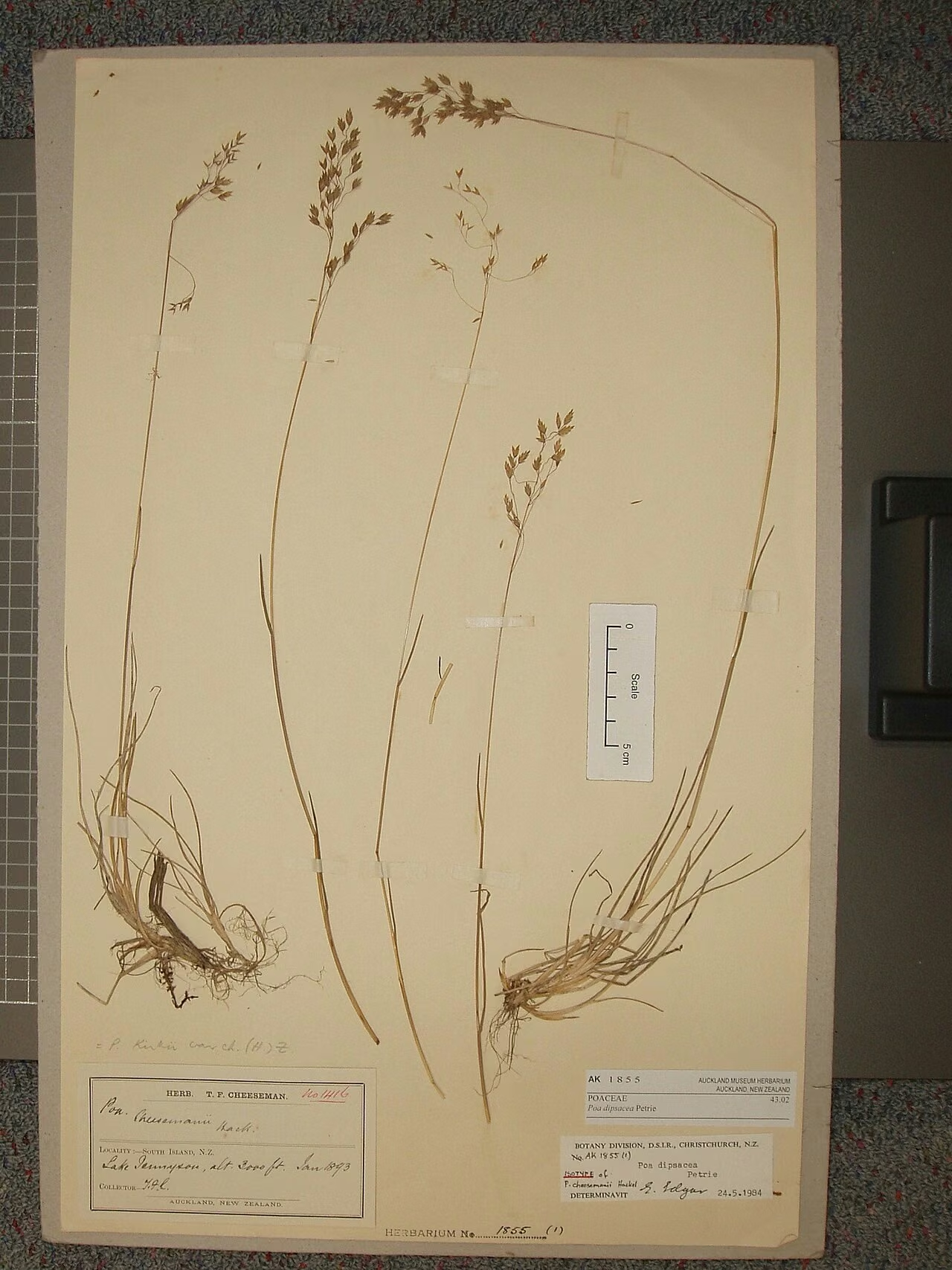
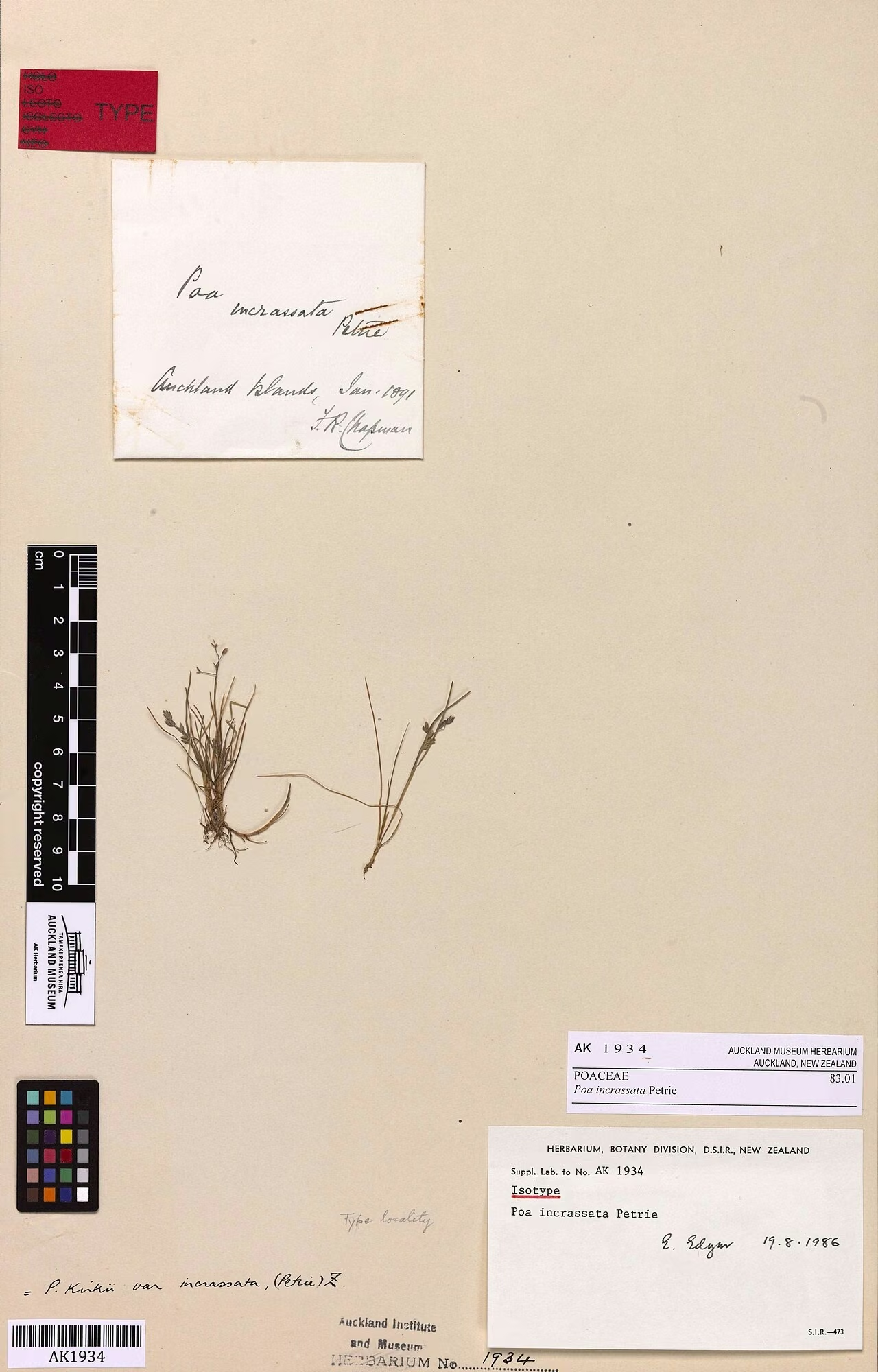
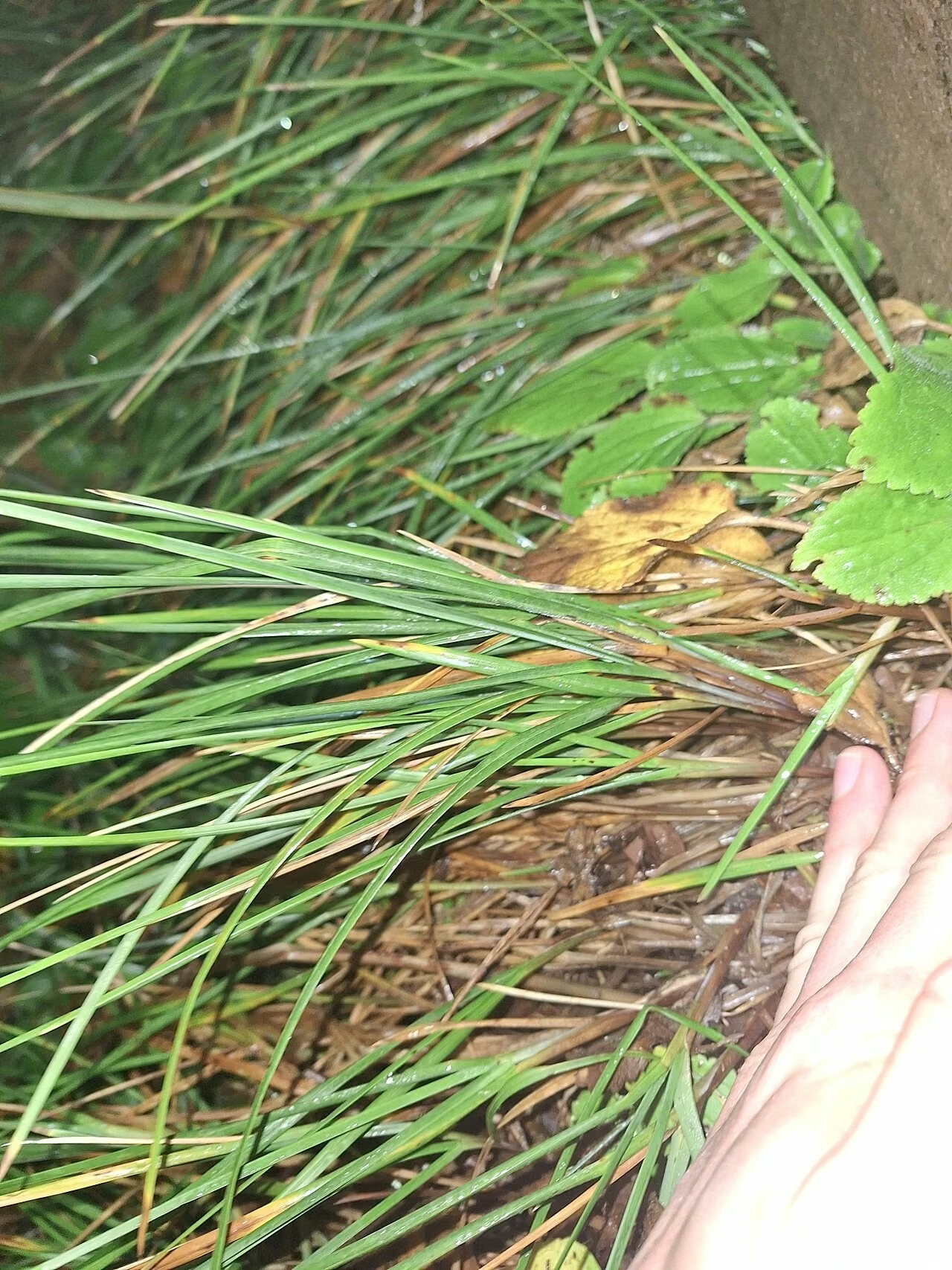
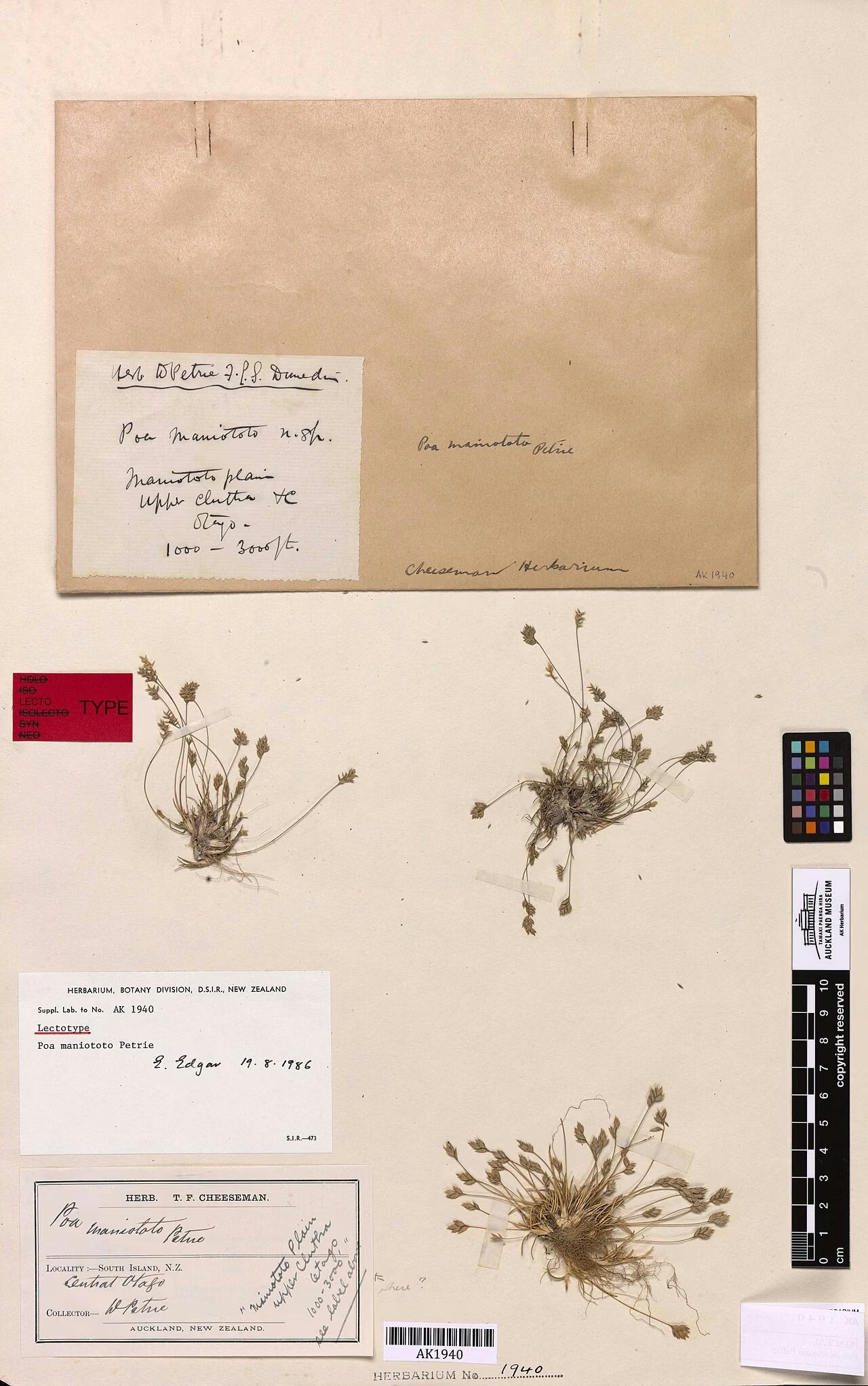
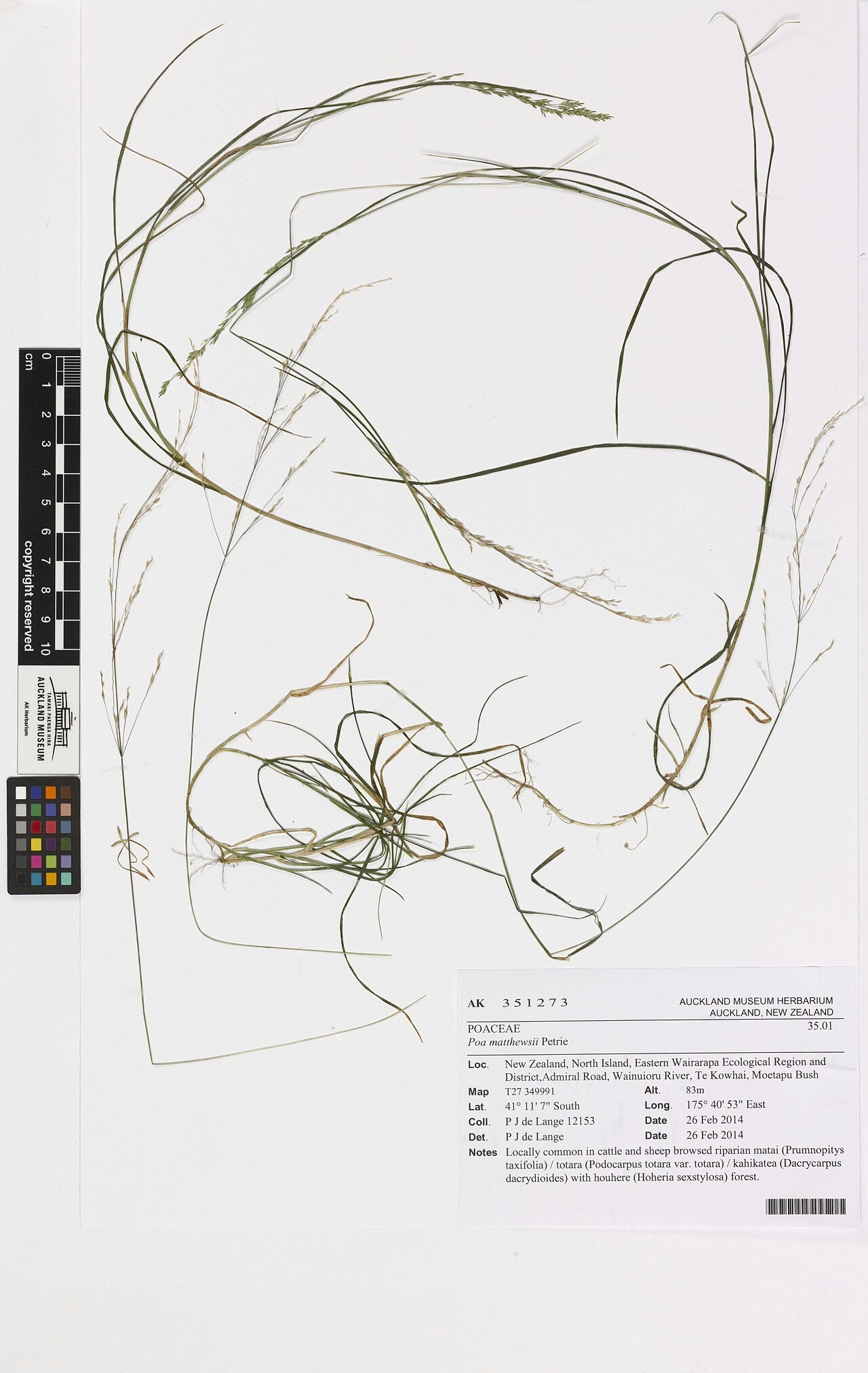
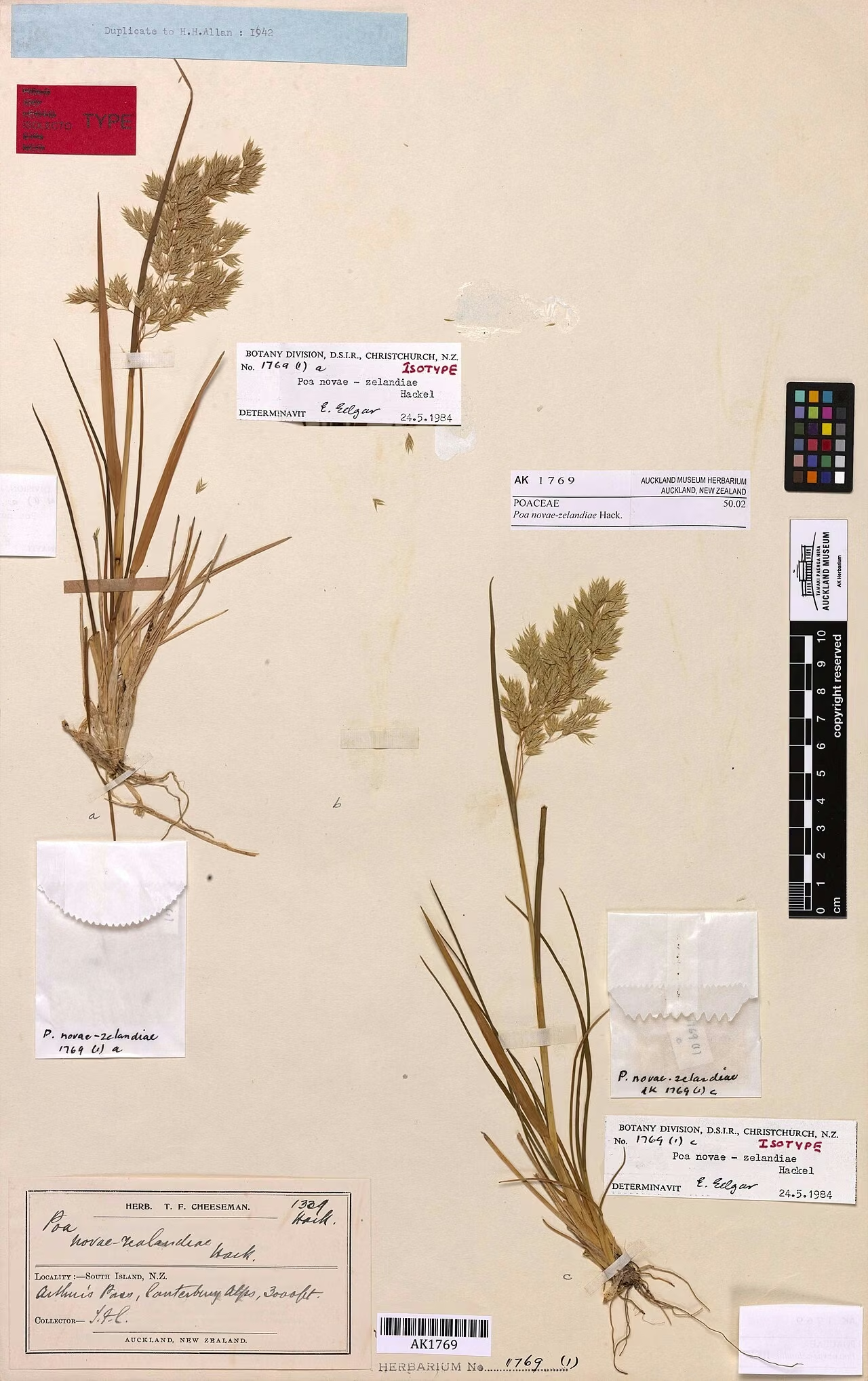
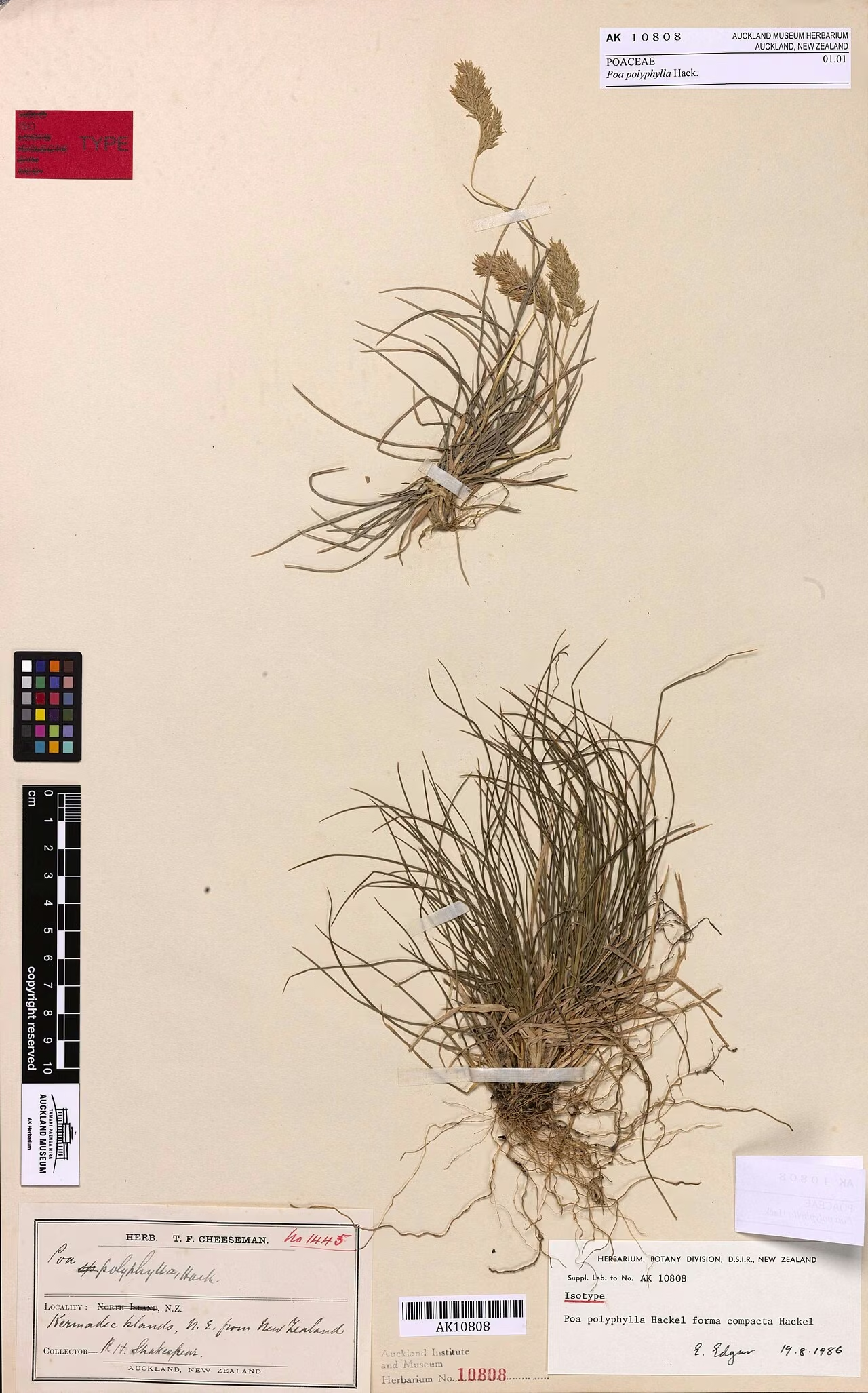
Explore other native plants that share similar characteristics or habitats with Poa (Poa maia), offering further insights into New Zealand's diverse flora. These related species provide context and opportunities for complementary planting in your garden.
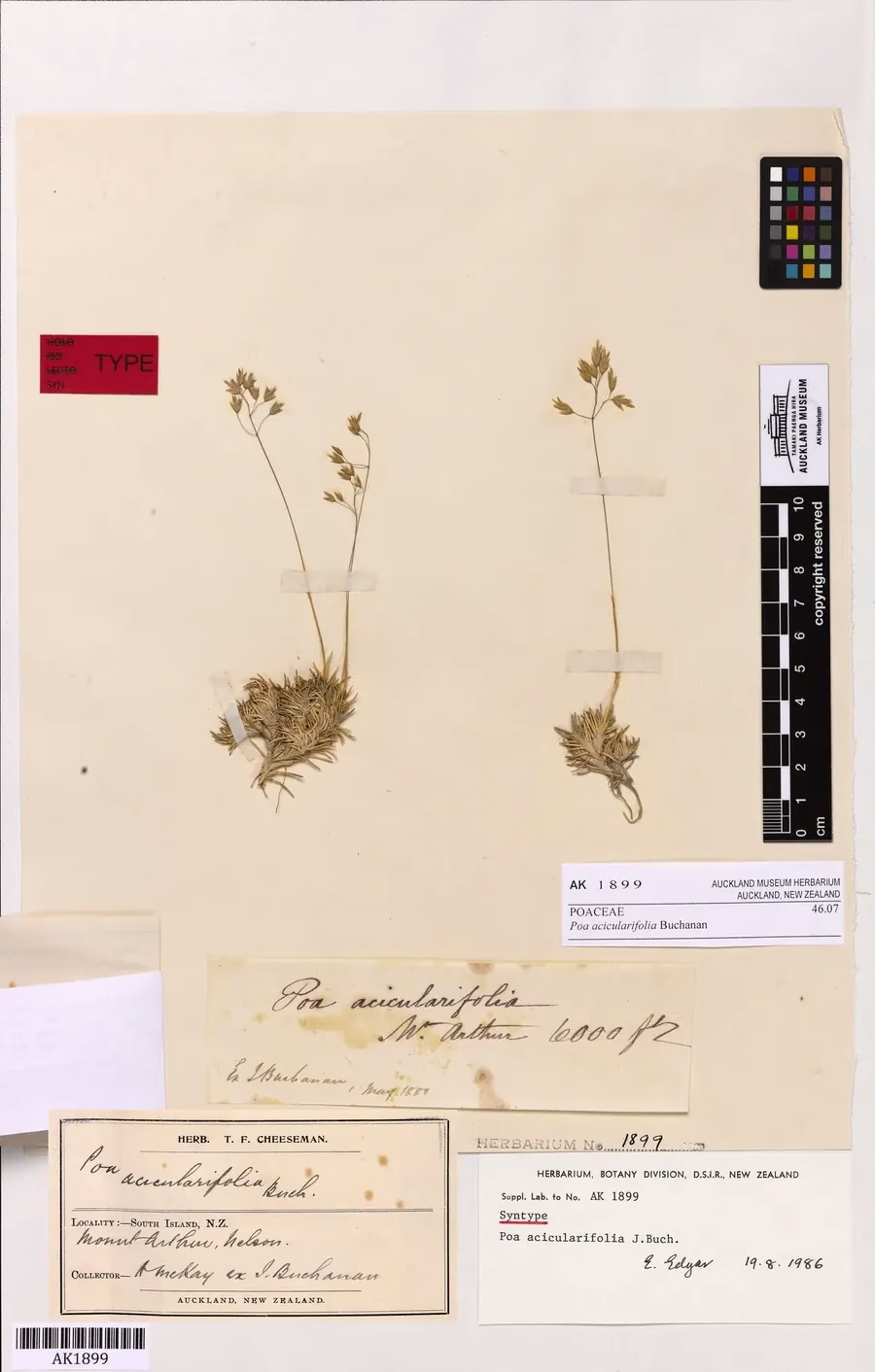
Plant Conservation
Poa maia is ranked Not Threatened (2023) and has held this ranking in every assessment since 2004.
No specific threats are documented. Much of its known range lies within protected areas, and controlling browsing animals and weeds in wet montane forest supports its habitat.
Frequently Asked Questions
Where does Poa maia grow?
It is found on Mt Taranaki (Mt Egmont) in the North Island and in Nelson and the Marlborough Sounds in the South Island, in montane to subalpine wet open forest and sometimes damp tussock grassland.
When was Poa maia described?
It was named by Elizabeth Edgar in the New Zealand Journal of Botany in 1986. The type specimen was collected by A.P. Druce in January 1972 from wet ground in silver beech forest between Mt Owen and the Lookout Range in north-west Nelson.
What does Poa maia look like?
It forms loose, erect tufts to 40 cm with light green to purplish shoots, folded wiry leaves only 0.5 to 1.5 mm wide, and a very lax panicle 3 to 9 cm long held above the leaves.
Sources and Further Reading
The botanical, growing, and conservation details for Poa (Poa maia) on this page draw on the New Zealand plant references below. Consult them for full technical records and the latest distribution data.