Poa
Poa matthewsii
Last updated:
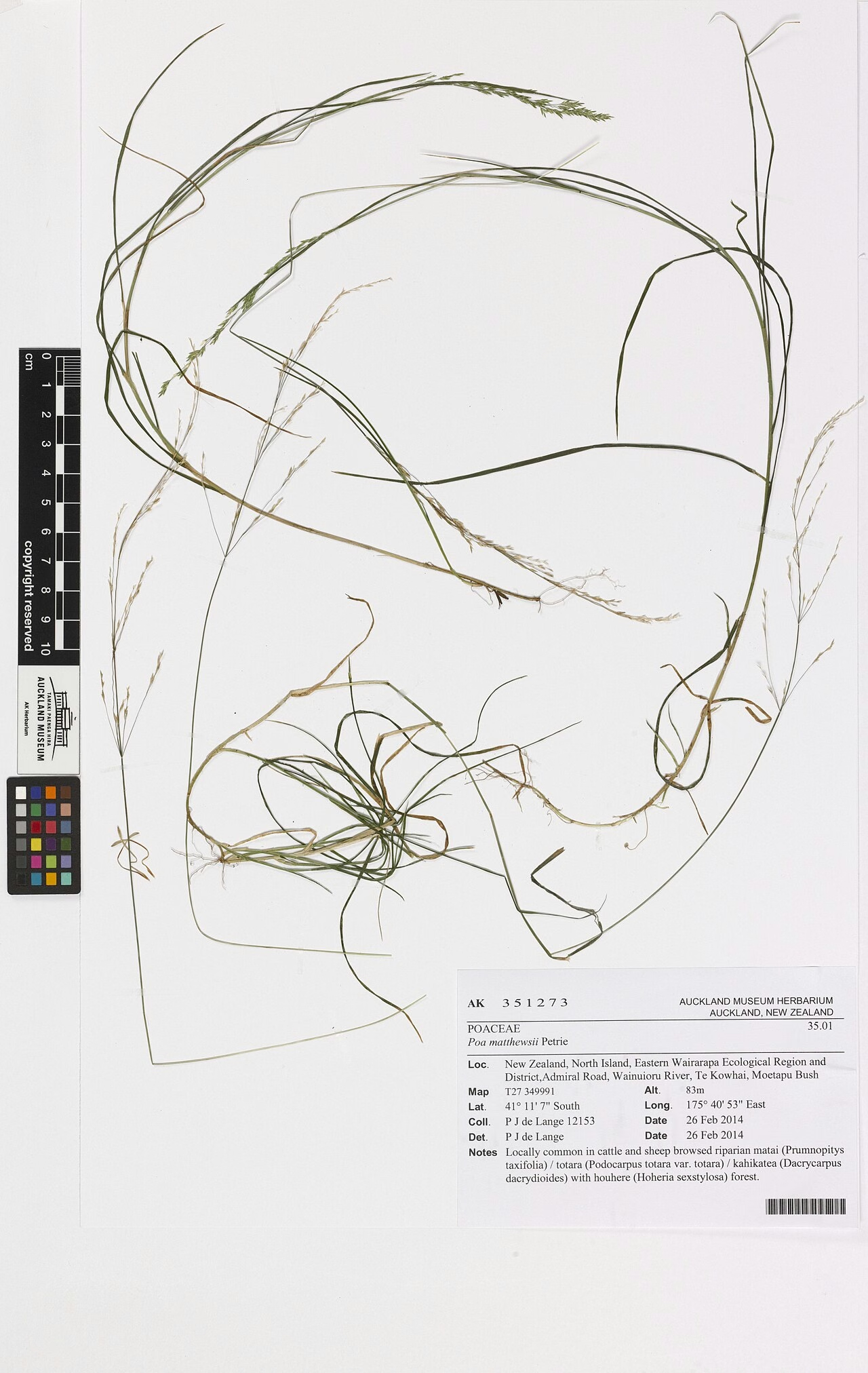
Poa matthewsii is a delicate native forest grass endemic to New Zealand. It is markedly stoloniferous, with soft, bright green leaves that tend to lie along the ground and very slender flowering stems up to about 50 cm carrying lax, airy panicles. It grows in lowland to montane open forest, often not far from the coast, in the North Island from the Waikato (including the Mangapu Caves area) southward and in the South Island east of the Main Divide and in north-west Nelson. It has no common name and is ranked Not Threatened. Explore more native grasses and flaxes in our native plant guide.
Plant Description
Poa matthewsii is a markedly stoloniferous perennial grass with bright green, rarely bluish leaves that tend to lie along the ground. The leaf sheaths are pale green to light brown and membranous, with minute hairs and prickle-teeth near their clear margins. The ligule is 0.7 to 1.5 mm long with a rounded, hairless tip.
The leaf blades are usually 10 to 17 cm long and only 1 to 2 mm wide, flat and soft, with fine hairs on the margins near the ligule. The very slender flowering stems are erect or bent and ascending, usually 10 to 25 cm long and occasionally to 36 cm, with the plant reaching about 50 cm in flower. The panicle is 10 to 25 cm long, lax and delicate, with finely roughened spreading branches carrying few spikelets at their tips.
It is morphologically close to Poa imbecilla, sharing delicate leaves and panicles, almost hairless spikelets and minute anthers. It is distinguished by its stoloniferous habit and by the roughened clear margins of the leaf sheath. The chromosome number is 2n = 28.
Quick Facts
| Scientific Name | Poa matthewsii |
|---|---|
| Height | Leaves low; flowering stems to 0.5 m |
| Spread | Spreads by stolons along the ground |
| Water Needs | Moderate; forest floor moisture |
| Light | Partial shade under open forest |
| Frost Tolerance | Moderate; lowland to montane species |
| Salt Tolerance | No information available, though it often grows near the coast |
| Growth Rate | No information available |
| Lifespan | Perennial |
Climate Best Suited to
It suits mild to cool, moist climates under a forest canopy, from coastal lowlands to montane districts. Hot, exposed and dry sites are unsuitable.
Regional Suitability
| City | Climate Suitability |
|---|---|
| Auckland | Medium |
| Wellington | High |
| Christchurch | Medium |
| Dunedin | Medium |
Plant Habitat
Poa matthewsii is endemic to New Zealand. In the North Island it occurs in South Auckland, including the Mangapu Caves area, and in central and southern districts. In the South Island it grows east of the Main Divide and in north-west Nelson.
It is a grass of lowland to montane open forest, often not far from the coast, where its stolons creep through the forest floor.
Growing Requirements
Soil Requirements
As a forest-floor grass it suits moist, humus-rich soil.
- Leafy, organic forest soil
- Moist but well drained
- Leaf litter mulch suits it
Light Requirements
It grows under open forest canopy rather than deep shade or full exposure.
- Dappled light or partial shade
- Shelter from hot afternoon sun
Water Requirements
Its soft leaves suggest it needs steady moisture.
- Water in dry spells
- Avoid waterlogging
Planting and Establishing
It is not commercially available. Where it is grown for restoration, plant rooted stolon pieces under open canopy in autumn or spring.
Give it space to creep, and keep it away from vigorous introduced grasses that would swamp its delicate growth.
Ecological Role
Poa matthewsii is part of the ground flora of lowland and montane open forest, where its stolons knit across the forest floor among leaf litter.
It is wind pollinated like other Poa species. No specific insect, bird or other associations are recorded in the sources consulted.
Uses & Significance
Garden Uses
A soft, creeping native grass of interest for woodland plantings.
- Ground cover under open trees
- Restoration of forest ground layers within its range
- Native grass collections
Ecological Value
It contributes to the native grass diversity of forest floors.
- Native ground cover in open forest
- Helps hold soil and leaf litter
- Part of coastal and lowland forest understorey communities
Landscaping Uses
Its bright green, soft leaves lying along the ground and fine, airy panicles could make a delicate carpet beneath open trees or along a shaded path edge.
It is not a lawn grass and would not tolerate heavy foot traffic.
Seasonal Care Calendar
Spring
Stolons resume growth and new leaves appear.
- Plant stolon divisions
- Weed around plants
Summer
Delicate lax panicles appear on slender stems. Exact flowering months are not recorded in the sources consulted.
- Water in dry weather
Autumn
Seed is shed and plants continue to spread by stolons.
- Collect seed
- Top up leaf litter mulch
Winter
Growth slows but the leaves remain.
- Little care needed
When to Prune and How Much
No pruning is needed. Spent flowering stems can be removed by hand.
If stolons stray where they are not wanted, pull or cut them back and use the rooted pieces to start new plants.
How to Grow Poa
No published propagation information for Poa matthewsii was found in the sources consulted, and NZPCN lists it as not commercially available. Its markedly stoloniferous habit means rooted runners should be the simplest way to increase it, and seed is an option for restoration where genetic diversity matters. These suggestions follow general practice for creeping native forest grasses. Collect material only with permission, and keep plantings within the same district as the source.
By Division of Stolons
The creeping stolons root along the ground, so rooted lengths can be cut free and potted. This is easiest in spring or autumn when soils are moist and growth is active.
Because the runners lie along the ground, pinning a stolon onto a pot of mix beside the parent plant, a form of layering, lets it root before it is severed.
- Find a stolon that has rooted at the nodes
- Cut it free with a few leafy shoots and roots attached
- Pot into a moist, humus-rich mix
- Keep in light shade and water regularly
- Plant out once new leaves are growing strongly
From Seed
Seed ripens in the lax panicles after flowering. The spikelets are few and small, so collect from several plants to gather enough seed and to capture genetic variety.
- Collect panicles once spikelets dry and seed loosens
- Sow on a fine, moist seed mix and cover very lightly
- Keep in a shaded, humid spot
- Prick out seedlings when large enough to handle
- Grow on in shade before planting under open canopy
Pests & Diseases
No pests or diseases are recorded for Poa matthewsii in the sources consulted.
In cultivation, slugs and snails may graze the soft young leaves, and competing weedy grasses are a bigger risk than any pest.
Cultural Significance
No Māori name or traditional use is recorded for Poa matthewsii in the sources consulted.
It was described by Donald Petrie. NZPCN states only that the epithet honours someone named Mathews, without identifying the person, and the grass was at one time treated as a variety of Poa imbecilla.
Bonus Tip
To tell Poa matthewsii from the similar Poa imbecilla on a forest walk, look at its growth habit first: a grass whose soft leaves lie flat along the ground on creeping runners is more likely Poa matthewsii, which you can confirm by checking the leaf sheath margins for tiny prickle-teeth with a hand lens.
Related Plants
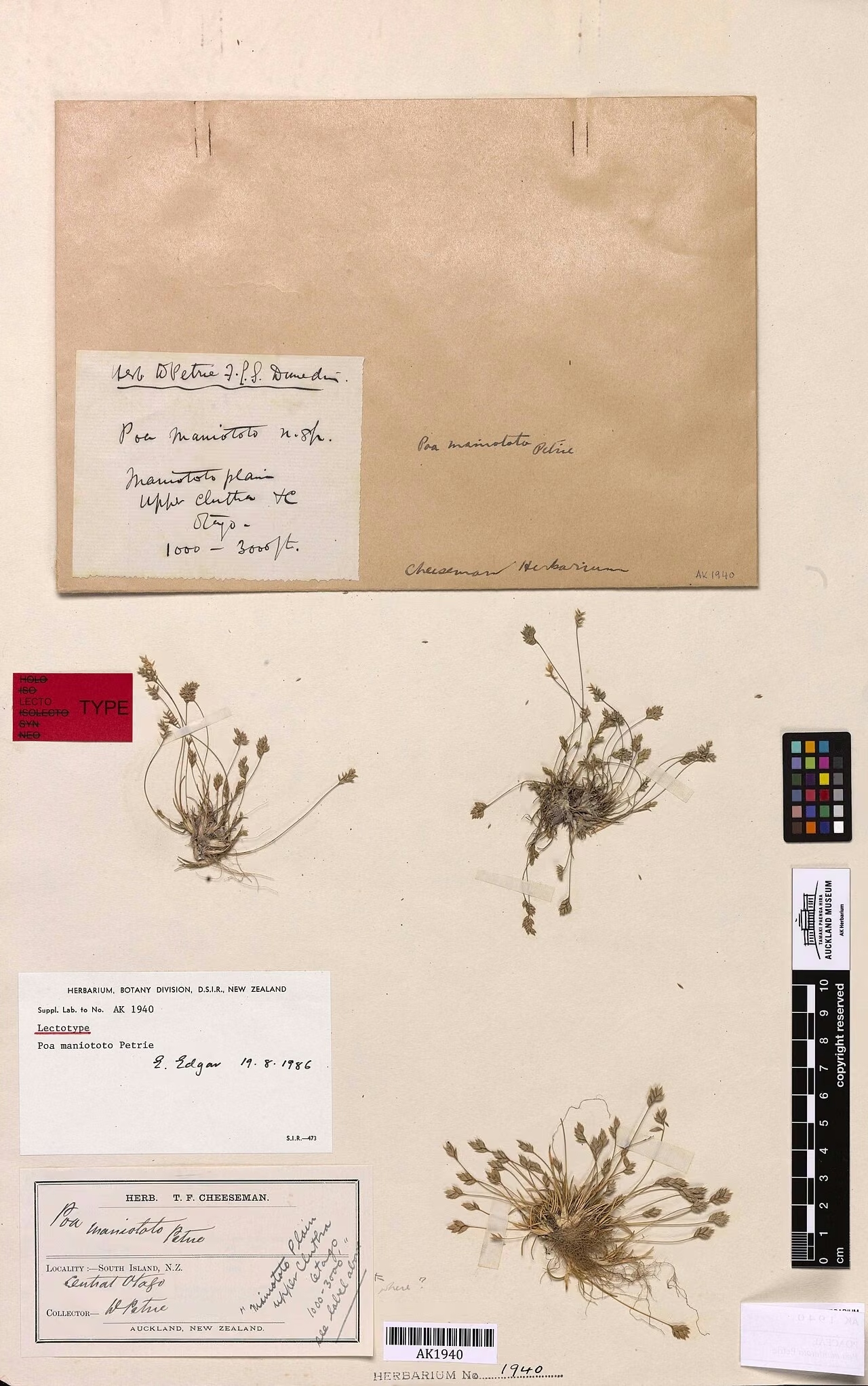
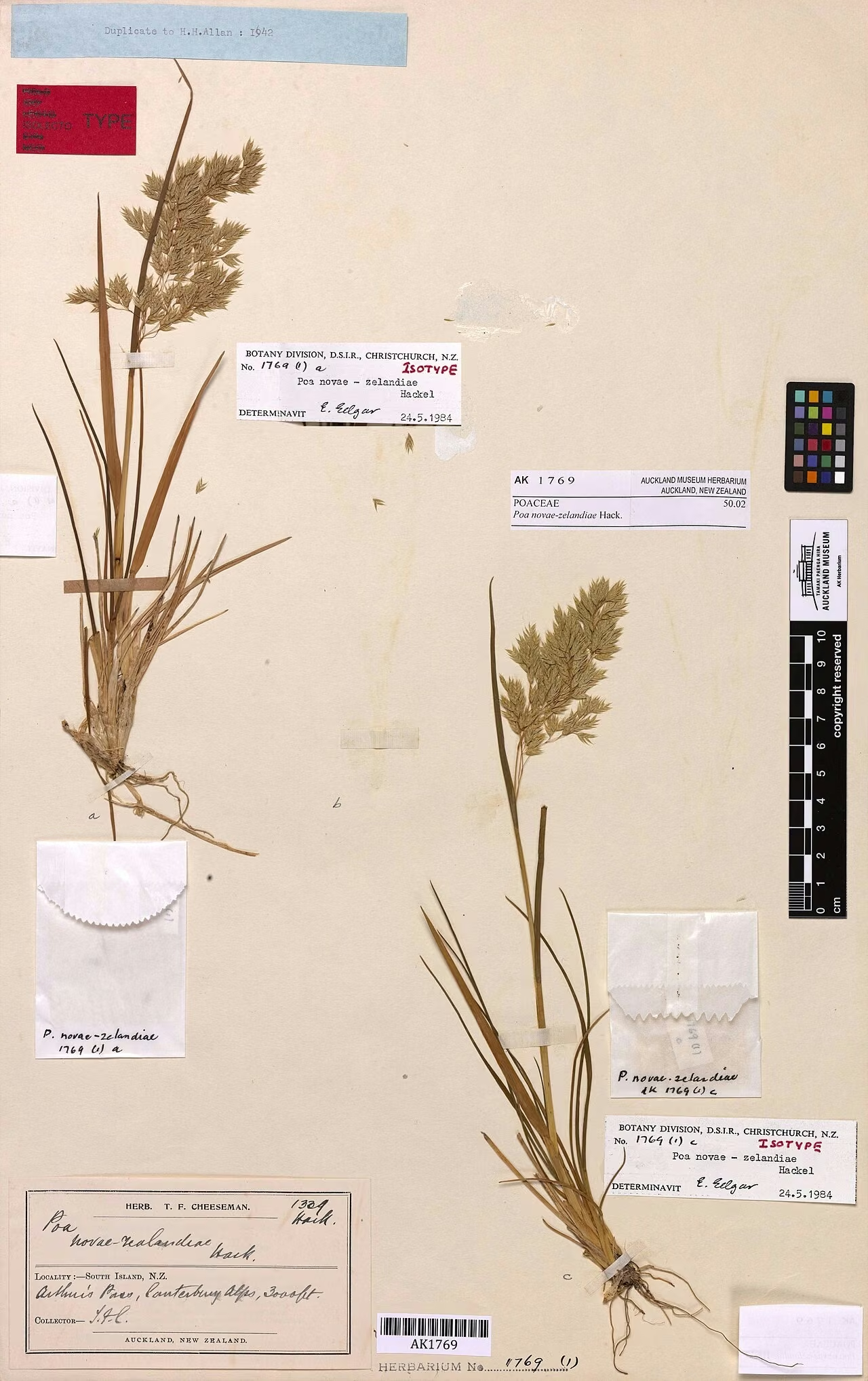
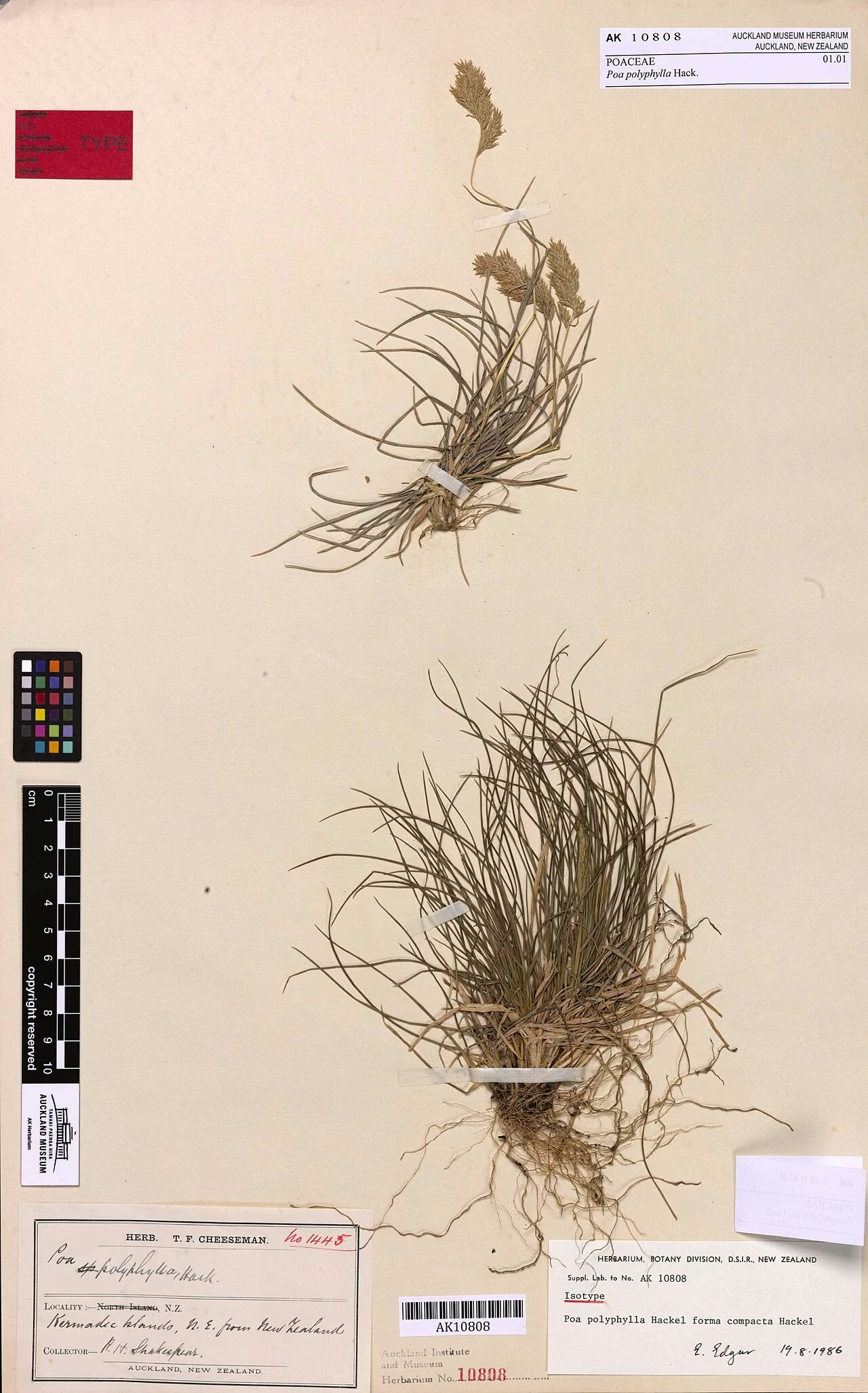
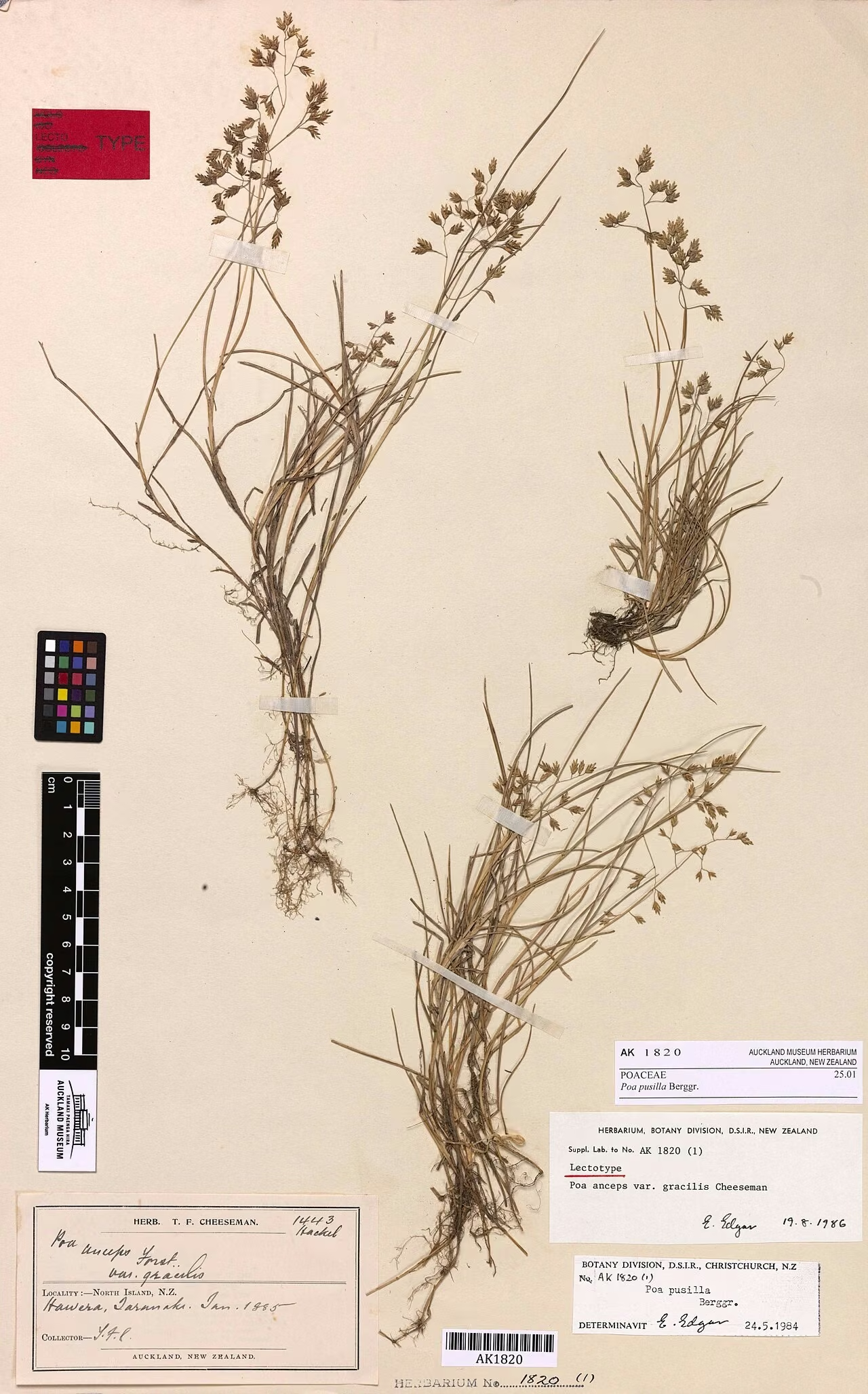
Explore other native plants that share similar characteristics or habitats with Poa (Poa matthewsii), offering further insights into New Zealand's diverse flora. These related species provide context and opportunities for complementary planting in your garden.
Plant Conservation
Poa matthewsii is ranked Not Threatened (2023) and has held that ranking in every national assessment since 2004. Regionally, it is Data Deficient in Wellington and Regionally Not Threatened in Otago (2025).
No specific threats are documented. Protecting lowland and coastal forest remnants and controlling weeds in their understorey supports this grass and many other ground-layer plants.
Frequently Asked Questions
Where does Poa matthewsii grow?
It occurs in the North Island in South Auckland, including near the Mangapu Caves, and in central and southern districts, and in the South Island east of the Main Divide and in north-west Nelson, in lowland to montane open forest often near the coast.
How is Poa matthewsii different from Poa imbecilla?
Both have delicate leaves and panicles, nearly hairless spikelets and minute anthers. Flora of New Zealand separates Poa matthewsii by its creeping stoloniferous habit and the finely roughened clear margins of its leaf sheaths.
Is Poa matthewsii a good shade grass?
It is a natural grass of open forest, so it suits light shade, but it is not commercially available and its use as a garden grass is not documented.
Sources and Further Reading
The botanical, growing, and conservation details for Poa (Poa matthewsii) on this page draw on the New Zealand plant references below. Consult them for full technical records and the latest distribution data.