Poa
Poa incrassata
Last updated:
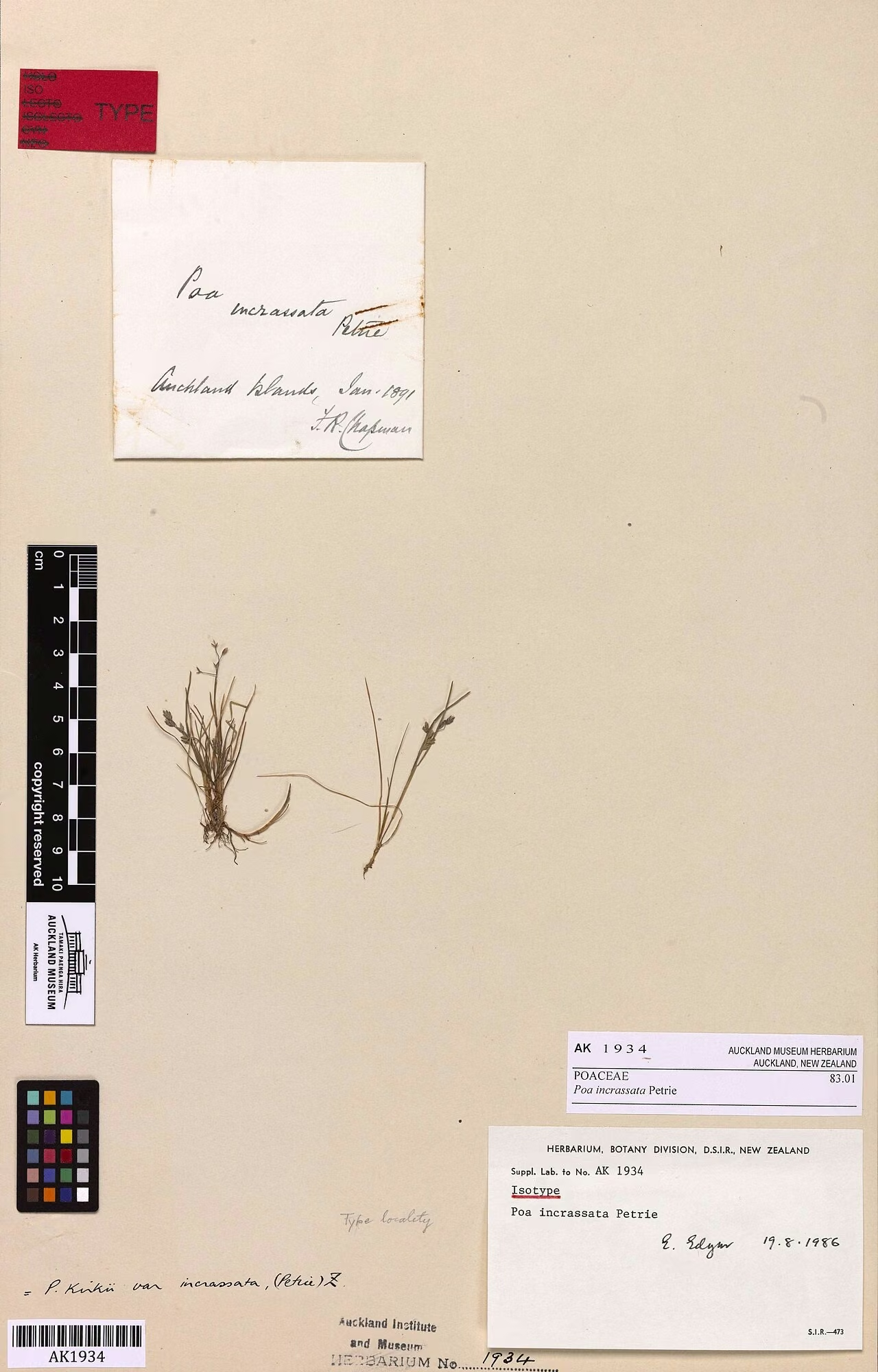
Poa incrassata is a diminutive, stoutly tufted, blue-green to grey-green perennial grass only 5 to 15 cm tall. It is endemic to New Zealand, where it grows above about 1100 m in central and western Otago and north-eastern Southland, with further populations on Stewart Island/Rakiura and the Auckland Islands. It favours damp ground in herbfield, fellfield and windswept, poorly drained short tussock grassland. Its small, compact panicles of purple-tinged spikelets appear in early summer. It has no recorded common name and is ranked At Risk - Naturally Uncommon because its populations are small and scattered. Explore more native grasses and flaxes in our native plant guide.
Plant Description
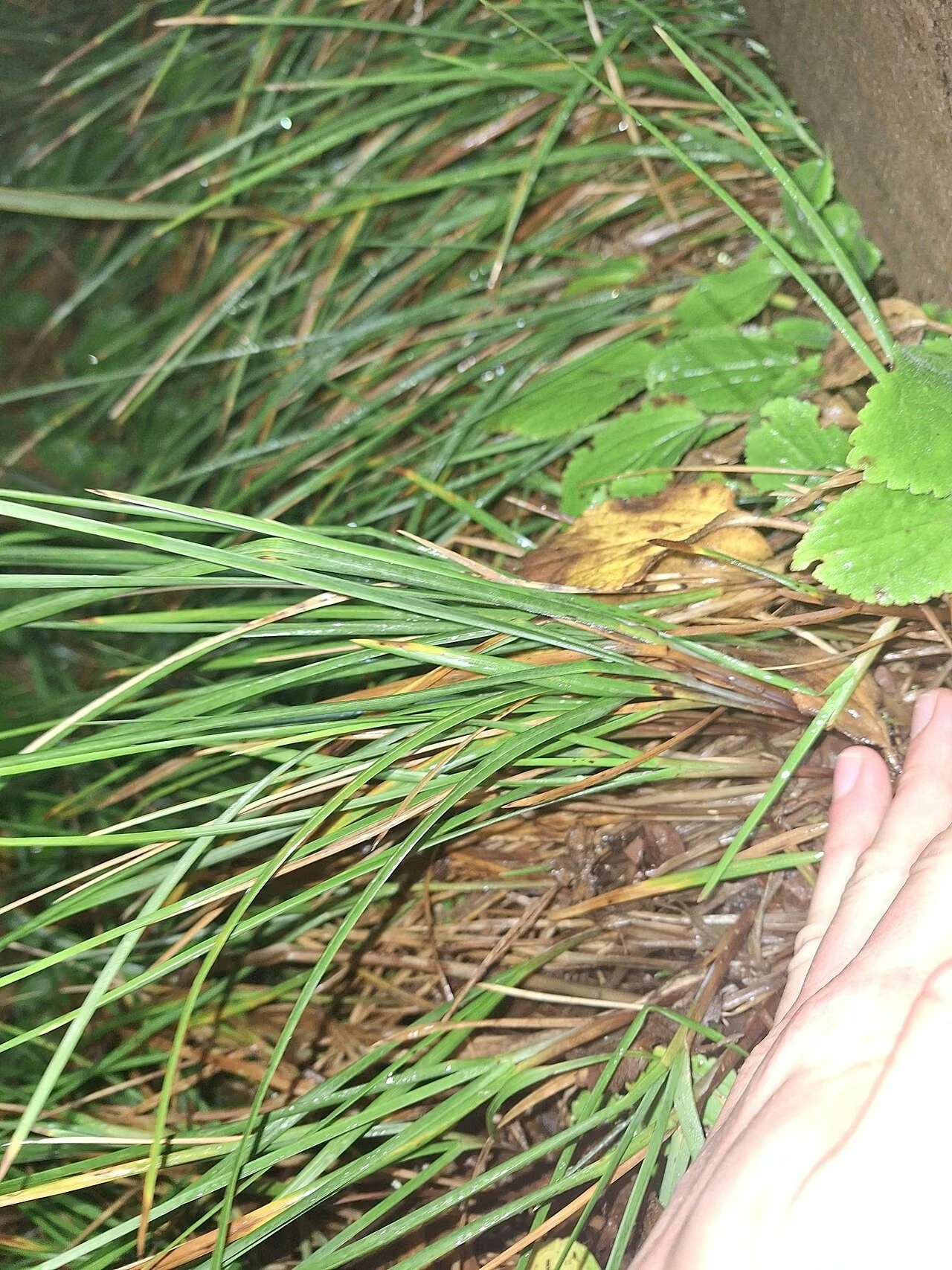
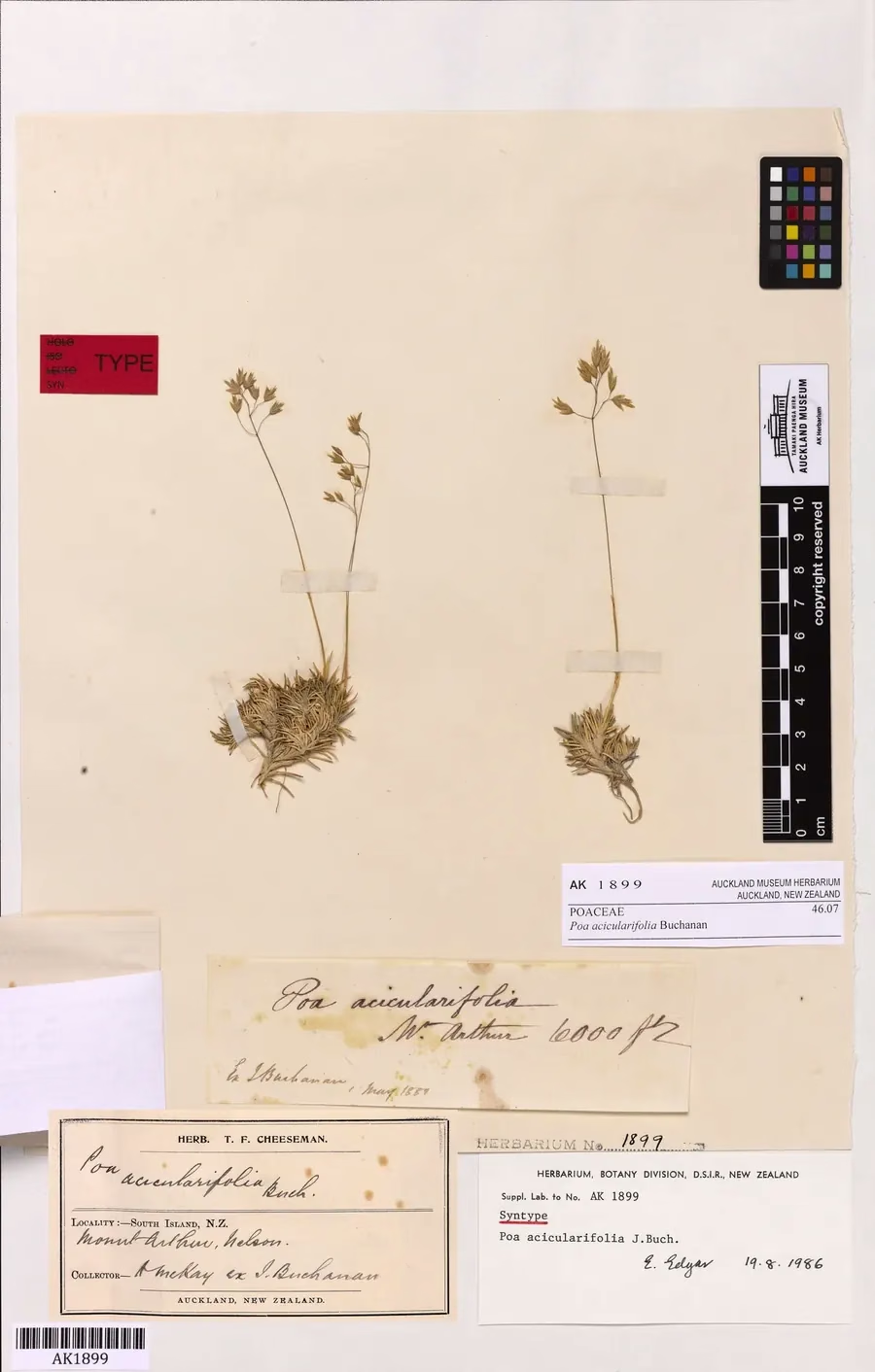
Poa incrassata forms small, stout tufts 5 to 15 cm tall with a narrow, glaucous, blue-green to grey-green appearance. The leaf sheaths are shining, greenish or reddish purple, later fading to light grey-brown, and the old leaf blades persist on the plant. The blades are 1 to 6 cm long (occasionally to 9 cm) and only 0.6 to 2 mm wide, usually folded, smooth on the underside but rough on the midrib near the curved tip.
The flowering stems are 2 to 9 cm long (occasionally to 16 cm), often finely rough just below the panicle. The panicle is 0.5 to 2.5 cm long, compact and spike-like or raceme-like, very rarely more open. The spikelets are 2.5 to 3.5 mm long with two to three florets, light green tinged with purple, and the anthers are tiny, only 0.2 to 0.5 mm long.
It is most likely to be confused with Poa sublimis, another small alpine poa. Poa incrassata is distinguished by its short, stiff, scabrid panicle branches and spikelet stalks. A hand lens is usually needed to see these features.
Quick Facts
| Scientific Name | Poa incrassata |
|---|---|
| Height | 5-15 cm |
| Spread | Small tufts a few centimetres across |
| Water Needs | Moist; grows in damp, poorly drained ground |
| Light | Full sun, open alpine sites |
| Frost Tolerance | Very high; an alpine species above 1100 m |
| Salt Tolerance | No information available; an inland alpine grass |
| Growth Rate | Slow |
| Lifespan | Perennial |
Climate Best Suited to
Suits cold, windswept subalpine and alpine climates with long winters, frequent frost and snow, and cool summers. It does poorly in warm, humid lowland conditions.
Regional Suitability
| City | Climate Suitability |
|---|---|
| Auckland | Low |
| Wellington | Low |
| Christchurch | Low |
| Dunedin | Medium |
Plant Habitat
Poa incrassata is endemic to New Zealand. On the South Island it is found from central and western Otago to north-eastern Southland, and it also occurs on Stewart Island/Rakiura and in the subantarctic Auckland Islands.
It grows in subalpine to alpine zones, generally above 1100 m on the mainland, in damp ground within herbfield, fellfield and open, windswept, poorly drained short tussock grassland. Populations tend to be small and scattered, which NZPCN considers a natural pattern rather than a result of human impacts.
Growing Requirements
Soil Requirements
In the wild it grows in thin, damp, often poorly drained alpine soils that stay cool year round.
- Gritty, low-fertility mix that holds some moisture
- Avoid rich, fertilised soils
- A layer of fine gravel around the tuft keeps the crown dry while the roots stay moist
Light Requirements
It grows in open, treeless alpine country with full exposure to sun and wind.
- Full sun
- Strong air movement, as in its windswept natural habitat
Water Requirements
Its natural sites are damp and often poorly drained, so it should never dry out, but it also needs cool, airy conditions rather than humid warmth.
- Keep the root zone consistently moist
- Water from below in pots to avoid wet foliage in warm weather
- Avoid humid, still glasshouse conditions
Planting and Establishing
This grass is not commercially available and is suited only to specialist alpine growers. NZPCN notes it can be grown in a small pot but dislikes humidity and should be kept in a cool place with some air movement.
In the south and inland, a pot or trough in a cool, open position is the most practical option. Do not collect plants from the wild.
Ecological Role
Poa incrassata is a small component of high-altitude short tussock grassland, herbfield and fellfield communities in Otago and Southland. Like other poas it is wind pollinated, and its small size lets it occupy damp gaps between larger tussocks and cushion plants.
Specific information on the insects that feed on it or how its seed is dispersed was not found in the sources consulted.
Uses & Significance
Garden Uses
Its value in cultivation is mainly as a specialist alpine collection plant.
- Alpine troughs and small pots in cool climates
- Botanic garden alpine collections
- Study collections of native Poa species
Ecological Value
It contributes to the plant diversity of Otago and Southland alpine grasslands and of the subantarctic Auckland Islands.
- Part of damp alpine herbfield and short tussock communities
- A naturally uncommon endemic that adds to regional biodiversity
Landscaping Uses
Its tiny, blue-green tufts are too small for general landscaping, but in an alpine trough they pair well with native cushion plants and small herbs from the same high-altitude habitats.
Set it among gravel and rocks where its purple-tinged summer flower heads can be seen at close range.
Seasonal Care Calendar
Spring
Growth resumes as snow melts and alpine temperatures rise.
- Check pots for drying out
- Remove any dead leaf material that holds damp
Summer
Flowering occurs in December and January, with compact purple-tinged panicles.
- Keep cool and airy during hot spells
- Watch for flowering if plants received enough winter cold
Autumn
Fruiting continues from January to March as seed ripens on the panicles.
- Collect ripe seed from cultivated plants
- Sow fresh seed outdoors to receive winter chilling
Winter
Plants are dormant under snow and frost in the wild.
- Leave pots outdoors in the cold
- Ensure pots do not sit in standing water
When to Prune and How Much
No pruning is required. Leaf blades persist naturally on this species, so leave the tuft largely intact.
If dead material builds up and holds moisture in a humid spell, tease out a little by hand rather than cutting the tuft back.
How to Grow Poa
Poa incrassata is not commercially available, and NZPCN gives only brief cultivation notes: it can be grown in a small pot but dislikes humidity, needs a cool place with some air movement, and will not flower in lowland situations without some form of cold treatment. Propagation therefore suits specialist growers who can provide cool, airy conditions. Seed and careful division of established cultivated tufts are the two practical methods, as for other small tufted poas. Never collect plants from wild populations, which are small and scattered.
From Seed
Seed ripens from January to March. Because the plant is an alpine species that needs cold to flower, it is sensible to give sown seed natural winter chilling outdoors before expecting germination.
- Collect ripe panicles from cultivated plants in late summer
- Sow on the surface of a gritty seed mix and cover lightly with fine grit
- Leave the pot outdoors through winter in a cool, exposed position
- Keep the mix moist and move seedlings into individual small pots once they form tufts
By Division
Mature tufts can be gently split into smaller pieces, each with roots and several shoots. Do this in early spring when growth resumes, and keep the divisions cool and shaded from hot sun until they settle.
- Lift a healthy cultivated tuft in early spring
- Separate it into pieces with roots and at least a few shoots each
- Pot into a gritty, moisture-retentive mix
- Keep cool, moist and well ventilated until new growth appears
Pests & Diseases
No specific pests are recorded for this species. In cultivation the main risk is rot or decline in warm, humid, still conditions, which it dislikes.
In the wild, NZPCN identifies no significant threats, though browsing animals and invasive weeds can affect high-country grasslands generally.
Cultural Significance
No traditional Māori name or use is recorded for Poa incrassata in the sources consulted.
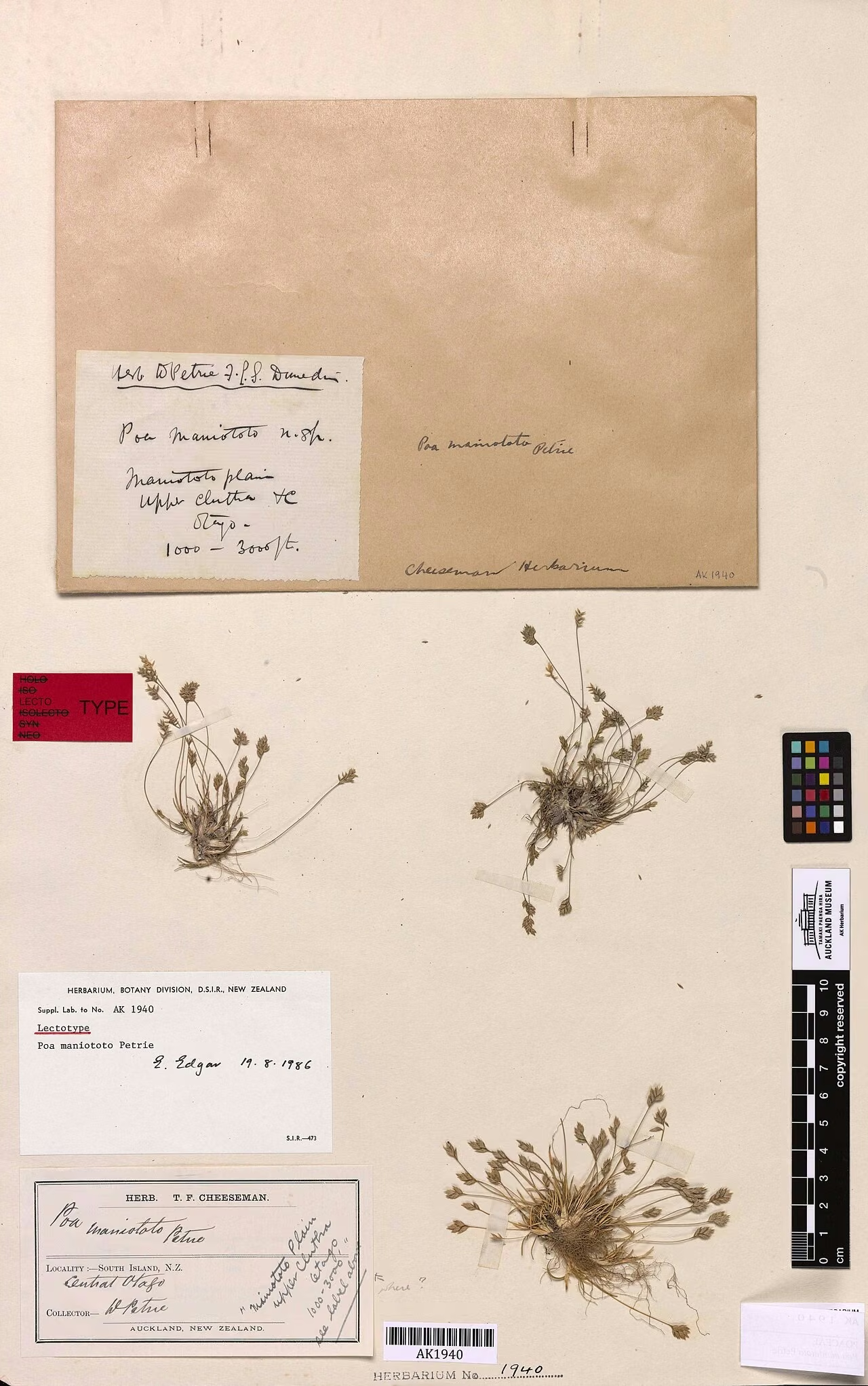
The species was described by the botanist Donald Petrie, and it has also been treated as Poa kirkii var. incrassata. The genus name Poa comes from the Greek for meadow grass.
Bonus Tip
If you grow this grass in a lowland garden and it refuses to flower, that is expected: NZPCN notes it needs some form of cold treatment to flower at low altitude. Leaving the pot outdoors in the coldest, most exposed part of the garden over winter gives it the best chance.
Related Plants
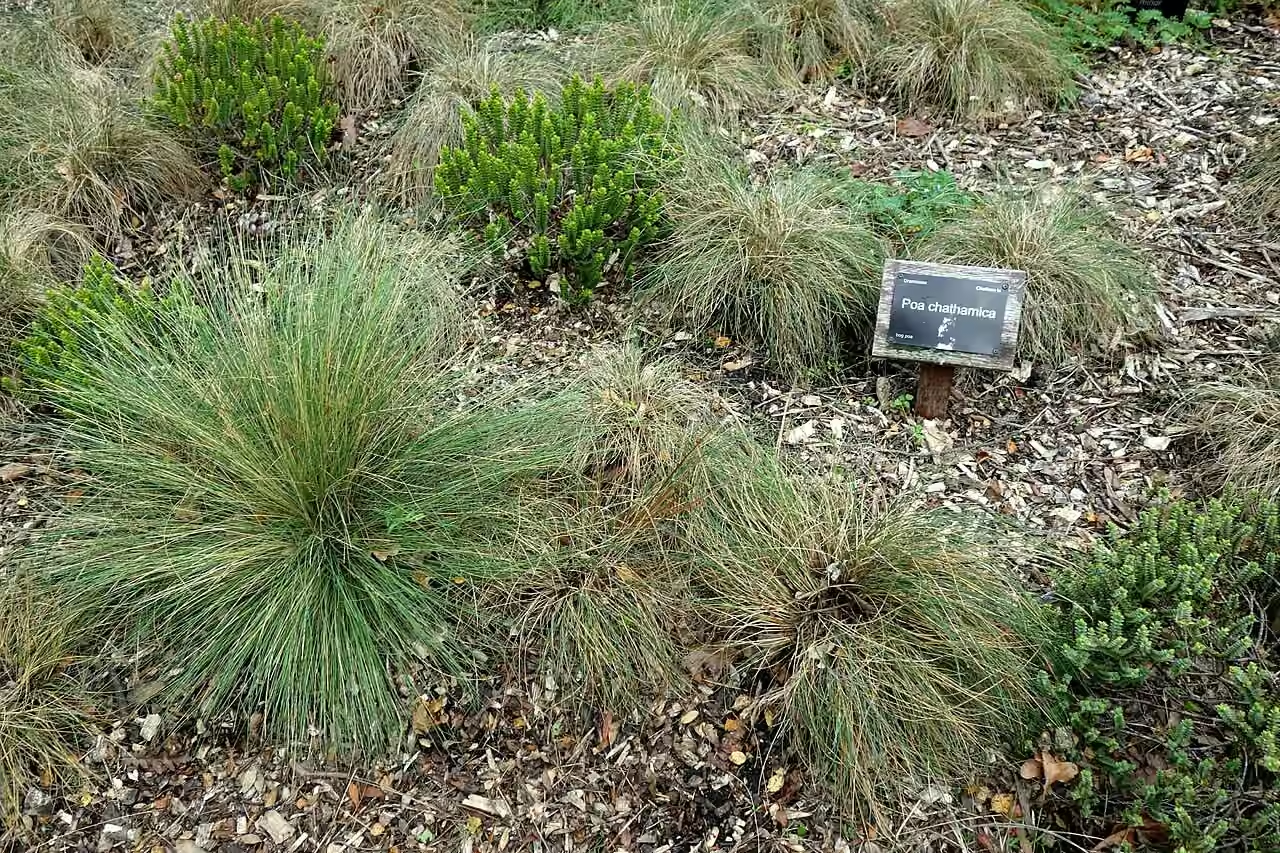
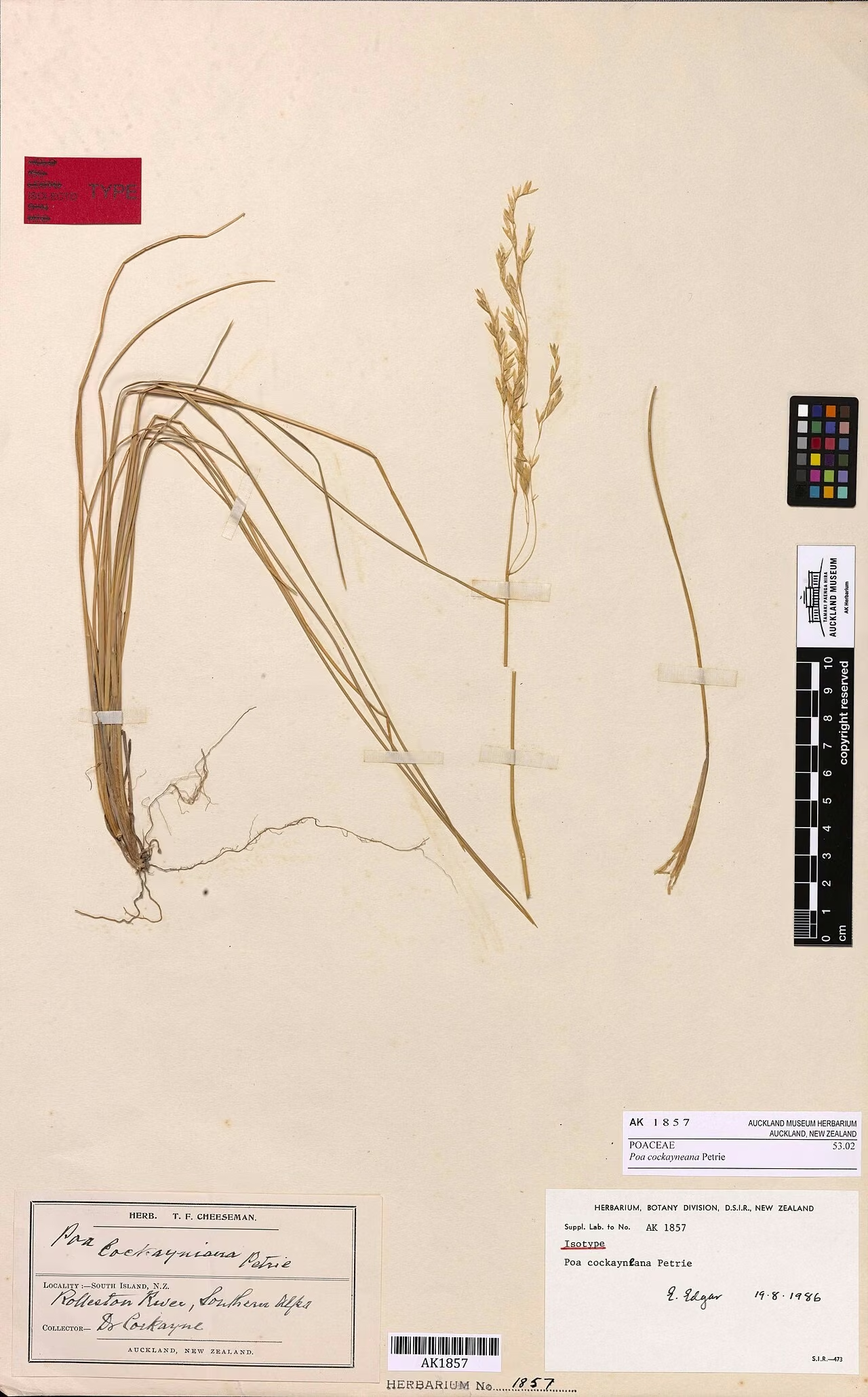
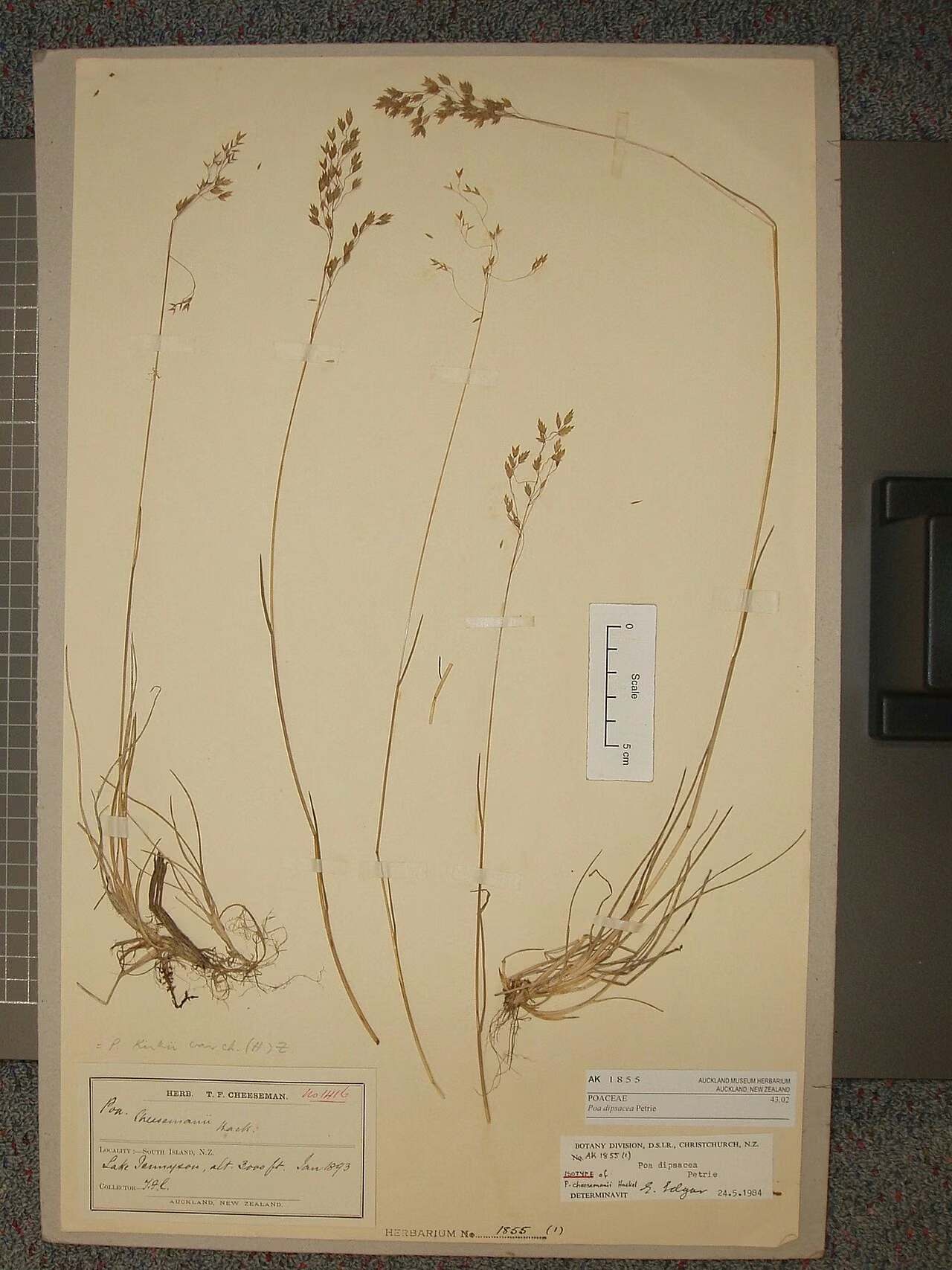
Explore other native plants that share similar characteristics or habitats with Poa (Poa incrassata), offering further insights into New Zealand's diverse flora. These related species provide context and opportunities for complementary planting in your garden.
Plant Conservation
Poa incrassata is ranked At Risk - Naturally Uncommon (2023) with the qualifiers Range Restricted and Sparse. It has held this ranking since 2009 and was previously listed as Sparse in 2004.
NZPCN considers it a high-elevation species that appears secure across its known range, with small, scattered populations that reflect its natural ecology rather than human damage. Protecting alpine grassland and herbfield from disturbance, weeds and browsing animals helps keep its populations secure.
Frequently Asked Questions
How do you identify Poa incrassata?
Look for a tiny blue-green to grey-green tuft 5 to 15 cm tall with shining, often reddish-purple leaf sheaths and compact, spike-like panicles of purple-tinged spikelets. It differs from the similar Poa sublimis in having short, stiff, rough (scabrid) panicle branches and spikelet stalks.
Where does Poa incrassata grow?
It is found in subalpine and alpine sites above about 1100 m in central and western Otago and north-eastern Southland, and also on Stewart Island/Rakiura and the Auckland Islands.
Is Poa incrassata threatened?
It is ranked At Risk - Naturally Uncommon because populations are small and scattered, but NZPCN considers it secure across its known range and its rarity appears to be natural.
Can Poa incrassata be grown at low altitude?
It can be kept in a small pot in a cool, airy place, but it dislikes humidity and will not flower in lowland conditions without some form of cold treatment.
Sources and Further Reading
The botanical, growing, and conservation details for Poa (Poa incrassata) on this page draw on the New Zealand plant references below. Consult them for full technical records and the latest distribution data.