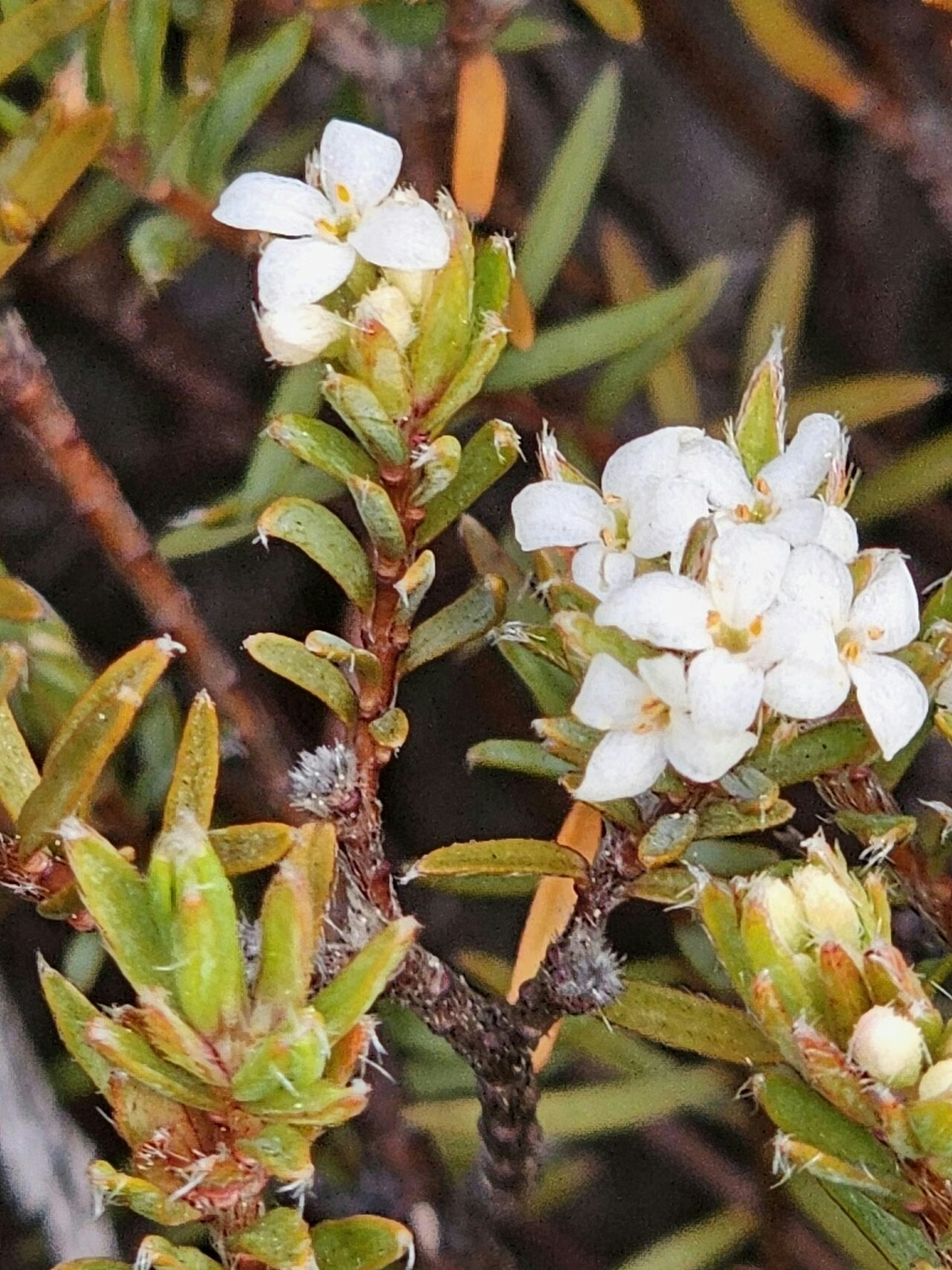
Pimelea
Pimelea suteri
Last updated:
Pimelea suteri is a small, much-branched endemic shrub that grows only on ultramafic rock in the South Island, in the Red Hills, on Mt Dun and the Richmond Range in the Nelson mineral belt, and at West Dome in Northern Southland. It reaches up to about 80 cm, has narrow paired leaves 5-8 mm long that are often brownish, loose heads of white flowers from September to February and small red fleshy fruit. It grows in open stony ground and shrubby tussock grassland from montane to alpine levels. It is ranked At Risk - Naturally Uncommon because of its very restricted range. Explore more native shrubs in our native plant guide.
Plant Description
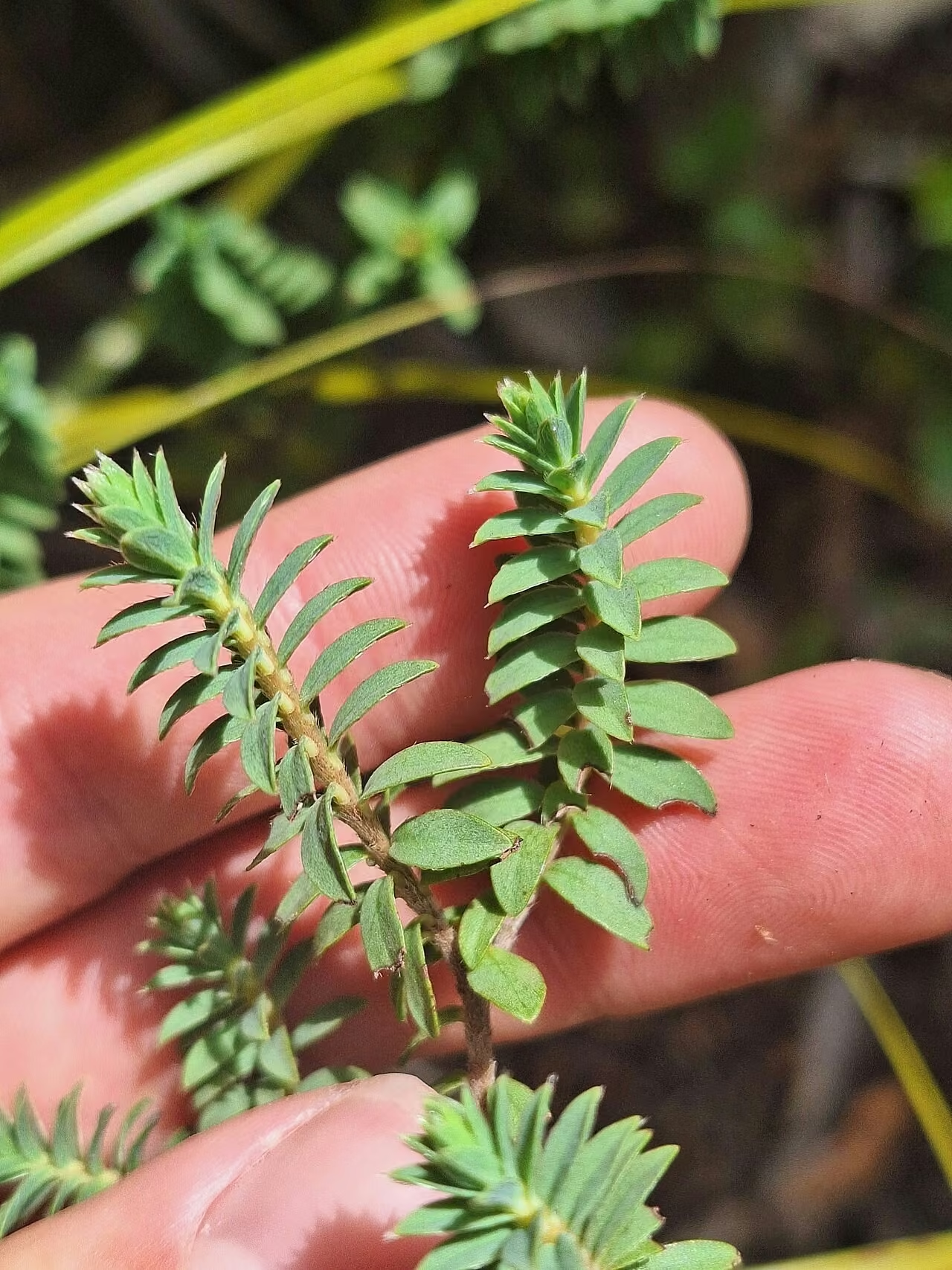
Pimelea suteri is a small, much-branched shrub. NZPCN gives its height as up to 800 mm in some sites and around 300 mm in others, so its size depends strongly on exposure. The leaves are in opposite pairs (decussate), narrow and linear-lanceolate, 5-8 mm long and 0.8-2 mm wide, often with a brownish tinge and sparse hairs underneath.
White flowers are carried in loose heads at the ends of the branches from September to February. The fruit are small, red and fleshy, ripening from December to April.
Its very narrow, often brownish leaves and strict restriction to ultramafic rock make it easy to separate from other pimeleas in the Nelson area, most of which have broader leaves and grow on ordinary soils.
Quick Facts
| Scientific Name | Pimelea suteri |
|---|---|
| Height | 0.3-0.8 m |
| Spread | Compact; much-branched |
| Water Needs | Low to moderate; sharp drainage |
| Light | Full sun |
| Frost Tolerance | Hardy; a montane to alpine plant |
| Salt Tolerance | Low; an inland mountain species |
| Growth Rate | Slow |
| Lifespan | Perennial |
Climate Best Suited to
It is adapted to the cold winters, strong sun and exposure of the Nelson and Southland mountains. It tolerates frost well but needs sharp drainage and an open, airy site.
Regional Suitability
| City | Climate Suitability |
|---|---|
| Auckland | Low |
| Wellington | Medium |
| Christchurch | Medium |
| Dunedin | Medium |
Plant Habitat
Pimelea suteri is endemic to the South Island. It is known from the ultramafic rocks of the Red Hills, Mt Dun and the Richmond Range in the Nelson mineral belt, and from West Dome in Northern Southland.
It grows from montane to alpine elevations in open, stony ground and shrubby tussock grassland on ultramafic rock. These toxic, infertile soils carry sparse vegetation, which gives this small shrub the open conditions it needs.
Growing Requirements
Soil Requirements
In the wild it grows on ultramafic gravels, but in cultivation the key requirement is a very free-draining, low-nutrient mix.
- Coarse gravel, grit or scree mix
- Low fertility; do not feed
- Never plant in heavy or wet soil
Light Requirements
Its natural habitat is open and exposed, and NZPCN recommends a sunny position in cultivation.
- Full sun
- Open, well-ventilated site
Water Requirements
Ultramafic gravels drain quickly, so the plant is used to sharp drainage and periods of dryness.
- Water sparingly once established
- Avoid humid, damp conditions around the foliage
Planting and Establishing
Grow it in a scree bed, raised gravel garden or alpine trough in full sun. A deep gravel mulch around the base helps keep the crown dry.
Expect slow growth. Use only nursery-propagated plants, as collection from the mineral belt is not appropriate for such a restricted species.
Ecological Role
The white flowers are likely pollinated by small native insects, and the small red fleshy fruit are probably eaten and spread by lizards and birds, as with other red-fruited mountain pimeleas, though no species-specific study was found.
It is one of a suite of plants that are restricted to or strongly associated with ultramafic rock in the Nelson mineral belt, which is a nationally important centre of plant endemism.
Uses & Significance
Garden Uses
It is a plant for specialist alpine and rock gardeners rather than general planting.
- Scree and gravel gardens
- Alpine troughs
- Collections of mineral belt plants
Ecological Value
Its value lies in the distinctive flora of ultramafic sites.
- Part of the Nelson mineral belt endemic flora
- Fruit for native lizards and birds
- Flowers for alpine insects
Landscaping Uses
In a rock garden its fine, brownish foliage contrasts well with grey cushion plants and small tussocks. Place it among stones where it can be seen up close.
It is too slow and specialised for hedging or mass planting.
Seasonal Care Calendar
Spring
Flowering starts as early as September, with white heads at the branch tips.
- Check drainage after winter rain
- Weed around plants by hand
Summer
Flowers continue to February and red fruit develop from December.
- Take semi-hardwood cuttings
- Give occasional water in long droughts
Autumn
Fruit ripen until April and growth firms up.
- Take hardwood cuttings later in autumn
- Collect fruit if sowing seed
Winter
Plants rest through cold weather and snow.
- No protection needed
- Keep away from waterlogged spots
When to Prune and How Much
No regular pruning is needed. This is a slow-growing shrub and cutting it back sets it back considerably.
Remove any dead twigs by hand to keep air flowing through the plant.
How to Grow Pimelea
NZPCN records that Pimelea suteri can be grown from semi-hardwood and hardwood cuttings, but that it is usually rather slow growing, and it does best in a sunny, well-drained position. That makes cuttings the reliable route. Seed from the red fruit may also be tried, though no germination data were found for this species. Because the plant occurs naturally only in a handful of ultramafic sites, cutting material should come from cultivated stock, and any collection for restoration work should be done with the agreement of the Department of Conservation or the landowner.
From Cuttings
Both semi-hardwood cuttings in summer and hardwood cuttings in autumn or winter can be used. Keep the mix lean and very well drained, since rot is the main cause of failure.
- Take 4-6 cm cuttings of firm side shoots
- Remove the lowest pairs of leaves
- Insert into a mix of pumice and coarse sand
- Keep in bright light with good air movement and modest humidity
- Allow several months for rooting, then pot into a gritty mix
From Seed
Red fruit ripen from December to April. Sowing fresh seed is the best chance, as with other pimeleas. Germination of pimelea seed is often slow, so do not discard the tray too early.
- Collect ripe red fruit from cultivated plants
- Clean off the flesh and sow at once on gritty mix
- Leave outdoors to experience winter cold
- Pot seedlings singly once they are large enough
Pests & Diseases
No pests or diseases specific to this species are recorded. In gardens, poor drainage and humid conditions are the most likely problems.
In the wild, NZPCN notes that wildling pines spreading across the Red Hills are a threat, as they can shade and alter the open ultramafic habitat.
Cultural Significance
No Māori name or traditional use is recorded for Pimelea suteri in the sources consulted.
The species was described by Thomas Kirk. Its name appears to honour Henry Suter, the Swiss-born naturalist who worked in New Zealand, though the sources consulted do not state the dedication explicitly.
Bonus Tip
If you want to see this species in the wild, the Red Hills area of Mount Richmond Forest Park is one of its strongholds. Search the open, stony ultramafic ground for a small brownish shrub with very narrow paired leaves, and leave plants and fruit undisturbed.
Related Plants
Explore other native plants that share similar characteristics or habitats with Pimelea (Pimelea suteri), offering further insights into New Zealand's diverse flora. These related species provide context and opportunities for complementary planting in your garden.
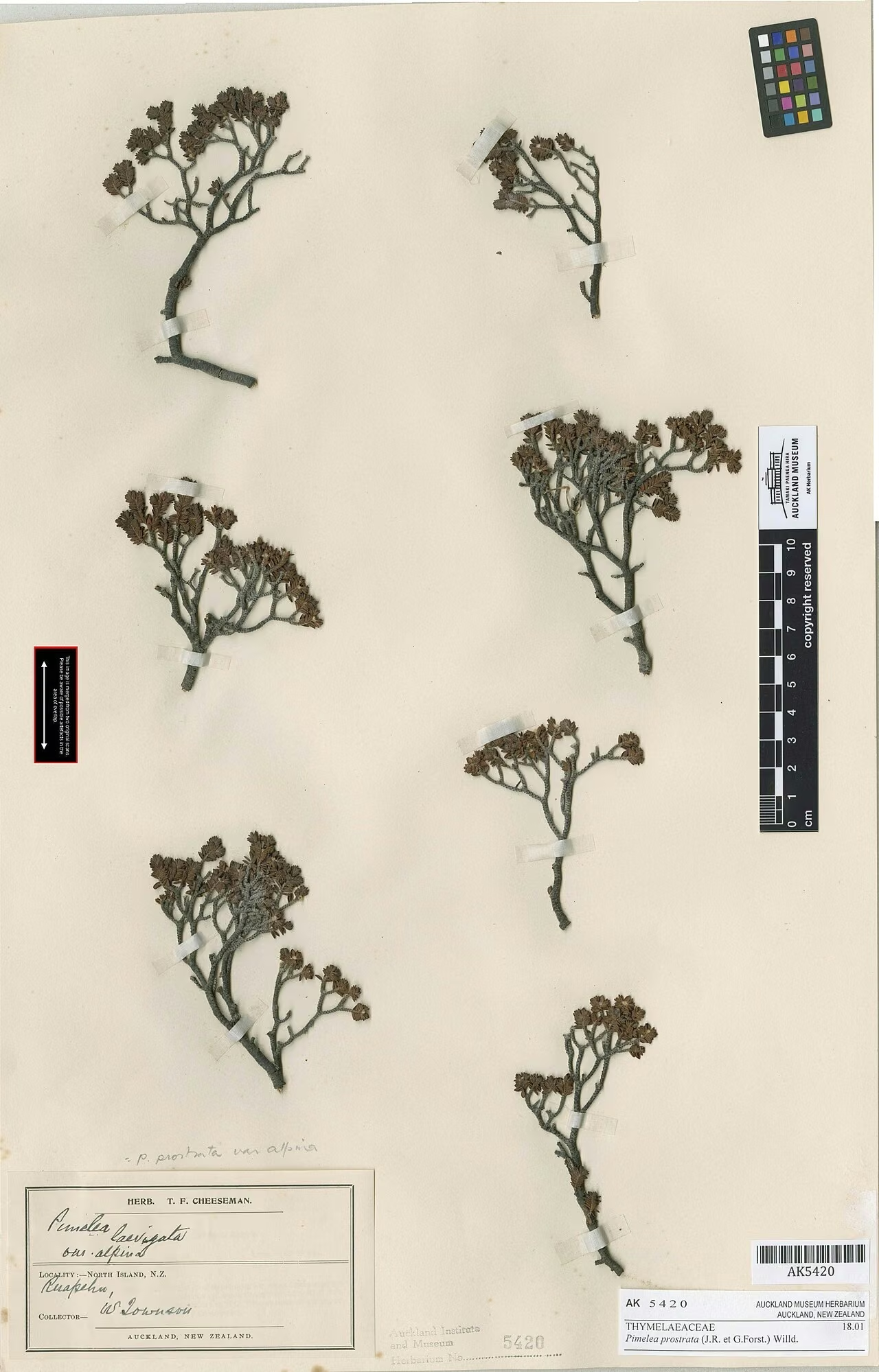
Pimelea microphylla
Pimelea microphylla
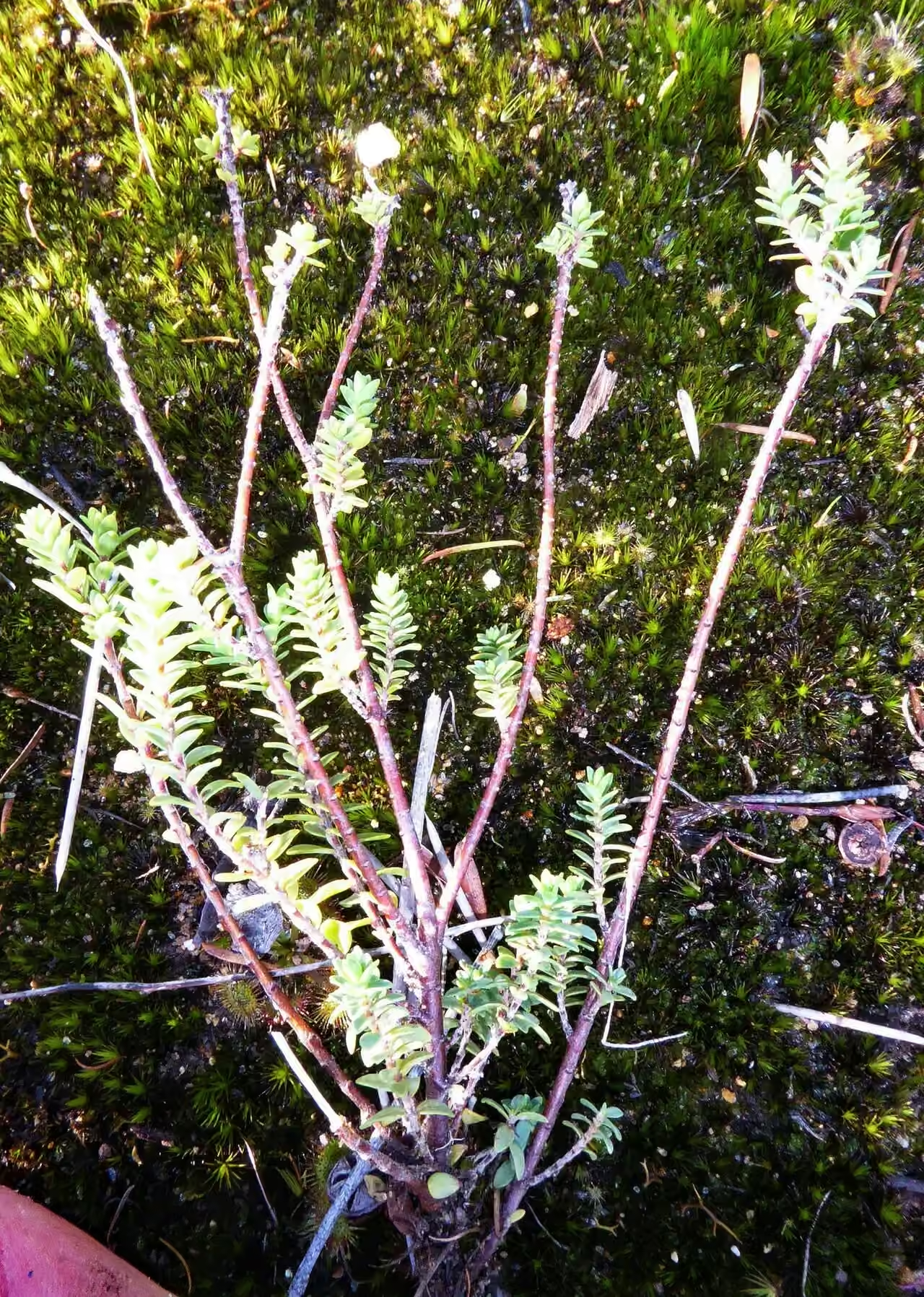
Pimelea orthia
Pimelea orthia
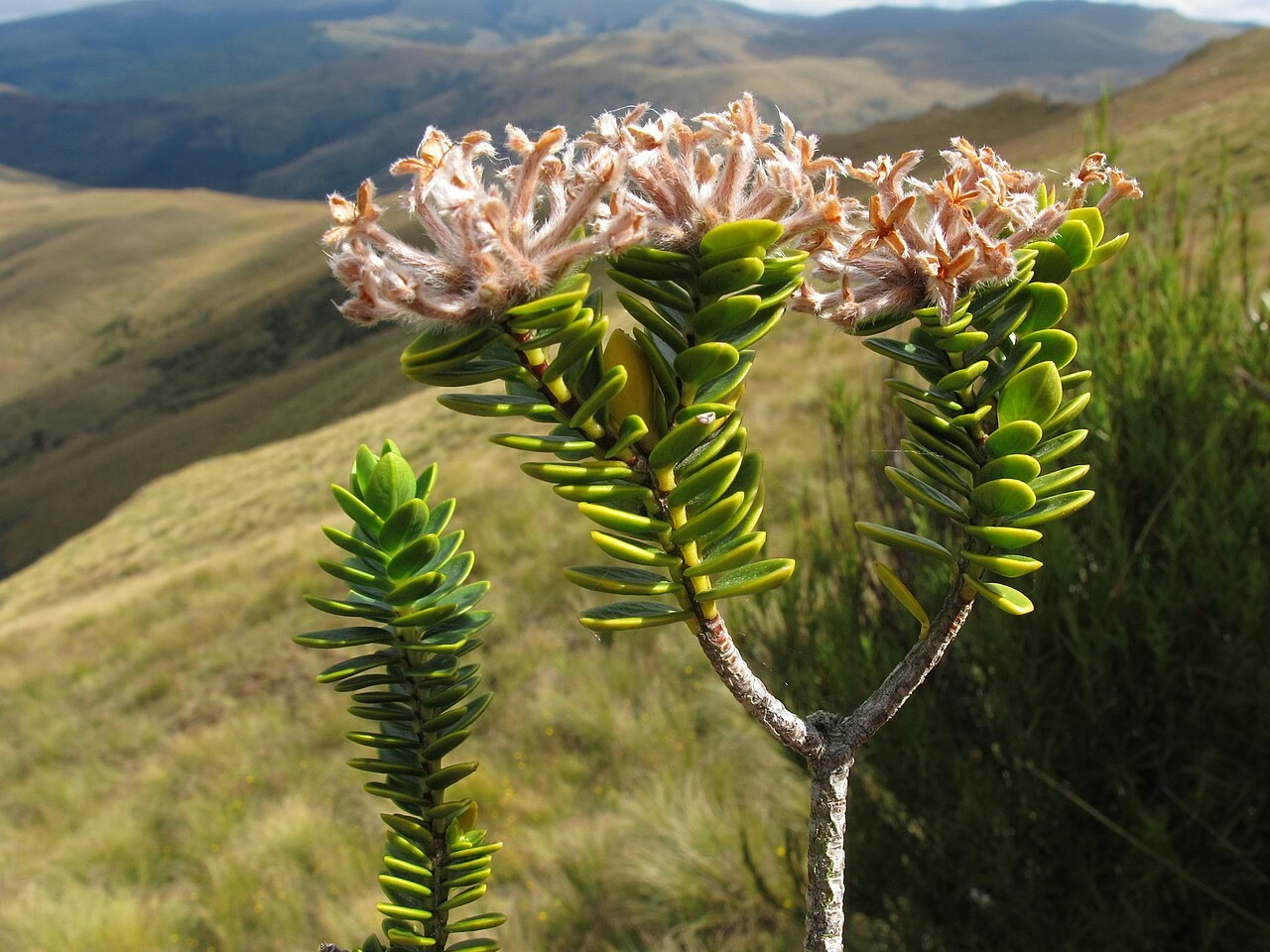
Poppelwell's Pimelea
Pimelea poppelwellii
Pimelea pseudolyallii
Pimelea pseudolyallii
Three Kings Pimelea
Pimelea telura
Pittosporum anomalum
Pittosporum anomalum
Plantago aucklandica
Plantago aucklandica
Pimelea acra
Pimelea acra
Plant Conservation
Pimelea suteri is ranked At Risk - Naturally Uncommon (2023) with the qualifier Range Restricted. It is naturally confined to a few ultramafic areas, so any loss of habitat there affects a large share of the species.
NZPCN identifies wildling pines spreading on the Red Hills as the main threat; otherwise no threats are recorded. Wilding conifer control in the mineral belt therefore directly benefits this plant and other ultramafic specialists.
Frequently Asked Questions
Why does Pimelea suteri only grow on ultramafic rock?
It is a specialist of the mineral belts, whose ultramafic soils are high in magnesium and heavy metals and low in plant nutrients, conditions that exclude most competing plants.
Where can you see Pimelea suteri?
It grows on the Red Hills, Mt Dun and the Richmond Range in the Nelson mineral belt, and at West Dome in Northern Southland, in open stony ground and shrubby tussock.
Can Pimelea suteri be grown in a garden?
It can be grown from semi-hardwood and hardwood cuttings, but NZPCN notes it is usually rather slow growing and needs a sunny, well-drained site.
Sources and Further Reading
The botanical, growing, and conservation details for Pimelea (Pimelea suteri) on this page draw on the New Zealand plant references below. Consult them for full technical records and the latest distribution data.