Pittosporum
Pittosporum anomalum
Last updated:
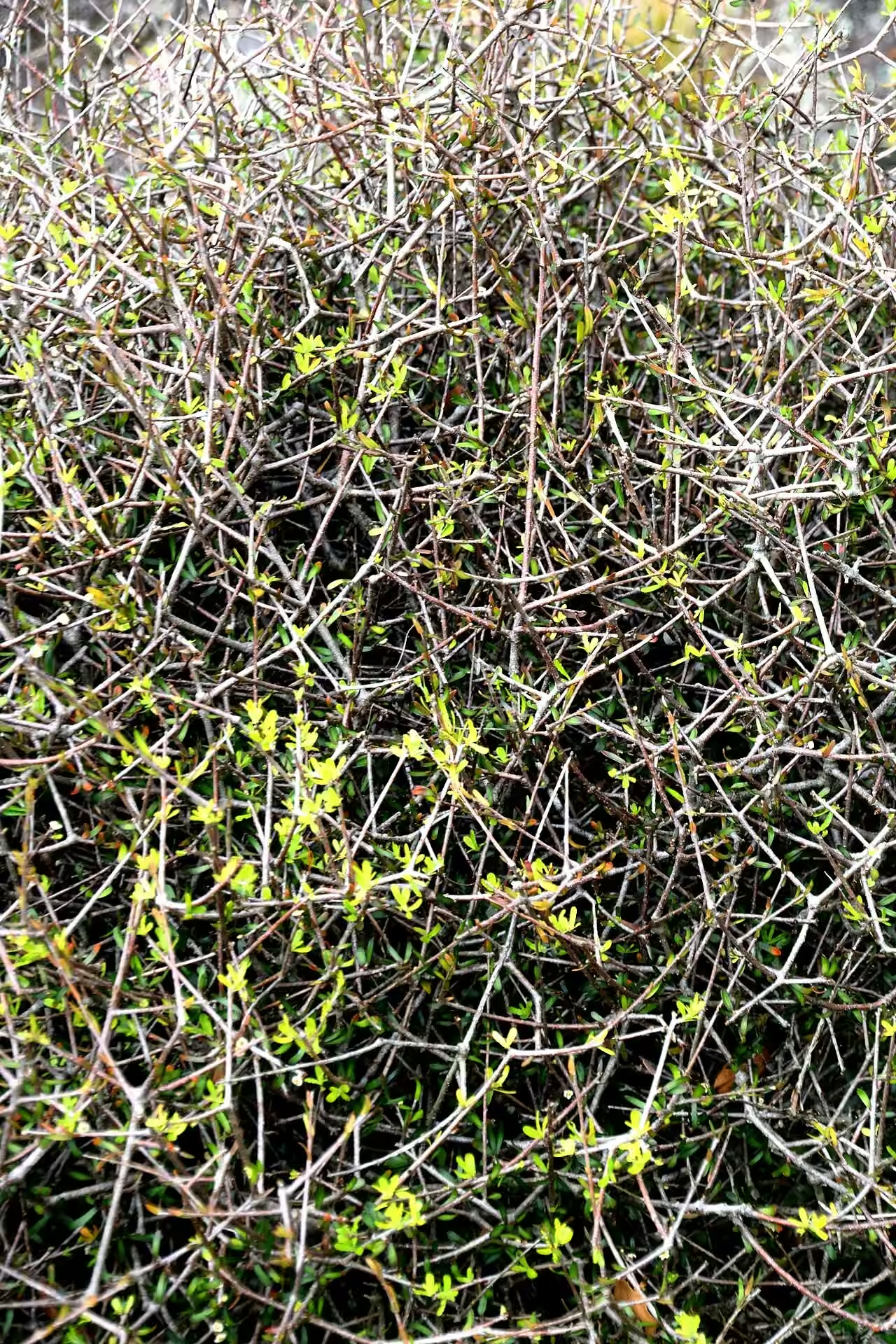
Pittosporum anomalum is a small, endemic, divaricating shrub about 1 m tall, made up of many interlacing, zig-zagging twigs with small, narrow, uneven leaves 5-15 mm long. It grows from the central North Island to the middle of the South Island, notably in subalpine scrub, and was first described from Arthur's Pass in 1935. In spring it bears small, fragrant, yellowish flowers with reddish margins. Its name reflects an anomaly: unlike most pittosporums, its seeds are not sticky but covered in a dry, papery membrane. It is ranked Not Threatened. Explore more native shrubs in our native plant guide.
Plant Description
Pittosporum anomalum is a divaricating shrub around 1 m tall, with slender, hairy, zig-zagging branchlets that interlace into a dense, tangled bush. Juvenile leaves are linear to narrow-oblong with irregular teeth or lobes. Adult leaves are aromatic, linear and pinnatifid (cut into lobes), 5-15 mm long, and are sometimes clustered in tufts on short side shoots.
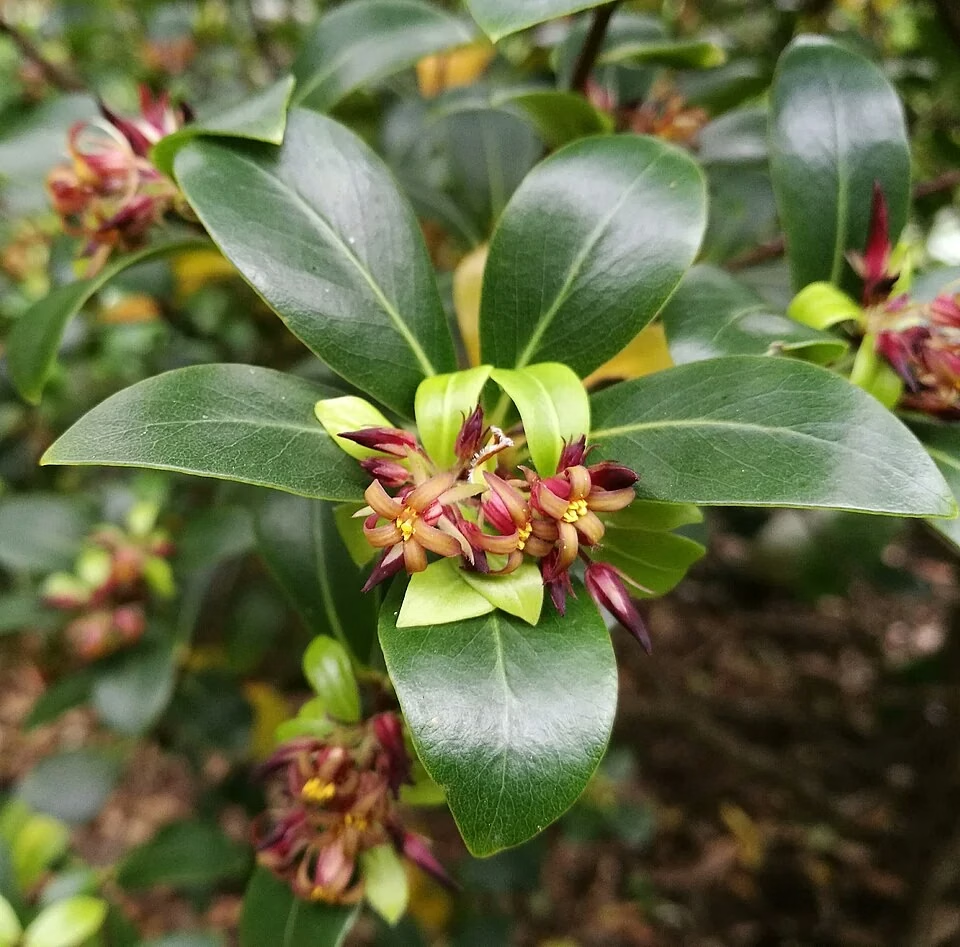
The small flowers are yellowish with reddish margins and fragrant, appearing from September to November. The fruit is a small, dry, thin-walled ovoid capsule holding 1-4 seeds, ripening in March and April. Unusually for the genus, the seeds are not immersed in sticky fluid but are covered by a papery membrane.
It can be confused with Pittosporum divaricatum, another divaricating mountain pittosporum, and herbarium specimens have been reidentified between the two. The lobed, aromatic adult leaves and dry, papery-coated seeds are the best features for recognising P. anomalum.
Quick Facts
| Scientific Name | Pittosporum anomalum |
|---|---|
| Height | About 1 m |
| Spread | About 1 m; dense and twiggy |
| Water Needs | Moderate; free-draining |
| Light | Full sun to partial shade |
| Frost Tolerance | Hardy; a subalpine plant |
| Salt Tolerance | Not documented; best inland |
| Growth Rate | Slow to moderate |
| Lifespan | Perennial |
Climate Best Suited to
It suits the cool, frosty climate of the central North Island volcanic plateau and the South Island mountains. It should also grow in cooler lowland gardens with good drainage.
Regional Suitability
| City | Climate Suitability |
|---|---|
| Auckland | Low |
| Wellington | Medium |
| Christchurch | High |
| Dunedin | High |
Plant Habitat
This shrub is endemic to New Zealand, recorded from the central North Island to the middle of the South Island. Herbarium collections come from the South Auckland, Wellington, Nelson, Marlborough and Canterbury land districts, and the type was collected near Jack's Hut at Arthur's Pass.
It grows on free-draining sites in subalpine low forest and scrub, mostly on the edges of taller scrub, where it receives more light than under the canopy.
Growing Requirements
Soil Requirements
Free-draining soil is the main requirement, reflecting its stony mountain habitats.
- Gritty or stony loam
- Moderate fertility
- Avoid waterlogged clay
Light Requirements
In the wild it grows at scrub margins with partial light, and in gardens it tolerates sun or part shade.
- Full sun in cool regions
- Partial shade in warmer districts
Water Requirements
It prefers evenly moist but well-drained conditions, similar to mountain scrub soils.
- Water young plants in dry summers
- Mulch to keep roots cool
Planting and Establishing
Plant in autumn or spring in a well-drained site with room for its dense, twiggy form. It suits rock gardens, banks and mixed native shrub borders.
Use eco-sourced plants where possible, and be aware that nursery stock labelled with this name could be confused with Pittosporum divaricatum.
Ecological Role
Its fragrant flowers are likely pollinated by moths and other insects, as in many New Zealand pittosporums, though this has not been studied for this species. The dry, papery-coated seeds are not adapted for sticking to birds like the sticky seeds of most pittosporums, and how they are dispersed is not documented.
Like other divaricating shrubs, its tangle of twigs shelters small birds, lizards and insects, and divarication is often interpreted as an adaptation to frost, wind or browsing by moa.
Uses & Significance
Garden Uses
Its intricate, dark twiggy form gives year-round structure, and the scented spring flowers are a bonus.
- Low informal hedges
- Rock and alpine gardens
- Habitat plantings for lizards
- Textural contrast with large-leaved shrubs
Ecological Value
Divaricating shrubs provide valuable cover in mountain scrub.
- Shelter for lizards and insects
- Spring nectar for insects
- Part of subalpine scrub-edge communities
Landscaping Uses
Plant it among tussocks and small-leaved coprosmas for a high-country look, or use several as a low, see-through screen.
Its fine texture contrasts well with bold-leaved plants such as Astelia or mountain flax.
Seasonal Care Calendar
Spring
Small, fragrant yellowish flowers with reddish edges appear from September to November.
- Enjoy the scent close up
- Plant new specimens
Summer
New shoots extend and the small capsules develop.
- Water in dry spells
- Take semi-hardwood cuttings
Autumn
Capsules ripen in March and April and split to release papery-coated seeds.
- Collect seed for sowing
- Light trim if needed
Winter
The bare-looking tangle of twigs gives winter structure, and the plant withstands frost.
- No protection needed
- Check drainage in wet weather
When to Prune and How Much
Little pruning is needed because its divaricating habit is naturally dense. If used as a low hedge, trim lightly after flowering.
Avoid heavy cuts into thick old stems, and remove any dead interior twigs to keep air moving through the bush.
How to Grow Pittosporum
No propagation guidance specific to Pittosporum anomalum was found in NZPCN or the Flora of New Zealand. A Nelson native plant nursery that grows it reports raising it from fresh seed or semi-hardwood cuttings, and states that the seed germinates without pretreatment, although a few weeks of cold stratification may make germination more even. The papery seed coat means there is no sticky pulp to clean off, unlike most pittosporums. Use seed from plants of known origin to avoid hybrids with other cultivated pittosporums, and eco-source material for restoration plantings.
From Seed
Collect capsules in March and April as they begin to split. Sow promptly for the best results.
- Pick ripe capsules and extract the papery-coated seeds
- Sow fresh on a free-draining seed mix
- Optionally chill the sown tray or seed for about four weeks first
- Keep in a cool, sheltered place and moist until seedlings appear
- Pot on when seedlings have several true leaves
From Cuttings
Semi-hardwood cuttings of firm side shoots can be taken in late summer or autumn. The thin, wiry twigs dry out quickly, so keep humidity up while they root. Cuttings taken from the outer, younger growth of a well-watered plant generally root more readily than old, woody interior twigs.
- Take 6-8 cm cuttings of semi-hardwood twigs
- Dip the base in rooting hormone
- Insert into a pumice and bark propagation mix
- Keep humid and lightly shaded until roots form
Pests & Diseases
No pests specific to this species are recorded. Pittosporums in general can be affected by scale insects, psyllids and leaf-mining caterpillars, but small-leaved divaricating forms are rarely badly damaged.
Poor drainage leading to root rot is the most likely cause of problems in cultivation.
Cultural Significance
No Māori name or traditional use is recorded for Pittosporum anomalum in the sources consulted.
It was described by Laing and Gourlay in 1935, from material collected near Jack's Hut at Arthur's Pass. The genus name Pittosporum means pitch seed, referring to the sticky seeds of most species, which makes this dry-seeded species a true anomaly.
Bonus Tip
To confirm you have the real Pittosporum anomalum, open a ripe autumn capsule. If the seeds are dry with a papery coat rather than embedded in sticky black or orange goo, it is a strong sign you have this species and not one of the other divaricating pittosporums.
Related Plants
Explore other native plants that share similar characteristics or habitats with Pittosporum (Pittosporum anomalum), offering further insights into New Zealand's diverse flora. These related species provide context and opportunities for complementary planting in your garden.
Pimelea pseudolyallii
Pimelea pseudolyallii
Pimelea suteri
Pimelea suteri
Three Kings Pimelea
Pimelea telura
Plantago aucklandica
Plantago aucklandica
Cockspur Flower
Coleus australis
Pleurophyllum criniferum
Pleurophyllum criniferum
Colenso's Pittosporum
Colenso's Pittosporum
Tāwhiri Karo
Tāwhiri Karo
Plant Conservation
Pittosporum anomalum is ranked Not Threatened. It is widespread across the central North Island and the northern and central South Island mountains, where much of its habitat lies in conservation land.
Protecting subalpine scrub from fire, browsing animals and weed invasion helps maintain healthy populations.
Frequently Asked Questions
Why is it called Pittosporum anomalum?
Anomalum comes from the Greek for unusual. Most pittosporum seeds sit in a sticky resin, but in this species the seeds are covered by a dry, papery membrane instead.
How is Pittosporum anomalum different from Pittosporum divaricatum?
Both are divaricating mountain shrubs and herbarium specimens have been confused, but Pittosporum anomalum has narrow, often deeply lobed aromatic adult leaves and seeds in a papery coat rather than sticky pulp.
Where does Pittosporum anomalum grow?
It is endemic and recorded from the central North Island to the middle of the South Island, including Arthur's Pass, often at the edges of subalpine scrub and low forest.
Sources and Further Reading
The botanical, growing, and conservation details for Pittosporum (Pittosporum anomalum) on this page draw on the New Zealand plant references below. Consult them for full technical records and the latest distribution data.