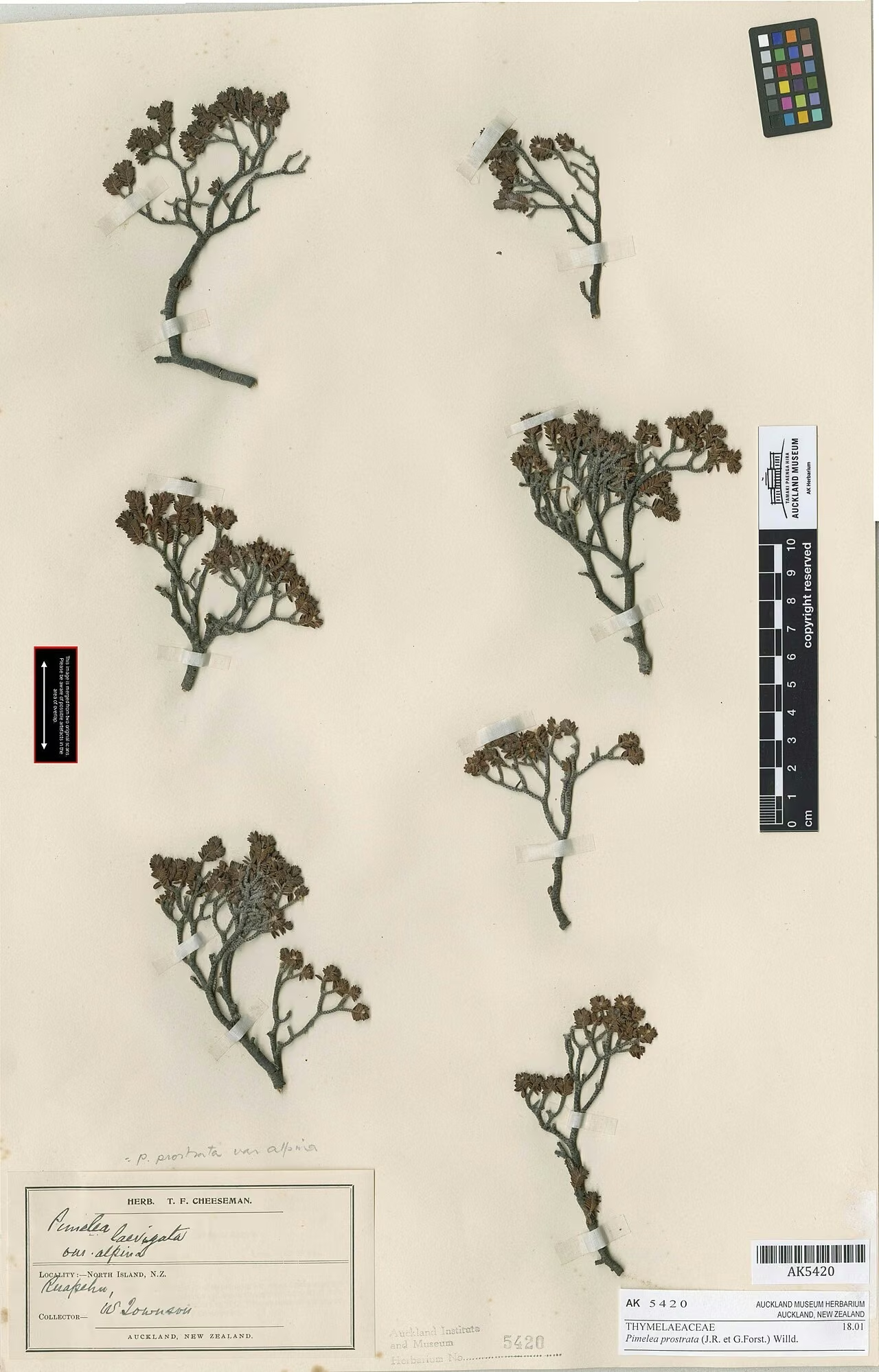
Pimelea
Pimelea microphylla
Last updated:
Pimelea microphylla is a tiny, cushion-forming native shrub only about 6 cm high and up to 25 cm across, with crowded, leathery leaves just 2.5 to 3 mm long. It is endemic to the Central Volcanic Plateau of the North Island, from the Kaingaroa Plains and Rangitīkei across the Kaimanawa and Kaweka ranges to the Rangipo Desert and the slopes of Tongariro, Ngāuruhoe and Ruapehu. It grows on bare scoria, pumice and tephra up to 1650 m, flowering white or pale red in summer and producing fleshy white or pink fruits. It is ranked At Risk - Naturally Uncommon, and NZPCN notes signs of decline. Explore more native ground covers in our native plant guide.
Plant Description
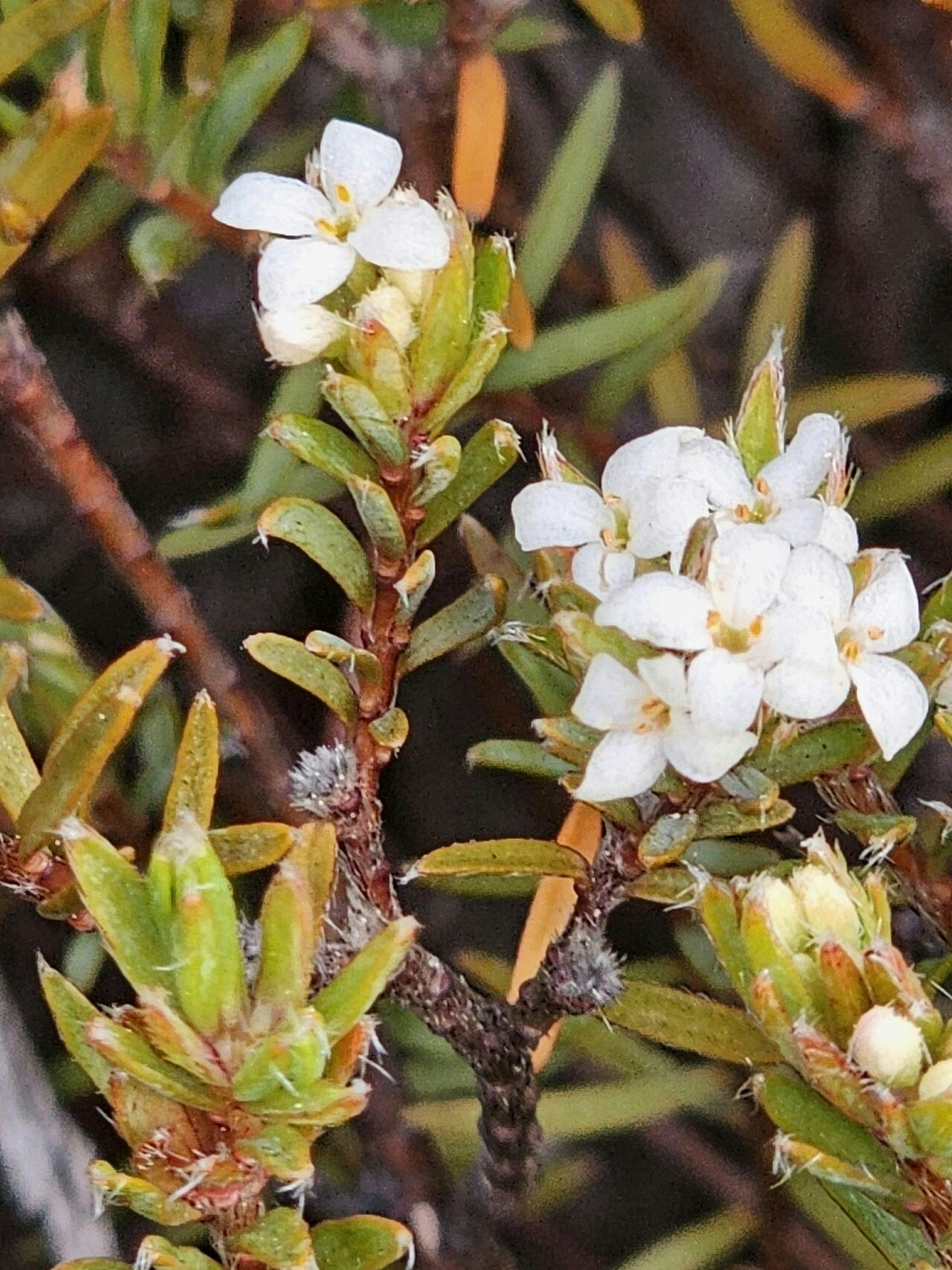
Pimelea microphylla is a small, compact shrub forming loose cushions up to 6 cm high and 25 cm across, with an erect, sympodial branching habit (each shoot ending and being replaced by side shoots), which gives the cushion its tight shape.
The leaves are crowded, overlapping and arranged in opposite pairs, broad-elliptic or broad-ovate, only 2.5 to 3 mm long and 1 to 2 mm wide, and leathery, as the name microphylla (small leaf) suggests. White or pale red flowers appear in summer, and are followed by oblate, fleshy, white or sometimes pink fruits about 5.5 mm long. The species is gynodioecious, with some plants bearing female flowers and others hermaphrodite flowers.
It can be distinguished from members of the Pimelea prostrata complex, which also occur in the central North Island, by its smaller, more compact cushion-forming habit and erect branching.
Quick Facts
| Scientific Name | Pimelea microphylla |
|---|---|
| Height | Up to 6 cm |
| Spread | Up to 25 cm |
| Water Needs | Low; very free-draining volcanic ground |
| Light | Full sun |
| Frost Tolerance | High; grows up to 1650 m |
| Salt Tolerance | No information available; an inland species |
| Growth Rate | Very slow |
| Lifespan | Perennial |
Climate Best Suited to
Suits the harsh climate of the Central Plateau: hot sunny summers, hard frosts, snow and strong winds on open volcanic ground.
Regional Suitability
| City | Climate Suitability |
|---|---|
| Auckland | Low |
| Wellington | Low |
| Christchurch | Medium |
| Dunedin | Low |
Plant Habitat
Pimelea microphylla is endemic to the Central Volcanic Plateau of the North Island. It ranges from Kaingaroa and the Rangitīkei south across the Kaimanawa and Kaweka ranges, and west across the Rangipo Desert to Mt Tongariro, Ngāuruhoe and Ruapehu, up to about 1650 m.
It grows on bare or sparsely vegetated scoria, lapilli, tephra, pumice flats and coarser volcanic debris, and sometimes in crevices on solid volcanic rock. These open, unstable, low-nutrient surfaces support little competition from other plants.
Growing Requirements
Soil Requirements
It needs extremely free-draining, low-fertility mineral ground, like the pumice and scoria of its natural habitat.
- Pumice, scoria or coarse volcanic grit
- Very low fertility
- No organic-rich or heavy soils
Light Requirements
A plant of bare, open ground that will not tolerate being shaded or crowded.
- Full sun
- Keep surrounding plants well clear
Water Requirements
Its habitat drains instantly and dries quickly, and NZPCN notes it dislikes excessive moisture and humidity.
- Water sparingly in cultivation
- Avoid humid, still conditions
Planting and Establishing
Pimelea microphylla is a plant for specialist alpine growers. Plant it in pure pumice or coarse volcanic grit in a trough, scree bed or alpine house, in full sun with good air movement.
NZPCN warns that plants are very slow to establish and dislike competition, so keep the area around them completely free of other plants and weeds.
Ecological Role
It is one of the specialised cushion plants of the Rangipo Desert and Volcanic Plateau, able to establish on bare, unstable volcanic surfaces where few other plants grow. Its flowers appear from November to February, though its pollinators are not documented in the sources consulted.
Its fleshy white fruits ripen from January to May. Fleshy, pale fruits of low-growing Pimelea are often suggested to be eaten by lizards and birds, but dispersal of this species has not been specifically recorded.
Uses & Significance
Garden Uses
Of interest mainly to alpine and rock garden specialists.
- Scree beds and troughs
- Alpine house collections
- Displays of Central Plateau flora
Ecological Value
It is part of the distinctive plant community of the Volcanic Plateau's bare scoria and pumice fields.
- Colonises bare volcanic ground
- A narrow-range endemic of the Central Plateau
- Fleshy fruits are a potential food source for wildlife
Landscaping Uses
Pimelea microphylla is too small and slow for general landscaping. In a trough or scree garden it makes a neat, tight cushion that pairs well with other small plants of open volcanic ground.
Top-dress with coarse pumice or scoria to mimic its natural setting and keep the cushion dry at the base.
Seasonal Care Calendar
Spring
New growth begins as the plateau warms.
- Weed around cultivated plants
- Keep pots on the dry side
Summer
Flowering from November to February, with white or pale red flowers.
- Water only in prolonged drought
- Ensure good air movement in humid weather
Autumn
Fleshy white or pink fruits ripen from January to May.
- Take semi-hardwood cuttings
- Collect fruits only from cultivated plants
Winter
Plants endure frost and snow on the open plateau.
- Protect potted plants from winter wet
- No feeding
When to Prune and How Much
Do not prune. The tight cushion form is part of the plant's adaptation to an exposed habitat.
Remove any dead shoots carefully by hand to prevent rot spreading through the cushion.
How to Grow Pimelea
NZPCN states that Pimelea microphylla can be grown from semi-hardwood cuttings, but that plants are often very slow to establish and dislike competition and excessive moisture or humidity. Propagation is therefore best attempted by experienced alpine growers. Because the species is At Risk - Naturally Uncommon and confined to the Central Plateau, much of which lies in Tongariro National Park, material should come from existing cultivated plants or be collected only with Department of Conservation permission. No germination records were found for seed in the sources consulted, so seed sowing should be regarded as experimental. Keep young plants in a very gritty medium, out of humid propagating environments once rooted.
From Cuttings
Small semi-hardwood shoots taken from the edge of the cushion are the documented method. Use short cuttings, since the shoots are tiny.
- Take 2 to 3 cm semi-hardwood shoot tips in late summer or autumn
- Insert into pure pumice or a mix of pumice and fine grit
- Keep just moist, in bright light with good air movement
- Avoid enclosed, humid propagating cases that encourage rot
- Pot on very carefully once rooted, and expect slow growth
From Seed
Fleshy fruits ripen from January to May. No published germination data exist for this species.
- Collect ripe fruits from cultivated plants and remove the flesh
- Sow fresh on coarse pumice grit
- Leave outdoors over winter and be patient
- Prick out seedlings into individual pots of pumice while still very small
Pests & Diseases
No specific pests are recorded for Pimelea microphylla. In cultivation, rot from excess moisture and humidity is the main cause of loss.
In the wild, the spread of heather (Calluna vulgaris) across the Volcanic Plateau is overrunning the open ground it depends on, and NZPCN identifies it as a cause of decline.
Cultural Significance
No Māori name or traditional use is recorded specifically for Pimelea microphylla in the sources consulted.
Much of its range lies within Tongariro National Park, whose peaks Tongariro, Ngāuruhoe and Ruapehu are sacred to Ngāti Tūwharetoa. The species epithet microphylla means small-leaved, and the genus name comes from the Greek pimelē, meaning lard or soft fat.
Bonus Tip
On tracks crossing the Rangipo Desert, scan the bare pumice and scoria for neat, tight green cushions no bigger than a dinner plate. In summer the white flowers, and in autumn the plump white or pink fruits, make Pimelea microphylla much easier to spot.
Related Plants
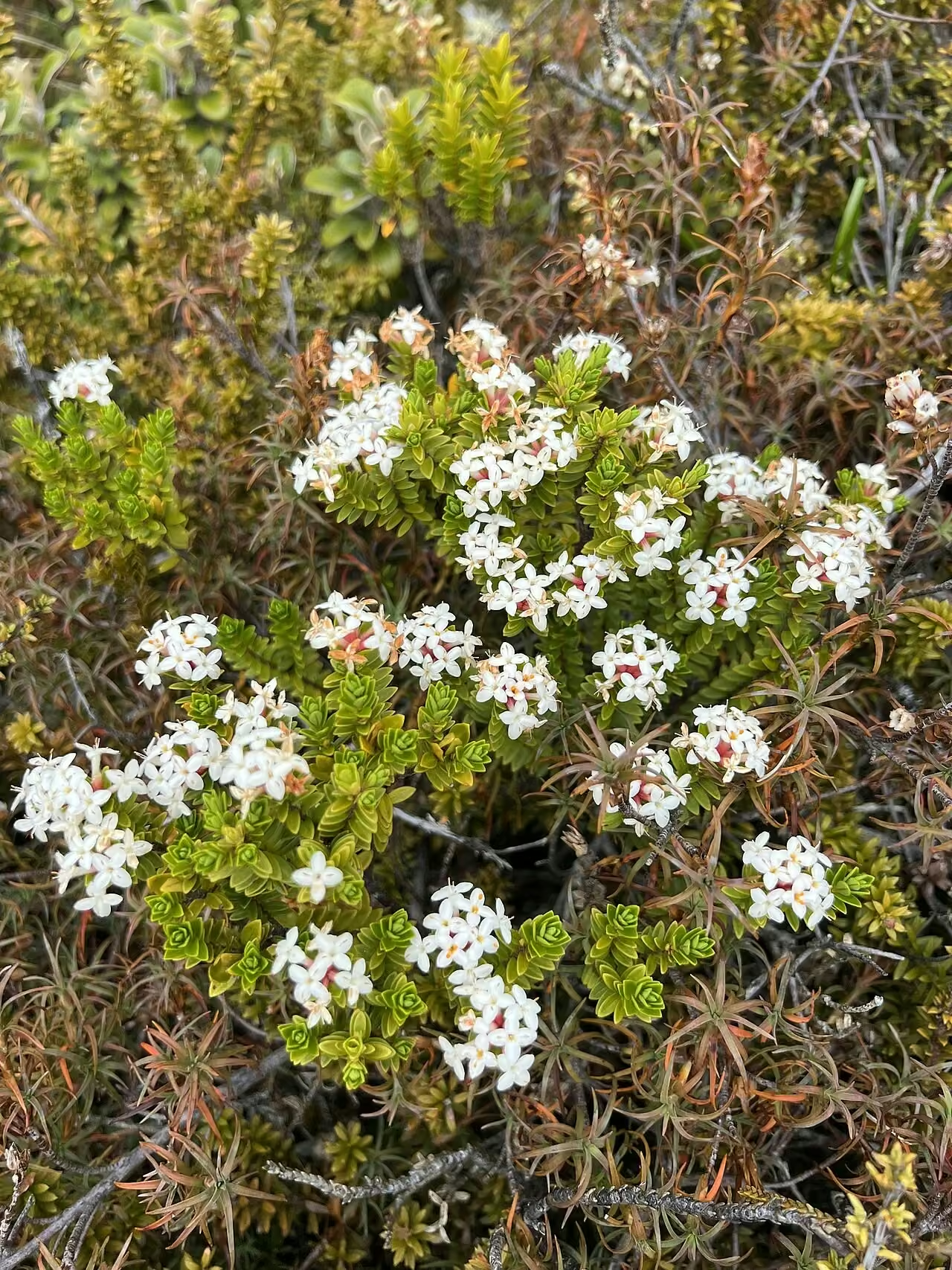
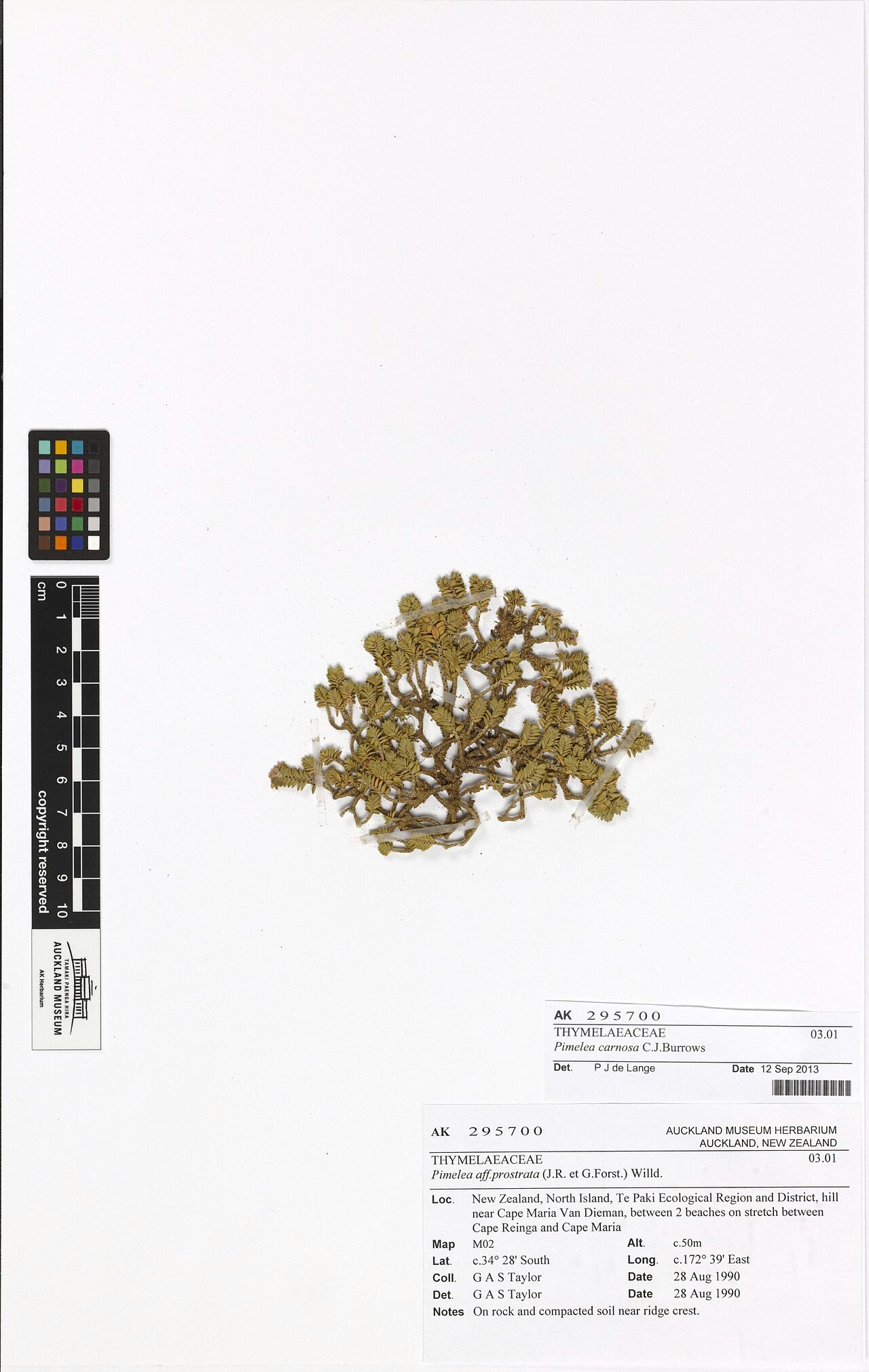
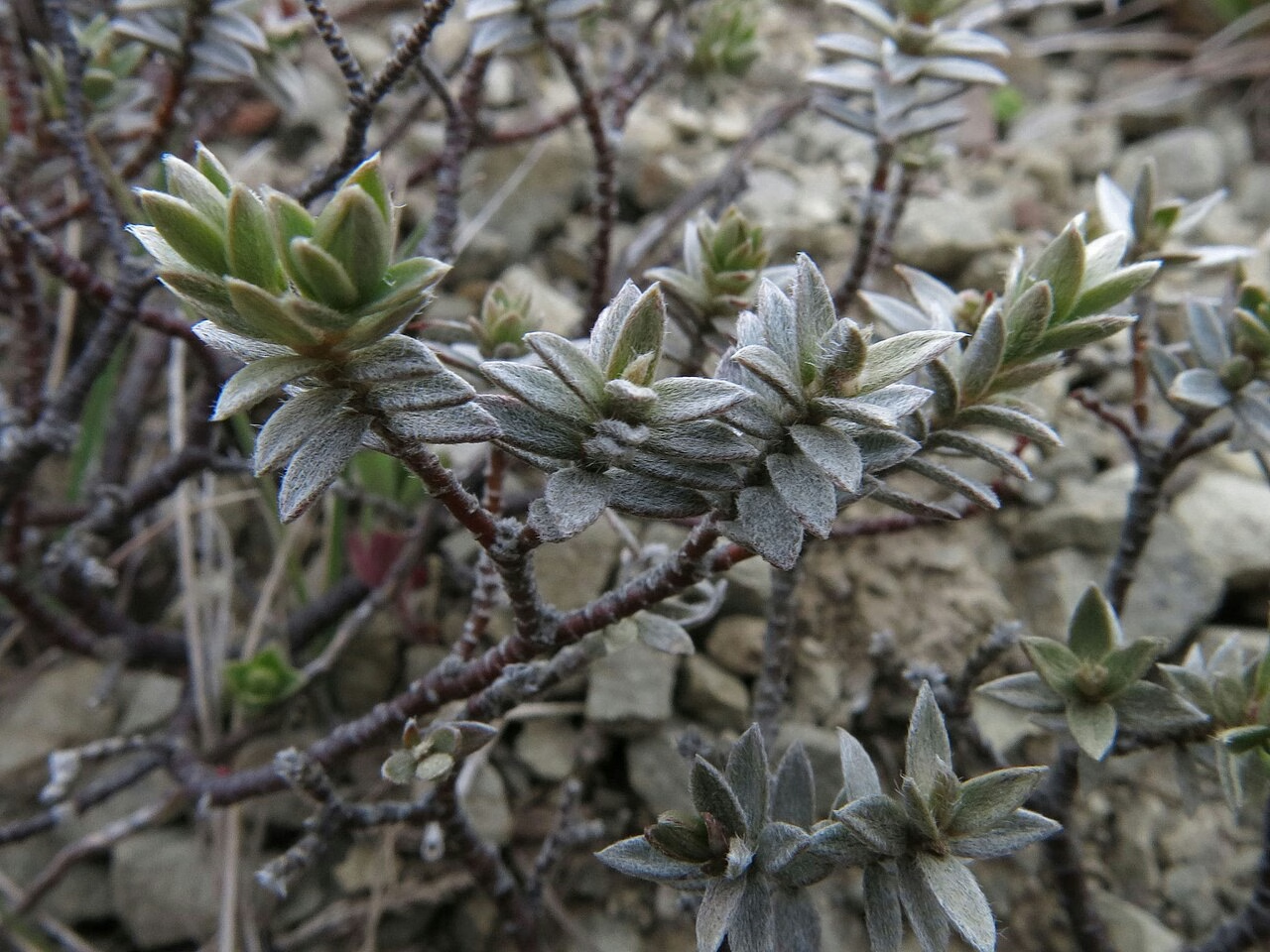
Explore other native plants that share similar characteristics or habitats with Pimelea (Pimelea microphylla), offering further insights into New Zealand's diverse flora. These related species provide context and opportunities for complementary planting in your garden.
Plant Conservation
Pimelea microphylla is ranked At Risk - Naturally Uncommon (2023), with the qualifiers Range Restricted and Sparse. It was assessed as Declining in 2009, and NZPCN still notes evidence of decline in parts of its range.
The spread of heather and, on the Kaingaroa Plain, conversion of habitat for farming and forestry are the main threats. Heather control in Tongariro National Park and the protection of remaining open pumice lands both help this species.
Frequently Asked Questions
Where does Pimelea microphylla grow?
It is endemic to the North Island's Central Volcanic Plateau, from Kaingaroa and the Rangitīkei across the Kaimanawa and Kaweka ranges to the Rangipo Desert, Tongariro, Ngāuruhoe and Ruapehu.
How is Pimelea microphylla different from Pimelea prostrata?
It forms a smaller, more compact cushion with an erect branching habit, whereas plants of the Pimelea prostrata complex are typically prostrate and spreading.
Why is Pimelea microphylla declining?
NZPCN reports evidence of decline over parts of its range because of the spread of heather and, on the Kaingaroa Plain, habitat modification for farming and forestry.
Can Pimelea microphylla be grown in a garden?
It can be grown from semi-hardwood cuttings, but NZPCN notes plants are very slow to establish and dislike competition and excessive moisture or humidity.
Sources and Further Reading
The botanical, growing, and conservation details for Pimelea (Pimelea microphylla) on this page draw on the New Zealand plant references below. Consult them for full technical records and the latest distribution data.