Pimelea
Pimelea acra
Last updated:
Pimelea acra is a small, compact, erect shrub up to about 45 cm tall, endemic to a handful of old volcanic peaks in northern New Zealand. It grows on exposed lava and conglomerate ledges at Whangārei Heads, on Mt Aubrey, Manaia and Bream Head, and on Hauturu/Little Barrier Island. Its finely hairy branchlets carry pairs of small, keeled, medium-green leaves, with clusters of white flowers from late winter to spring followed by red fruits. Because it is confined to so few sites it is ranked At Risk - Naturally Uncommon, though its main populations are currently secure. Explore more native shrubs in our native plant guide.
Plant Description
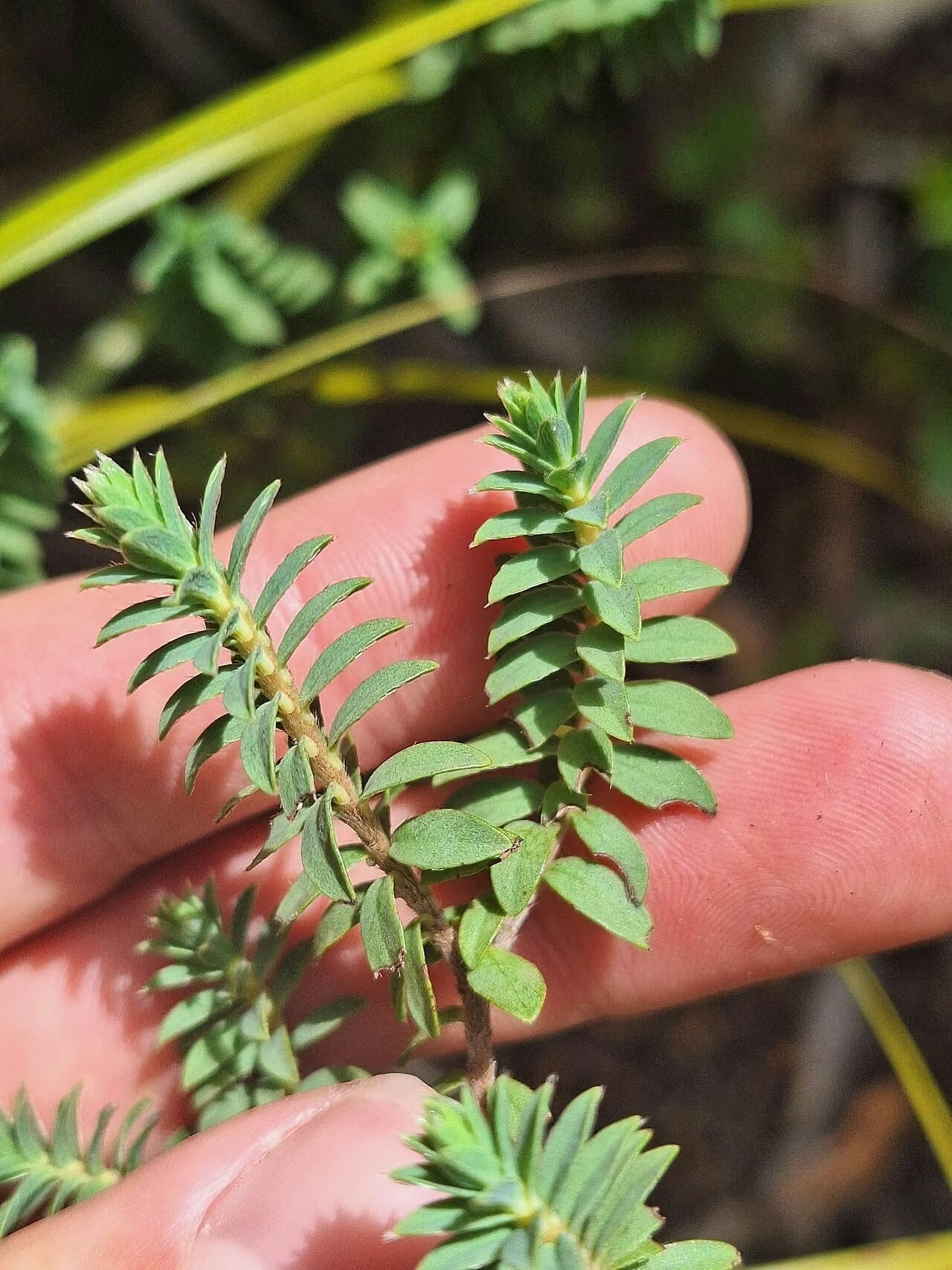
Pimelea acra is a compact, erect shrub reaching about 450 mm tall. Its young branchlets are clothed in fine hairs, and the leaves are arranged in opposite pairs along the stems.
The leaves are small, 5 to 7 mm long, medium green, about 2 to 2.5 mm wide, ovate to elliptic and slightly keeled underneath, and are noticeably uniform in size along the shoots. White flowers are borne in small clusters at the branch tips from July to October, and are followed by broad-ovoid red fruits from September to December.
Among New Zealand Pimelea it is distinguished by its erect habit and its uniformly sized, keeled leaves. It is most similar to Pimelea eremitica of the Three Kings Islands, which lacks hairs on the leaves and has white to pink fruits, and it differs from Pimelea tomentosa in leaf size and in the pattern of hairs.
It is gynodioecious, meaning some plants carry only female flowers while others carry hermaphrodite flowers.
Quick Facts
| Scientific Name | Pimelea acra |
|---|---|
| Height | Up to 0.45 m |
| Spread | Compact; no published figure found |
| Water Needs | Low to moderate; grows on free-draining rock ledges |
| Light | Full sun to light shade on exposed ledges |
| Frost Tolerance | Low; a northern coastal-lowland species |
| Salt Tolerance | No information available; grows near the coast at Whangārei Heads |
| Growth Rate | Slow to moderate |
| Lifespan | Perennial |
Climate Best Suited to
Suits the warm, humid, almost frost-free climate of the Northland coast and the Hauraki Gulf.
Regional Suitability
| City | Climate Suitability |
|---|---|
| Auckland | Medium |
| Wellington | Low |
| Christchurch | Low |
| Dunedin | Low |
Plant Habitat
Pimelea acra is endemic to the North Island and is known only from the Whangārei Heads, on Mt Aubrey, Manaia and Bream Head, and from Hauturu/Little Barrier Island in the outer Hauraki Gulf.
It grows on exposed lava and eroding conglomerate ledges on the forested remains of old andesitic and basaltic volcanoes, and sometimes on boulder heaps below cliffs. These rocky openings within forest give it the light and freedom from competition that it needs.
Growing Requirements
Soil Requirements
In the wild it roots into thin soil on rock ledges and among boulders, where drainage is sharp.
- Volcanic rock ledges and conglomerate
- Thin, free-draining mineral soil
- Boulder heaps below cliffs
Light Requirements
It grows on exposed ledges that break the forest canopy, receiving good light for at least part of the day.
- Open rock faces with sun
- Shading by surrounding forest or weeds would disadvantage it
Water Requirements
Rock ledges dry quickly between rains, so it is adapted to free drainage rather than constant moisture.
- Avoid waterlogging
- Tolerates periods of dryness on rock
Planting and Establishing
Pimelea acra is not known from cultivation, and wild plants should not be disturbed. NZPCN suggests it would probably grow easily from cuttings, so material for any conservation collection should come from authorised cuttings rather than dug plants.
If grown, a rock garden or gritty container in a sunny, sheltered northern spot would best imitate its natural ledges.
Ecological Role
Its red fleshy fruits ripen from September to December. The animals that disperse them have not been documented for this species, though fleshy-fruited Pimelea are generally thought to be eaten by birds and lizards.
On its rock ledges it forms part of a specialised cliff flora on old volcanic plugs, a habitat that is naturally fragmented and supports several local plants.
Uses & Significance
Garden Uses
It is not grown commercially and is mainly of conservation interest.
- Conservation collections of Northland endemics
- Potential rock garden plant if propagated legally
- Best appreciated on walks up Manaia or Bream Head
Ecological Value
It contributes to the distinctive endemic flora of the Whangārei Heads volcanic peaks and Hauturu.
- A narrow-range endemic found nowhere else
- Part of the cliff and rock-ledge flora of old volcanoes
- Fleshy red fruits are a potential food source for wildlife
Landscaping Uses
Pimelea acra is not used in landscaping. Its compact, upright form and small paired leaves would suit a rock garden alongside other small northern natives, if plants ever become available from legal propagation.
Similar effects in a garden can be achieved with commercially available Pimelea species, which are easier to obtain.
Seasonal Care Calendar
Spring
Flowering continues to October and red fruits begin to ripen from September.
- Look for white flower clusters
- Red fruits appear from September
Summer
Fruiting continues into December, after which plants put on new growth.
- Fruits are finished by the end of December
- Cultivated plants need sharp drainage in humid weather
Autumn
A period of vegetative growth with no flowers or fruit.
- Semi-hardwood shoots are suitable for cuttings
- Keep weeds clear of wild sites
Winter
Flowering begins as early as July, in the middle of winter.
- First flower clusters appear
- Protect cultivated plants from cold, wet soil
When to Prune and How Much
No pruning is needed; the plant is naturally compact.
On any cultivated plant, light trimming of straggly tips after fruiting will keep it bushy, but avoid cutting into old wood.
How to Grow Pimelea
Pimelea acra is not known from cultivation, so no tested propagation method exists. NZPCN states only that it would probably be easily grown from cuttings, which is consistent with related Pimelea such as Pimelea carnosa and Pimelea concinna that root readily from semi-hardwood cuttings. The methods below are therefore general approaches used for New Zealand Pimelea rather than proven techniques for this species. Any material should be collected only with permission from the Department of Conservation or landowners, taking a few cuttings from several plants without damaging them, and never by digging up wild plants on its tiny number of sites.
From Cuttings
Semi-hardwood cuttings taken after flowering and fruiting, from late summer into autumn, are the method most likely to succeed, based on the experience with related species.
- Take 3 to 5 cm tip cuttings of semi-hardwood shoots
- Remove the lower leaves and dip in a rooting hormone if desired
- Insert into a free-draining mix of pumice or perlite with fine bark
- Keep in bright, indirect light with good air movement to prevent rot
- Pot on once roots form, using a gritty mix
From Seed
Seed is held in the red fleshy fruits that ripen between September and December. Germination of Pimelea seed is often erratic, and no germination data exist for this species.
- Collect fully ripe red fruits
- Clean off the flesh and sow fresh in a gritty seed mix
- Keep moist and be prepared to wait several months
Pests & Diseases
No specific pests or diseases are recorded for Pimelea acra. NZPCN notes it is unpalatable and not threatened by browsing animals.
Weeds invading its rock ledges are a local concern. In cultivation, Pimelea generally suffer root rot in wet, poorly drained soil.
Cultural Significance
No Māori name or traditional use is recorded specifically for Pimelea acra in the sources consulted.
The plant grows on Manaia, a prominent peak at Whangārei Heads that is of great significance to local hapū, and on Hauturu, a nature reserve. The species was formally named by C.J. Burrows and P.J. de Lange in 2009. Its epithet comes from the Greek akra, meaning tip or extremity, a reference to its hilltop and cliff habitats, while the genus name comes from the Greek pimelē, meaning lard or soft fat, presumably referring to the oily seeds or fleshy seed leaves.
Bonus Tip
On the Manaia or Bream Head tracks in late winter, look up at sunny rock ledges for small, upright shrubs with tiny paired leaves and white flower clusters. Pimelea acra flowers from July, in winter and early spring, so it can be in bloom when many other shrubs are not, which is a useful clue when identifying it.
Related Plants
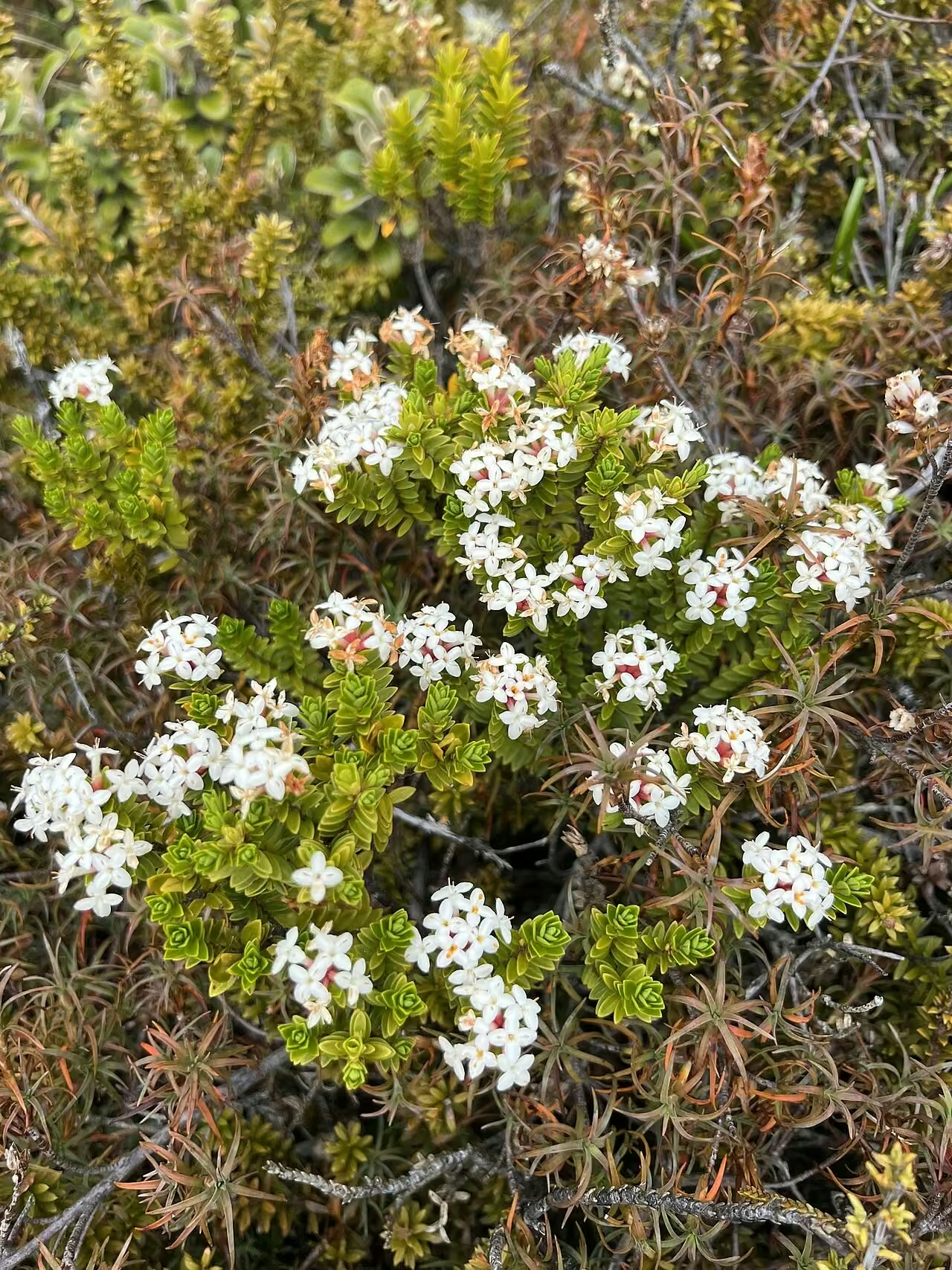
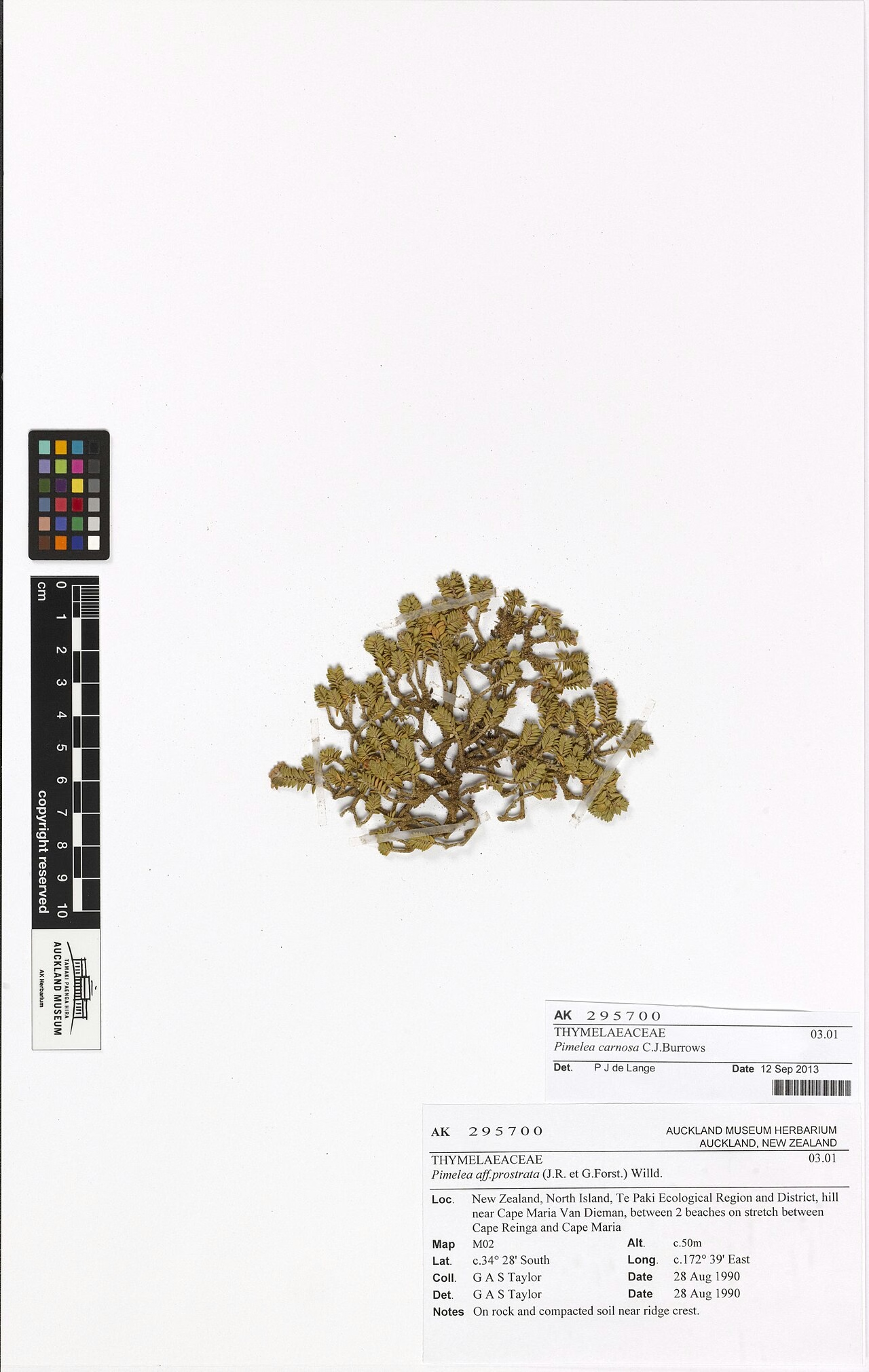
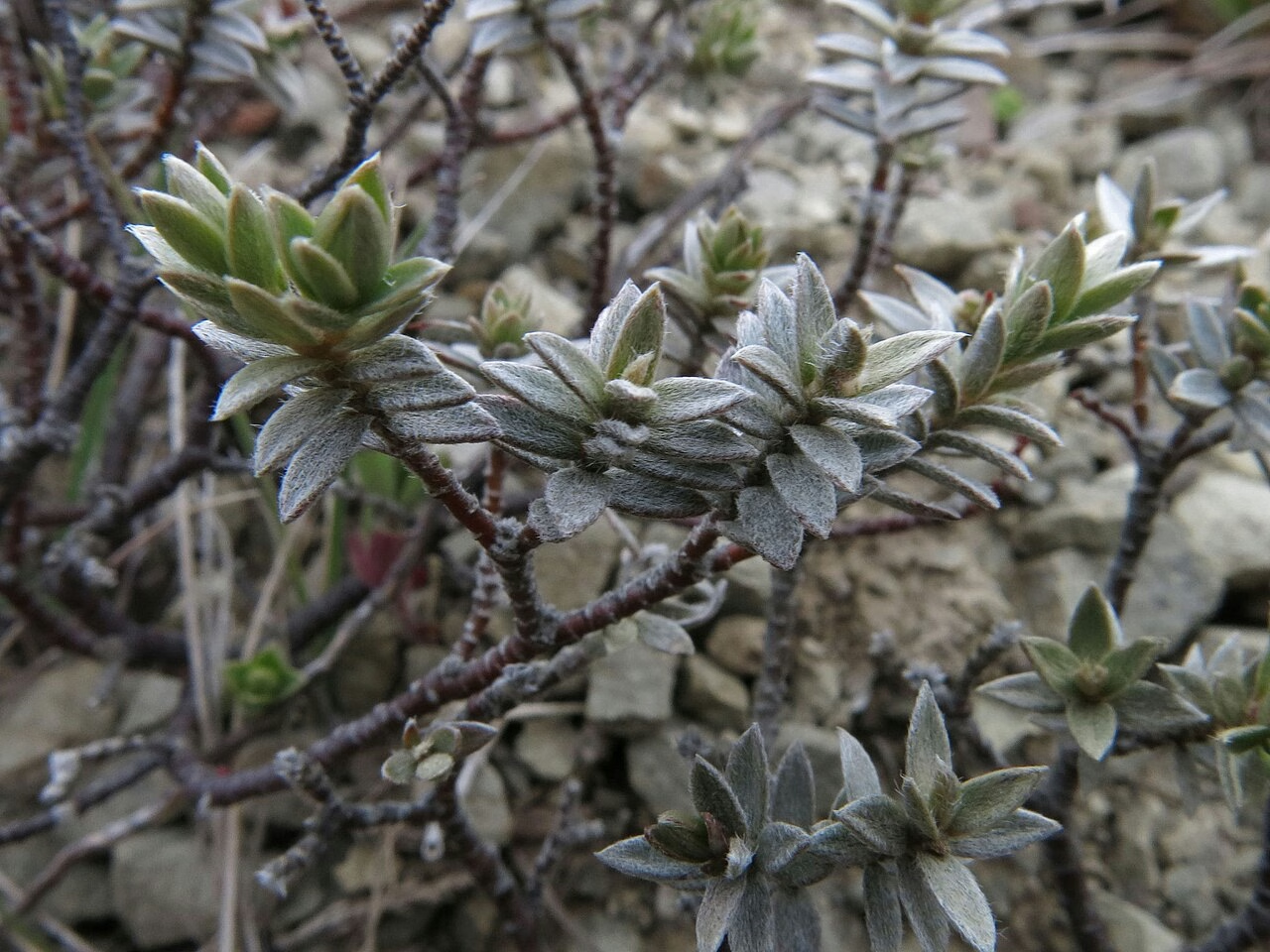
Explore other native plants that share similar characteristics or habitats with Pimelea (Pimelea acra), offering further insights into New Zealand's diverse flora. These related species provide context and opportunities for complementary planting in your garden.
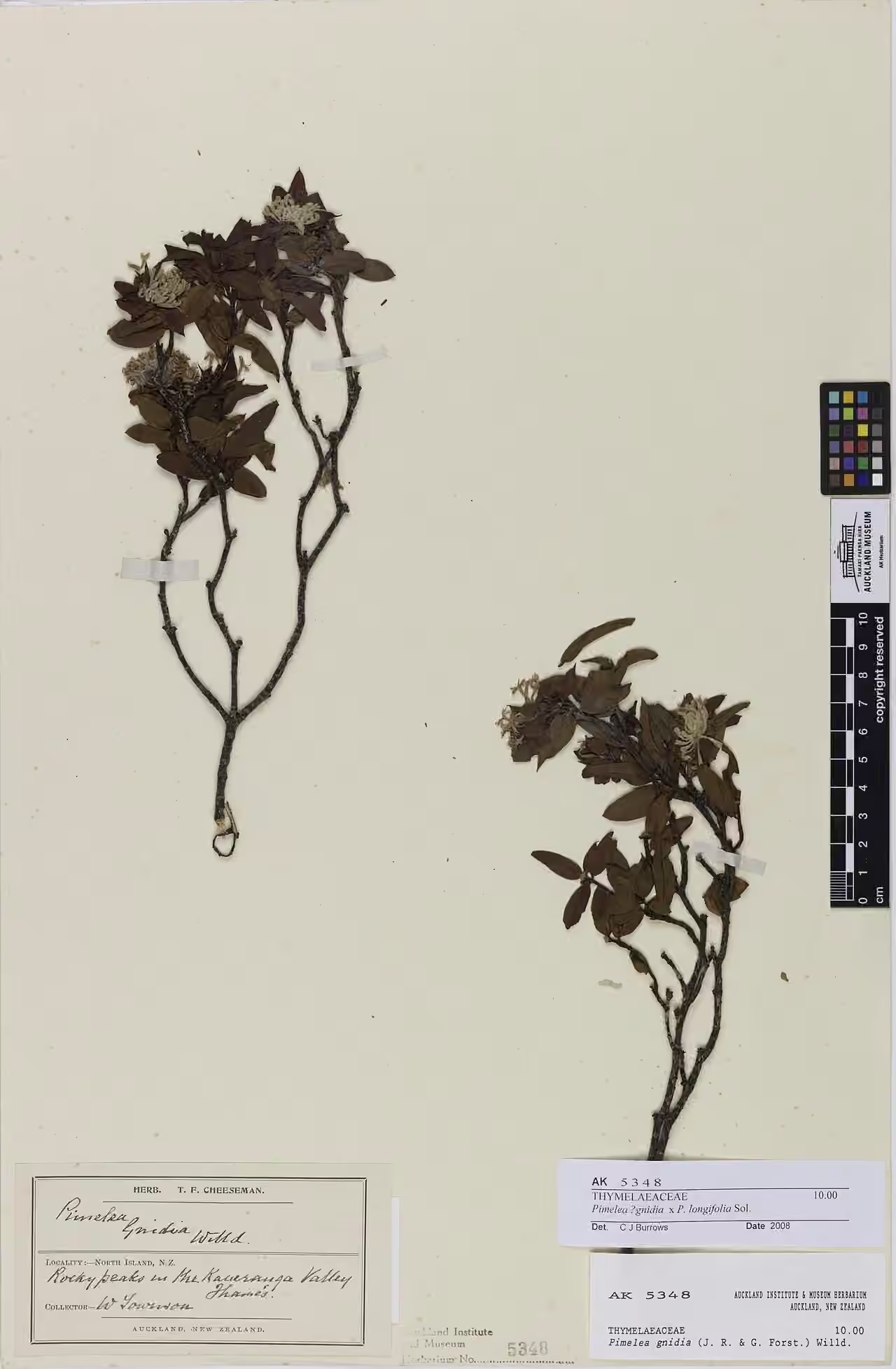
Plant Conservation
Pimelea acra is ranked At Risk - Naturally Uncommon (2023) with the qualifier Range Restricted. Its rarity reflects its very small natural range rather than a known decline.
NZPCN considers the populations at Mt Manaia and Bream Head secure, and its unpalatability protects it from browsing animals. Controlling weeds on its rock ledges and staying on tracks on these peaks are the most useful actions.
Frequently Asked Questions
Where does Pimelea acra grow?
It is known only from the Whangārei Heads area, on Mt Aubrey, Manaia and Bream Head, and from Hauturu/Little Barrier Island, growing on exposed rock ledges of old forested volcanoes.
How do you identify Pimelea acra?
It is an erect shrub with uniformly sized, slightly keeled leaves 5 to 7 mm long, hairy young branchlets, white flowers and red fruits. The similar Pimelea eremitica lacks leaf hairs and has white to pink fruits.
Is Pimelea acra threatened?
It is ranked At Risk - Naturally Uncommon because of its tiny natural range. NZPCN regards the Manaia and Bream Head populations as secure, with weeds a local concern.
Do goats or possums eat Pimelea acra?
NZPCN notes it is not threatened by browsing because it is unpalatable to browsing animals.
Sources and Further Reading
The botanical, growing, and conservation details for Pimelea (Pimelea acra) on this page draw on the New Zealand plant references below. Consult them for full technical records and the latest distribution data.