Pimelea
Pimelea orthia
Last updated:
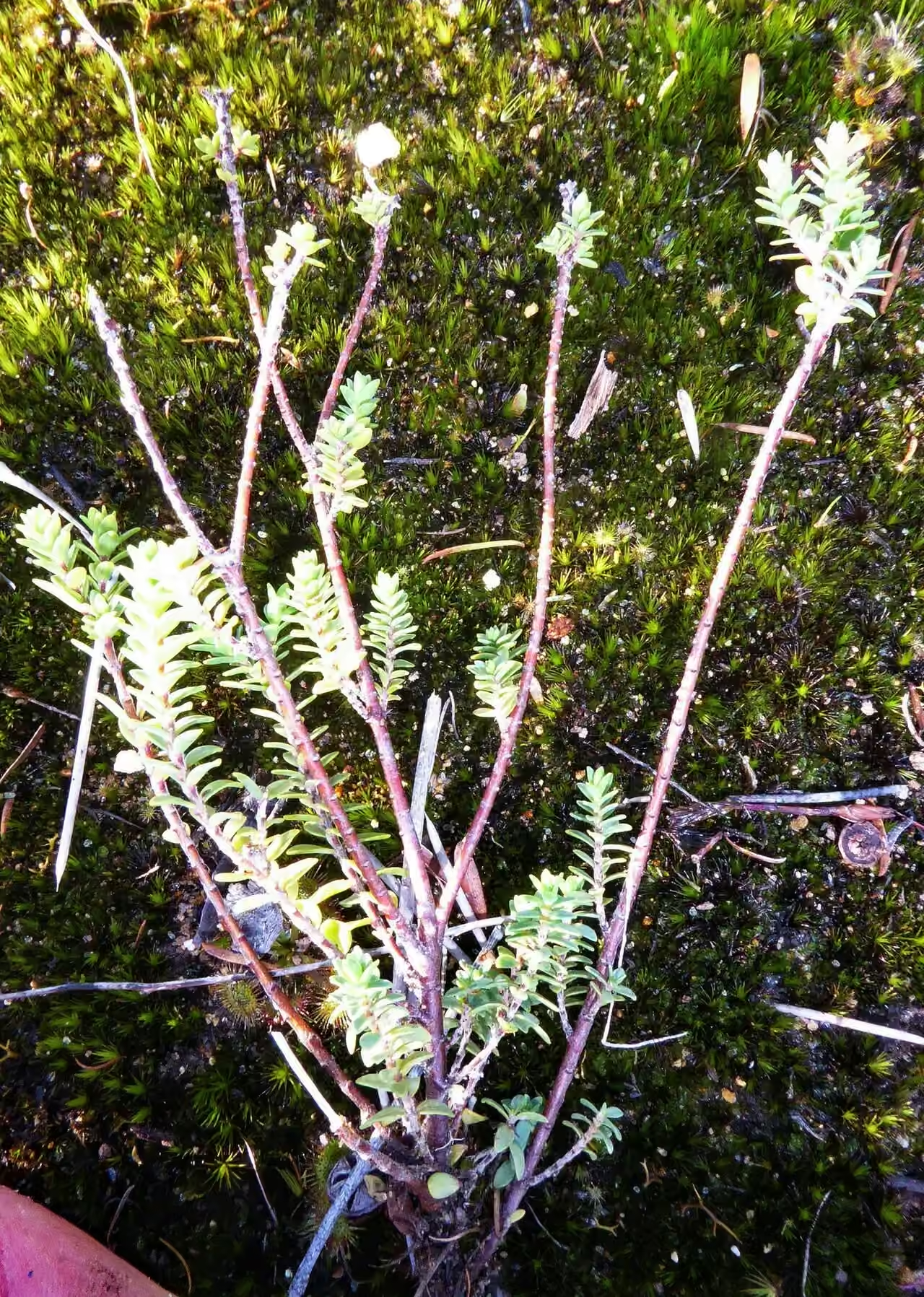
Pimelea orthia is a small, bushy, endemic shrub of the upper North Island that grows up to about 90 cm tall, with many erect hairy branches, pairs of small blue-green leaves, hairy white flowers and white fleshy fruit. It was only formally named in 2009, having long been treated as an upright form of the common pinātoro (Pimelea prostrata). It grows in open scrub and grassland on leached, infertile soils, on dunes and on rock outcrops from Northland to Mahia. The typical subspecies is ranked Threatened - Nationally Critical, and a second subspecies on the Mahia dunes is Nationally Vulnerable. Explore more native shrubs in our native plant guide.
Plant Description
Pimelea orthia is a bushy shrub reaching about 90 cm, made up of many erect branches that are clothed in fine hairs. The leaves are arranged in opposite pairs, are blue-green and small, about 5-8 mm long and 2-3 mm wide, and sit closely along the stems.
The flowers are white and hairy on the outside, carried in small clusters at the branch tips. Flowering is long, running from September to May, and the white fleshy fruit follow from November to July, so plants can carry flowers and fruit together for much of the year.
Its upright, much-branched form is the easiest way to separate it from the low, spreading pimeleas of the Pimelea prostrata complex such as P. xenica and P. actea. Within the species, subsp. orthia is mostly erect and grows on infertile consolidated soils, while subsp. protea has both erect and prostrate plants and is confined to sand dunes.
Quick Facts
| Scientific Name | Pimelea orthia |
|---|---|
| Height | Up to 0.9 m |
| Spread | About 0.3-0.8 m |
| Water Needs | Low once established; dislikes waterlogging |
| Light | Full sun |
| Frost Tolerance | Light frosts only; a northern lowland plant |
| Salt Tolerance | Moderate; grows on coastal dunes and rock outcrops |
| Growth Rate | Moderate |
| Lifespan | Perennial |
Climate Best Suited to
It suits the mild, frost-light climate of northern and eastern North Island lowlands, with warm summers and dry, sunny sites. Colder inland gardens will need a warm, sheltered spot.
Regional Suitability
| City | Climate Suitability |
|---|---|
| Auckland | High |
| Wellington | Medium |
| Christchurch | Medium |
| Dunedin | Low |
Plant Habitat
This pimelea is endemic to the North Island. Subspecies orthia is recorded from North Auckland (Mangonui south to Auckland City), South Auckland and the King Country, the Coromandel Peninsula, the eastern Bay of Plenty, East Cape and Gisborne, and Mahia. Subspecies protea is restricted to the isthmus of the Mahia Peninsula.
It is a coastal to lowland plant of open scrubland and grassland growing over leached, infertile soils, as well as dunes and rock outcrops. Many of the remaining sites are on road and track margins, where open, low-competition conditions persist.
Growing Requirements
Soil Requirements
In the wild it grows on poor, leached soils and sand, so it needs sharp drainage rather than rich ground.
- Free-draining sandy, gravelly or poor clay soils
- Low fertility is fine; avoid heavy feeding
- Never plant in soil that stays wet
Light Requirements
This is a plant of open, sunny sites and it becomes leggy and short-lived when crowded or shaded.
- Full sun
- Keep taller neighbours from overshadowing it
Water Requirements
Once established it copes well with dry summers, which matches its natural dune and scrubland habitats.
- Water while establishing
- Little extra watering needed afterwards
- Overwatering in heavy soil leads to root rot
Planting and Establishing
NZPCN recommends growing it in well-drained soil in full sun. Plant from autumn to early spring into a raised or sloping site, adding grit or pumice to heavier soils.
Give it space so grasses and vigorous shrubs do not smother it, and use only nursery-grown plants of known origin, since wild plants of this Nationally Critical species must never be dug up.
Ecological Role
The small, scented white flowers attract a range of native insects, and the white fleshy fruit are likely eaten by lizards and birds, as with other New Zealand pimeleas, though specific dispersers of this species are not documented in the sources consulted.
As a plant of open, infertile ground it relies on habitats where taller vegetation is held back. Where scrub closes over or sites are cleared, populations decline, which is why roadside and trackside plants are both important refuges and at risk.
Uses & Significance
Garden Uses
Its neat upright habit and long flowering season make it a good small shrub for dry, sunny gardens in the north.
- Rock gardens and gravel gardens
- Coastal and sandy gardens
- Large containers with gritty mix
- Conservation plantings with eco-sourced stock
Ecological Value
Growing eco-sourced plants helps maintain the genetic diversity of a critically threatened shrub.
- Nectar for small native insects
- Fleshy fruit for native fauna
- Supports recovery of a Nationally Critical taxon
Landscaping Uses
Use it as an upright accent among low grasses, sedges and prostrate natives such as pinātoro, where its blue-green foliage and white flowers stand out. It also fits between rocks in a sunny bank planting.
Avoid irrigated borders and mulches that stay damp against the stems; a gravel mulch suits it far better.
Seasonal Care Calendar
Spring
Flowering begins in September and new growth is made.
- Take semi-hardwood cuttings later in the season
- Weed around plants
Summer
Plants continue to flower and the first white fruit ripen from November.
- Water young plants in long dry spells
- Collect fruit if trying seed
Autumn
Flowering tails off by May while fruit continue to mature.
- Good time to plant
- Check drainage before winter
Winter
Late fruit hang on into July, and growth slows in the cooler months.
- Protect from hard frost in colder districts
- Avoid waterlogged soil
When to Prune and How Much
Little pruning is needed. Lightly trim the branch tips after the main flush of flowering to keep the bush compact.
Avoid cutting into old, bare wood, as pimeleas often regrow poorly from it.
How to Grow Pimelea
Pimelea orthia is one of the easier threatened pimeleas to propagate vegetatively. NZPCN states that it is easily grown from semi-hardwood cuttings and from rooted pieces, but that seed is difficult to germinate. Because the typical subspecies is Nationally Critical, propagation material should come only from cultivated plants or from collections approved for conservation projects, and plants should be eco-sourced so that local forms are not mixed between districts.
From Cuttings
Semi-hardwood cuttings taken from late spring to autumn root reliably in a free-draining mix with bottom warmth helping in cooler months, and the rooted pieces that form where branches touch the ground can also be detached and potted. Rooted pieces establish fastest of all.
- Take 5-8 cm semi-hardwood tip cuttings from a cultivated plant
- Remove the lower pairs of leaves
- Insert into a mix of pumice or perlite with a little fine bark
- Keep in bright, indirect light with moderate humidity
- Pot on once roots form, usually within a couple of months
From Seed
Seed is difficult to germinate according to NZPCN, so it is mainly worth trying where many fruit are available from cultivated plants and genetic diversity is wanted.
- Collect ripe white fruit between November and July
- Remove the flesh and sow fresh in a gritty seed mix
- Keep the tray outdoors in a sheltered place and be patient
- Prick out seedlings carefully once they have true leaves
Pests & Diseases
No specific pests are recorded for this species in the sources consulted. In gardens the main cause of loss is root rot in heavy or wet soils.
In the wild, the main problems are habitat clearance, roadside works and track maintenance, and smothering by weeds and taller vegetation.
Cultural Significance
No Māori name or traditional use specific to Pimelea orthia is recorded in the sources consulted; it was not recognised as a distinct species until 2009.
The genus name comes from the Greek pimelē, meaning lard or soft fat, probably referring to the oily seeds or fleshy seed leaves. The species name orthia appears to derive from the Greek orthos, straight or upright, which fits its erect habit.
Bonus Tip
If you buy a plant labelled as an upright form of Pimelea prostrata or Pimelea laevigata var. erecta from a northern native nursery, it may well be this species under an old name. Ask the nursery where the stock came from, and plant it in your own district only if it is local.
Related Plants
Explore other native plants that share similar characteristics or habitats with Pimelea (Pimelea orthia), offering further insights into New Zealand's diverse flora. These related species provide context and opportunities for complementary planting in your garden.
Plant Conservation
Pimelea orthia subsp. orthia is ranked Threatened - Nationally Critical, with the qualifier Sparse, while subsp. protea on the Mahia dunes is Threatened - Nationally Vulnerable. Many sites are small and vulnerable to clearance, and roadside and trackside plants can be lost to routine maintenance.
Protecting known sites, controlling weeds that shade them, and growing eco-sourced plants for restoration plantings all help. Councils and road contractors being aware of roadside populations can prevent accidental losses.
Frequently Asked Questions
How is Pimelea orthia different from pinātoro (Pimelea prostrata)?
Pimelea orthia is a much-branched, mostly erect bush up to 90 cm tall, whereas pinātoro and its close relatives such as Pimelea xenica and P. actea are low or sprawling plants.
Why is Pimelea orthia so threatened?
Its small populations sit on roadsides, track edges, scrubland and dunes that are easily cleared or disturbed, so the typical subspecies is ranked Nationally Critical.
Can Pimelea orthia be grown from cuttings?
Yes. NZPCN notes it is easily grown from semi-hardwood cuttings and rooted pieces, while seed is difficult to germinate.
What are the two subspecies of Pimelea orthia?
Subspecies orthia is a mostly erect shrub of infertile soils from Northland to Mahia, while subspecies protea grows both erect and prostrate on stable sand dunes of the Mahia isthmus.
Sources and Further Reading
The botanical, growing, and conservation details for Pimelea (Pimelea orthia) on this page draw on the New Zealand plant references below. Consult them for full technical records and the latest distribution data.