Pimelea
Pimelea pseudolyallii
Last updated:
Pimelea pseudolyallii is a low, scrambling shrub of the eastern South Island mountains, found from Marlborough through Canterbury to North Otago. It has hairy twigs, pairs of pointed green leaves that are silky-hairy underneath with hairs projecting past the margin to give a silver edge, cream to white hairy flowers from November to January, and small red fruit. It grows near the beech forest bush line, in subalpine scrub and among tussock. The name means 'false lyallii', because it looks deceptively like Pimelea lyallii. It is ranked At Risk - Naturally Uncommon. Explore more native shrubs in our native plant guide.
Plant Description
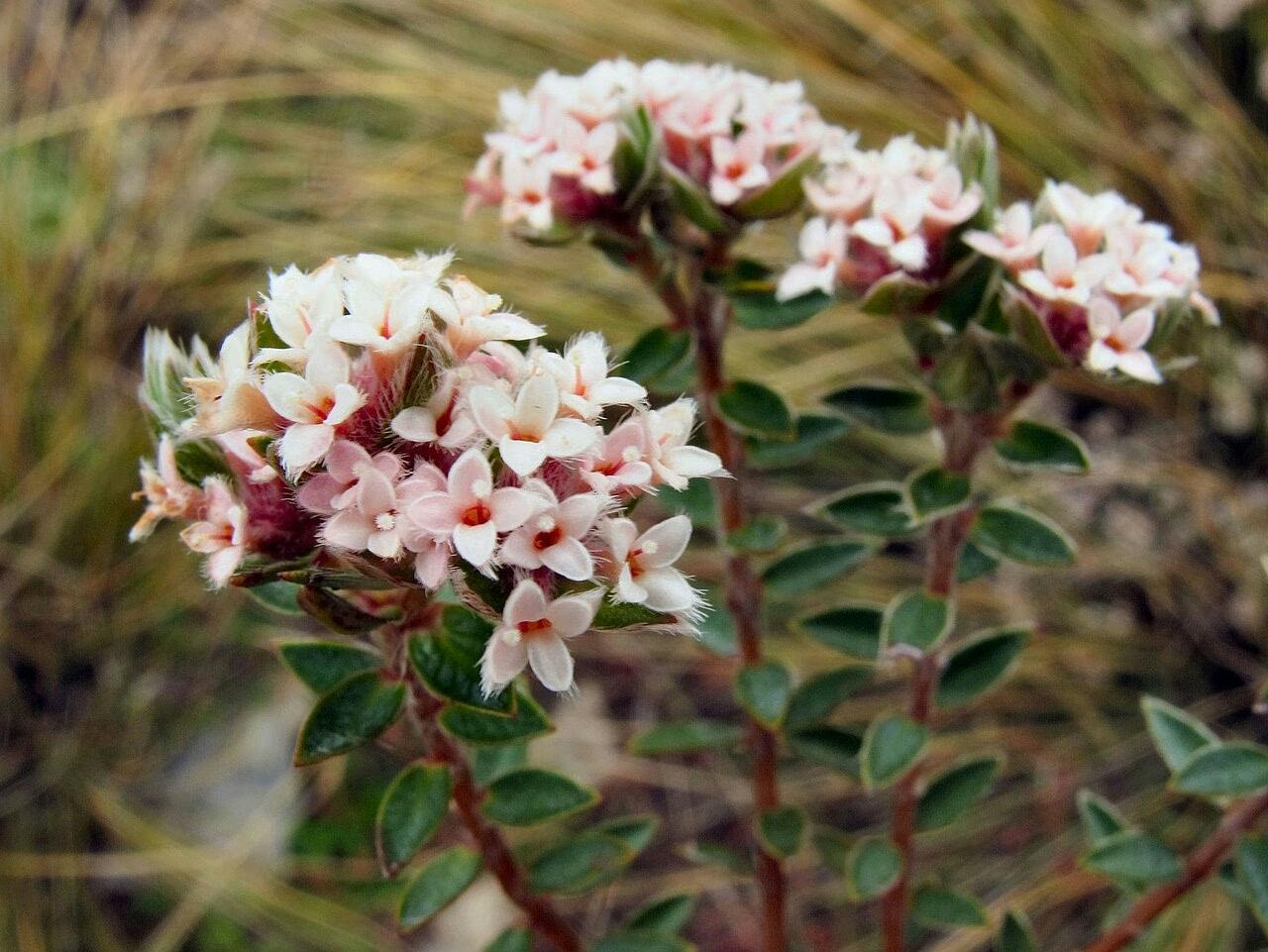
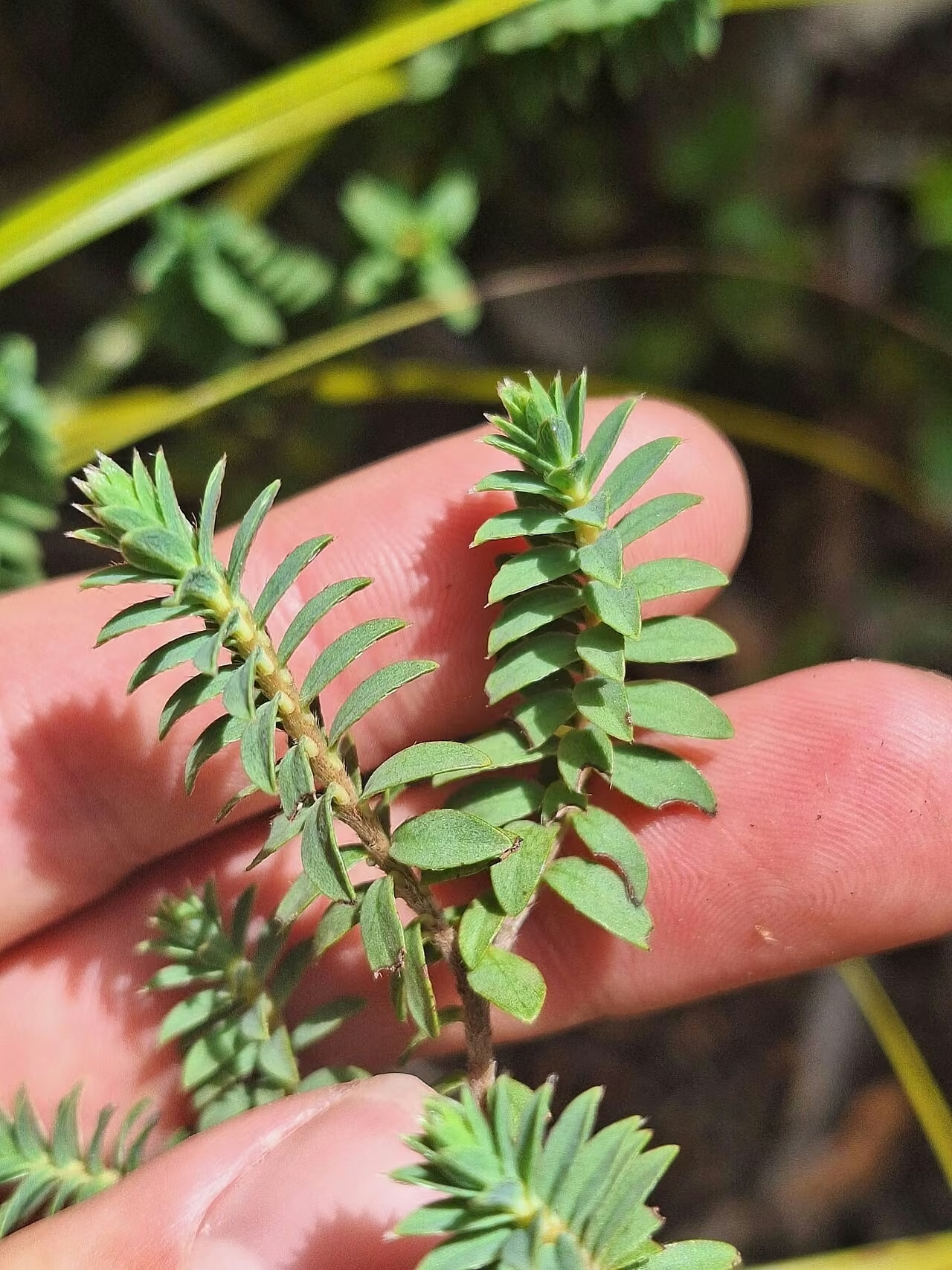
Pimelea pseudolyallii is a low-growing, scrambling shrub with hairy twigs. Its leaves are in opposite pairs, green and pointed, about 5-15 mm long by 3-6.5 mm wide. The upper surface is almost hairless, but the underside is silky-hairy and the hairs project beyond the leaf edge, giving each leaf a fine silver margin.
The flowers are white to cream and hairy, carried in small clusters at the tips of the shoots between November and January. They are followed from December to February by small fleshy red fruit.
Despite its name, NZPCN considers it most similar to members of the Pimelea aridula complex. It differs from them in its weaker, spreading rather than erect growth and its green to dark leaves that are nearly hairless above and silky beneath. The silver-edged leaves and red fruit help separate it from white-fruited lowland pimeleas.
Quick Facts
| Scientific Name | Pimelea pseudolyallii |
|---|---|
| Height | Low-growing; a scrambling sub-shrub |
| Spread | 0.3-0.8 m, sprawling |
| Water Needs | Moderate; free-draining |
| Light | Full sun to light shade |
| Frost Tolerance | Hardy; a montane to alpine plant |
| Salt Tolerance | Low; an inland mountain species |
| Growth Rate | Moderate |
| Lifespan | Perennial |
Climate Best Suited to
It suits the cold winters, frequent frosts and drier eastern climate of the South Island high country. It can be grown in cool lowland gardens with good drainage.
Regional Suitability
| City | Climate Suitability |
|---|---|
| Auckland | Low |
| Wellington | Medium |
| Christchurch | High |
| Dunedin | Medium |
Plant Habitat
This species is endemic to the eastern South Island, recorded from Marlborough, Canterbury and North Otago. It is a montane to alpine plant.
It grows in open mountain beech (Nothofagus) forest near the bush line, in subalpine scrub, among shrubs in tussock grassland and within tussock grassland itself. NZPCN describes it as naturally uncommon and biologically sparse, so plants are scattered rather than abundant.
Growing Requirements
Soil Requirements
Mountain soils under tussock and beech are stony and free-draining, and that is what it needs in a garden.
- Gritty, free-draining loam
- Moderate fertility
- Avoid heavy soils that stay wet in winter
Light Requirements
In the wild it grows both in open tussock and at forest edges, so it tolerates sun or light shade.
- Full sun in cool areas
- Light afternoon shade in warmer districts
Water Requirements
It prefers soil that is cool and moderately moist but never waterlogged.
- Water during dry summer spells
- Good drainage is essential through winter
Planting and Establishing
Plant in autumn or spring in a well-drained spot such as a rock garden edge, bank or raised bed. Allow room for the stems to scramble outwards.
Work grit into heavier soils and mulch with stones rather than bark to keep the crown dry. Use eco-sourced plants where possible, especially near wild populations.
Ecological Role
The small white flowers are likely visited by native moths, flies and solitary bees, and the red fleshy fruit are probably eaten by lizards and birds that disperse the seed, as with related red-fruited pimeleas, although specific studies of this species are lacking.
It forms part of the low shrub layer at the bush line and in tussock grassland, often growing among taller shrubs that give it partial shelter.
Uses & Significance
Garden Uses
Its sprawling habit and silver-edged leaves make it a pleasing small plant for cool, dry gardens.
- Rock gardens and banks
- Low border edges
- Alpine and tussock-themed plantings
- Containers with gritty mix
Ecological Value
Growing it helps conserve a sparse eastern South Island endemic.
- Nectar for native insects
- Red fruit for lizards and birds
- Adds diversity to high-country restoration
Landscaping Uses
Let it weave between small tussocks such as Festuca or Poa and among rocks, where its red fruit show up in early summer.
It also works as a low foreground plant in front of upright mountain shrubs like Hebe and Coprosma.
Seasonal Care Calendar
Spring
New growth starts and buds form ahead of November flowering.
- Plant out new specimens
- Remove weeds before they shade it
Summer
Flowering runs from November to January and the red fruit ripen from December to February.
- Take semi-hardwood cuttings
- Water in prolonged dry spells
Autumn
Growth slows and the stems firm up before winter.
- Good planting time
- Check drainage around the crown
Winter
Plants rest through frosts and snow without harm.
- No protection needed in most areas
- Avoid wet, poorly drained soil
When to Prune and How Much
Pruning is rarely needed. Trim straggly stems lightly after fruiting to keep the plant tidy.
Do not cut hard into old bare wood, where regrowth is slow.
How to Grow Pimelea
Pimelea pseudolyallii is easy to propagate vegetatively: NZPCN states that it is easily grown from semi-hardwood cuttings. Seed from the red fruit is an alternative, though no reliable germination data for this species was found, so cuttings are the method to rely on. Use eco-sourced material from cultivated plants wherever possible, and keep regional forms local, particularly in Otago where the species is ranked Regionally Endangered.
From Cuttings
Semi-hardwood cuttings taken in summer, after flowering, root readily. Choose firm side shoots that are not carrying flowers or fruit. Because the stems scramble along the ground, check older garden plants for any stem that has rooted where it touches the soil; such a layered piece can be lifted and potted in autumn.
- Cut 5-8 cm side shoots in summer or early autumn
- Remove the lowest leaves and any flowers
- Insert into a free-draining propagation mix of pumice and peat or bark
- Keep in a cool, shaded spot and mist lightly
- Pot on into gritty mix once roots appear
From Seed
Fruit ripen red between December and February. Fresh seed is worth trying, but germination may be slow or erratic. Remove all the red flesh before sowing, as fruit pulp can encourage fungal rot in the seed tray.
- Pick fully red fruit and remove the flesh
- Sow fresh on a gritty seed mix and cover lightly
- Leave outdoors in a sheltered spot over winter
- Prick out seedlings in spring when large enough to handle
Pests & Diseases
No particular pests are recorded. Like other pimeleas it can suffer root rot in wet soils and may be browsed by rabbits or hares in rural gardens.
In the wild, browsing animals and changes to tussock grassland could affect sparse populations, though no specific threats are documented.
Cultural Significance
No Māori name or traditional use is recorded for Pimelea pseudolyallii in the sources consulted.
The species was described by H.H. Allan, and was once spelled Pimelea pseudo-lyallii. Its name records how easily it was confused with Pimelea lyallii, a species of the far south.
Bonus Tip
To pick this species out from other mountain pimeleas in the field, turn a leaf over: the silky underside with hairs poking out past the edge, giving a thin silver rim, is distinctive, and the red fruit in early summer confirm it.
Related Plants
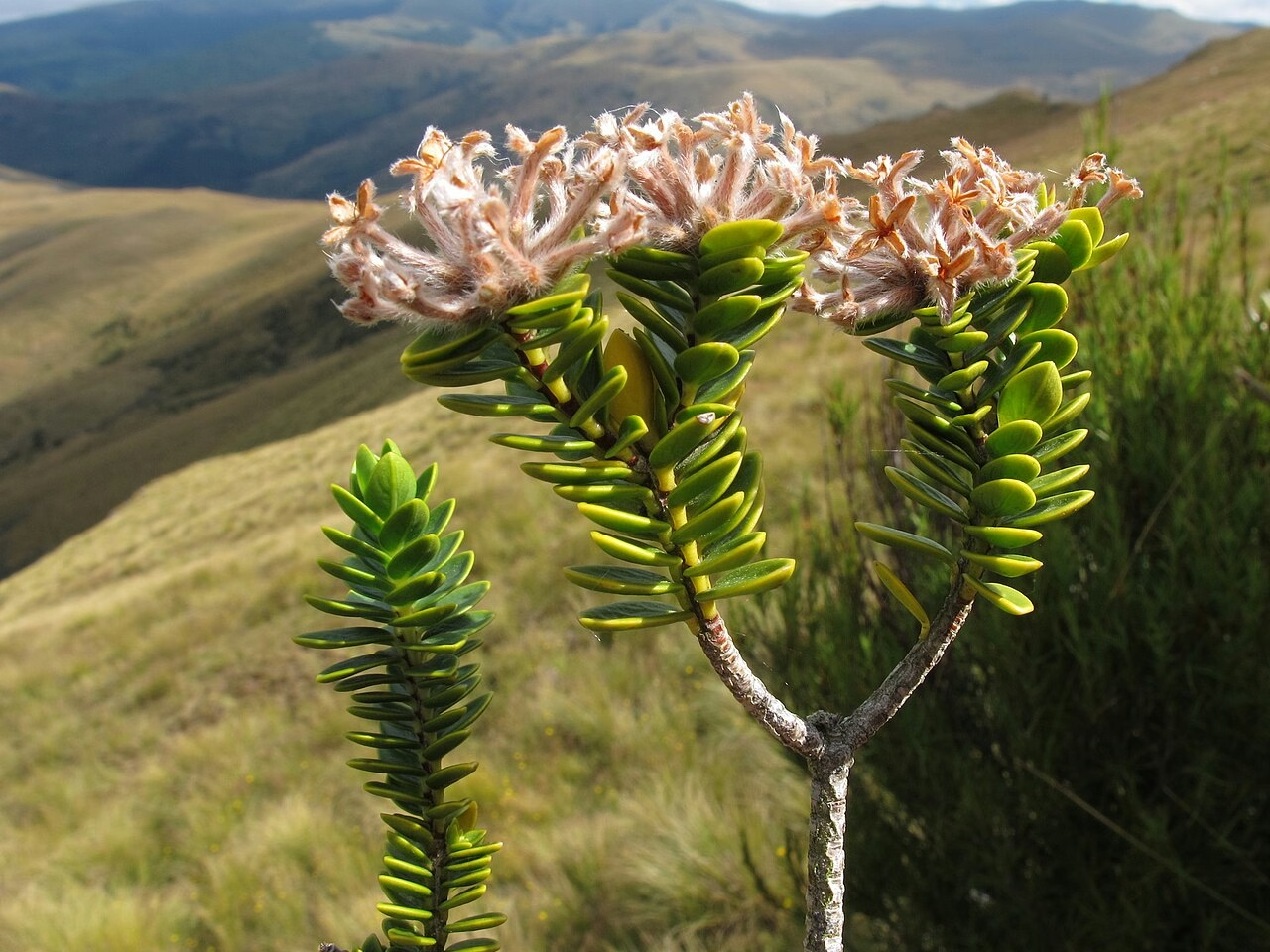
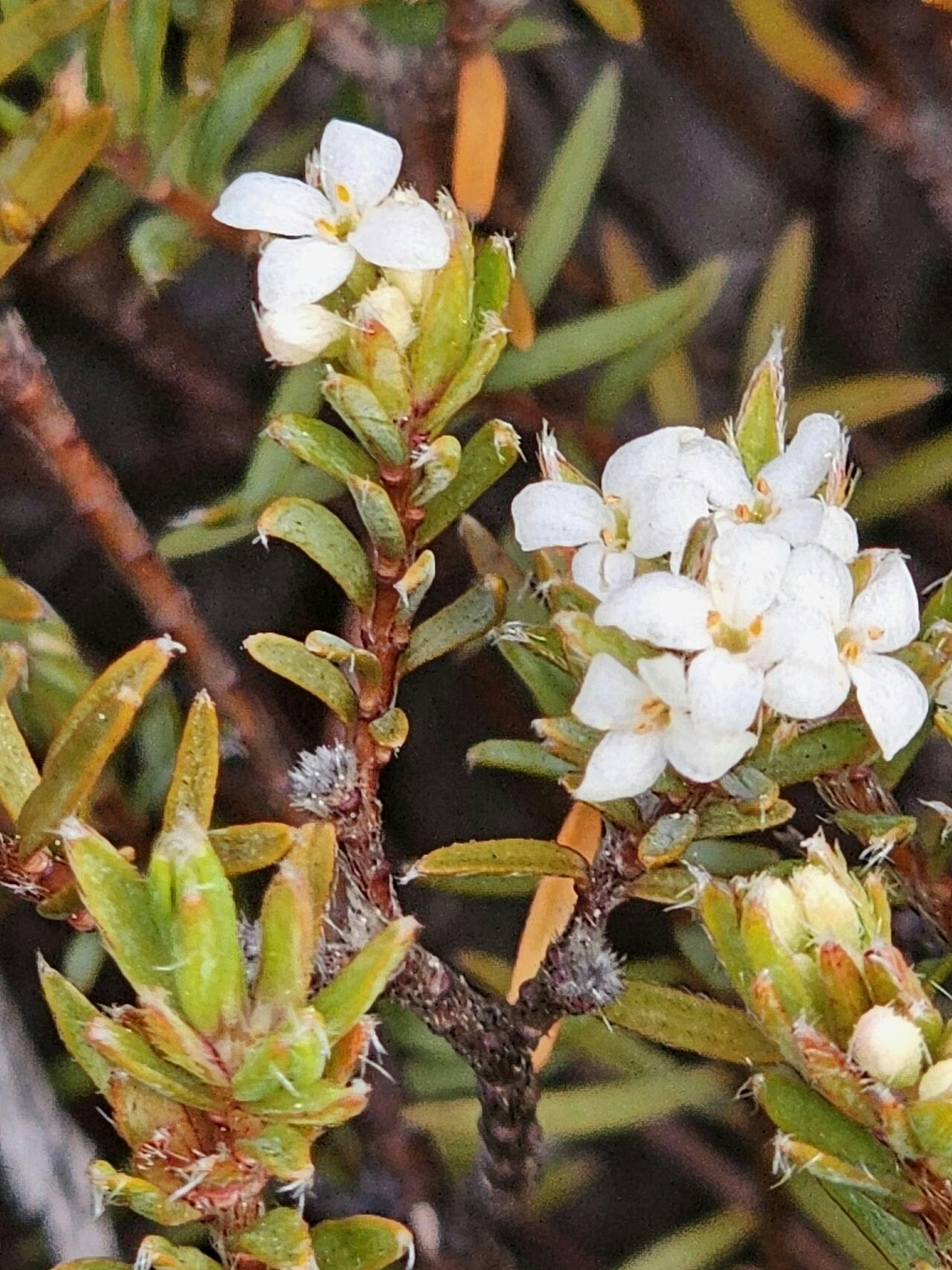
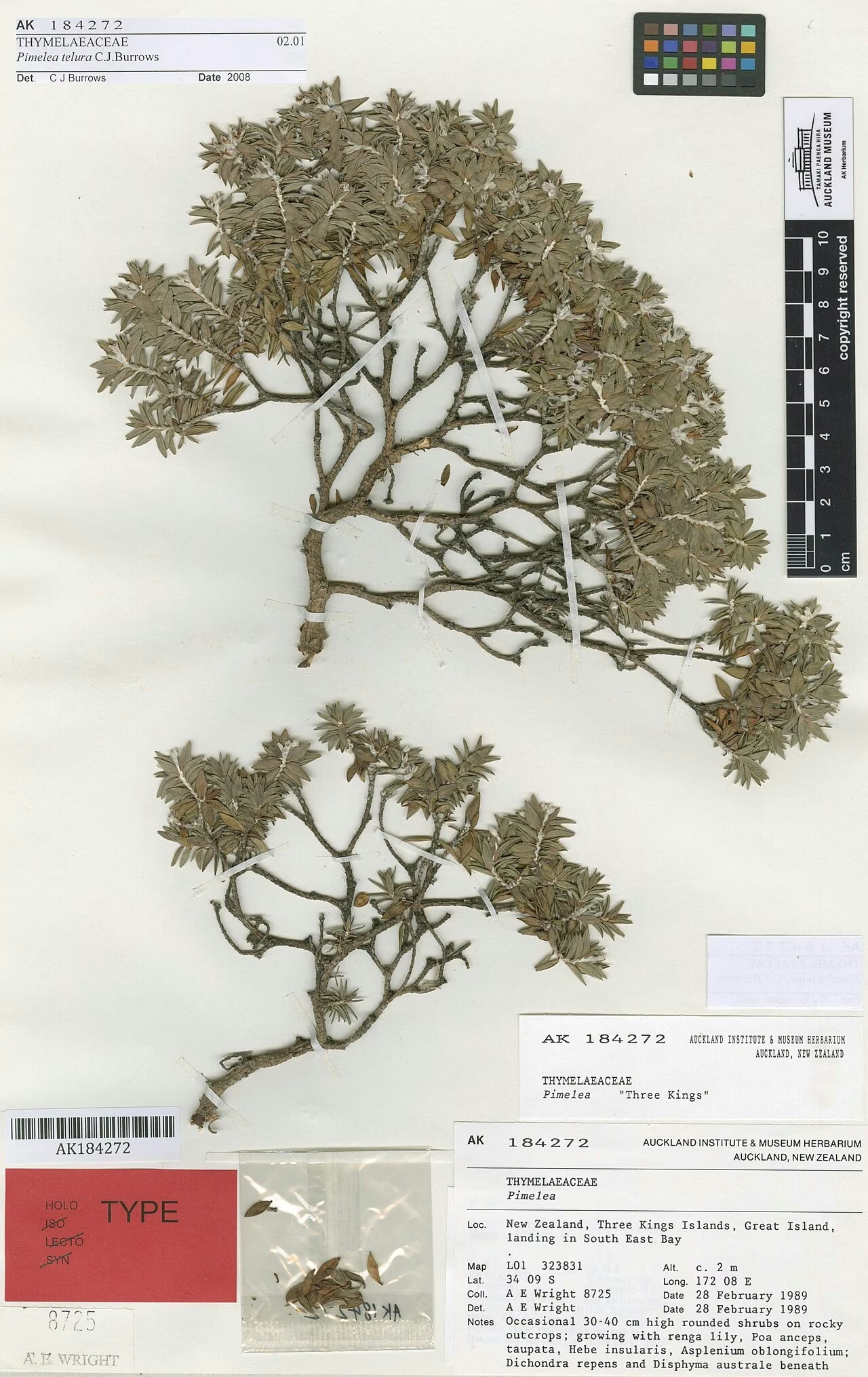
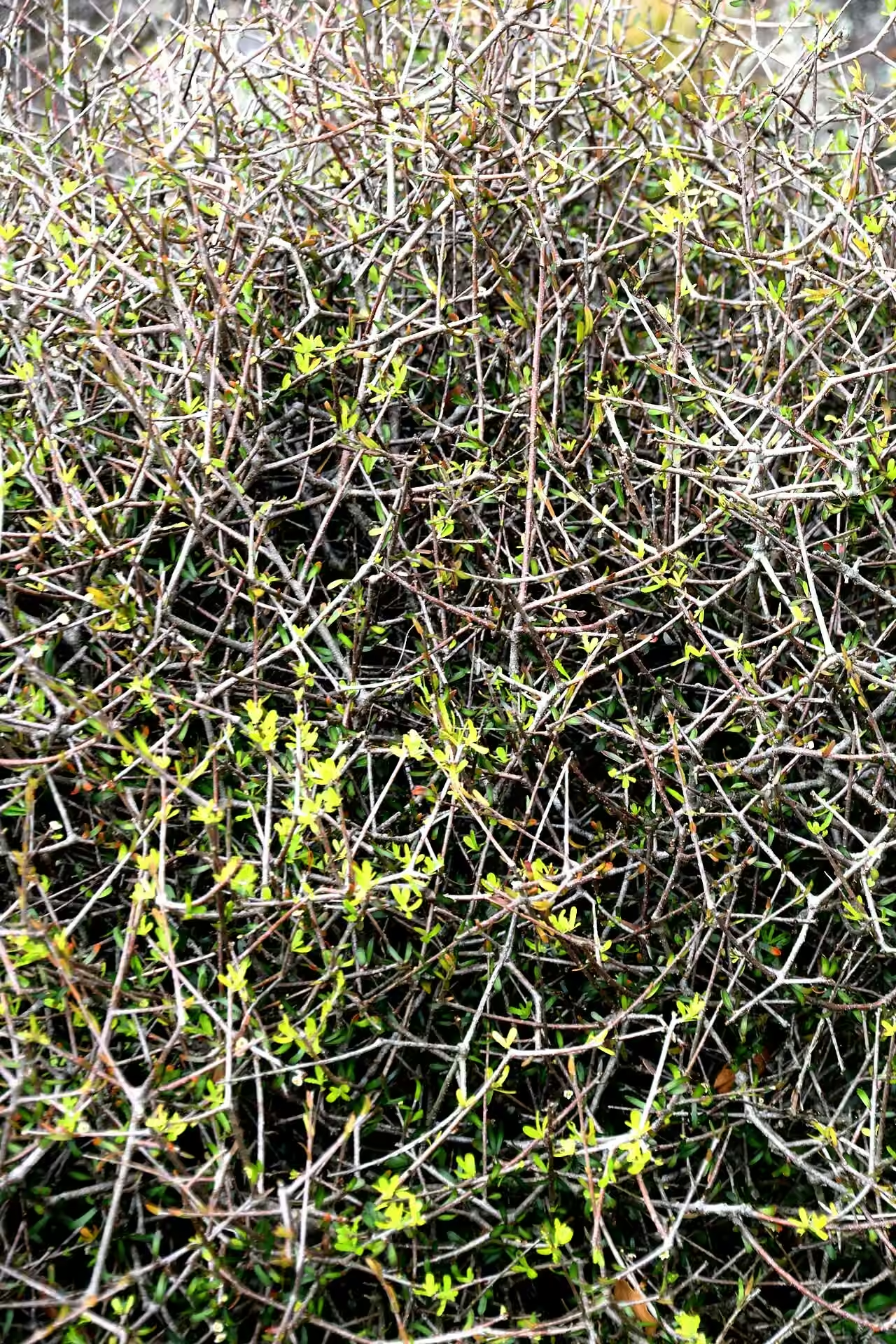
Explore other native plants that share similar characteristics or habitats with Pimelea (Pimelea pseudolyallii), offering further insights into New Zealand's diverse flora. These related species provide context and opportunities for complementary planting in your garden.
Plant Conservation
Nationally, Pimelea pseudolyallii is ranked At Risk - Naturally Uncommon (2023), with the qualifiers Sparse, Data Poor Size and Data Poor Trend. In Otago it is ranked Regionally Endangered (2025) and in Wellington it is Regionally Data Deficient.
Its rarity is mainly natural, but scattered plants in tussock grassland and scrub could be lost to land development, fire or browsing. Better survey data and protection of high-country tussock and shrubland are the main needs.
Frequently Asked Questions
What does pseudolyallii mean?
The name means deceptively similar to Pimelea lyallii, a southern species it resembles, even though it is more closely related to the Pimelea aridula complex.
Does Pimelea pseudolyallii have red or white berries?
It produces small red fruit, which ripen from December to February after the white or cream flowers.
Is Pimelea pseudolyallii easy to grow?
NZPCN says it is easily grown from semi-hardwood cuttings and forms a somewhat sprawling sub-shrub in a garden setting.
Where is Pimelea pseudolyallii found in the wild?
It grows in the eastern South Island in Marlborough, Canterbury and North Otago, from montane beech forest near the bush line up into alpine tussock grassland.
Sources and Further Reading
The botanical, growing, and conservation details for Pimelea (Pimelea pseudolyallii) on this page draw on the New Zealand plant references below. Consult them for full technical records and the latest distribution data.