Plantain
Plantago aucklandica
Last updated:
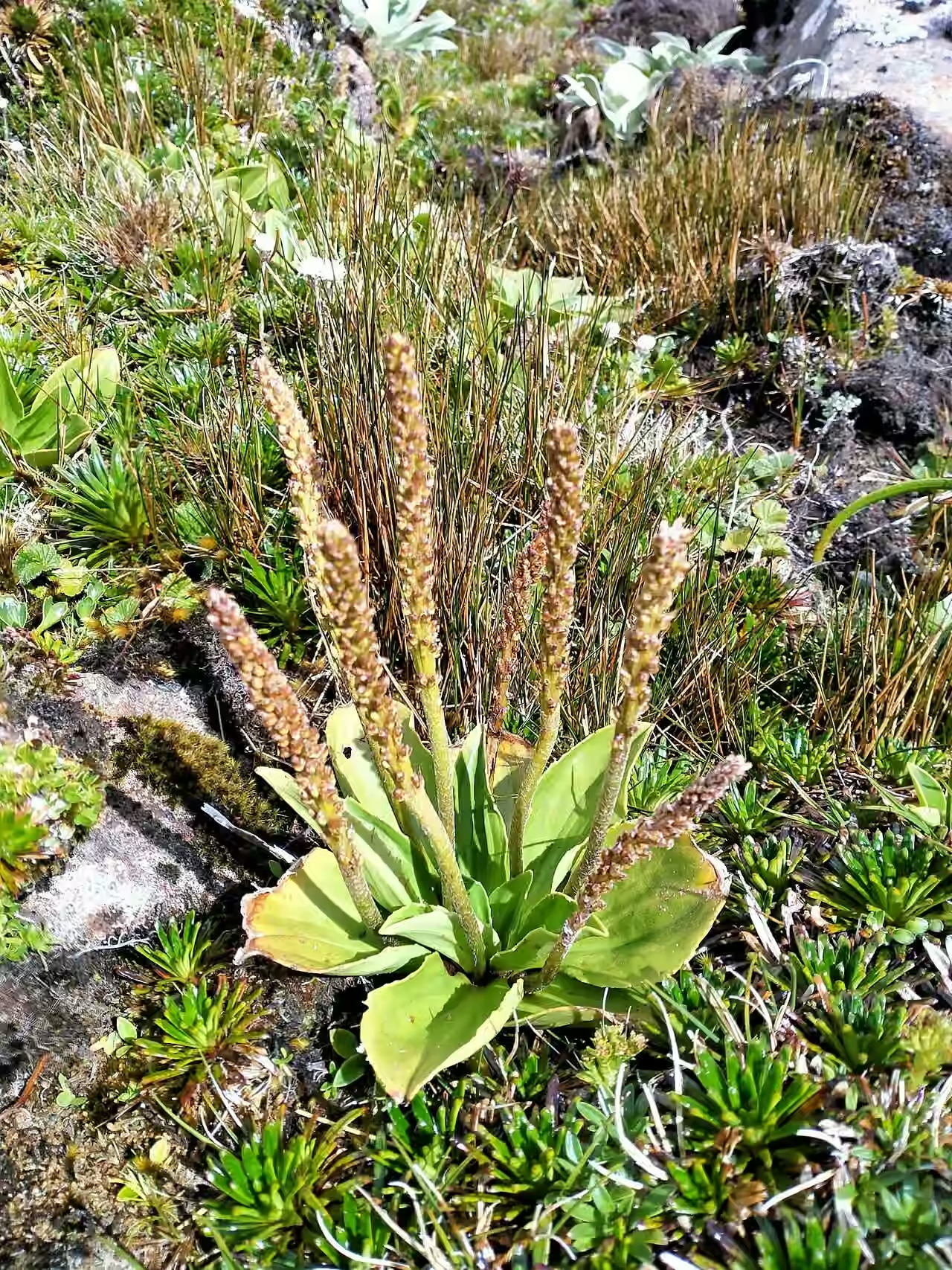
Plantago aucklandica is a robust rosette-forming plantain endemic to the subantarctic Auckland Islands, where it grows only at higher elevations on Auckland, Adams and Disappointment Islands. Each rosette has 5 to 13 broad leaves up to about 12 cm long, with three to seven veins, wide stalks and long rusty hairs in the leaf axils, and flowering stems up to 34 cm tall carrying dense spikes of up to 132 small flowers. It grows in fellfield, marshy ground, bare windswept places and rock outcrops. Recently recognised as one of the subantarctic megaherbs, it is ranked At Risk - Naturally Uncommon. Explore more native flowering plants in our native plant guide.
Plant Description
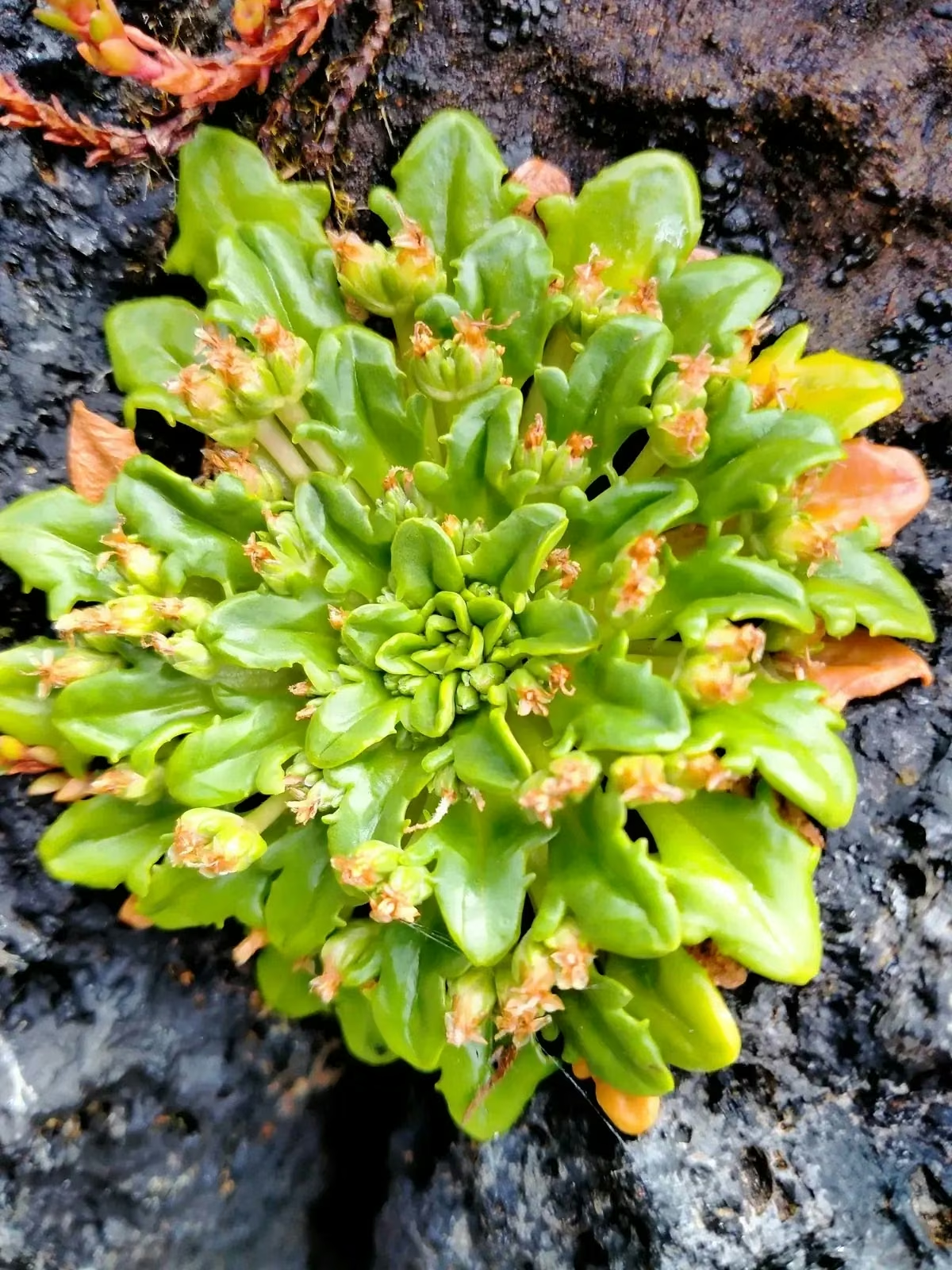
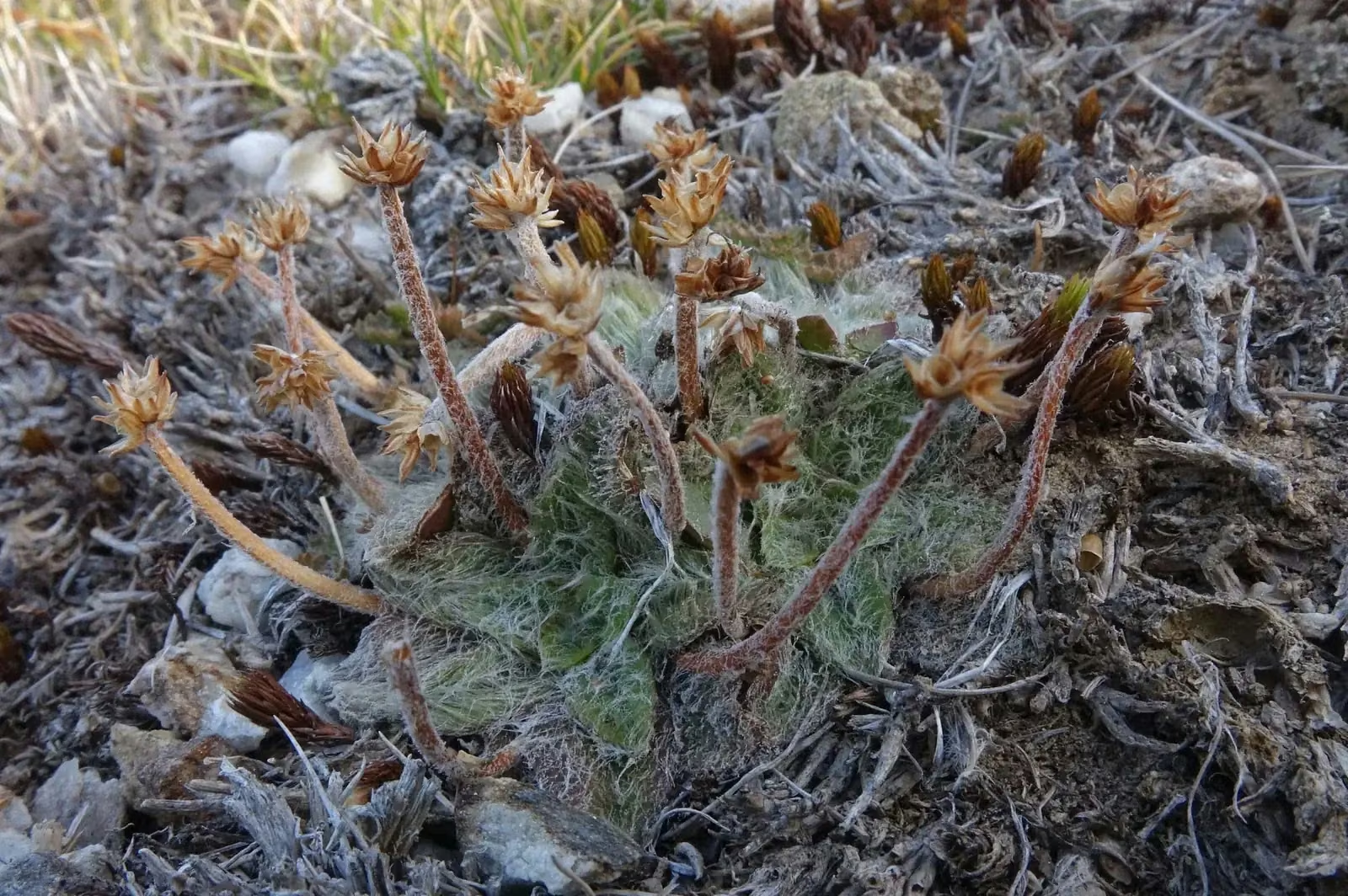
Plantago aucklandica forms basal rosettes on a thick taproot 6-25 mm across. Each rosette has 5 to 13 leaves, 50-116 mm long and 14-50 mm wide, angular-ovate or narrowly obovate and broadest above the middle. They are usually dotted with tiny glands, hairless on the upper surface, have three to seven veins and taper into broad stalks. Long, rust-coloured hairs, often over 15 mm long, grow in the leaf axils. Dried leaves typically turn brown.
Flowering stems, including the spikes, are 117-338 mm long, with the bare part of the stalk 62-206 mm. Each spike is densely crowded with 44 to 132 small flowers. Each capsule holds only one or rarely two brown seeds about 1.3-2 mm long with rounded edges.
The combination of few, large, many-veined leaves, wide stalks, very long axillary hairs and one-seeded capsules separates it from other New Zealand plantains, which typically have smaller leaves and several seeds per capsule. Hooker, who described it, compared it with plantains of other oceanic islands rather than mainland New Zealand species.
Quick Facts
| Scientific Name | Plantago aucklandica |
|---|---|
| Height | Flower stems 12-34 cm; leaves in a low rosette |
| Spread | Rosettes about 10-25 cm across |
| Water Needs | Constantly cool and moist, never dry |
| Light | Full sun with cool temperatures |
| Frost Tolerance | Hardy to cold; dislikes heat |
| Salt Tolerance | Moderate; exposed to salt-laden subantarctic winds |
| Growth Rate | Slow |
| Lifespan | Perennial |
Climate Best Suited to
It is adapted to the cold, wet, windy and cloudy climate of the subantarctic, with cool summers and no real dry season. Warm or humid lowland gardens do not suit it.
Regional Suitability
| City | Climate Suitability |
|---|---|
| Auckland | Low |
| Wellington | Low |
| Christchurch | Low |
| Dunedin | Medium |
Plant Habitat
Plantago aucklandica is endemic to the Auckland Islands, about 465 km south of Bluff. It is recorded from Auckland Island, Adams Island and the ridge tops of Disappointment Island, at roughly 360-550 m above sea level.
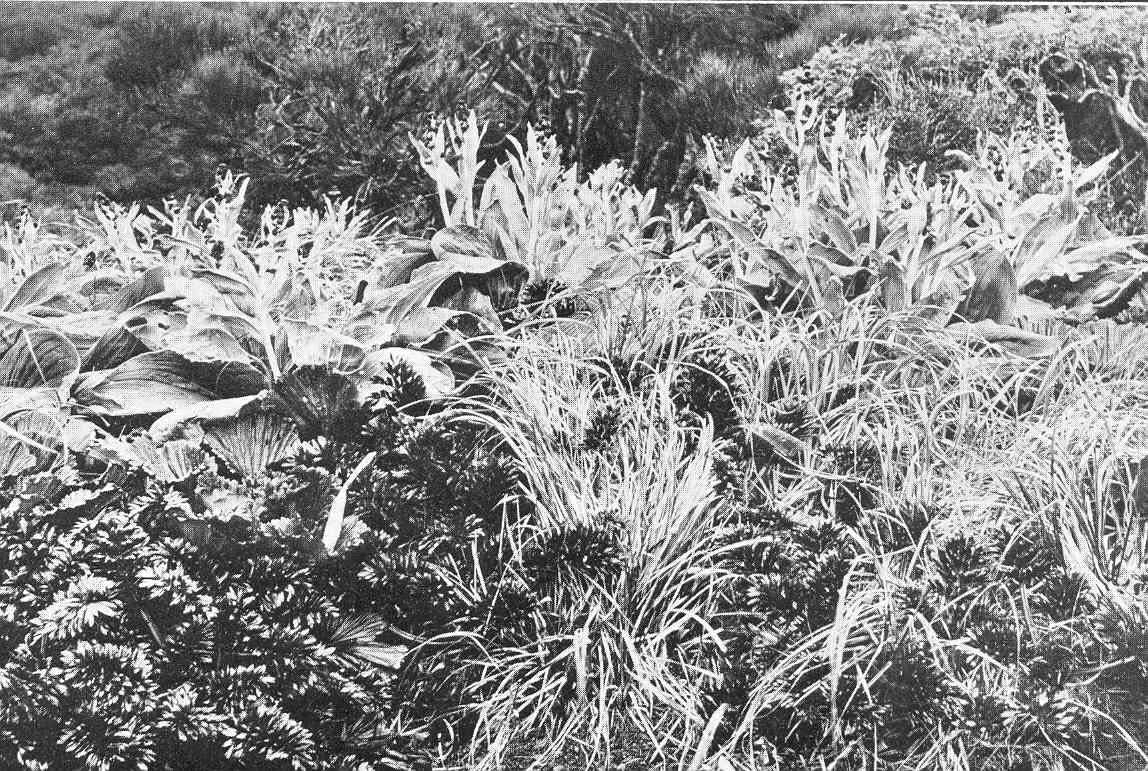
It grows in fellfield, marshy places, on bare wind-blown ground and on rock outcrops. Hooker's original collection came from mountain ridges in peaty soil, and on Disappointment Island it grows with Acaena minor var. antarctica, Gentianella concinna and Bulbinella rossii.
Growing Requirements
Soil Requirements
Its natural soils are cold, peaty and often wet, but exposed to constant wind that stops them going stagnant.
- Moist, peaty, gritty mix in cultivation
- Good drainage despite constant moisture
- Low to moderate fertility
Light Requirements
It grows in open, treeless upland where light is good but the sky is usually overcast.
- Bright light without heat
- Shade from hot afternoon sun in gardens
Water Requirements
NZPCN notes that it resents drought, so it must never dry out, but also resents humidity.
- Keep evenly moist
- Provide plenty of air movement to reduce mildew
Planting and Establishing
This is a plant for specialist alpine growers in cool climates. Grow it in a deep pot or trough in a cool alpine house or a sheltered rock garden, in a moist but gritty peaty mix.
It is not commercially available. Any plants should come from existing cultivated stock, since the Auckland Islands are a nature reserve and World Heritage Area with strict collection controls.
Ecological Role
In the windswept upland of the Auckland Islands it is part of the fellfield and herbfield vegetation that includes other megaherbs and cushion plants. Plantains are generally wind-pollinated, but the pollination of this species has not been studied in detail.
Large-leaved subantarctic herbs such as this one are thought to benefit from absorbing heat in their dense rosettes in a cool, cloudy climate. Their recovery after the removal of introduced grazing animals from several subantarctic islands has helped restore these upland communities.
Uses & Significance
Garden Uses
Its garden use is limited to specialist collections.
- Alpine house collections
- Cool, moist rock gardens in southern districts
- Botanic garden displays of subantarctic flora
Ecological Value
It contributes to the unique megaherb flora of the subantarctic islands.
- Endemic to the Auckland Islands
- Part of fellfield and upland herbfield
- Seed source for island invertebrates
Landscaping Uses
This species is not suited to general landscaping. In a specialist cool-climate garden its broad, ribbed rosettes contrast well with fine tussocks and small cushion plants.
Grow it alongside other subantarctic or southern alpine plants in a damp, airy scree bed.
Seasonal Care Calendar
Spring
New leaves expand in the rosette, and flowering can start from October.
- Keep pot-grown plants moist
- Watch for early mildew
Summer
Spikes of small flowers and then capsules develop between November and February.
- Protect from heat and drought
- Increase ventilation in alpine houses
Autumn
Seeds ripen in the one-seeded capsules.
- Collect seed from cultivated plants
- Remove old flowering stems
Winter
Rosettes persist through the cold, wet subantarctic winter.
- Little care needed
- Avoid stagnant, airless conditions
When to Prune and How Much
No pruning is needed. Remove spent flowering stems once seed is collected and pull away any dead, brown leaves.
Cut off any leaves showing powdery mildew to reduce its spread.
How to Grow Plantain
NZPCN notes that Plantago aucklandica is occasionally cultivated in rock gardens or alpine houses but is fickle, resenting humidity and drought and being prone to powdery mildew. No specific propagation protocol was found in the sources consulted. Plantains in general are raised from seed, and because each capsule of this species contains only one or two seeds, it produces fewer seeds per spike than most other New Zealand plantains. Plants with several rosettes on a thick taproot may also be divided with care. Any material must come from existing cultivated plants, since collecting on the Auckland Islands requires permits.
From Seed
Collect seed from ripe spikes on cultivated plants in late summer or autumn and sow fresh. Keep seedlings cool and well ventilated to avoid damping off. A cool shadehouse or cold frame suits them far better than a warm greenhouse.
- Harvest spikes as capsules begin to brown
- Shake out the brown seeds into a paper bag
- Sow on a moist, gritty peat-based mix and barely cover
- Keep cool, bright and moist with good air flow
- Pot seedlings singly into deep pots for the taproot
By Division
Older plants that have produced more than one rosette can be split, although the thick taproot makes this risky. Divide only in cool weather.
- Lift the plant in early spring
- Separate a rosette with some of its own roots
- Replant at once in a moist, gritty mix
- Keep shaded and cool until new growth starts
Pests & Diseases
Powdery mildew is the main problem in cultivation, particularly in humid or stagnant air, according to NZPCN.
In the wild, no specific pests are recorded. Introduced pigs, cats and mice still present on main Auckland Island are a wider concern for its ecosystems, while smaller islands such as Disappointment and Adams are largely free of introduced mammals.
Cultural Significance
No Māori name or traditional use is recorded for Plantago aucklandica in the sources consulted.
Joseph Dalton Hooker described the species in 1844 from specimens gathered during James Clark Ross's Antarctic expedition, which visited the Auckland Islands in 1840. The species was revised by Heidi Meudt in 2012 as part of her work on New Zealand Plantago.
Bonus Tip
When identifying a subantarctic plantain, gently pull back a leaf at the base of the rosette. Very long, rusty hairs over 15 mm long hidden in the leaf axil are a quick field sign of Plantago aucklandica.
Related Plants
Explore other native plants that share similar characteristics or habitats with Plantain (Plantago aucklandica), offering further insights into New Zealand's diverse flora. These related species provide context and opportunities for complementary planting in your garden.
Plant Conservation
Plantago aucklandica is ranked At Risk - Naturally Uncommon (2023) with the qualifiers Island Endemic and Range Restricted. It is naturally limited to a few high-elevation localities, and the size and trend of its population are not well known, so a precautionary ranking has been applied.
The Auckland Islands are a nature reserve and part of the New Zealand Subantarctic Islands World Heritage Area. Strict biosecurity, and the long-term goal of removing pigs, cats and mice from Auckland Island, should further protect its habitat.
Frequently Asked Questions
Where does Plantago aucklandica grow?
It is confined to higher elevations, roughly 360-550 m, on Auckland Island, Adams Island and the ridge tops of Disappointment Island in the subantarctic Auckland Islands group.
Is Plantago aucklandica a megaherb?
Yes. Research published in 2023 identified Plantago aucklandica as one of the subantarctic megaherbs, the unusually large herbaceous plants typical of New Zealand's southern islands.
How can you tell Plantago aucklandica from other New Zealand plantains?
It has few but large leaves with up to seven veins, broad leaf stalks, axillary hairs longer than 15 mm, and capsules containing only one or occasionally two seeds.
Can Plantago aucklandica be grown in a garden?
It is occasionally cultivated in rock gardens or alpine houses but NZPCN describes it as fickle, resenting both humidity and drought and prone to powdery mildew.
Sources and Further Reading
The botanical, growing, and conservation details for Plantain (Plantago aucklandica) on this page draw on the New Zealand plant references below. Consult them for full technical records and the latest distribution data.