Pimelea
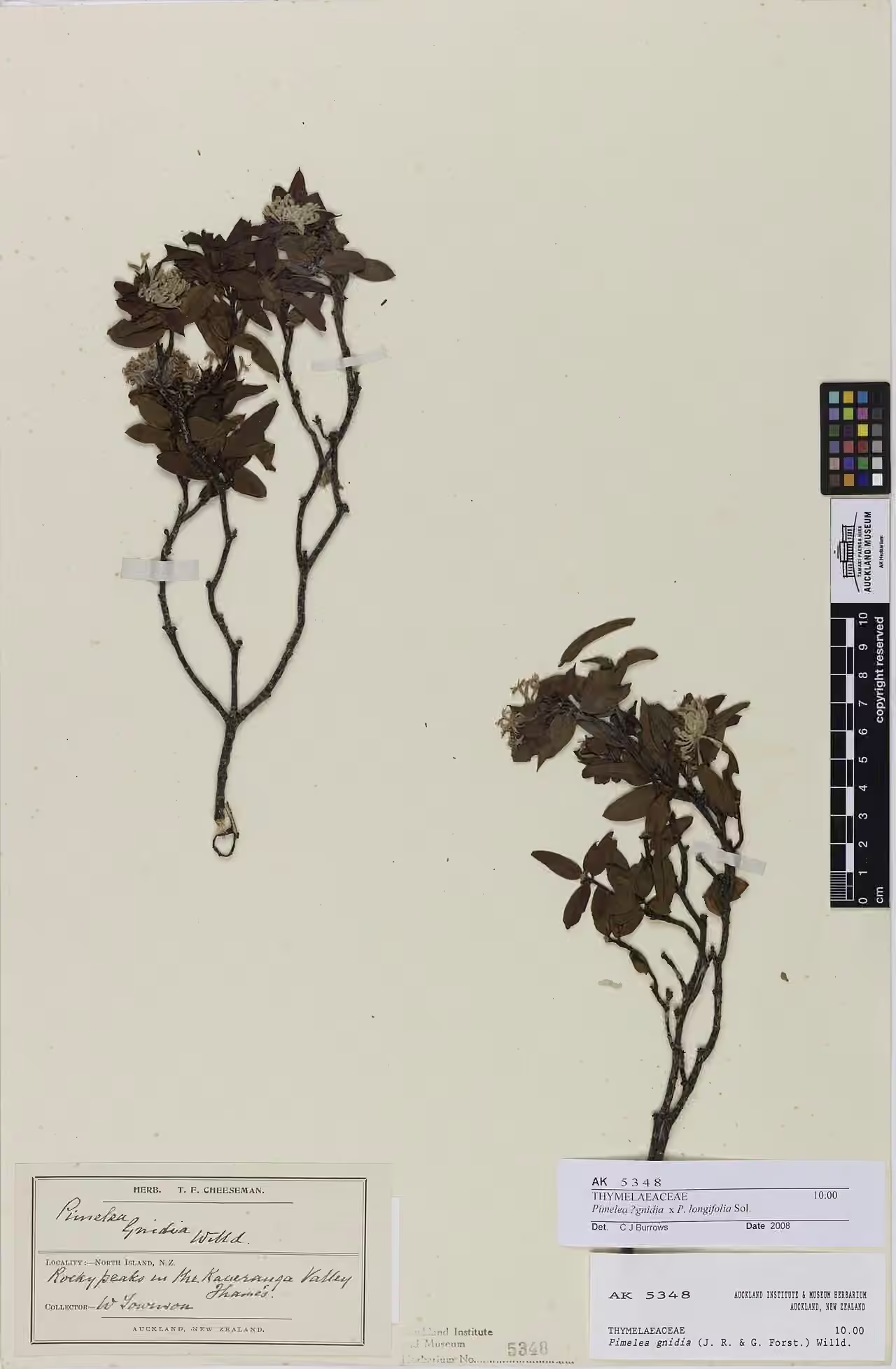
Pimelea gnidia
Last updated:
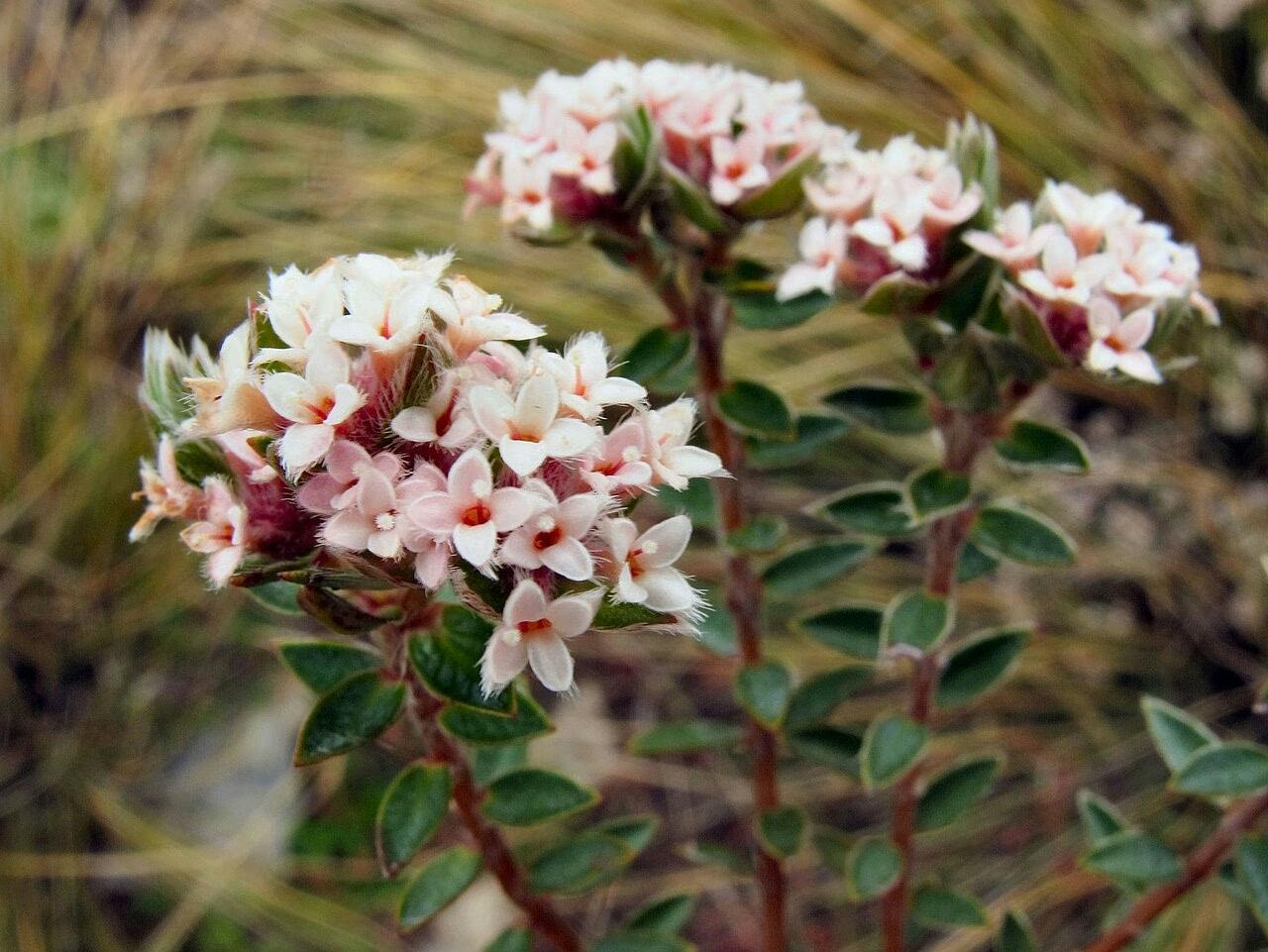
Pimelea gnidia is an erect, much-branched native shrub up to 1.5 m tall, smaller on exposed sites, with neat pairs of narrow leaves and clusters of white, rose-flushed or pink flowers from October to January. It is endemic to New Zealand, growing in the southern third of the North Island and in the South Island west of the main divide from Nelson to Fiordland. It is mostly a montane to subalpine plant of forest margins, scrub, slips, moraines and heathland, coming down to the coast only in the south. It is ranked Not Threatened but, like many Pimelea, can be fickle in gardens. Explore more native shrubs in our native plant guide.
Plant Description
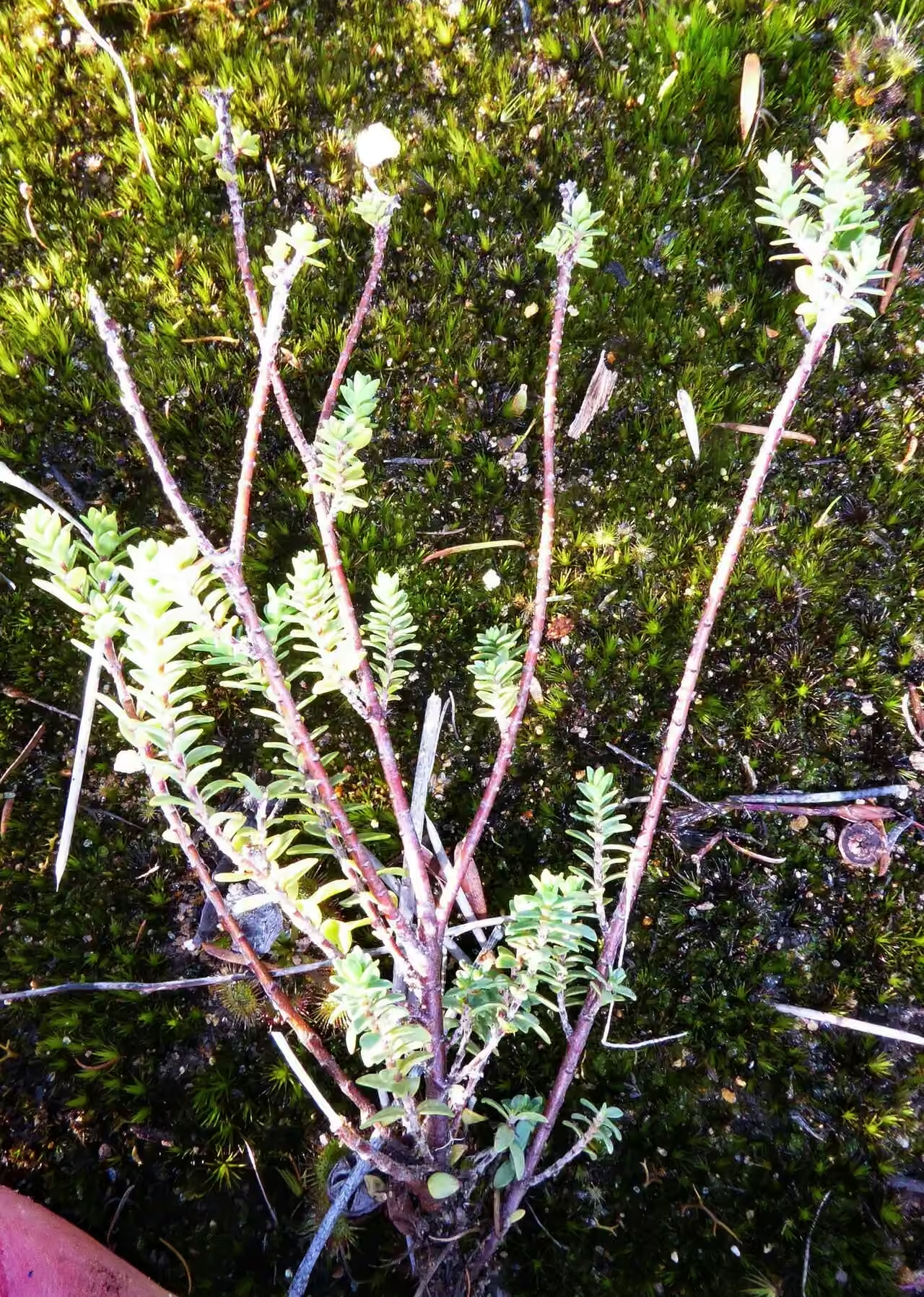
Pimelea gnidia is an erect, much-branched shrub up to 1.5 m tall, becoming lower and more compact on exposed sites. Its branches are ascending and, in older growth, dark red-brown.
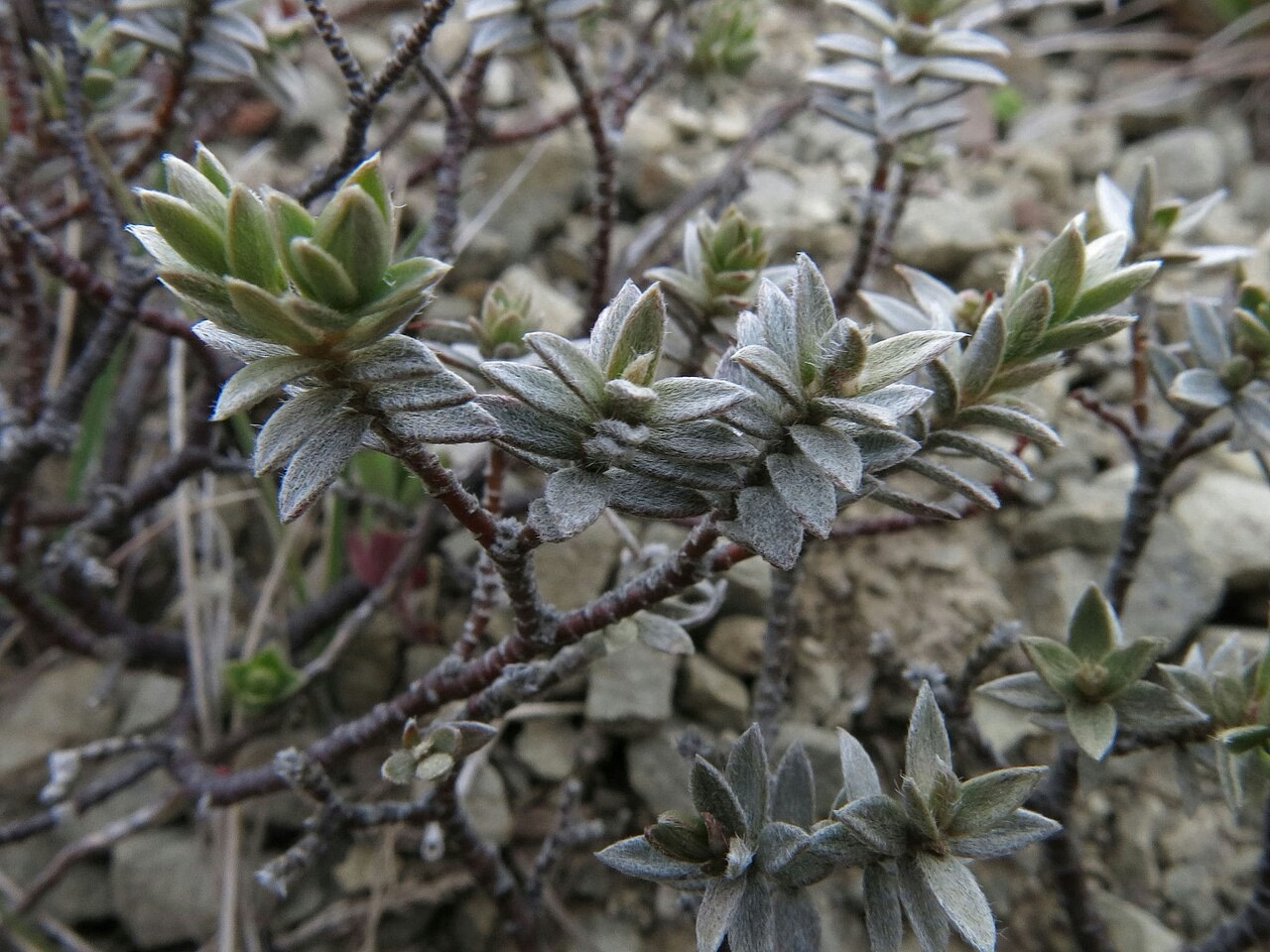
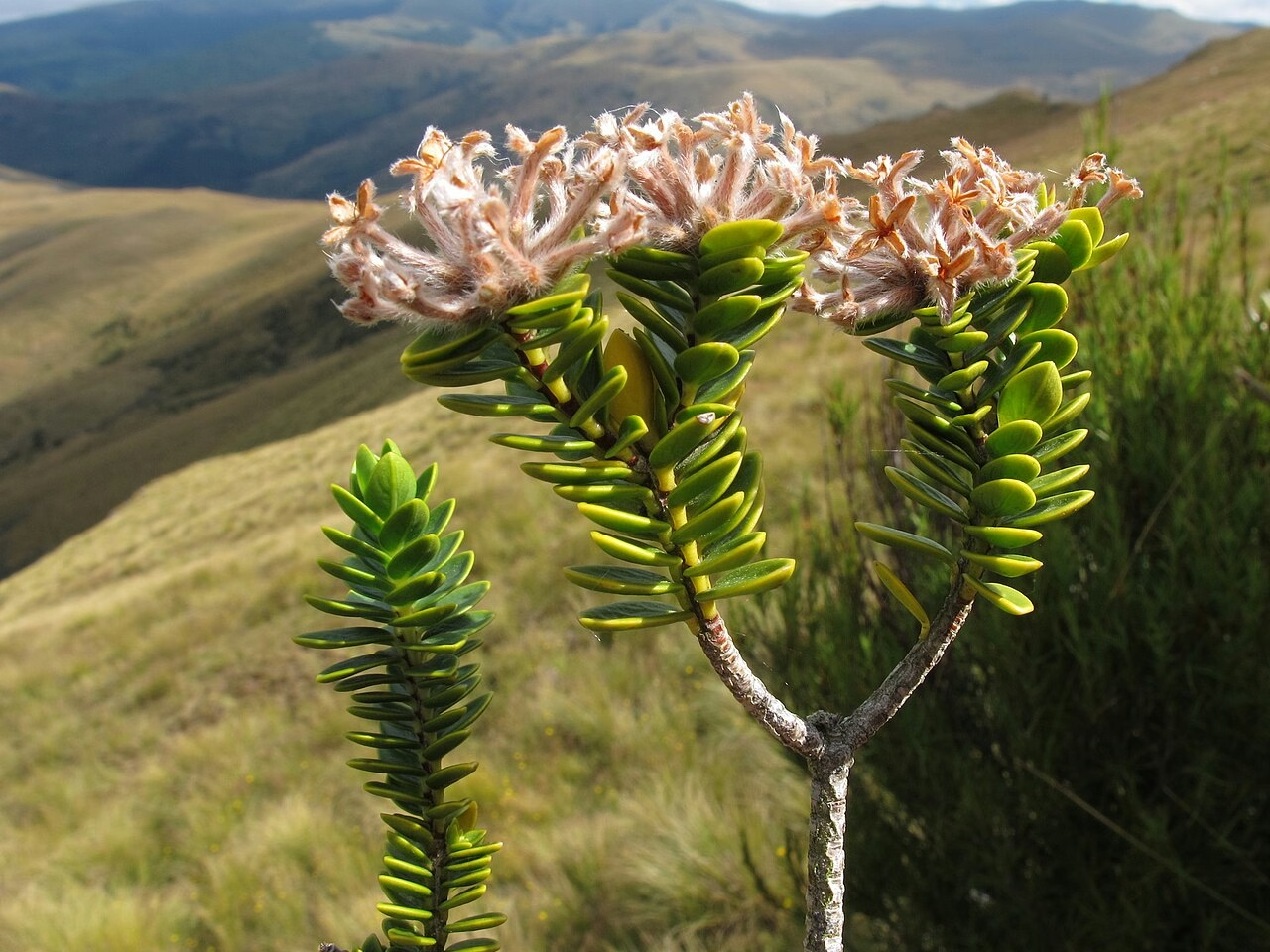
The leaves are arranged in opposite pairs on short stalks 1 to 3 mm long. They are elliptic, ovate or sometimes oblong, obovate or lanceolate, 5 to 35 mm long and 2 to 7 mm wide. The flowers are white or flushed rose, sometimes wholly pink and often with the lower part of the tube red, and are up to about 5.5 mm long, carried in clusters at the branch tips. The ovoid fruits are about 4 mm long, each holding a single seed about 3.4 mm long.
It is very close to Pimelea longifolia, which has larger leaves and longer flowers and generally grows at lower elevations. The two frequently hybridise where they meet, so intermediate plants are common and some individuals cannot be assigned confidently to either species.
Quick Facts
| Scientific Name | Pimelea gnidia |
|---|---|
| Height | Up to 1.5 m, lower on exposed sites |
| Spread | 0.5-1 m |
| Water Needs | Moderate; moist but well drained |
| Light | Full sun to light shade |
| Frost Tolerance | High; reaches the subalpine zone |
| Salt Tolerance | Low to moderate; reaches the coast only in the south |
| Growth Rate | Slow to moderate |
| Lifespan | Perennial, prone to sudden collapse in cultivation |
Climate Best Suited to
Suits cool, wet, mountainous climates with high rainfall and cold winters, such as the ranges of the southern North Island and the West Coast to Fiordland.
Regional Suitability
| City | Climate Suitability |
|---|---|
| Auckland | Low |
| Wellington | Medium |
| Christchurch | Medium |
| Dunedin | Medium |
Plant Habitat
Pimelea gnidia is endemic to New Zealand. It occurs in the southern third of the North Island and in the South Island on the western side, from Nelson south to Fiordland.
It is coastal and lowland only in the southern part of its range, and otherwise montane to subalpine. It grows on rock, mineral soil and peaty loam in open forest, at forest margins, in scrub along streams, on landslides, in valley heads, on moraines, in heathland and in areas of burnt forest.
Growing Requirements
Soil Requirements
It grows on a range of substrates from bare rock and mineral soil to peaty loam, but always where water drains away freely.
- Free-draining mineral or peaty soils
- Acidic to neutral, low to moderate fertility
- Gritty raised beds suit it in gardens
Light Requirements
It grows in open forest, on margins and in scrub, so tolerates some shade, but NZPCN recommends full sun in cultivation.
- Full sun for best flowering
- Light shade tolerated in cool districts
Water Requirements
Its natural range is wet and cool, so it prefers consistently moist soil that never becomes waterlogged.
- Keep moist during dry summers
- Good drainage is essential
Planting and Establishing
Plant in a sunny, well-drained position, ideally in a cool district. A rock garden, raised bed or slope with gritty soil gives the best chance of success.
Because established plants can collapse suddenly, as NZPCN notes, keep replacement plants coming on from cuttings.
Ecological Role
Pimelea gnidia is a coloniser of disturbed and open ground in the mountains, such as landslides, moraines and burnt forest, and persists in heathland and at forest margins. Its flowers, open from October to January, are visited by insects, though specific pollinators are not recorded in the sources consulted.
Its frequent hybridisation with Pimelea longifolia creates zones of intermediate plants where the two meet, an example of the active hybridisation found in many New Zealand shrub groups.
Uses & Significance
Garden Uses
An attractive flowering shrub for cool, high-rainfall gardens and alpine collections.
- Rock gardens and alpine beds
- Mixed native shrub plantings in cool districts
- Restoration of disturbed montane sites within its range
Ecological Value
It helps revegetate slips, moraines and other disturbed montane ground.
- Early coloniser of open, disturbed sites
- Flowers provide nectar in late spring and early summer
- Part of subalpine scrub and heathland communities
Landscaping Uses
Its upright shape and clusters of white to pink flowers make it a good mid-height shrub among tussocks, hebes and smaller Coprosma in a montane-style planting.
Plant in a group of three or more for impact, placing it where it gets sun and good drainage, such as on the upper side of a rock garden.
Seasonal Care Calendar
Spring
Flowering begins in October, with clusters of white to rose-pink flowers.
- Apply a gravel mulch to keep the collar dry
- Water if spring is dry
Summer
Flowering finishes by January and fruits ripen from December.
- Take semi-hardwood cuttings
- Water young plants in dry spells
Autumn
Fruiting continues until April.
- Collect ripe fruits for seed
- Lightly trim after fruiting if needed
Winter
Plants rest and tolerate hard frost.
- Check drainage after heavy rain
- No feeding needed
When to Prune and How Much
Light pruning after fruiting keeps plants bushy, especially in sheltered gardens where they may become taller and looser than in the wild.
Cut only into leafy wood and remove dead branches promptly. Hard pruning is not recommended.
How to Grow Pimelea
NZPCN describes propagation of Pimelea gnidia as fickle. It can be grown from cuttings, and occasionally seed germinates in garden conditions. Plants do best in full sun on well-drained soil, but even well-established plants are prone to sudden collapse, so it is worth striking a few new plants every year or two. Because the species readily hybridises with Pimelea longifolia, seed collected from gardens where both grow, or from wild hybrid zones, may give intermediate offspring. Cuttings are the only way to keep a particular form true. Collect from the wild only with permission and from several plants.
From Cuttings
Semi-hardwood cuttings are the most reliable method for New Zealand Pimelea and keep the parent's form true.
- Take 5 to 8 cm semi-hardwood tip cuttings in summer or early autumn
- Strip the lower leaves without tearing the bark
- Insert into a free-draining mix of pumice or perlite and fine bark
- Keep in bright, cool conditions with good air movement
- Pot on once rooted, using a gritty mix
- Grow young plants on in a cool, sunny spot for a season before planting out
From Seed
Seed ripens from December to April. NZPCN notes it only occasionally germinates in garden conditions, so expect variable results.
- Collect ripe fruits from plants away from Pimelea longifolia
- Sow fresh in a gritty seed mix
- Leave outdoors in a cool, sheltered spot over winter
- Prick out seedlings carefully as they resent root disturbance
Pests & Diseases
No specific pests are recorded for Pimelea gnidia. The main problem in gardens is sudden collapse, usually associated with root problems in poorly drained or overly warm, humid conditions.
In the wild it is widespread within large protected areas and no particular threats are noted by NZPCN.
Cultural Significance
No Māori name or traditional use is recorded specifically for Pimelea gnidia in the sources consulted.
The species has had a long naming history. It was first placed in Banksia, Passerina and Cookia before being settled in Pimelea, and plants once treated as Pimelea crosby-smithiana are now included in it. The epithet gnidia refers to the related genus Gnidia in the daphne family.
Bonus Tip
If you see a pimelea on a West Coast or Fiordland track with smaller leaves and shorter flowers than the Pimelea longifolia growing lower down, you may be looking at Pimelea gnidia, but expect intermediates. Note the altitude and leaf size before naming it, since hybrids between the two are common.
Related Plants
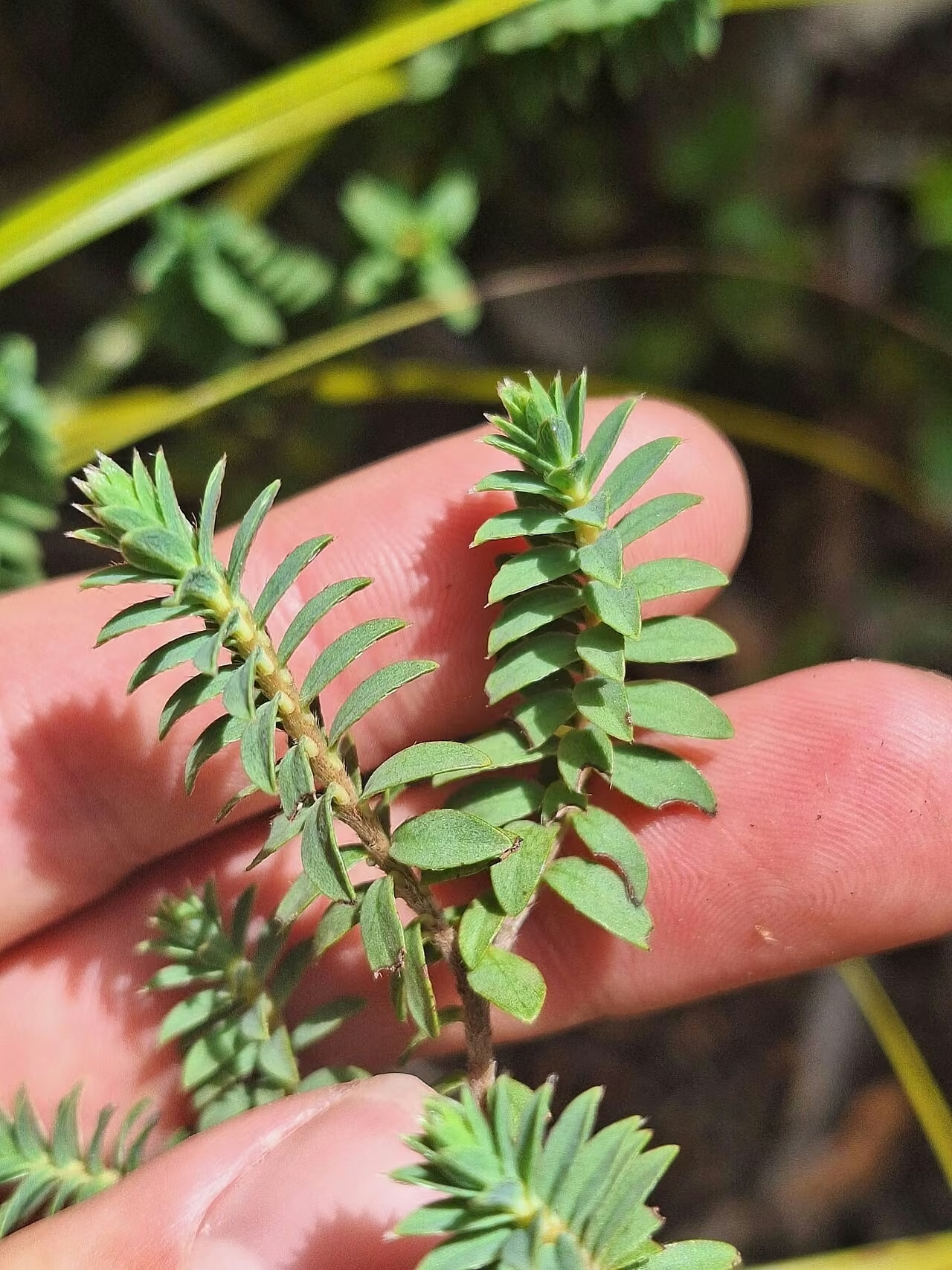
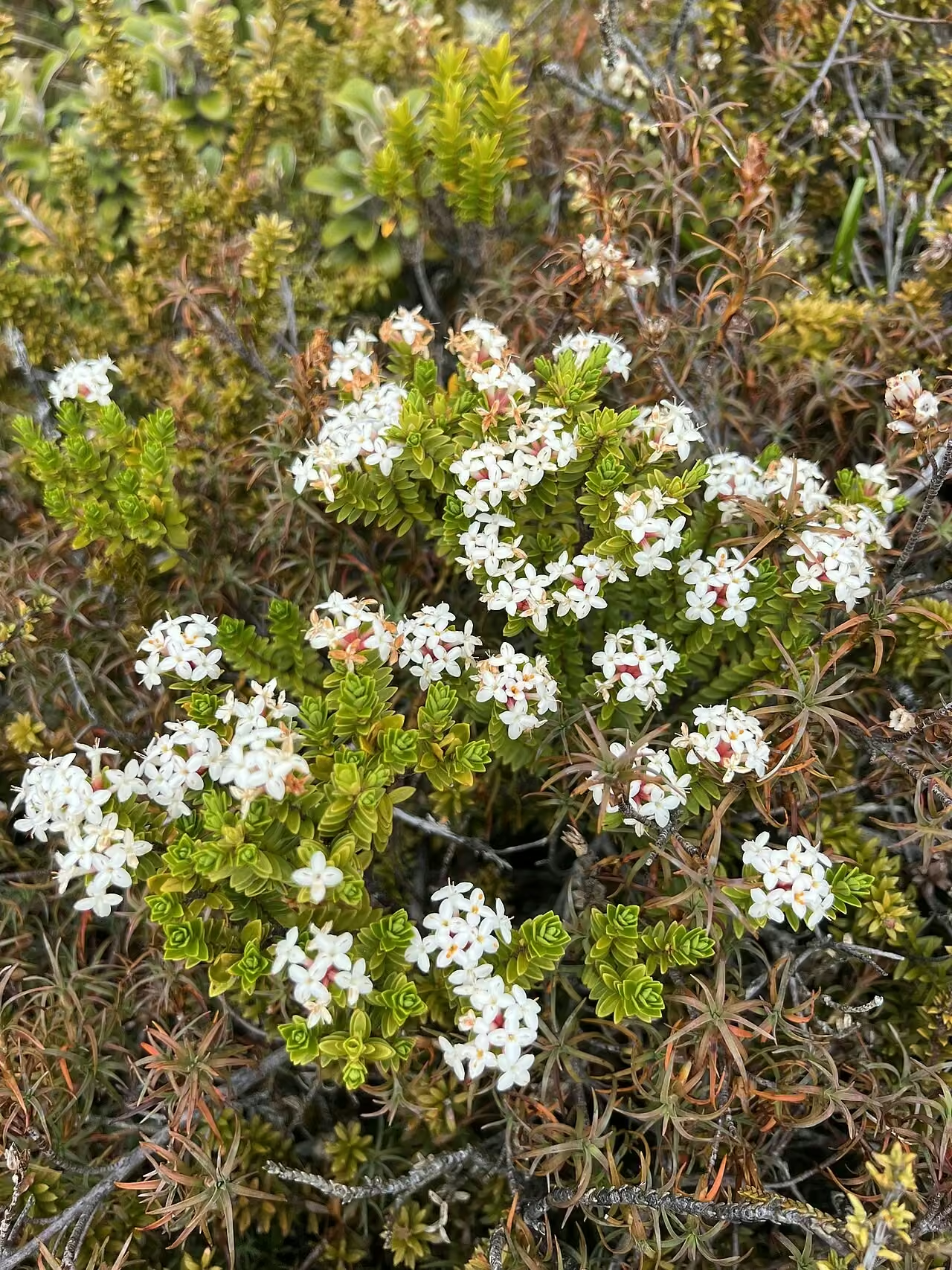
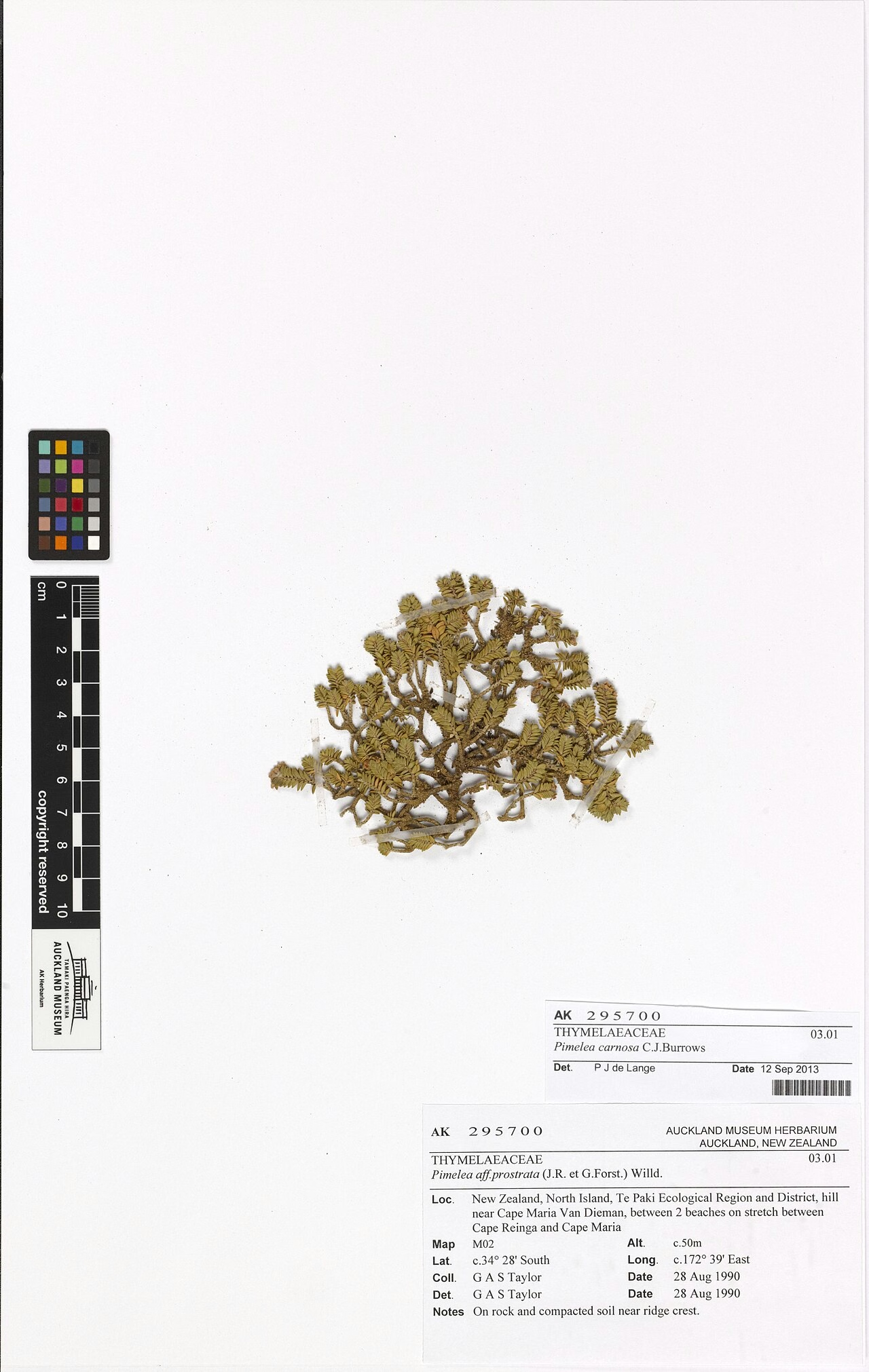
Explore other native plants that share similar characteristics or habitats with Pimelea (Pimelea gnidia), offering further insights into New Zealand's diverse flora. These related species provide context and opportunities for complementary planting in your garden.
Plant Conservation
Pimelea gnidia is ranked Not Threatened (2023). Much of its range lies within national parks and conservation land in the western South Island, including Fiordland.
As a widespread species it is not a conservation priority, but its habitats benefit from control of browsing animals and weeds in montane and subalpine areas.
Frequently Asked Questions
How do you tell Pimelea gnidia from Pimelea longifolia?
The two are very close and often hybridise. Pimelea gnidia has smaller leaves and shorter flowers, and generally grows higher, in montane to subalpine habitats.
Where does Pimelea gnidia grow?
It is endemic to the southern third of the North Island and to the western South Island from Nelson to Fiordland, mostly at montane to subalpine elevations.
Is Pimelea gnidia easy to grow?
NZPCN describes it as fickle. It can be grown from cuttings and needs full sun and good drainage, but even established plants may collapse suddenly.
Where does the name gnidia come from?
It is taken from Gnidia, a genus in the same daphne family, whose name in turn comes from Gnidus, an ancient town.
Sources and Further Reading
The botanical, growing, and conservation details for Pimelea (Pimelea gnidia) on this page draw on the New Zealand plant references below. Consult them for full technical records and the latest distribution data.