Pimelea
Pimelea concinna
Last updated:
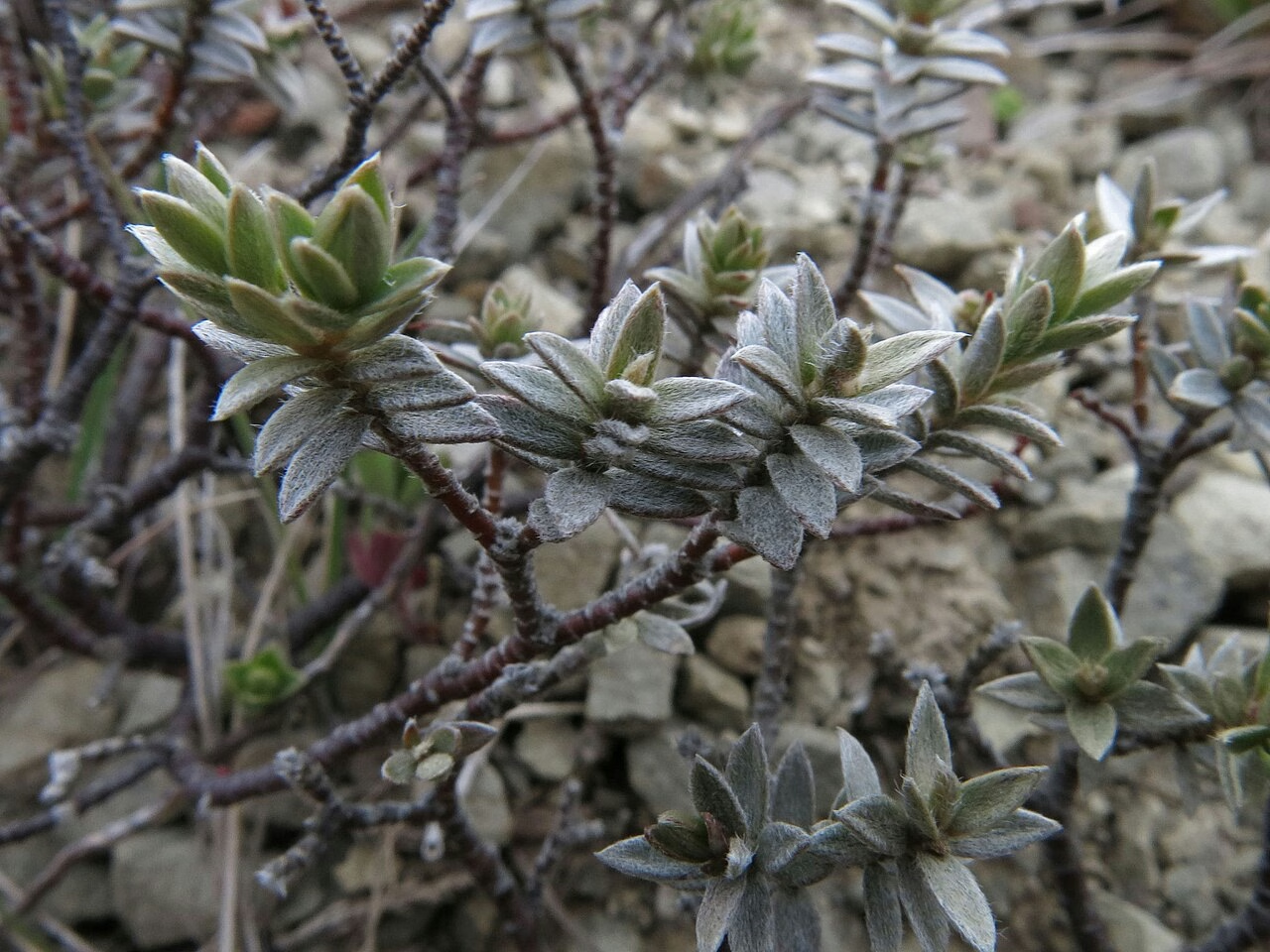
Pimelea concinna is an erect, densely branched native shrub up to 0.8 m tall and 50 to 60 cm wide, endemic to the dry hill country of the north-eastern South Island. Its small, crowded leaves are covered on both surfaces in short white hairs, giving the plant a silvery sheen, and from October to January it carries clusters of scented white flowers followed by fleshy red fruits. It grows on dry, rocky hillsides with short grassland and scrub in inland Nelson, Marlborough and North Canterbury. Its name means charming or elegant, and NZPCN notes that it grows easily from cuttings. Explore more native shrubs in our native plant guide.
Plant Description
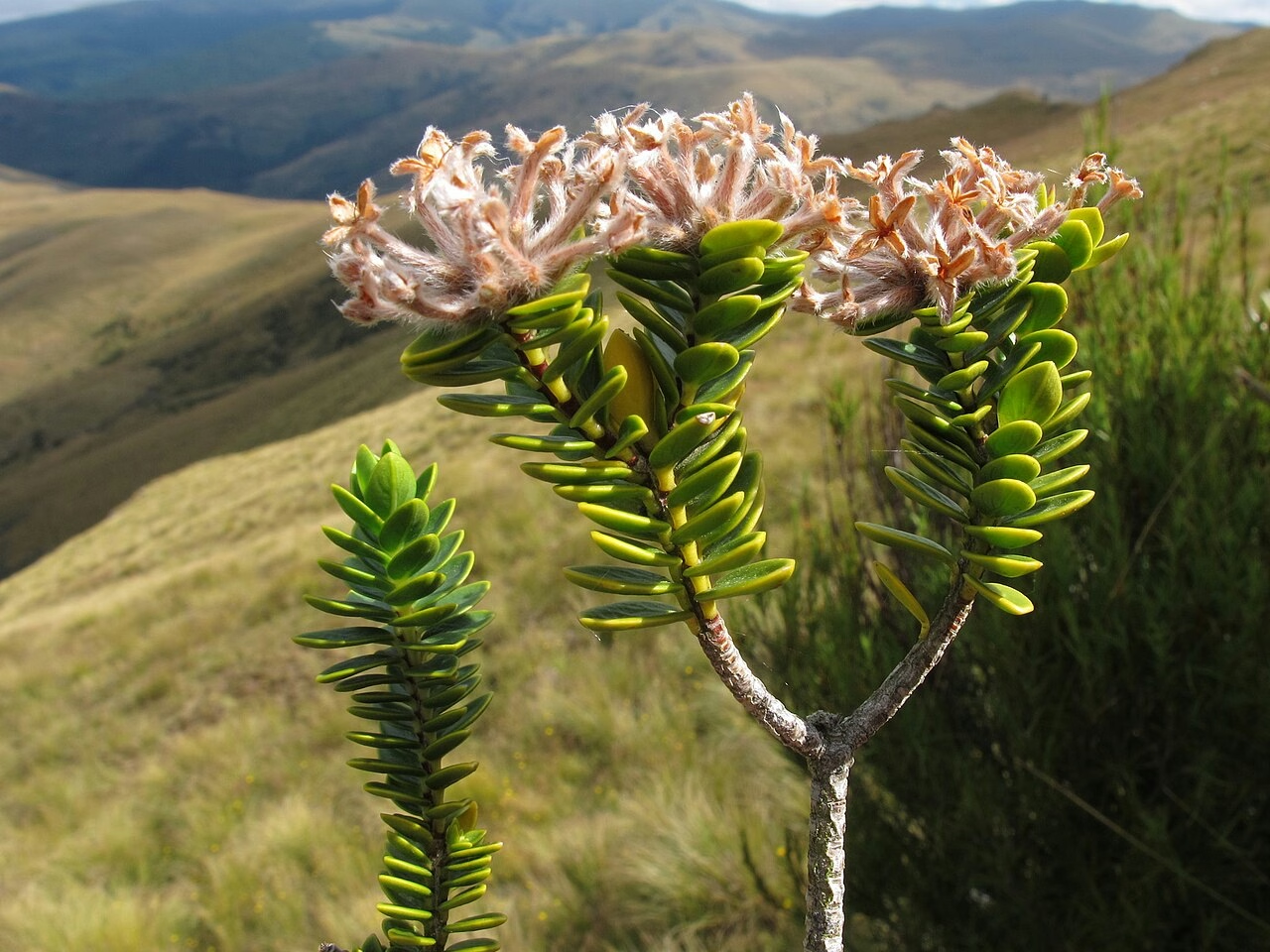
Pimelea concinna is an erect, much-branched shrub reaching 0.8 m tall and 50 to 60 cm across. The young branches are densely covered in white, closely pressed hairs, with very short internodes of 1 to 2 mm, so the leaves are crowded along the stems.
The leaves are arranged in opposite pairs, angled upwards, broadly elliptic or ovate, 5 to 8 mm long and 2.5 to 5 mm wide, with pointed tips and wedge-shaped bases. Both surfaces are densely covered in short white hairs. Clusters of 5 to 10 white, scented flowers with hairy outer surfaces form at the branch tips. The species is gynodioecious: female flowers have tubes about 3.5 mm long, while hermaphrodite flowers reach 6 mm. The fleshy fruits are ovoid, about 4 mm long, and usually red, occasionally white.
It is easily told from Pimelea aridula subsp. olga by its upright habit and red fleshy fruits; Pimelea aridula has dry brown fruits and longer, narrower leaves with notably longer, less distinct hairs.
Quick Facts
| Scientific Name | Pimelea concinna |
|---|---|
| Height | Up to 0.8 m |
| Spread | 0.5-0.6 m |
| Water Needs | Low; suited to dry hillsides |
| Light | Full sun |
| Frost Tolerance | Moderate to high; lowland to montane inland sites |
| Salt Tolerance | No information available; an inland species |
| Growth Rate | Moderate |
| Lifespan | Perennial |
Climate Best Suited to
Suits dry, sunny climates with warm summers and cold winters, like the rain-shadow hill country of inland Marlborough and North Canterbury.
Regional Suitability
| City | Climate Suitability |
|---|---|
| Auckland | Low |
| Wellington | Medium |
| Christchurch | High |
| Dunedin | Medium |
Plant Habitat
Pimelea concinna is endemic to the north-eastern South Island, where it occurs in inland Nelson, Marlborough and North Canterbury, extending just into the Waiau Uwha catchment.
It grows from lowland to montane elevations on dry, rocky hillsides with short grassland and scrub, in country that receives relatively little rain and plenty of sun.
Growing Requirements
Soil Requirements
In the wild it grows on stony, free-draining hill soils. NZPCN notes it does best in cultivation when planted in a rich, fertile but free-draining soil.
- Free-draining, stony or gravelly soil
- Reasonable fertility in cultivation
- Avoid wet, heavy soils
Light Requirements
A sun-lover that NZPCN notes is intolerant of shade.
- Full sun
- Open sites with good air movement
Water Requirements
Adapted to dry hillsides, it dislikes humidity and persistently damp conditions.
- Water young plants until established
- Little watering needed once established
- Avoid humid, sheltered spots
Planting and Establishing
Plant in full sun in a free-draining site with fertile soil, such as a sunny bank, raised bed or rock garden. NZPCN notes it is intolerant of shade and humidity, so avoid enclosed, damp corners.
It is best suited to drier eastern districts. In humid northern gardens it is likely to struggle, and a gravel mulch around the base will help keep the collar dry.
Ecological Role
Its scented white flowers appear from October to January and are visited by insects, although specific pollinators are not recorded in the sources consulted. The gynodioecious breeding system, with some plants bearing only female flowers, encourages cross-pollination between plants.
Fleshy red fruits ripen from December to May. Their colour and fleshy texture suggest dispersal by birds or lizards, but this has not been documented for this species.
Uses & Significance
Garden Uses
A neat, silvery, small shrub for dry, sunny gardens in eastern New Zealand.
- Rock gardens and gravel gardens
- Dryland and low-water plantings
- Fragrant flowers near paths
- Restoration of dry hill country within its natural range
Ecological Value
It is part of the distinctive dryland shrub flora of Marlborough and North Canterbury, a flora much reduced by farming.
- Nectar source over late spring and early summer
- Fleshy fruits are a potential food for native birds and lizards
- A component of short grassland and scrub on rocky slopes
Landscaping Uses
The silvery foliage pairs well with other dryland natives such as Coprosma propinqua, Muehlenbeckia astonii, Carmichaelia and fescue tussock (Festuca novae-zelandiae). Use it in groups on a sunny bank or among rocks for a natural look.
Its tidy, upright shape also makes it a good small specimen plant at the front of a dry border, where the scent of the flowers can be enjoyed.
Seasonal Care Calendar
Spring
Flowering starts in October with clusters of scented white flowers.
- Weed around plants
- Plant out new stock in early spring
Summer
Flowering continues to January and red fruits ripen from December.
- Water young plants during drought
- Take semi-hardwood cuttings after flowering
Autumn
Red fruits continue to ripen and drop until May.
- Collect fruits for seed trials
- Lightly tidy plants after fruiting
Winter
Plants rest through the cold, dry inland winter.
- Ensure drainage is good during wet spells
- No feeding needed
When to Prune and How Much
Pimelea concinna has a naturally neat, branched shape and needs little pruning.
If it becomes leggy, trim lightly after fruiting, cutting only into leafy stems. Old, bare wood may not reshoot reliably.
How to Grow Pimelea
NZPCN states that Pimelea concinna is easily grown from semi-hardwood cuttings, and that it does best in a free-draining, sunny site planted in rich, fertile soil. Cuttings are therefore the recommended method. No information on raising it from seed was found in the sources consulted, so seed should be treated as experimental. Because the species is gynodioecious, plants raised from cuttings will share the sex of their parent, so for seed production or restoration plantings it is worth taking cuttings from several different wild or garden plants. Material from the wild should be collected only with permission from the landowner or the Department of Conservation.
From Cuttings
Semi-hardwood cuttings taken in summer or early autumn, once the season's growth has firmed, root readily.
- Take 4 to 6 cm cuttings from firm, current-season shoots
- Remove the lower leaves, taking care not to tear the bark
- Insert into a free-draining propagating mix of pumice or perlite and fine bark
- Keep in bright light with good ventilation, avoiding humid enclosed conditions
- Pot on into a fertile but free-draining mix once rooted
From Seed
Seed is contained in the red fleshy fruits that ripen from December to May. Germination of this species has not been documented.
- Collect ripe red fruits and remove the flesh
- Sow fresh in a gritty seed mix
- Keep in a cool, sheltered spot outdoors and wait for germination
Pests & Diseases
No specific pests are recorded for Pimelea concinna. In cultivation, rot caused by humidity, shade or poor drainage is the most likely problem.
In the wild, grazing by cattle, burning and conversion of hill country through topdressing and oversowing have reduced its habitat.
Cultural Significance
No Māori name or traditional use is recorded specifically for Pimelea concinna in the sources consulted.
The species was described by H.H. Allan. Its epithet concinna is Latin for charming or elegant, and the genus name Pimelea comes from the Greek pimelē, meaning lard or soft fat, presumably referring to the oily seeds or fleshy seed leaves.
Bonus Tip
To keep this pimelea happy in a garden, think of a dry Marlborough hillside: a sunny, open bank with fast drainage and air moving around the plant. Gardeners in Christchurch, Blenheim and similar dry eastern districts will find it far easier than those in humid northern centres.
Related Plants
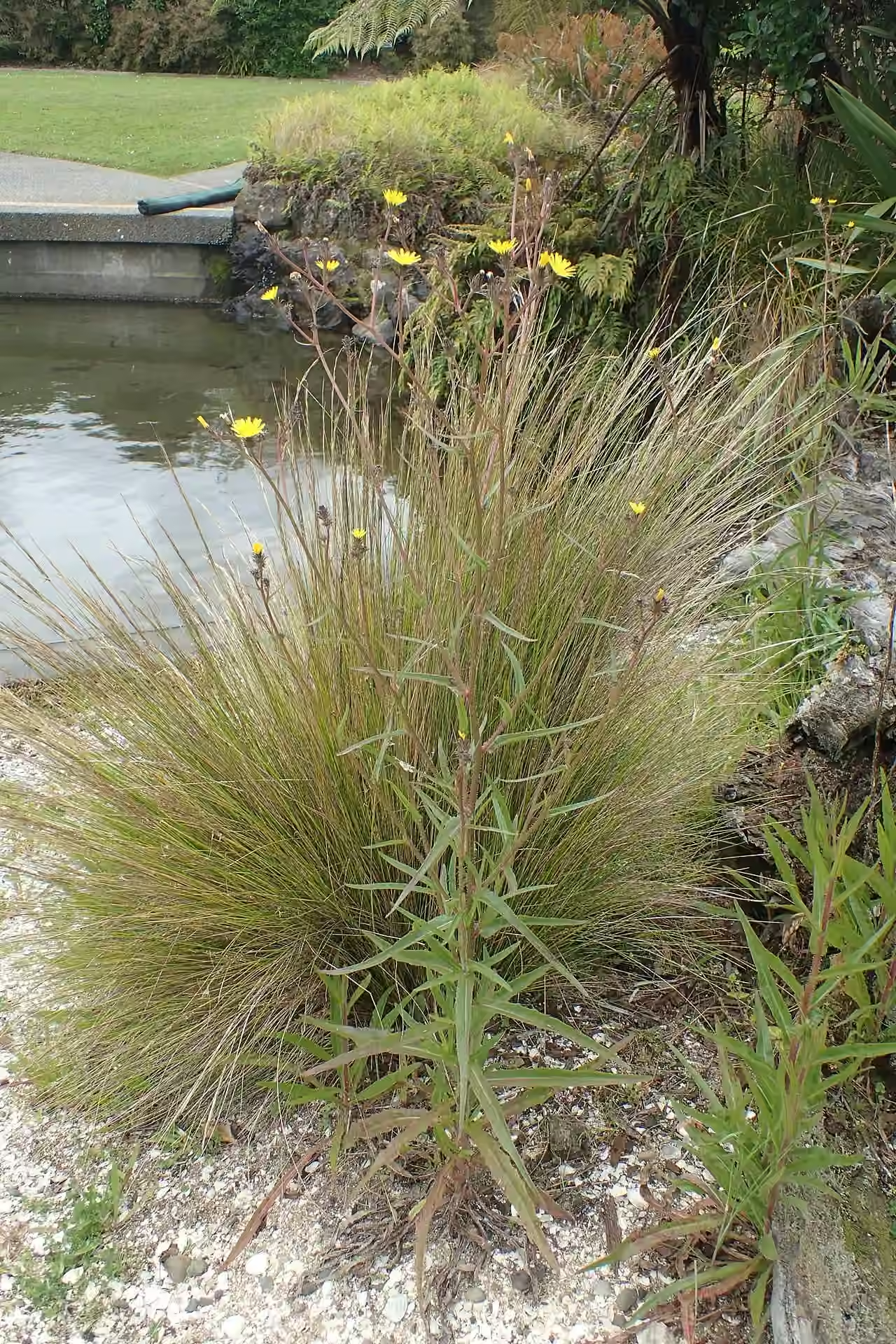
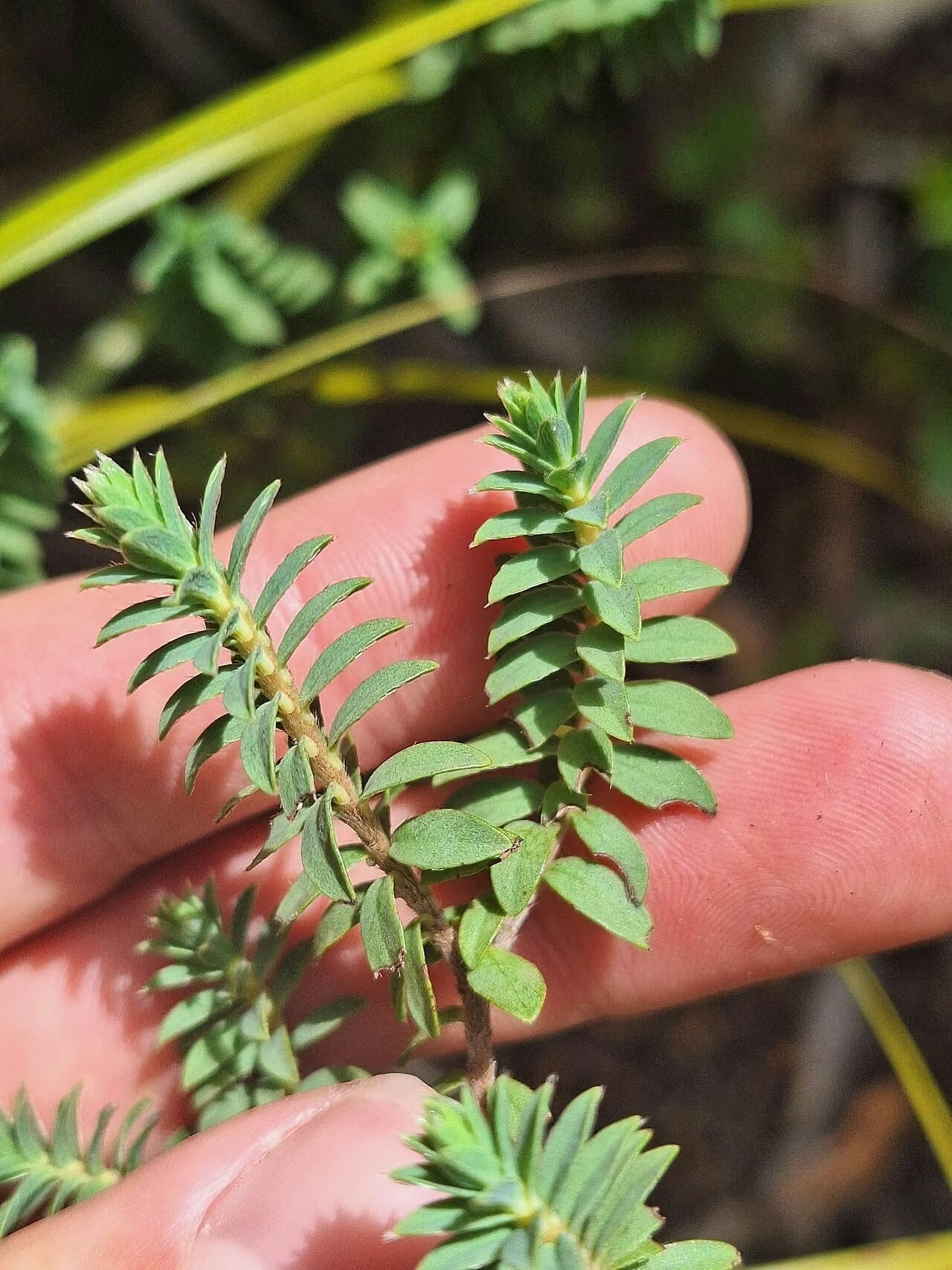
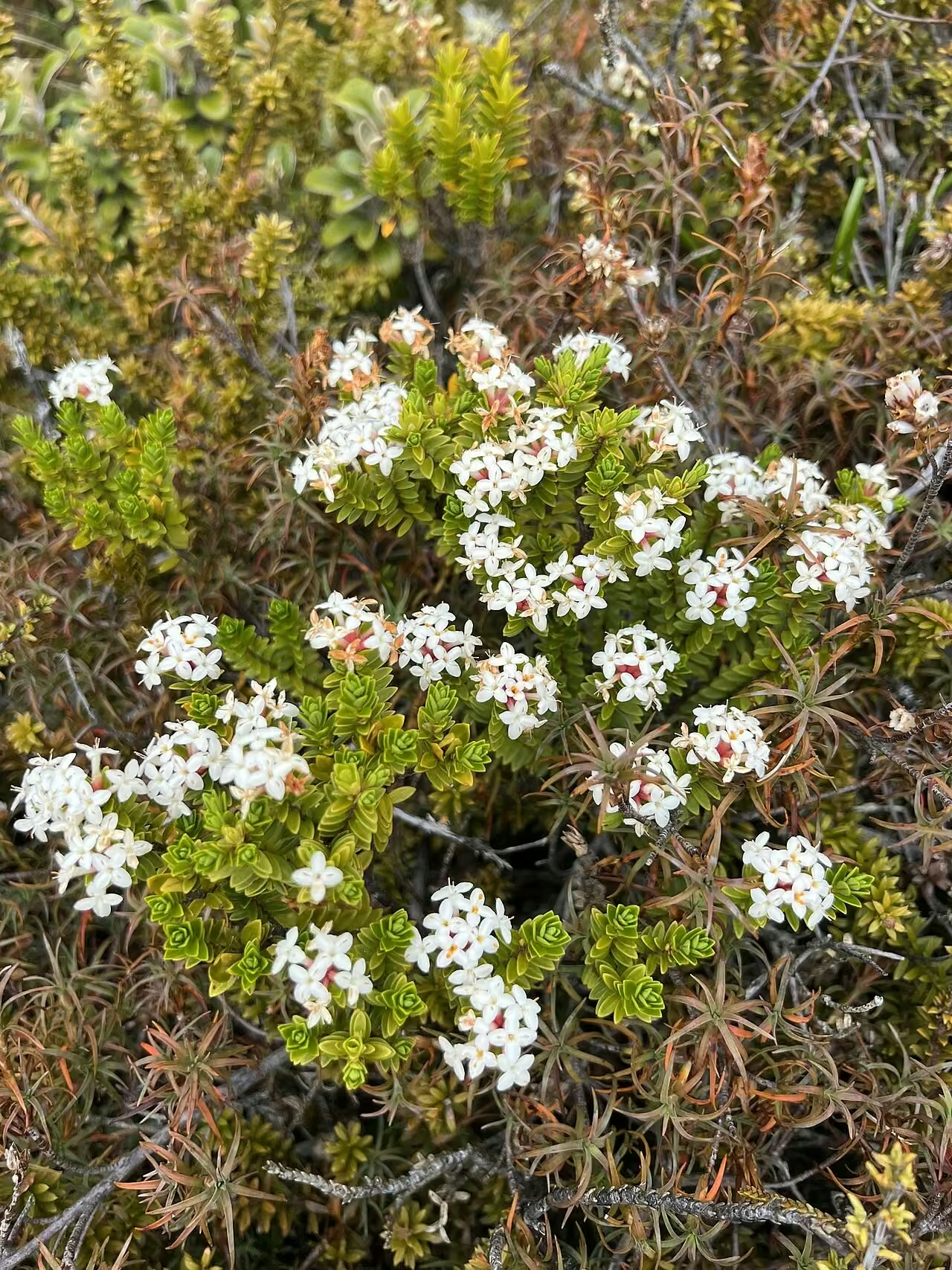
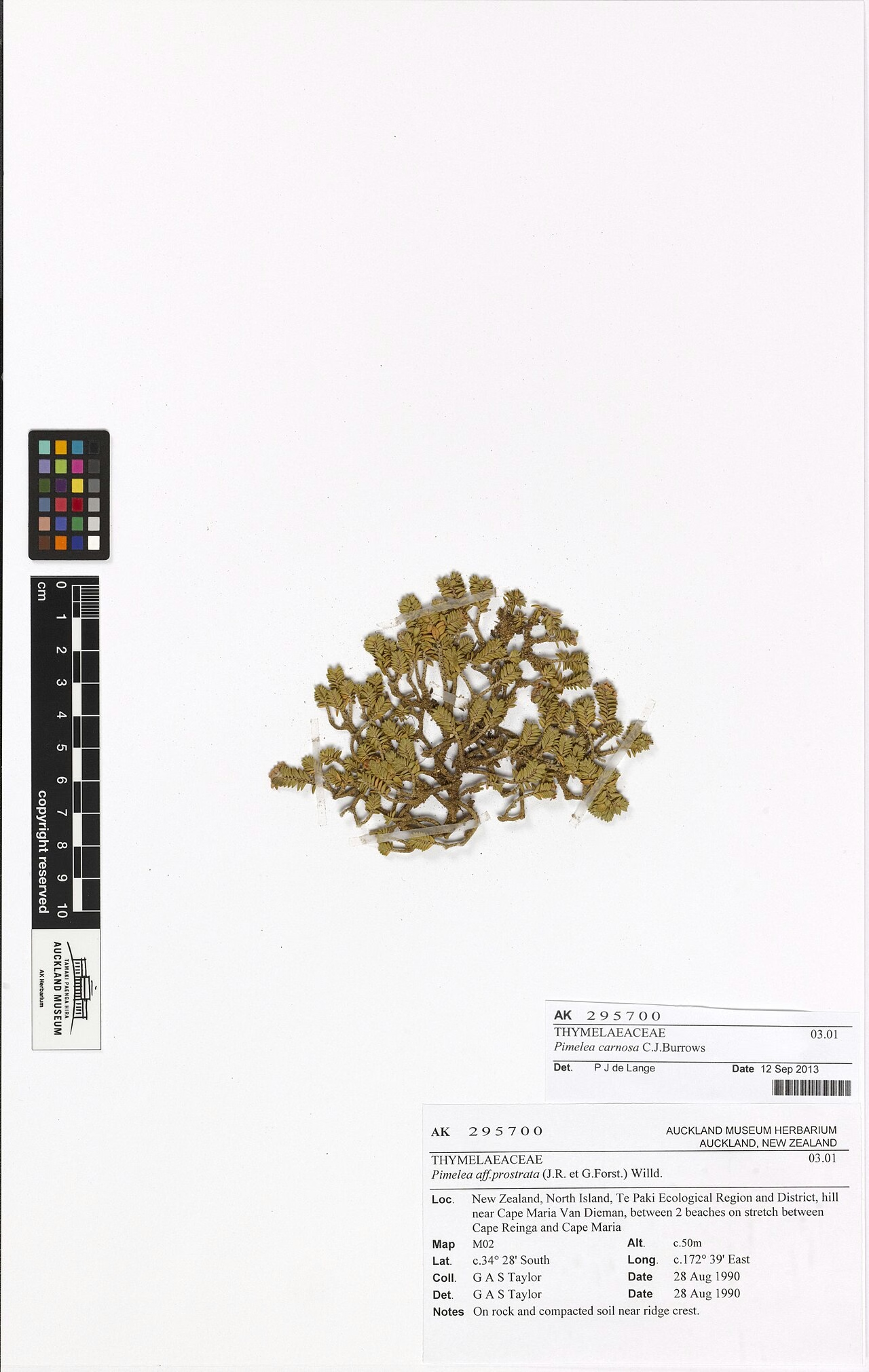
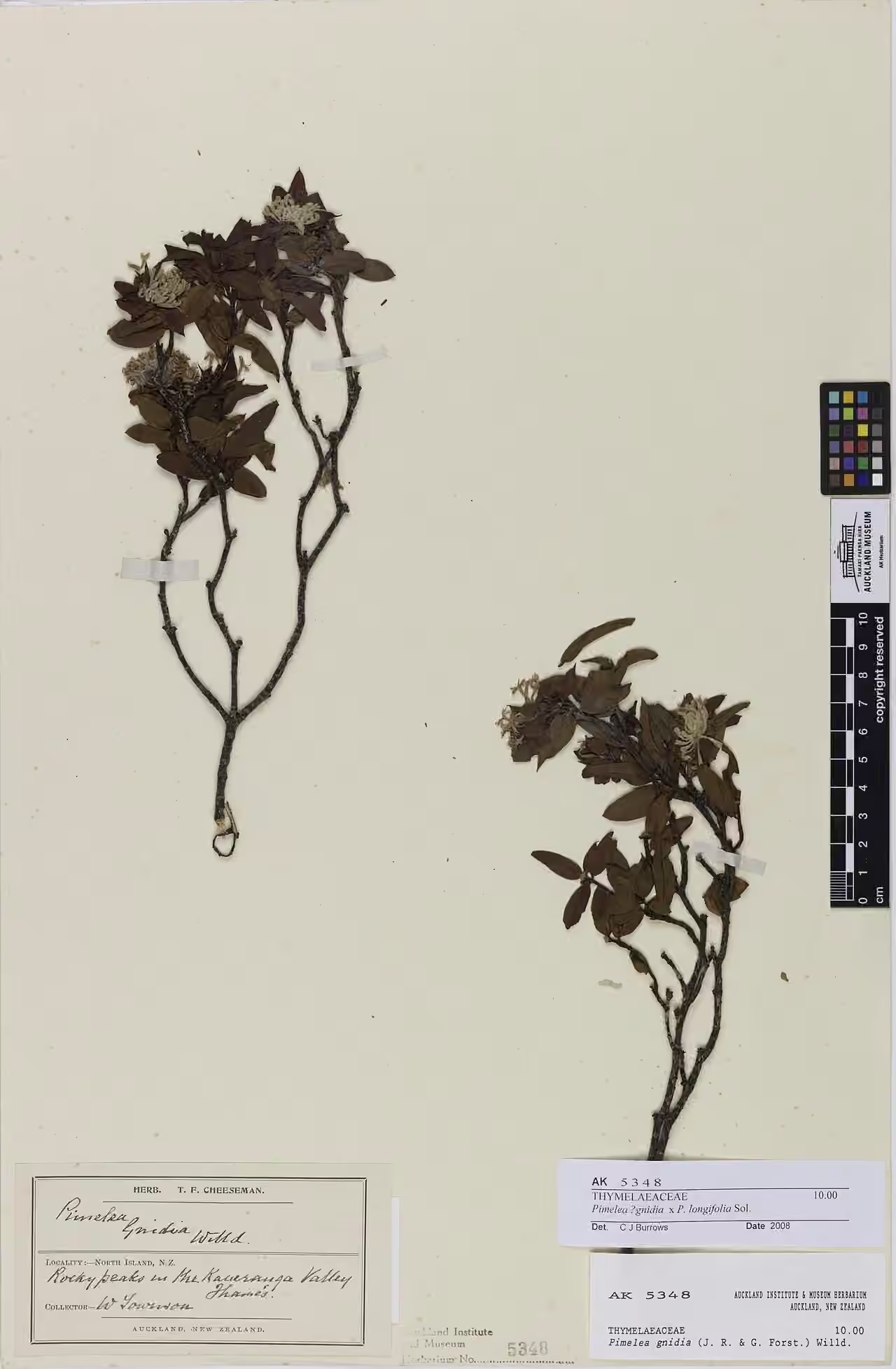
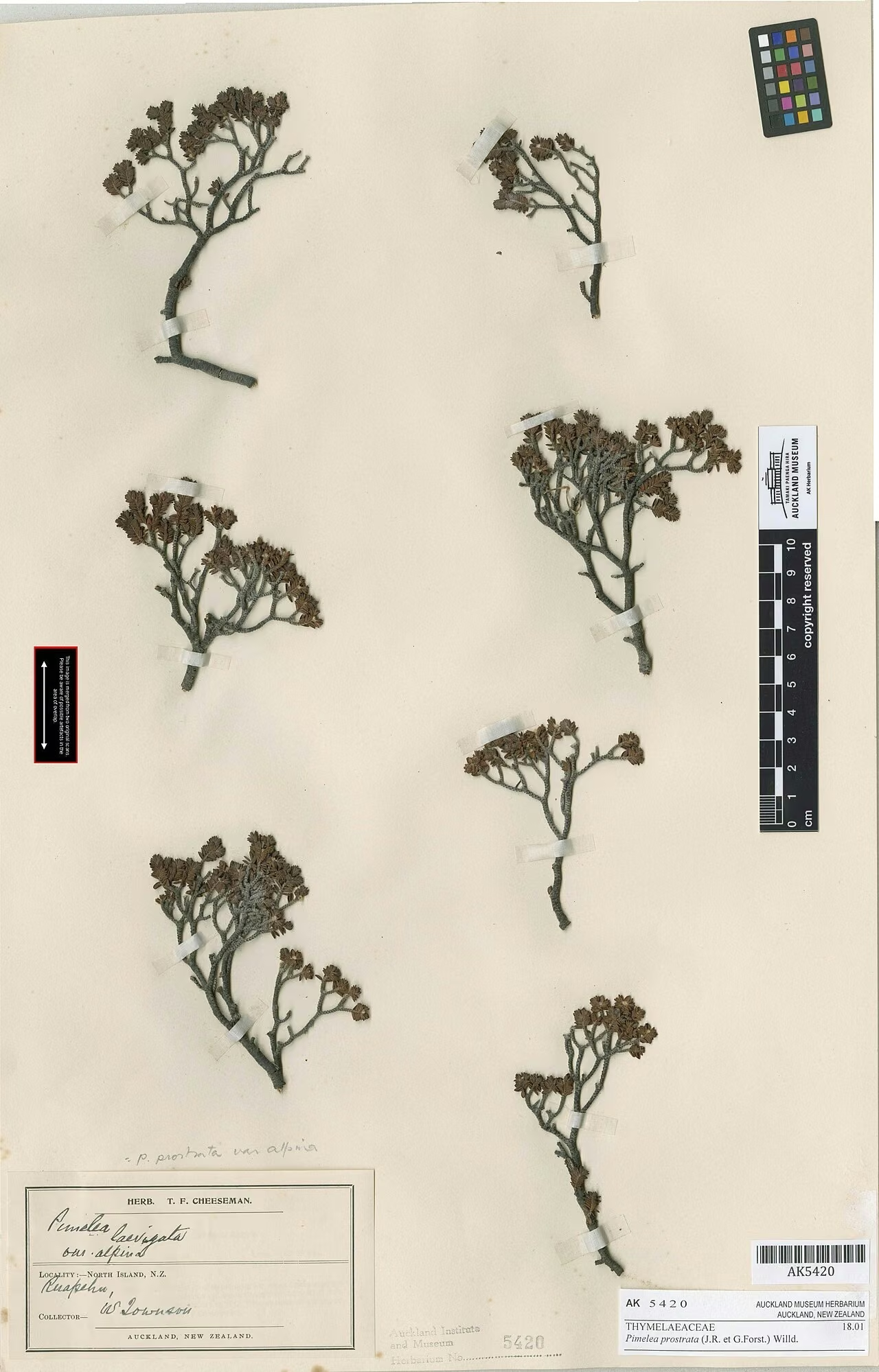
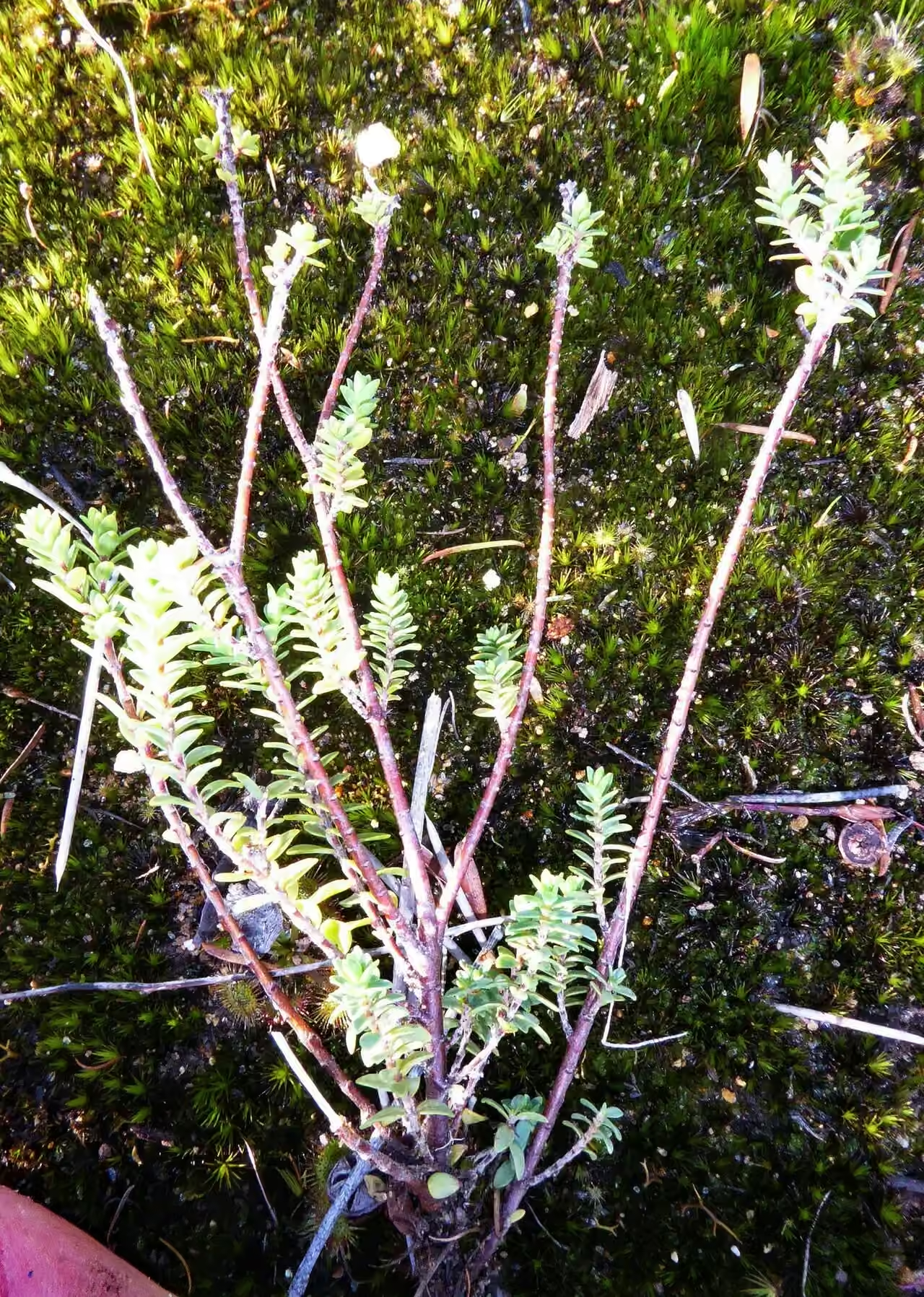
Explore other native plants that share similar characteristics or habitats with Pimelea (Pimelea concinna), offering further insights into New Zealand's diverse flora. These related species provide context and opportunities for complementary planting in your garden.
Plant Conservation
Pimelea concinna is ranked Not Threatened (2023), with the qualifiers Data Poor Size and Data Poor Trend. NZPCN notes, however, that it is declining because of land development, topdressing, oversowing, burning and cattle grazing, and that its status may need re-evaluation.
Protecting remnants of dry hill-country scrub and grassland in Marlborough and North Canterbury, and fencing out cattle from rocky slopes where it grows, would help secure it.
Frequently Asked Questions
Where does Pimelea concinna grow?
It is endemic to the north-eastern South Island, in inland Nelson, Marlborough and North Canterbury, extending just into the Waiau Uwha catchment, on dry rocky hillsides.
How is Pimelea concinna different from Pimelea aridula?
Pimelea concinna grows upright and has red fleshy fruits, whereas Pimelea aridula subsp. olga has dry brown fruits and longer, narrower leaves with longer hairs.
Can I grow Pimelea concinna in my garden?
Yes. NZPCN says it is easily grown from semi-hardwood cuttings and does best in a free-draining, sunny site, though it dislikes shade and humidity.
What does concinna mean?
Concinna is Latin for charming or elegant, a fitting name for this neat, silvery shrub with its scented white flowers.
Sources and Further Reading
The botanical, growing, and conservation details for Pimelea (Pimelea concinna) on this page draw on the New Zealand plant references below. Consult them for full technical records and the latest distribution data.