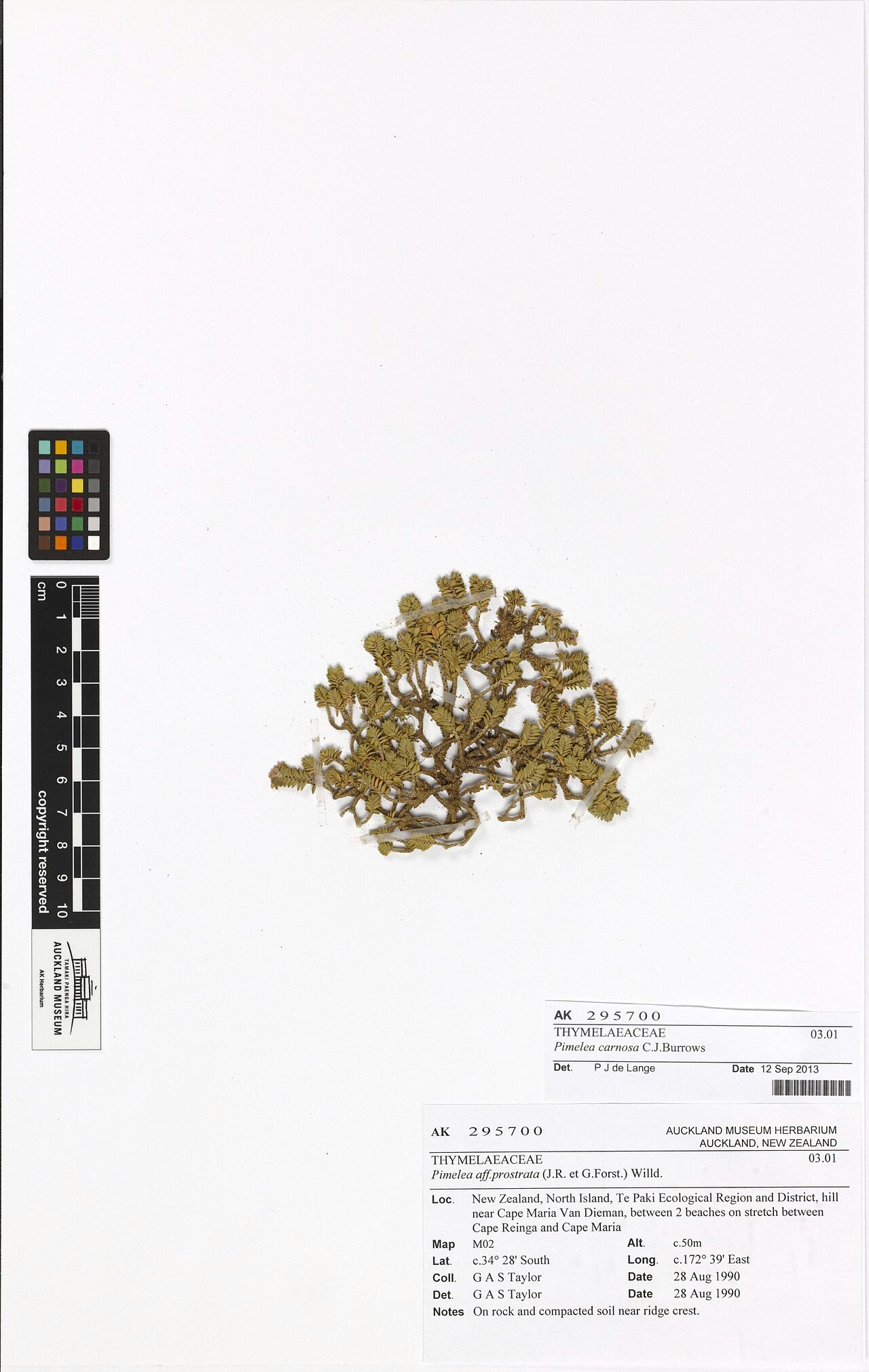
Pinātoro
Pimelea carnosa
Last updated:
Pinātoro (Pimelea carnosa) is a very low, sprawling native shrub of coastal cliffs and banks, with creeping greyish-haired stems up to 70 cm long and tiny, thick, fleshy leaves. From spring to autumn it carries clusters of fragrant white flowers, followed by fleshy white fruits. It is endemic to New Zealand, growing from Manawatāwhi/Three Kings Islands through the North Island and in the northern South Island, often in short turf on wind- and spray-swept cliff tops. It is ranked Not Threatened and is easily grown from cuttings, making it a good choice for sunny coastal rockeries. Explore more native ground covers in our native plant guide.
Plant Description
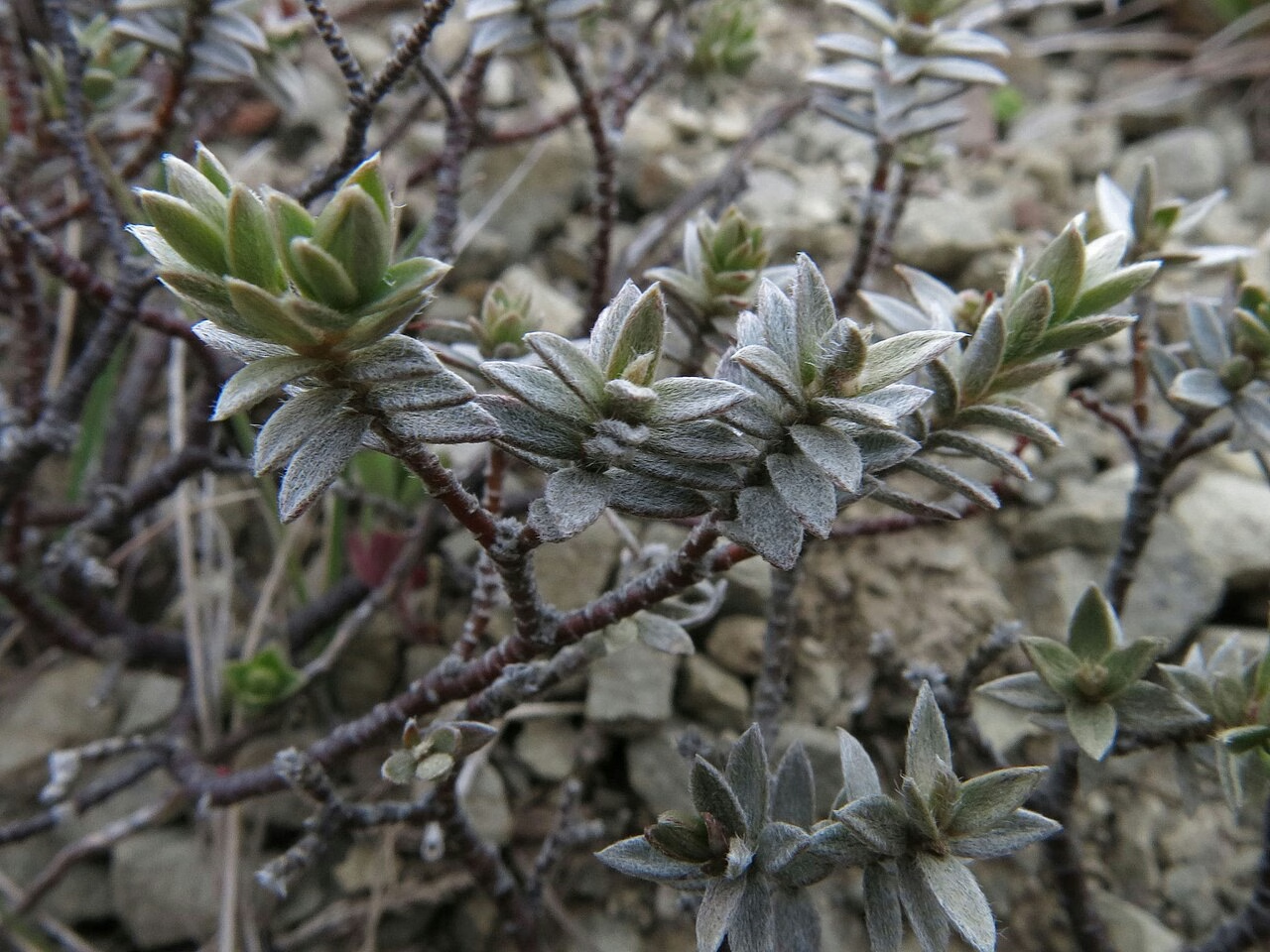
Pimelea carnosa is a very low-growing, sprawling shrub with creeping twigs up to 70 cm long. The stems are light brown and moderately covered in short, stiff, greyish-white hairs.
The leaves are thick and fleshy, as the name carnosa (fleshy) suggests, oval in outline and only 3.5 to 4.9 mm long and 1.5 to 3.5 mm wide, set in opposite pairs along the stems. Fragrant white flowers are borne in terminal clusters of four to six, and are followed by broad-ovoid, fleshy white fruits about 5 mm long.
It belongs to the Pimelea prostrata and Pimelea urvilliana complexes and was named as a separate species by C.J. Burrows in 2009. It is told from Pimelea urvilliana by its stem hairs, which are denser, shorter and greyish-white rather than bright white and long, and by the spacing of its leaves.
Quick Facts
| Scientific Name | Pimelea carnosa |
|---|---|
| Height | Very low, sprawling close to the ground |
| Spread | Stems up to 0.7 m long |
| Water Needs | Low; drought tolerant once established |
| Light | Full sun |
| Frost Tolerance | Low to moderate; a coastal species |
| Salt Tolerance | High; grows on spray-swept cliff tops |
| Growth Rate | Moderate |
| Lifespan | Perennial |
Climate Best Suited to
Suits mild coastal climates with salt-laden winds and good sunshine, from the subtropical far north to the cooler Marlborough and Canterbury coasts.
Regional Suitability
| City | Climate Suitability |
|---|---|
| Auckland | High |
| Wellington | High |
| Christchurch | Medium |
| Dunedin | Low |
Plant Habitat
Pimelea carnosa is endemic to New Zealand. It occurs on Manawatāwhi/Three Kings Islands and through the North Island, and historically in the South Island south to about Otago. Recent South Island records are limited to Nelson, north-west Nelson to Buller, and the Marlborough coast south to Ward, with an outlying site at Kaitorete Spit.
It is a strictly coastal plant, growing mainly on cliffs and banks and sometimes on dunes. It is frequently found in short turf on wind- and spray-swept cliff tops, among salt-tolerant herbs.
Growing Requirements
Soil Requirements
It grows in thin, free-draining coastal soils and sand, and needs good drainage in gardens.
- Sandy, gravelly or rocky soils
- Low to moderate fertility
- Sharp drainage; avoid heavy clay
Light Requirements
A sun-loving plant of open coastal turf.
- Full sun
- Open, exposed positions with good air movement
Water Requirements
Its fleshy leaves help it cope with dry, windy cliff-top conditions, so it needs little watering once established.
- Water young plants until established
- Allow soil to dry between waterings
Planting and Establishing
Plant pinātoro in full sun on well-drained soil. NZPCN suggests it is suitable for rockeries, and it is equally at home trailing over a low wall, bank or the edge of a container.
On heavier soils, build up a raised bed of gritty soil or plant into a slope. Gravel mulch keeps the stems dry and shows off the grey-green foliage and white fruits.
Ecological Role
Its fragrant white flowers appear from September to April and are visited by insects, though the specific pollinators of this species are not documented in the sources consulted.
The fleshy white fruits ripen from November to June. Fleshy-fruited coastal Pimelea are thought to be eaten by lizards and birds, which would disperse the seed, but this has not been specifically recorded for Pimelea carnosa.
Uses & Significance
Garden Uses
A neat, salt-tolerant ground cover for sunny, dry coastal gardens.
- Rockeries and gravel gardens
- Trailing over walls and banks
- Coastal cliff-top and dune restoration within its range
- Container and trough planting
Ecological Value
It is part of the low turf community of exposed coastal cliffs.
- Long flowering season provides nectar
- Fleshy fruits are a potential food for lizards and birds
- Helps bind thin soils on cliff tops and banks
Landscaping Uses
Its grey-green, finely textured foliage contrasts well with coastal plants such as Coprosma acerosa, Muehlenbeckia axillaris, small hebes and grasses like Poa cita. Plant it at the front of borders or among rocks where the trailing stems can spread.
In coastal restoration it is useful on open cliff-top turf and banks, where it knits with other low salt-tolerant species.
Seasonal Care Calendar
Spring
Flowering begins in September with clusters of scented white flowers.
- Weed around plants before competition builds
- Plant new stock
Summer
Flowering continues and fleshy white fruits begin to ripen from November.
- Water young plants in prolonged drought
- Take semi-hardwood cuttings
Autumn
Late flowers persist into April and fruits continue to ripen.
- Remove rooted pieces for propagation
- Keep crowns clear of leaf litter
Winter
Growth slows; the last fruits drop by June.
- Check drainage in wet weather
- Protect from hard frost in colder inland gardens
When to Prune and How Much
Little pruning is needed. Trim back over-long stems after the main flowering to keep the plant within bounds.
Avoid cutting hard into old, bare wood, which may not reshoot. Removing any dead patches promptly helps prevent rot spreading.
How to Grow Pinātoro
NZPCN reports that Pimelea carnosa is easily grown from semi-hardwood cuttings and from rooted pieces of the creeping stems, while seed germination is difficult. Vegetative methods are therefore the practical choice for gardeners and nurseries. Its sprawling stems often root where they touch the ground, so pieces with roots already attached can be separated and potted up with little effort. For coastal restoration, collect material from plants growing on the same stretch of coast to keep local forms intact, and take cuttings from several plants rather than one. Grow young plants in a gritty mix in full sun.
From Cuttings
Semi-hardwood cuttings taken from summer into autumn root readily.
- Take 5 to 8 cm cuttings of semi-hardwood stem tips
- Remove the lower leaves
- Insert into a free-draining mix of pumice or perlite and fine bark
- Keep lightly moist in bright light with good airflow
- Pot on into a gritty mix once rooted
By Layering and Rooted Pieces
The creeping stems frequently root into the soil. Separating these rooted pieces is the quickest way to obtain new plants.
- Find a stem that has rooted into the soil
- Sever it from the parent with clean secateurs
- Lift with as much root as possible and pot into a gritty mix
- Keep in light shade for a few weeks before moving into full sun
From Seed
Seed from the fleshy white fruits is difficult to germinate, according to NZPCN, so treat it as a slow and uncertain option.
- Collect ripe white fruits and clean off the flesh
- Sow fresh in a gritty seed mix and wait
Pests & Diseases
No specific pests are recorded for Pimelea carnosa. In gardens the most common cause of failure is root or collar rot in wet, poorly drained soil or humid, still conditions.
In the wild, coastal development, trampling of cliff-top turf and weeds that overgrow low coastal vegetation reduce its habitat.
Cultural Significance
NZPCN lists pinātoro as a common name for this species. The name pinātoro is also used for other low-growing Pimelea, and no traditional Māori use specific to Pimelea carnosa is recorded in the sources consulted.
The species was named by C.J. Burrows in 2009 in the New Zealand Journal of Botany as part of his revision of the Pimelea prostrata and Pimelea urvilliana complexes. The epithet carnosa means fleshy, referring to its thick leaves.
Bonus Tip
When shopping, check labels carefully: plants sold as Pimelea prostrata may include material now treated as Pimelea carnosa or other segregate species. For a coastal garden, look for stock grown from a local coastal population, which will be best adapted to salt wind.
Related Plants
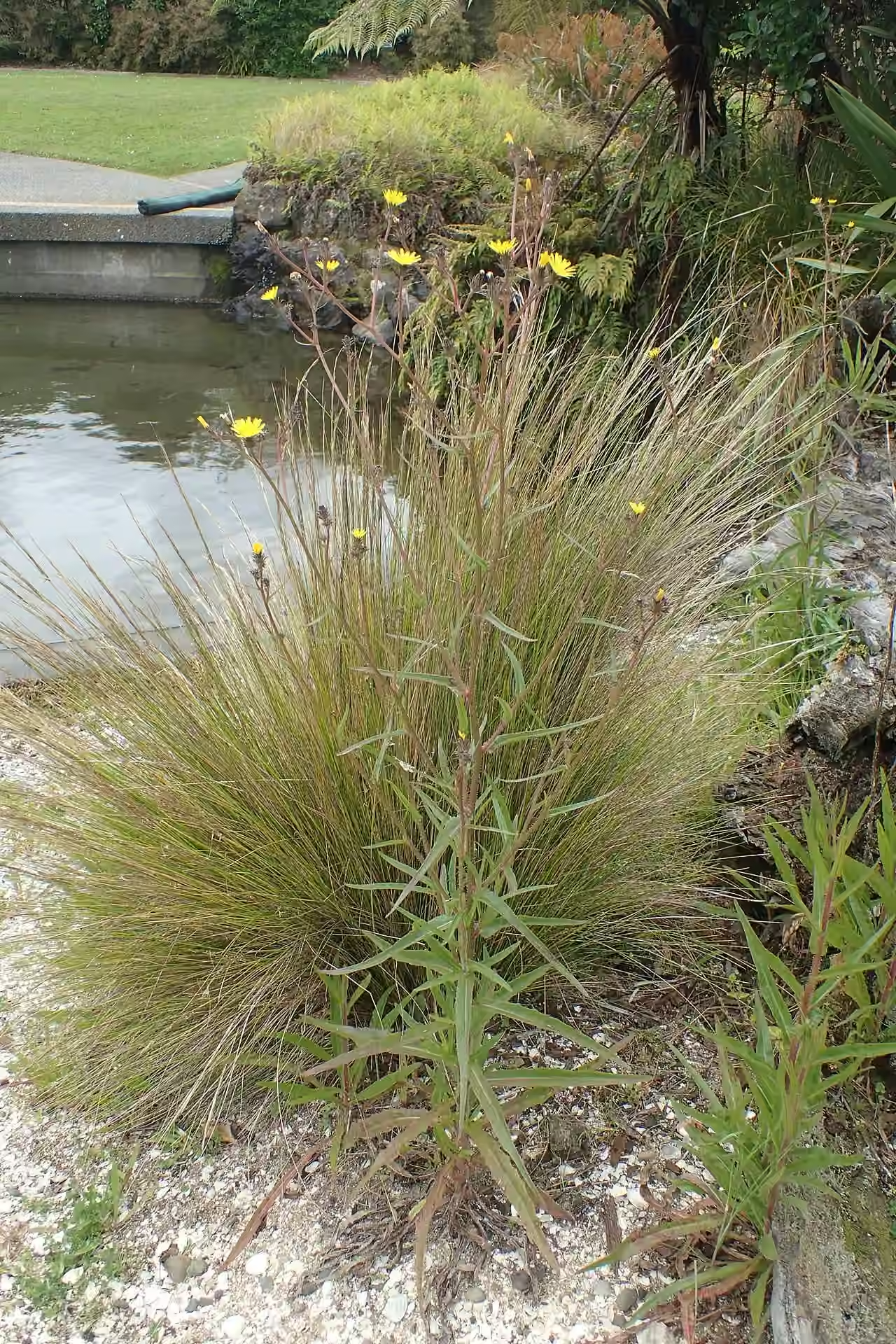
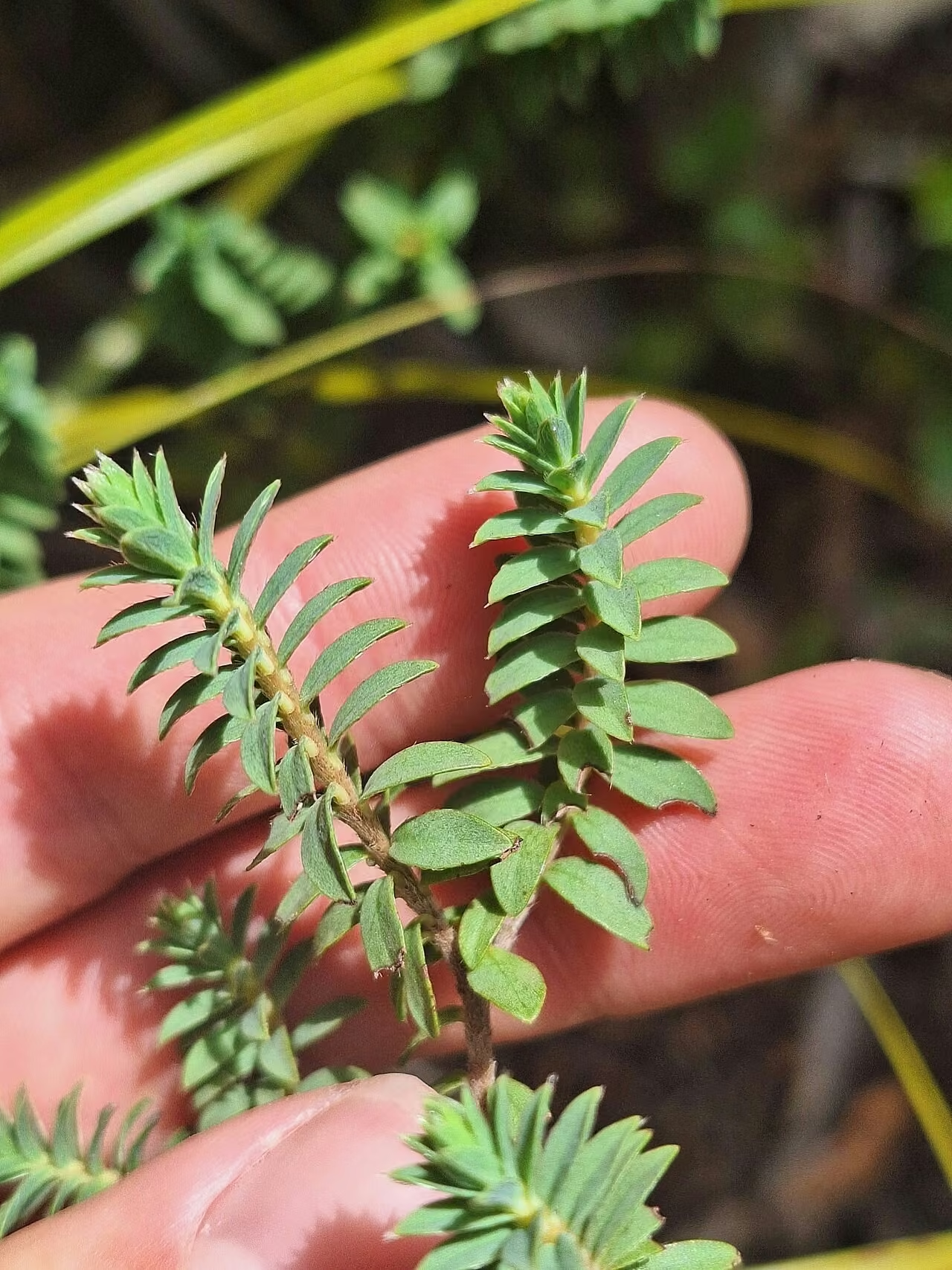
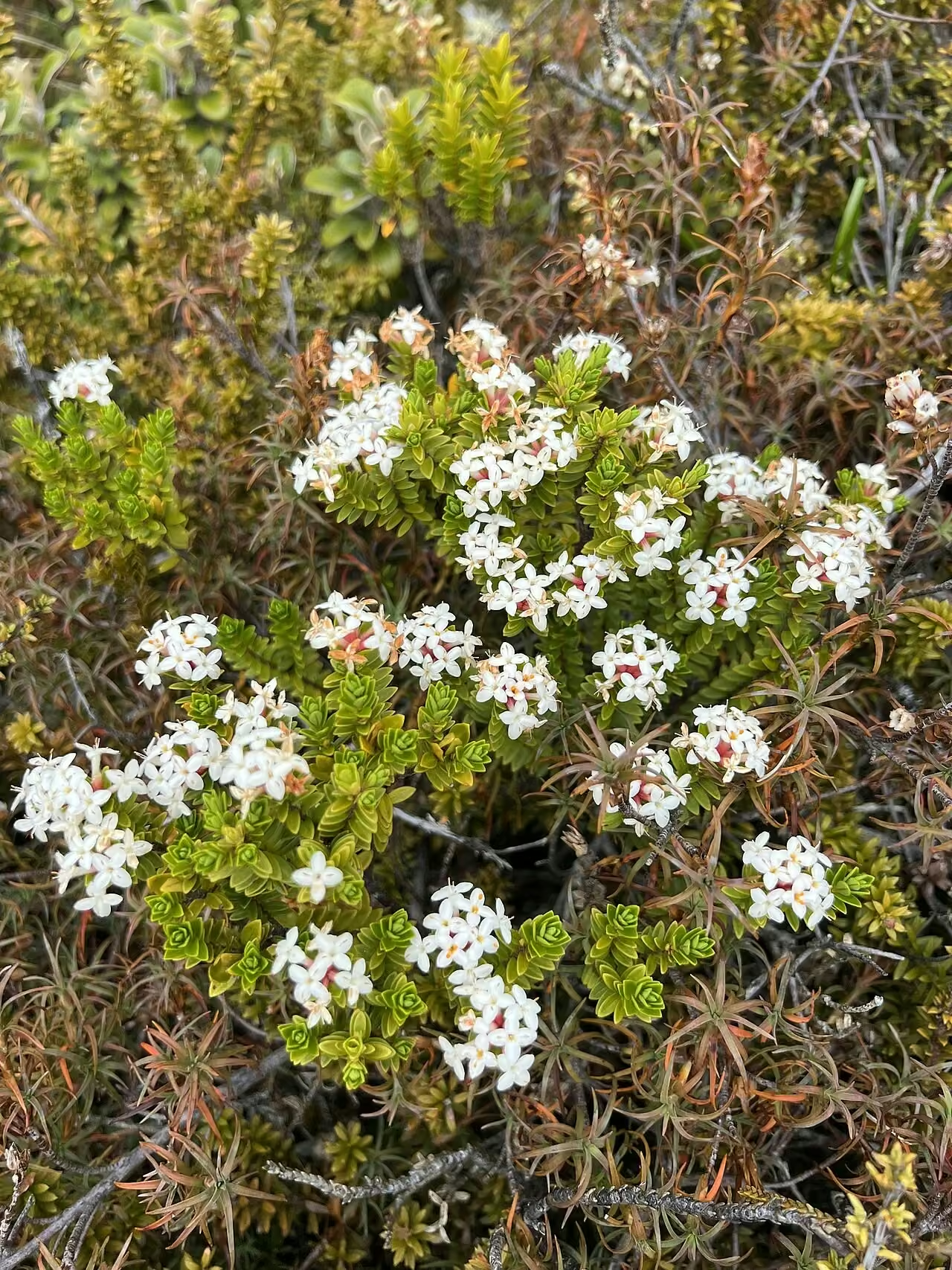
Explore other native plants that share similar characteristics or habitats with Pinātoro (Pimelea carnosa), offering further insights into New Zealand's diverse flora. These related species provide context and opportunities for complementary planting in your garden.

Plant Conservation
Pimelea carnosa is ranked Not Threatened (2023). It remains widespread around North Island coasts, although its South Island range appears to have contracted, with recent records limited to Nelson, Buller, Marlborough and Kaitorete Spit.
Protecting coastal cliff-top turf from development, trampling and weed invasion helps this species and the other low coastal plants that share its habitat.
Frequently Asked Questions
What is the difference between Pimelea carnosa and Pimelea urvilliana?
Pimelea carnosa has denser, shorter greyish-white hairs on its stems, whereas Pimelea urvilliana has bright white, long, dense hairs. The two also differ in how closely the leaves are spaced along the stem.
Is Pimelea carnosa good for coastal gardens?
Yes. It grows naturally on wind- and spray-swept coastal cliffs, and NZPCN recommends it for rockeries in full sun on well-drained soil.
How do you propagate pinātoro?
NZPCN reports it is easily grown from semi-hardwood cuttings and rooted pieces of stem, while seed is difficult to germinate.
Where is Pimelea carnosa found?
It is endemic, found on the Three Kings Islands and around the North Island coast, and in the South Island from Nelson and Buller to the Marlborough coast and Kaitorete Spit.
Sources and Further Reading
The botanical, growing, and conservation details for Pinātoro (Pimelea carnosa) on this page draw on the New Zealand plant references below. Consult them for full technical records and the latest distribution data.