Pygmy Clubmoss
Phylloglossum drummondii
Last updated:
Pygmy clubmoss (Phylloglossum drummondii) is the smallest member of New Zealand's clubmoss family, a fleshy, tufted, bright yellow-green plant only 15 to 50 mm tall that sprouts each winter from a tiny underground tuber. It is the only wholly deciduous member of the Lycopodiaceae, appearing above ground only in winter and early spring and then dying back to its tuber. In New Zealand it now survives at scattered sites in the far north between Surville Cliffs and Dargaville, mostly in recently burnt gumland scrub. It also grows in southern Australia, but in New Zealand it is ranked Threatened - Nationally Endangered. Explore more native ferns in our native plant guide.
Plant Description
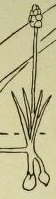
Phylloglossum drummondii is a minute, fleshy, tufted plant, bright yellow to yellow-green, arising from a small white to pale pink tuber buried in the soil. Above ground it consists of a basal rosette of narrow, linear leaves, giving it a superficially grass-like or quill-like look at first glance.
Fertile plants send up a single unbranched, leafless stalk from the centre of the rosette, topped by an erect strobilus (spore cone) 4 to 10 mm long. Each season a fertile plant can form new tubers, sometimes two at once, which carry it through the dry months and allow small colonies to build up.
No other New Zealand plant closely resembles it. Other clubmosses, such as Lycopodiella and Lycopodium, have leafy creeping or erect stems, whereas pygmy clubmoss is a tiny rosette with a naked cone-bearing stalk and disappears entirely outside the cool season.
Quick Facts
| Scientific Name | Phylloglossum drummondii |
|---|---|
| Height | 15-50 mm |
| Spread | A few centimetres; forms small scattered colonies |
| Water Needs | Moist to wet in winter and spring, dry when dormant |
| Light | Full sun, open ground |
| Frost Tolerance | Low to moderate; grows in frost-light northern lowlands |
| Salt Tolerance | No information available |
| Growth Rate | Fast seasonal growth from a tuber each winter |
| Lifespan | Perennial, deciduous, surviving summer as a tuber |
Climate Best Suited to
Suits the mild, wet-winter, warm-summer climate of Northland lowlands, where it grows actively in winter and spring and lies dormant through the dry summer.
Regional Suitability
| City | Climate Suitability |
|---|---|
| Auckland | Medium |
| Wellington | Low |
| Christchurch | Low |
| Dunedin | Low |
Plant Habitat
In New Zealand pygmy clubmoss once ranged from Te Paki to northern Waikato in the North Island and was also recorded from Marlborough and Banks Peninsula in the South Island, where it is now extinct. Today it is confined to scattered sites between Surville Cliffs and Dargaville, with Flora of New Zealand noting gumland areas around Kaitāia, from sea level to about 240 m.
Its habitat is coastal to lowland, especially open gumland or sandy soil under mānuka and other scrub that has recently been burnt. It also grows on poorly drained clay pans and podsols, on acidic and ultramafic soils, and on weathered sandstones. Outside New Zealand it occurs in southern Western Australia, South Australia, Victoria and Tasmania.
Growing Requirements
Soil Requirements
It grows in infertile, acidic, often poorly drained soils such as gumland podsols and clay pans, where competition from other plants is low.
- Acidic, low-nutrient gumland soils and podsols
- Clay pans that are wet in winter
- Ultramafic soils and weathered sandstone at some sites
Light Requirements
It needs open, sunny ground and disappears when scrub regrows and shades the site.
- Full sun on bare or sparsely vegetated ground
- Recently burnt scrub provides the open conditions it favours
Water Requirements
Growth happens in the wet season, when gumland soils are moist or waterlogged, and the tuber rests through the drier summer.
- Wet in winter and spring while in leaf
- Tolerates summer drying because it is dormant underground
Planting and Establishing
Pygmy clubmoss is not a garden plant. NZPCN states it is difficult to grow, not commercially available and should not be removed from the wild.
Conservation of the species depends on managing its natural gumland habitat, keeping sites open, rather than on planting.
Ecological Role
Like other clubmosses, its gametophyte (the small sexual generation that grows from a spore) relies on mycorrhizal fungi for nutrients, at first being non-photosynthetic and later developing a green crown. This dependence on soil fungi is one reason it is so hard to establish away from wild sites.
It is a plant of early succession. Fire or other disturbance clears the gumland scrub, and the tubers send up leaves into the newly open ground. As mānuka and other shrubs grow back, the site becomes too shaded and the colony dwindles.
Uses & Significance
Garden Uses
It has no place in ordinary gardens and should never be dug from the wild.
- Of interest to botanists and conservation workers only
- Best seen in situ on Northland gumlands in winter and early spring
Ecological Value
It is part of the distinctive, fire-adapted flora of northern gumlands, a habitat that has largely been lost to farming and forestry.
- An indicator of open, low-fertility gumland
- A rare lycophyte with an unusual tuberous, deciduous life cycle
- One of several threatened gumland specialists in Northland
Landscaping Uses
This species is not used in landscaping. Its value lies in the protection of remnant gumland habitat in Northland.
Restoration projects in gumland should aim to retain open patches among regenerating scrub, which benefits pygmy clubmoss and other small gumland plants such as orchids and sundews.
Seasonal Care Calendar
Spring
Plants are in leaf, and spore cones are produced from August to October.
- Best time to look for fertile plants
- Avoid trampling known colonies
Summer
Leaves die back and the plant survives as an underground tuber.
- Nothing is visible above ground
- Sites can dry out without harming tubers
Autumn
The tuber remains dormant until the soils become wet again.
- No visible growth
- Do not disturb soil at known sites
Winter
Sterile leaf rosettes emerge from July onwards as the gumland soils become moist.
- First leaves appear in July
- Look in open, recently burnt gumland
When to Prune and How Much
No pruning applies. The plant dies back naturally each year to its tuber.
Habitat management that keeps sites open, such as removing encroaching scrub at known colonies, is the equivalent of maintenance for this species and should be done only by conservation managers.
How to Grow Pygmy Clubmoss
NZPCN describes pygmy clubmoss as difficult to propagate and states that it should not be removed from the wild. In nature it reproduces in two ways: by spores released from the small cone at the top of the fertile stalk, and by forming new tubers, sometimes two in a single season, which allows small colonies to build up vegetatively. No reliable horticultural protocol for growing it was found in the sources consulted. The notes below describe how the plant reproduces and the general principles that would apply to any conservation work, rather than a proven method for home growers, and any such work should be done only by specialists with appropriate authority.
From Spores
Spores are produced in the strobilus between August and October. The gametophyte that grows from a spore depends on mycorrhizal fungi in its early stages, so spores sown on sterile media are unlikely to develop without the right fungal partner.
- Collect spores only under authority and only from secure populations
- Sow onto soil taken from the plant's own site so that native fungi are present
- Keep the medium moist and cool through winter
- Expect very slow development and low success
From Tubers
Each fertile plant can produce new tubers during the growing season. In the wild this vegetative increase maintains colonies between fires, and it is the most likely route for any ex situ conservation holding.
- Work only with tubers held legally in cultivation
- Keep tubers in acidic, low-nutrient gumland soil
- Water through winter and spring while in leaf
- Allow the pot to dry in summer while the tuber is dormant
Pests & Diseases
No specific pests are recorded for pygmy clubmoss. The main threats are habitat related rather than pests or diseases.
Weeds and regrowing scrub that shade the open gumland are the most serious problem at existing sites, along with any soil disturbance from vehicles or development.
Cultural Significance
No Māori name or traditional use is recorded for Phylloglossum drummondii in the sources consulted.
The species epithet honours James Drummond, a nineteenth-century botanical collector in Western Australia, where the plant is widespread. In New Zealand the species was documented in detail by Braggins (1974), whose work remains a key reference on its habitat and distribution here.
Bonus Tip
If you are searching for pygmy clubmoss, go in August to October when the small yellow-green spore cones are standing up on their stalks. Without cones the leaf rosettes are easy to mistake for a seedling sedge or grass, and outside winter and spring there is nothing above ground to find.
Related Plants
Explore other native plants that share similar characteristics or habitats with Pygmy Clubmoss (Phylloglossum drummondii), offering further insights into New Zealand's diverse flora. These related species provide context and opportunities for complementary planting in your garden.

Plant Conservation
Phylloglossum drummondii is ranked Threatened - Nationally Endangered (2023). It has declined markedly as gumland has been converted to farmland and as the remaining scrub has grown up through natural succession, and past over-collection also harmed vulnerable populations.
Protecting what remains of Northland's gumlands, keeping parts of them open, and leaving plants undisturbed are the most useful actions. Records from new sites are valuable and should be reported to the Department of Conservation or NZPCN.
Frequently Asked Questions
What is pygmy clubmoss?
Pygmy clubmoss (Phylloglossum drummondii) is a tiny lycophyte, related to the larger clubmosses, that grows from an underground tuber and produces a rosette of narrow leaves and a single small spore cone.
Where does Phylloglossum drummondii grow in New Zealand?
It is now restricted to scattered northern sites between Surville Cliffs and Dargaville, mostly in gumland scrub. It once reached northern Waikato and was recorded from Marlborough and Banks Peninsula, where it is now extinct.
Why is pygmy clubmoss so hard to find?
It is only 15 to 50 mm tall and is visible only from about July to November, spending the rest of the year as a dormant tuber underground, so it is easily overlooked.
Why does pygmy clubmoss need fire?
It favours open gumland that has recently been burnt. As mānuka and other scrub regrow and close over, succession shades it out, which is one reason it has declined.
Sources and Further Reading
The botanical, growing, and conservation details for Pygmy Clubmoss (Phylloglossum drummondii) on this page draw on the New Zealand plant references below. Consult them for full technical records and the latest distribution data.