Phyllachne
Phyllachne clavigera
Last updated:
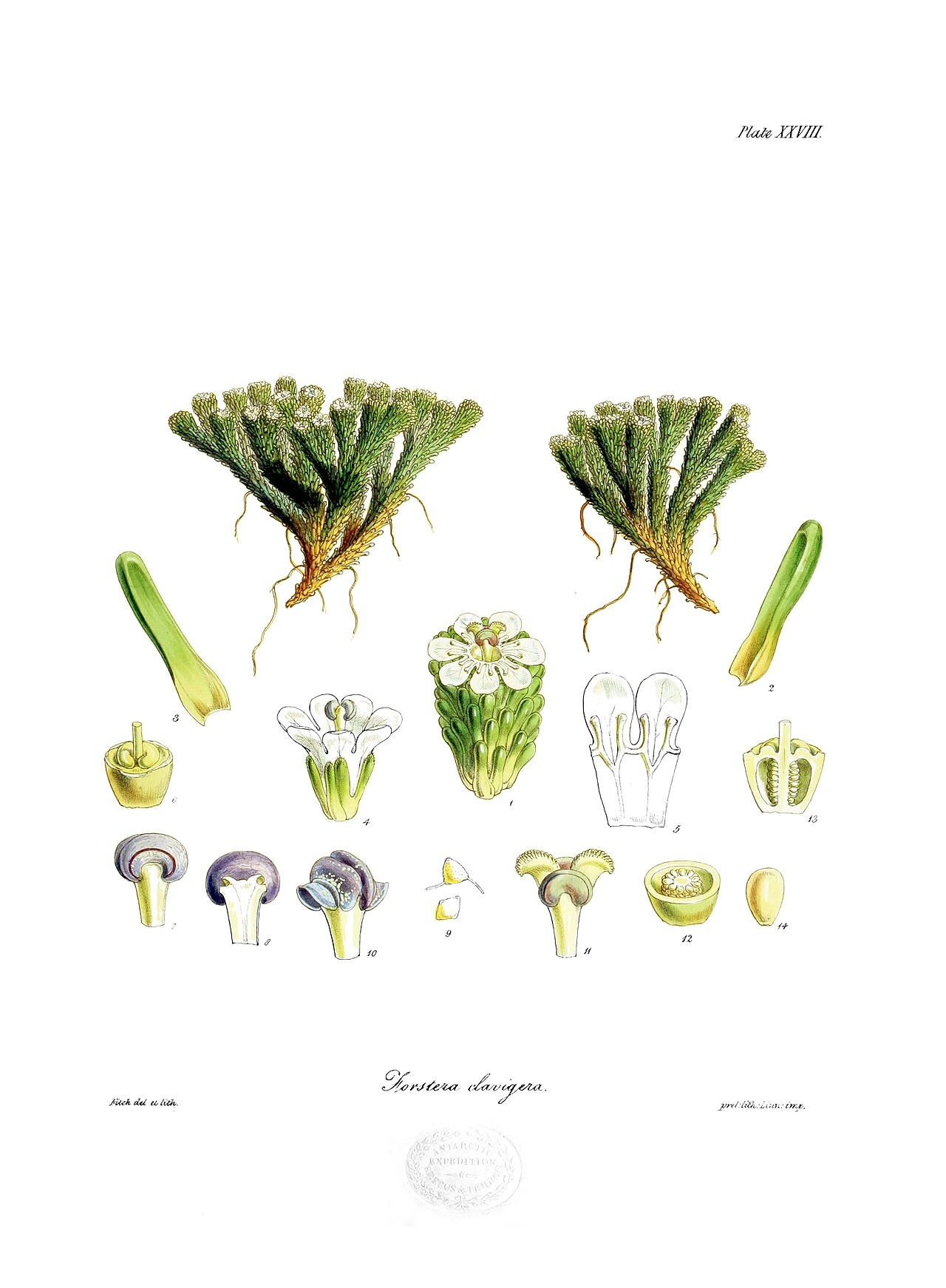
Phyllachne clavigera is a small, dense cushion plant endemic to New Zealand, belonging to the trigger plant family, Stylidiaceae. Its cushions grow to about 5 cm tall and are built from tightly packed shoots of tiny leaves, each about 5 mm long and thickened at the tip into a small knob, which gives the species its name. Small white flowers, 2-4 mm across, sit among the leaves from spring to late summer. It grows in subalpine herbfield, fellfield and rocky places in the South Island south of about latitude 42 degrees 30 minutes, and on the Auckland and Campbell Islands, where it is common on peat bogs. It is ranked Not Threatened. Explore more native ground covers in our native plant guide.
Plant Description
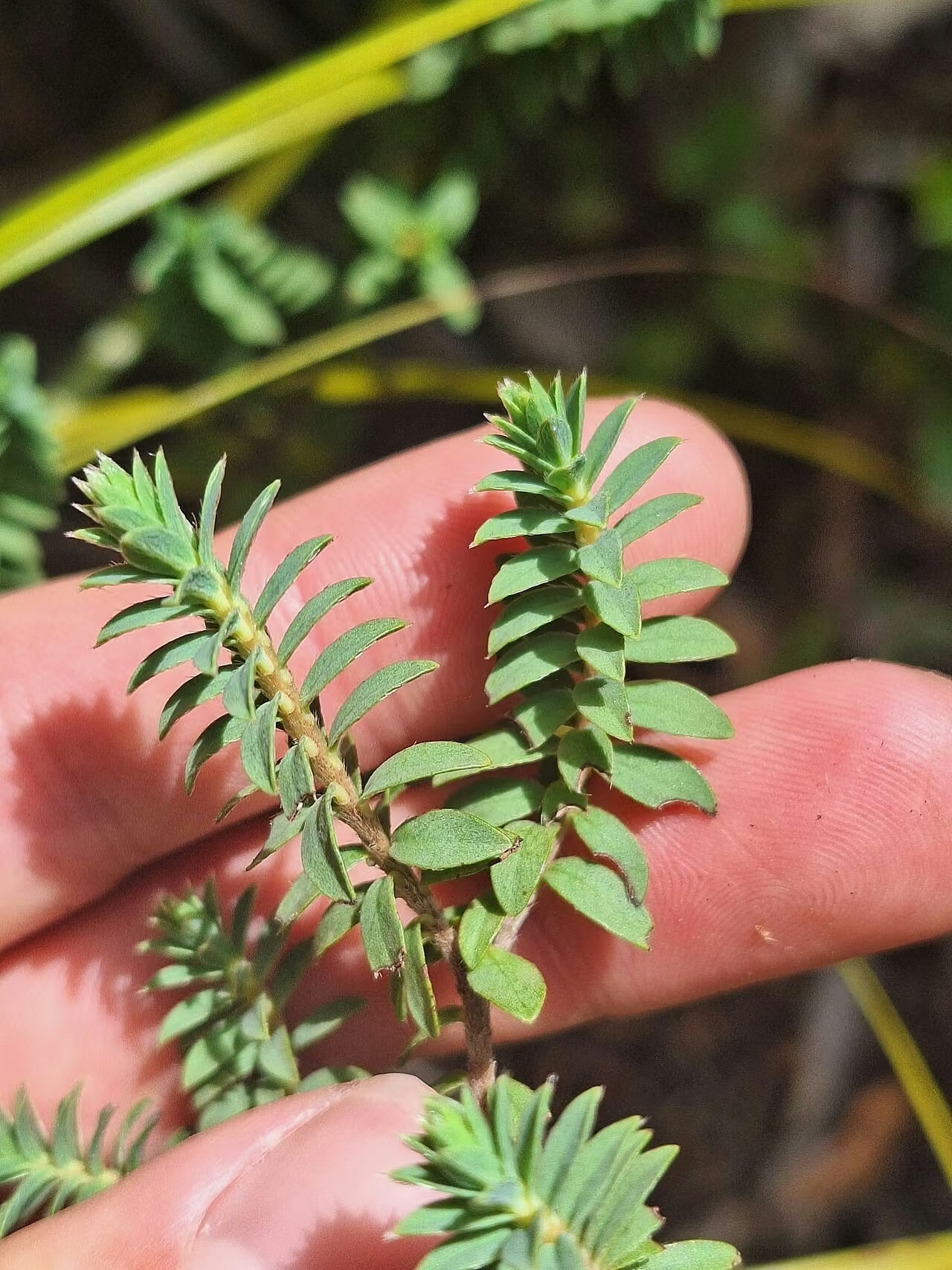
Phyllachne clavigera forms compact cushions up to about 5 cm tall. The leaves are densely crowded on short shoots. Each is linear-oblong, about 5 mm long, concavo-convex to plano-convex in section, narrowing gradually from the base and then thickening abruptly at the apex into a small knob, with a pore near the leaf tip. The genus name Phyllachne means chaff-like leaves.
Flowers are small, 2-4 mm across, with white petals divided into usually 5-7 lobes. They sit among the leaves at the surface of the cushion. The fruit is a top-shaped (turbinate) capsule containing 6-8 seeds. The Flora of New Zealand records flowering from October to March and fruiting from December to April.
New Zealand has three Phyllachne species, all cushion plants with white flowers: P. clavigera, P. colensoi and P. rubra. P. clavigera is recognised by its knob-tipped leaves with an apical pore and its small 2-4 mm flowers. P. rubra also has knobbed leaf tips but larger flowers, about 5 mm across, that usually dry dark red. The Flora of New Zealand notes past confusion between P. clavigera and P. colensoi.
Quick Facts
| Scientific Name | Phyllachne clavigera |
|---|---|
| Height | Up to about 0.05 m |
| Spread | Low cushions; width not recorded in sources consulted |
| Water Needs | High; moist peaty or boggy ground |
| Light | Full sun, open sites |
| Frost Tolerance | Very high; subalpine and subantarctic |
| Salt Tolerance | Not recorded; grows near sea level on Campbell Island |
| Growth Rate | Very slow |
| Lifespan | Perennial |
Climate Best Suited to
A plant of cold, wet, windy climates: the subalpine zone of the southern South Island and the cool oceanic climate of the subantarctic Auckland and Campbell Islands.
Regional Suitability
| City | Climate Suitability |
|---|---|
| Auckland | Low |
| Wellington | Low |
| Christchurch | Low |
| Dunedin | Medium |
Plant Habitat
Phyllachne clavigera is endemic to New Zealand. It occurs in the South Island from about latitude 42 degrees 30 minutes southward, and on the Auckland Islands and Campbell Island in the subantarctic.
On the South Island it grows in subalpine herbfields, fellfields and rocky places. On Campbell Island the Flora of New Zealand records it growing from sea level to high on the hills, and very common on peat bogs and low ridges. Cushion bogs of the western South Island ranges are the kind of habitat where Phyllachne cushions are characteristic.
Growing Requirements
Soil Requirements
It grows in wet peat, thin soils over rock and fellfield gravels. Any cultivation attempt would need a moist, acidic, low-nutrient medium.
- Peaty, acidic substrate
- Constant moisture with some aeration
- Very low fertility
- No fertiliser
Light Requirements
Its habitats are treeless herbfields, fellfields and bogs, so it grows in full light.
- Full sun in cool climates
- Cannot compete with taller plants
- Needs open ground
Water Requirements
It lives in high-rainfall, often boggy environments and needs consistent moisture.
- Keep constantly moist
- Use rainwater rather than hard tap water
- Avoid both drying out and stagnant water
Planting and Establishing
No cultivation records for this species were found in the sources consulted. It is not available from nurseries and is not a practical garden plant.
Specialist alpine growers attempting it would need a cool climate, a peaty, acidic mix and a cold, humid environment such as a bog trough in a shaded frame. Plants must never be taken from the wild.
Ecological Role
Phyllachne clavigera is a cushion former in subalpine herbfield, fellfield and bog. Cushions trap moisture and organic matter and provide sheltered microhabitats for other small plants and invertebrates.
Its small white flowers are presumably insect pollinated, but no study of its pollinators was found. On the subantarctic islands it is a common component of peat bog and ridge vegetation.
Uses & Significance
Garden Uses
Not a garden plant. It is of interest mainly to botanists and alpine plant enthusiasts.
- Botanical and research collections
- Specialist alpine house culture only
- Best appreciated in the wild
Ecological Value
As a cushion plant it helps build and stabilise peat and soil in exposed alpine and subantarctic environments.
- Common component of Campbell Island peat bogs
- Forms cushions that shelter other species
- Part of endemic subalpine flora
Landscaping Uses
This species has no established role in landscaping. In the wild it is part of mosaics of cushions and low herbs that colour alpine bogs and fellfields.
Visitors to southern alpine tops or the subantarctic islands should keep to tracks and boardwalks, since cushion plants are slow growing and easily damaged by trampling.
Seasonal Care Calendar
Spring
Flowering begins from October in its natural habitat.
- Look for tiny white flowers on the cushion surface
Summer
Peak flowering, with capsules developing from December.
- Capsules form among the leaves
Autumn
Fruit ripens through to April and flowering ends.
- Seeds are shed from the capsules
Winter
Cushions sit dormant under snow or in cold, wet conditions.
- No growth or flowering
When to Prune and How Much
No pruning is needed or advisable. Cushion plants grow very slowly and do not recover well from damage.
In any cultivated plant, only dead or rotting shoots should be carefully removed with fine tweezers.
How to Grow Phyllachne
No propagation information specific to Phyllachne clavigera was found in the sources consulted, and it is not known to be in general cultivation. The notes below describe the approaches used for small alpine cushion plants in general and should be treated as untested for this species. Seed is the most practical starting point, since the capsules hold 6-8 seeds and ripen from December to April. Any collection would need landowner and Department of Conservation permission, as most populations lie on public conservation land and the subantarctic islands are tightly protected nature reserves.
From Seed
Alpine and subantarctic seed often benefits from a period of cold before germinating. Sow fresh seed on a peaty, gritty surface and keep it cool.
- Collect ripe capsules in late summer or autumn, with permission
- Sow on a mix of peat substitute and fine grit
- Do not cover the seed, or cover only very lightly
- Keep constantly moist and outdoors over winter for cold exposure
- Grow seedlings on slowly in a cool, shaded frame
From Cuttings (Rosettes)
Individual shoots removed from the edge of a cushion can sometimes root in a humid, cool environment, though success with this species is unrecorded.
Because the cushion depends on its tightly packed shoots for protection, removing too many from one plant would expose it to damage, so take only a few from any cushion.
- Remove a few short shoots from the cushion edge in spring
- Insert into a moist mix of peat substitute and sand
- Keep cool, humid and shaded until roots form
Pests & Diseases
No pests or diseases specific to this species are recorded. Like other alpine cushions, it is vulnerable to trampling and to browsing animals in some areas.
In cultivation, warmth and stagnant air would likely cause fungal rot, which is the main problem with growing alpine cushion plants in lowland conditions.
Cultural Significance
No Māori name or traditional Māori use is recorded for Phyllachne clavigera in the sources consulted.
It was first described by Joseph Hooker as Forstera clavigera and later moved to Phyllachne by Ferdinand von Mueller. The genus Phyllachne has only four species: three in New Zealand and one in southern South America, a distribution that reflects old links between southern lands.
Bonus Tip
To tell this species from other cushions in the field, use a hand lens on a single leaf. A Phyllachne clavigera leaf narrows from its base and then swells abruptly into a tiny knob at the tip, a feature easy to see once you know to look for it.
Related Plants
Explore other native plants that share similar characteristics or habitats with Phyllachne (Phyllachne clavigera), offering further insights into New Zealand's diverse flora. These related species provide context and opportunities for complementary planting in your garden.
Plant Conservation
Phyllachne clavigera is ranked Not Threatened (2023) and has been ranked Not Threatened in every assessment since 2004.
Its alpine and subantarctic habitats are largely within protected areas. Trampling, browsing animals and long-term climate warming are potential pressures on alpine cushion vegetation generally.
Frequently Asked Questions
What does clavigera mean in Phyllachne clavigera?
Clavigera means club-bearing. It refers to the leaves, which narrow gradually from the base and then thicken abruptly into a small knob at the tip.
Where is Phyllachne clavigera found?
It grows in the South Island from about latitude 42 degrees 30 minutes southward, and on the subantarctic Auckland and Campbell Islands, in subalpine herbfield, fellfield, rocky places and peat bogs.
How do you tell Phyllachne clavigera from Phyllachne colensoi?
Both form low cushions with white flowers. Phyllachne clavigera has leaves with an abrupt knob-like thickening and a pore near the tip, while the Flora of New Zealand notes the two have been confused in some records.
Is Phyllachne clavigera endangered?
No. It is ranked Not Threatened in the 2023 New Zealand Threat Classification System and has held that ranking in every assessment since 2004.
Sources and Further Reading
The botanical, growing, and conservation details for Phyllachne (Phyllachne clavigera) on this page draw on the New Zealand plant references below. Consult them for full technical records and the latest distribution data.