Glaucous Goosefoot
Oxybasis ambigua
Last updated:
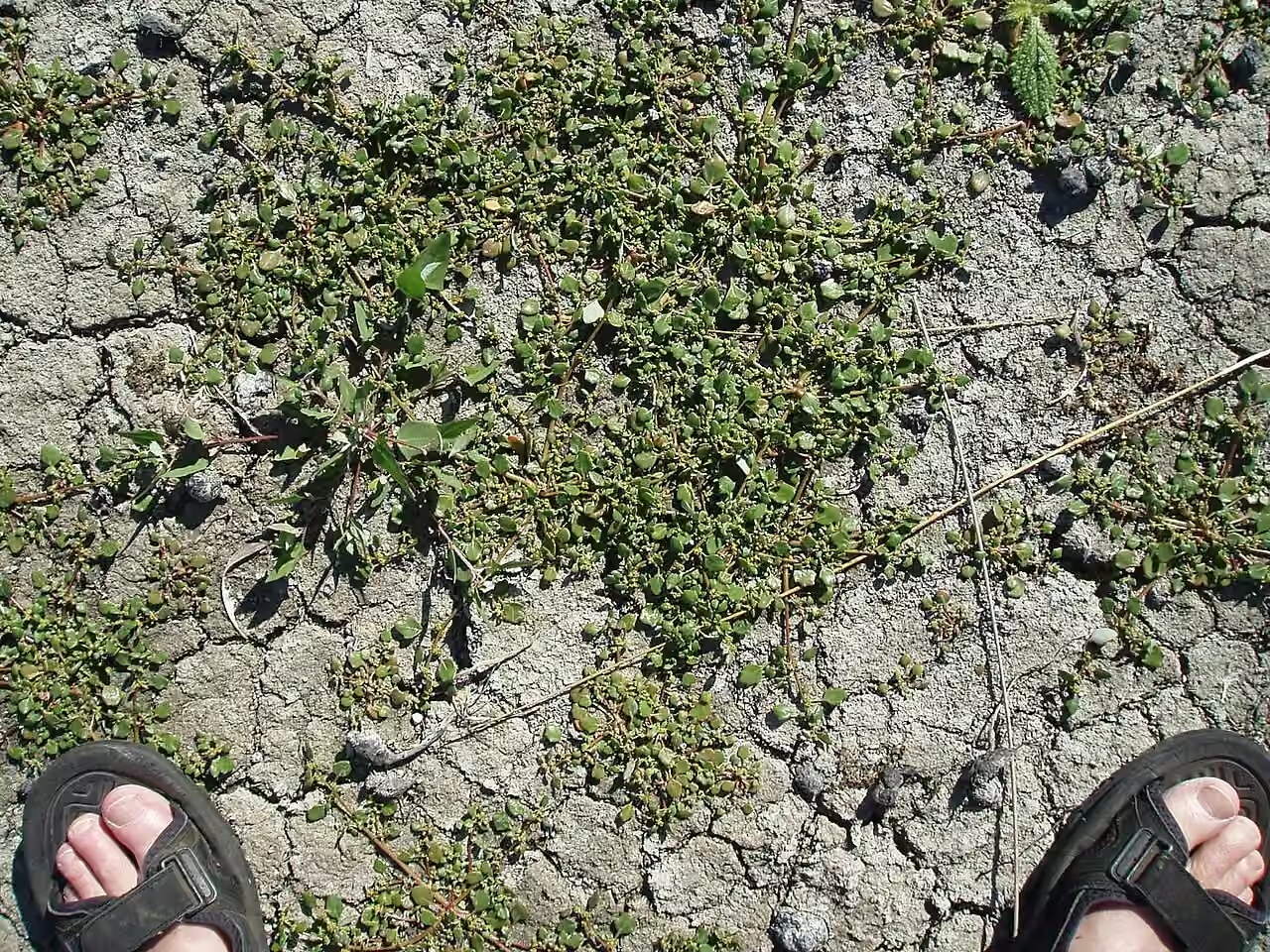
Glaucous goosefoot (Oxybasis ambigua, long known as Chenopodium ambiguum) is a small, prostrate to semi-erect herb with thick, fleshy, toothed leaves that are dark green to reddish above and whitish beneath. It grows on coastal sands and muds, in coastal and inland salt marshes, and around saline or brackish lake margins and swamps, including inland saline sites in Central Otago. Found in the North, South and Stewart Islands, it is also native to Australia and Chile. It is ranked At Risk - Declining, and several regions now list it as regionally threatened. Explore more native ground covers in our native plant guide.
Plant Description
Oxybasis ambigua is a prostrate, branching herb whose smooth, ridged stems carry many branches and can spread to about 60 cm across; some plants grow more erect to around 40 cm tall. The leaves are thick and fleshy, obovate-wedge-shaped to rhomboid or oblong, with teeth that range from widely spaced to fairly close. They are dark green to reddish above and glaucous to white below.
The tiny flowers are borne in small clusters in spikes at the leaf axils and branch tips, each with three or four perianth segments that do not fully cover the fruit. The seeds are black, shining and 1 to 1.5 mm long with rounded margins.
In earlier New Zealand literature this plant was called Chenopodium glaucum, the name of a related Northern Hemisphere species. The fleshy leaves with a white underside and its saline habitat help separate it from weedy goosefeet such as fat hen, which have thinner, mealy leaves and grow in gardens and cultivated ground.
Quick Facts
| Scientific Name | Oxybasis ambigua |
|---|---|
| Height | Up to about 0.4-0.5 m, often prostrate |
| Spread | Up to about 0.6 m across |
| Water Needs | Moist; salt marsh and lake margin sites |
| Light | Full sun |
| Frost Tolerance | Moderate; grows inland in Central Otago |
| Salt Tolerance | High; a plant of saline ground |
| Growth Rate | Fast |
| Lifespan | Annual to short-lived |
Climate Best Suited to
Grows in mild coastal climates and in the dry, continental climate of Central Otago, wherever saline or brackish damp ground occurs.
Regional Suitability
| City | Climate Suitability |
|---|---|
| Auckland | Medium |
| Wellington | Medium |
| Christchurch | High |
| Dunedin | Medium |
Plant Habitat
Glaucous goosefoot occurs in the North, South and Stewart Islands, and also in Australia and Chile. Herbarium collections include coastal Canterbury sites such as Wakanui Beach and Lake Ellesmere/Te Waihora.
It is a plant of coastal sands and muds and coastal salt marshes, and also grows inland on saline ground, especially in Central Otago. It is occasionally found around lake margins and in saline or sub-saline swamps.
Growing Requirements
Soil Requirements
It grows on saline or brackish sand, mud and silt, where salt limits competition from other plants.
- Saline or brackish sand and mud
- Inland saline soils in dry areas
- Open, sparsely vegetated ground
Light Requirements
It needs open, sunny sites; taller vegetation quickly crowds it out.
- Full sun
- Open salt marsh and lake edges
Water Requirements
Its habitats are damp at least seasonally, though inland saline sites can dry out in summer.
- Moist to seasonally wet ground
- Tolerates brackish water
Planting and Establishing
Nelson Natives grows it from fresh seed and suggests it for riparian and wetland restoration. Plant on the upper edge of a salt marsh or brackish lake margin, where there is open ground and full sun.
Because it is low growing and short-lived, plant it in drifts and allow it to self-seed rather than relying on individual plants.
Ecological Role
Oxybasis ambigua is part of the low herb community of salt marsh margins and saline flats. Its seeds are dispersed by wind and water (Thorsen et al. 2009), which suits a plant of tidal and lake margin habitats.
Specific pollinators and seed-eating animals for this species are not documented in the sources consulted.
Uses & Significance
Garden Uses
It is mainly a plant for restoration of saline and coastal wetland edges rather than ornamental gardens.
- Salt marsh and estuary restoration
- Brackish lake margin plantings
- Coastal sand and mud flat edges
Ecological Value
It contributes to the specialised flora of salt marshes and inland saline sites, both reduced and modified habitats in New Zealand.
- Native herb of saline ground
- Seed source spread by wind and water
- Indicator of intact salt marsh margins
Landscaping Uses
In coastal restoration it can fill the low, open zone at the upper edge of salt marshes alongside other salt-tolerant natives such as glasswort and sea primrose.
Its fleshy grey-backed leaves give a silvery texture to low coastal plantings.
Seasonal Care Calendar
Spring
Seedlings appear on damp saline ground.
- Control competing weeds
- Avoid trampling margins
Summer
Plants grow and flower in clustered spikes.
- Look for fleshy leaves with white undersides
- Watch for seed set
Autumn
Black seeds ripen and are shed onto mud and water.
- Collect fresh seed for propagation
- Leave some to self-sow
Winter
Most plants die back, surviving as seed.
- Leave habitat undisturbed
- Plan weed control for spring
When to Prune and How Much
No pruning is needed for this short-lived herb.
In restoration sites, focus on cutting back taller weeds that shade it rather than on the plant itself.
How to Grow Glaucous Goosefoot
Glaucous goosefoot is propagated from fresh seed, as noted by Nelson Natives, and like most goosefoots it produces plenty of seed once established. As an annual to short-lived plant it does not lend itself to division, and seed is the practical method for restoration. Seed should be collected from local populations to preserve regional genetic differences, particularly where the species is regionally threatened, and only with the landowner's or Department of Conservation's permission on public land. Seedlings must be grown in full sun and should not be overwatered with fresh water in heavy mixes.
From Seed
The seeds are small, black and shining, 1 to 1.5 mm long. Collect them when the flower clusters are dry and the seeds rub out easily.
Fresh seed is recommended. Sow in a sandy, free-draining mix with ordinary water; seedlings should then be hardened off in a sunny, exposed spot before planting into salty or brackish sites.
- Collect dry seed heads from local plants in autumn
- Rub out the seed and remove chaff
- Sow fresh onto a sandy seed mix and cover lightly
- Keep moist in a warm, sunny position until germination
- Prick out seedlings into small pots or plug trays
- Plant out into damp, open coastal or saline ground in spring
Direct Sowing of Seed
Because the seeds are naturally spread by wind and water onto bare mud, scattering fresh seed directly onto cleared, damp ground at a restoration site in autumn is a simple alternative to raising plants in pots.
- Clear weeds from a patch of open saline or brackish ground
- Scatter fresh seed over the surface in autumn
- Mark the area so seedlings are not weeded out in spring
Pests & Diseases
No specific pests are recorded. Competition from introduced grasses and weeds that invade salt marsh margins is the main issue.
Habitat loss through drainage, reclamation and development of coastal and inland saline land, and grazing of salt marsh margins, are wider pressures on this kind of habitat.
Cultural Significance
No traditional Māori name or use is recorded for glaucous goosefoot in the sources consulted.
The epithet ambigua is Latin for ambiguous or uncertain, fitting for a plant that has carried several names and was long confused with Chenopodium glaucum. The species was first described by Robert Brown from Australian material.
Bonus Tip
Turn a leaf over to confirm identification: the strongly whitened underside contrasting with a dark green or reddish upper surface is the quickest field character, and it immediately separates this native from the common weedy fat hen.
Related Plants
Explore other native plants that share similar characteristics or habitats with Glaucous Goosefoot (Oxybasis ambigua), offering further insights into New Zealand's diverse flora. These related species provide context and opportunities for complementary planting in your garden.
New Zealand Sneezewort
Centipeda aotearoana
Centrolepis strigosa
Centrolepis strigosa
Ceratocephala pungens
Ceratocephala pungens
Chaerophyllum ramosum
Chaerophyllum ramosum
Beddie's Tussock
Chionochloa beddiei
Coastal Tussock
Chionochloa bromoides
Narrow-Leaved Bush Tussock
Chionochloa cheesemanii
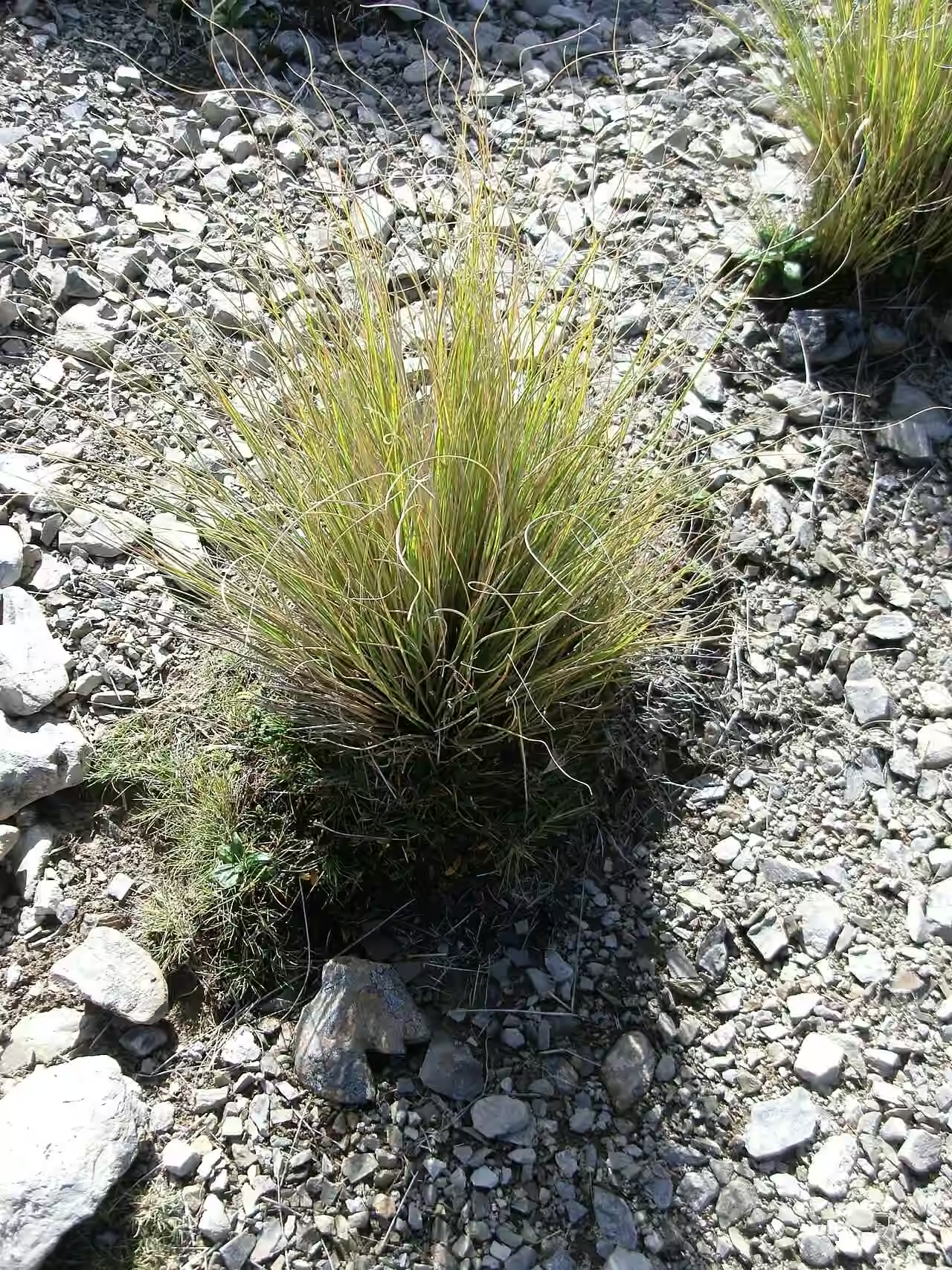
Pungent Snow Tussock
Chionochloa crassiuscula subsp. crassiuscula
Plant Conservation
Oxybasis ambigua is ranked At Risk - Declining (2023) with qualifiers including Sparse, Climate Impact, Data Poor, Population Fragmentation and Secure Overseas. It was ranked Not Threatened in 2012 under the name Chenopodium ambiguum. Regionally it is Critical in Northland (2026) and Auckland (2025), Endangered in Otago and Vulnerable in Wellington (2025).
Protecting salt marshes and inland saline sites from drainage, development and weed invasion, and including it in coastal restoration with locally sourced seed, will help it.
Frequently Asked Questions
What is the current name of Oxybasis ambigua?
It is now Oxybasis ambigua (R.Br.) de Lange et Mosyakin. Oxybasis ambigua, Chenopodium glaucum subsp. ambiguum and Oxybasis glauca subsp. ambigua are synonyms.
How do you recognise glaucous goosefoot?
Look for a low, branching herb with thick, fleshy, toothed leaves that are dark green or reddish on top and glaucous to white underneath, growing on salty coastal or inland ground.
Where does Oxybasis ambigua grow in New Zealand?
It is found in the North, South and Stewart Islands on coastal sands and muds, salt marshes, saline lake margins and saline swamps, and inland in saline sites such as those of Central Otago.
Is glaucous goosefoot threatened?
It is ranked At Risk - Declining nationally (2023), and is Regionally Critical in Northland and Auckland, Regionally Endangered in Otago and Regionally Vulnerable in Wellington.
Sources and Further Reading
The botanical, growing, and conservation details for Glaucous Goosefoot (Oxybasis ambigua) on this page draw on the New Zealand plant references below. Consult them for full technical records and the latest distribution data.