Ceratocephala
Ceratocephala pungens
Last updated:
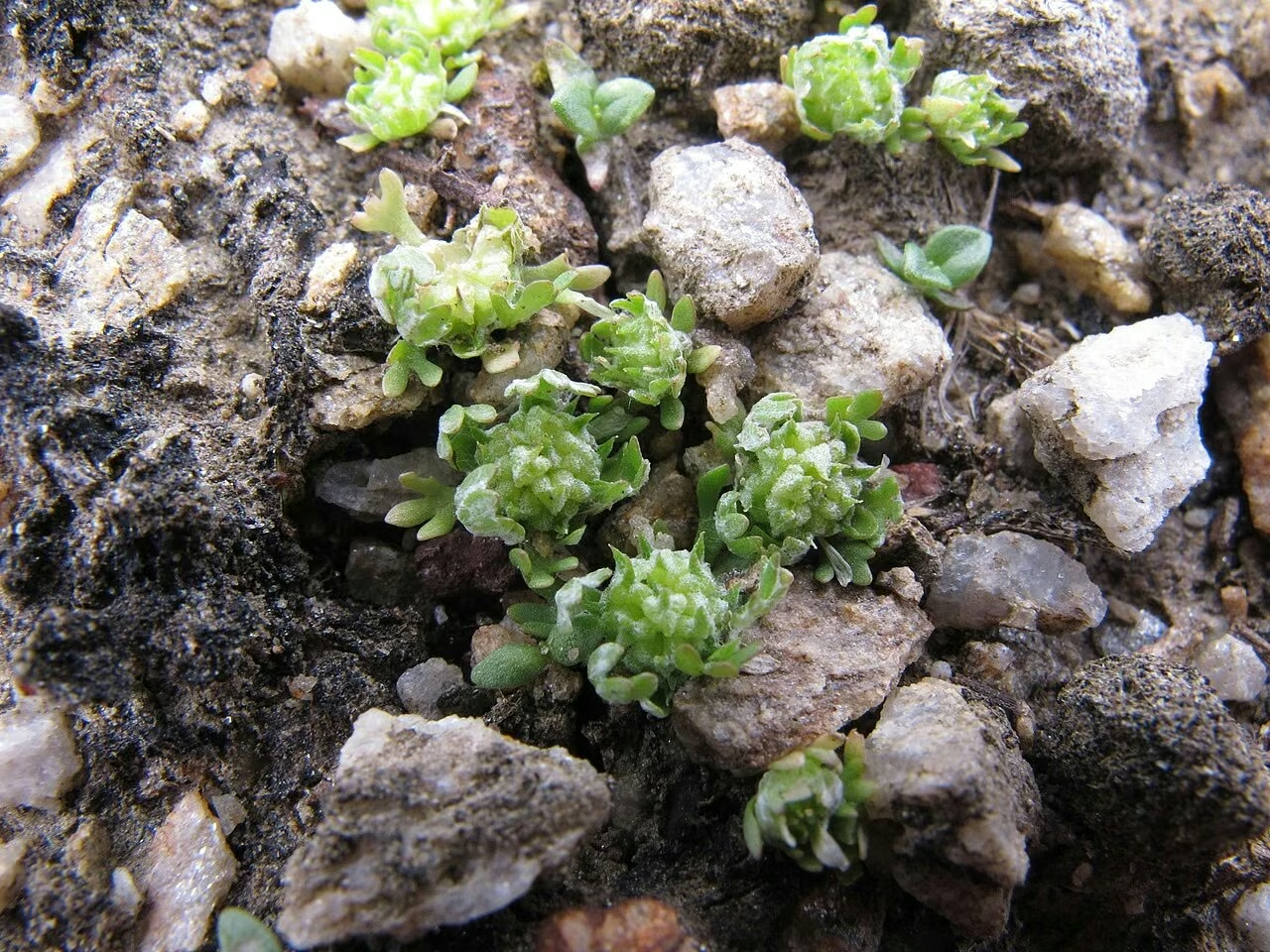
Ceratocephala pungens is one of New Zealand's smallest and rarest buttercups. A minute tufted annual only 1.5 to 2 cm tall, it has grey-green, finely woolly, finely divided leaves, solitary yellow flowers in spring and heads of 20 to 30 woolly fruits, each tipped with an erect spine-like beak. It grows on dry, open ground, often among mats of scabweed (Raoulia), in the Mackenzie Basin and Central Otago, and appears to have disappeared from the upper Waitaki River. Ranked Threatened - Nationally Critical, it is losing its open habitat as taller grasses spread through the drylands. Explore more native flowering plants in our native plant guide.
Plant Description
Ceratocephala pungens is a small tufted annual herb 1.5 to 2 cm tall. Its leaves are grey-green and finely woolly, spathulate in outline, 4 to 8 mm long and 3 to 10 mm wide, and three-lobed with each segment divided two or three times again, giving a lacy appearance.
The flowers are solitary with yellow, linear-oblanceolate petals about as long as the sepals. Each flower produces 20 to 30 woolly achenes, 3 to 4 mm long and 1.5 mm wide, each ending in an erect, tapering, spine-like beak 1 to 1.5 mm long. The fruiting head therefore looks like a tiny spiky woolly burr, the source of the epithet pungens, meaning sharp-pointed.
NZPCN lists no similar taxa in New Zealand. Its combination of tiny size, woolly divided leaves and spiny beaked fruits is distinctive among native buttercups.
Quick Facts
| Scientific Name | Ceratocephala pungens |
|---|---|
| Height | 1.5-2 cm |
| Spread | A tiny tuft a few centimetres across |
| Water Needs | Low; dry open ground |
| Light | Full sun |
| Frost Tolerance | High; grows in frosty inland basins |
| Salt Tolerance | No information available; an inland species |
| Growth Rate | Fast; completes its life cycle within months |
| Lifespan | Annual |
Climate Best Suited to
Restricted to the dry, continental climate of the inland South Island, with hot summers, cold frosty winters and low rainfall.
Regional Suitability
| City | Climate Suitability |
|---|---|
| Auckland | Low |
| Wellington | Low |
| Christchurch | Low |
| Dunedin | Low |
Plant Habitat
This buttercup is confined to the South Island, in the Mackenzie Basin and Central Otago. It was formerly known from the upper Waitaki River, where it appears to be extinct.
It is a species of dry, open ground, often growing among scabweed (Raoulia) mats. These sparse, low-growing dryland communities on stony river terraces and outwash surfaces are among New Zealand's most modified habitats.
Growing Requirements
Soil Requirements
It grows on dry, stony or gravelly, low-fertility soils with sparse plant cover.
- Open, stony or gravelly ground
- Low fertility, which keeps taller grasses at bay
- Free draining and summer dry
Light Requirements
It needs fully open ground; shading by taller grasses is the main cause of its decline.
- Full sun
- Bare or sparsely vegetated ground
Water Requirements
It germinates and grows during the cool, moist period of late winter and spring, then sets seed before the dry inland summer.
- Relies on spring moisture
- Survives summer drought as seed
Planting and Establishing
Ceratocephala pungens is not a garden plant. NZPCN describes it as difficult to grow and says it should not be removed from the wild.
Conservation effort is best directed at maintaining open, low-fertility scabweed habitat where existing populations survive.
Ecological Role
This tiny annual is part of the low scabweed and herb communities of inland South Island drylands. It needs bare, open ground among the Raoulia mats, and is crowded out when taller introduced or indigenous grasses close in.
The spiny achenes are dispersed by attaching to passing animals and possibly by seed-eating animals. As an annual, its survival depends on a reserve of seed in the soil, which helps it ride out poor years.
Uses & Significance
Garden Uses
It has no ordinary garden use because it is difficult to grow and Nationally Critical.
- Conservation and research collections only
- Of interest to dryland botanists
Ecological Value
It is one of the rarest members of the threatened inland South Island dryland flora.
- Part of the specialised scabweed community
- Indicator of open, intact dryland habitat
- A Nationally Critical species whose loss would be global if NZPCN's endemic treatment is correct
Landscaping Uses
This plant is not used in landscaping.
Dryland restoration in the Mackenzie Basin and Central Otago should keep patches of bare stony ground and avoid sowing pasture grasses where it might occur.
Seasonal Care Calendar
Spring
Plants grow and flower from October to December.
- Best time to search for flowering plants
- Avoid trampling scabweed mats
Summer
Fruit ripens from November and plants die as the ground dries.
- Spiny fruits disperse
- Seed enters the soil
Autumn
The last fruits are shed by March.
- No living plants remain
- Seed bank persists
Winter
Seed lies dormant in the soil through the cold inland winter.
- Germination follows as conditions moisten and warm
When to Prune and How Much
No pruning applies to this tiny annual.
In the wild, management involves controlling taller grasses so that open ground remains.
How to Grow Ceratocephala
NZPCN describes Ceratocephala pungens as difficult to propagate and states it should not be removed from the wild. No published propagation protocol for this species was found in the sources consulted. As an annual it can only be raised from seed, and the notes below outline the general approach used for small annual dryland herbs rather than a proven technique. Any seed collection must be done by or with the Department of Conservation under permit, taking only a small proportion of fruits so that the soil seed bank of these tiny, Nationally Critical populations is not depleted.
From Seed
Fruiting runs from November to March. The woolly, spiny-beaked achenes should be collected when dry and loosen easily from the head.
Germination cues are not known. Annuals of inland drylands often germinate after autumn or late winter rains, so seed could be sown in autumn and left outdoors in a cold position to experience winter conditions.
Keeping any cultivated plants in pots of open gravel mimics the bare scabweed ground they need, and stops weedy grasses smothering the seedlings.
- Collect a small proportion of dry achenes under permit
- Store dry and cool in paper envelopes
- Sow in autumn on the surface of a very gritty, low-fertility mix
- Cover with a thin layer of fine gravel
- Leave outdoors in a sunny, open position and keep just moist in winter and spring
- Allow plants to flower and set seed in the pot to build up a cultivated seed supply
Pests & Diseases
No specific insect pests or diseases are recorded. The primary threat is competition from taller introduced and indigenous grasses replacing open scabweed habitat.
Other pressures on inland dryland habitat generally include conversion to pasture or irrigated farmland, weed invasion and disturbance of fragile ground surfaces.
Cultural Significance
No traditional Māori name or use for Ceratocephala pungens is recorded in the sources consulted.
The species was described by the New Zealand botanist Phil Garnock-Jones in 1984. The genus name refers to the horned fruit heads, and pungens is Latin for sharp-pointed.
Bonus Tip
To spot this buttercup, search Mackenzie Basin or Central Otago scabweed flats in October or November on hands and knees. Look for tiny grey woolly tufts with a single small yellow flower, often tucked against the edges of Raoulia mats.
Related Plants
Explore other native plants that share similar characteristics or habitats with Ceratocephala (Ceratocephala pungens), offering further insights into New Zealand's diverse flora. These related species provide context and opportunities for complementary planting in your garden.
Celmisia traversii
Celmisia traversii
Large Burr Grass
Cenchrus caliculatus
New Zealand Sneezewort
Centipeda aotearoana
Centrolepis strigosa
Centrolepis strigosa
Chaerophyllum ramosum
Chaerophyllum ramosum
Glaucous Goosefoot
Oxybasis ambigua
Beddie's Tussock
Chionochloa beddiei
Coastal Tussock
Chionochloa bromoides
Plant Conservation
Ceratocephala pungens is ranked Threatened - Nationally Critical (2023) with the qualifiers Data Poor Size, Data Poor Trend, Extreme Fluctuations and Partial Decline. Its populations fluctuate widely from year to year, as expected for an annual.
In 2003 NZPCN warned that, as open scabweed habitats are replaced by taller grasses, the species could become extinct within 5 to 10 years if the trend continued unchecked. Protecting remaining dryland sites from intensification and controlling grasses and weeds are essential.
Frequently Asked Questions
What is Ceratocephala pungens?
It is a minute annual buttercup in the family Ranunculaceae, 1.5 to 2 cm tall, with grey-green woolly leaves, small yellow flowers and spiny-beaked fruits.
Where does Ceratocephala pungens grow?
It is found on dry open ground, often among scabweed mats, in the Mackenzie Basin and Central Otago in the South Island, and was formerly known from the upper Waitaki River.
Why is Ceratocephala pungens Nationally Critical?
Its open scabweed habitats are being replaced by taller introduced and native grasses, and NZPCN warned in 2003 that the species could become extinct within 5 to 10 years if this continued.
When does Ceratocephala pungens flower?
It flowers from October to December and fruits from November to March, completing its short annual life cycle in spring and early summer.
Sources and Further Reading
The botanical, growing, and conservation details for Ceratocephala (Ceratocephala pungens) on this page draw on the New Zealand plant references below. Consult them for full technical records and the latest distribution data.