Narrow-Leaved Bush Tussock
Chionochloa cheesemanii
Last updated:
Narrow-leaved bush tussock (Chionochloa cheesemanii) is a tall, dark green tussock grass endemic to New Zealand. Its rough leaves reach 80 cm long on brown, hairy sheaths, and its flowering stems can stand up to 2 m tall. Unlike most of its snow tussock relatives, it is associated with beech forest as well as grassland, growing mostly between about 900 and 1225 m. It occurs in the central North Island ranges from Lake Waikaremoana to the southern Wellington ranges, and in Nelson, northern Marlborough and the Kaikōura mountains. It is classed as Not Threatened. Explore more native grasses and flaxes in our native plant guide.
Plant Description
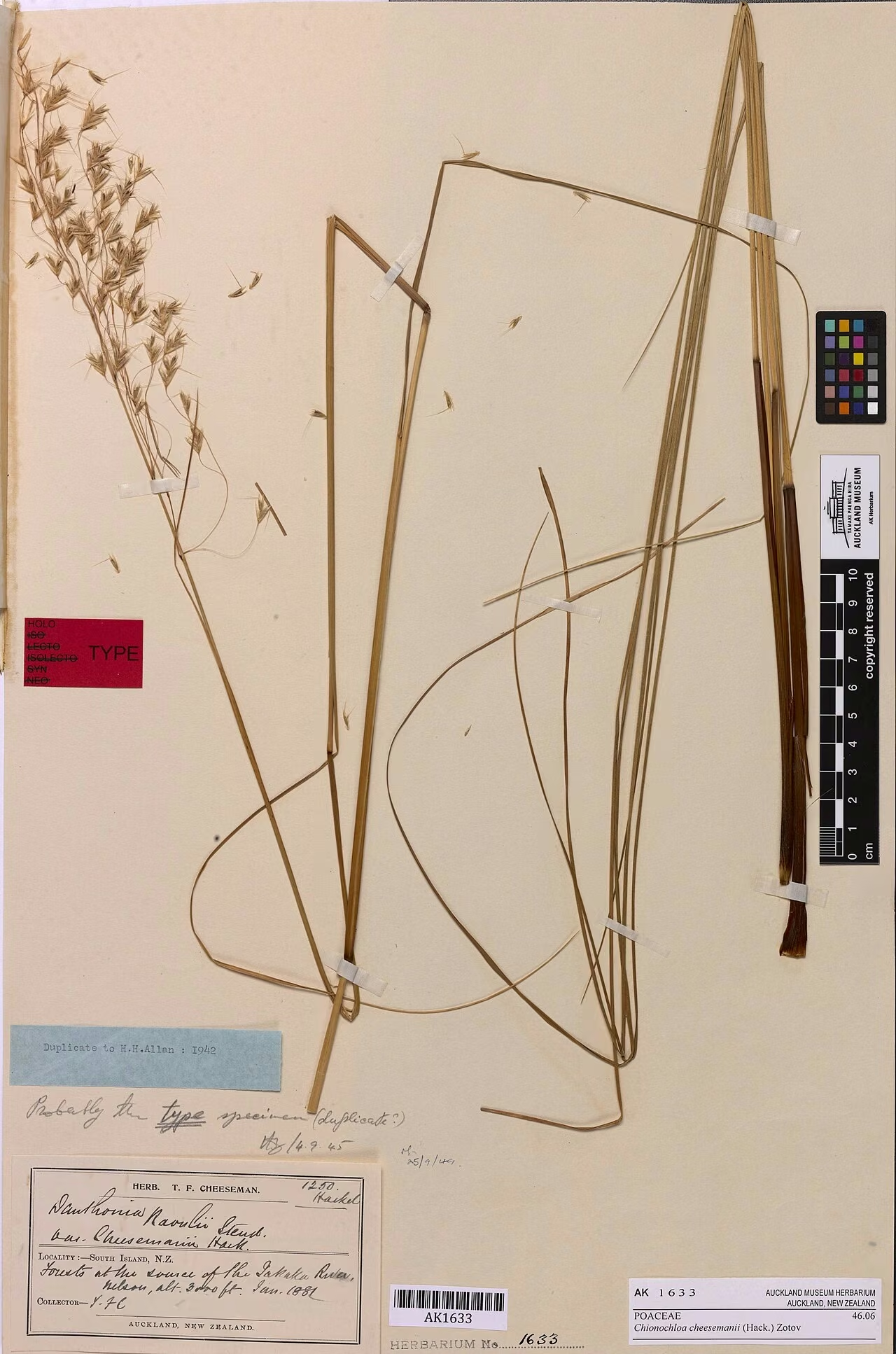
Chionochloa cheesemanii is a tall tussock grass with dark green leaves that persist on the plant. The leaf blades are up to 80 cm long, rough to the touch (scabrid) and many-ribbed, and they arise from brown, hairy leaf sheaths. The combination of persistent dark leaves and hairy brown sheaths gives the base of the tussock a distinctive look.
The flowering stems (culms) are very tall, reaching up to 2 m, and carry a flower head up to 35 cm long. Each spikelet holds up to six florets, and the lemma has a central awn up to about 15 mm long. As in other Chionochloa, the florets are dispersed by wind. Flowering and fruiting dates have not been published for this species.
Its narrow, dark green, persistent leaves and forest habitat help separate it from the broad-leaved bush tussock (Chionochloa conspicua), which typically has much broader leaves. Earlier botanists treated it as a variety of Danthonia raoulii or Danthonia flavicans before it was raised to a species in Chionochloa.
Quick Facts
| Scientific Name | Chionochloa cheesemanii |
|---|---|
| Height | Leaves to about 0.8 m; flowering stems to 2 m |
| Spread | Large tussock (no published width) |
| Water Needs | Moderate; grows in high-rainfall montane country |
| Light | Partial shade to sun; forest and grassland |
| Frost Tolerance | High; a montane to subalpine species |
| Salt Tolerance | No information available; an inland mountain species |
| Growth Rate | Slow to moderate |
| Lifespan | Perennial |
Climate Best Suited to
Suited to cool, wet montane climates of the central North Island ranges and the northern South Island, with frequent cloud, rain and winter frost and snow. Warm, dry lowland gardens are a poor match.
Regional Suitability
| City | Climate Suitability |
|---|---|
| Auckland | Low |
| Wellington | Medium |
| Christchurch | Low |
| Dunedin | Medium |
Plant Habitat
Narrow-leaved bush tussock is endemic to New Zealand and occurs in both main islands. In the North Island the Flora of New Zealand records it from Lake Waikaremoana, the Ruahine Range and the southern Wellington ranges, including the Tararua Range. In the South Island it grows in Nelson, northern Marlborough and the Kaikōura mountains.
It inhabits beech forest and grassland, usually between about 900 and 1225 m above sea level, reaching up to 1500 m in Marlborough. Its holotype was gathered from forest at the source of the Takaka River in Nelson at about 3000 ft (roughly 900 m) in January 1881.
Growing Requirements
Soil Requirements
In the wild it grows on the leached, often acidic mountain soils typical of beech forest and montane grassland.
- Moist, free-draining, humus-rich soil
- Acidic to neutral soils suit it
- No need for fertiliser
Light Requirements
Its occurrence in beech forest as well as grassland suggests it tolerates both open conditions and the dappled light of forest openings.
- Partial shade to full sun
- Forest edges and clearings are a natural fit
Water Requirements
It comes from high-rainfall ranges such as the Tararua and Ruahine, so it needs reliable moisture and is unlikely to cope with long drought.
- Keep soil evenly moist through summer
- Mulch to retain moisture around the base
- Ensure drainage so roots do not sit waterlogged
Planting and Establishing
This species is rarely if ever offered by nurseries, so planting is mostly relevant to restoration projects within its montane range. Plant in autumn or spring into a forest margin, clearing or grassy opening, using plants raised from locally collected seed.
Because the tussock becomes large, with flowering stems up to 2 m tall, allow plenty of room between plants. Water in well and protect young plants from deer, goats and hares where these are present.
Ecological Role
Narrow-leaved bush tussock is wind pollinated and its florets are dispersed by wind. Other Chionochloa species are well known for mast flowering, producing heavy flower crops in some years and few in others, but whether this species does so has not been documented.
In montane beech forest and grassland the large tussocks provide shelter and nesting cover for invertebrates and small animals and help bind soil on steep slopes. Species-specific studies of its associated insects or birds were not found.
Uses & Significance
Garden Uses
It is a botanical and restoration plant rather than a common garden subject, but in cool, moist districts it could make a bold specimen tussock for a large native garden.
- Specimen tussock in large, cool, moist gardens
- Restoration of montane forest edges and grassland
- Botanical collections of Chionochloa
Ecological Value
It contributes to the structure of montane beech forest openings and grasslands in the central North Island and northern South Island.
- Binds soils on steep, high-rainfall slopes
- Provides shelter for invertebrates and ground-dwelling fauna
- Part of the endemic tussock flora of the northern ranges
Landscaping Uses
In a large garden its tall, arching dark green leaves and very tall flowering stems make a strong vertical feature, best seen against a backdrop of shrubs or at the edge of a native woodland planting.
Plant it where its size can be appreciated, such as at the junction of a lawn and a beech or podocarp planting, and keep smaller alpine plants well away from its spreading base.
Seasonal Care Calendar
Spring
New leaves grow as soils warm. This is a good time to plant in cold montane districts.
- Plant out after hard frosts
- Mulch to conserve moisture
Summer
Tall flowering stems may appear, although flowering dates for this species are not published.
- Keep young plants watered in dry spells
- Watch for seed heads to ripen
Autumn
Collect any ripe seed from the heads before it is blown away, and plant in milder districts.
- Collect ripe florets
- Autumn planting in lowland gardens
Winter
Growth is slow and plants in the mountains may sit under snow. The persistent leaves stay on the tussock.
- No pruning needed
- Avoid waterlogged soil
When to Prune and How Much
Pruning is not required. The leaves of this species persist on the plant, and the old material at the base is part of the natural tussock structure that shelters the growing shoots.
Old flowering stems can be cut out once they have shed their seed. Wear gloves, as the leaves are scabrid and can be rough on bare hands.
How to Grow Narrow-Leaved Bush Tussock
No propagation notes specific to Chionochloa cheesemanii have been published by NZPCN or in the Flora of New Zealand, and it is not a standard nursery species. The suggestions below follow the methods generally used for tall Chionochloa tussocks and the species' own biology: it forms a multi-shooted tussock and sheds wind-dispersed florets. Seed is preferred for restoration because it maintains genetic diversity. Collect material only from legally accessible plants, and obtain permission from the Department of Conservation or the landowner before collecting on conservation land, which covers most of its range.
From Seed
Raising plants from seed is the best way to produce stock for montane restoration. Ripe seed heads should be harvested as the florets begin to loosen and fall.
- Harvest ripe heads on a dry day and spread them out to finish drying.
- Sow fresh florets on a free-draining seed mix and cover lightly with fine grit or mix.
- Keep the tray cool, moist and in good light, such as in a cold frame.
- Be patient, as germination of tussock seed can be slow and uneven.
- Pot seedlings on individually and grow for one or two seasons before planting out.
By Division
Large cultivated tussocks can be divided to produce a few plants identical to the parent. Divisions should include plenty of roots and several healthy shoots.
- Lift the clump in early spring or autumn during cool, moist weather.
- Cut or prise it into sections, each with several shoots and a good root mass.
- Trim the leaves back by about half to reduce moisture loss.
- Pot up or replant immediately and keep moist and shaded until established.
Pests & Diseases
No pests or diseases specific to this species are documented. In the wild, introduced browsing mammals such as deer, goats and hares graze many montane tussocks and may affect it.
In cultivation, drought stress and hot, dry sites are more likely to cause problems than any particular insect.
Cultural Significance
No Māori name or traditional use specific to narrow-leaved bush tussock was found in the sources consulted. The species name honours Thomas Frederick Cheeseman, curator of the Auckland Museum and author of the 1906 Manual of the New Zealand Flora.
It was first described by Eduard Hackel in 1906 as Danthonia raoulii var. cheesemanii, later treated as a variety of Danthonia flavicans, and raised to species rank in Chionochloa by Victor Zotov in 1963.
Bonus Tip
If you meet a very tall tussock with narrow, rough, dark green leaves inside beech forest in the Tararua, Ruahine or Nelson ranges, check the leaf sheaths: brown, hairy sheaths beneath persistent dark leaves point to narrow-leaved bush tussock rather than the broad-leaved bush tussock that grows in similar places.
Related Plants
Explore other native plants that share similar characteristics or habitats with Narrow-Leaved Bush Tussock (Chionochloa cheesemanii), offering further insights into New Zealand's diverse flora. These related species provide context and opportunities for complementary planting in your garden.
Chaerophyllum ramosum
Chaerophyllum ramosum
Glaucous Goosefoot
Oxybasis ambigua
Beddie's Tussock
Chionochloa beddiei
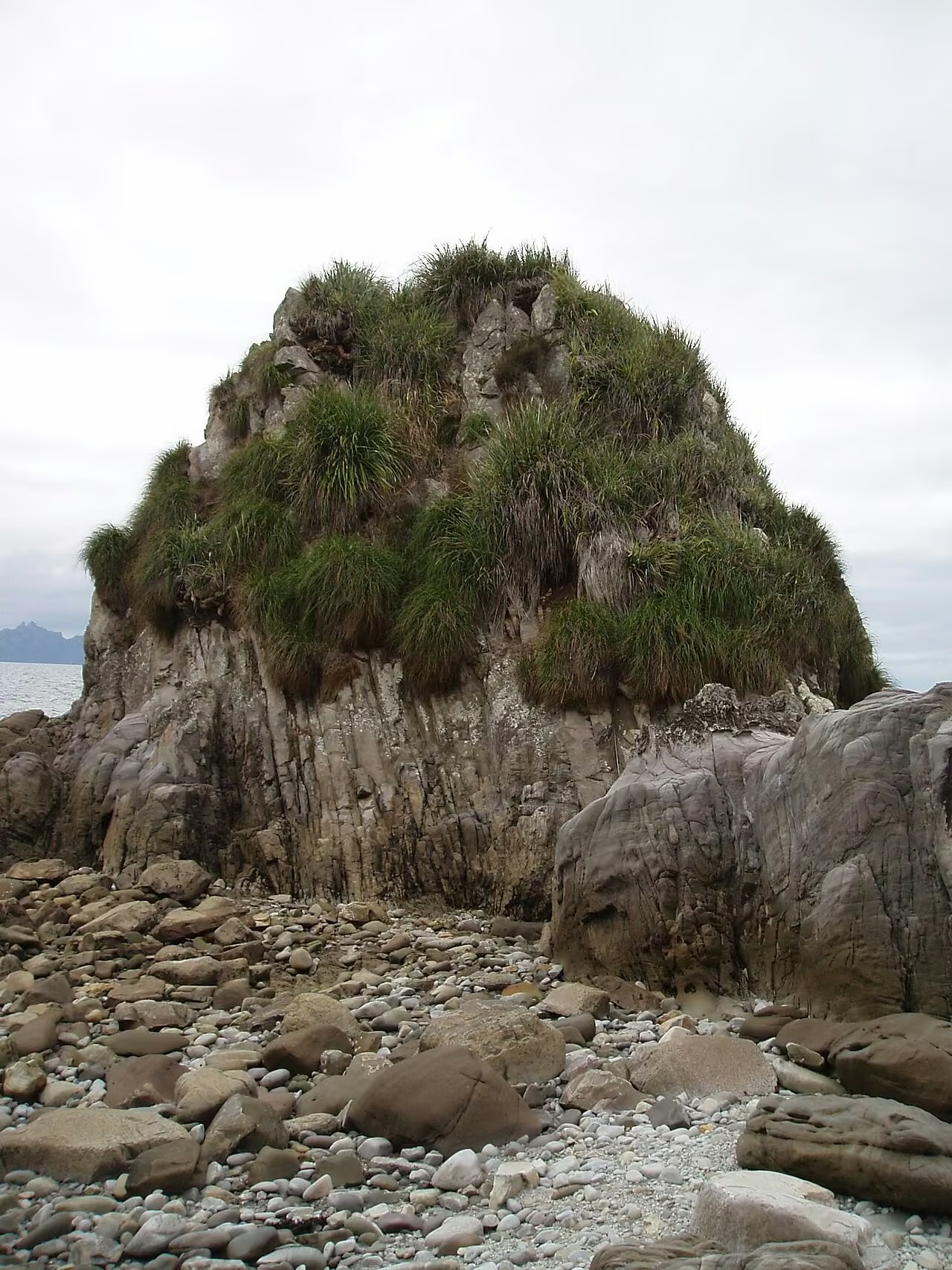
Coastal Tussock
Chionochloa bromoides
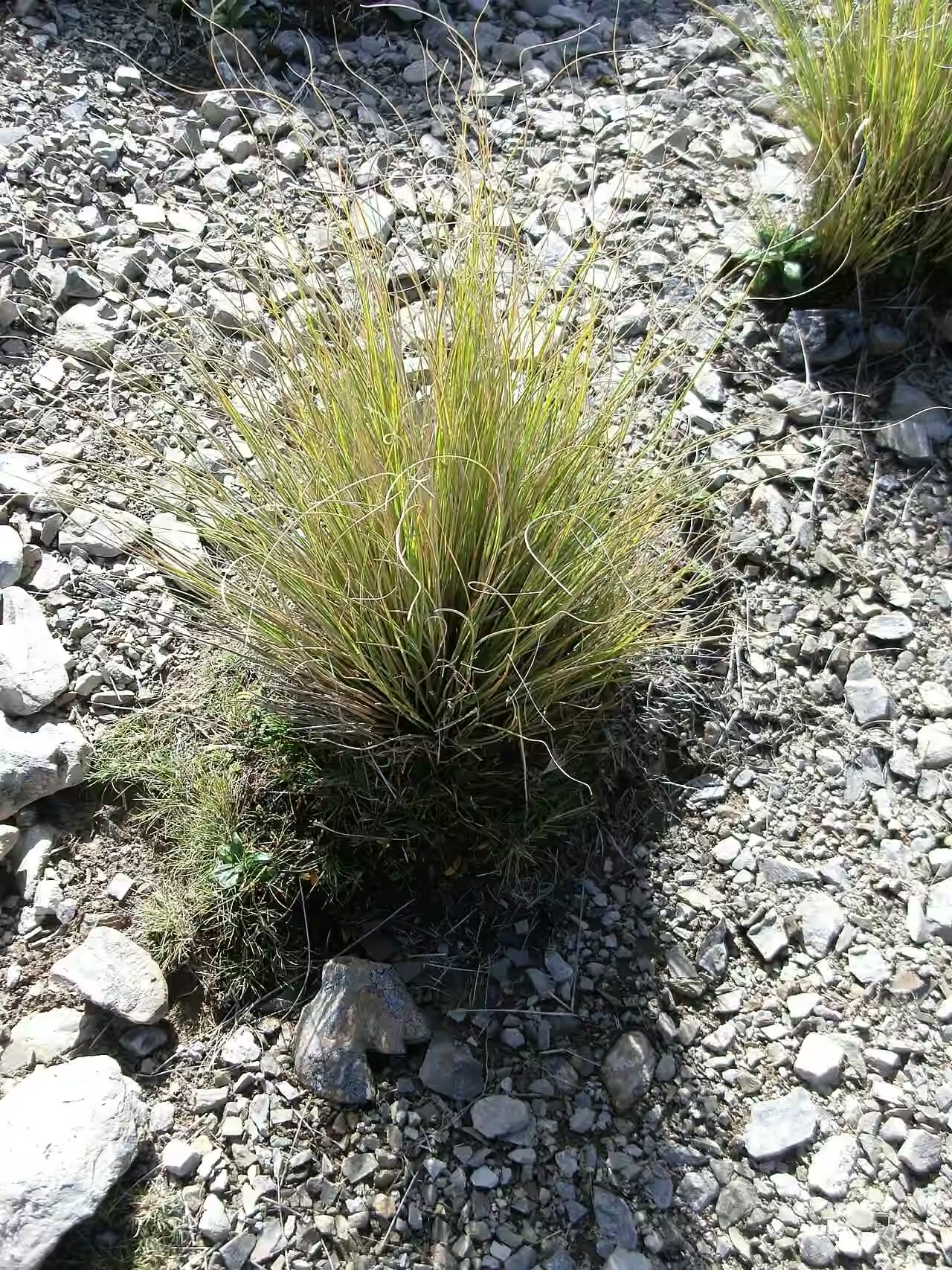
Pungent Snow Tussock
Chionochloa crassiuscula subsp. crassiuscula
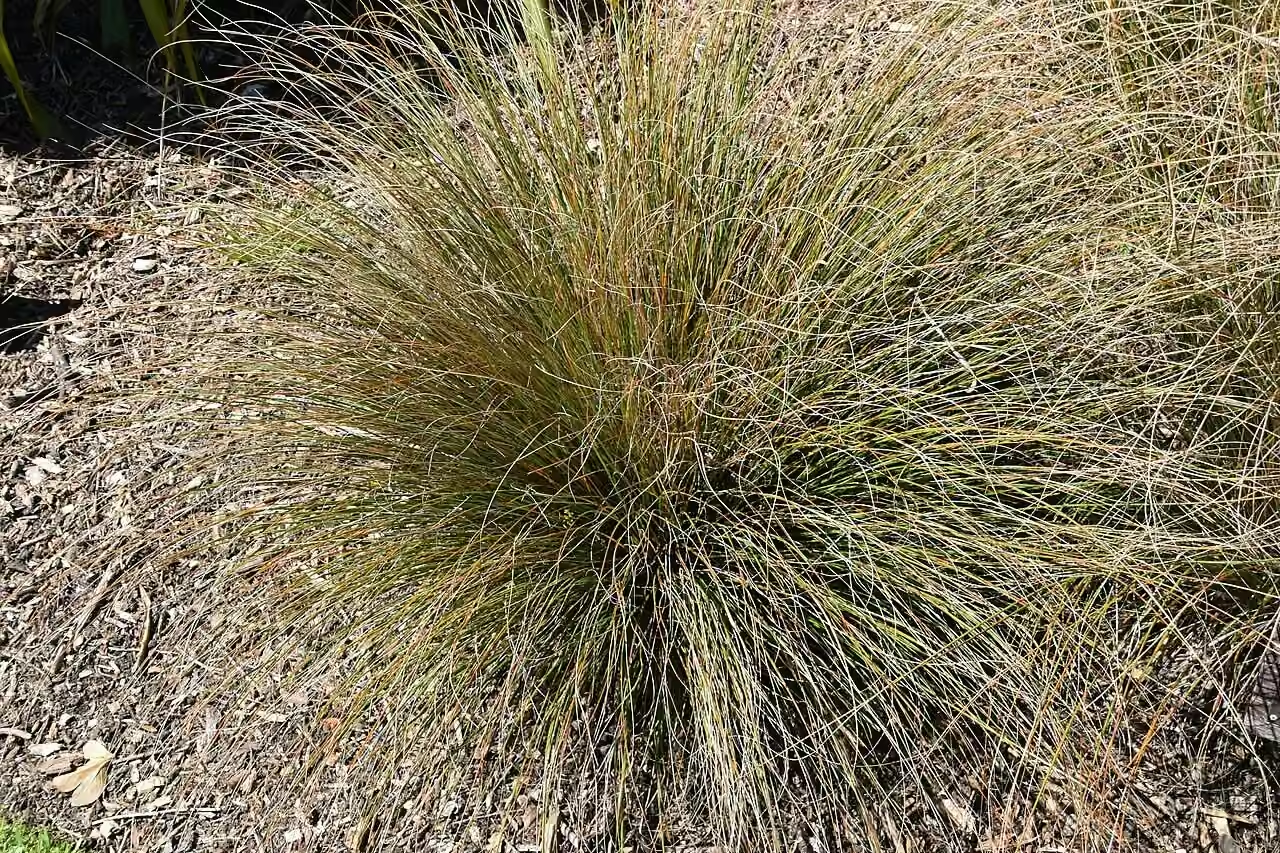
Red Hills Snow Tussock
Chionochloa defracta
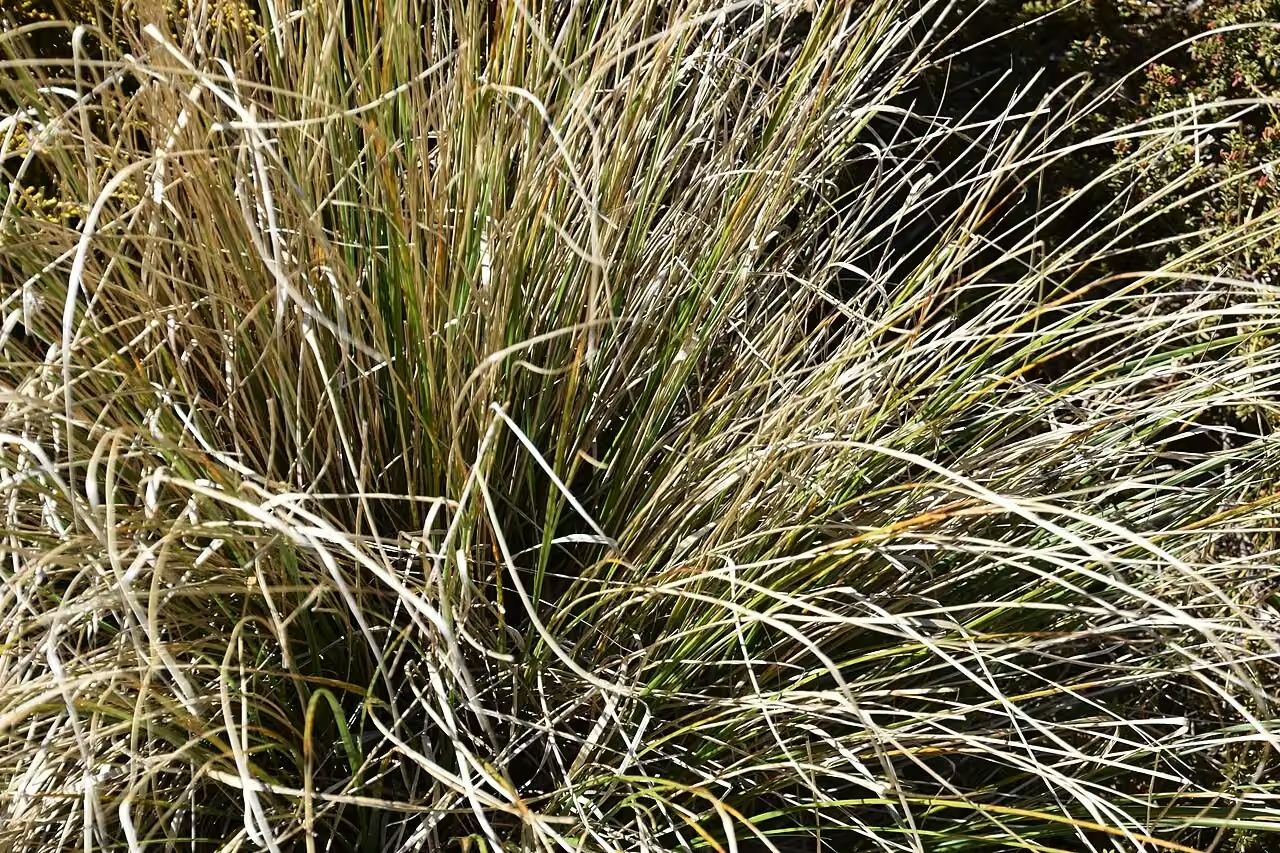
Slim Snow Tussock
Chionochloa macra
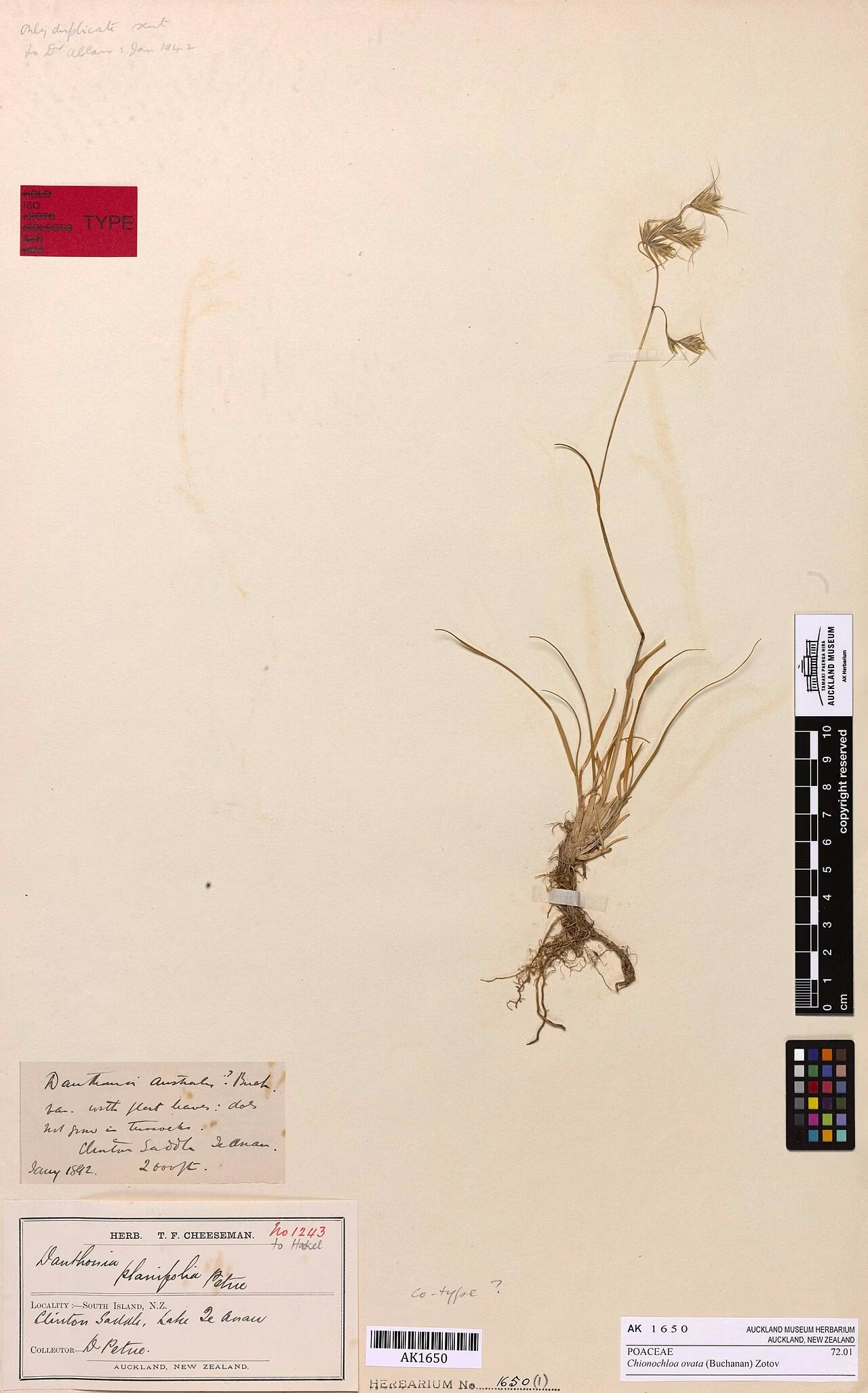
Squat Snow Tussock
Chionochloa ovata
Plant Conservation
Narrow-leaved bush tussock has been assessed as Not Threatened in every national assessment from 2004 to 2023. It is, however, listed as Regionally Naturally Uncommon in the Wellington region (2025), reflecting its limited occurrence there.
Most of its range lies within conservation land such as the Tararua, Ruahine and Kahurangi areas. Ongoing control of deer, goats and other browsers in these ranges is the main measure that helps maintain healthy populations.
Frequently Asked Questions
Why is Chionochloa cheesemanii called bush tussock?
Unlike the snow tussocks of open alpine grassland, it grows in beech forest as well as grassland, and its type specimen was collected from forest at the source of the Takaka River in 1881.
How tall does narrow-leaved bush tussock grow?
Its leaves reach about 80 cm long and its flowering stems can be up to 2 m tall, making it one of the taller members of the genus.
Where is Chionochloa cheesemanii found?
It grows at Lake Waikaremoana, in the Ruahine Range and southern Wellington ranges in the North Island, and in Nelson, northern Marlborough and the Kaikōura mountains in the South Island.
Who is Chionochloa cheesemanii named after?
It honours Thomas Frederick Cheeseman (1846-1923), the botanist who wrote the Manual of the New Zealand Flora, published in 1906.
Sources and Further Reading
The botanical, growing, and conservation details for Narrow-Leaved Bush Tussock (Chionochloa cheesemanii) on this page draw on the New Zealand plant references below. Consult them for full technical records and the latest distribution data.