Pungent Snow Tussock
Chionochloa crassiuscula subsp. crassiuscula
Last updated:
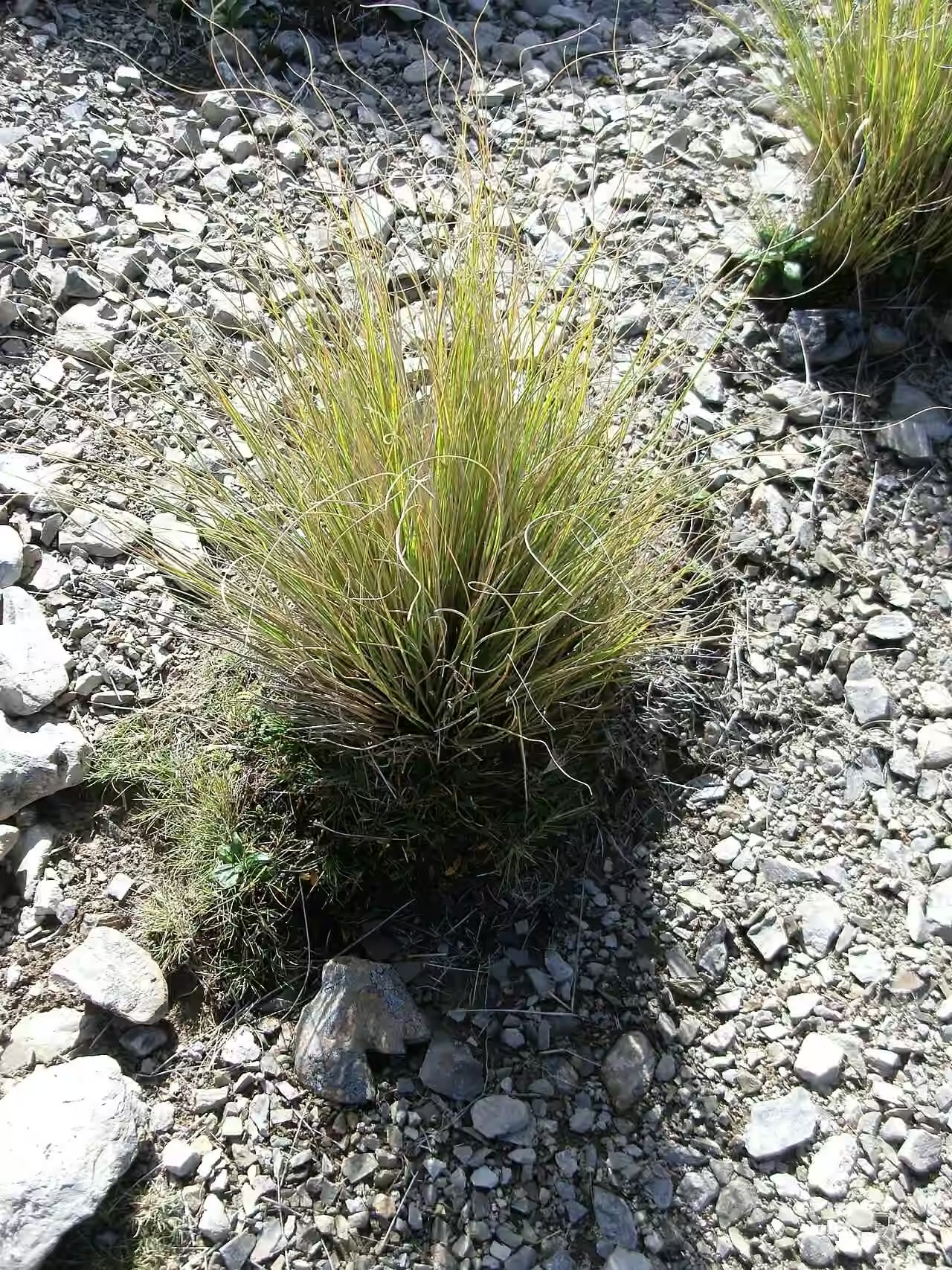
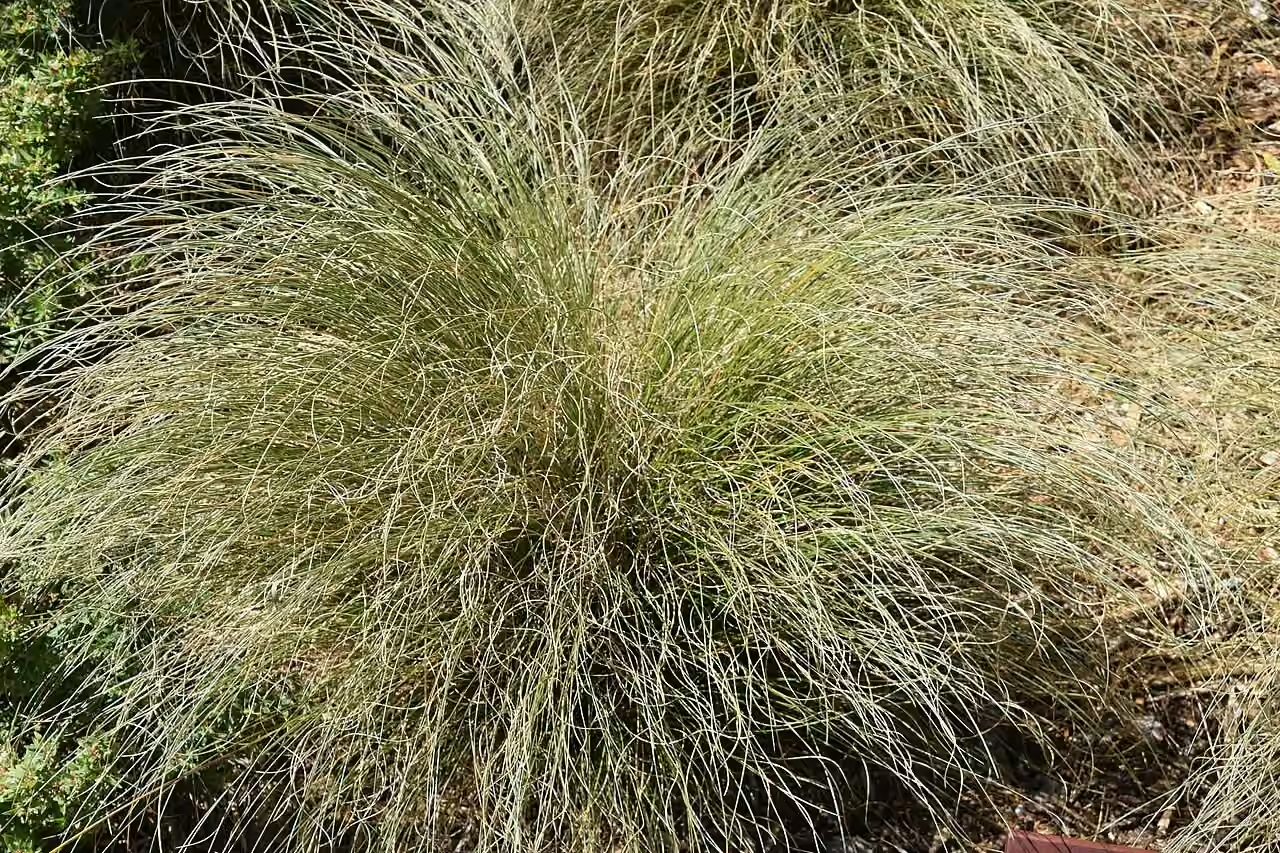
Pungent snow tussock (Chionochloa crassiuscula subsp. crassiuscula) is a short, stout tussock grass found only on Stewart Island/Rakiura. Its stiff, leathery leaves are up to 30 cm long and 6 mm wide and taper to a very sharp point, which gives the plant its common name. Golden-flowered stems reach about 65 cm. It grows in upper montane to alpine herbfields, boggy meadows and scrub between about 700 and 1000 m, on peaks such as Hananui and the Tin Range, where it often dominates the herbfield. It is ranked At Risk - Naturally Uncommon because of its small range. Explore more native grasses and flaxes in our native plant guide.
Plant Description
Chionochloa crassiuscula subsp. crassiuscula forms short, stout, robust tussocks clothed at the base in many old overlapping sheaths. The leaf sheaths are up to 8 cm long, hairless and pale or dark brown. The leaf blades are up to 30 cm long and 6 mm wide, very leathery, curved and keeled, and taper shortly to a very sharp point. The upper surface near the base and the margins carry many tiny prickle-teeth, and the leaves are deciduous, falling away from the sheath.
Flowering stems reach about 65 cm and are often purplish and hairy just below the flower head. The open panicle is up to 15 cm long, with spikelets of up to seven golden florets whose lemmas are densely hairy at the margins. Flowering runs from November to January and seed ripens from December to April, with florets dispersed by wind.
Growth form varies with exposure: on wet, windswept sites plants can be small and nearly prostrate with short leaves, while in sheltered spots they are taller. The Flora of New Zealand notes that cultivated plants changed only gradually over months, suggesting either genetically fixed dwarf forms or extremely slow growth. Subspecies torta, from the South Island, differs in its long, twisting or curling leaf tips and often purpled, hairy sheaths.
Quick Facts
| Scientific Name | Chionochloa crassiuscula subsp. crassiuscula |
|---|---|
| Height | Leaves to 0.3 m; flowering stems to 0.65 m |
| Spread | Compact tussock; dwarf and prostrate on exposed sites |
| Water Needs | High; must never dry out |
| Light | Semi-shade in cultivation; open herbfield in the wild |
| Frost Tolerance | High; subalpine to alpine |
| Salt Tolerance | No information available |
| Growth Rate | Very slow |
| Lifespan | Perennial |
Climate Best Suited to
Adapted to the cold, wet, windy and cloudy climate of the Rakiura uplands, with frequent rain, low summer temperatures and regular frost. It is poorly suited to warm or dry districts.
Regional Suitability
| City | Climate Suitability |
|---|---|
| Auckland | Low |
| Wellington | Low |
| Christchurch | Low |
| Dunedin | Medium |
Plant Habitat
This subspecies is endemic to Stewart Island/Rakiura. The type specimen was collected by Thomas Kirk at Smith's Lookout in January 1887, and herbarium records come from Hananui (about 950 m), Table Hill and the Tin Range (about 600 m). The Flora of New Zealand gives its altitude range as roughly 700 to 1000 m.
It grows in the upper montane, subalpine and alpine zones, where it typically dominates herbfields, and also occurs in boggy meadows and among low scrub. NZPCN classes it as a facultative wetland plant, at home on both wet peaty ground and better-drained sites.
Growing Requirements
Soil Requirements
In the wild it grows in wet, peaty, acidic soils on the Rakiura tops. NZPCN advises a permanently damp, acidic soil in cultivation.
- Acidic, peaty, permanently moist soil
- Low fertility; avoid fertiliser
- A peat bed or bog garden suits it
Light Requirements
Although it grows in open herbfield in the cool, cloudy Rakiura climate, NZPCN recommends semi-shade in cultivation to reduce heat and drying.
- Semi-shade in gardens
- Shelter from hot afternoon sun
Water Requirements
Water is the critical factor: NZPCN states plants must never be allowed to dry out.
- Keep the root zone constantly moist
- Use rainwater where tap water is hard
- Suits the margins of a bog or seepage
Planting and Establishing
This subspecies is rarely available and is very slow growing, so it is mostly of interest to specialist alpine growers and restoration work on Rakiura. Plant into a cool, damp, acidic peat bed in semi-shade, ideally in spring so it settles before summer.
Firm in gently, water thoroughly and mulch the surface with moss or fine bark to hold moisture. Check moisture often during the first summer, as even a short dry spell can set back a young plant.
Ecological Role
As with all Chionochloa, it is wind pollinated and its florets are dispersed by wind. Snow tussocks as a genus are known for mast flowering, with heavy flowering in some years and little in others, but no flowering records specific to the Rakiura subspecies were found.
Where it dominates herbfields on the Rakiura tops it forms much of the plant cover, sheltering small herbs, mosses and invertebrates and protecting peat soils from erosion.
Uses & Significance
Garden Uses
This is a specialist plant for alpine enthusiasts in cool southern districts rather than a general garden tussock, owing to its slow growth and strict moisture needs.
- Peat beds and alpine bog gardens
- Trough or container culture in a cool, shaded spot
- Botanical collections of Rakiura plants
Ecological Value
It is a dominant herbfield plant in the alpine zone of Rakiura and a distinctive part of the island's endemic upland flora.
- Dominant ground cover of Rakiura herbfields
- Protects peat soils on exposed summits
- Shelters smaller alpine plants and invertebrates
Landscaping Uses
Its compact, spiky tussocks with sharp-tipped leaves contrast well with soft cushion plants, mosses and small celmisias in a cool, moist alpine bed. Planting several together recreates the look of a Rakiura herbfield.
Because the leaves are very sharp, keep it away from path edges where people might brush against it.
Seasonal Care Calendar
Spring
New growth begins slowly. This is the best time to plant or divide.
- Plant or divide in spring
- Check moisture as weather warms
Summer
Golden flowers appear from November to January. Summer heat and dryness are the main threats in cultivation.
- Never let the soil dry out
- Provide afternoon shade
Autumn
Seed ripens from December through to April. Collect it fresh for sowing.
- Collect ripe seed
- Sow seed fresh
Winter
Plants are largely dormant. In the wild they endure cold, wind and snow on the Rakiura tops.
- No feeding needed
- Keep pots moist but not stagnant
When to Prune and How Much
No pruning is needed. Old overlapping sheaths at the base are normal and protect the shoots, and the leaves are deciduous, falling naturally from their sheaths.
Spent flowering stems may be removed after seed has dropped. Wear gloves, as the leaf tips are very sharp.
How to Grow Pungent Snow Tussock
NZPCN describes this tussock as often difficult to grow, noting that it can be raised from fresh seed and from rooted pieces but tends to be very slow growing. The Flora of New Zealand also records that cultivated plants changed only gradually over months. Patience and constant moisture are therefore essential. As the subspecies grows wild only on Stewart Island/Rakiura, much of it within Rakiura National Park, seed or plant material must not be collected without a Department of Conservation authorisation.
From Seed
Fresh seed is recommended. Seed ripens between December and April and should be sown soon after collection.
- Collect heads when the golden florets loosen and begin to fall.
- Sow fresh on a moist, acidic, peaty seed mix and cover very lightly.
- Keep trays in a cool, semi-shaded place and never let them dry out.
- Expect slow germination and slow early growth.
- Pot seedlings into an acidic, moisture-retentive mix and grow on for at least a year before planting out.
By Division
NZPCN notes that rooted pieces can be grown on. Separating rooted shoots from a cultivated tussock is the quickest way to obtain a sizeable plant, though growth afterwards remains slow.
- Divide in spring when growth is starting and the weather is cool.
- Detach pieces that each carry several shoots with their own roots.
- Pot into damp, acidic peaty mix and keep in semi-shade.
- Keep evenly moist until new growth shows, which may take several months.
Pests & Diseases
No specific pests or diseases are recorded for this subspecies. On Rakiura, introduced white-tailed deer browse many native plants and could affect herbfield vegetation.
In cultivation, drying out and summer heat are the most common causes of failure.
Cultural Significance
No Māori name or traditional use specific to this tussock was found in the sources consulted. Its species name crassiuscula means rather thick, a reference to its stout leaves.
Thomas Kirk collected the type specimen at Smith's Lookout on Stewart Island in 1887. Thomas Cheeseman named it Danthonia pungens in 1906, Victor Zotov moved it to Chionochloa as C. pungens in 1963, and it is now treated as the typical subspecies of Chionochloa crassiuscula.
Bonus Tip
Grow pungent snow tussock in a deep pot of acidic peat mix stood in a saucer of rainwater in a shaded spot over summer. This mimics the permanently wet peat of the Rakiura tops and is the simplest way to stop it drying out, the main reason it fails in cultivation.
Related Plants
Explore other native plants that share similar characteristics or habitats with Pungent Snow Tussock (Chionochloa crassiuscula subsp. crassiuscula), offering further insights into New Zealand's diverse flora. These related species provide context and opportunities for complementary planting in your garden.
Glaucous Goosefoot
Oxybasis ambigua
Beddie's Tussock
Chionochloa beddiei
Coastal Tussock
Chionochloa bromoides
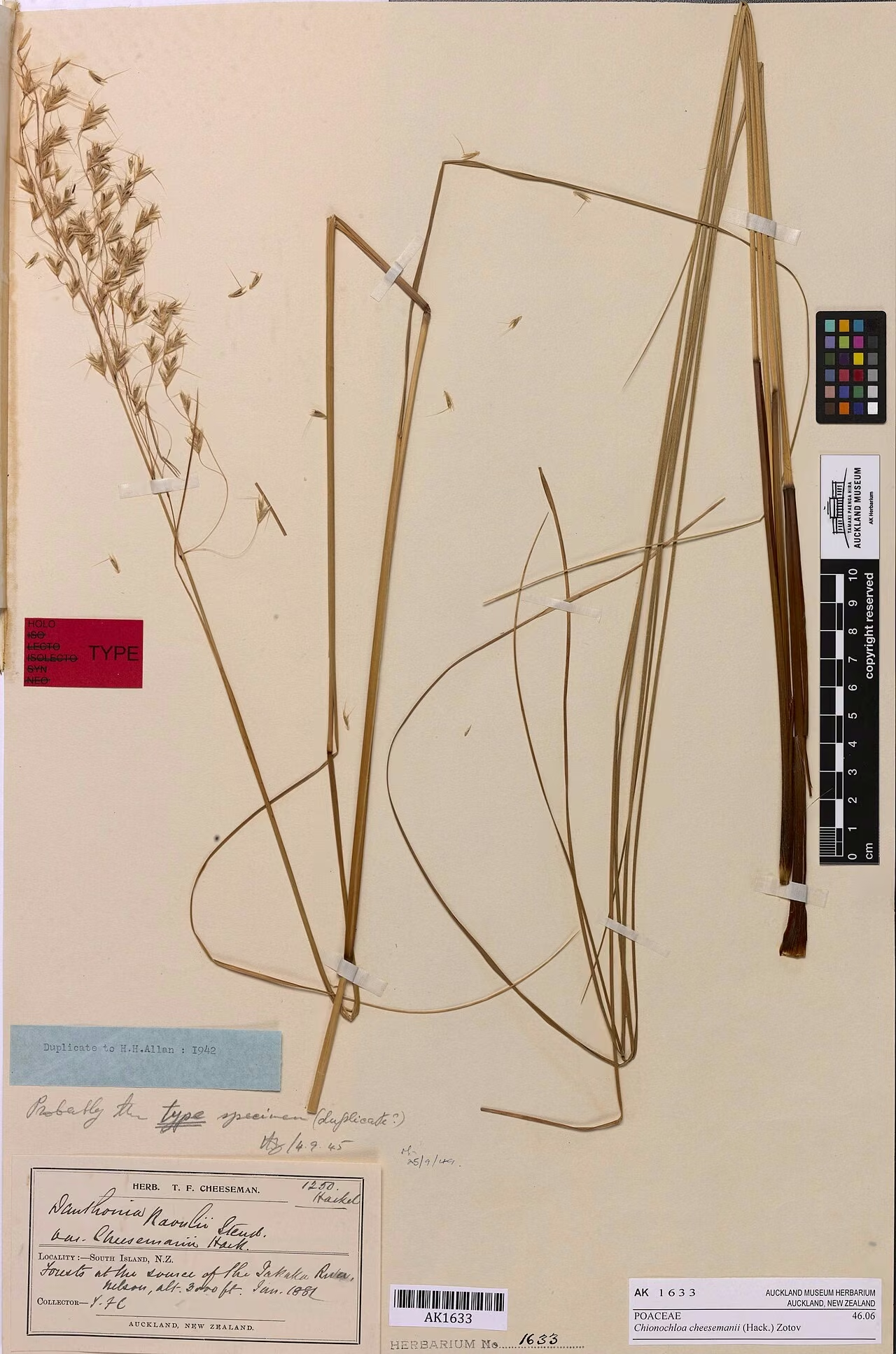
Narrow-Leaved Bush Tussock
Chionochloa cheesemanii
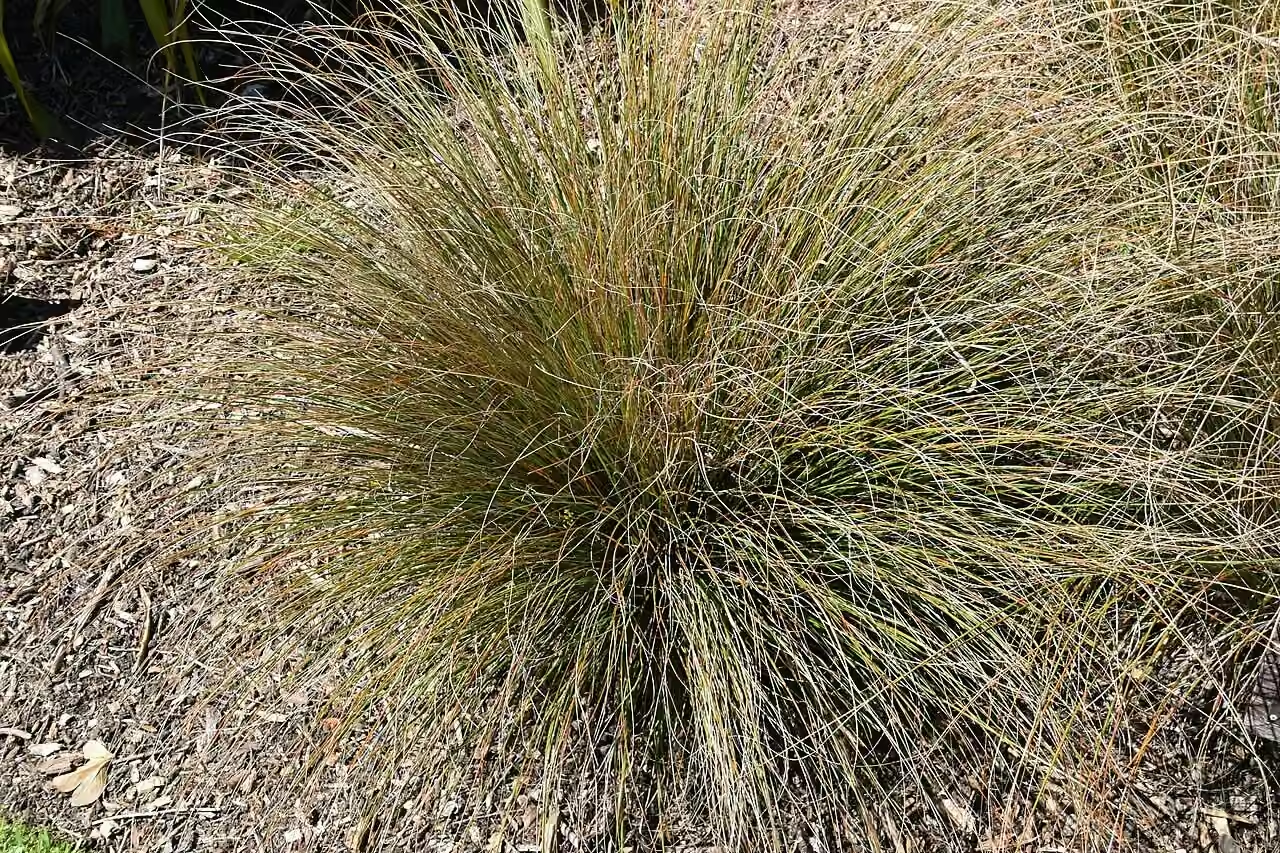
Red Hills Snow Tussock
Chionochloa defracta
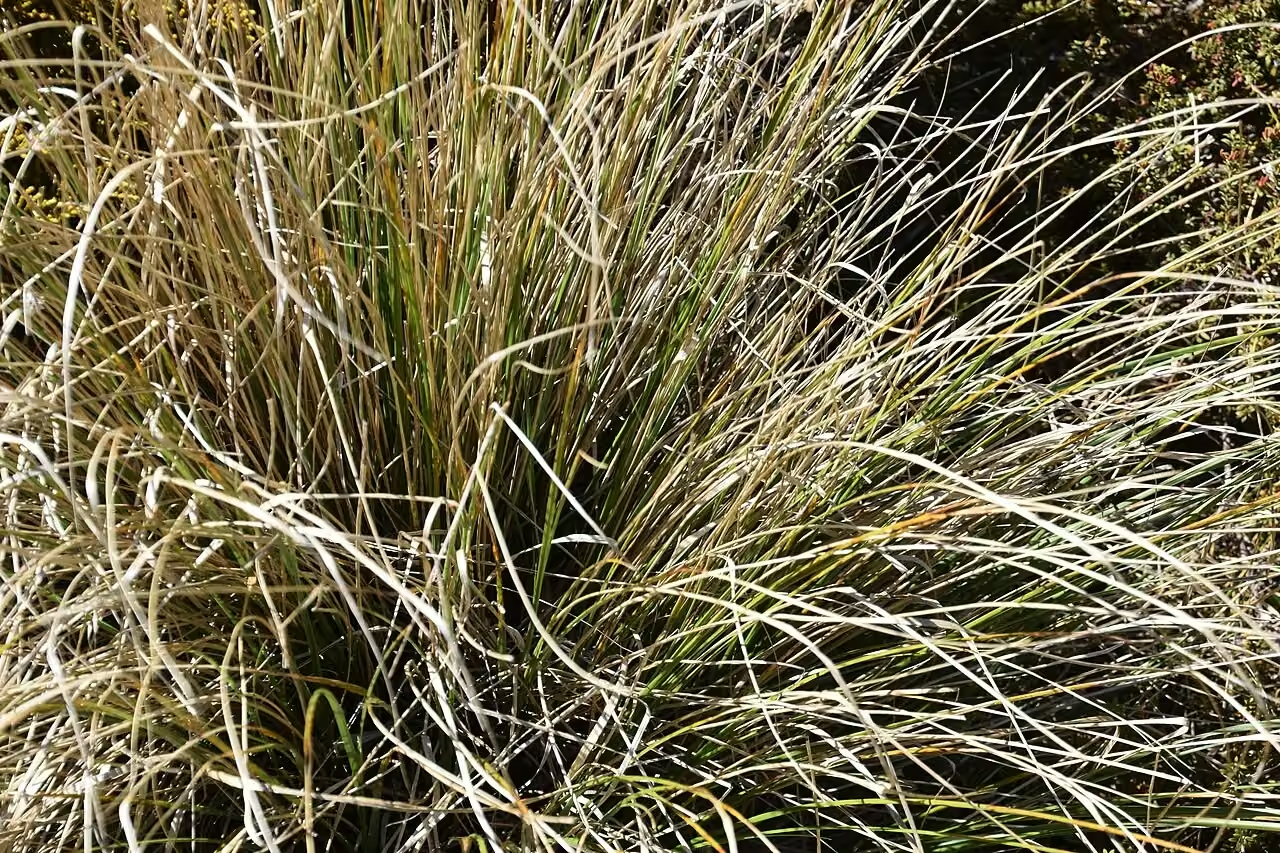
Slim Snow Tussock
Chionochloa macra
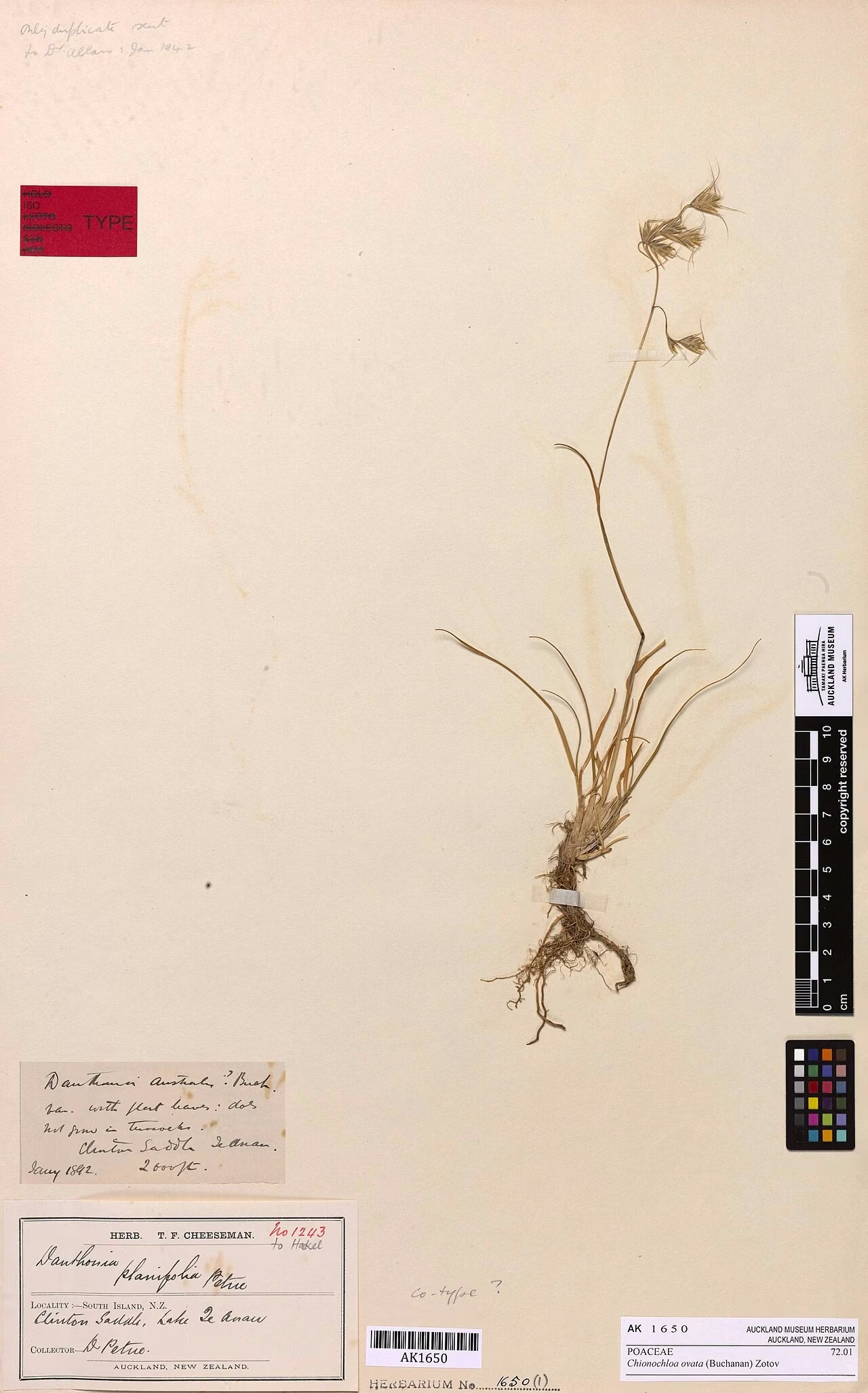
Squat Snow Tussock
Chionochloa ovata
Terete-Leaved Snow Tussock
Chionochloa teretifolia
Plant Conservation
Chionochloa crassiuscula subsp. crassiuscula is ranked At Risk - Naturally Uncommon (2023) with qualifiers Range Restricted and Stable. It is common within its habitat but confined to the uplands of a single island.
Most of its habitat lies within Rakiura National Park. Protecting the island's herbfields from browsing deer, from trampling and from any spread of weeds onto the tops helps keep its populations secure.
Frequently Asked Questions
Why is it called pungent snow tussock?
Pungent here means sharply pointed, not smelly. The leaves taper to a very sharp tip, and the plant was once named Danthonia pungens and later Chionochloa pungens for that reason.
Where does Chionochloa crassiuscula subsp. crassiuscula grow?
This subspecies is confined to Stewart Island/Rakiura, where it grows in herbfields, boggy meadows and scrub at about 700-1000 m, including on Hananui, Table Hill and the Tin Range.
How does subsp. crassiuscula differ from the other subspecies?
It has hairless, pale or dark brown leaf sheaths and a short, very pungent leaf tip, while subsp. torta of the South Island has long, twisting or curling leaf tips and often purplish sheaths.
Can you grow pungent snow tussock in a garden?
NZPCN says it is often difficult and very slow growing. It needs permanently damp, acidic soil, semi-shade, and must never dry out.
Sources and Further Reading
The botanical, growing, and conservation details for Pungent Snow Tussock (Chionochloa crassiuscula subsp. crassiuscula) on this page draw on the New Zealand plant references below. Consult them for full technical records and the latest distribution data.