Coastal Tussock
Chionochloa bromoides
Last updated:
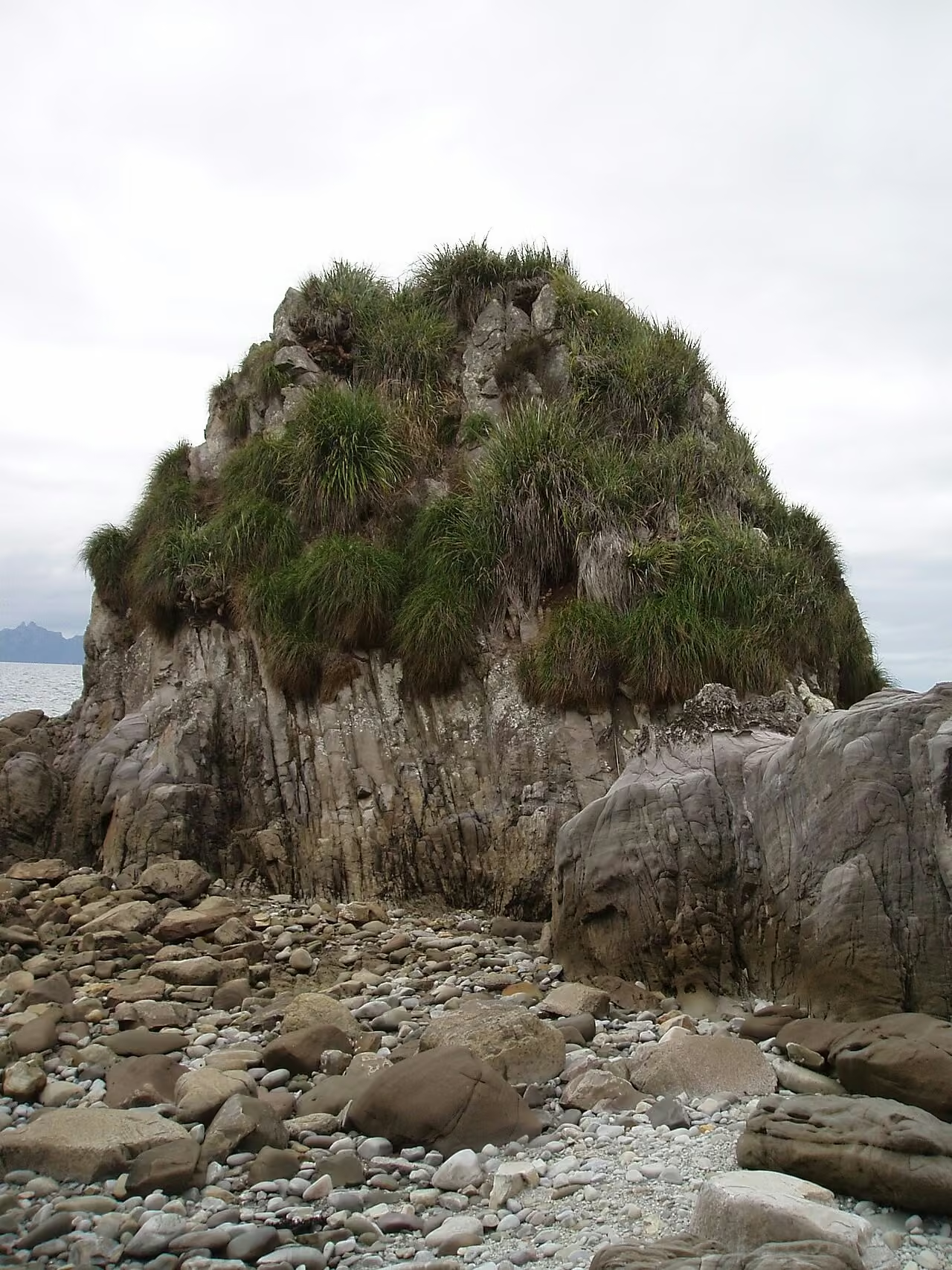
Coastal tussock (Chionochloa bromoides), also called seabird tussock, is a stout, bright green tussock grass endemic to the far north of the North Island. Its flat leaves reach 50 cm and droop or sprawl over cliff faces, and its flowering stems grow to about 70 cm. It lives on coastal cliffs, bluffs, rock stacks and petrel scrub from the Bay of Islands to the Poor Knights, Hen and Chickens and Mokohinau Islands, where seabirds often burrow into its base. It is the only lowland coastal member of a genus better known for alpine snow tussocks, and it is ranked At Risk - Naturally Uncommon. Explore more native grasses and flaxes in our native plant guide.
Plant Description
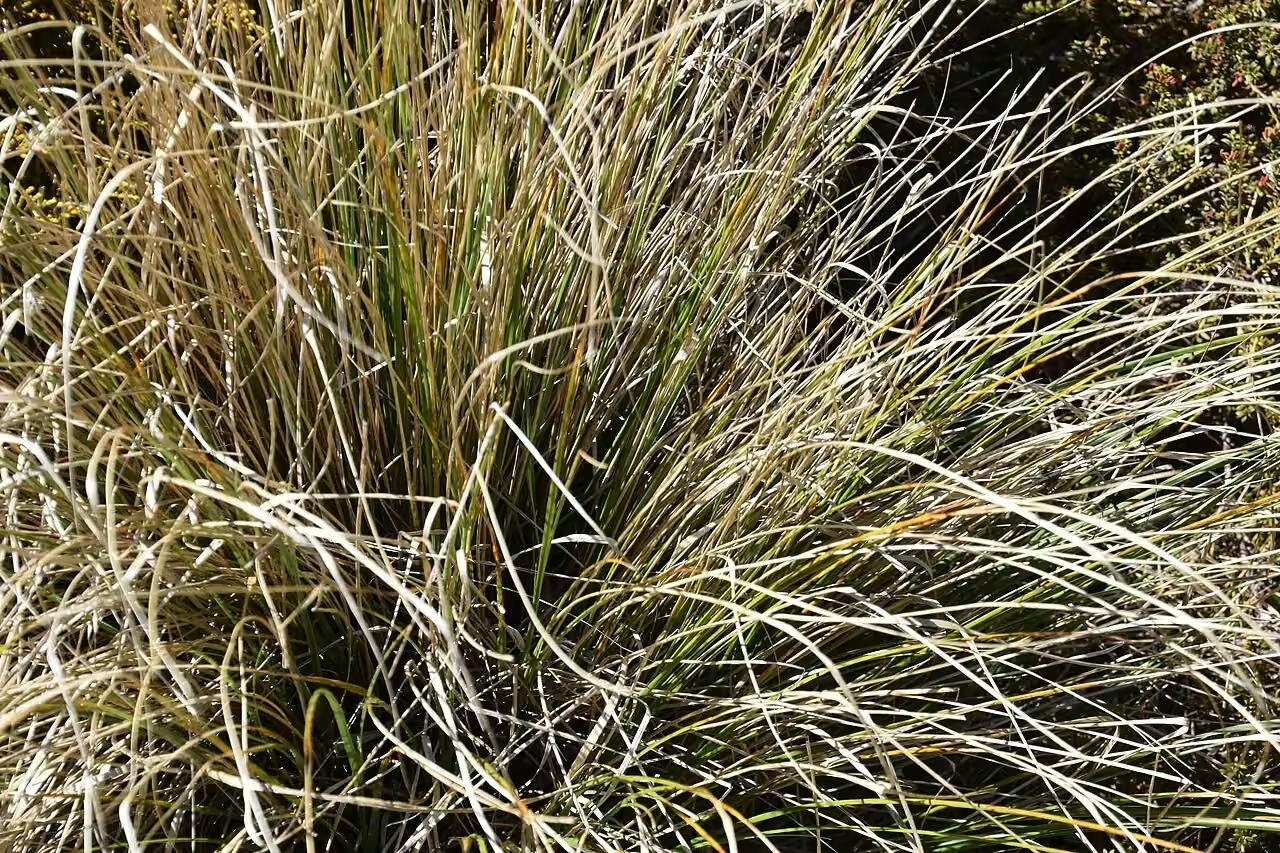
Chionochloa bromoides forms a stout, bright green tussock whose leaves droop or sprawl, so plants on cliffs often hang downwards over the rock. The leaf sheaths are up to 150 mm long, shining yellow and keeled, and both the sheaths and leaves persist on the plant rather than falling away. The leaf blades are up to 500 mm long and 10 mm wide, flat or U-shaped in section.
Flowering stems reach 700 mm and end in a very congested flower head up to 200 mm long, each spikelet holding up to six florets with long awns. The plant is gynodioecious, meaning some plants carry only female flowers while others carry hermaphrodite flowers. Flowering runs from September to December and fruit ripens from November to March; the grains are up to 3.5 mm long and the florets are dispersed by wind.
Within its northern coastal range it is unlikely to be confused with any other Chionochloa, as the rest of the genus grows in montane to alpine country further south. Its glossy yellow sheaths, broad bright green drooping leaves and dense, crowded seed heads separate it from coastal sedges and other tussock-forming grasses on the same cliffs.
Quick Facts
| Scientific Name | Chionochloa bromoides |
|---|---|
| Height | Foliage to about 0.5 m; flowering stems to 0.7 m |
| Spread | Sprawling, pendent clump (no published width) |
| Water Needs | Low to moderate; needs sharp drainage |
| Light | Full sun |
| Frost Tolerance | Low; a frost-free northern coastal plant |
| Salt Tolerance | High; grows on exposed sea cliffs and rock stacks |
| Growth Rate | Moderate |
| Lifespan | Perennial |
Climate Best Suited to
Suited to the mild, frost-free maritime climate of Northland and the Hauraki Gulf islands, with strong salt winds and warm summers. NZPCN notes that it dislikes humidity, so in gardens it needs an airy, well-drained site.
Regional Suitability
| City | Climate Suitability |
|---|---|
| Auckland | High |
| Wellington | Medium |
| Christchurch | Low |
| Dunedin | Low |
Plant Habitat
Coastal tussock is endemic to the North Island and is confined mainly to northern offshore islands and easterly headlands. Its range runs from the Bay of Islands south to the Poor Knights Islands, the Hen and Chickens Islands and the Mokohinau Islands, with a single westerly outlier at Maunganui Bluff on the Northland west coast.
It grows on coastal cliff faces, bluffs and rock stacks and within petrel scrub, the low windswept vegetation found on seabird breeding islands. Plants on these islands frequently have their bases riddled with burrows of diving petrels and other seabirds, which add nutrients to the soil around them.
Growing Requirements
Soil Requirements
In the wild it roots into cliff crevices and thin, stony, seabird-enriched soils. In cultivation NZPCN recommends a freely draining soil or planting it on a stone wall.
- Free-draining gravelly or rocky soil
- Suits the top or face of a dry stone wall
- Avoid heavy clay or ground that stays wet
Light Requirements
It is a plant of open cliffs fully exposed to sun and wind, and NZPCN advises full sun in cultivation.
- Full sun
- Open, airy positions help avoid problems with humidity
Water Requirements
Cliff habitats drain quickly and dry out between rains, so the plant is adapted to periodic dryness rather than constant moisture.
- Water to establish, then only in long dry spells
- Never leave the root zone sitting wet
- Good drainage matters more than frequent watering
Planting and Establishing
NZPCN advises planting coastal tussock where it is to grow permanently, as it resents much root disturbance. Choose a sunny, exposed site with fast drainage, such as a rock bank, a coastal slope or the top of a stone wall, and plant small, well-rooted pot-grown plants rather than large divided clumps.
Planting in autumn in northern districts lets roots establish over the mild, moist winter. Set the plant at the same depth it grew in the pot, firm gently, water in and avoid moving it again. For restoration on northern coastal sites, use seed collected locally from the same ecological district.
Ecological Role
Like other Chionochloa it is wind pollinated, and its florets are dispersed by wind. Its gynodioecious breeding system, with some plants carrying only female flowers, encourages cross-pollination between plants.
On seabird islands it is an important part of the cliff and petrel scrub vegetation. Its dense bases provide cover and stable ground for burrowing seabirds such as diving petrels, and the birds in turn enrich the soil. Specific studies of insects associated with this tussock were not found.
Uses & Significance
Garden Uses
In northern coastal gardens it is a striking feature tussock for rock banks and walls, valued for its glossy bright green leaves and drooping habit.
- Stone walls and rockeries in coastal gardens
- Exposed cliff-top or bank plantings
- Restoration of northern coastal headlands
Ecological Value
It helps hold thin soils on coastal cliffs and offshore islands and forms part of the habitat used by burrowing seabirds.
- Stabilises cliff faces and rock stacks
- Provides shelter around seabird burrows
- Contributes to the rare northern coastal cliff flora
Landscaping Uses
Use coastal tussock where its arching, cascading leaves can spill over an edge, such as the lip of a retaining wall, a raised bed or a rocky bank. Its bright green colour stands out against grey rock and silver-leaved coastal plants.
It combines naturally with other northern cliff plants such as harakeke, coastal astelia and taupata. Give each plant room so air circulates freely around the foliage, which suits its dislike of humid conditions.
Seasonal Care Calendar
Spring
Flowering begins in September and the dense flower heads emerge through spring.
- Flowering from September
- Check drainage after wet winter weather
Summer
Flowering finishes by December and seed ripens through summer on the crowded heads.
- Seed ripens from November
- Water young plants in long droughts
Autumn
The last seed ripens by about March. Collect it fresh for sowing, as NZPCN recommends fresh seed.
- Collect and sow seed fresh
- Good planting time in northern districts
Winter
Growth slows in the cooler months. Wet, cold soil is the main risk in gardens away from the coast.
- No feeding needed
- Protect from frost in colder districts
When to Prune and How Much
Coastal tussock keeps its old leaves and sheaths, which is natural for this species. Little pruning is needed beyond removing spent flowering stems once seed has been collected or has fallen.
Avoid cutting the tussock hard back, which can damage the growing points. If the clump becomes untidy, comb out dead leaves by hand with gloves on a dry day.
How to Grow Coastal Tussock
NZPCN describes coastal tussock as sometimes difficult to propagate and recommends fresh seed as the best method. Because plants resent root disturbance, seedlings should be moved into their final positions while still small, and dividing established clumps is not a reliable approach. Seed ripens from November to March. For restoration work on the offshore islands and northern headlands where it grows wild, collect seed only with landowner and Department of Conservation permission, and keep sources local so that the distinct northern populations are not mixed.
From Seed
Fresh seed gives the best results. Collect heads when the florets loosen and begin to shed in summer or early autumn, and sow promptly rather than storing the seed for long periods.
- Pick ripe heads on a dry day once the florets come away easily.
- Sow the florets fresh on the surface of a gritty, free-draining seed mix and cover lightly with fine grit.
- Keep the tray in a bright, airy place and water only when the surface begins to dry.
- Prick out seedlings into individual deep pots when they have a few leaves, handling the roots as little as possible.
- Plant out while still small, directly into the final position, to avoid later root disturbance.
By Division
Division is possible in principle because the plant forms a multi-shooted tussock, but NZPCN notes that coastal tussock resents root disturbance, so divisions often establish poorly. Use it only when seed is unavailable.
- Divide in autumn in mild northern districts, never during hot dry weather.
- Separate small portions with several shoots and an intact root ball.
- Pot into a gritty mix and keep in a bright, sheltered spot until new growth shows.
Pests & Diseases
No specific pests or diseases of coastal tussock are documented. In cultivation the main problems are rotting in poorly drained or humid sites, which NZPCN notes it dislikes.
On the mainland, browsing animals and weeds invading coastal cliffs can affect wild plants, while island populations are largely protected by pest-free status.
Cultural Significance
No Māori name or traditional use specific to Chionochloa bromoides was found in the sources consulted. The genus name Chionochloa means snow grass, an ironic name for this frost-free coastal species, and bromoides means resembling the brome grasses (Bromus).
It was first described by Joseph Hooker in 1853 as Danthonia bromoides and moved to Chionochloa by Victor Zotov in 1963.
Bonus Tip
Grow coastal tussock on the top of a sunny dry stone wall rather than in a garden bed. The wall gives the perfect drainage and airflow it needs, and its leaves will drape over the stones much as they hang over cliff faces on the Poor Knights and Hen and Chickens Islands.
Related Plants
Explore other native plants that share similar characteristics or habitats with Coastal Tussock (Chionochloa bromoides), offering further insights into New Zealand's diverse flora. These related species provide context and opportunities for complementary planting in your garden.
Ceratocephala pungens
Ceratocephala pungens
Chaerophyllum ramosum
Chaerophyllum ramosum
Glaucous Goosefoot
Oxybasis ambigua
Beddie's Tussock
Chionochloa beddiei
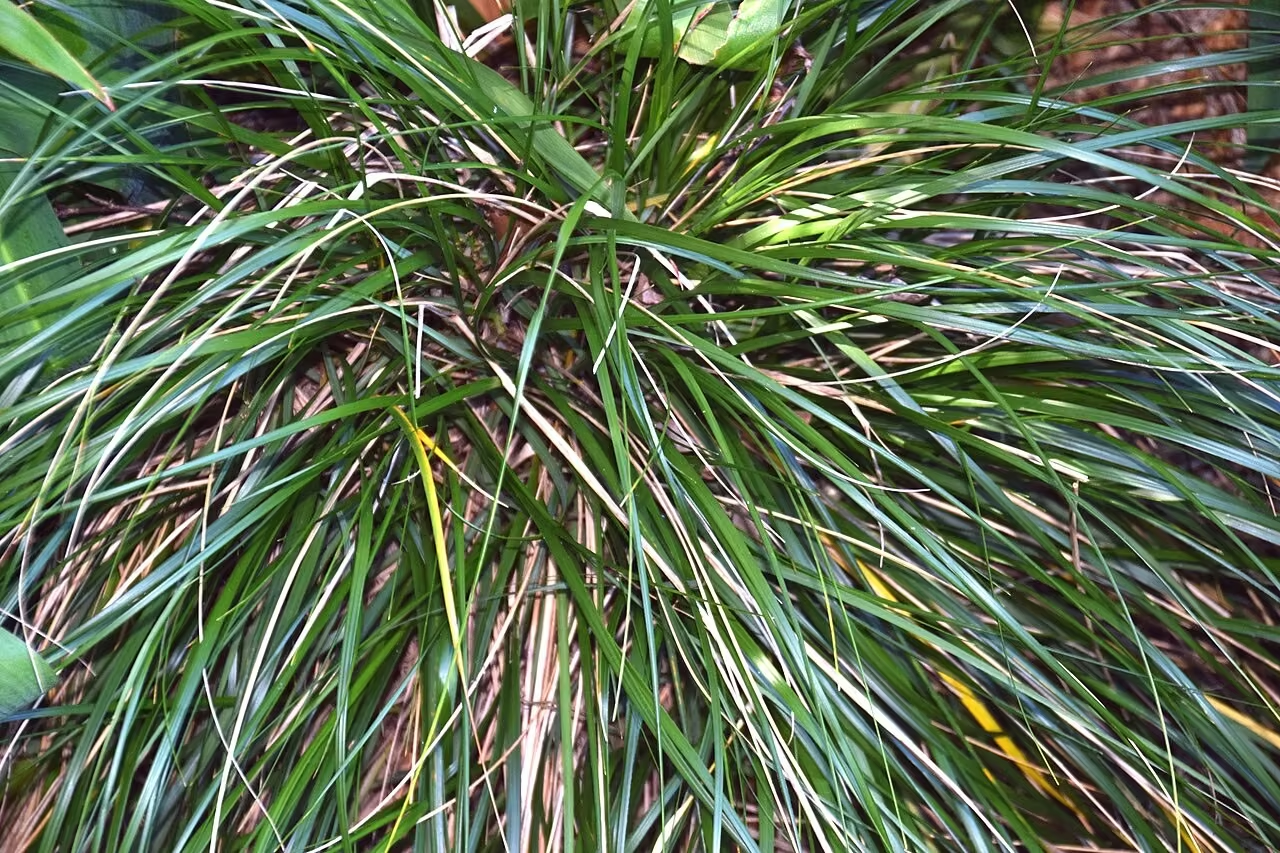
Narrow-Leaved Bush Tussock
Chionochloa cheesemanii
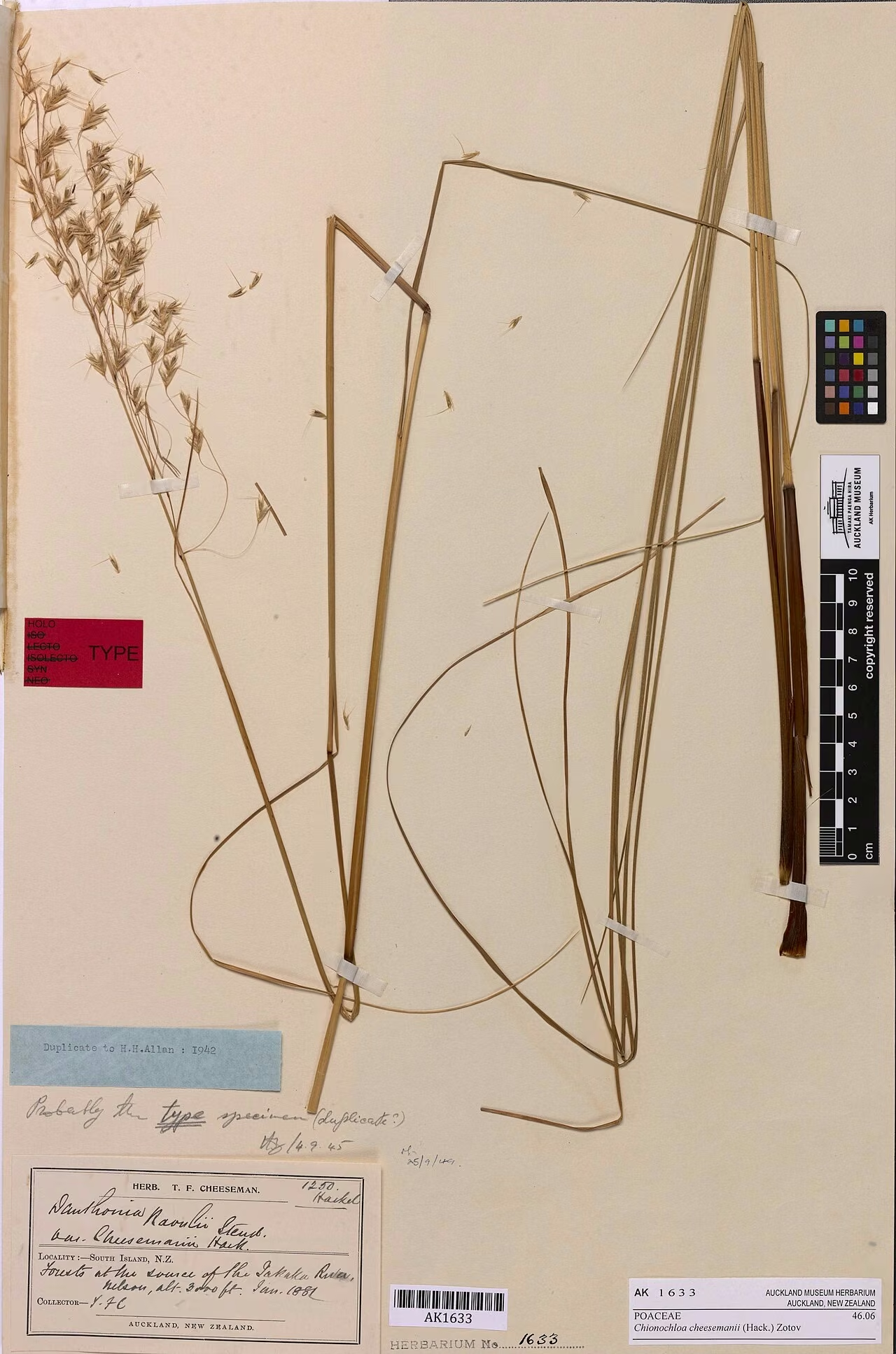
Pungent Snow Tussock
Chionochloa crassiuscula subsp. crassiuscula
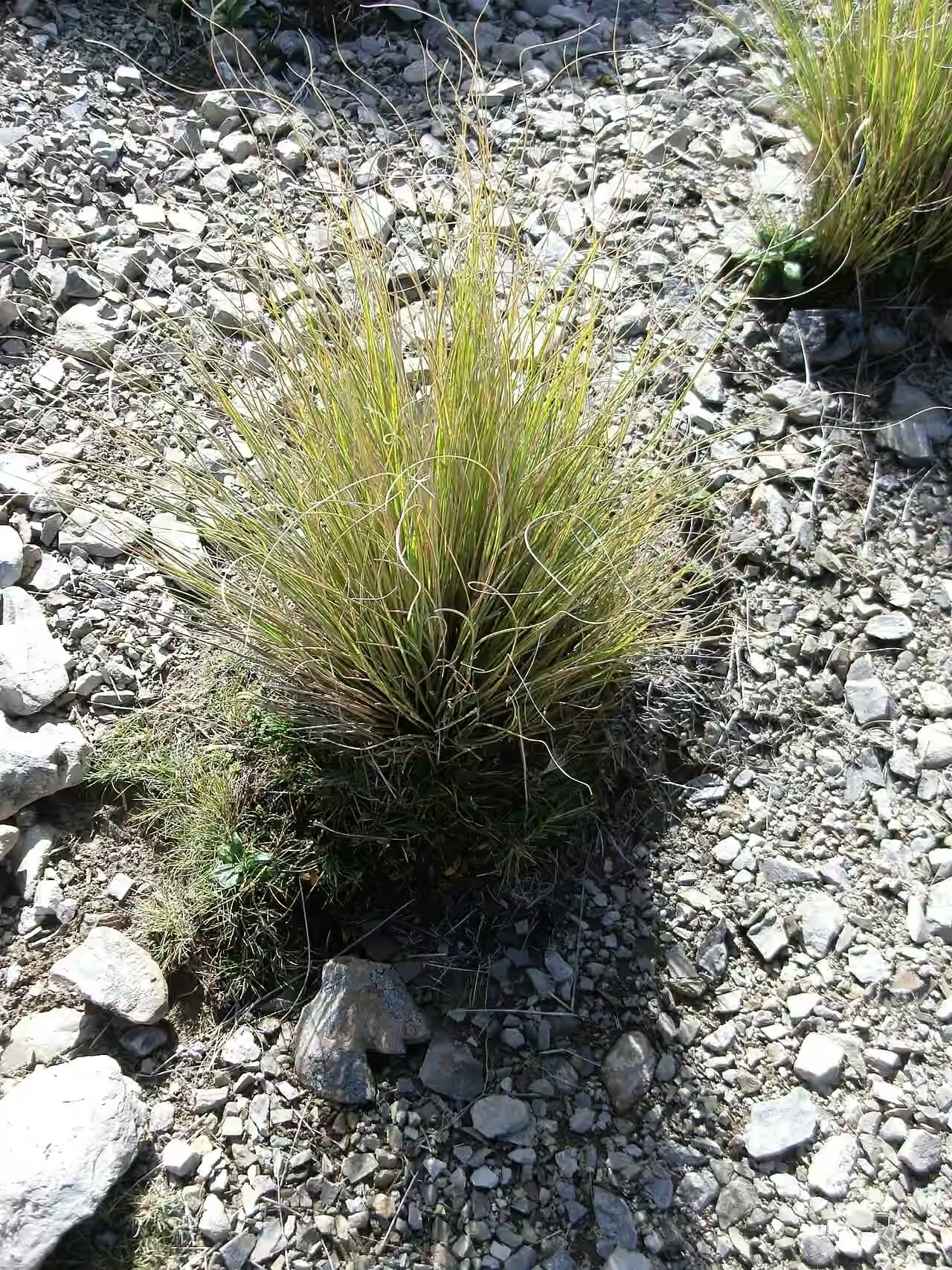
Red Hills Snow Tussock
Chionochloa defracta
Slim Snow Tussock
Chionochloa macra
Plant Conservation
Coastal tussock is ranked At Risk - Naturally Uncommon (2023) with the qualifier Range Restricted, because it is confined to a small number of northern islands and headlands. It is considered Regionally Endangered in the Auckland region and Regionally Naturally Uncommon in Northland.
Many populations are on protected offshore islands, which helps secure the species. Keeping those islands free of introduced predators and browsers, protecting mainland headland sites from weeds and grazing, and using locally sourced seed in coastal restoration are the actions that most benefit it.
Frequently Asked Questions
Why is Chionochloa bromoides called seabird tussock?
It grows on offshore islands and headlands where seabirds nest, and NZPCN notes that its bases are often heavily burrowed by birds such as diving petrels.
Where does coastal tussock grow naturally?
It is confined mainly to northern offshore islands and eastern headlands from the Bay of Islands south to the Poor Knights, Hen and Chickens and Mokohinau Islands, with one western outlier at Maunganui Bluff.
Is coastal tussock hard to grow?
NZPCN says it can be difficult. It is best raised from fresh seed, planted where it is to stay because it resents root disturbance, and given full sun and very free drainage, as it dislikes humidity.
Is Chionochloa bromoides a snow tussock?
It belongs to the snow tussock genus Chionochloa, but unlike its mountain relatives it grows only at the coast on cliffs, rock stacks and islands in northern New Zealand.
Sources and Further Reading
The botanical, growing, and conservation details for Coastal Tussock (Chionochloa bromoides) on this page draw on the New Zealand plant references below. Consult them for full technical records and the latest distribution data.