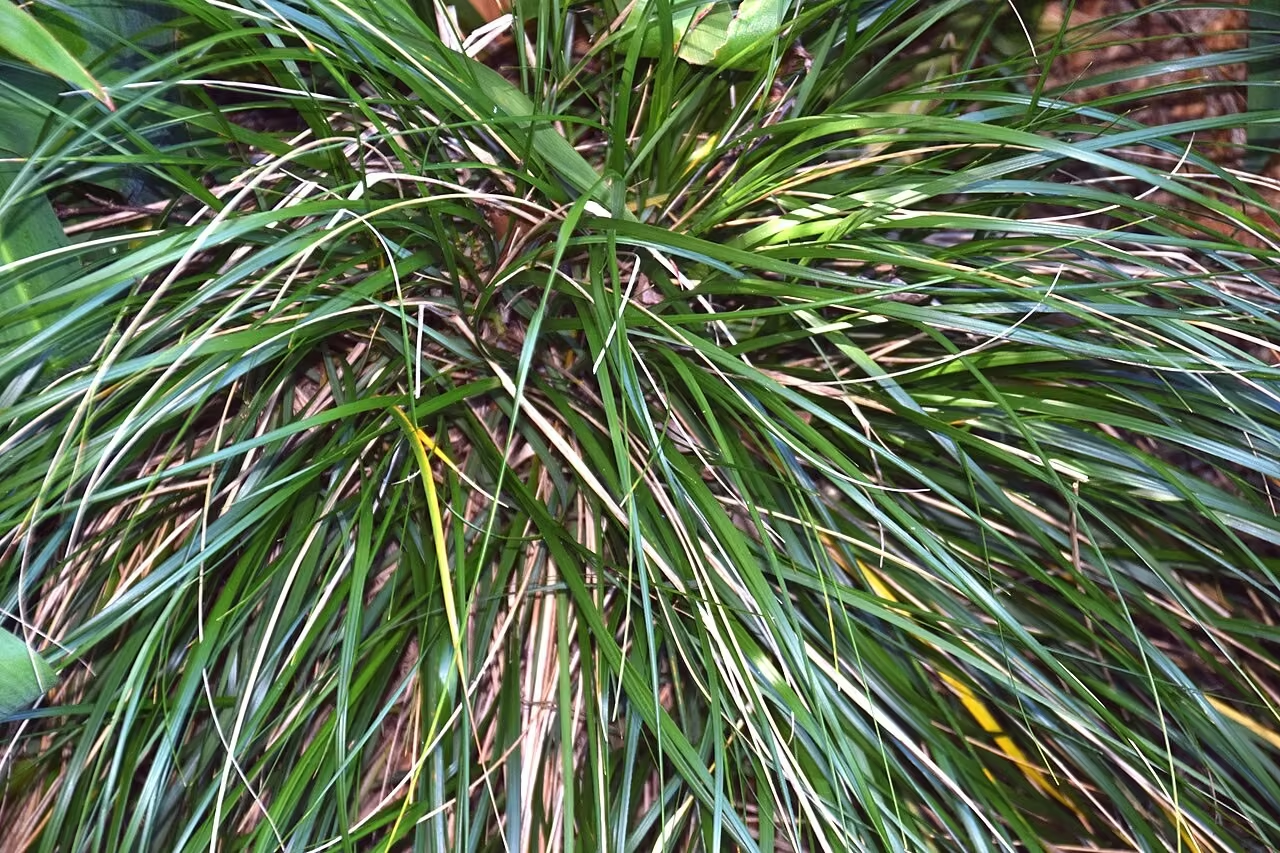
Beddie's Tussock
Chionochloa beddiei
Last updated:
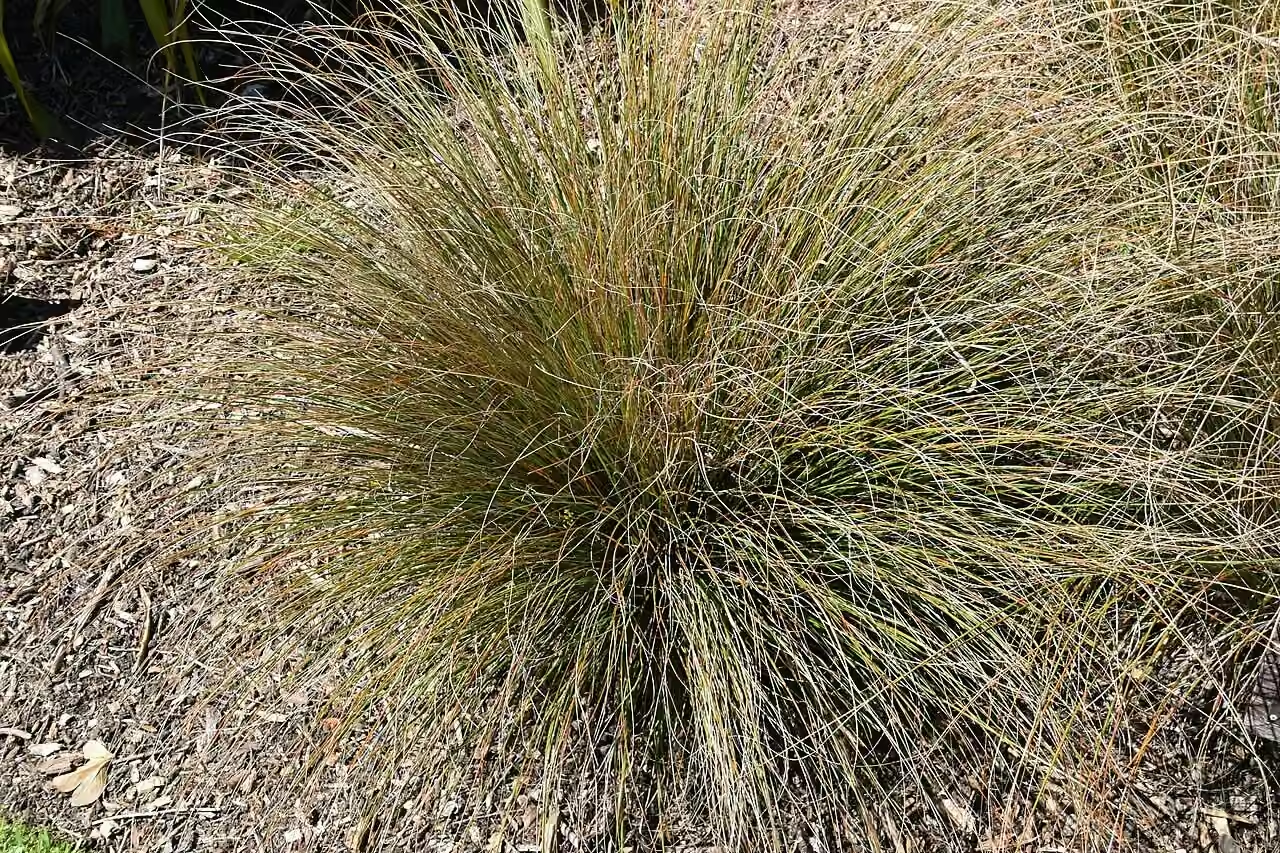
Beddie's tussock, or Cook Strait tussock (Chionochloa beddiei), is a small, shiny snow tussock found only on the southern coast of the North Island, from about the Orongorongo River east to White Rock beyond Cape Palliser. It forms stiff, widely spreading clumps of persistent leaves, with flowering stems to about 75 cm carrying tight, bristly seed heads in early summer. Unusually for a snow tussock it is a coastal plant, growing on wind-battered bluffs, cliffs and talus slopes, sometimes extending a short way inland. It is ranked Threatened - Nationally Vulnerable and is grown by some native nurseries for coastal gardens. Explore more native grasses and flaxes in our native plant guide.
Plant Description
Chionochloa beddiei is a short, shiny tussock with stiff, widely spreading shoots and leaves that persist on the plant rather than falling away. The leaf blades are up to 60 cm long and about 4 mm wide, giving the clump a bristly, glossy appearance.
Flowering stems (culms) reach about 75 cm. The panicle is tight and congested, up to about 15 cm long with short branches, and appears bristly because of the awns. Flora of New Zealand notes prickle-teeth on both the glumes and the lemma lobes. Flowering is from November to December and seed ripens from December to May.
Its short stature, stiffly spreading glossy leaves and coastal cliff habitat separate it from the taller inland snow tussocks. Some Marlborough Sounds plants once referred to this species may be hybrids between C. beddiei and C. flavescens, but C. beddiei has not been confirmed there.
Quick Facts
| Scientific Name | Chionochloa beddiei |
|---|---|
| Height | 0.6-0.75 m in flower |
| Spread | 0.4-0.8 m |
| Water Needs | Low once established; excellent drainage essential |
| Light | Full sun |
| Frost Tolerance | Good; recorded up to about 850 m inland |
| Salt Tolerance | High; grows on coastal cliffs exposed to salt spray |
| Growth Rate | Slow to moderate |
| Lifespan | Long-lived perennial |
Climate Best Suited to
Suits windy, exposed maritime climates with cool summers. It dislikes humidity, so it performs best in breezy, well-ventilated coastal sites rather than sheltered, muggy gardens.
Regional Suitability
| City | Climate Suitability |
|---|---|
| Auckland | Low |
| Wellington | High |
| Christchurch | Medium |
| Dunedin | Medium |
Plant Habitat
This tussock is endemic to the North Island, on the South Wellington coast from about the Orongorongo River east to White Rock, east of Cape Palliser. The type specimen was collected by A.D. Beddie in 1935 at a river mouth on Palliser Bay. Flora of New Zealand records it from sea level up to about 850 m, extending inland up to about 10 km.
It is mainly coastal and lowland, growing on coastal bluffs, cliffs, talus slopes and sparsely scrub-covered promontories, occasionally extending short distances inland. These steep, rocky, wind-exposed sites face Cook Strait and Palliser Bay.
Growing Requirements
Soil Requirements
It grows on thin, rocky soils and talus on coastal cliffs, so sharp drainage is essential in cultivation.
- Rocky, gravelly or stony soil
- Excellent drainage; avoid heavy clay
- Suits stone walls and raised beds
Light Requirements
NZPCN recommends full sun, matching its open, exposed cliff habitat.
- Full sun all day
- Open, airy positions without crowding
Water Requirements
Once established it copes with dry, windy conditions, but it rots in poorly drained, humid sites.
- Water young plants until roots establish
- Never leave standing in wet soil
- Avoid overhead watering in humid weather
Planting and Establishing
Plant young plants straight into their permanent position, since NZPCN warns they resent much root disturbance. Choose a sunny, freely draining site such as a rocky bank, coastal slope, stone wall or raised bed.
Space plants so air can move freely around each tussock, which helps avoid the humidity it dislikes. Use eco-sourced plants from the Wellington south coast for restoration projects in its natural range.
Ecological Role
Beddie's tussock is part of the coastal cliff and bluff vegetation of the south Wellington and Palliser Bay coast, where its dense clumps help hold thin soils and talus on steep slopes. Its florets are dispersed by wind.
Like other snow tussocks it offers shelter for invertebrates and lizards among its persistent leaf bases, though specific studies of fauna using this species were not found. The Recruitment Failure qualifier in its threat listing indicates that few new plants are establishing in the wild.
Uses & Significance
Garden Uses
A compact, glossy tussock well suited to exposed coastal gardens and rock gardens in the Wellington region.
- Coastal gardens exposed to wind and salt
- Rock gardens, stone walls and raised beds
- Erosion control on dry slopes
- Coastal restoration within its natural range
Ecological Value
As one of New Zealand's most localised tussocks, it is a signature plant of the rugged south Wellington coast.
- Stabilises cliffs, talus and coastal banks
- Provides shelter for small fauna
- Endemic to a short stretch of coastline
Landscaping Uses
Mass plantings on a coastal bank give a bristly, glossy texture that moves in the wind. Combine with other south coast natives such as small coprosmas, flax and coastal hebes for a natural look.
In smaller gardens a single plant set into a stone wall or among boulders makes a neat architectural feature.
Seasonal Care Calendar
Spring
New leaf growth begins and plants can be planted out.
- Plant young plants into permanent positions
- Water until established
Summer
Flowering occurs from November to December, with tight, bristly panicles above the leaves.
- Water new plants during dry spells
- Enjoy the flowering heads
Autumn
Seed ripens from December through to May.
- Collect fresh seed for sowing
- Remove only dead flower stems if untidy
Winter
The evergreen clumps hold up well to winter gales and salt.
- Check drainage after heavy rain
- Avoid disturbing roots
When to Prune and How Much
Little pruning is needed. Remove old flowering stems once seed has dropped if you prefer a tidy look.
Do not cut the tussock back hard; its persistent leaves are part of its character, and severe cutting can weaken the plant. Dead leaves can be gently combed out with gloved hands.
How to Grow Beddie's Tussock
NZPCN notes that Chionochloa beddiei can be difficult to propagate and is best grown from fresh seed. Seed ripens from December to May after flowering in November and December. Because established plants resent root disturbance, seedlings should be moved into their final positions while young rather than being grown on in pots for years. Division is not suggested in the sources consulted and is unlikely to succeed given how poorly the plant tolerates disturbance. For restoration within its natural range, collect seed only from local south coast populations, with permission, so that eco-sourced plants are used and the genetics of the wild populations are kept intact.
From Seed
Collect the seed heads in late summer or autumn when the florets loosen and begin to fall. Snow tussocks flower heavily in some years and sparingly in others, so take advantage of good seed years.
Sow seed fresh, as tussock seed usually loses viability with storage.
Deep pots or root trainers suit tussock seedlings because they develop long roots early; transplanting from these causes less root damage than lifting seedlings from a shallow tray once they are larger.
- Collect ripe florets from December to May
- Sow fresh on the surface of a gritty, free-draining seed mix
- Cover lightly with fine grit and keep just moist
- Place in full light with good air movement to avoid damping off
- Prick out seedlings carefully into individual deep pots or root trainers
- Plant out while still young to avoid root disturbance later
Pests & Diseases
No specific pests are recorded. The main cultivation problem is rot in humid or poorly drained conditions, which NZPCN notes this species dislikes.
In the wild, weeds on coastal cliffs and browsing by introduced animals may affect seedlings, contributing to the poor recruitment noted in its threat listing.
Cultural Significance
No traditional Māori name or use specific to Chionochloa beddiei is recorded in the sources consulted.
The species was described by Victor Zotov and named after A.D. Beddie, who collected the type specimen at a river mouth on Palliser Bay in 1935. The genus name Chionochloa means snow grass.
Bonus Tip
Plant Beddie's tussock as a small seedling directly into a gap in a dry stone wall or rock bank. The cool root run among the stones and sharp drainage closely match its cliff habitat, and planting it young avoids the root disturbance that established plants dislike.
Related Plants
Explore other native plants that share similar characteristics or habitats with Beddie's Tussock (Chionochloa beddiei), offering further insights into New Zealand's diverse flora. These related species provide context and opportunities for complementary planting in your garden.
Centrolepis strigosa
Centrolepis strigosa
Ceratocephala pungens
Ceratocephala pungens
Chaerophyllum ramosum
Chaerophyllum ramosum
Glaucous Goosefoot
Oxybasis ambigua
Coastal Tussock
Chionochloa bromoides
Narrow-Leaved Bush Tussock
Chionochloa cheesemanii
Pungent Snow Tussock
Chionochloa crassiuscula subsp. crassiuscula
Red Hills Snow Tussock
Chionochloa defracta
Plant Conservation
Chionochloa beddiei is ranked Threatened - Nationally Vulnerable (2023) with the qualifiers Sparse, Range Restricted and Recruitment Failure. It was previously listed as At Risk - Naturally Uncommon from 2009 to 2017.
Weed control and pest animal management along the south Wellington and Palliser Bay coast, protection of cliff habitats, and planting eco-sourced stock in restoration projects all help this localised tussock.
Frequently Asked Questions
Where does Beddie's tussock grow?
It is endemic to the south Wellington coast, from about the Orongorongo River east to White Rock beyond Cape Palliser, on coastal bluffs, cliffs, talus slopes and sparsely scrubby promontories.
How big does Chionochloa beddiei grow?
It is a short tussock with leaves up to 60 cm long and 4 mm wide and flowering stems to about 75 cm tall; Nelson Natives gives a spread of about 40 to 80 cm.
How do you grow Cook Strait tussock in a garden?
NZPCN advises full sun and freely draining soil or a stone wall, planting young plants where they are to grow because they resent root disturbance, and avoiding humid conditions.
Why is Chionochloa beddiei threatened?
It has a very small natural range and sparse populations, and its 2023 ranking of Nationally Vulnerable includes the qualifier Recruitment Failure, meaning too few young plants are establishing.
Sources and Further Reading
The botanical, growing, and conservation details for Beddie's Tussock (Chionochloa beddiei) on this page draw on the New Zealand plant references below. Consult them for full technical records and the latest distribution data.