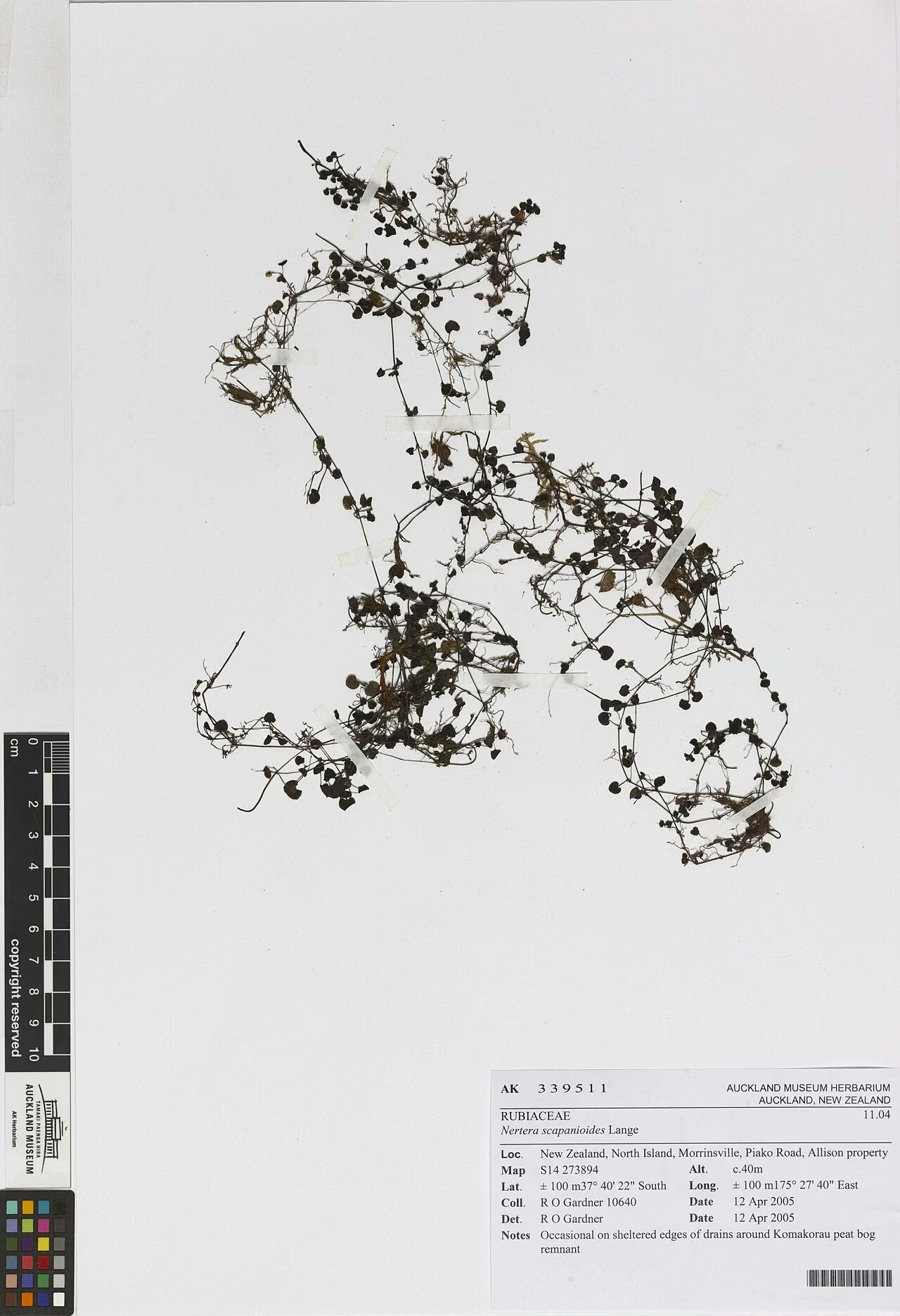
Bead Plant
Nertera scapanioides
Last updated:
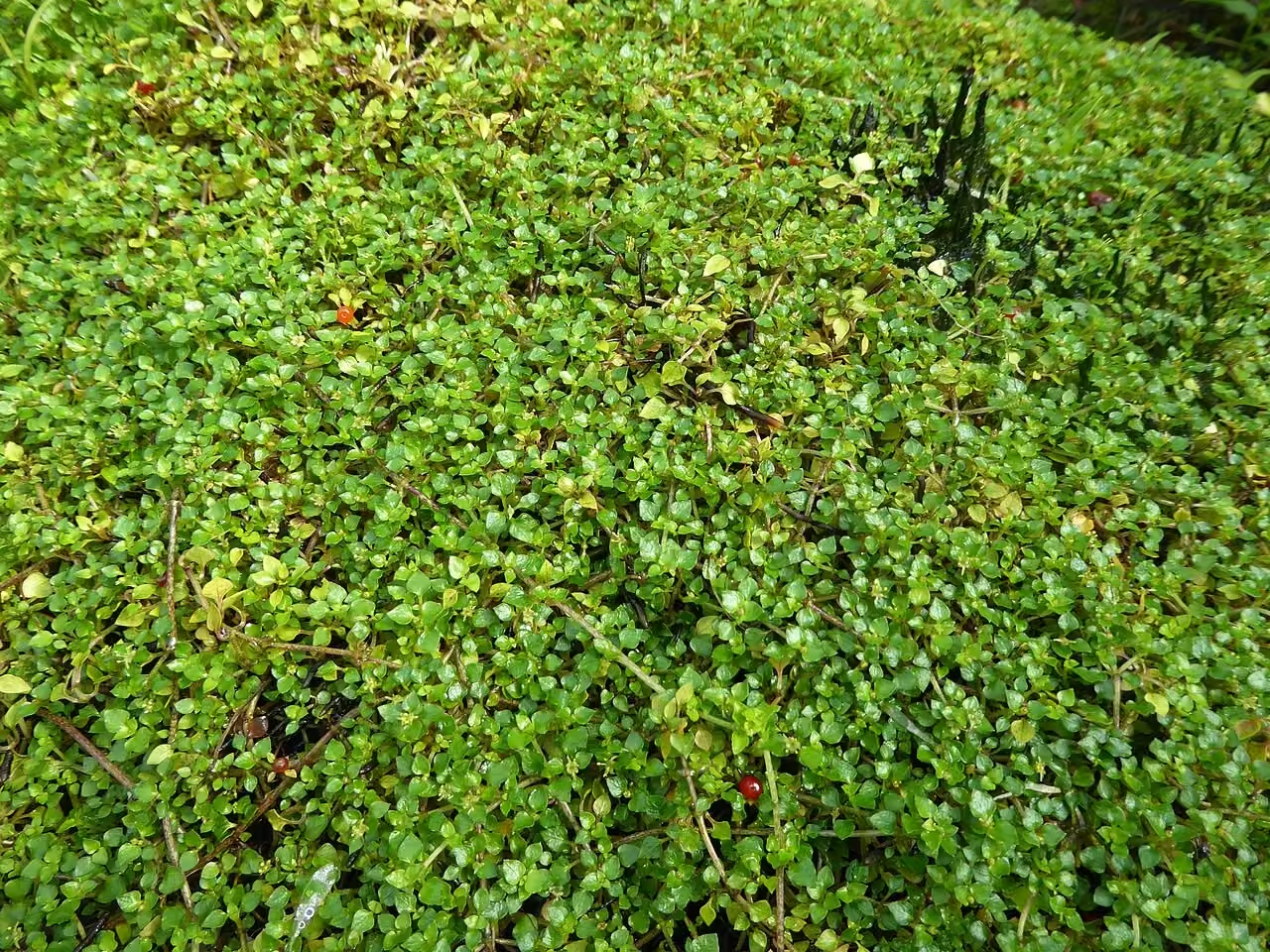
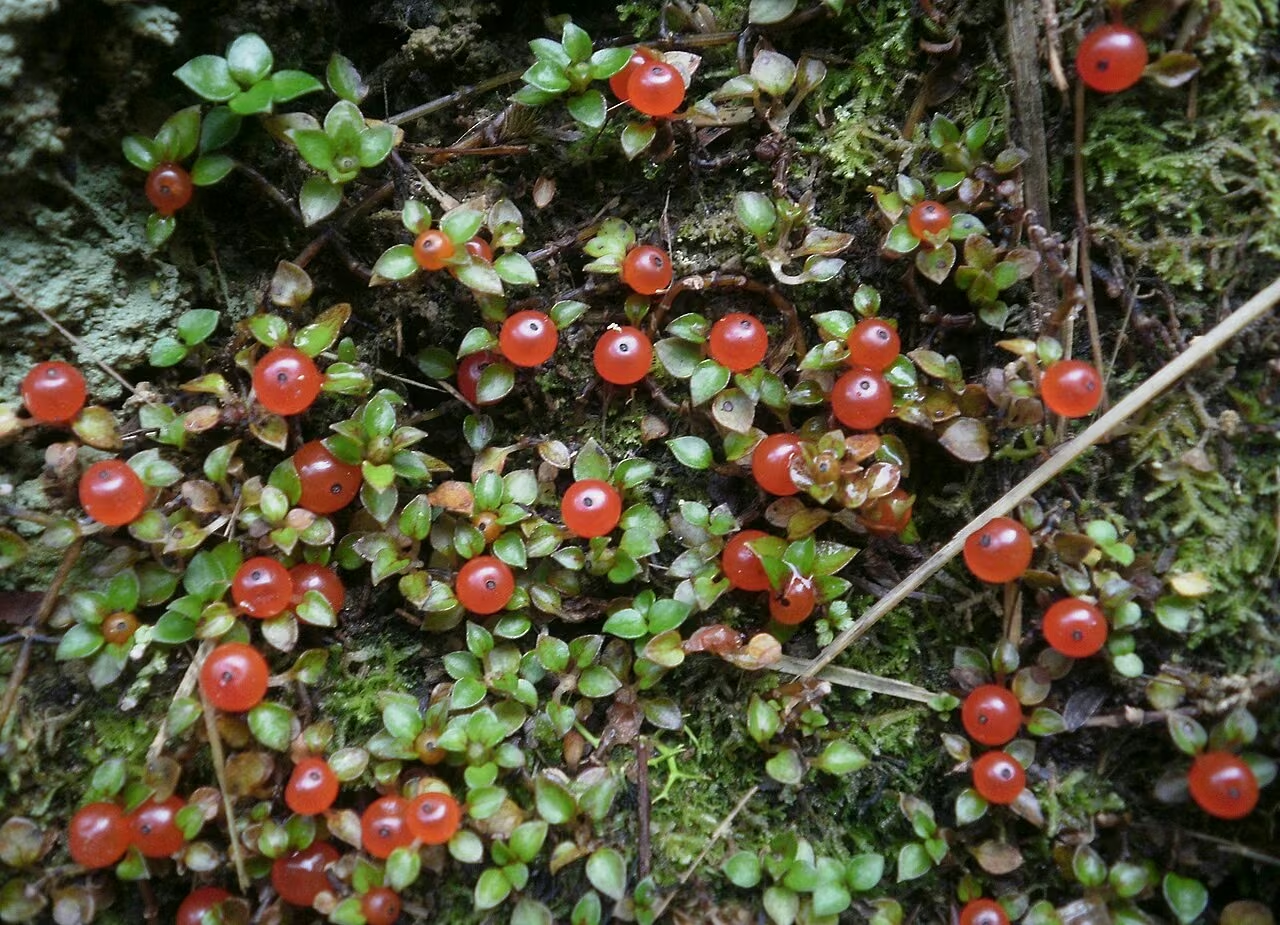
Nertera scapanioides is a small creeping herb in the coffee family that forms mats or loose cushions about 5 cm deep in peaty wetlands, usually where Sphagnum moss grows. Its rounded, heart-based leaves are up to about 7 mm across and almost hairless, and from late spring into autumn it carries bright orange round fruit about 4 mm wide. It is endemic to New Zealand, recorded from the North, South, Stewart and Chatham Islands from near sea level to 1200 m. Nationally it is Not Threatened, but it is declining in Auckland and uncommon in Northland, where wetland loss and stock grazing have reduced its habitat. Explore more native ground covers in our native plant guide.
Plant Description
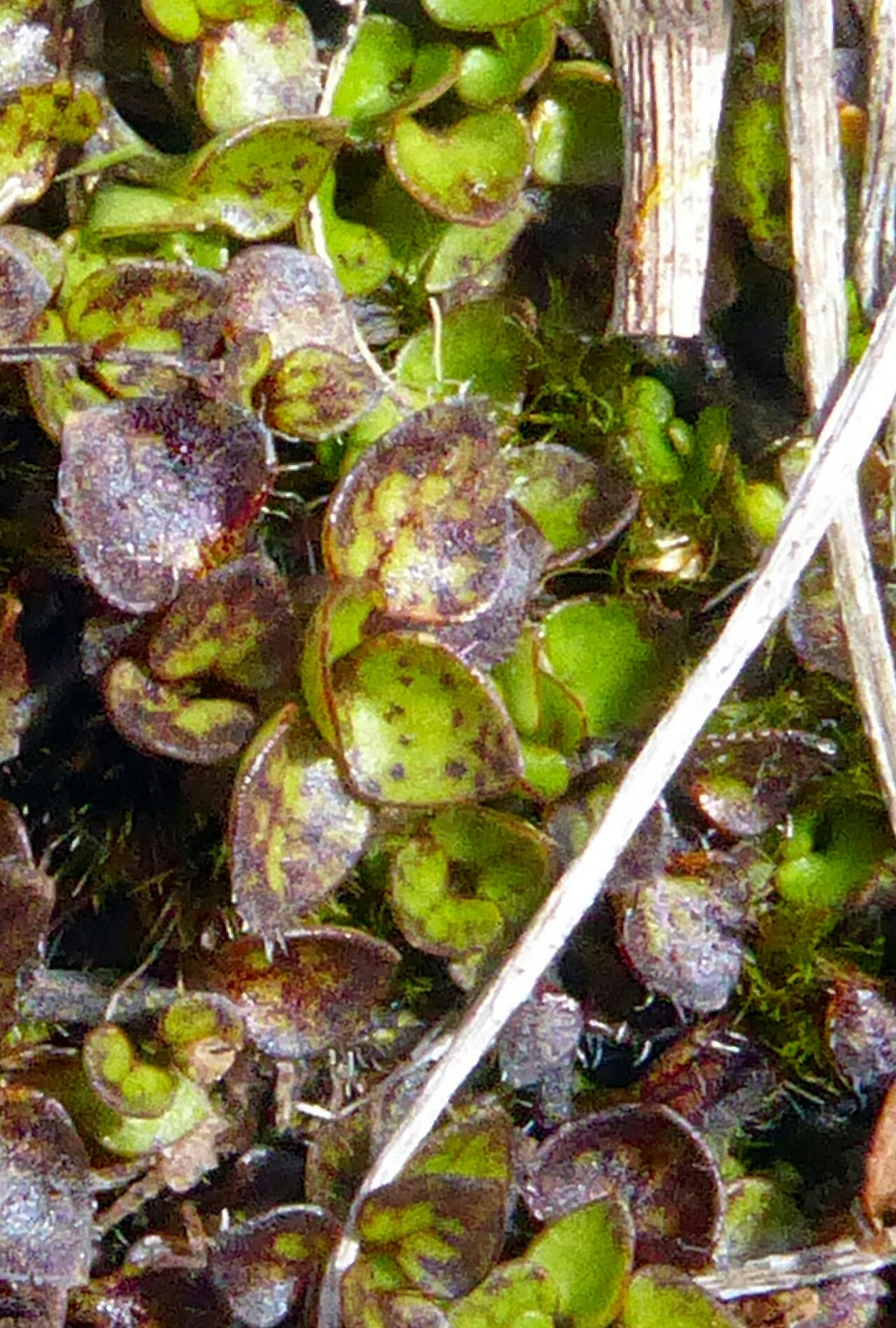
Nertera scapanioides is a creeping perennial herb forming mats or loose cushions to about 5 cm deep. Its stems are round, 0.4 to 1 mm thick and hairless or sparsely hairy. Small triangular stipules fuse above the leaf-stalk bases to form a low sheathing collar. The leaves sit on flattened stalks up to about 5 mm long, and the blades are up to about 6.5 mm long and 7 mm wide, broad-ovate to almost round, rounded at the tip and heart-shaped (cordate) at the base.
The flowers are solitary, stalkless and borne at the shoot tips between a pair of slightly reduced leaves. Each has a funnel-shaped corolla with a tube about 1 mm long and four lobes of similar length. The fruit is a more or less globose drupe about 4 mm across that ripens bright orange, containing seeds about 2.3 mm long.
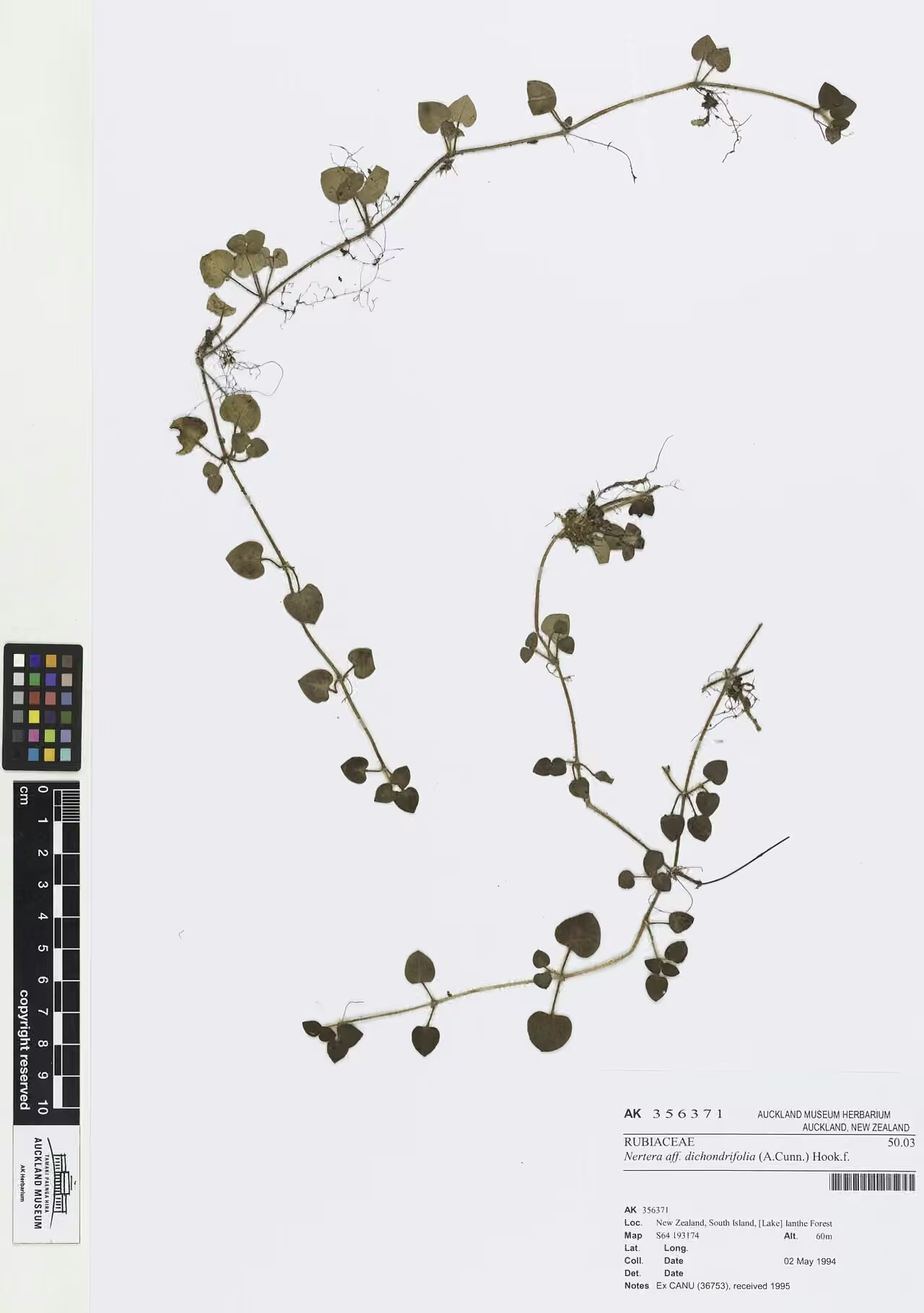
Nertera dichondrifolia is the most similar species but is covered in fine short hairs, whereas Nertera scapanioides is almost hairless. In fruit it can be mistaken for Nertera depressa, which has smaller leaves with olive or brown colouring and a pungent foul smell when crushed.
Quick Facts
| Scientific Name | Nertera scapanioides |
|---|---|
| Height | Mats about 0.05 m deep |
| Spread | Forms spreading mats and loose cushions |
| Water Needs | Wet; permanently moist peat |
| Light | Full sun to light shade |
| Frost Tolerance | High; grows up to 1200 m |
| Salt Tolerance | No information available |
| Growth Rate | Slow to moderate |
| Lifespan | Perennial |
Climate Best Suited to
Tolerates a wide range of temperate climates from coastal lowlands to montane bogs, provided its peaty wetland habitat stays wet.
Regional Suitability
| City | Climate Suitability |
|---|---|
| Auckland | Medium |
| Wellington | Medium |
| Christchurch | Medium |
| Dunedin | High |
Plant Habitat
Nertera scapanioides is endemic to New Zealand and is found on Te Ika-a-Māui (North Island), Te Waipounamu (South Island), Rakiura (Stewart Island) and Rēkohu (Chatham Island). It ranges from the northern North Island to Southland but is less common on the Central Plateau and in the Arthur's Pass area.
It occurs from coastal to montane elevations, 0 to 1200 m, and is characteristic of peaty wetlands where Sphagnum mosses also grow. There it creeps through the moss carpet, often forming loose cushions on hummocks.
Growing Requirements
Soil Requirements
It roots into wet, acidic peat and living Sphagnum moss rather than mineral soil.
- Acidic, low-nutrient peat
- Live Sphagnum moss as a growing surface
- Avoid fertilisers and lime
Light Requirements
Peat wetlands are generally open, so it receives good light among low vegetation.
- Open, sunny to lightly shaded bogs
- Becomes shaded out if tall rushes or shrubs invade
Water Requirements
It needs permanently wet conditions, like the bogs in which it grows.
- Never allow the peat to dry
- Rainwater is preferable to hard tap water in cultivation
Planting and Establishing
Nertera scapanioides is a specialist plant for bog gardens. Plant it into a peat or Sphagnum bed that stays permanently wet, such as a lined bog garden beside a pond, and allow it to creep through the moss.
For wetland restoration it is best encouraged by restoring hydrology and excluding stock, so that existing plants can spread, rather than by planting.
Ecological Role
Nertera scapanioides is part of the distinctive small-herb community of New Zealand Sphagnum bogs, growing alongside mosses and other low wetland plants. Its orange fruit is fleshy and conspicuous, suggesting dispersal by birds, but dispersers have not been documented in the sources consulted.
Because it depends on intact peat wetlands, its presence is an indicator of relatively unmodified bog habitat.
Uses & Significance
Garden Uses
Only practical where a permanently wet, acidic bog garden can be maintained.
- Sphagnum bog gardens
- Pond margins with peaty soil
- Specialist wetland plant collections
Ecological Value
An endemic herb of peat wetlands, one of New Zealand's most reduced ecosystem types.
- Characteristic of Sphagnum peatlands
- Indicator of intact bog hydrology
- Provides orange fleshy fruit over a long season
Landscaping Uses
In a constructed bog garden, combine Nertera scapanioides with Sphagnum, sundews and small sedges to recreate a natural peatland scene. Its orange fruit gives colour through summer and autumn.
Keep taller plants such as rushes and flax at the back or edges of the bog so they do not shade the low mats.
Seasonal Care Calendar
Spring
Growth resumes and flowering begins in November.
- Check water levels in the bog garden
- Weed out invading grasses
Summer
Flowering continues to January while the first orange fruit ripens.
- Top up with rainwater in dry spells
- Do not let the peat dry
Autumn
Fruit persists through autumn until about May.
- Collect fruit for sowing
- Remove fallen leaves from the moss
Winter
Occasional fruit may last to July, and plants sit dormant in cold wet peat.
- No intervention needed
- Avoid trampling bog surfaces
When to Prune and How Much
No pruning is required. The mats grow slowly through the moss and need little intervention.
Remove competing grasses and rushes by hand so the low cushions keep receiving light.
How to Grow Bead Plant
Nertera scapanioides is not commonly grown, and no specific propagation protocol was found in the sources consulted. The methods below follow the approach that works for other creeping Nertera species: sowing fresh seed and separating rooted stems. The key difference for this species is the growing medium, which should mimic its natural habitat of wet, acidic peat and Sphagnum moss rather than ordinary potting mix. Keep containers standing in a tray of rainwater so the mix never dries. Only use material from cultivated plants, or collect small amounts with landowner and Department of Conservation permission, because the species is declining in parts of its range.
From Seed
Fruit ripens bright orange from November to May. The seeds are about 2.3 mm long and should be sown fresh.
- Collect fully ripe orange fruit
- Squash and rinse the seed free of pulp
- Sow on the surface of moist chopped Sphagnum or a peat-based mix
- Stand the pot in rainwater in a bright, sheltered place
- Grow seedlings on in the same medium before planting out
By Division
Rooted stems can be teased out of a cultivated mat together with some of the moss they are growing through. Keeping the moss attached protects the fine roots and helps the division settle quickly into its new position.
- Lift a small portion of mat with its moss intact
- Replant into wet Sphagnum or peat
- Keep permanently moist and protected from drying wind
Pests & Diseases
No specific pests or diseases are recorded for Nertera scapanioides.
In the wild, damage comes mainly from habitat change: drainage that dries the peat, trampling and grazing by stock, and invasion of wetlands by taller weeds that shade the mats.
Cultural Significance
No traditional Māori name or use is recorded for Nertera scapanioides in the sources consulted.
The species was named by the Danish botanist Johan Lange. Its epithet compares it to Scapania, a leafy liverwort, an apt description of how it creeps unobtrusively through wet moss.
Bonus Tip
When searching bogs for Nertera, check the Sphagnum hummocks closely for bright orange beads. If the leaves are rounded, almost hairless and have no foul smell when crushed, you are probably looking at Nertera scapanioides rather than the more common Nertera depressa.
Related Plants
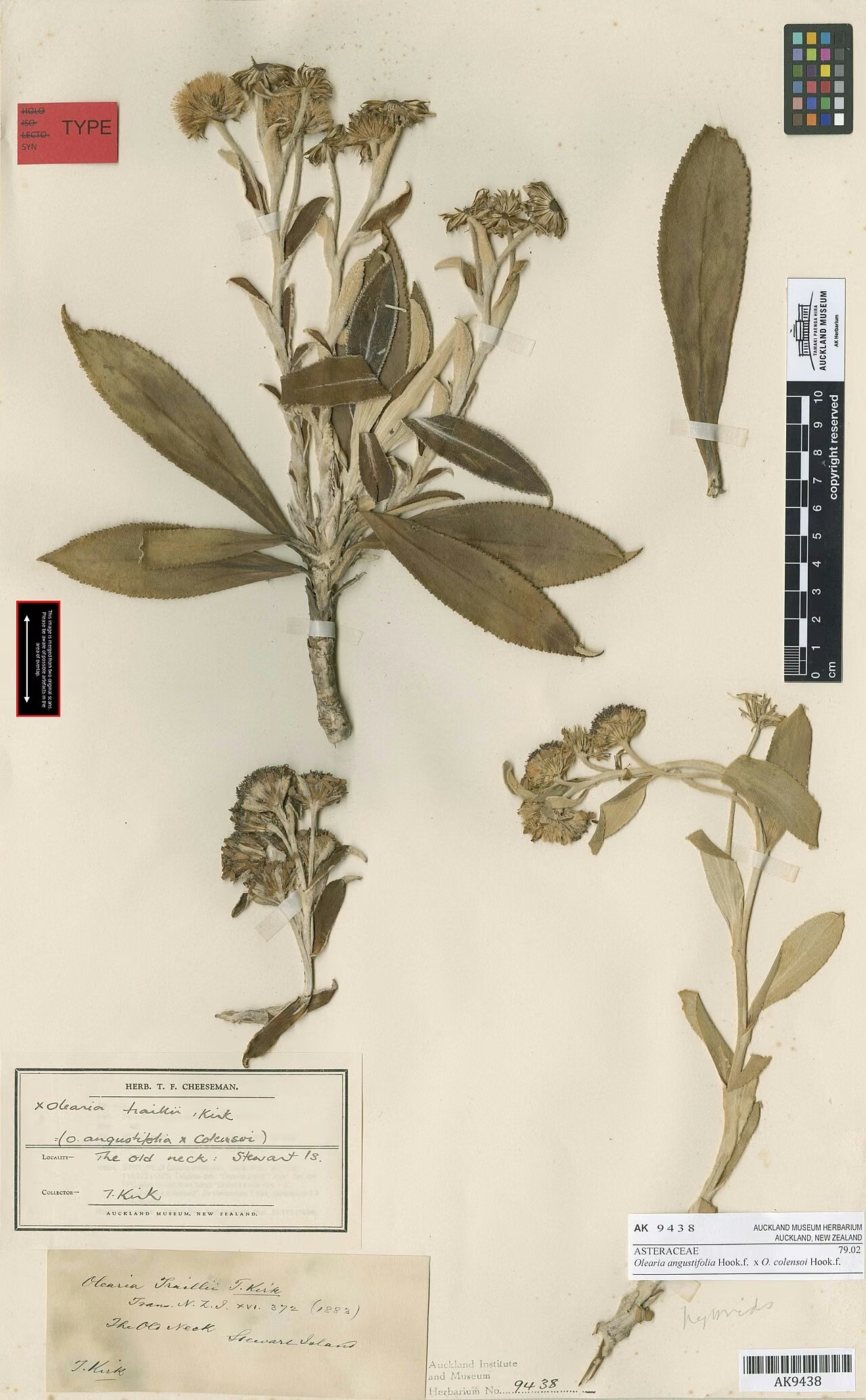
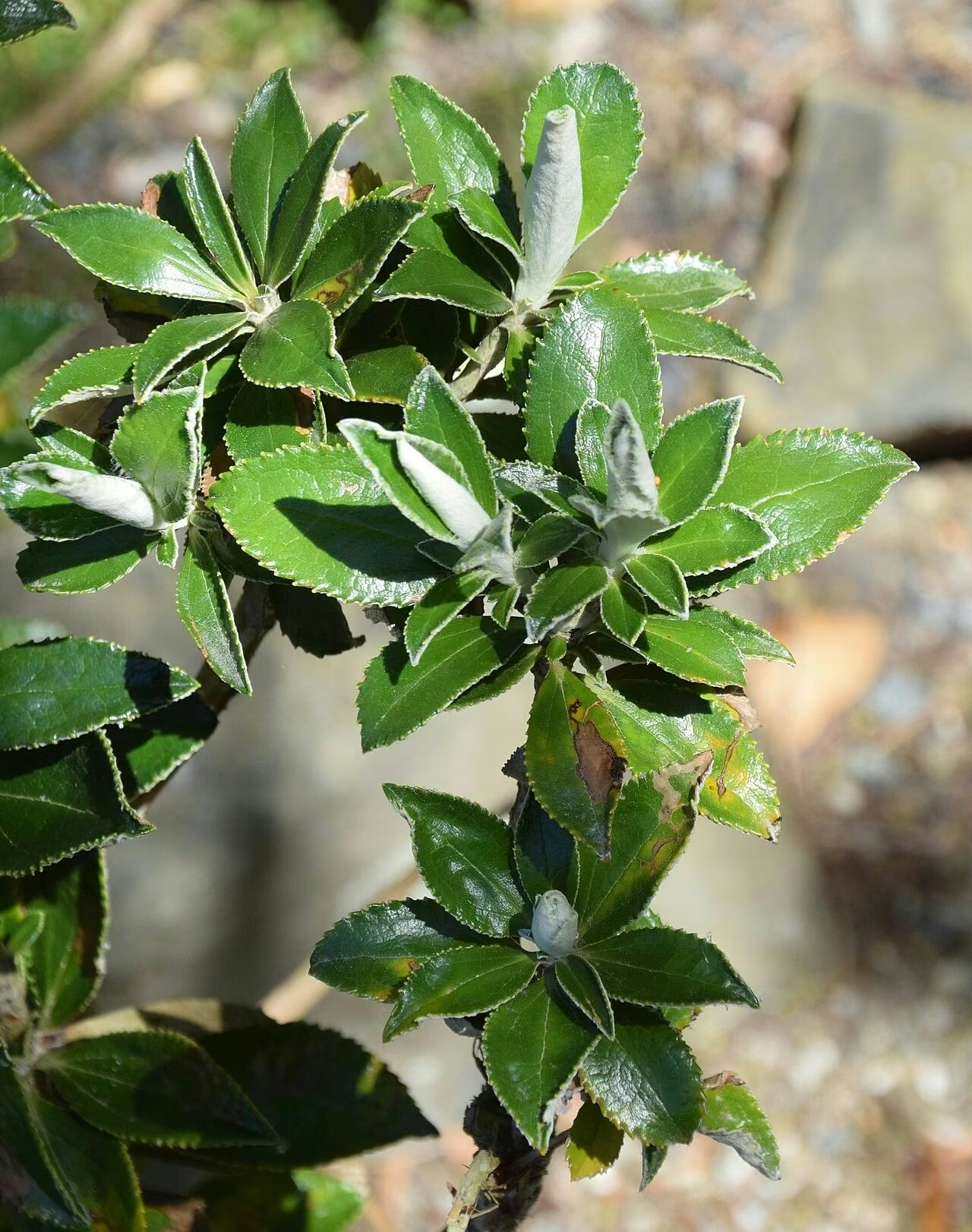
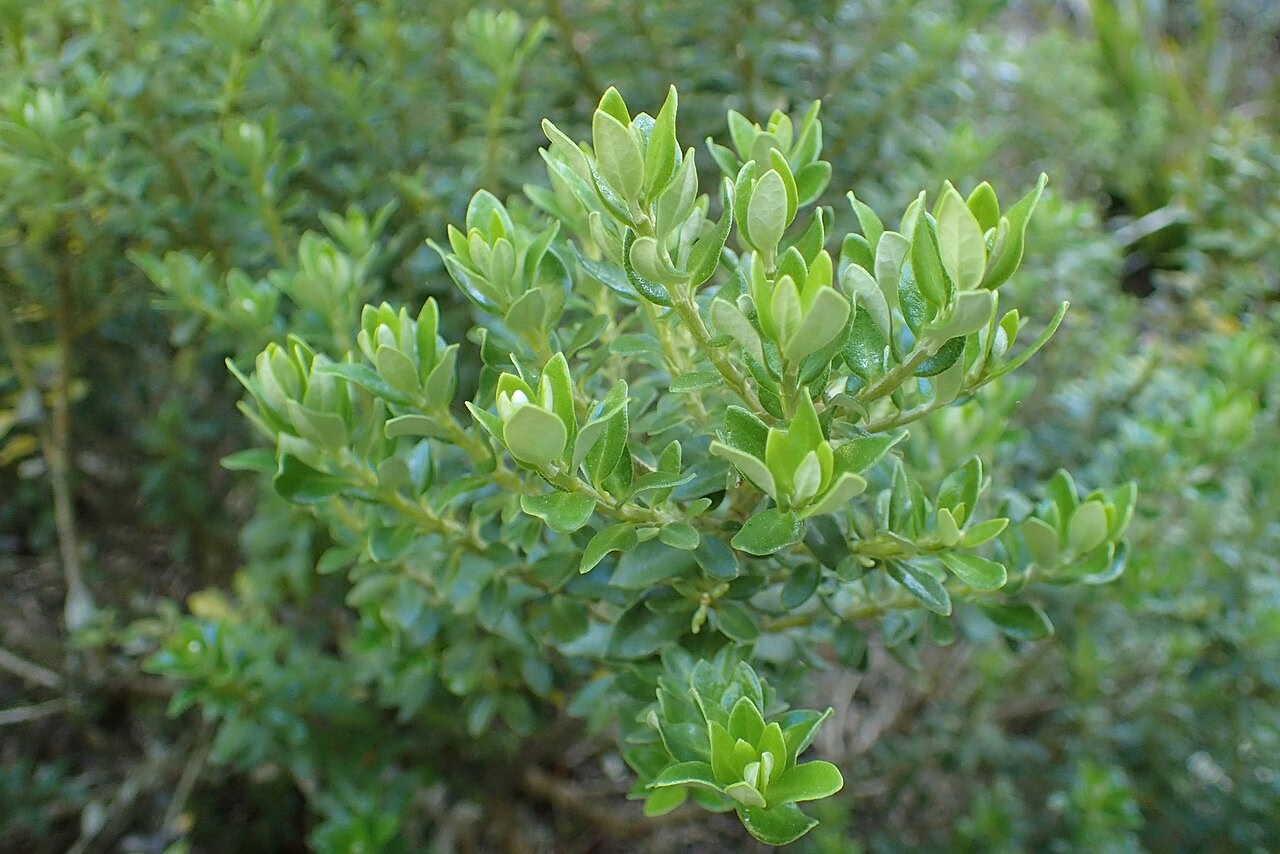
Explore other native plants that share similar characteristics or habitats with Bead Plant (Nertera scapanioides), offering further insights into New Zealand's diverse flora. These related species provide context and opportunities for complementary planting in your garden.
Plant Conservation
Nertera scapanioides is ranked Not Threatened nationally (2023), but it is Regionally At Risk - Regionally Declining in Auckland (2025) and Regionally At Risk - Regionally Naturally Uncommon in Northland (2026).
The main threats are wetland destruction for development and degradation of wetlands by stock grazing. Fencing wetlands, maintaining natural water levels and protecting remaining peatlands are the most effective ways to secure it.
Frequently Asked Questions
What does scapanioides mean?
It means like Scapania, a genus of leafy liverwort. The name refers to the plant's resemblance to a liverwort as it creeps through wet moss.
Where is Nertera scapanioides found?
It grows from coastal to montane areas (0 to 1200 m) on the North, South, Stewart and Chatham Islands, most often in peaty wetlands where Sphagnum mosses also occur. It is less common on the Central Plateau and around Arthur's Pass.
When does Nertera scapanioides fruit?
It flowers from November to January and carries orange fruit from November to May, occasionally as late as July.
What threatens Nertera scapanioides?
NZPCN lists wetland destruction through development and degradation of wetlands by stock grazing as the main threats.
Sources and Further Reading
The botanical, growing, and conservation details for Bead Plant (Nertera scapanioides) on this page draw on the New Zealand plant references below. Consult them for full technical records and the latest distribution data.