Bead Plant
Nertera depressa
Last updated:
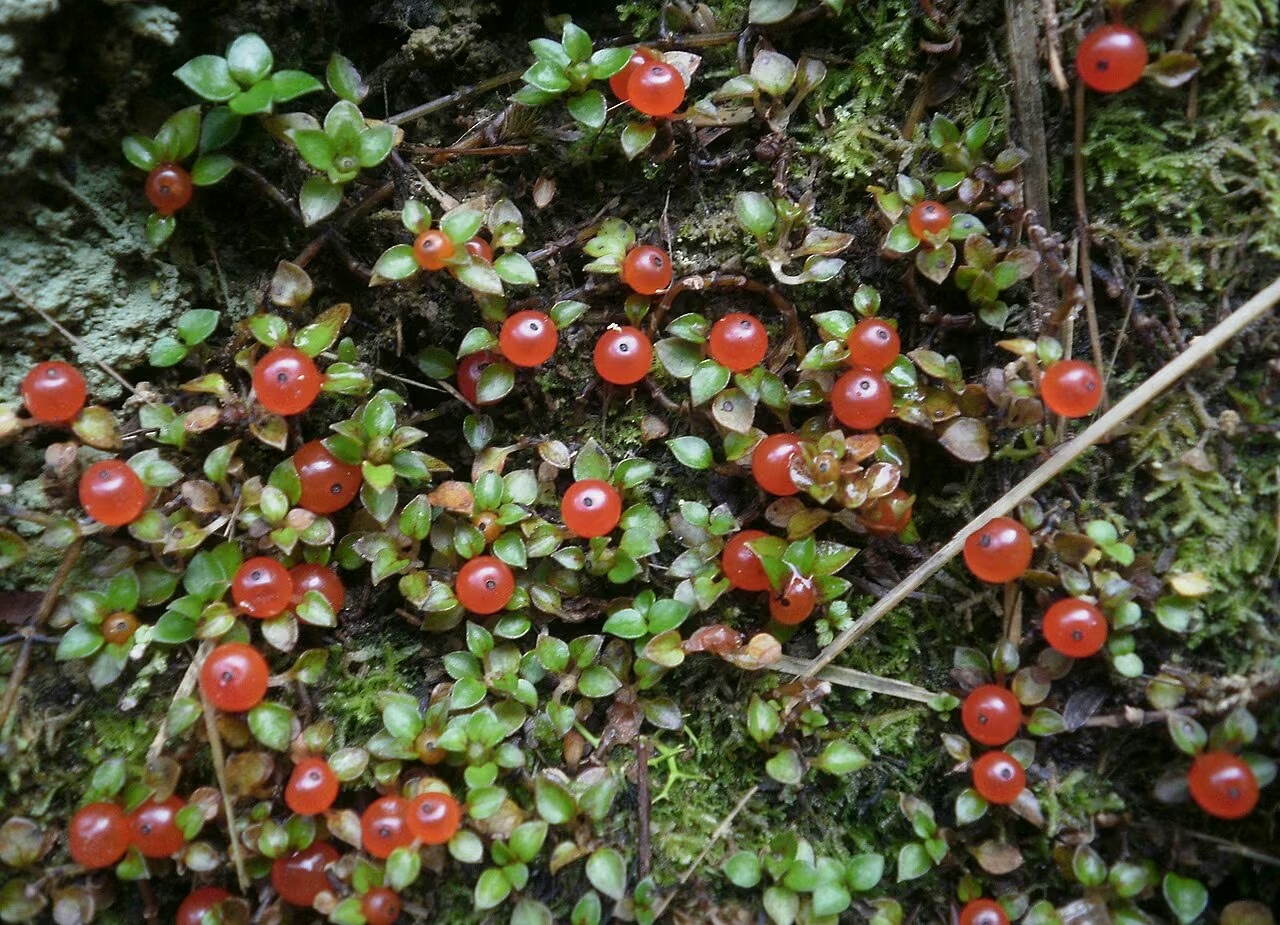
Bead plant (Nertera depressa) is a low creeping herb in the coffee family that forms dense mats of tiny rounded leaves, sometimes up to 3 m across, studded from summer into autumn with glossy red berries about 4 mm wide. It is the most common Nertera in New Zealand, growing in damp forest, scrub, grassland and wet banks on the North, South, Stewart, Chatham and subantarctic islands. It is indigenous rather than endemic, also occurring in Australia, the South Pacific and South America. Crushed leaves give off a foul smell, a quick way to tell it from similar species. It is also called nertera and fruiting duckweed. Explore more native ground covers in our native plant guide.
Plant Description
Nertera depressa is a creeping, mat-forming perennial with slender to stout, much-branched stems usually up to 30 cm long and occasionally reaching 1 m, rooting freely at the nodes. Over time a single plant can build a patch up to 3 m across. The leaves are small, 3 to 15 mm long and 2 to 10 mm wide, ovate to almost round, on stalks 1 to 4 mm long. They are hairless or carry only the odd hair, and are often tinged olive or brown.
The flowers are tiny, green to yellow and sit in the leaf axils and at the shoot tips, with a short-tubed corolla only 2 to 3 mm long. They appear from November to February and are followed by globose, glossy fruit about 4 mm across that ripen bright to dark red between December and May.
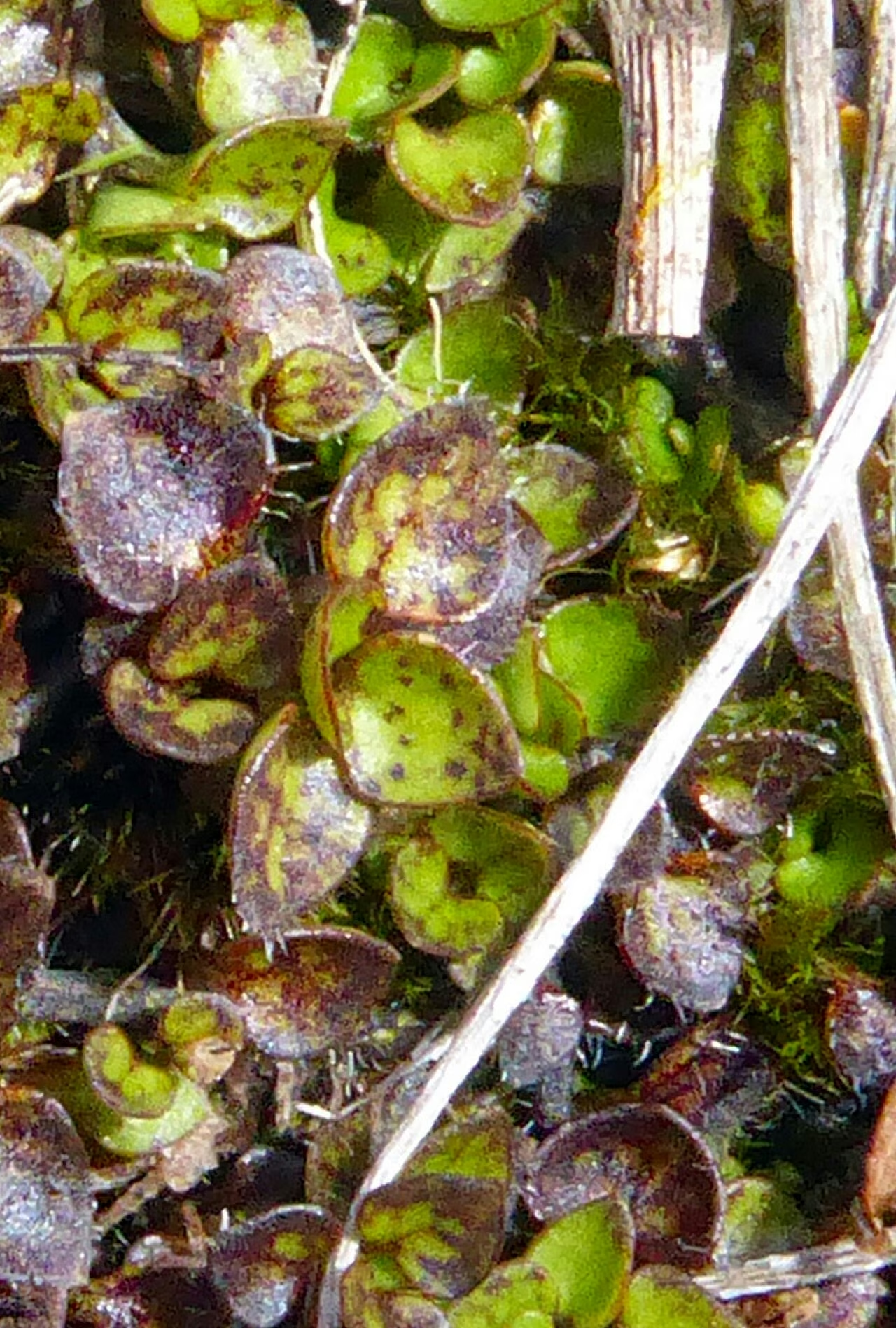
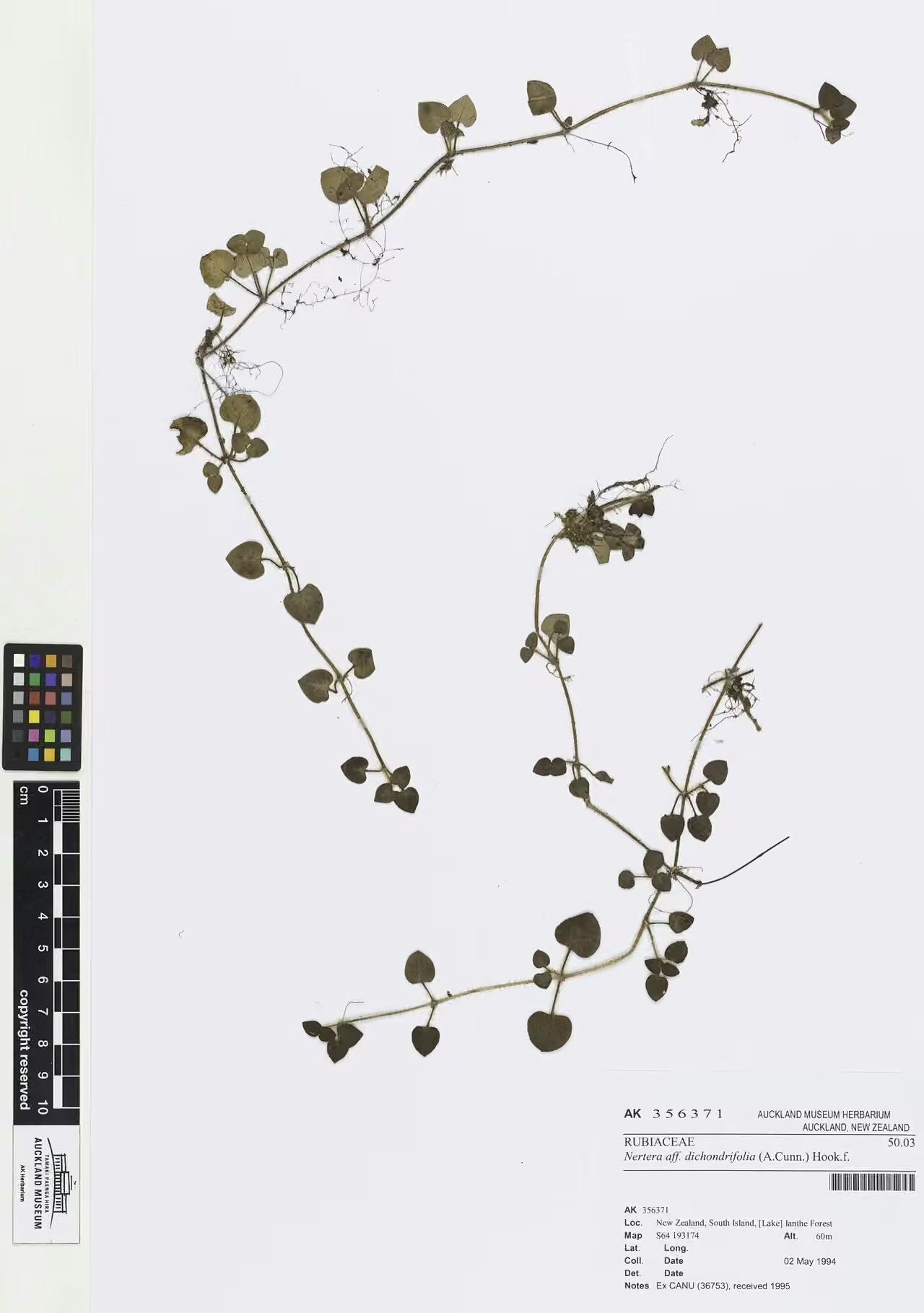
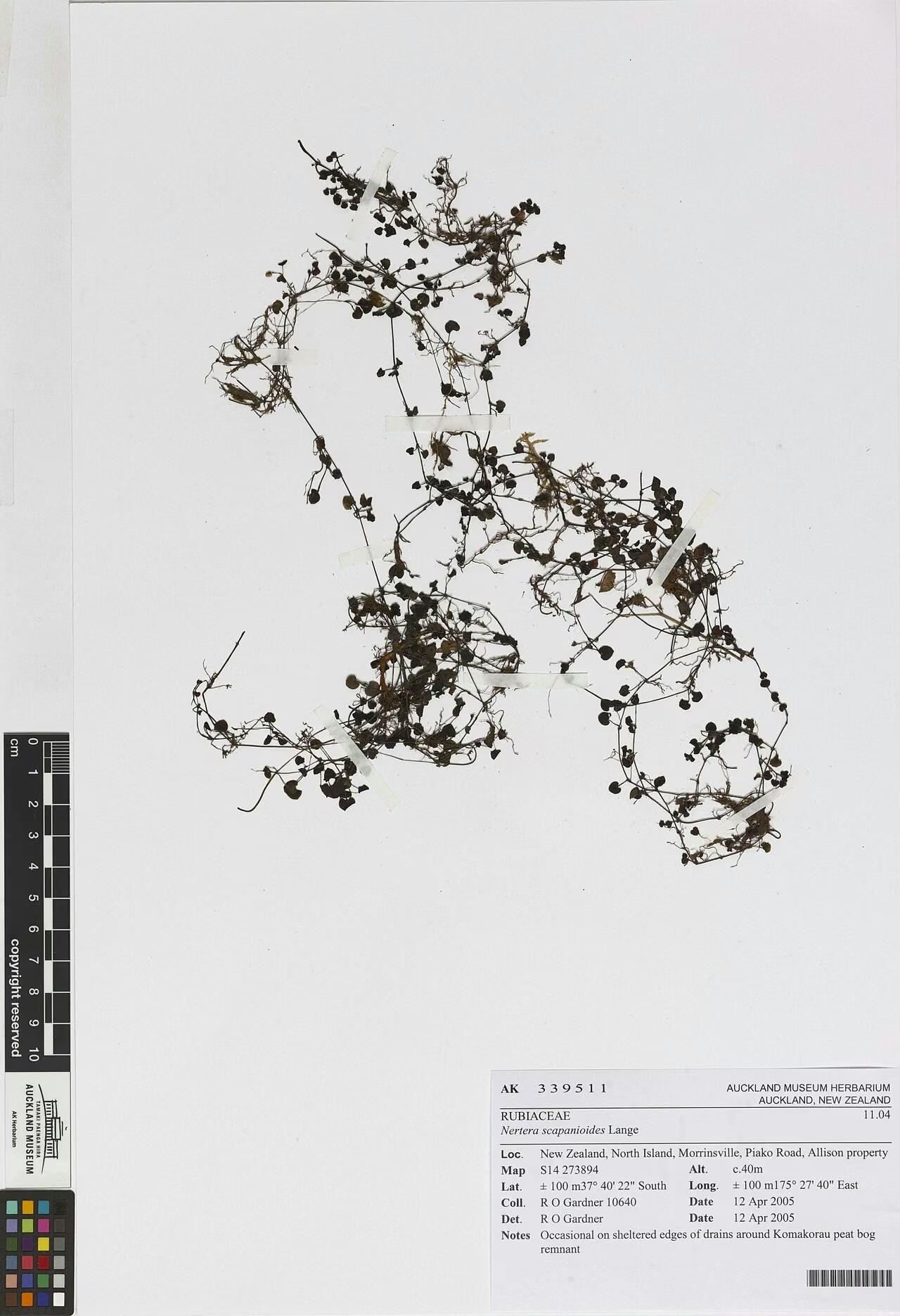
The strong unpleasant smell of the crushed leaves is the most reliable field character. Nertera ciliata lacks the smell and has hair-fringed leaves; Nertera scapanioides has larger, almost hairless, bright green heart-based leaves and orange fruit; and Nertera dichondrifolia is softly hairy.
Quick Facts
| Scientific Name | Nertera depressa |
|---|---|
| Height | Up to 0.1 m |
| Spread | Patches up to 3 m across |
| Water Needs | Consistently moist |
| Light | Full sun to partial shade |
| Frost Tolerance | High; ranges to the subantarctic islands |
| Salt Tolerance | Moderate; common in damp coastal sites |
| Growth Rate | Moderate to fast in moist soil |
| Lifespan | Perennial |
Climate Best Suited to
Very adaptable: it grows from warm northern lowlands to the cold, wet subantarctic islands, provided the ground stays damp.
Regional Suitability
| City | Climate Suitability |
|---|---|
| Auckland | High |
| Wellington | High |
| Christchurch | Medium |
| Dunedin | High |
Plant Habitat
Nertera depressa is found throughout the North, South and Stewart Islands, and on the Chatham Islands and the subantarctic islands. Outside New Zealand it occurs in Australia, the South Pacific and South America.
It is especially frequent in damp coastal and lowland places. Herbarium records document it on forest floors under dense subcanopy, in regenerating forest, in mossy flushes within red tussock grassland, on the margins of low forest and hanging from banks beside small waterfalls. NZPCN classes it as facultative upland: occasionally in wetlands but usually on moist non-wetland ground.
Growing Requirements
Soil Requirements
It needs soil that stays moist. In gardens a light, well-drained but water-retentive soil gives the best results.
- Light, humus-rich loam or peaty soil
- Constant moisture without stagnant water
- Grows well on mossy banks and among rocks
Light Requirements
It tolerates both full sun and partial shade, but in sunny sites the mat dries quickly, so semi-shade with shelter from cold winds is ideal in gardens.
- Full sun only where the soil stays wet
- Semi-shade for the most reliable growth
Water Requirements
Its shallow-rooted mat suffers quickly in drought.
- Keep evenly moist all year
- Containers need regular watering in summer
Planting and Establishing
Plant rooted divisions in spring into moist soil in a sheltered, semi-shaded spot. Firm the stems onto the soil so the nodes make contact and can root.
It suits stream edges, damp banks, the shady side of rock gardens and containers. Nurseries recommend it for riparian planting, where its mat helps bind moist soil.
Ecological Role
Nertera depressa is a widespread member of the low herb layer in damp forest, scrub and grassland. Its conspicuous red fruit is suited to dispersal by birds, and nursery notes list it as attractive to birds and bees, although specific pollinators and seed dispersers are not documented in the scientific sources consulted.
Its dense mats colonise moist banks, track edges and seepages, helping to stabilise bare damp ground.
Uses & Significance
Garden Uses
A dependable small ground cover for damp, shaded or sheltered places, prized for its long-lasting red berries.
- Ground cover for moist banks and stream edges
- Pots, troughs and hanging displays
- Between stepping stones in shady, damp paths
- Riparian restoration plantings
Ecological Value
Its wide distribution makes it one of the most familiar small native herbs in moist habitats.
- Provides fleshy fruit over a long season
- Binds soil on wet banks and seepages
- Found from the far north to the subantarctic islands
Landscaping Uses
Let bead plant spread as a carpet beneath ferns, kiokio or small Coprosma shrubs in a damp corner. Its red fruit stands out against dark moss and stones from late summer through autumn.
In containers it can be grown on its own as a mound of fine foliage that drapes over the rim, or combined with small sedges in a shallow bowl kept in a shaded, humid spot.
Seasonal Care Calendar
Spring
New stems extend across the soil and root as they go.
- Divide and replant
- Weed around young mats
Summer
Tiny greenish-yellow flowers appear from November, with the first red fruit by December.
- Water in dry spells
- Shade pots from hot afternoon sun
Autumn
This is the peak berry season, with fruit lasting into May.
- Collect fruit for sowing
- Clear fallen leaves off the mat
Winter
Growth slows but the evergreen mat persists.
- Avoid waterlogged pots
- Little care needed
When to Prune and How Much
No regular pruning is needed. Trim back or lift stems that wander beyond their space.
Old mats that have thinned in the centre can be rejuvenated by replanting rooted pieces from the vigorous edges.
How to Grow Bead Plant
Bead plant is among the easiest small natives to propagate. Its creeping stems root at almost every node, so division gives new plants within weeks, and fresh seed germinates without any pre-treatment when kept moist. Division is best in spring or early autumn while the soil is warm and damp. Seed taken from ripe red fruit between December and May can be sown immediately. Both methods need a humid, shaded environment and a light growing medium, and seedlings should never be allowed to dry out because their roots are very fine.
By Division
The simplest method is to cut rooted sections from an established mat and replant them. Several pieces planted together will knit into a carpet within a season or two.
Pieces taken from the actively growing edge of the mat establish faster than those from the older centre, which is often thinner and woodier.
- Lift a section of mat with rooted nodes
- Cut into pieces about 5 cm across
- Plant into moist, humus-rich soil or a light potting mix
- Water in and keep shaded until established
From Seed
Collect fully red fruit and sow the seed fresh. Nurseries report that it germinates without stratification or other treatment.
- Squash ripe fruit and rinse off the pulp
- Sow thinly on fine, moist seed-raising mix
- Cover with a fine sprinkle of mix or grit
- Keep humid and shaded until germination
- Pot seedlings on when large enough to handle
Pests & Diseases
No serious pests are recorded. Slugs and snails may graze the small leaves, and mats can rot in pots that sit in water during winter.
Drought is the main cause of decline in gardens; mats that dry out in summer often brown off and die back.
Cultural Significance
No traditional Māori name or use is recorded for Nertera depressa in the sources consulted.
Nertera comes from a Greek word meaning lowly or low growing, and depressa is Latin for flattened, both describing its ground-hugging habit. Colenso described a mountain form as Nertera montana in 1896, now treated as a synonym.
Bonus Tip
To show off the berries, grow a mat in a shallow terracotta bowl and stand it in a shaded, humid spot outdoors over summer. Kept moist, it will carry its red fruit for months, and you can bring it closer to the house in autumn when the display peaks.
Related Plants
Explore other native plants that share similar characteristics or habitats with Bead Plant (Nertera depressa), offering further insights into New Zealand's diverse flora. These related species provide context and opportunities for complementary planting in your garden.
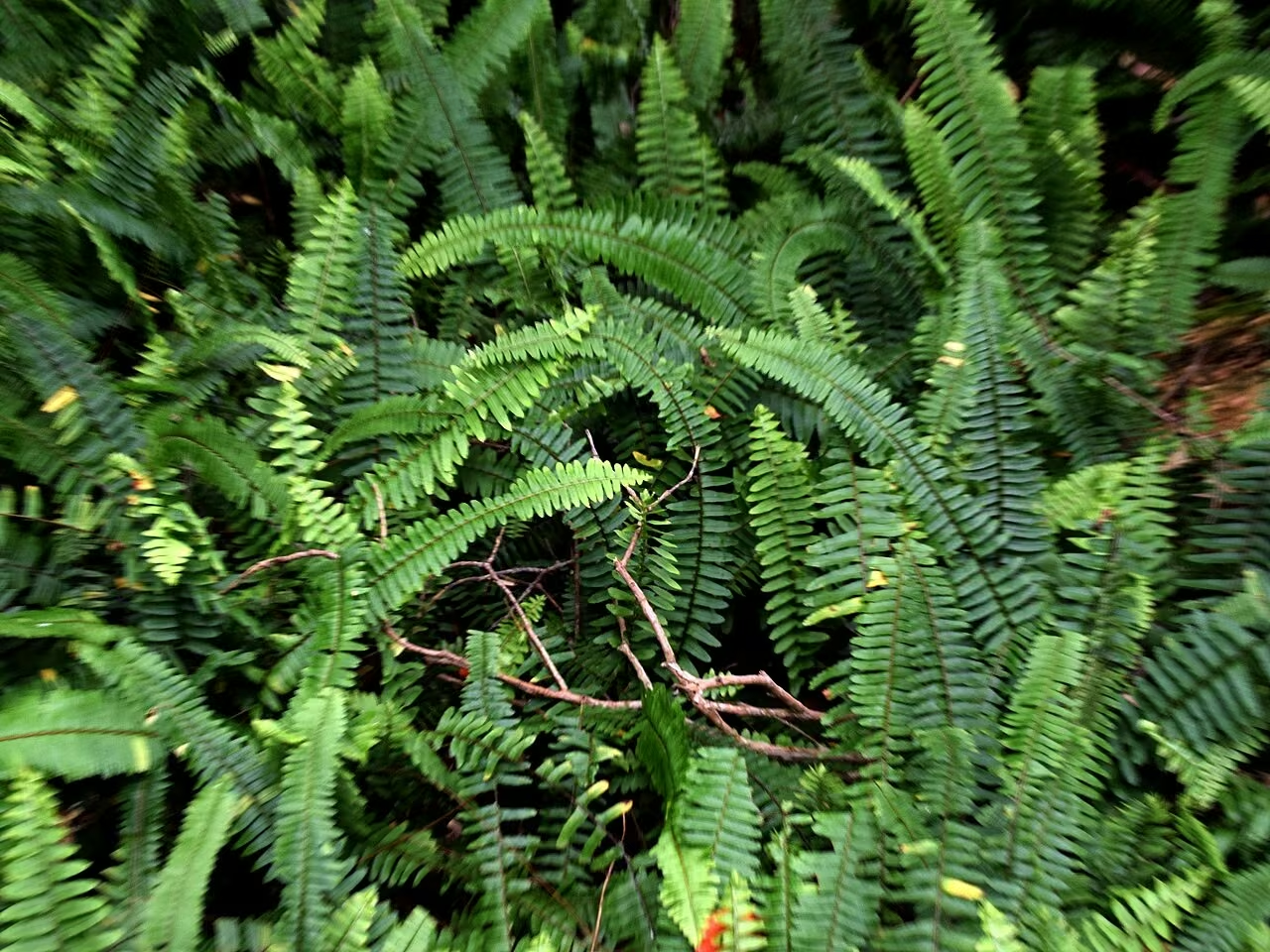
Nephrolepis flexuosa
Nephrolepis flexuosa
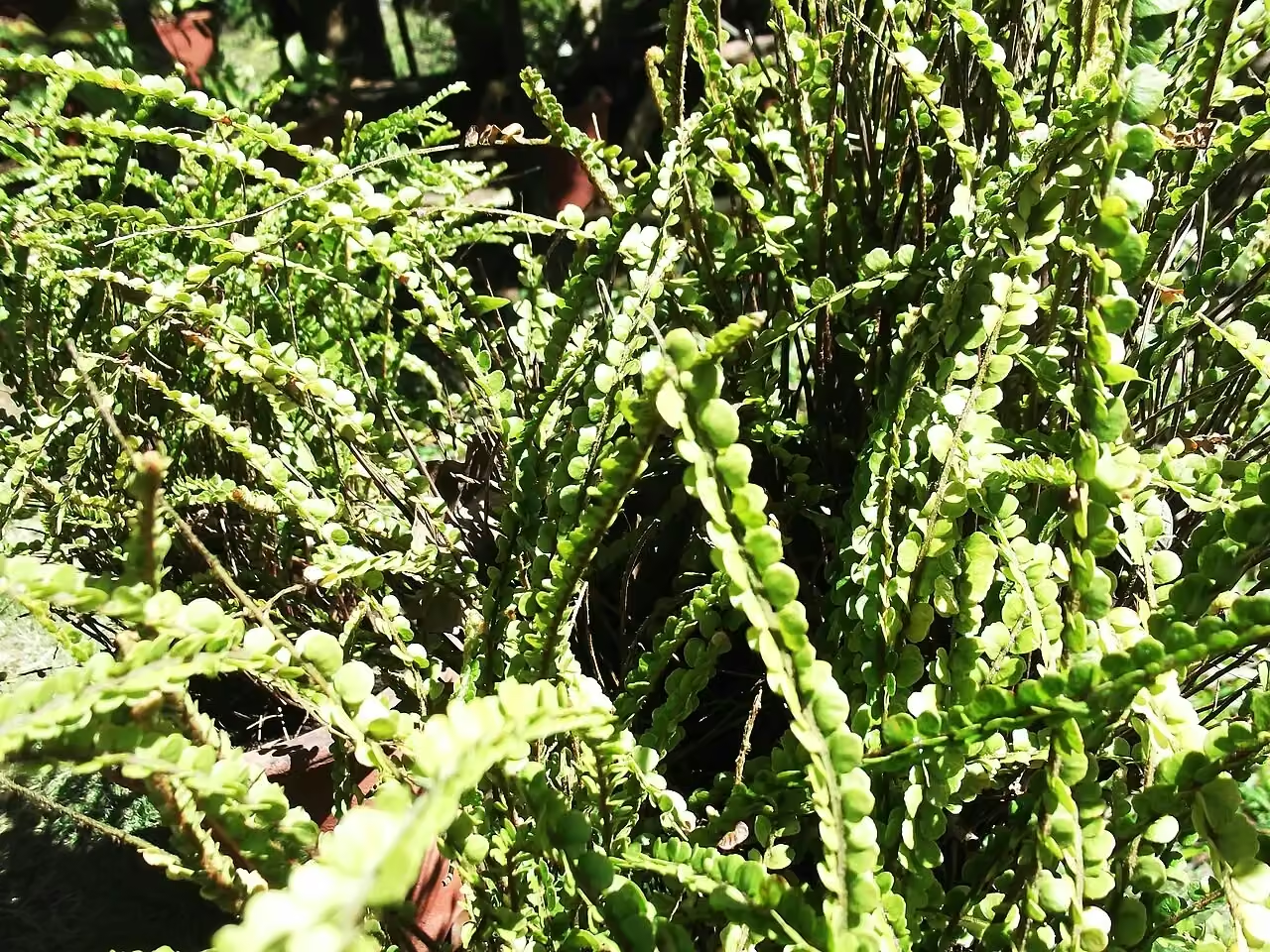
Rough Sword Fern
Nephrolepis brownii
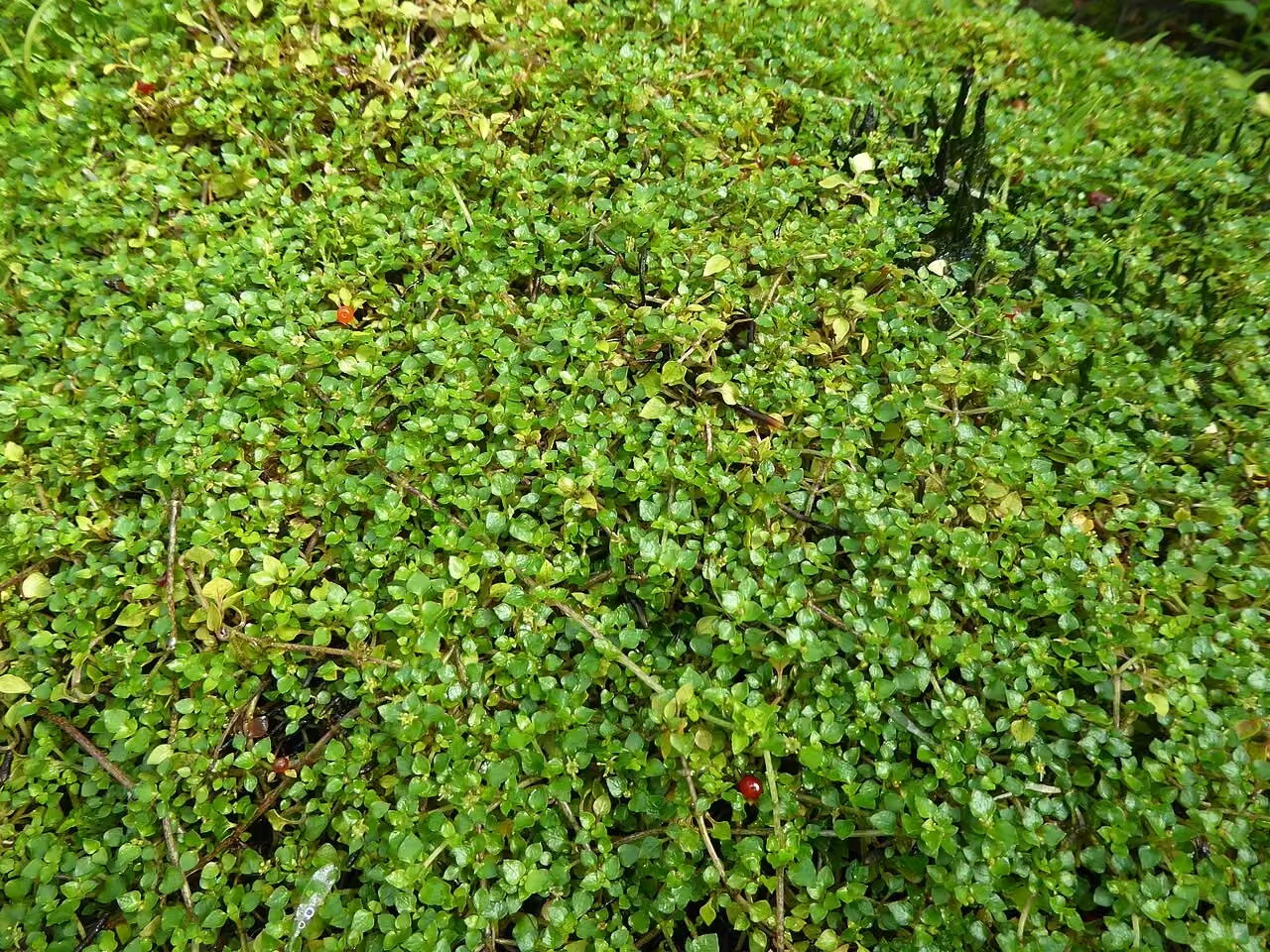
Nertera balfouriana
Nertera balfouriana
Nertera ciliata
Nertera ciliata
Nertera dichondrifolia
Nertera dichondrifolia
Nertera scapanioides
Nertera scapanioides
Teteaweka
Macrolearia angustifolia
Keketerehe
Macrolearia chathamica
Plant Conservation
Nertera depressa is ranked Not Threatened (2023) with the qualifier Secure Overseas, and has held this ranking in every assessment since 2004. Regional assessments for Northland, Auckland, Wellington and Otago also rank it Not Threatened.
It is common and widespread, and no specific threats are recorded. Protecting damp forest margins and wetlands from drainage and stock trampling maintains its habitat along with many other small herbs.
Frequently Asked Questions
Why do Nertera depressa leaves smell bad?
The leaves are faintly to strongly foetid when bruised, with a smell NZPCN likens to stinkwood (Coprosma foetidissima). This odour is the easiest way to separate it from Nertera ciliata, which has no smell.
Are bead plant berries poisonous?
The sources consulted do not record whether Nertera depressa fruit is toxic or edible, so it is safest not to eat it and to keep it away from small children and pets.
Is Nertera depressa native to New Zealand?
Yes. It is indigenous to New Zealand but not endemic, because it also grows naturally in Australia, the South Pacific and South America.
When does bead plant have berries?
It flowers from November to February and its bright to dark red fruit ripens between December and May, often lasting into autumn.
Sources and Further Reading
The botanical, growing, and conservation details for Bead Plant (Nertera depressa) on this page draw on the New Zealand plant references below. Consult them for full technical records and the latest distribution data.