Bead Plant
Nertera dichondrifolia
Last updated:
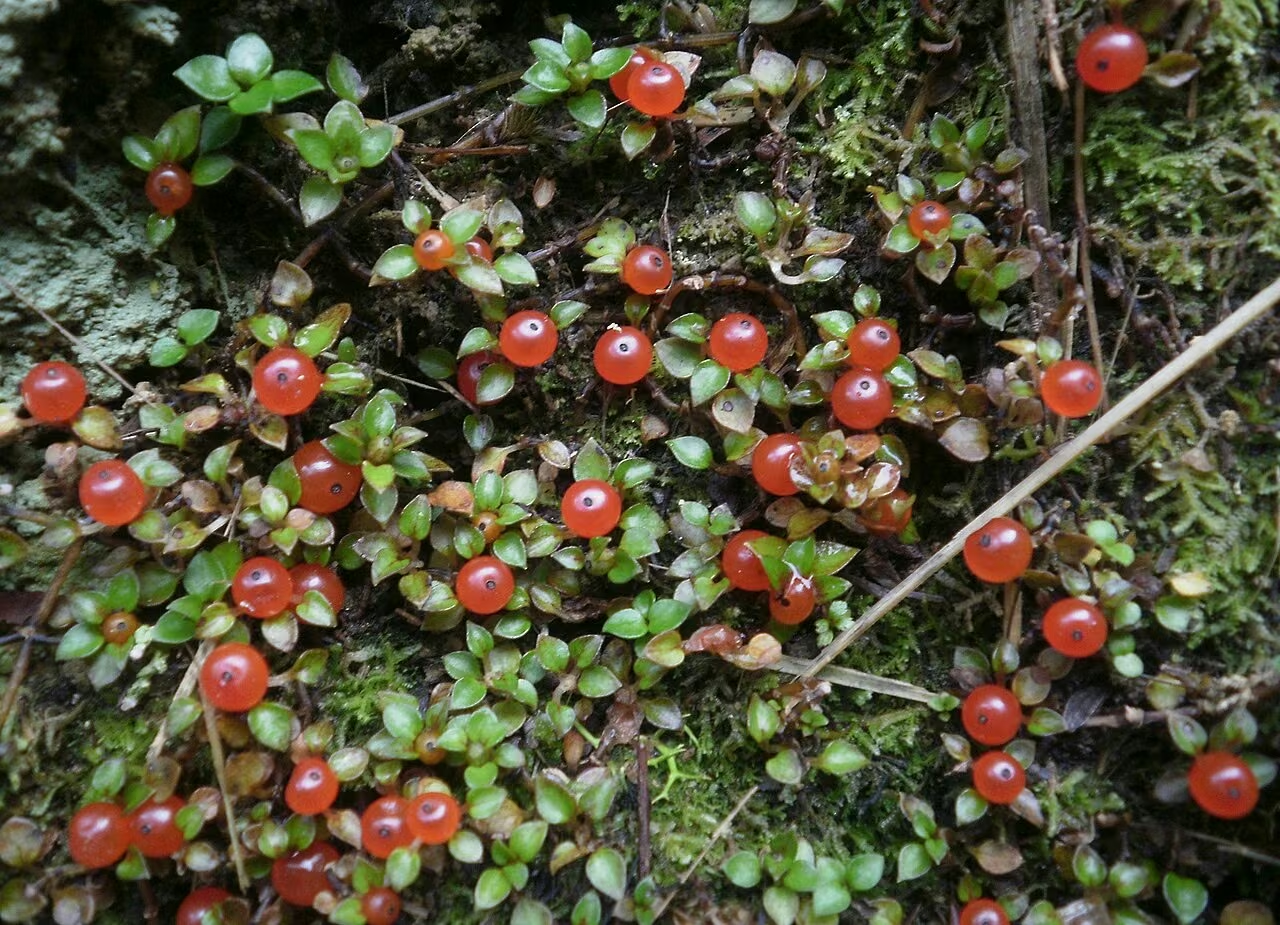
Nertera dichondrifolia is a slender, mat-forming herb of the coffee family, endemic to the Three Kings Islands and the North Island from Te Paki south to Waitomo and Gisborne. Its rounded leaves, 6 to 12 mm long, resemble those of the lawn plant Dichondra, which gives the species its name, and they are softly hairy to varying degrees. Patches reach about 40 cm across and carry round red to dark orange berries about 4 mm wide from early summer into autumn. It grows in damp, mossy places on the floor of northern forests, often on poor soils. It is ranked Not Threatened. Explore more native ground covers in our native plant guide.
Plant Description
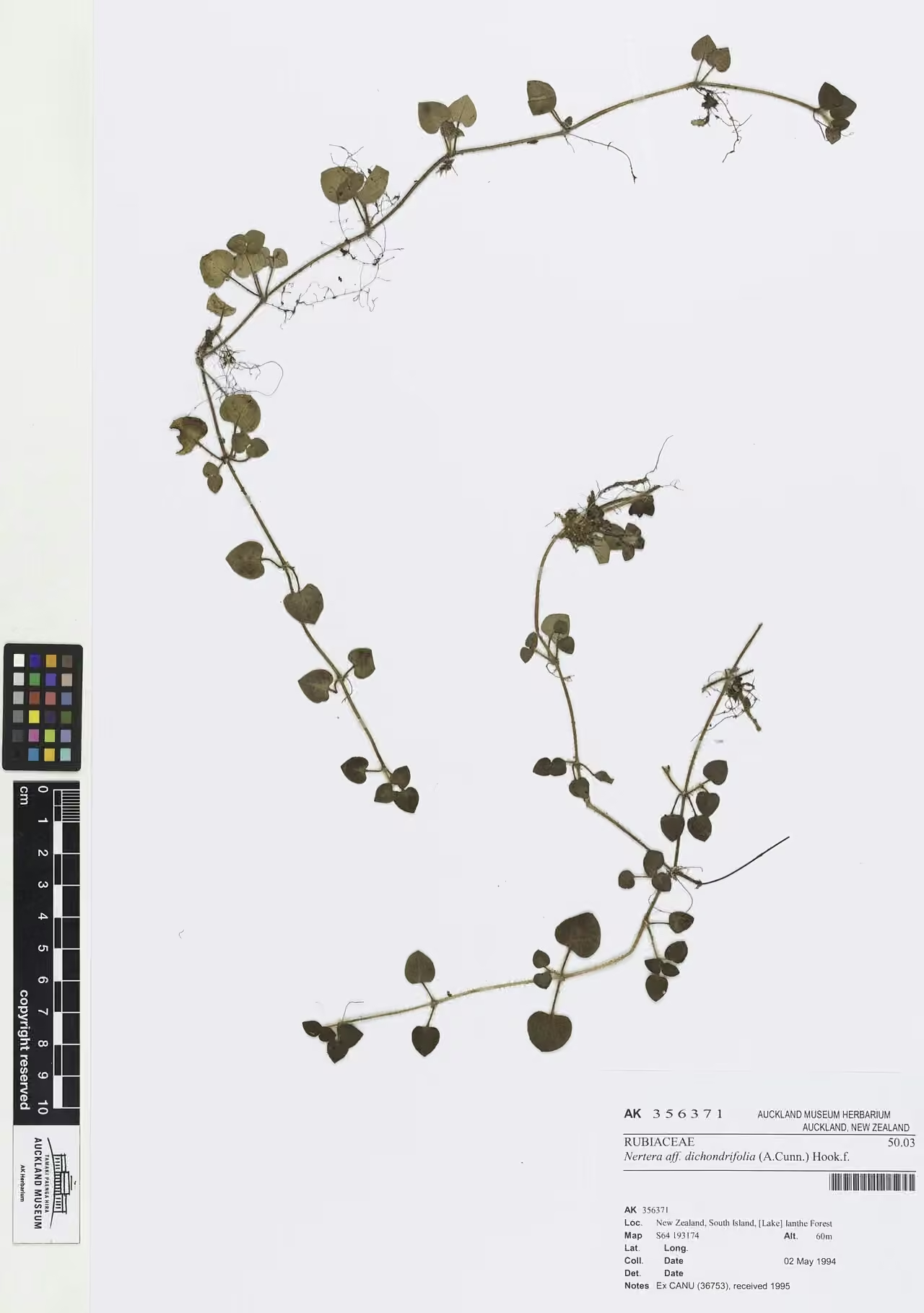
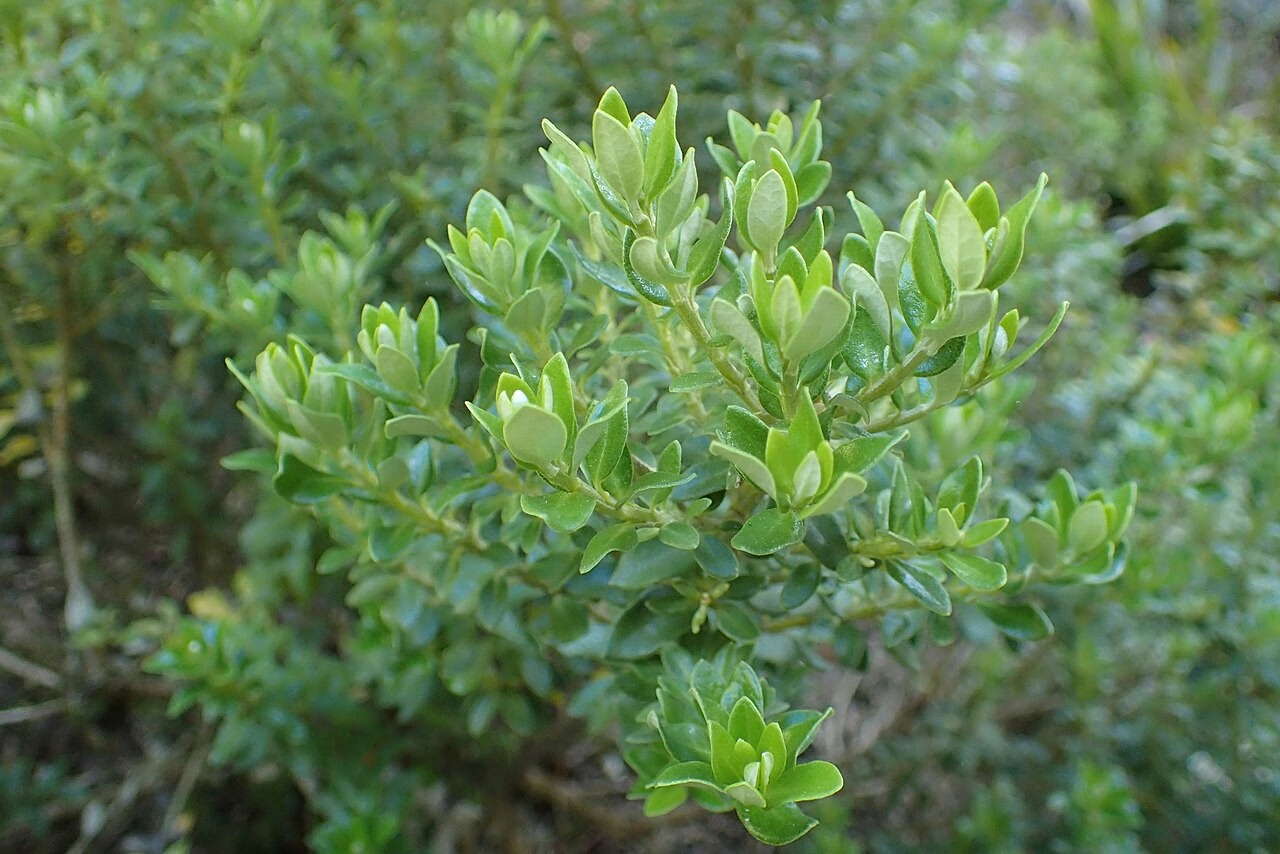
Nertera dichondrifolia forms flat mats up to about 40 cm across from much to sparingly branched creeping stems that root at the nodes. The leaves are broad-ovate to broadly ovate-oblong, 6 to 12 mm long and 6 to 10 mm wide, on hairy stalks. Both leaf surfaces carry fine short hairs, although the amount of hair is variable from plant to plant.
The tiny flowers sit singly in the leaf axils and have a funnel-shaped corolla 2.5 to 3.5 mm long with four narrow lobes. Flowering runs from October to February, and the globose fruit, about 4 mm across and red to dark orange when ripe, appears from December to May.
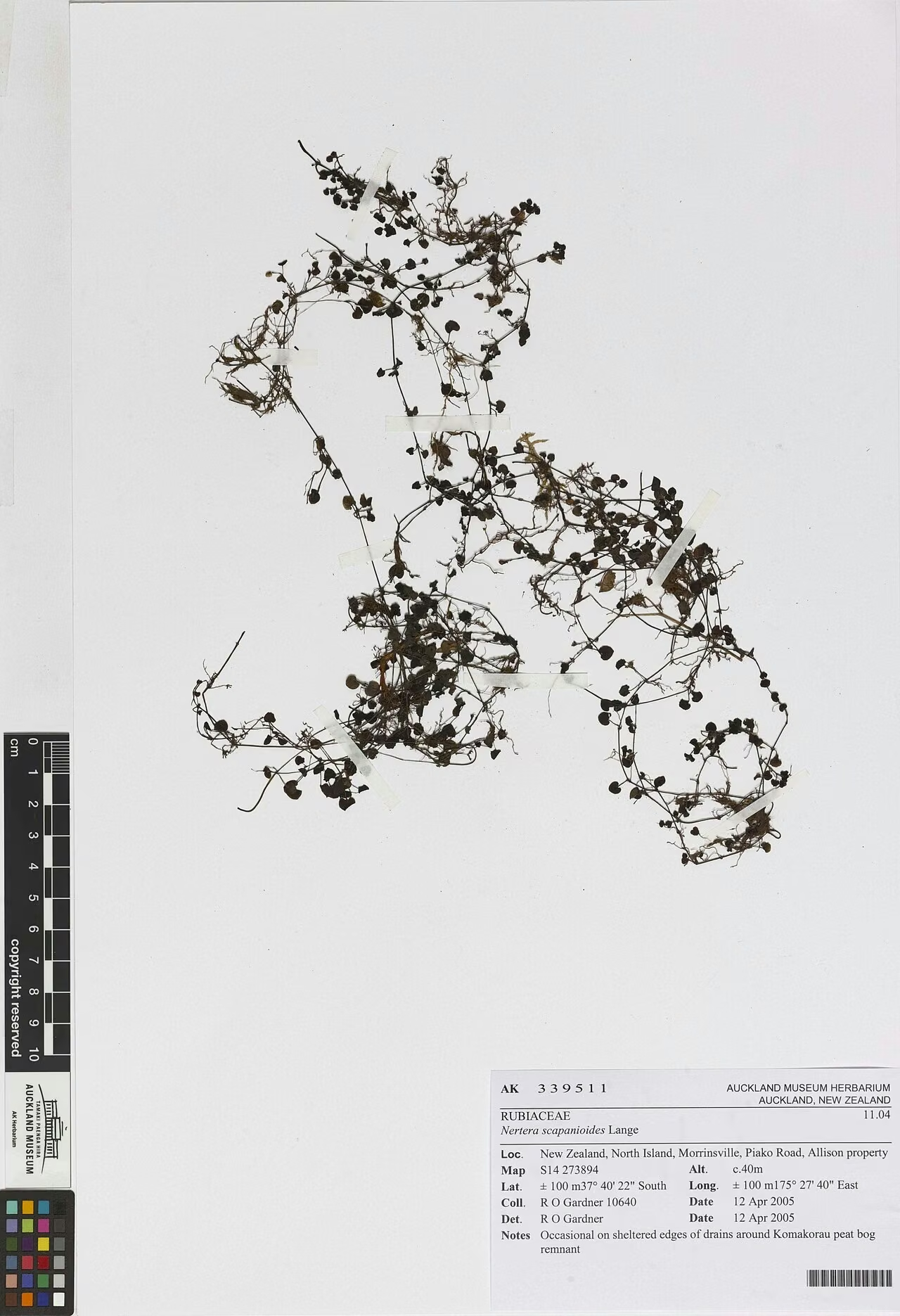
Its closest look-alike is Nertera scapanioides, which has similar rounded leaves but is almost hairless and grows mainly in peaty wetlands. Nertera depressa has smaller, olive-tinged, hairless leaves with a foul smell when crushed.
Quick Facts
| Scientific Name | Nertera dichondrifolia |
|---|---|
| Height | Under 0.05 m |
| Spread | Patches to about 0.4 m across |
| Water Needs | Moist; must not dry out |
| Light | Shade to semi-shade |
| Frost Tolerance | Low to moderate; a northern forest species |
| Salt Tolerance | No information available |
| Growth Rate | Moderate |
| Lifespan | Perennial |
Climate Best Suited to
Suits the mild, humid climate of northern New Zealand, where frosts are light and forest floors stay damp year round.
Regional Suitability
| City | Climate Suitability |
|---|---|
| Auckland | High |
| Wellington | Medium |
| Christchurch | Low |
| Dunedin | Low |
Plant Habitat
Nertera dichondrifolia is endemic to New Zealand, occurring on the Three Kings Islands and in the North Island from Te Paki in the far north south to about Waitomo in the west and Gisborne in the east. It is most common in the northern forests.
It grows in damp forest, particularly in mossy places on poor soil where it is protected from drying out. Herbarium records include kānuka forest at the edge of low banks, regenerating forest with kauri on summit ridges where it roots in duff, and track edges such as the Mangatangi Track in the Hunua Ranges.
Growing Requirements
Soil Requirements
In the wild it often roots into leaf litter, duff and moss over infertile clay soils.
- Low-fertility, humus-rich surface layer
- Moist but freely drained
- Tolerates poor, acidic forest soils
Light Requirements
A forest-floor plant that prefers shade or filtered light.
- Shade or dappled light
- Avoid exposed sunny positions
Water Requirements
Its slender stems and shallow roots need constant moisture and humidity.
- Keep the surface damp, especially in summer
- A mulch of leaf litter or moss helps hold moisture
Planting and Establishing
Plant rooted pieces into a shady, sheltered spot with damp leaf litter or moss, such as under established native trees or beside a shaded path. Spring and autumn are the best times in northern gardens.
It is a delicate plant best used where it will not be overrun by vigorous ground covers or swamped by heavy leaf fall.
Ecological Role
Nertera dichondrifolia is part of the low herb layer of northern North Island forests, growing among mosses, small ferns and seedlings on banks and the forest floor. Its fleshy red to orange fruit suggests bird dispersal, though specific dispersers are not recorded in the sources consulted.
Its ability to grow on poor soils in mossy places makes it a feature of kauri and kānuka forest floors, where nutrients are scarce.
Uses & Significance
Garden Uses
Best for naturalistic shady gardens in the north, where it can creep among moss and leaf litter.
- Shady woodland or forest-floor gardens
- Mossy banks and track edges
- Shallow pots in a shade house
Ecological Value
An endemic component of the ground flora in northern forests, including kauri forest.
- Contributes to forest-floor plant diversity
- Produces fleshy fruit through summer and autumn
- Grows on infertile soils where few herbs thrive
Landscaping Uses
Use it in restoration projects in northern forest remnants to re-establish the ground layer once canopy cover has developed and the forest floor stays humid.
In home gardens, let it weave around the bases of ferns and small shrubs in a shaded bed, where its soft rounded leaves contrast with finely divided fern fronds.
Seasonal Care Calendar
Spring
Flowering starts in October with tiny axillary flowers.
- Divide and replant
- Refresh leaf-litter mulch
Summer
Red to dark orange fruit ripens from December.
- Water during dry periods
- Collect ripe fruit for seed
Autumn
Fruit continues into May.
- Sow fresh seed
- Remove heavy leaf fall from the mat
Winter
Growth slows in cooler weather.
- Protect potted plants from frost
- Keep moist but not waterlogged
When to Prune and How Much
This species needs no pruning. Remove any stems that stray onto paths, or lift and replant pieces if the mat becomes patchy.
Keep taller weeds from overgrowing it, as the small leaves need light reaching the ground to persist.
How to Grow Bead Plant
Nertera dichondrifolia can be raised from fresh seed or from rooted pieces of stem. Nursery growers report that the seed needs no pre-treatment and germinates when sown directly and kept moist, and that division also works well. Because the plant grows naturally in mossy, humid forest, propagation is most successful in a shade house or under cover where humidity can be kept high. Collect wild material only with permission from landowners or the Department of Conservation, and prefer local sources so restoration plantings keep regional genetic character.
From Seed
Fruit ripens from December to May. Seed sown immediately after cleaning gives the best results.
- Gather ripe red to dark orange fruit
- Remove the pulp by squashing and rinsing
- Surface-sow on a moist mix of seed-raising compost and fine bark
- Cover lightly and keep shaded and humid
- Pot seedlings individually once they are large enough to handle
By Division
The creeping stems root at the nodes, so sections can be separated and grown on with little loss.
Divisions taken in spring or early autumn establish fastest. Several small pieces planted close together will join up into a mat more quickly than one large clump, and they are less likely to rot if the mix stays damp for long periods.
- Select a vigorous section with several rooted nodes
- Cut it from the mat with a little soil or moss attached
- Pot into a free-draining, humus-rich mix
- Keep in shade with high humidity until new leaves appear
Pests & Diseases
No specific pests are recorded for Nertera dichondrifolia. Slugs and snails may damage young plants in damp conditions.
In gardens, drying out and smothering by leaf litter or aggressive weeds are the most common causes of failure.
Cultural Significance
No traditional Māori name or use is recorded for Nertera dichondrifolia in the sources consulted.
The species has had an unsettled taxonomic history and has been treated at different times as Geophila dichondrifolia and Coprosma dichondrifolia, reflecting the close relationship between Nertera and Coprosma within the coffee family.
Bonus Tip
When planting into a northern forest restoration site, wait until the canopy has closed and moss is establishing on the ground. Planted too early into open, sunny sites, this delicate herb dries out, but under a mature kānuka canopy it can spread steadily.
Related Plants
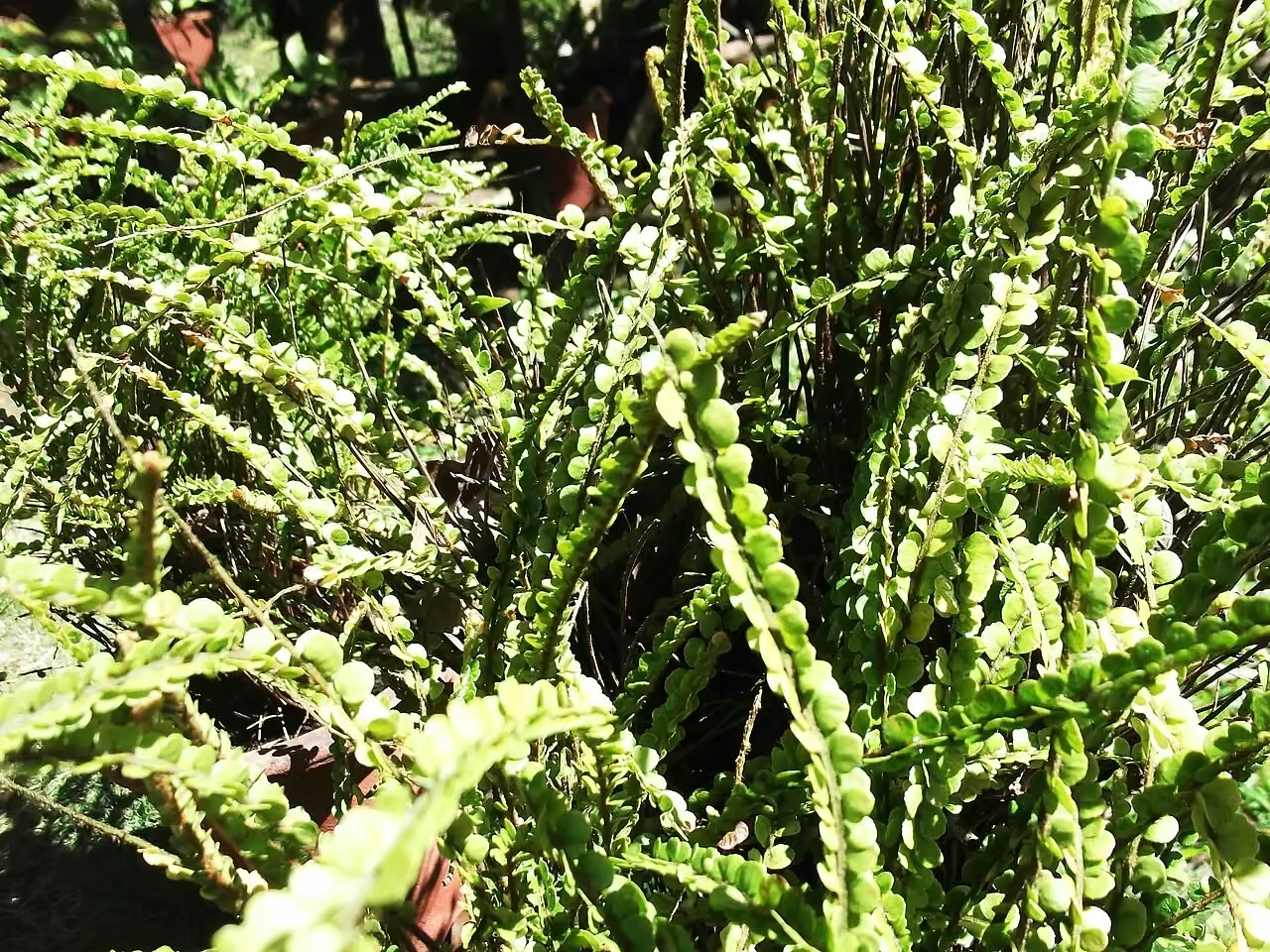
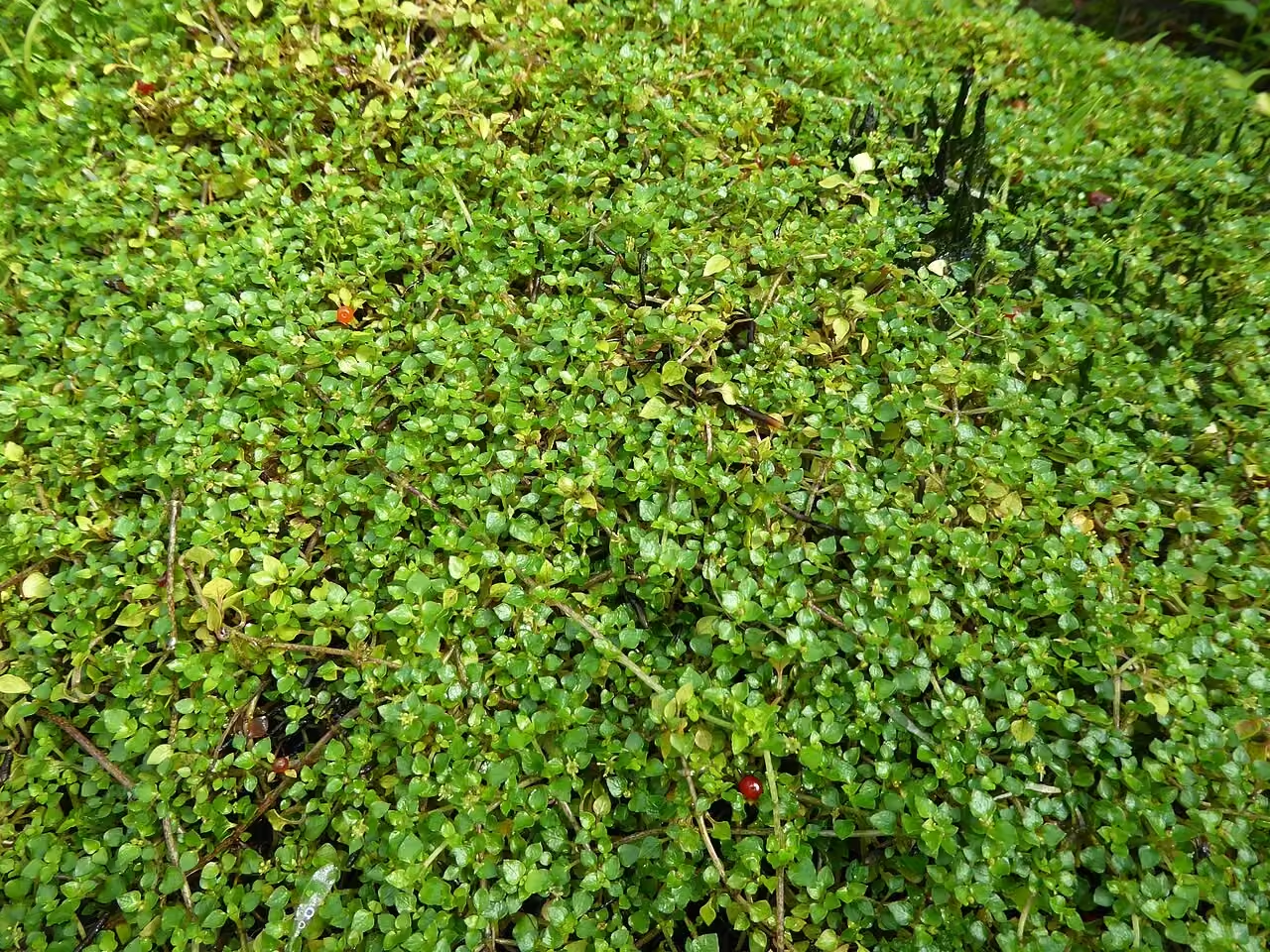
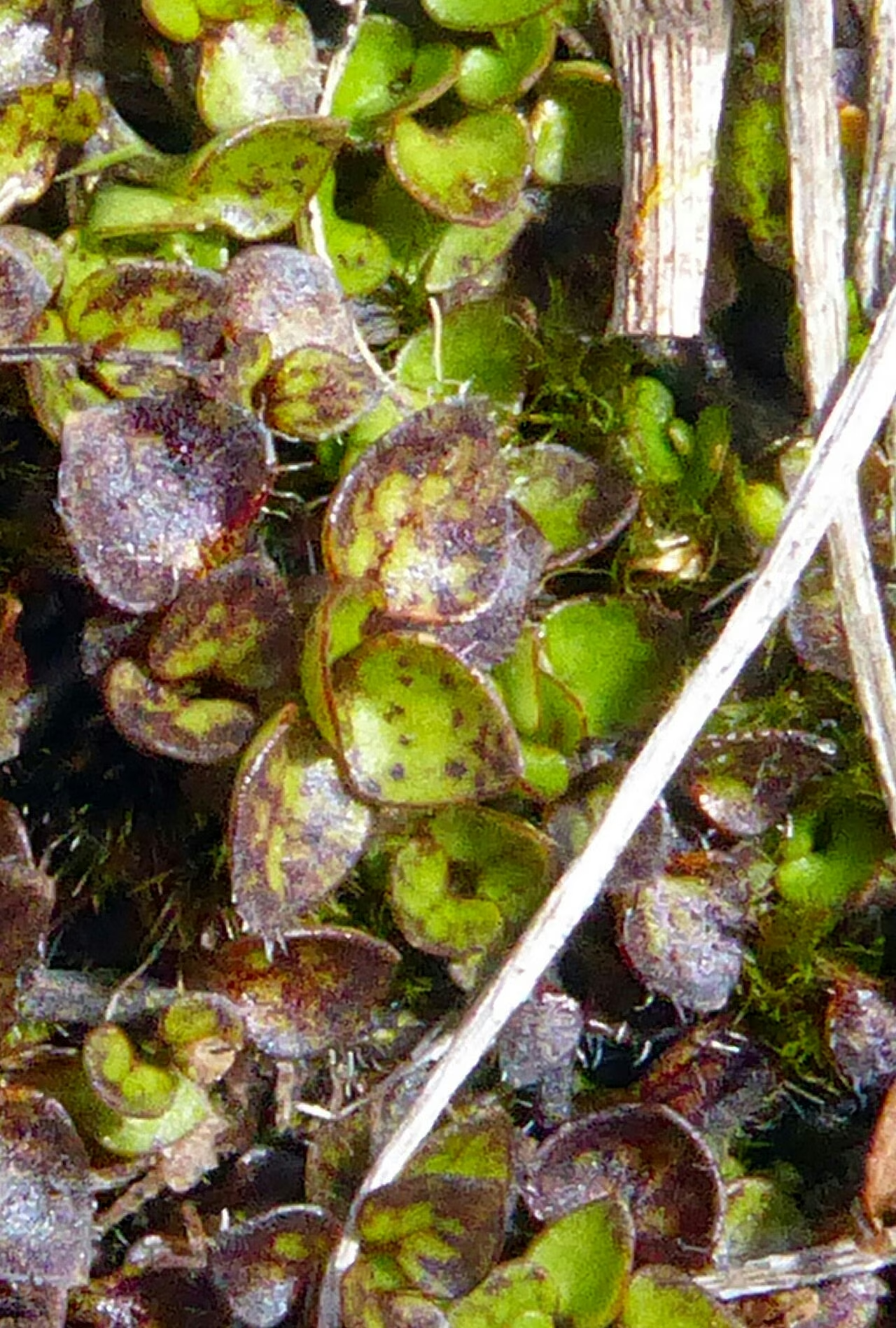
Explore other native plants that share similar characteristics or habitats with Bead Plant (Nertera dichondrifolia), offering further insights into New Zealand's diverse flora. These related species provide context and opportunities for complementary planting in your garden.
Plant Conservation
Nertera dichondrifolia is ranked Not Threatened (2023). Regional assessments rank it Regionally Not Threatened in both Northland and Auckland, with Auckland noting that the assessment is data poor.
No specific threats are documented. Protecting northern forest remnants from browsing animals, weeds and drying edge effects maintains the moist ground layer it depends on.
Frequently Asked Questions
What does dichondrifolia mean?
It means Dichondra-leaved. The rounded, kidney to oval leaves look like those of Dichondra, a small creeping plant often used as a lawn substitute.
Where does Nertera dichondrifolia grow?
It is endemic to the Three Kings Islands and the North Island from Te Paki to Waitomo and Gisborne, in damp forest, especially mossy places on poor soil.
How is Nertera dichondrifolia different from Nertera scapanioides?
The two look alike, but Nertera dichondrifolia has fine short hairs over most of the plant, whereas Nertera scapanioides is almost hairless and typically grows in peaty Sphagnum wetlands.
Sources and Further Reading
The botanical, growing, and conservation details for Bead Plant (Nertera dichondrifolia) on this page draw on the New Zealand plant references below. Consult them for full technical records and the latest distribution data.