Tree Daisy
Shawia coriacea
Last updated:
Shawia coriacea is an endemic tree daisy found only in south Marlborough and North Canterbury, where it grows in shrubland on rocky ground and cliff faces. It is a stiff, rigid-branched shrub usually 1 to 2 m tall and up to 3 m, with thick, leathery, almost round leaves whose edges curl down so each leaf looks like a small saddle. The undersides are covered in a dense brownish-white felt, and small clusters of whitish flower heads are followed by fluffy wind-borne seed. It is ranked At Risk - Naturally Uncommon because of its scattered, limited range. In 2025 it was transferred, with related species, to the genus Shawia as Shawia coriacea. It was previously known as Olearia coriacea. Explore more native shrubs in our native plant guide.
Plant Description
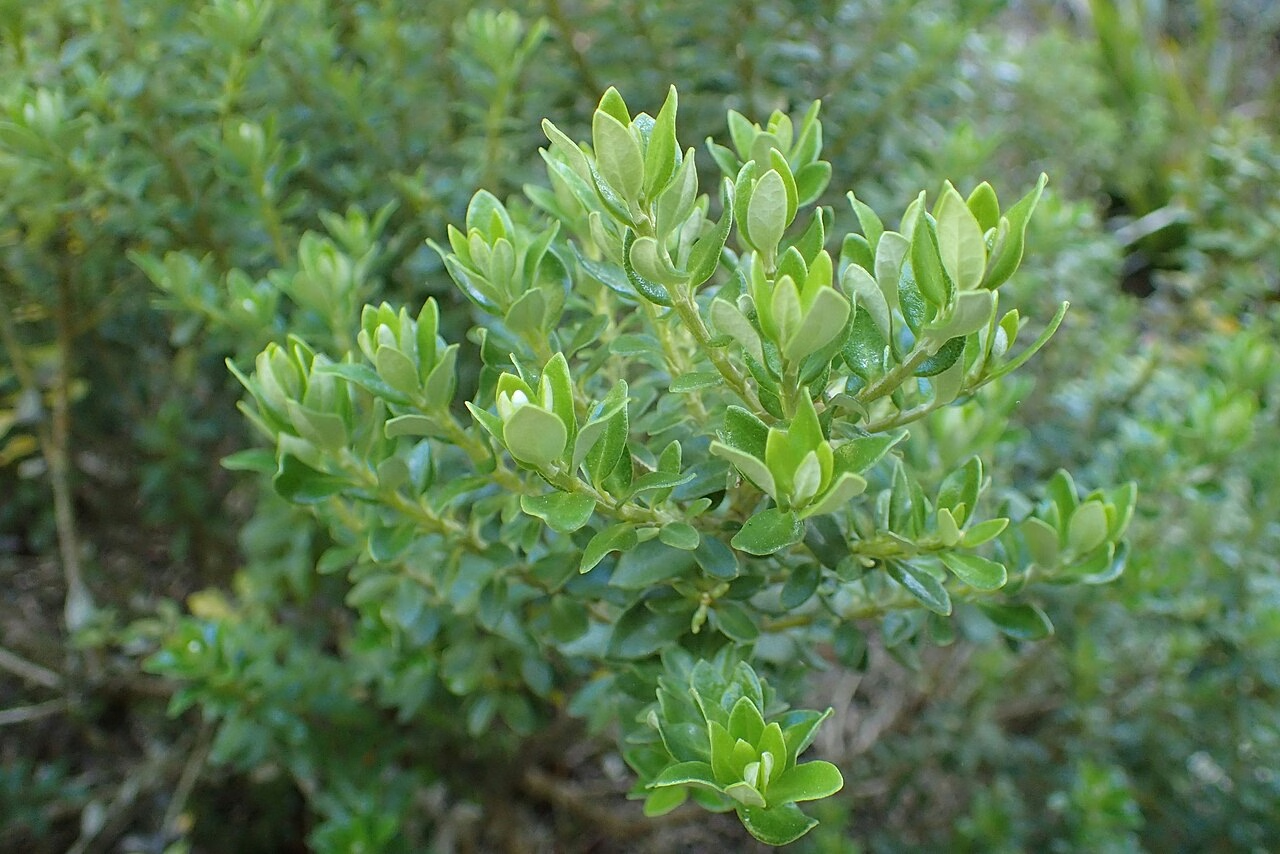
Shawia coriacea is an evergreen shrub up to 3 m tall with stout, rigid branchlets covered in short fuzzy hairs. Its growth is stiff and twiggy, giving the bush a dense, compact outline in exposed sites.
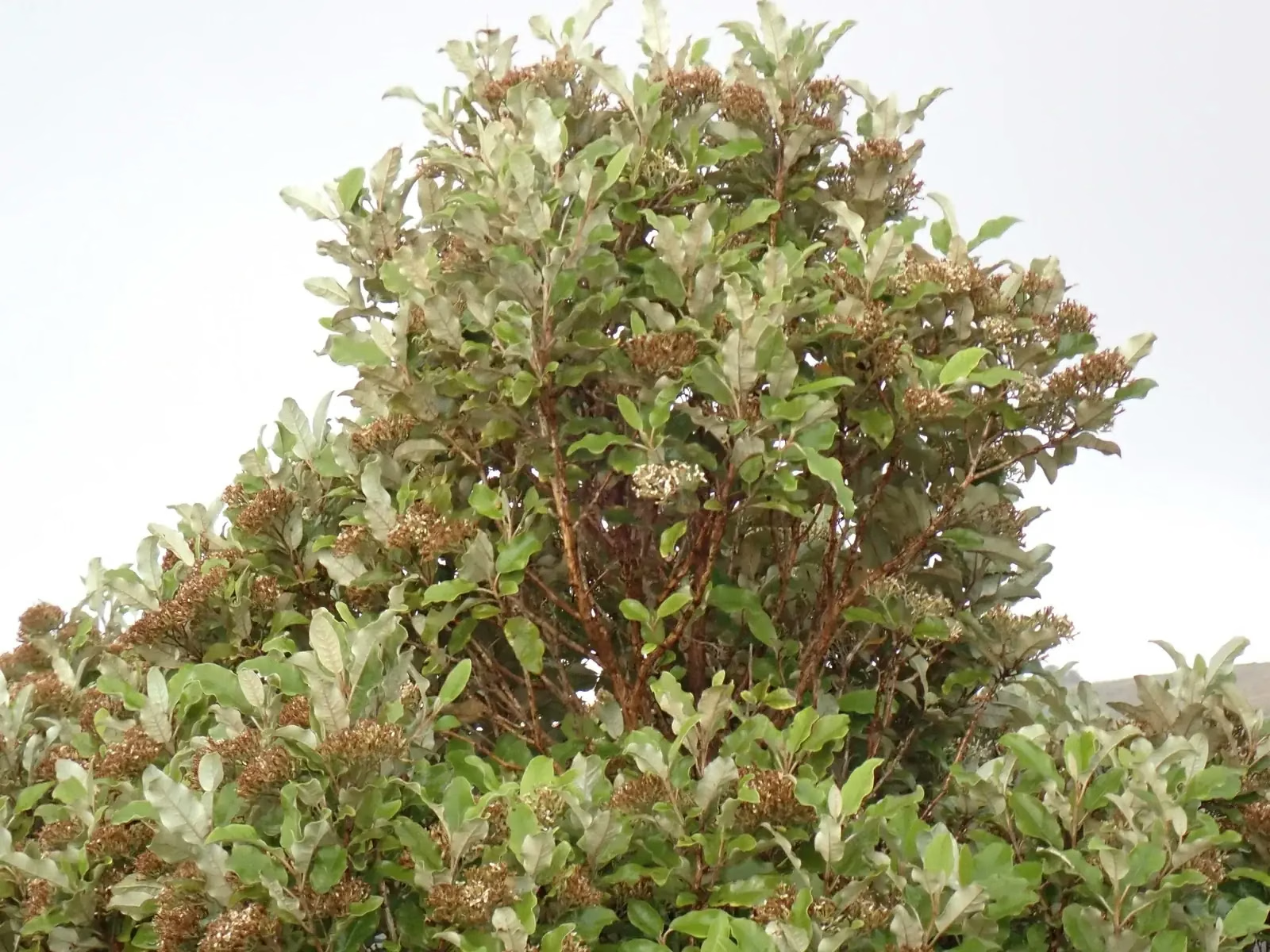
The leaves are very leathery, 1 to 2 cm long and 8 to 15 mm wide, broad-ovate to almost circular. The upper surface is smooth or nearly so and green, while the underside is clothed in a dense brownish-white tomentum. The margins are somewhat rolled under and slightly undulate, and the drooping sides give the leaf its distinctive saddle shape. Whitish flower heads are carried in small branched clusters, and the achenes are 1 to 3 mm long with a fluffy pappus that carries them on the wind.
It is most likely to be confused with Olearia nummulariifolia, another small-leaved, leathery tree daisy. That species has even smaller leaves, 5 to 10 mm long, held closely along sticky yellowish twigs, and solitary flower heads rather than small clusters, and it grows at subalpine altitudes over a much wider range.
Quick Facts
| Scientific Name | Shawia coriacea |
|---|---|
| Height | 1-3 m |
| Spread | About 1.5-2 m |
| Water Needs | Low once established |
| Light | Full sun to light shade |
| Frost Tolerance | Moderate to good; grows naturally to montane altitudes |
| Salt Tolerance | Moderate; sold by nurseries as suitable for coastal planting |
| Growth Rate | Slow to moderate |
| Lifespan | Long-lived perennial shrub |
Climate Best Suited to
Suits the dry, sunny, warm-summer and frosty-winter climate of the eastern South Island, with hot north-westerly winds and moderate rainfall. It does not suit humid, poorly drained conditions.
Regional Suitability
| City | Climate Suitability |
|---|---|
| Auckland | Low |
| Wellington | Medium |
| Christchurch | High |
| Dunedin | Medium |
Plant Habitat
Shawia coriacea is endemic to New Zealand and has a limited range in the north-eastern South Island, mainly eastern and southern Marlborough and North Canterbury. The detailed locations of its scattered populations are not set out in the sources consulted.
It grows in lowland to montane shrubland, typically on rocky outcrops, bluffs and cliff faces where competition from taller vegetation is limited. NZPCN notes that data on its population size and trend are poor, which is reflected in its threat qualifiers.
Growing Requirements
Soil Requirements
In the wild it roots into thin, stony soil and rock crevices, so it needs sharp drainage above all else.
- Gravelly, stony or rocky free-draining soil
- Low to moderate fertility; avoid rich, heavily fertilised beds
- Avoid heavy clay that stays wet in winter
Light Requirements
It grows on open rock faces and is best in full sun, though nurseries report it tolerates some shade.
- Full sun gives the densest, most compact shape
- Light shade is tolerated but growth becomes looser
Water Requirements
Adapted to the dry eastern South Island, it needs little watering once its roots are established.
- Water regularly in the first summer after planting
- Established plants cope with dry spells
- Overwatering and wet feet are a greater risk than drought
Planting and Establishing
Plant in autumn or early spring into a sunny, well-drained site such as a rockery, bank or gravel garden. Dig a wide hole, mix in grit if the soil is heavy, and set the plant at the same depth it sat in its pot.
Mulch with stones or gravel rather than bark to keep the stem base dry, and water through the first summer until it is established. Because it is naturally uncommon, buy nursery-raised plants, ideally of Marlborough or North Canterbury origin if planting within its natural range.
Ecological Role
Like other tree daisies, Shawia coriacea produces many small flower heads that are visited by native bees, flies and other insects, though the specific pollinators of this species are not documented in the sources consulted. Its seed is wind-dispersed by a fluffy pappus.
On bluffs and rock outcrops it forms part of a dryland shrub community that provides shelter for lizards and invertebrates. Nurseries list it as attractive to birds and bees, but no species-specific studies of its insect associates were found.
Uses & Significance
Garden Uses
Its unusual leathery foliage and compact form make it a characterful small shrub for dry, sunny gardens.
- Rock gardens and gravel gardens
- Low informal hedges or windbreak infill in dry, exposed sites
- Coastal gardens away from direct salt spray
- Restoration plantings within its natural range in Marlborough and North Canterbury
Ecological Value
As a naturally uncommon endemic of the eastern South Island drylands, it contributes to a distinctive regional shrubland flora.
- Part of rock outcrop and bluff shrubland communities
- Nectar and pollen source for small native insects
- Planting eco-sourced stock helps conserve local genetic diversity
Landscaping Uses
Use Shawia coriacea where its saddle-shaped, felted leaves can be seen up close, such as beside a path or on a raised rock bank. Its rigid, rounded outline contrasts well with fine-leaved tussocks such as Poa cita and with silver plants such as Pimelea and Raoulia.
In a dryland-themed planting it combines naturally with other eastern South Island shrubs like Corokia cotoneaster, Coprosma propinqua and Muehlenbeckia astonii, all of which share its tolerance of wind and drought.
Seasonal Care Calendar
Spring
New growth appears and young shoots are covered in soft fuzzy hairs. Spring is a good time to plant.
- Plant new shrubs once heavy frosts have passed
- Take a light trim if a tidier shape is wanted
Summer
Plants cope with heat and drought once established. Nursery growers report flowering through late spring and summer in cultivation.
- Water young plants during long dry spells
- Collect semi-hardwood cuttings in late summer
Autumn
The Flora of New Zealand records flowering in March and April, after which the fluffy seed heads ripen.
- Collect ripe seed as soon as the heads turn fluffy
- Autumn is also a good planting time
Winter
The leathery evergreen foliage carries through winter, with little growth.
- Check drainage after heavy rain
- Avoid fertilising during dormancy
When to Prune and How Much
Little pruning is needed because the stiff, slow growth keeps a naturally compact shape. Trim lightly after flowering to tidy the outline or remove any dead twigs.
Avoid cutting hard into old bare wood, as small-leaved tree daisies often regrow slowly from it.
How to Grow Tree Daisy
Shawia coriacea can be raised from both seed and cuttings, and a Nelson native plant nursery describes it as easy from semi-hardwood cuttings and fresh seed. NZPCN does not give propagation details for this species. Because it is ranked At Risk - Naturally Uncommon, collect material only from cultivated plants or, for restoration work in Marlborough and North Canterbury, with landowner permission and in small amounts so that wild populations are not harmed. Eco-sourced seed or cuttings from the area where plants are to go is the best choice for restoration plantings.
From Seed
The achenes are small, 1 to 3 mm long, with a fluffy pappus. The nursery reports that seed germinates without pretreatment but may take 9 to 12 months and that germination can be variable, while four weeks of cold stratification can speed it up.
- Collect seed heads when they turn fluffy and the seed comes away easily
- Sow fresh on the surface of a free-draining seed-raising mix and cover lightly with fine grit
- For faster results, keep sown trays or moist seed in the fridge for about four weeks first
- Keep the mix just moist in a sheltered, bright spot and be patient, since germination can be slow
- Prick out seedlings into individual pots once they have a few true leaves
From Cuttings
Semi-hardwood cuttings taken in late summer or autumn root reliably and produce plants identical to the parent, which is useful for keeping a good compact form.
- Take 8 to 10 cm cuttings from firm current season's growth
- Remove the lower leaves and dip the base in rooting hormone
- Insert into a gritty mix of pumice or perlite and propagating mix
- Keep in a sheltered, humid spot out of direct sun, avoiding waterlogging
- Pot on once roots form, usually after several weeks
Pests & Diseases
No serious pests are recorded specifically for Shawia coriacea. Its tough, felted leaves are not a favoured food of common garden pests, and no species-specific problems were found in the sources consulted.
The main cultivation problem is root rot in poorly drained or waterlogged soil. In the wild, browsing animals and weed invasion of its rocky shrubland habitat are likely pressures, though NZPCN notes population data for this species are lacking.
Cultural Significance
No traditional Māori name or use specific to Shawia coriacea is recorded in the sources consulted.
The species was described by Thomas Kirk, and the epithet coriacea means leathery, describing its thick leaves. In 2025 it was moved to Shawia, a genus named after Thomas Shaw (1694 to 1751), an English scholar and traveller, so it is now also known as Shawia coriacea.
Bonus Tip
To see the saddle shape at its best, grow Shawia coriacea in full sun on poor, stony soil. In rich, shaded or well-watered conditions the leaves tend to be larger and flatter and the bush looser, losing the tight, sculptural character it has on its native Marlborough bluffs.
Related Plants
Explore other native plants that share similar characteristics or habitats with Tree Daisy (Shawia coriacea), offering further insights into New Zealand's diverse flora. These related species provide context and opportunities for complementary planting in your garden.
Nertera dichondrifolia
Nertera dichondrifolia
Nertera scapanioides
Nertera scapanioides
Teteaweka
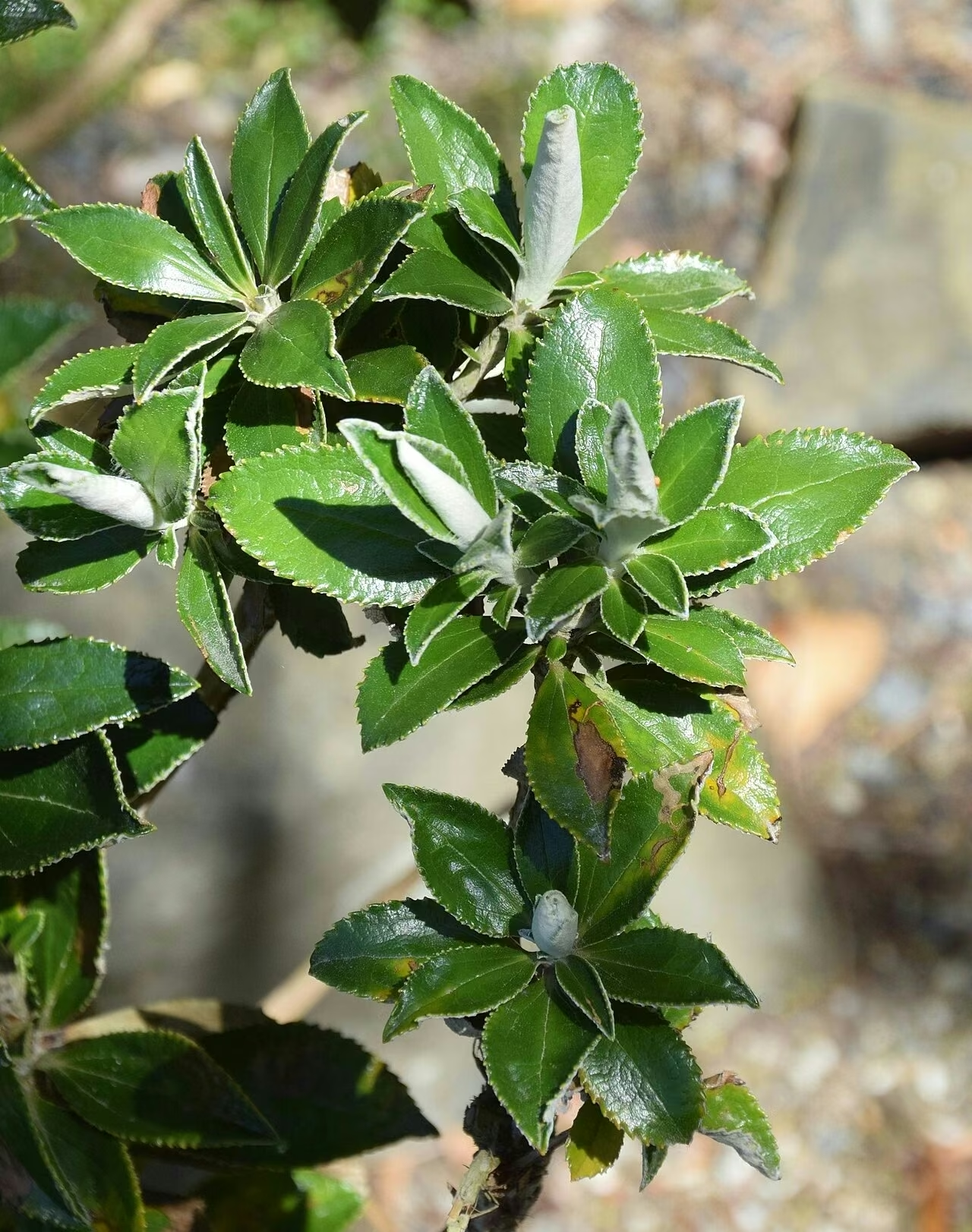
Macrolearia angustifolia
Keketerehe
Macrolearia chathamica
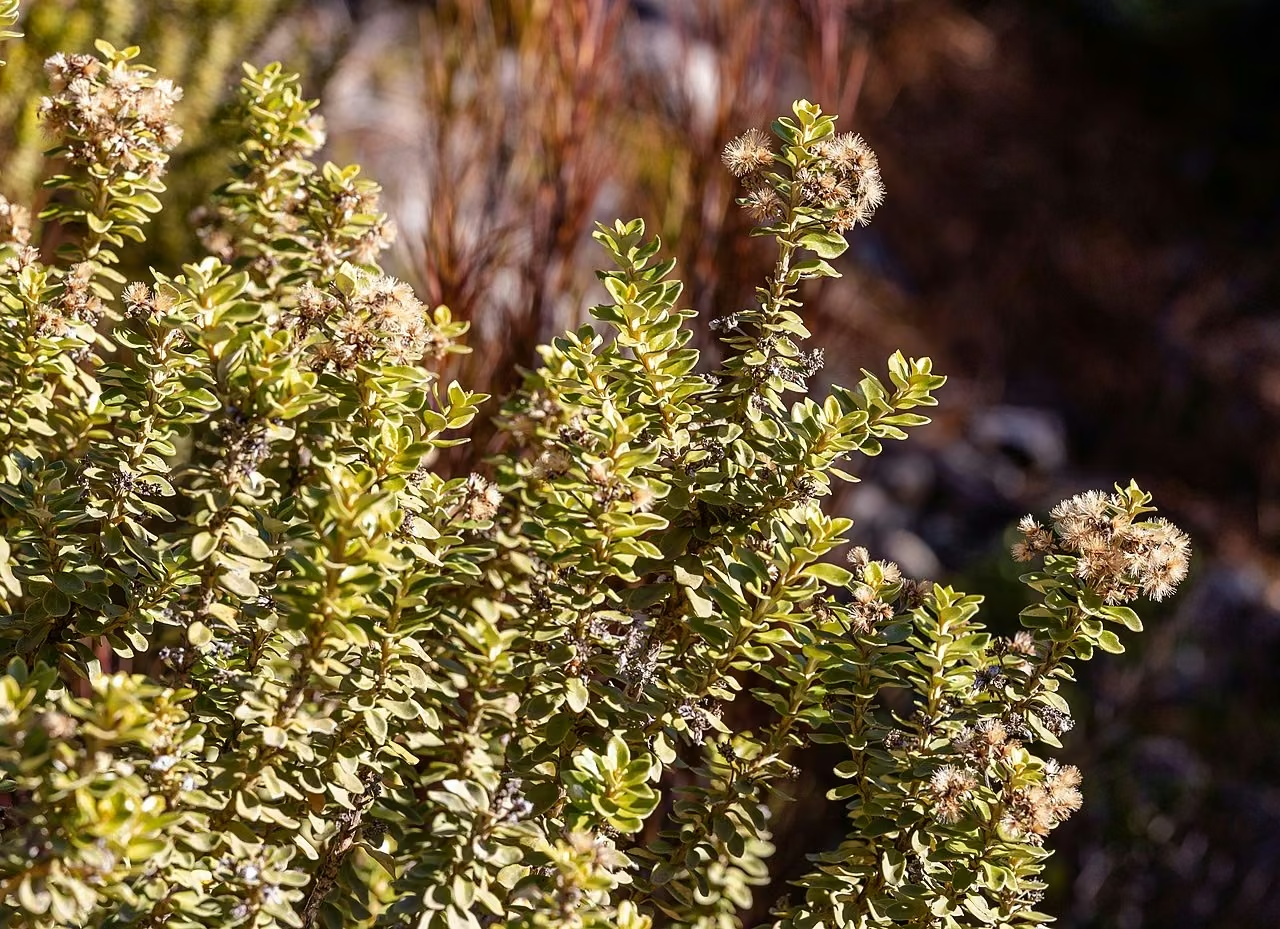
Shawia nummulariifolia
Shawia nummulariifolia
Hangatere
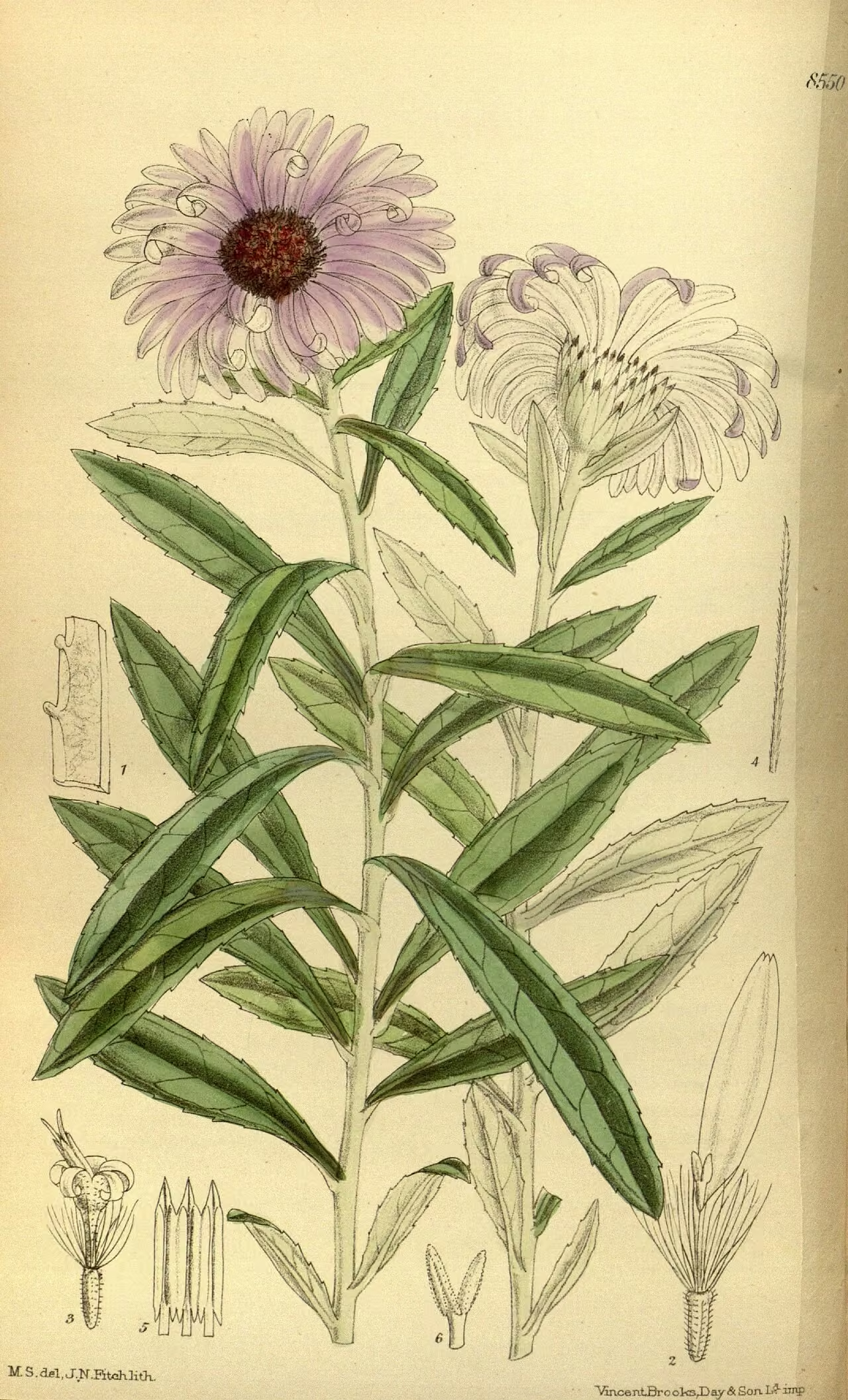
Macrolearia semidentata
Stalked Adder's Tongue Fern
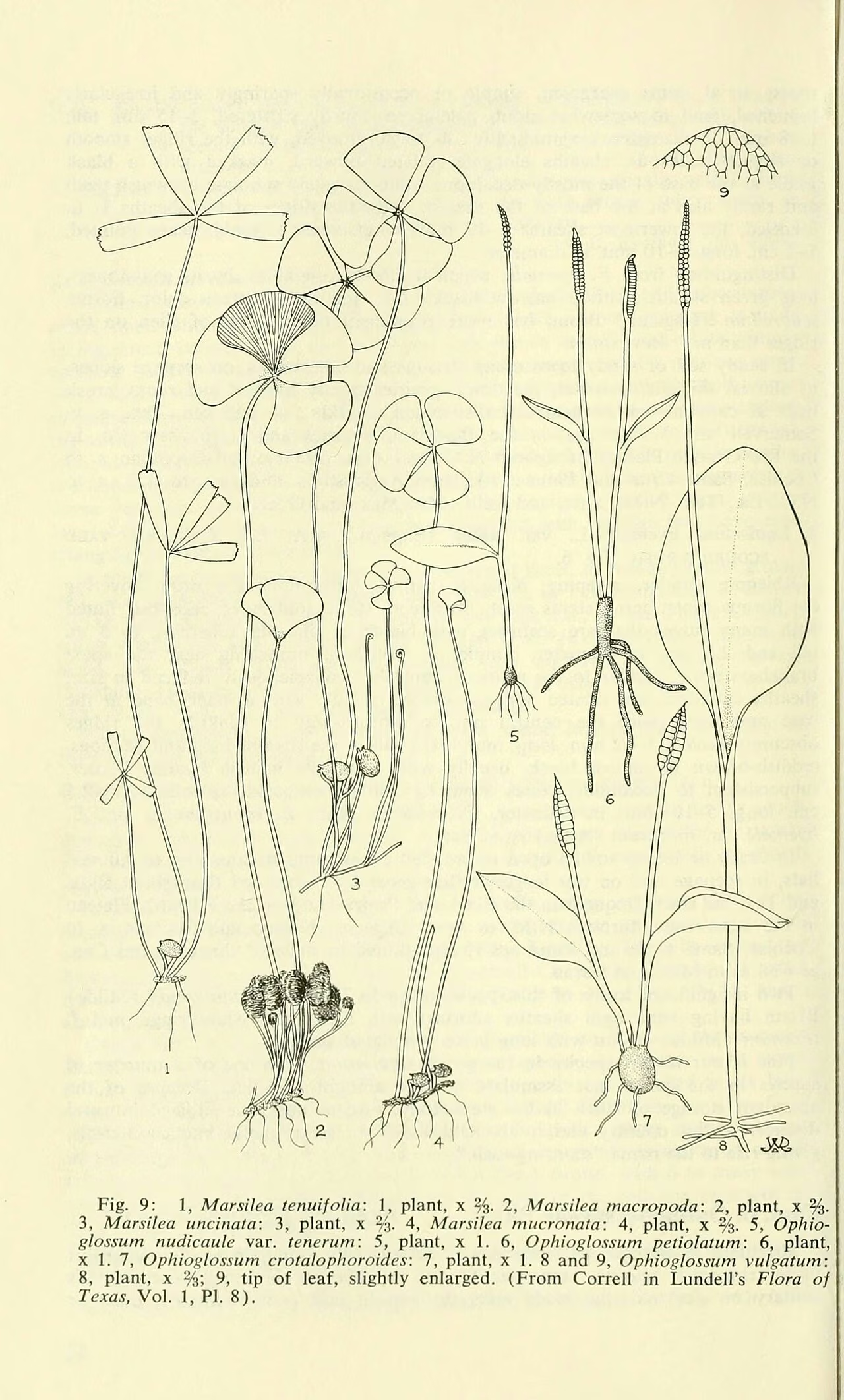
Ophioglossum petiolatum
Albida Plant
Albida Plant
Plant Conservation
Shawia coriacea is ranked At Risk - Naturally Uncommon under the New Zealand Threat Classification System (2023), with the qualifiers Sp (sparse), DPS (data poor: size) and DPT (data poor: trend). It was listed as Not Threatened in 2004, and the change reflects a better appreciation of its limited range rather than a documented decline.
Its rocky habitat gives some protection, but weeds, fire and browsing animals can affect dryland shrubland in Marlborough and Canterbury. Surveys to count populations, weed and pest control, and planting eco-sourced stock in restoration projects within its range would help secure it.
Frequently Asked Questions
Why are the leaves of Shawia coriacea described as saddle-shaped?
The thick leathery leaves have slightly wavy margins that roll under while the sides droop, so each small rounded leaf curves like a saddle. This is the easiest feature for recognising the species.
Where does Shawia coriacea grow naturally?
It is endemic to the north-eastern South Island, in south Marlborough and North Canterbury, growing in lowland to montane shrubland on rocky outcrops and cliff faces.
Is Olearia coriacea now called Shawia coriacea?
Yes. A 2025 revision moved a group of New Zealand Olearia species, including this one, into the genus Shawia, and NZPCN now lists it as Shawia coriacea.
Is Shawia coriacea a good plant for dry gardens?
Nursery growers describe it as tolerant of wind and dry conditions once established, provided it has full sun and very free drainage, which matches its rocky natural habitat.
Sources and Further Reading
The botanical, growing, and conservation details for Tree Daisy (Shawia coriacea) on this page draw on the New Zealand plant references below. Consult them for full technical records and the latest distribution data.