Tree Daisy
Shawia nummulariifolia
Last updated:
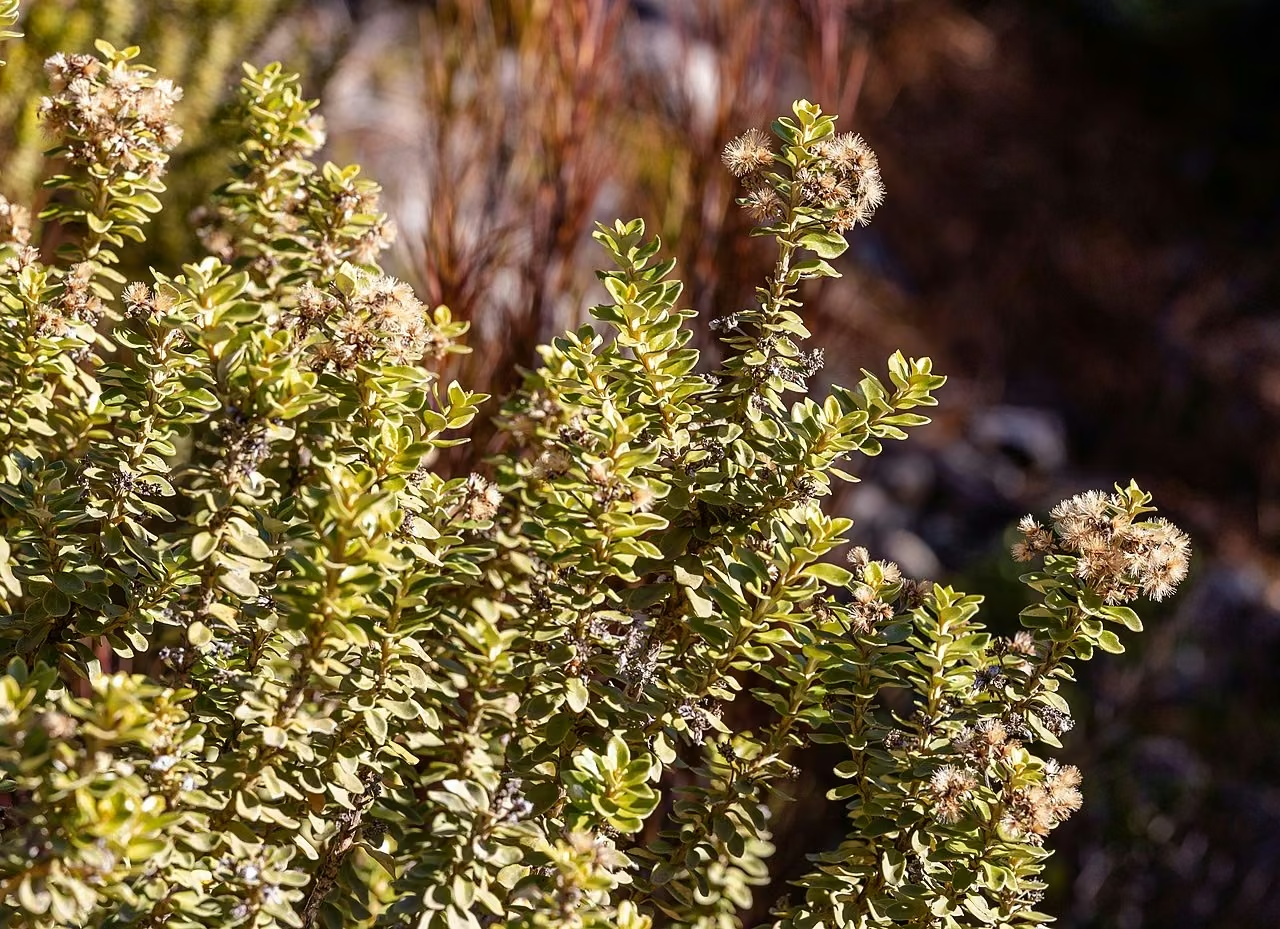
Shawia nummulariifolia is an endemic subalpine tree daisy found in mountain shrubland through much of the North and South Islands, mostly between about 600 and 1400 m and descending towards the lowlands in the south. It is a dense, twiggy evergreen shrub, usually 1 to 1.5 m tall in exposed places but up to 3 m in shelter, with sticky yellowish twigs crowded with tiny, thick, rounded leaves only 5 to 10 mm long. The name means coin-leaved. Solitary creamy-white flower heads appear from late spring to autumn. It is Not Threatened and is hardy, drought tolerant and suited to cool gardens. It is now also known as Shawia nummulariifolia. It was previously known as Olearia nummulariifolia. Explore more native shrubs in our native plant guide.
Plant Description
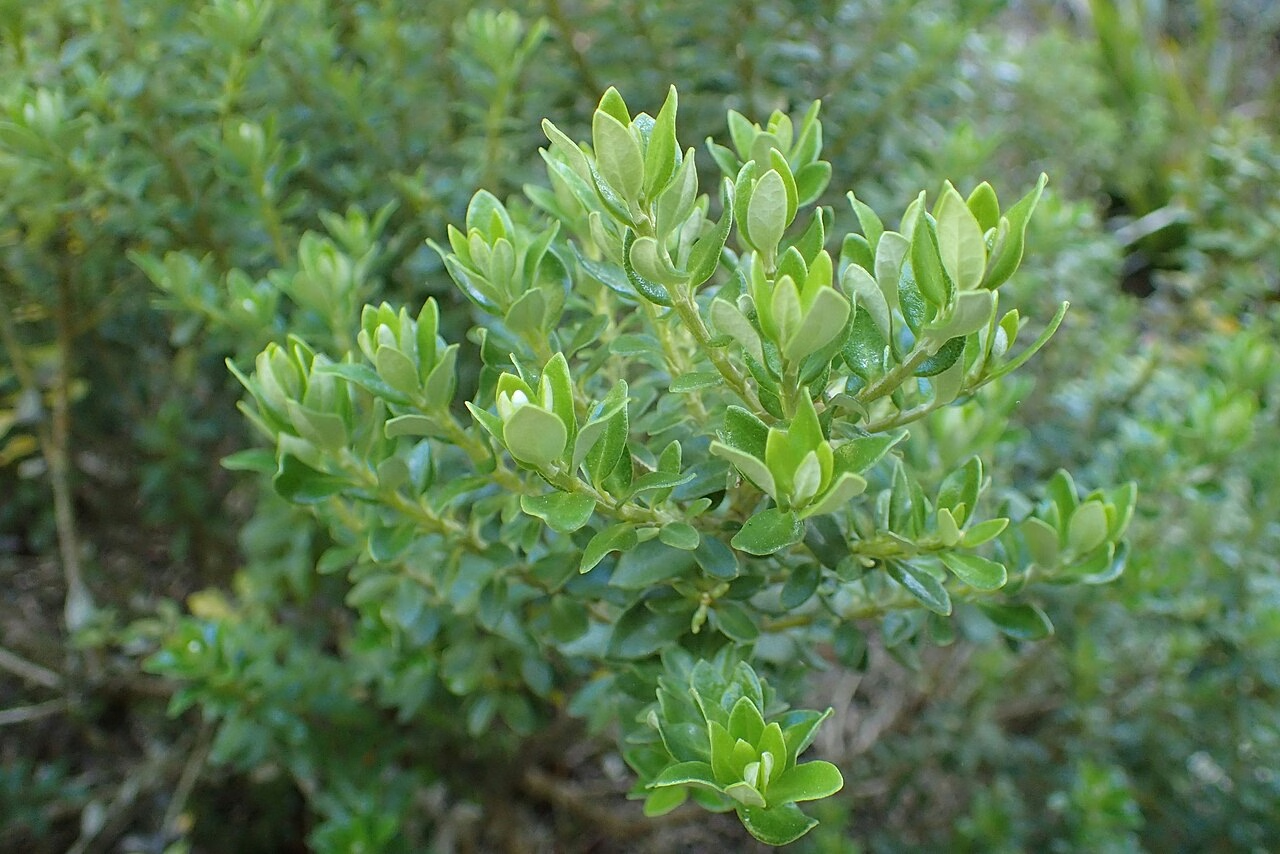
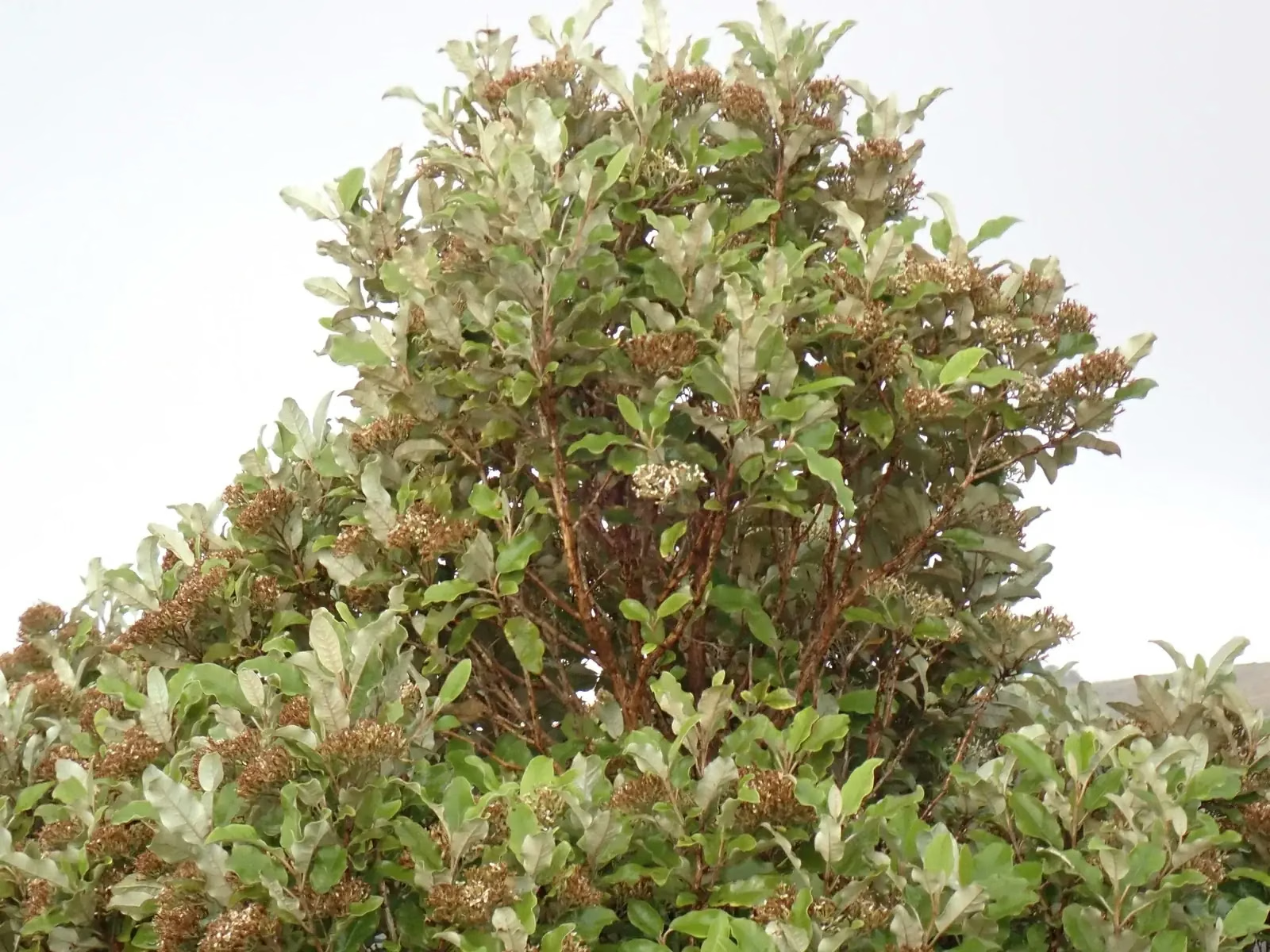
Shawia nummulariifolia is a much-branched, stiff evergreen shrub up to 3 m tall, though in exposed subalpine sites it is usually much lower. The stout branchlets are sticky when young and covered with white to yellowish star-shaped hairs, giving the twigs a distinctly yellow look.
The leaves are close-set along the twigs, very thick and leathery, 5 to 10 mm long and 4 to 6 mm wide on a stalk about 1 mm long. They are broad-obovate to almost circular, hairless and yellowish-green above when mature, and covered beneath in white to buff or yellowish felt, with the margins somewhat curled under. The flower heads are solitary at the twig tips, 3 to 5 mm across, on short stalks clothed in bracts, with a narrow sticky involucre about 1 cm long and 5 to 12 florets, up to 5 of them creamy-white rays. Trees and Shrubs Online records that the flowers have a heliotrope scent. The ribbed achenes are about 3 mm long with pappus hairs 5 to 6 mm long.
Its tiny rounded leaves and sticky yellow twigs separate it from most other tree daisies. Olearia cymbifolia has narrower leaves rolled almost to the midrib, and Olearia coriacea of Marlborough and North Canterbury has larger, saddle-shaped leaves 1 to 2 cm long with flower heads in small clusters.
Quick Facts
| Scientific Name | Shawia nummulariifolia |
|---|---|
| Height | 1-3 m |
| Spread | About 1-1.5 m |
| Water Needs | Low to moderate; drought tolerant once established |
| Light | Full sun |
| Frost Tolerance | High; a subalpine species |
| Salt Tolerance | No reliable information available |
| Growth Rate | Slow |
| Lifespan | Long-lived perennial shrub |
Climate Best Suited to
Suits cool, exposed mountain climates with cold winters, frost, snow and wind, and tolerates dry summers. It struggles in warm, humid lowland climates.
Regional Suitability
| City | Climate Suitability |
|---|---|
| Auckland | Low |
| Wellington | Medium |
| Christchurch | High |
| Dunedin | High |
Plant Habitat
Shawia nummulariifolia is endemic to New Zealand and occurs in subalpine areas through the North and South Islands. NZPCN notes it is absent from Mt Taranaki. It is mostly found between about 600 and 1400 m, descending to lower altitudes in the southern part of its range.
It grows in dry, open subalpine shrubland and scrub, often with other small-leaved shrubs, where it must cope with cold, wind, snow and summer drought. NZPCN classes it as an obligate upland (non-wetland) plant.
Growing Requirements
Soil Requirements
It needs free-draining soil and does well on the thin, stony and low-fertility soils typical of mountain shrubland.
- Gravelly, stony or sandy free-draining soil
- Low to moderate fertility
- Avoid wet, heavy soil that stays waterlogged
Light Requirements
A plant of open subalpine country, it grows densest and most compact in full sun.
- Full sun is best
- In shade it becomes leggy and flowers less
Water Requirements
It is very resilient to drought once established, and good drainage matters more than regular watering.
- Water through the first summer after planting
- Established plants need watering only in prolonged drought
- Do not let it sit in wet soil
Planting and Establishing
Plant in autumn or spring in an open, sunny position with good air movement. On heavy soils, raise the bed or add plenty of grit and plant on a slight mound so water drains away from the stem.
A gravel or stone mulch keeps the root zone cool without holding moisture against the stem. Space plants about 1 m apart for a low informal hedge or massed planting, and expect slow but steady growth.
Ecological Role
Its small, scented flower heads appear over a long season, from November to April, and are visited by insects; the particular pollinators are not documented in the sources consulted. The seed, ripening from December to April, carries a long pappus and is dispersed by wind.
As a dense, stiff-branched shrub of subalpine scrub, it provides shelter for invertebrates, lizards and small birds in an otherwise exposed landscape and helps stabilise slopes and gravels at the treeline.
Uses & Significance
Garden Uses
Its fine texture and yellowish-green foliage make it a distinctive structural shrub for cool, dry or exposed gardens.
- Alpine and rock gardens
- Low hedges and clipped shapes in cold or windy sites
- Foliage contrast among tussocks and silver-leaved plants
- Restoration of subalpine shrubland with eco-sourced stock
Ecological Value
It is a widespread component of subalpine shrubland and supports the wider mountain ecosystem.
- Nectar and pollen over a long flowering season
- Dense shelter for invertebrates and lizards
- Helps hold soil on exposed mountain slopes
Landscaping Uses
The tight, twiggy form and tiny leaves read almost like a conifer from a distance, giving year-round structure. Use it as a backbone shrub in an alpine or dryland garden, or repeat it along a path to create rhythm.
Pair it with snow tussocks (Chionochloa), blue-grey Hebe species and silvery Celmisia to recreate a subalpine shrubland scene. Its yellow tones also contrast well with bronze Carex and darker-leaved Coprosma.
Seasonal Care Calendar
Spring
Fresh growth appears on sticky yellowish shoots, and flowering begins from November.
- Plant once hard frosts ease
- Light trim before new growth if shaping is needed
Summer
The main flowering period, with scented creamy-white heads at the twig tips and seed ripening from December.
- Water young plants in dry spells
- Take semi-hardwood cuttings in late summer
Autumn
Flowering and fruiting continue into April, after which fluffy seed disperses on the wind.
- Collect fresh seed as heads open
- Good season for planting
Winter
Fully hardy to frost and snow, it holds its evergreen foliage through winter.
- No protection required
- Check that drainage copes with winter rain
When to Prune and How Much
Pruning is optional. The shrub naturally keeps a dense, rounded shape, but it tolerates a light trim after flowering, which makes it suitable for low hedging.
Trim little and often rather than cutting hard into old wood, and remove any dead or damaged twigs in spring.
How to Grow Tree Daisy
Shawia nummulariifolia can be grown from seed or cuttings, and a Nelson native plant nursery describes it as easily grown from semi-hardwood cuttings and fresh seed. NZPCN does not publish propagation notes for this species. As it is widespread and Not Threatened, seed collection from wild plants is less of a concern than for rare species, but always obtain permission, take only a small share of seed, and use local, eco-sourced material for restoration in subalpine areas. Cuttings are the quicker route to garden-sized plants and preserve the form of a good parent.
From Seed
Seed ripens between December and April. The nursery notes that untreated seed may take 9 to 12 months to germinate with variable results, and that four weeks of cold stratification can speed germination, which is unsurprising for a mountain species.
- Collect seed heads when the pappus is fluffy and seeds detach easily
- Mix the seed with damp sand or sow onto a seed tray and chill in the fridge for about four weeks
- Sow on the surface of a gritty seed-raising mix and press in lightly
- Keep cool, bright and evenly moist in a sheltered place
- Pot seedlings on individually when large enough to handle
From Cuttings
Semi-hardwood cuttings from the current season's growth, taken in late summer or autumn, are the usual method for raising this shrub.
- Cut 5 to 8 cm lengths of firm young shoot
- Strip leaves from the lower half and apply rooting hormone
- Insert into a free-draining mix of propagating mix with pumice or perlite
- Keep humid and out of direct sun, and avoid overwatering
- Harden off and pot on once well rooted
Pests & Diseases
No significant pests or diseases are recorded for Shawia nummulariifolia in the sources consulted.
The main risk in gardens is root rot or general decline in poorly drained, humid or overly rich conditions. In the wild, subalpine shrublands can be damaged by browsing animals, fire and invasive weeds such as wilding conifers.
Cultural Significance
No traditional Māori name or use specific to Shawia nummulariifolia is recorded in the sources consulted.
The species was described by Joseph Dalton Hooker. It has been grown in British gardens, where Trees and Shrubs Online describes it as one of the hardier olearias, surviving typical winters at Kew. In 2025 it was transferred to Shawia, named after the English scholar and traveller Thomas Shaw, and is now also called Shawia nummulariifolia.
Bonus Tip
On a still summer evening, get close to the flowers: Trees and Shrubs Online records a heliotrope scent from the small creamy heads. Plant it beside a path or seat in a sunny, gritty bed where you can enjoy both the fragrance and the coin-like leaves at close range.
Related Plants
Explore other native plants that share similar characteristics or habitats with Tree Daisy (Shawia nummulariifolia), offering further insights into New Zealand's diverse flora. These related species provide context and opportunities for complementary planting in your garden.
Plant Conservation
Shawia nummulariifolia is ranked Not Threatened under the New Zealand Threat Classification System (2023), as it was in assessments from 2004 to 2017, and it is also Not Threatened in the 2025 Otago regional assessment.
It remains common across New Zealand's subalpine zone. Protecting subalpine shrubland from fire, browsing animals and wilding conifer spread helps keep it secure, along with many smaller species that share its habitat.
Frequently Asked Questions
What does nummulariifolia mean?
It means coin-leaved, from the Latin nummularius, referring to the small, thick, rounded leaves that are crowded along the twigs like little coins.
Where does Shawia nummulariifolia grow in New Zealand?
It grows in subalpine shrubland on both main islands, mostly from about 600 to 1400 m, and comes down to lower altitudes in the south. NZPCN notes it is absent from Mt Taranaki.
Is Shawia nummulariifolia hardy?
Yes. It is adapted to harsh, exposed subalpine conditions and tolerates cold, wind and drought. In Britain it is regarded as one of the hardier olearias.
How do you tell Shawia nummulariifolia from Olearia cymbifolia?
Olearia cymbifolia, once treated as a variety of this species, has slightly longer, narrower leaves with margins rolled almost to the midrib, giving them a boat-shaped look. Shawia nummulariifolia has broader, flatter, rounded leaves with only slightly recurved edges.
Sources and Further Reading
The botanical, growing, and conservation details for Tree Daisy (Shawia nummulariifolia) on this page draw on the New Zealand plant references below. Consult them for full technical records and the latest distribution data.