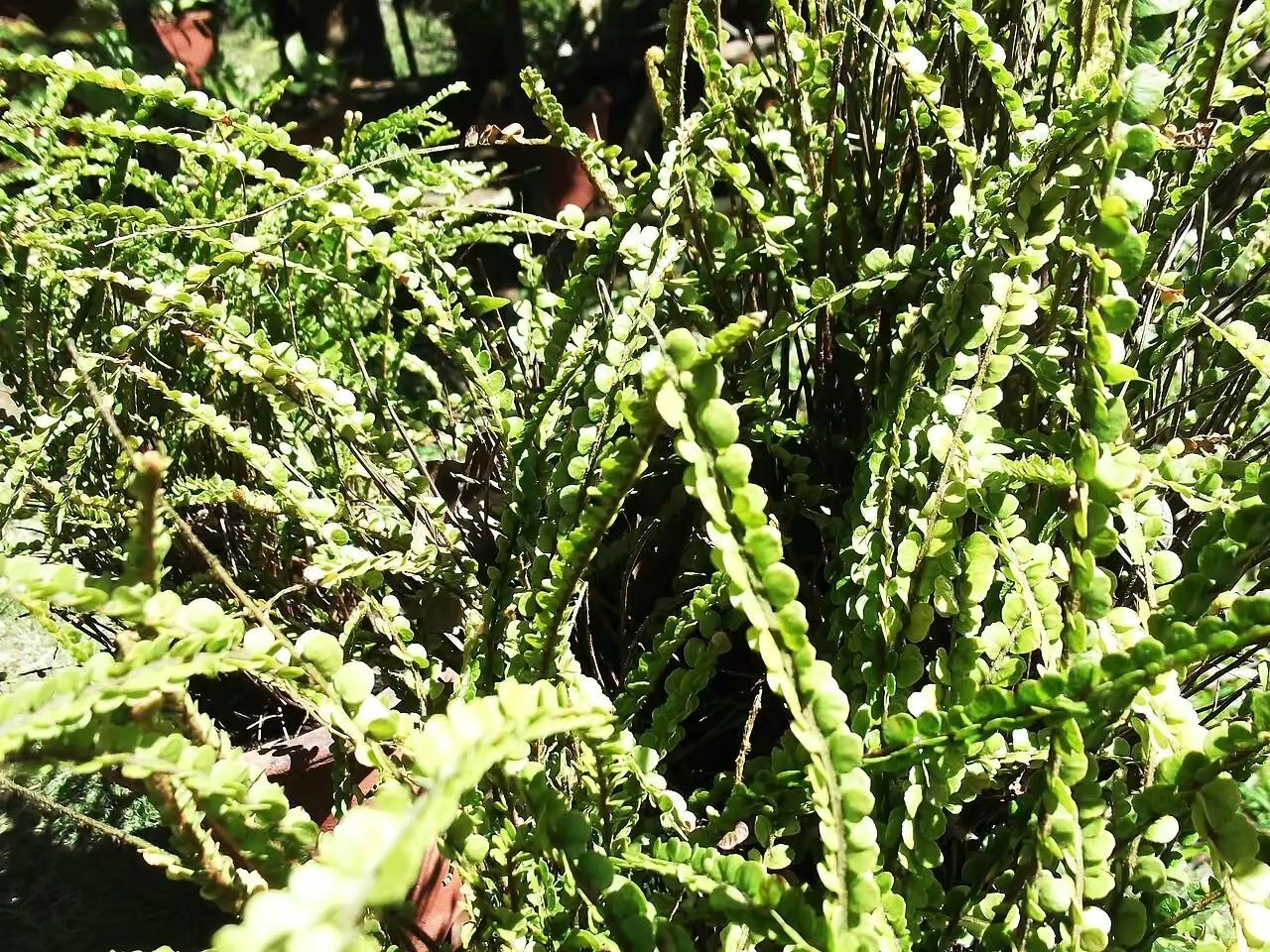
Rough Sword Fern
Nephrolepis brownii
Last updated:
Rough sword fern is the Kermadec Islands ladder fern long known in New Zealand as Nephrolepis brownii. Those plants are now identified as Nephrolepis brownii, and true N. hirsutula is not recorded wild here. It is a stout, patch-forming fern with erect rhizomes, spreading runners and pinnate fronds 0.3-2 m long. In New Zealand it is confined to Raoul, Macauley, Curtis and Dayrell Islands, where it is common in forest, shrubland, clearings and around Raoul's thermal vents and craters. It is widespread across the Pacific, Australia and tropical Asia and is ranked At Risk - Naturally Uncommon because of its restricted New Zealand range. It was previously known as Nephrolepis hirsutula. Explore more native ferns in our native plant guide.
Plant Description
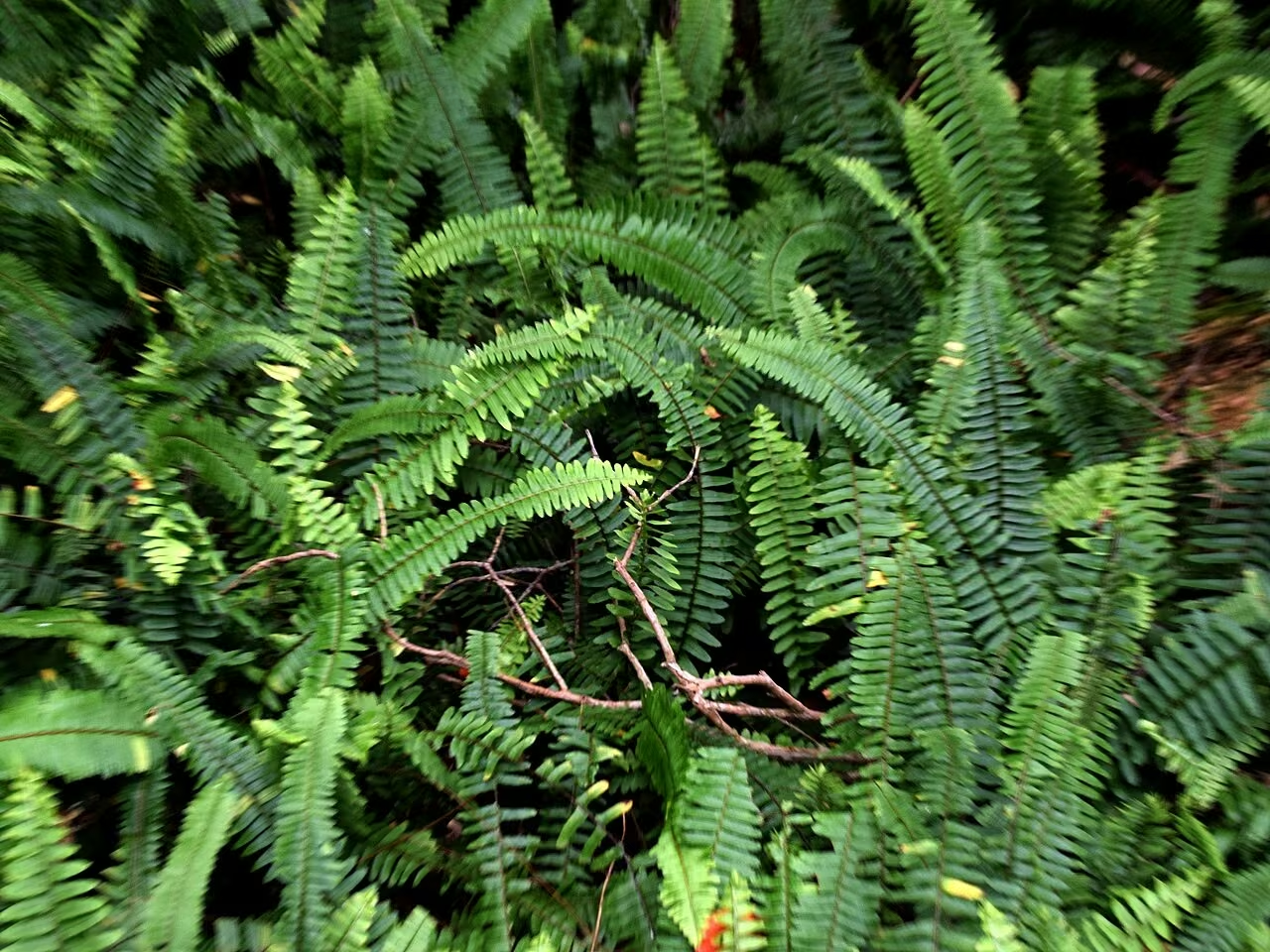
Rough sword fern is a stout terrestrial fern forming dense patches, with short-creeping to erect rhizomes that send out long-creeping runners. The fronds are elliptic to narrowly elliptic and once-pinnate, 300-2000 mm long and 100-250 mm wide, dark green or yellow-green, with 18-75 pairs of pinnae up to about 155 mm long.
The undersides of the pinnae carry pale brown fringed scales and multicellular hairs, which give the fern its rough feel and common name. Round sori sit at the ends of the veins inside the pinna margin and are covered by kidney-shaped indusia 1-1.5 mm long.
It differs from N. flexuosa in its much longer, sickle-shaped pinnae with fringed scales beneath, and from the naturalised N. cordifolia in lacking tubers. Early New Zealand botanists confused it with N. exaltata, and from 1977 it was recorded as N. hirsutula, a closely related species that differs in its rufous, toothed rachis scales, sori near the margin and lack of hairs on the upper midribs.
Quick Facts
| Scientific Name | Nephrolepis brownii |
|---|---|
| Height | Fronds 0.3-2 m long |
| Spread | Forms dense patches through runners |
| Water Needs | Moderate; tolerates dry and wet forest |
| Light | Sun to partial shade |
| Frost Tolerance | Low; NZPCN notes it is cold sensitive |
| Salt Tolerance | Grows in coastal forest; tolerance not documented |
| Growth Rate | Fast in warm conditions |
| Lifespan | Perennial |
Climate Best Suited to
It is a subtropical fern that NZPCN describes as cold sensitive. On the mainland it would need a frost-free, warm, humid site or indoor conditions.
Regional Suitability
| City | Climate Suitability |
|---|---|
| Auckland | Medium |
| Wellington | Low |
| Christchurch | Low |
| Dunedin | Low |
Plant Habitat
In New Zealand Nephrolepis brownii is confined to the Kermadec Islands, on Raoul, Dayrell, Macauley and Curtis Islands, at 5-170 m altitude. Beyond New Zealand it occurs widely in the Pacific and Australia and through Malesia to India, Sri Lanka, southern China and Taiwan.
On Raoul Island it is common throughout dry and wet forest, open shrubland, clearings and around old cultivation sites, and around the thermal vents and craters. It also grows on banks, among boulders, sometimes as a low epiphyte, and on Macauley Island under Kermadec ngaio.
Growing Requirements
Soil Requirements
It grows in a wide range of volcanic soils on the Kermadecs, from forest floor to open, disturbed ground.
- Free-draining, humus-rich mix in cultivation
- Tolerates poor and disturbed soils
- Avoid cold, waterlogged soil
Light Requirements
It grows in both forest and open shrubland and clearings.
- Full sun to partial shade
- Bright indirect light indoors
- Denser growth in good light
Water Requirements
It occurs in both dry and wet forest on Raoul Island, so it is reasonably adaptable.
- Keep evenly moist while growing
- Tolerates short dry spells once established
- Reduce watering in cool weather
Planting and Establishing
Outside the Kermadecs it should only be grown in containers in a warm, frost-free place, as NZPCN notes it is cold sensitive and can become invasive in ideal conditions.
Keep pots away from bush margins and do not dump unwanted plants or runners, because related ladder ferns have become weeds in New Zealand.
Ecological Role
On Raoul Island it is a widespread ground fern of forest and shrubland and colonises open, disturbed ground such as clearings and old cultivation sites, as well as the heated ground around thermal vents.
It spreads quickly by runners to form dense patches, and reproduces by wind-dispersed spores, which helps explain its wide range across Pacific islands.
Uses & Significance
Garden Uses
It is mainly of interest as a conservation or collection plant in warm areas.
- Large pot or hanging basket fern under cover
- Collections of Kermadec Islands plants
- Not recommended for open planting on the mainland
Ecological Value
It is part of the distinctive subtropical flora of the Kermadec Islands.
- Ground cover in Kermadec forest and shrubland
- Colonises disturbed ground and thermal areas
- Range-restricted in New Zealand terms
Landscaping Uses
Its long, arching fronds make a bold statement in a large container in a conservatory or sheltered courtyard.
Contain its runners carefully; it is not suited to open garden beds.
Seasonal Care Calendar
Spring
New fronds emerge as temperatures rise.
- Divide or repot
- Begin regular watering
Summer
Rapid growth and runner production in warmth.
- Remove runners escaping the pot
- Keep moist
Autumn
Fronds mature and release spores.
- Collect spores if wanted
- Trim tired fronds
Winter
Growth slows and cold can damage fronds.
- Keep frost-free
- Water sparingly
When to Prune and How Much
Remove old and damaged fronds at the base to keep the clump tidy.
Cut back runners regularly so the fern cannot escape its container, and dispose of them in general waste rather than compost.
How to Grow Rough Sword Fern
NZPCN states that rough sword fern is easily grown from rooted pieces and fresh spores, noting that it is cold sensitive and in ideal conditions grows very fast and can become invasive. Division of rooted plantlets from the runners is the easiest method. Because the wild New Zealand population is restricted to the remote Kermadec Islands, which are a nature reserve, material should come only from existing cultivated plants.
By Division
Runners root along their length and produce young plants, and established clumps can be cut into sections.
Plantlets taken in late spring or summer, when the fern is growing fastest, establish most quickly. Pot them into a container that will hold the runners, rather than open ground.
- Find a plantlet with its own roots along a runner
- Cut it free with a sharp knife
- Pot into a free-draining, humus-rich fern mix
- Keep warm, humid and in bright indirect light
- Pot on once new fronds are growing strongly
From Spores
Spores form in round sori under kidney-shaped indusia. Collect fertile fronds when the sori begin to darken and sow fresh, keeping everything warm, since this is a cold-sensitive fern.
Sporelings take several months to reach a size that can be handled.
- Lay a fertile frond on paper for a day or two to release spores
- Sow thinly onto sterilised, moist fern mix
- Cover to maintain high humidity
- Keep warm and out of direct sun
- Prick out sporelings in small clumps once fronds form
Pests & Diseases
No specific pests are recorded for this fern in the sources consulted, and NZPCN lists no apparent threats to the Kermadec populations.
In cultivation the main problems are cold damage and its own vigour; keep it frost-free and contained.
Cultural Significance
No Māori name or traditional use specific to this fern is recorded in the sources consulted.
Its name has changed several times in New Zealand botany. Early botanists called it N. exaltata, it was recorded as N. hirsutula from 1977, and in 2005 Hovenkamp and Miyamoto showed the Kermadec plants belong to N. brownii, an identity NZPCN reports was clarified for New Zealand in 2015.
Bonus Tip
If you are trying to name a Kermadec ladder fern, turn a pinna over and use a hand lens: fine hairs along the upper midrib and pale fringed scales point to N. brownii rather than the true N. hirsutula.
Related Plants
Explore other native plants that share similar characteristics or habitats with Rough Sword Fern (Nephrolepis brownii), offering further insights into New Zealand's diverse flora. These related species provide context and opportunities for complementary planting in your garden.
Plant Conservation
Rough sword fern is ranked At Risk - Naturally Uncommon in New Zealand, with the qualifiers RR (range restricted) and SO (secure overseas), because it is confined to the Kermadec Islands though common elsewhere.
NZPCN lists no apparent threats. Its Kermadec habitat lies within a nature reserve, and biosecurity on the islands helps protect it.
Frequently Asked Questions
Is Nephrolepis brownii native to New Zealand?
Not as currently understood. The Kermadec Islands plants once called N. hirsutula are now Nephrolepis brownii, which is indigenous to the Kermadecs, while true N. hirsutula is not recorded wild in New Zealand.
Where does rough sword fern grow?
In New Zealand it is confined to the Kermadec Islands: Raoul, Dayrell, Macauley and Curtis Islands. Elsewhere it ranges through the Pacific and Australia into Malesia and India.
How do you tell Nephrolepis brownii from N. hirsutula?
N. brownii has nearly entire scale tips, pale or hyaline rachis scales, sori set in from the margin and hairs along the upper midribs of the pinnae, while N. hirsutula has rufous, toothed scales and sori near the margin.
Can rough sword fern become invasive?
NZPCN warns that in ideal conditions it is a very fast-growing fern that can become invasive, and it has naturalised in tropical America and Hawaiʻi.
Sources and Further Reading
The botanical, growing, and conservation details for Rough Sword Fern (Nephrolepis brownii) on this page draw on the New Zealand plant references below. Consult them for full technical records and the latest distribution data.