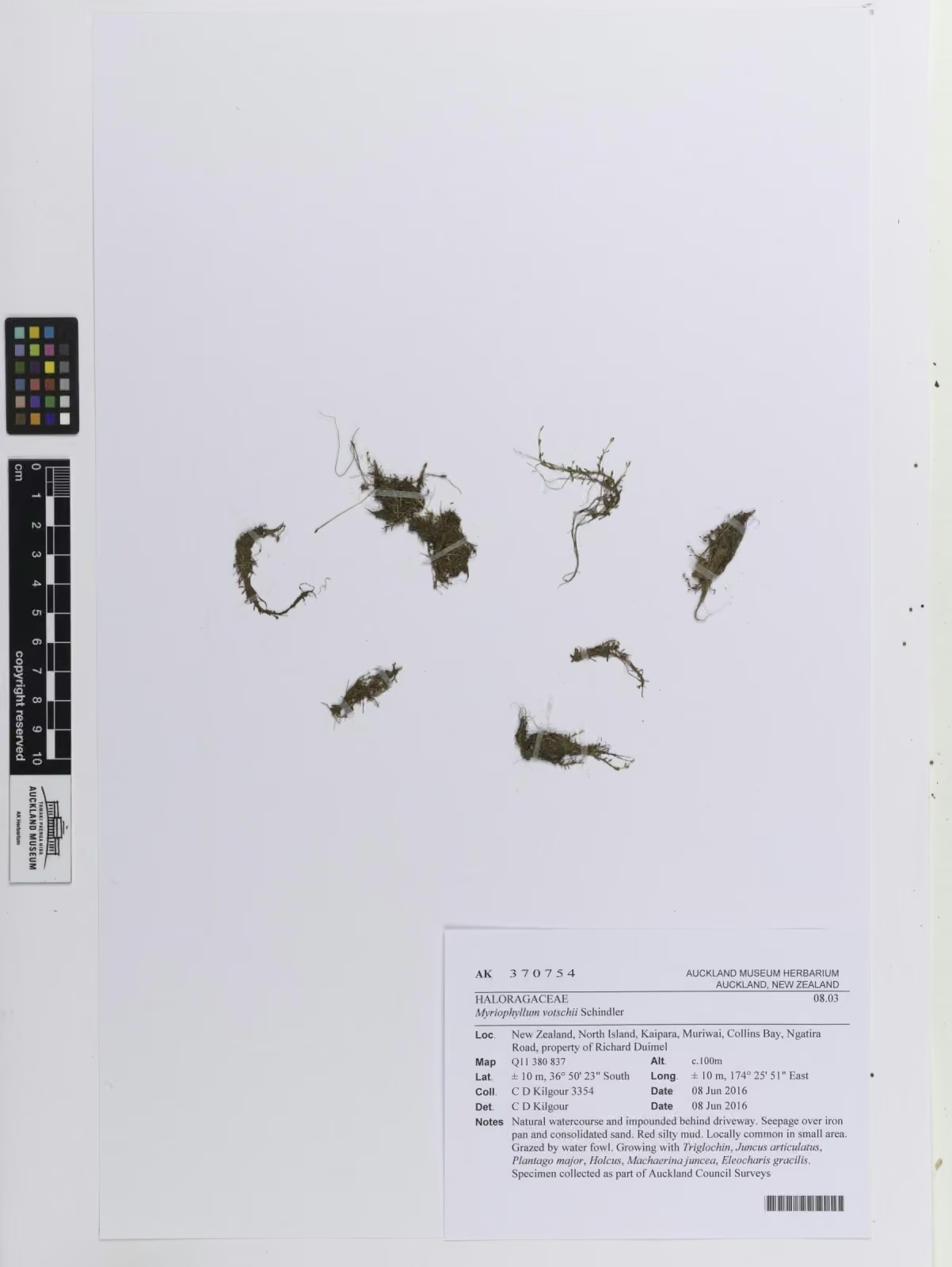
Small Water Milfoil
Myriophyllum votschii
Last updated:
Small water milfoil (Myriophyllum votschii) is one of New Zealand's smallest native wetland plants: a creeping, dioecious herb that roots at its nodes to form patches or tight cushions up to 7 cm high and about 10 cm across. Its opposite leaves are only 1.8-3.5 mm long and swollen, unlike the feathery leaves of most milfoils. It is endemic, recorded from the North, South, Stewart and Chatham Islands, and nationally ranked Not Threatened but sparse. In Auckland and Wellington it is regionally Endangered. NZPCN notes it grows easily from rooted pieces and can be kept in a pond or fish tank. Explore more native ground covers in our native plant guide.
Plant Description
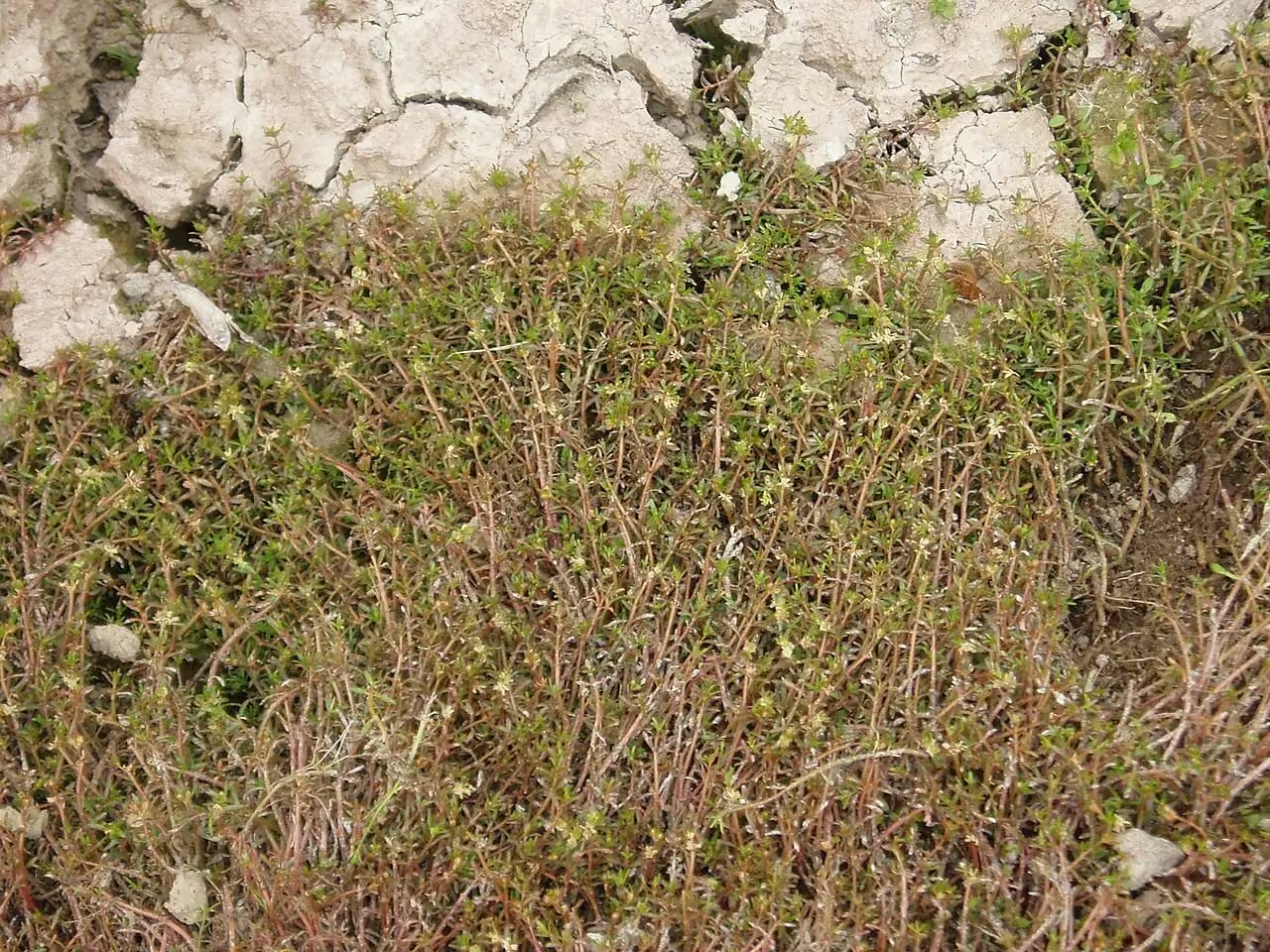
Small water milfoil is a dioecious perennial herb, meaning male and female flowers are on separate plants. The stems are usually prostrate, rarely erect, branching freely and rooting at the nodes to form patches or tight cushions up to 7 cm high and clumps around 10 cm across.
The leaves are all of one kind, opposite, entire and obovoid, 1.8-3.5 mm long and 0.5-1.1 mm wide, flat or slightly concave on top and convex below. This makes it look more like a tiny succulent turf plant than a typical feathery milfoil, although it can produce submerged leaves when flooded.
Male flowers have four greenish-white petals marked with reddish spots, while female flowers have no sepals or petals. The fruit is black and depressed-globular, about 1 mm long and 1.1-1.4 mm wide. Flowering is recorded from November to February and fruiting from January to February. Its opposite, undivided leaves separate it from the larger native milfoils such as M. triphyllum and M. propinquum.
Quick Facts
| Scientific Name | Myriophyllum votschii |
|---|---|
| Height | Up to 0.07 m |
| Spread | Clumps to about 0.1 m across |
| Water Needs | Wet; must never dry out |
| Light | Full sun to light shade |
| Frost Tolerance | No specific information available |
| Salt Tolerance | No information available |
| Growth Rate | Moderate once established |
| Lifespan | Perennial |
Climate Best Suited to
It is recorded from Northland to Stewart Island and the Chatham Islands, so it tolerates a wide climatic range provided its wetland habitat stays wet.
Regional Suitability
| City | Climate Suitability |
|---|---|
| Auckland | Medium |
| Wellington | Medium |
| Christchurch | Medium |
| Dunedin | Medium |
Plant Habitat
Myriophyllum votschii is endemic to New Zealand and recorded from the North, South, Stewart and Chatham Islands. NZPCN classifies it as an obligate wetland plant, one that almost always grows in wetlands. A herbarium record from Waverley in Taranaki is among those documented.
The sources consulted give no detailed account of its preferred wetland types or altitude range. Its ability to produce submerged leaves when inundated indicates it grows on wet ground that is periodically flooded. Its regional rankings show it has become scarce in the northern and lower North Island regions where wetland loss has been greatest.
Growing Requirements
Soil Requirements
It needs permanently moist, open ground where its creeping stems can root at the nodes.
- Wet, fine-textured soil or mud
- Low competition from taller plants
- Avoid soils that dry out in summer
Light Requirements
As a very low cushion it is easily smothered, so it needs open, unshaded ground.
- Full sun to light shade
- Keep taller grasses and sedges away
- Good light keeps cushions compact
Water Requirements
Constant moisture is essential, and NZPCN stresses that cultivated plants must be kept moist.
- Stand pots in a saucer of water
- Tolerates temporary flooding
- Never allow it to dry out
Planting and Establishing
Grow small water milfoil in a shallow pot of wet, fine mix stood in a tray of water, or on a permanently damp pond edge with little competition. Plant pieces close together so they knit into a patch.
Because it is regionally Endangered in some areas, obtain material from cultivated stock or a specialist native nursery, never from wild populations.
Ecological Role
Little is recorded about the pollination or seed dispersal of this species. Separate male and female plants mean a population needs both sexes to set seed, and creeping stems allow single plants to spread clonally.
Like other tiny wetland herbs it is vulnerable to being overgrown by taller vegetation once natural flooding or disturbance that keeps ground open is reduced.
Uses & Significance
Garden Uses
This is a plant for enthusiasts and wetland restoration rather than general gardens.
- Miniature bog or pond-edge collections
- Aquarium or tank foreground plant kept moist
- Restoration of small native wetland turfs
Ecological Value
It is part of New Zealand's distinctive flora of tiny wetland herbs, many of which are declining.
- Indicator of intact natural wetland margins
- Part of native turf communities
- Regionally threatened populations worth protecting
Landscaping Uses
Use it in a container bog garden alongside other miniature native wetland plants, where its tiny leaves and compact cushions can be seen close up.
It is too small and too dependent on constant moisture to use as a general groundcover.
Seasonal Care Calendar
Spring
Cushions resume active growth.
- Divide or pot up rooted pieces
- Remove competing weeds
Summer
Flowering occurs from November to February.
- Keep containers standing in water
- Watch for drying in hot weather
Autumn
Black fruits ripen from January to February, with growth continuing into autumn.
- Collect fruit from female plants if both sexes are grown
- Keep moist
Winter
Growth slows, and the plant may be partly flooded in natural sites.
- Little care needed
- Ensure pots do not sit frozen solid in very cold places
When to Prune and How Much
No pruning is needed. The only maintenance is weeding out grasses and other plants that would overgrow the cushions.
If a patch outgrows its pot, cut rooted sections away and replant them elsewhere.
How to Grow Small Water Milfoil
NZPCN states that small water milfoil is easily grown from fresh seed and rooted pieces, provided it is kept moist. Because it is dioecious, seed is only produced where male and female plants grow together, so division of rooted stems is the more practical method for most growers. Whichever method you use, start with material from a cultivated plant, label it carefully because the tiny cushions are easily lost among other pots, and grow it on in a shallow container standing in water until it forms a solid clump.
By Division (Rooted Pieces)
The prostrate stems root at the nodes, so a patch can be pulled apart into many small rooted pieces. Pieces establish quickly in warm months if never allowed to dry.
- In spring or summer lift a small section of the patch
- Separate it into pieces, each with roots at the nodes
- Press the pieces into a wet, fine mix in a shallow pot
- Stand the pot in a tray of water in good light
- Keep the mix saturated until new growth appears, then plant out or pot on
From Seed
Fruit ripens from January to February on female plants. Sow seed fresh onto a constantly wet surface, as it comes from a plant of saturated ground.
- Collect ripe black fruits from female plants
- Sow on the surface of a fine, wet seed mix
- Stand the tray in shallow water
- Keep in good light and never allow it to dry
- Prick out seedlings once large enough to handle
Pests & Diseases
No particular pests are recorded. The main risks are drying out and being smothered by weeds such as creeping grasses, which can quickly overgrow such a small plant.
In the wild, drainage, nutrient enrichment, stock trampling and weed invasion of wetland margins are the likely pressures behind its regional decline.
Cultural Significance
No Māori name or traditional use is recorded for Myriophyllum votschii in the sources consulted. The genus name means many leaves.
The origin of the epithet votschii could not be confirmed from the sources reached.
Bonus Tip
If you are trying to identify a tiny cushion in a wet place, look at the leaves with a hand lens: opposite, swollen, undivided leaves under 4 mm long point to Myriophyllum votschii rather than the feathery-leaved milfoils.
Related Plants
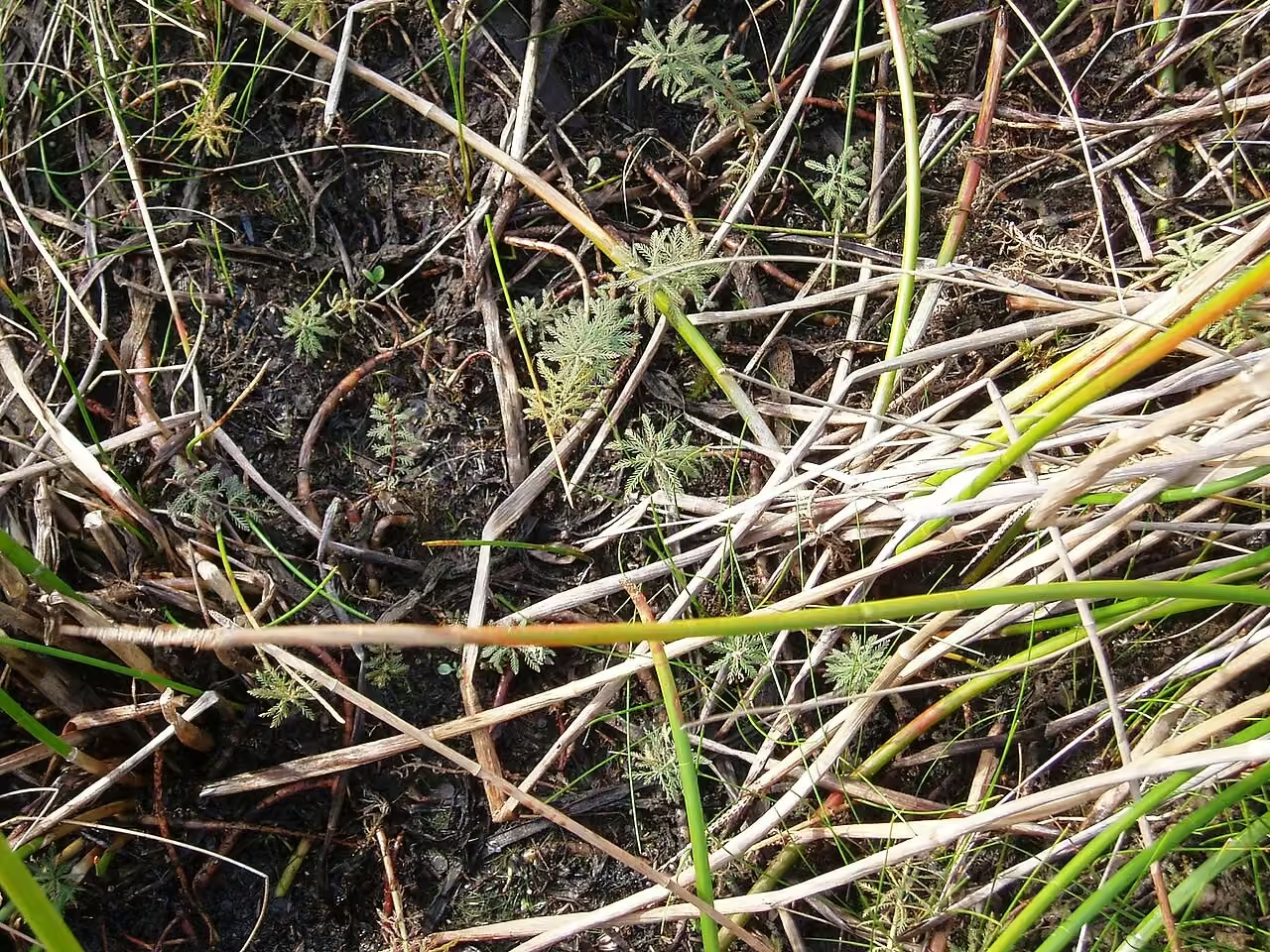
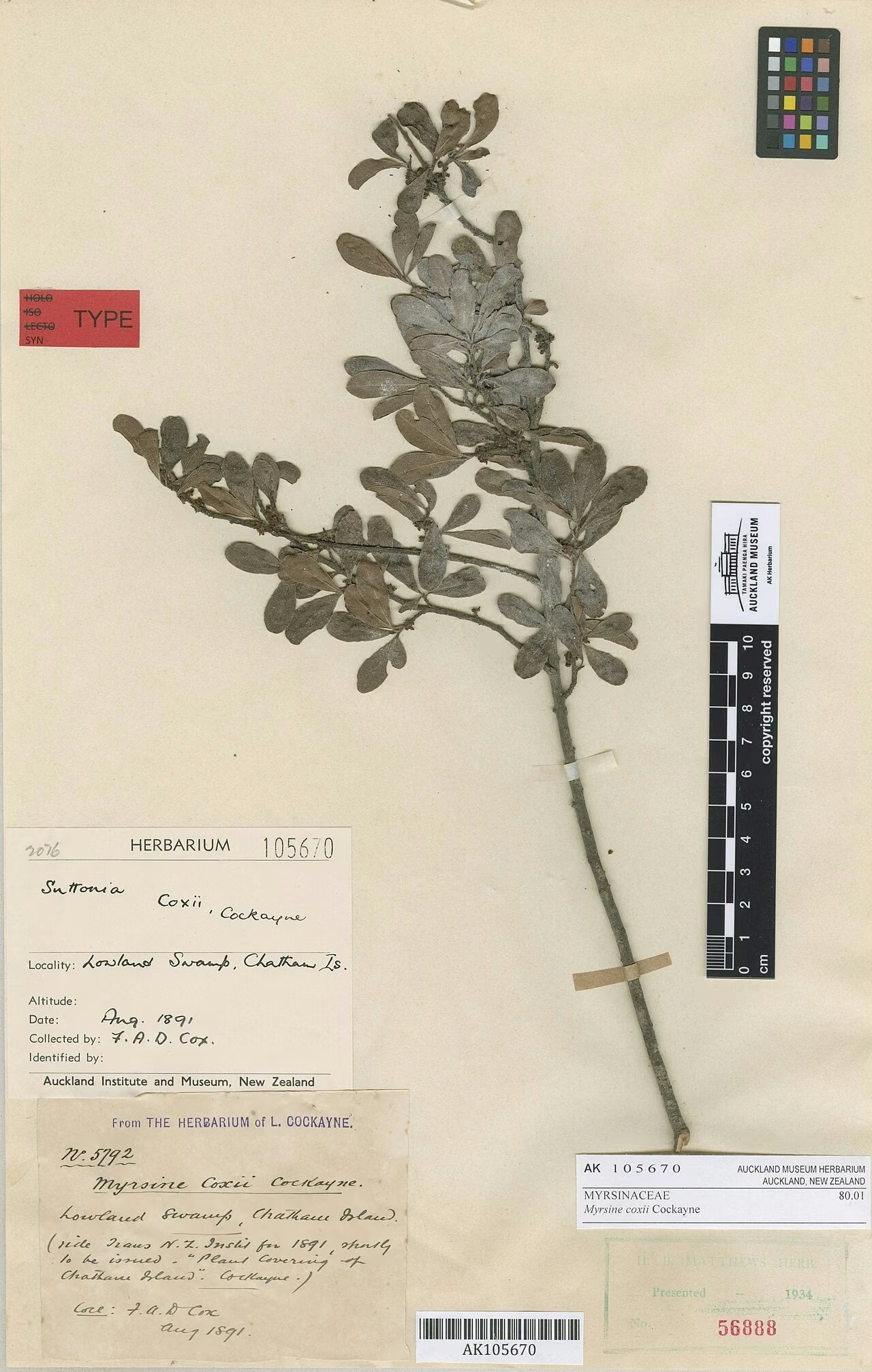
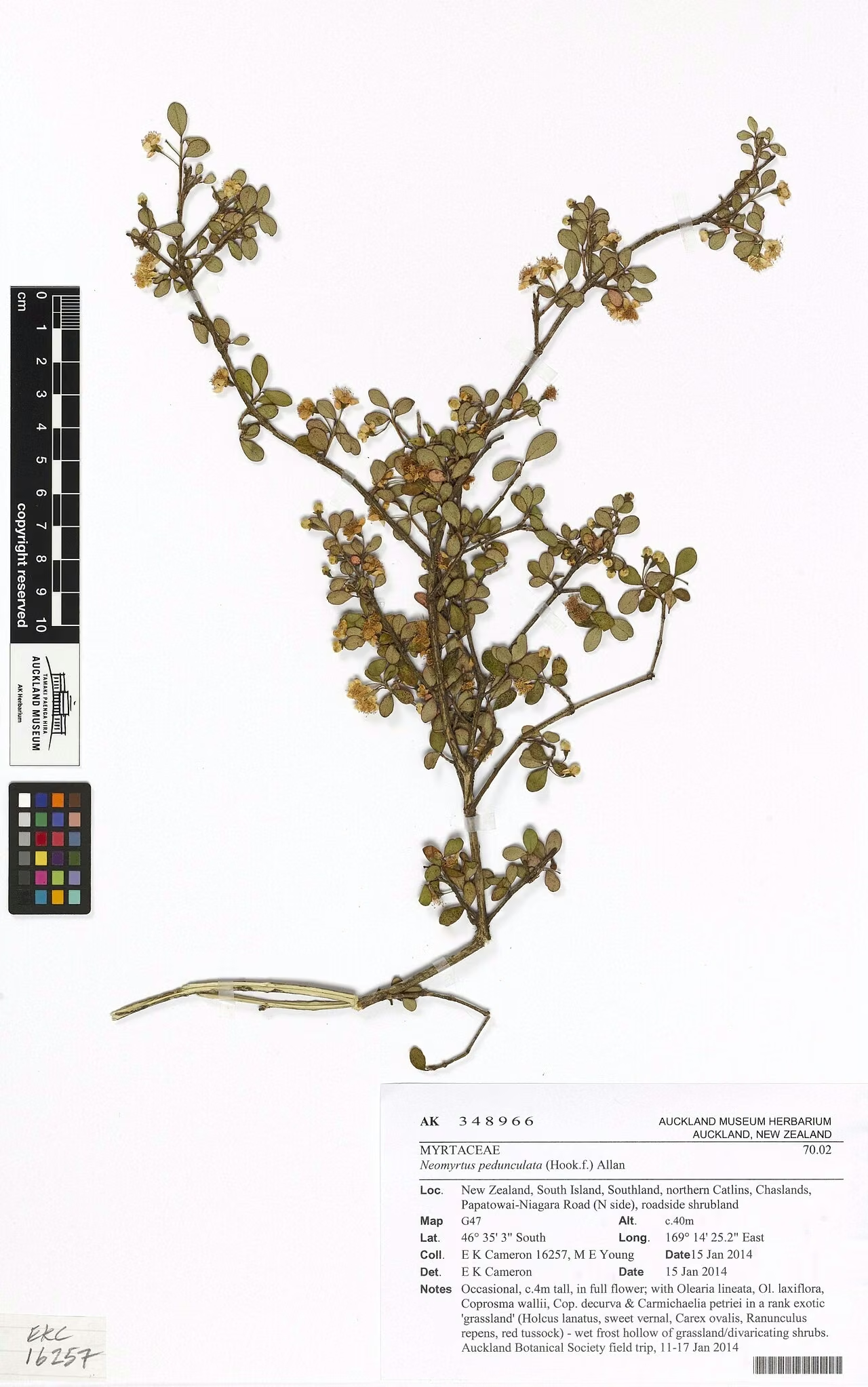
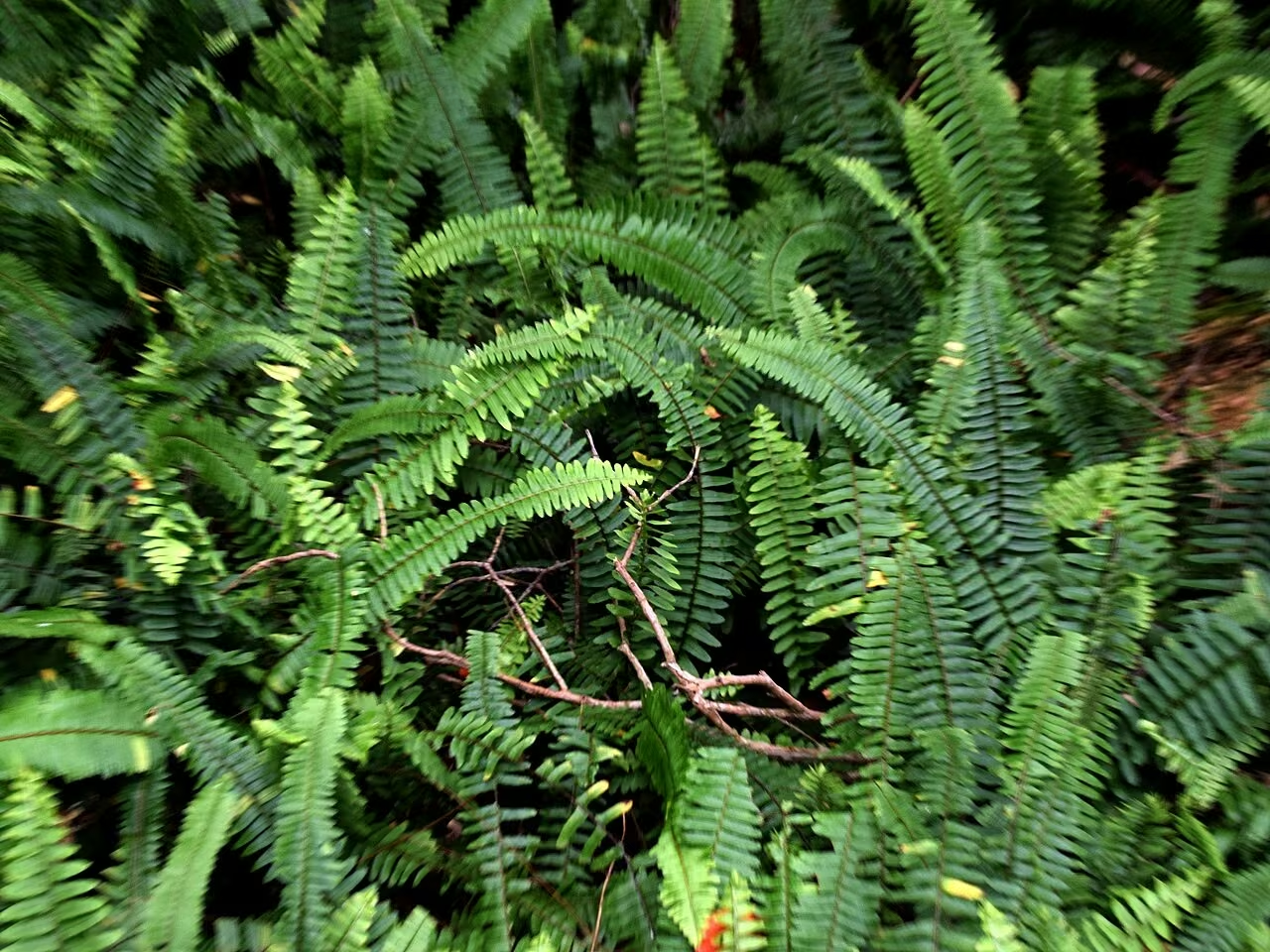
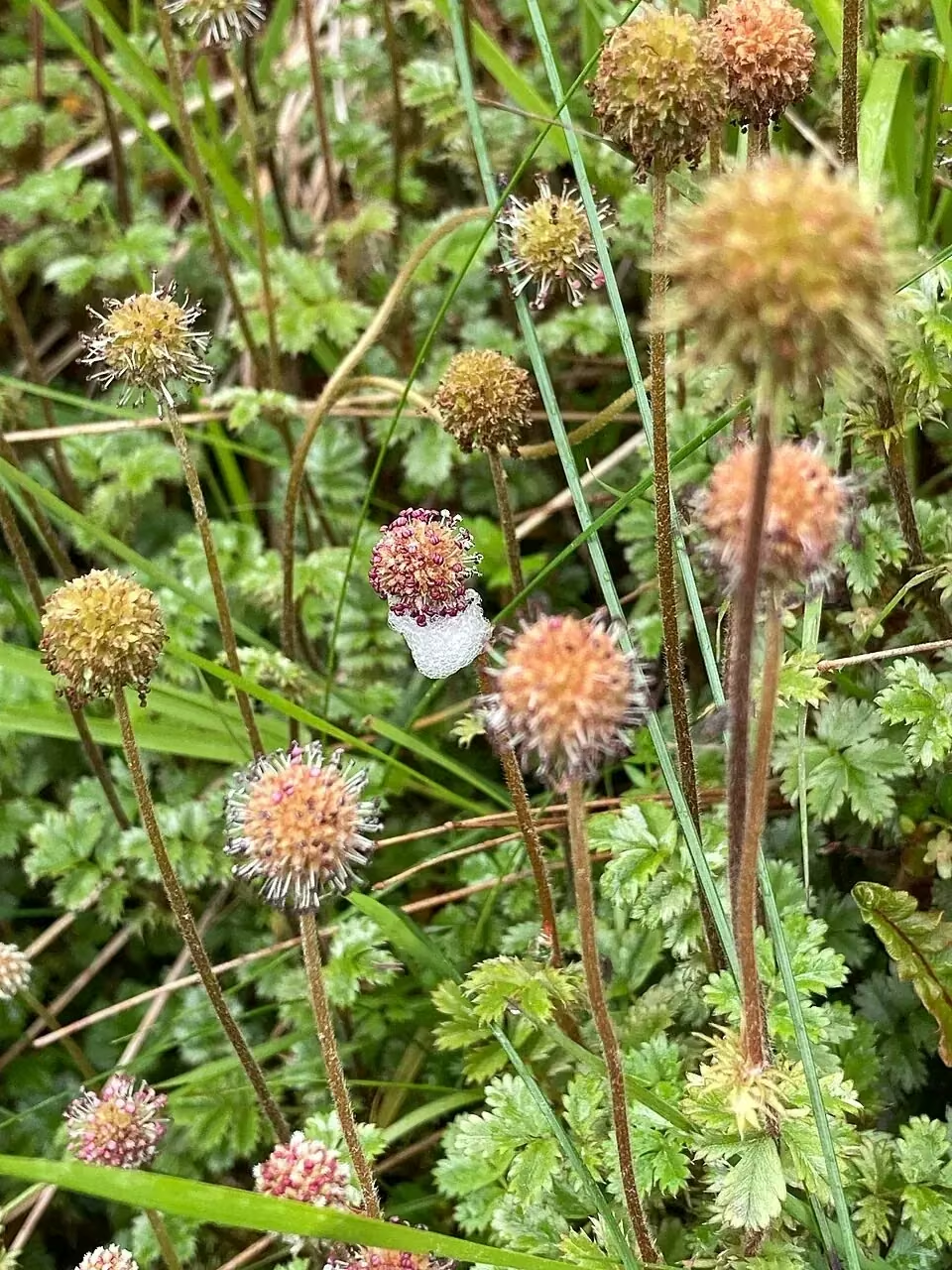
Explore other native plants that share similar characteristics or habitats with Small Water Milfoil (Myriophyllum votschii), offering further insights into New Zealand's diverse flora. These related species provide context and opportunities for complementary planting in your garden.

Plant Conservation
Myriophyllum votschii is ranked Not Threatened nationally (2023) with the qualifier Sp, meaning sparse. Regionally it is Endangered in Auckland and Wellington and Naturally Uncommon in Northland and Otago.
Protecting remaining natural wetland margins from drainage, stock and weed invasion, and recording new sightings, help the species, especially in the regions where it has become scarce.
Frequently Asked Questions
What does Myriophyllum votschii look like?
It forms small green patches or cushions to about 7 cm high made of creeping stems with tiny, opposite, swollen leaves 1.8-3.5 mm long, quite unlike the feathery leaves of larger milfoils.
Is small water milfoil rare?
Nationally it is ranked Not Threatened with a qualifier noting it is sparse, but it is regionally Endangered in Auckland and Wellington and Naturally Uncommon in Northland and Otago.
Can Myriophyllum votschii grow underwater?
Yes. NZPCN notes that it can form submerged leaves when inundated, and it is suitable for a pond margin or fish tank as long as it is kept moist.
Sources and Further Reading
The botanical, growing, and conservation details for Small Water Milfoil (Myriophyllum votschii) on this page draw on the New Zealand plant references below. Consult them for full technical records and the latest distribution data.