Common Water Milfoil
Myriophyllum propinquum
Last updated:
Common water milfoil (Myriophyllum propinquum) is a soft native aquatic herb with slender stems about 5 to 40 cm long that grows in ponds, slow-flowing streams and wet margins throughout New Zealand, including the Chatham Islands. Underwater it carries whorls of finely divided, comb-like leaves; stems that emerge above the water have tiny, narrow linear leaves and spikes of small flowers. It is ranked Not Threatened and, as its common name suggests, is widely distributed. NZPCN describes it as an excellent plant for a pond, slow stream or fish tank, and it grows easily from seed or rooted pieces. Explore more native ground covers in our native plant guide.
Plant Description
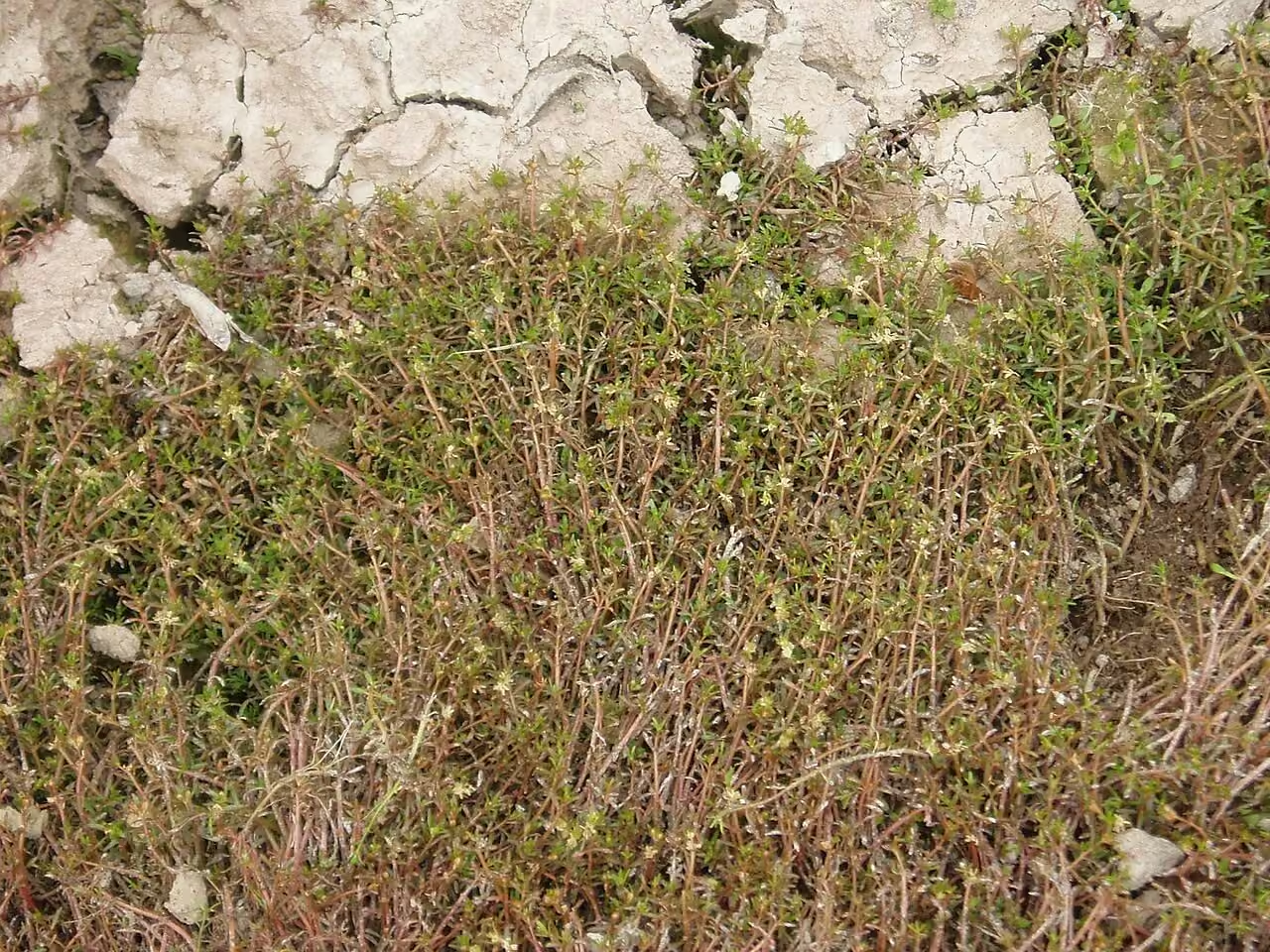
Myriophyllum propinquum is a weak, perennial aquatic or semi-aquatic herb. Its slender stems are usually unbranched, prostrate or erect, roughly 5 to 40 cm long, and root from the lower nodes. Plants growing in water can be longer and floppier, while those stranded on mud are short and compact.
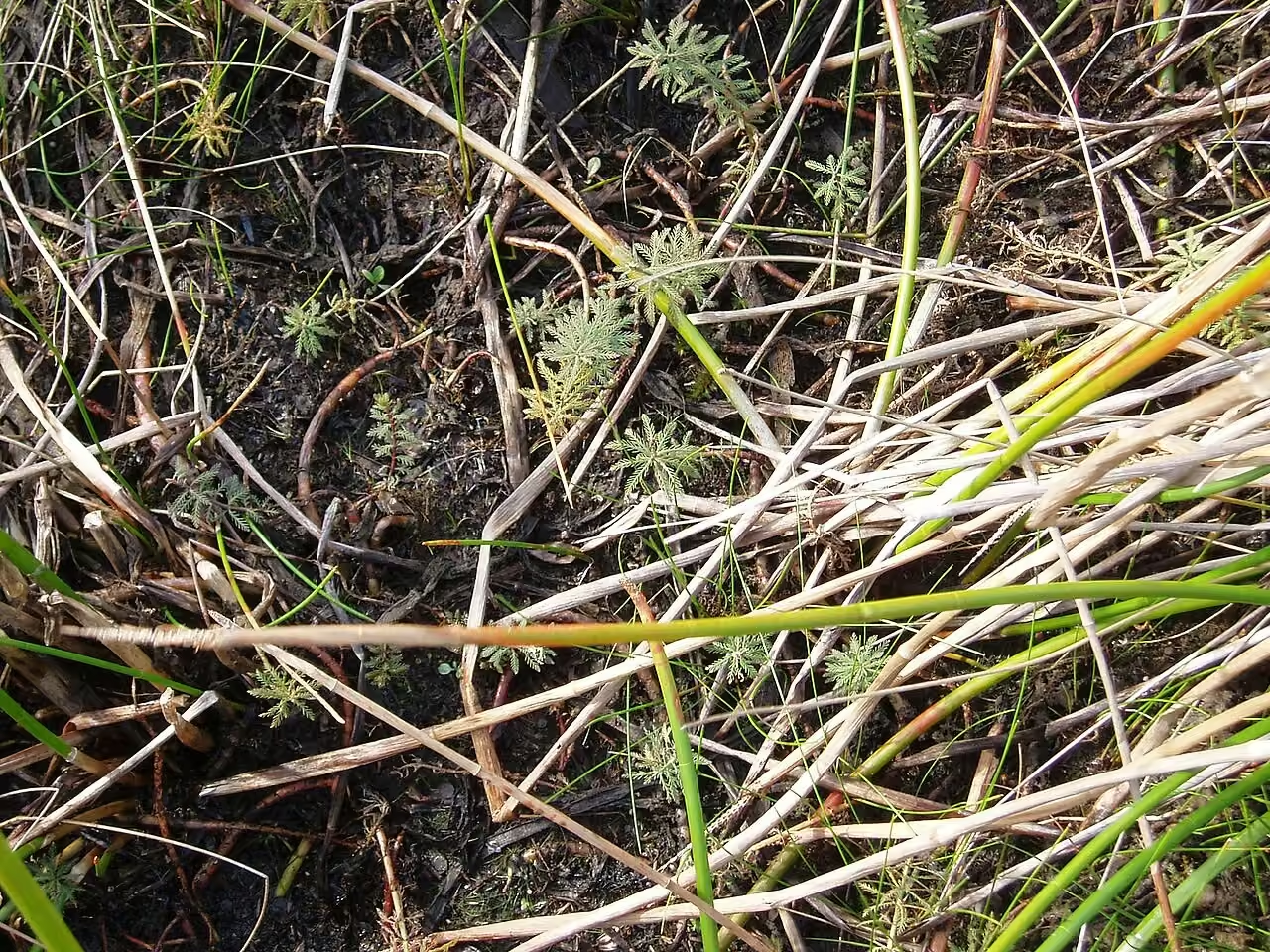
The leaves are strongly dimorphic. Submerged leaves are pectinate, divided into fine comb-like segments, and arranged in whorls of three to five around the stem. Emergent or aerial leaves are much smaller, linear and flattened. The tiny flowers are unisexual and are borne in spikes among the emergent leaves, with male flowers in the upper whorls and female flowers below. The male petals are hooded and white to yellow. The fruits are very small and pale yellow-brown to greenish.
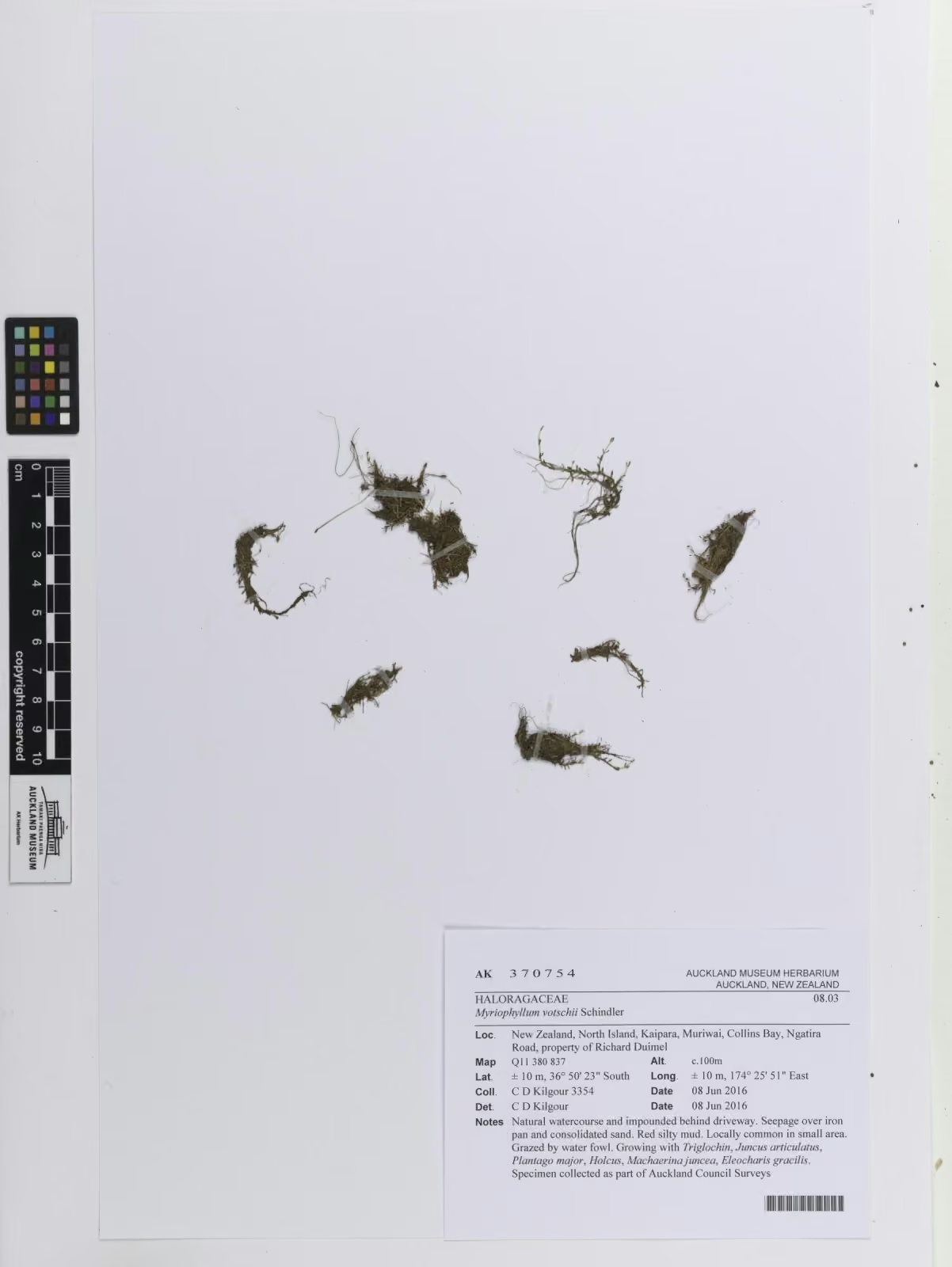
Several other native milfoils occur in New Zealand, including Myriophyllum triphyllum, M. votschii and M. pedunculatum, and close examination of the leaves and flowers is needed to separate them. The introduced parrot's feather (M. aquaticum), a serious weed, is much larger and more robust, with bright blue-green feathery leaves held well above the water.
Quick Facts
| Scientific Name | Myriophyllum propinquum |
|---|---|
| Height | Stems 5-40 cm long, occasionally longer |
| Spread | Spreads by rooting stems to form loose patches |
| Water Needs | Aquatic; shallow fresh water or permanently wet mud |
| Light | Full sun to partial shade |
| Frost Tolerance | Hardy; occurs naturally on the North, South and Chatham Islands |
| Salt Tolerance | Not recorded; a freshwater plant, so avoid brackish water |
| Growth Rate | Fast in warm, shallow water |
| Lifespan | Perennial |
Climate Best Suited to
Grows across almost the full range of New Zealand lowland climates, from warm northern ponds to cool southern wetlands. Year-round fresh water matters far more than temperature.
Regional Suitability
| City | Climate Suitability |
|---|---|
| Auckland | High |
| Wellington | High |
| Christchurch | High |
| Dunedin | High |
Plant Habitat
Common water milfoil is widespread in the North Island, South Island and Chatham Islands. It is recorded as an obligate wetland plant (OBL), meaning it is almost always found in water or saturated ground and rarely elsewhere.
Typical habitats are ponds, lake margins, slow-flowing streams, drains, swamps and seasonally flooded hollows. It grows both fully submerged and as a creeping plant on wet mud as water levels fall. Although Not Threatened nationally, it is ranked Regionally Vulnerable in the Wellington region, where many lowland wetlands have been drained.
Growing Requirements
Soil Requirements
It roots into soft, silty or muddy substrates beneath shallow water or on permanently wet margins.
- Silt, mud or a heavy loam topped with a little gravel in ponds
- No added fertiliser needed in garden ponds, where nutrients encourage algae
- Ordinary aquatic planting mix works for baskets
Light Requirements
It grows best in open water that receives good light, although it tolerates some shade along stream edges.
- Full sun to partial shade
- Deep shade produces weak, sparse growth
Water Requirements
This is an obligate wetland plant that needs permanent fresh water or saturated mud. It copes with fluctuating levels by switching between submerged and emergent growth forms.
- Shallow, still or slow-moving fresh water
- Tolerates seasonal drawdown onto wet mud
- Does not suit fast-flowing or brackish water
Planting and Establishing
Plant rooted pieces directly into the mud at the edge of a pond or in a shallow aquatic basket placed on a marginal shelf. A few stems will root at the nodes and spread to form a patch over a season.
In aquariums, push the stem bases into fine gravel or substrate and provide good light. Source plants from cultivated stock or a reputable aquatic nursery, and check that you are not buying the invasive parrot's feather by mistake.
Ecological Role
The finely divided underwater leaves provide shelter for aquatic invertebrates, tadpoles and small native fish, and give surfaces on which algae and microscopic animals grow. As a native oxygenating plant it contributes to the structure of shallow freshwater habitats.
The small flowers are held above the water on emergent spikes and, as in other milfoils, are thought to be wind pollinated. Detailed studies of its pollination and seed dispersal in New Zealand were not found in the sources consulted.
Uses & Significance
Garden Uses
Common water milfoil is one of the easiest native aquatic plants to grow and is a good alternative to exotic oxygenating weeds.
- Native oxygenating plant for garden ponds
- Planted aquariums and fish tanks
- Wetland restoration and constructed stormwater ponds
- Edges of slow streams and drains
Ecological Value
It provides native underwater habitat in waterways that are often dominated by introduced aquatic weeds.
- Shelter for aquatic insects, snails and young fish
- Part of native submerged plant communities in ponds and lake margins
- Supports regional recovery where wetlands have been drained
Landscaping Uses
In a pond design, use it in the shallow zone between marginal sedges and open water, where its feathery submerged foliage softens the transition. It combines well with other native wetland plants such as Carex secta and native rushes along the bank.
Because it is low and delicate, it is valued for function and natural character rather than visual impact. Keep it to a defined part of the pond if you want clear open water elsewhere.
Seasonal Care Calendar
Spring
New stems extend rapidly as water warms, and the first emergent shoots appear in shallow water.
- Plant or divide rooted pieces
- Clear excess silt from pond baskets
Summer
Peak flowering, with small spikes of white to yellow flowers on the emergent stems.
- Top up ponds during dry spells
- Thin vigorous patches if needed
Autumn
Fruit continues to ripen into autumn, and stems may be stranded on mud as water levels drop.
- Collect ripe fruiting spikes for seed
- Remove fallen leaves from small ponds
Winter
Growth slows in cold water, though the plant persists below the surface.
- No action needed
- Avoid disturbing the substrate
When to Prune and How Much
No formal pruning is needed. In small ponds, pull or cut back excess stems in summer to keep open water, and compost the trimmings well away from natural waterways.
Thinning also provides rooted pieces that can be replanted elsewhere in the pond or shared with other gardeners.
How to Grow Common Water Milfoil
NZPCN notes that Myriophyllum propinquum is easily grown from fresh seed and from rooted pieces, and that it makes an excellent plant for a pond, slow stream or fish tank. Vegetative propagation from stem pieces is the quickest method, because each node can produce roots. Seed is useful where a range of genetic material is wanted for restoration plantings. Always propagate from cultivated or legally sourced plants, and make sure the parent material is genuinely this native milfoil and not the invasive parrot's feather.
From Cuttings (Rooted Stem Pieces)
Stem pieces root readily at the nodes when kept in shallow water or on wet mud. Pieces that already have roots establish fastest.
- Cut 10 to 15 cm lengths of healthy stem, ideally with roots already forming at the lower nodes
- Push the lower nodes into wet mud, fine gravel or an aquatic basket
- Keep the pieces submerged or the substrate saturated
- Place in good light; new growth usually appears within a few weeks in warm water
From Seed
Fruiting is recorded from November to May. The fruits are tiny, so collect whole fruiting spikes from emergent stems and sow fresh.
- Collect fruiting spikes when the fruits turn pale yellow-brown
- Sow on the surface of a tray of fine, wet mud or seed mix
- Stand the tray in a shallow dish of water so the surface stays saturated
- Grow on in good light and transplant seedlings into ponds once they form small rooted stems
Pests & Diseases
Few pests trouble it in gardens. Pond snails may graze the soft foliage, and grass carp or other herbivorous fish can strip it entirely.
The bigger problem in the wild is competition from introduced aquatic weeds such as parrot's feather, oxygen weeds and hornwort, and degradation of wetlands through drainage, nutrient runoff and sedimentation.
Cultural Significance
No traditional Māori name or use specific to this plant is recorded in the sources consulted.
The genus name Myriophyllum means many leaves, describing the finely divided foliage, and the species name propinquum means near or closely related, referring to its close resemblance to another species described alongside it.
Bonus Tip
Before planting any milfoil in a pond, check its identity. Native common water milfoil is a small, delicate plant with stems rarely over 40 cm, whereas the invasive parrot's feather is bulky, with dense whorls of bright blue-green feathery leaves standing well above the water. Never release any pond plants into natural waterways.
Related Plants
Explore other native plants that share similar characteristics or habitats with Common Water Milfoil (Myriophyllum propinquum), offering further insights into New Zealand's diverse flora. These related species provide context and opportunities for complementary planting in your garden.


Plant Conservation
Common water milfoil is ranked Not Threatened (2023) nationally, with the qualifier Secure Overseas. Regionally, it is listed as Regionally Vulnerable in the Wellington region, reflecting the heavy loss of lowland wetlands there.
Protecting and restoring wetlands, fencing stock out of stream margins, reducing nutrient and sediment runoff, and controlling invasive aquatic weeds all benefit this species. Using it in constructed wetlands and stormwater ponds helps reintroduce native submerged vegetation to modified catchments.
Frequently Asked Questions
Is common water milfoil native to New Zealand?
Yes. Myriophyllum propinquum is native and is treated by NZPCN and the Flora of New Zealand as endemic, occurring on the North, South and Chatham Islands. It should not be confused with the invasive parrot's feather (Myriophyllum aquaticum) from South America.
Can I grow Myriophyllum propinquum in a pond or aquarium?
Yes. NZPCN describes it as easily grown from fresh seed and rooted pieces and an excellent plant for a pond, slow-flowing stream or fish tank.
Why does water milfoil have two kinds of leaves?
Submerged stems carry whorls of finely divided, comb-like leaves suited to life underwater, while stems that grow above the surface produce much smaller, narrow, flattened leaves and the flower spikes.
When does common water milfoil flower?
Flowering is recorded from November to April and fruiting from November to May, with tiny white to yellow flowers carried on the emergent stems.
Sources and Further Reading
The botanical, growing, and conservation details for Common Water Milfoil (Myriophyllum propinquum) on this page draw on the New Zealand plant references below. Consult them for full technical records and the latest distribution data.