Mazus
Mazus arenarius
Last updated:
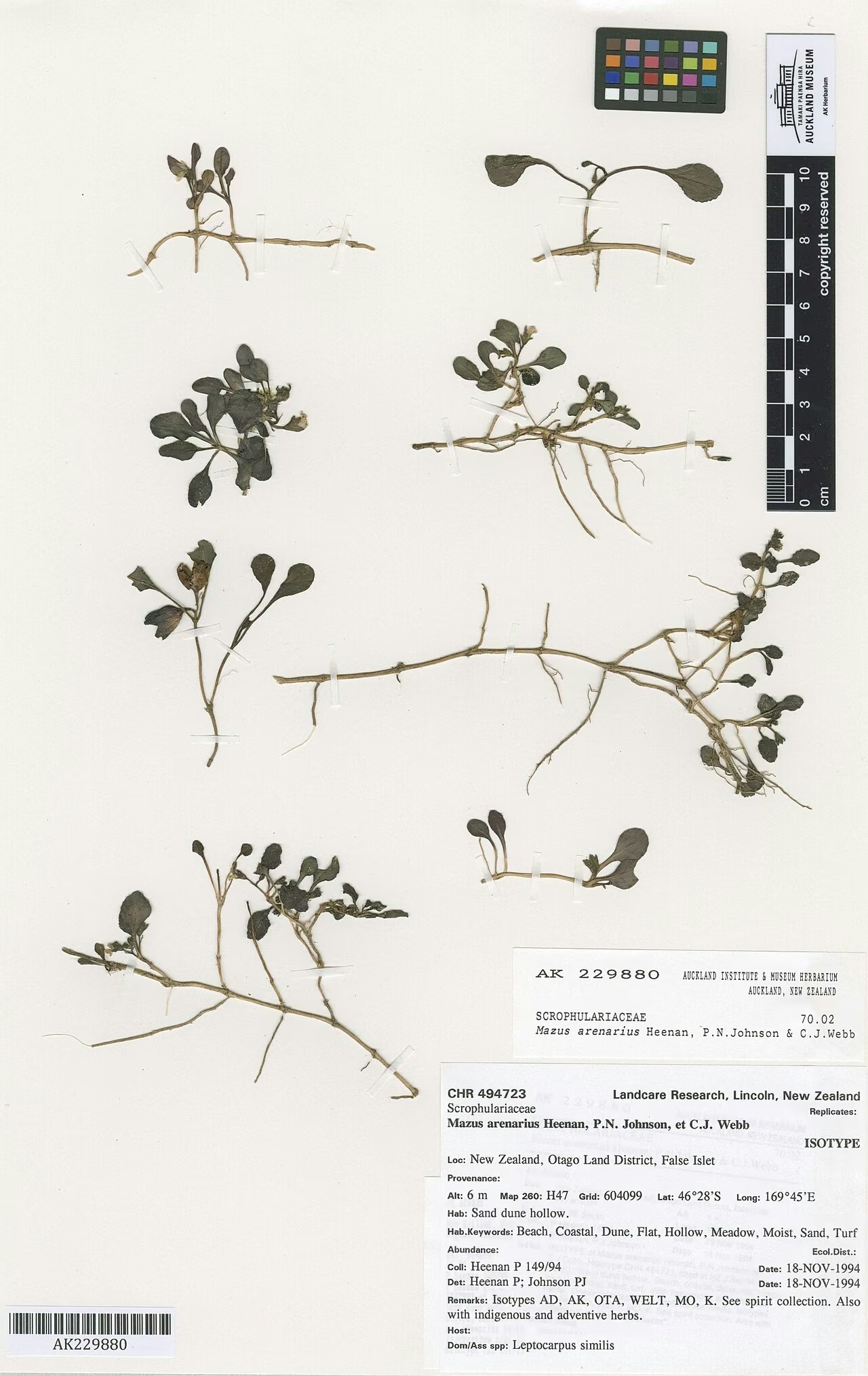
Mazus arenarius is a small, creeping, mat-forming herb endemic to the southern coast of New Zealand, where it grows in seasonally damp hollows between sand dunes and in coastal turf around seepages. Its rosettes of spoon-shaped leaves often turn purple-brown in exposure, and in early summer it bears small white flowers with a purple-flushed throat and yellow palate. Described only in 1996, it is known from about 14 populations in coastal Otago, Southland and Stewart Island/Rakiura. It is ranked At Risk - Declining because its populations are small and fragmented and its dynamic dune habitat is threatened by development and weeds. Explore more native ground covers in our native plant guide.
Plant Description
Mazus arenarius is a perennial, rhizomatous, mat-forming creeping herb. Its leaves are opposite and spathulate to broadly elliptic, and turn purple-brown in exposed sites. Unlike the related Mazus radicans, the leaves are uniformly coloured without blotches or mottling.
The flowers are small, with a corolla 6.5 to 9 mm long, white with a purple flush in the throat and a yellow palate on the lower lip. The lower lobes are rounded and the upper lobes narrowly triangular. The fruit is a capsule 3.5 to 9 mm long, often red-purple, containing tiny seeds 0.7 to 0.9 mm long.
Compared with Mazus radicans, it has smaller flowers on shorter stalks, unmottled leaves, fruit with rounded tips and smaller seeds. Its sandy coastal habitat in the far south also helps separate it from other New Zealand Mazus.
Quick Facts
| Scientific Name | Mazus arenarius |
|---|---|
| Height | Low mat, a few centimetres high |
| Spread | Creeping mats spreading by rooting stems |
| Water Needs | Seasonally damp to wet |
| Light | Full sun in open dune hollows and turf |
| Frost Tolerance | Moderate; grows on the cool southern coast |
| Salt Tolerance | Moderate; grows in coastal turf and beside tidal streams |
| Growth Rate | Slow unless conditions are right |
| Lifespan | Perennial |
Climate Best Suited to
Suits the cool, moist, windy coastal climate of Otago, Southland and Rakiura. It depends on ground that stays damp through at least part of the year.
Regional Suitability
| City | Climate Suitability |
|---|---|
| Auckland | Low |
| Wellington | Low |
| Christchurch | Low |
| Dunedin | Medium |
Plant Habitat
Mazus arenarius is endemic to the southern coast of New Zealand: coastal Otago, Southland and Stewart Island/Rakiura. It is known from only about 14 populations, seven in the southern South Island and seven on Rakiura.
In dune fields it grows in seasonally damp swales, the low hollows between dunes where the water table rises in winter. It also grows on rocky coastlines in coastal turf around seepages, and occasionally along the margins of slow-flowing tidal streams.
Growing Requirements
Soil Requirements
It grows on damp sand in dune hollows and on the thin, moist soils of coastal turf around seepages.
- Damp sand or sandy peat
- Moist coastal turf soils
- Low competition from taller plants
Light Requirements
It needs open, sunny sites; leaves turn purple-brown when fully exposed.
- Full sun
- Suppressed by tall grasses and weeds
Water Requirements
Its swale habitat is seasonally wet, flooding or staying damp in winter and drying somewhat in summer.
- Keep cultivated plants moist, especially in summer
- Tolerates periodic wet conditions
Planting and Establishing
NZPCN notes it is easy to propagate from division and seed but is not especially attractive, is hard to maintain and grows slowly unless conditions are right. It is mainly of interest for conservation plantings and specialist collections rather than general gardens.
If grown, plant it in a sunny, damp spot in sandy soil, free of competing grasses, and keep it moist. Wild plants should not be collected.
Ecological Role
Mazus arenarius is a specialist of dynamic dune systems, where shifting sand creates and closes damp swales over time. It colonises these low, open hollows and coastal seep turfs, forming mats among other small turf plants.
It flowers in November and December and fruits from December to July. The specific pollinators are not documented, though the small white and yellow flowers are typical of those visited by small insects. Its dependence on open, moist hollows makes it vulnerable when dunes are stabilised or invaded by weeds.
Uses & Significance
Garden Uses
It has limited garden value but is useful in conservation and dune restoration within its natural range.
- Specialist collections of threatened plants
- Damp, sandy pockets in a coastal garden in the far south
Ecological Value
A rare endemic of southern dune swales and coastal turf, it is part of a distinctive, much-reduced community of small native plants.
- Indicator of intact dune slack habitat
- Contributes to coastal turf biodiversity
- Endemic to southern New Zealand
Landscaping Uses
Mazus arenarius is not a landscaping plant. In dune restoration on the Otago, Southland and Rakiura coasts, protecting damp swales from planting with marram or dense cover helps keep its habitat open.
Its low mats and tiny white flowers are best appreciated close up in their natural setting.
Seasonal Care Calendar
Spring
New leaves grow as swales begin to dry out from winter wetness.
- Keep cultivated plants moist
- Remove weeds competing in swales
Summer
Flowering runs from November to December, with small white flowers flushed purple in the throat.
- Best time to find and identify plants
- Water cultivated plants in dry spells
Autumn
Red-purple capsules continue to ripen, as fruiting runs through to July.
- Collect seed from cultivated plants
- Divide clumps if needed
Winter
Swales are seasonally wet and plants persist as low mats, still bearing late fruit.
- Little care needed
- Protect pots from waterlogging
When to Prune and How Much
No pruning is required. Its low, creeping mats are best left alone.
The most important maintenance in the wild or in cultivation is removing competing grasses and weeds that can overgrow the mats.
How to Grow Mazus
NZPCN describes Mazus arenarius as easy to propagate from division of whole plants and from seed, but notes it is hard to maintain and slow-growing unless conditions are right. Propagation is mainly undertaken for conservation and should use cultivated stock or seed collected with permission from managed populations, keeping material from each population separate where it will be used for restoration.
By Division
Division of whole plants is the quickest way to multiply it. The creeping stems root as they spread, so rooted sections separate easily.
Pieces taken from the outer edge of a mat, where the stems are young and still rooting, usually establish faster than pieces from the older centre.
- Lift an established mat in spring or autumn
- Separate rooted pieces, each with several leaves
- Pot into a sandy, moisture-retentive mix
- Keep in a sunny position and do not let the mix dry out
- Plant out once the divisions are actively growing
From Seed
Fruit is produced from December to July. The seeds are tiny, 0.7 to 0.9 mm long, so capsules should be collected as they ripen and the seed sown on the surface.
Because the seedlings are very small at first, sow thinly and water from below so the seed is not washed away or buried.
- Collect ripe red-purple capsules
- Dry them on paper to release the seed
- Sow on the surface of a fine, sandy seed mix without covering
- Keep moist and in good light
- Prick out seedlings into small pots when large enough to handle
Pests & Diseases
No specific pests or diseases are recorded. The main threats listed by NZPCN are small, fragmented populations, the dynamic nature of its dune habitat, land development and competition from naturalised plants.
In cultivation, plants can be overrun by weeds or decline if allowed to dry out.
Cultural Significance
No Māori name or traditional use for Mazus arenarius was found in the sources consulted.
It is a recent addition to the New Zealand flora, formally described in the New Zealand Journal of Botany in 1996 by Peter Heenan, Peter Johnson and Colin Webb, who separated it from the more widespread Mazus radicans.
Bonus Tip
When searching southern dune systems for this plant, check the low, damp hollows between dunes in early summer, when the small white flowers with their yellow palate make the otherwise inconspicuous mats much easier to spot.
Related Plants
Explore other native plants that share similar characteristics or habitats with Mazus (Mazus arenarius), offering further insights into New Zealand's diverse flora. These related species provide context and opportunities for complementary planting in your garden.
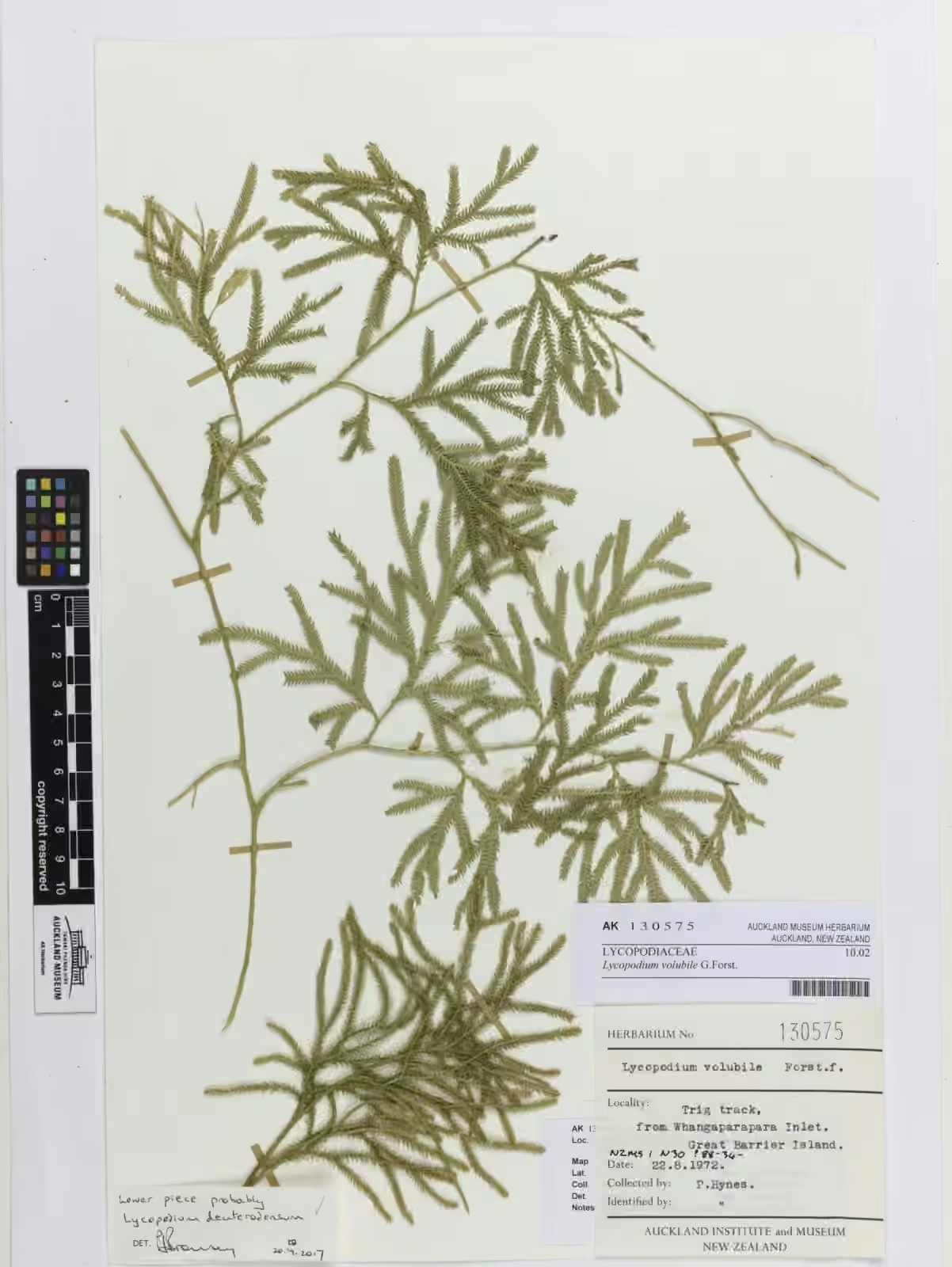
Waewaekoukou
Pseudodiphasium volubile
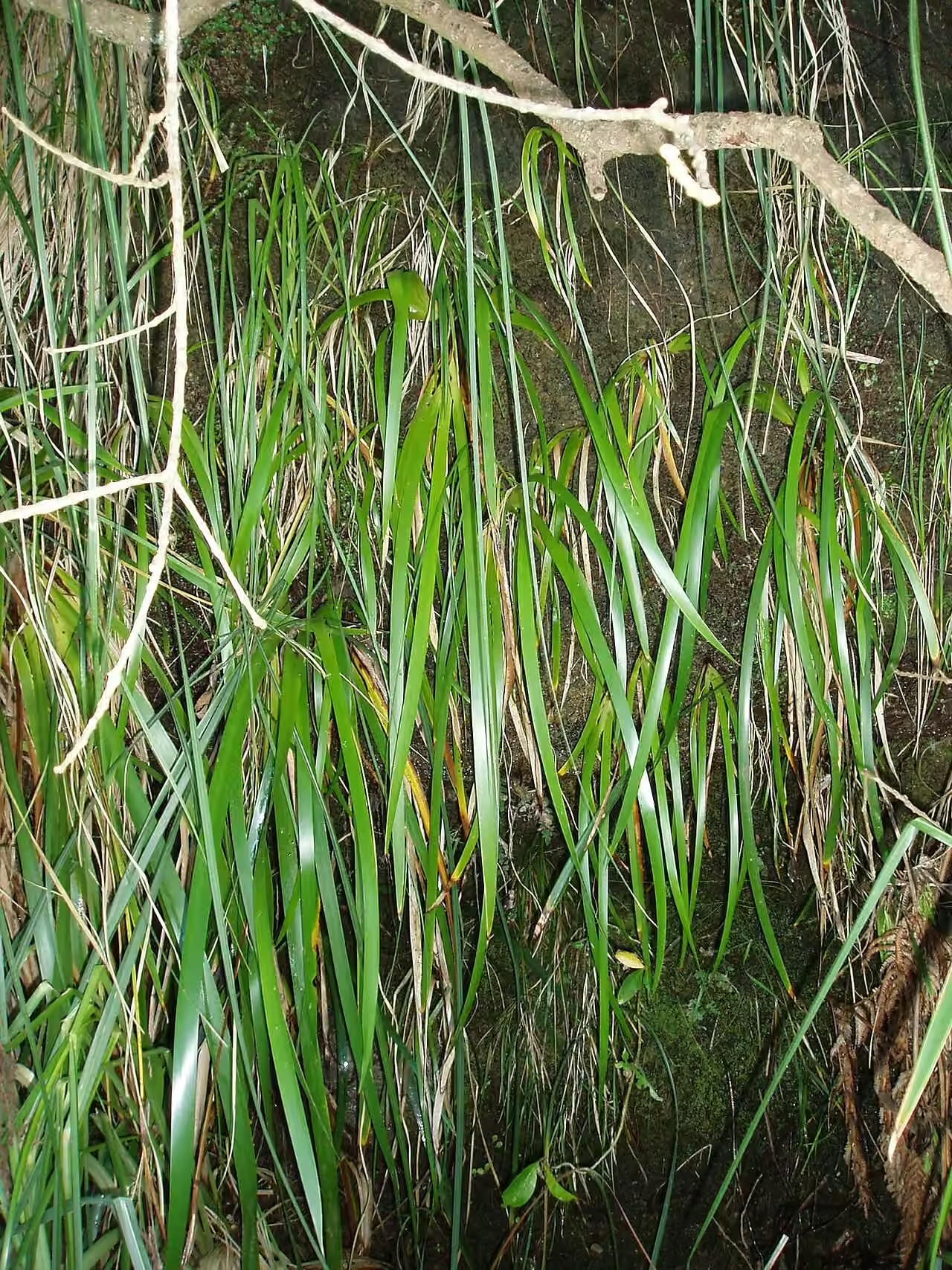
Pēpepe
Machaerina sinclairii
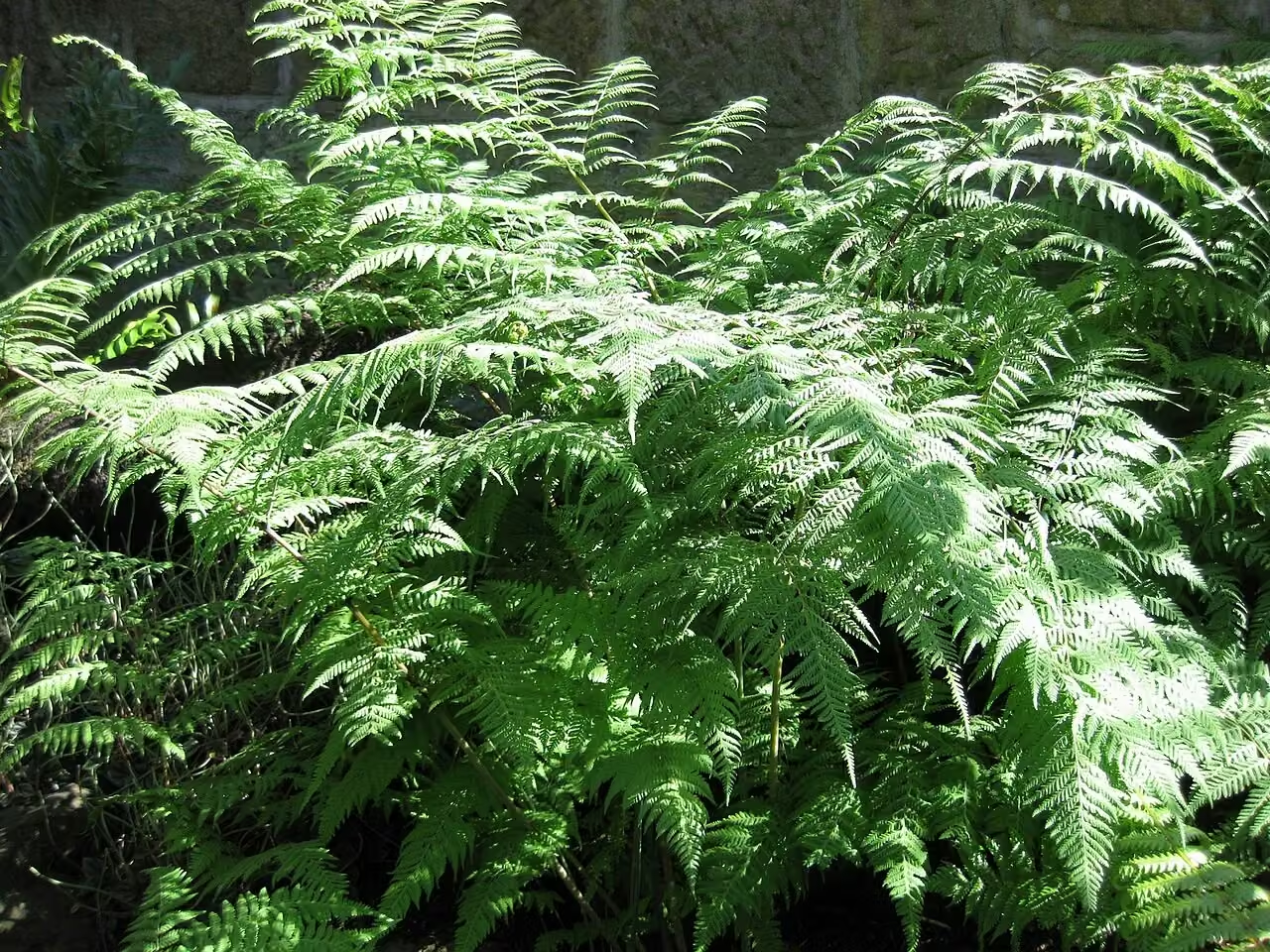
Macrothelypteris torresiana
Macrothelypteris torresiana
Alpine Rush
Marsippospermum gracile
Dwarf Musk
Mazus novaezeelandiae subsp. novaezeelandiae
Mazus pumilio
Mazus pumilio
Chatham Island Māhoe
Melicytus chathamicus
Large-Leaved Māhoe
Melicytus macrophyllus
Plant Conservation
Mazus arenarius is ranked At Risk - Declining (2023) with qualifiers for sparse populations, data poor size and trend, and range restricted. It was previously listed as Naturally Uncommon (2009, 2012) and is Regionally Critical in Otago.
Threats include small, fragmented populations, shifting dune habitat, land development and competition from naturalised plants. Protecting dune swales, controlling weeds such as marram grass, and maintaining natural dune dynamics all help.
Frequently Asked Questions
How is Mazus arenarius different from Mazus radicans?
Mazus arenarius was split from Mazus radicans in 1996. It has smaller flowers on shorter stalks, leaves without blotches or mottling, fruit with rounded tips and smaller seeds.
Where does Mazus arenarius grow?
It is endemic to coastal Otago, Southland and Stewart Island/Rakiura, growing in seasonally damp dune swales, in coastal turf around seepages and occasionally beside slow tidal streams. Only about 14 populations are known.
Is Mazus arenarius threatened?
It is ranked At Risk - Declining nationally and Regionally Critical in Otago, because of small, fragmented populations, changing dune habitat, land development and competition from introduced plants.
What does arenarius mean?
Arenarius means sand dweller, referring to its dune habitat. The genus name Mazus is said to come from a word for teat, after the protuberance in the throat of the flower.
Sources and Further Reading
The botanical, growing, and conservation details for Mazus (Mazus arenarius) on this page draw on the New Zealand plant references below. Consult them for full technical records and the latest distribution data.