Waewaekoukou
Pseudodiphasium volubile
Last updated:
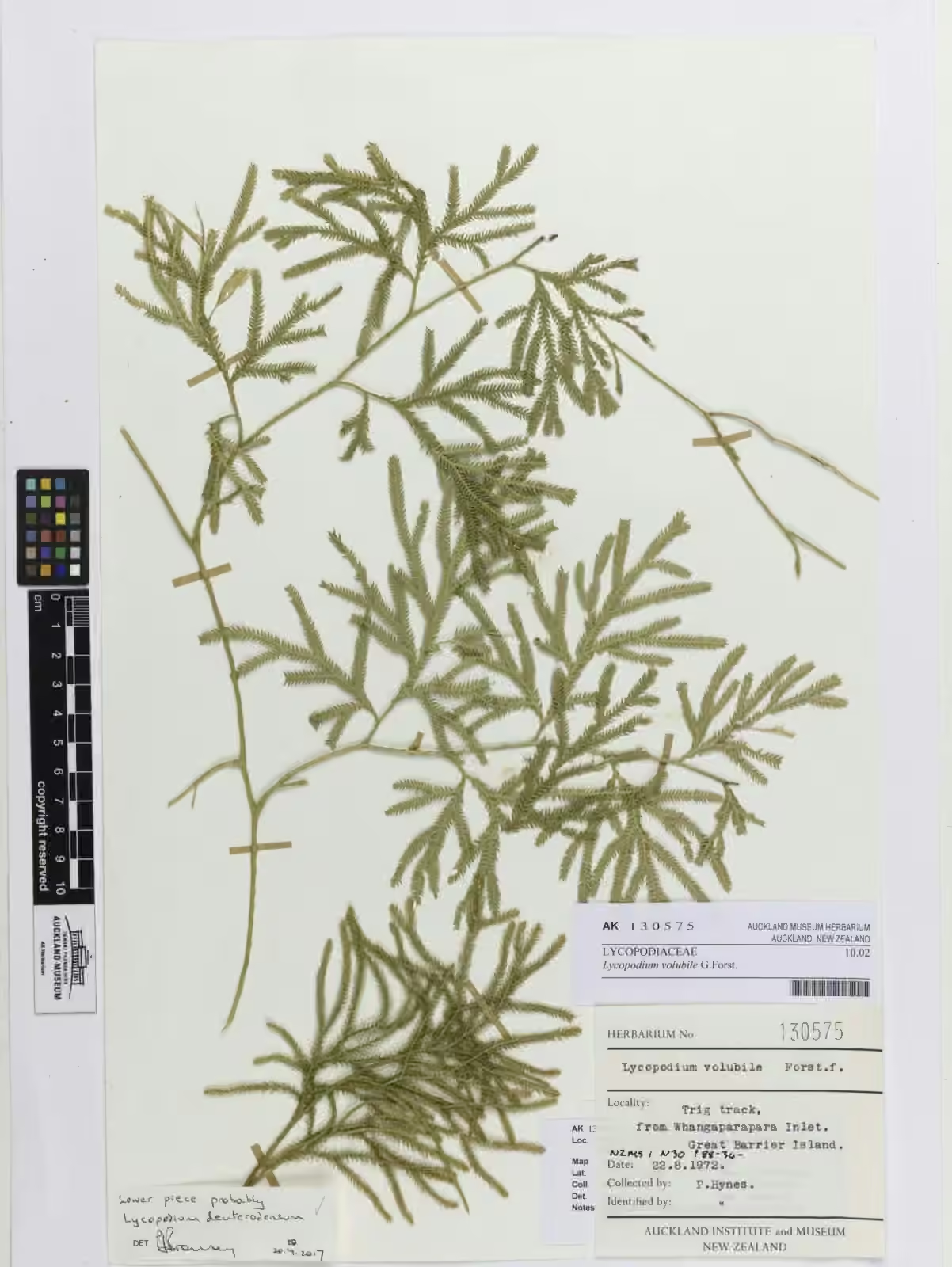
Waewaekoukou or climbing clubmoss (Pseudodiphasium volubile, now Pseudodiphasium volubile) is a scrambling lycophyte whose wiry, much-branched stems climb through shrubs for up to 8 m. Its flattened, frond-like branchlets are yellow-green, and yellow-brown cones up to 80 mm long hang in large, drooping clusters. It grows from Raoul Island and the Three Kings south through the North and South Islands to Stewart Island/Rakiura and the Chatham Islands, on gumland, scrub, forest margins, ridgelines and road cuttings from the coast to the mountains. It was used by Māori for women's head-dresses and mourning wreaths, and is Not Threatened. It was previously known as Lycopodium volubile. Explore more native ferns in our native plant guide.
Plant Description
Climbing clubmoss has scrambling or climbing main stems up to 8 m long that are wiry, round in section and much branched, bearing widely spaced scale leaves. They clamber over and through shrubs and low trees, forming tangled, yellow-green curtains on forest edges and banks.
The branchlets are flattened in one plane and carry three kinds of leaves: larger lateral leaves, and smaller leaves on the upper and lower surfaces. The foliage is yellow-green, very rarely orange. The cones (strobili) are up to 80 mm long, yellow when young and brown with age, straight or sometimes forked, and hang in large pendulous clusters at the branch ends.
Its relative creeping clubmoss (Lycopodium scariosum) also has flattened shoots, but it is a low plant with smaller leaves and erect, mostly solitary cones. The long climbing stems and hanging clusters of cones make waewaekoukou unmistakable.
Quick Facts
| Scientific Name | Pseudodiphasium volubile |
|---|---|
| Height | Scrambles or climbs up to 8 m |
| Spread | Stems up to 8 m long through surrounding shrubs |
| Water Needs | Moderate; tolerates both dry gumland and swampy ground |
| Light | Full sun to partial shade |
| Frost Tolerance | Moderate; found from sea level to about 1050 m |
| Salt Tolerance | Low to moderate; occurs in coastal scrub |
| Growth Rate | No reliable data; readily colonises disturbed banks |
| Lifespan | Long-lived perennial |
Climate Best Suited to
Suits mild, moist climates from subtropical Raoul Island to cool montane districts. It is most common in the warmer north but extends to Stewart Island/Rakiura.
Regional Suitability
| City | Climate Suitability |
|---|---|
| Auckland | High |
| Wellington | Medium |
| Christchurch | Low |
| Dunedin | Low |
Plant Habitat
Waewaekoukou occurs on the Kermadec Islands (Raoul Island), Manawatāwhi/Three Kings Islands, the North Island, South Island, Stewart Island/Rakiura and the Chatham Islands, from sea level to about 1050 m. Overseas it ranges through south-east Asia, New Guinea, the Solomon Islands, Vanuatu, New Caledonia and Australia.
It grows in gumland scrub, shrublands, forest margins and along open ridgelines within dense forest, and readily colonises roadside banks and cuttings. The Flora of New Zealand also records it in open kauri, podocarp, broadleaved and beech forest, under mānuka and kānuka, in regenerating scrub, on river banks, slip faces and swampy or disturbed ground.
Growing Requirements
Soil Requirements
It favours poor, acidic soils such as gumland clays and freshly exposed banks where competition is limited.
- Infertile clay, podzol or peat
- Disturbed banks, slips and cuttings
- Tolerates both dry and swampy ground
Light Requirements
It needs good light and climbs towards it through scrub and along forest edges and ridges.
- Full sun to partial shade
- Requires shrubs or other support to climb
Water Requirements
It tolerates a broad moisture range, from dry gumland ridges to swampy ground, in regions with reliable rainfall.
- Moderate, reliable moisture
- Avoid prolonged drought for cultivated plants
Planting and Establishing
Climbing clubmoss is not sold commercially and NZPCN advises against removing it from the wild. It is not recommended for garden planting.
Where it already grows on a property, the scrub and shrubs that support it should be retained, as it depends on them to climb into the light.
Ecological Role
Waewaekoukou is an early-successional plant that colonises open, disturbed and infertile ground, then scrambles through regenerating mānuka, kānuka and other shrubs. It spreads vegetatively along its long stems and reproduces by spores shed from its hanging cones.
Its dense, tangled growth gives cover on forest margins and banks. As in other Lycopodium species, its spores produce small gametophytes believed to depend on soil fungi. No specific insect or bird relationships are recorded in the sources consulted.
Uses & Significance
Garden Uses
It has no regular garden use because it is difficult to propagate and not sold, but it is a striking plant to retain in bush blocks and on banks.
- Retain existing plants on scrubby banks
- Do not collect from the wild for decoration
Ecological Value
A widespread climber of regenerating scrub and forest edges that helps clothe disturbed ground and contributes to the structure of gumland and shrubland vegetation.
- Colonises slips, cuttings and gumland
- Adds cover along forest margins
- Ancient spore-bearing plant lineage
Landscaping Uses
Climbing clubmoss is not used in designed landscapes. On rural and bush properties, leaving scrubby banks and forest edges uncleared lets it form its distinctive yellow-green curtains.
Its hanging cone clusters are particularly decorative, which historically made it popular for decoration; leaving it in place now protects the plant.
Seasonal Care Calendar
Spring
New growth extends along the climbing stems and branchlets.
- Avoid clearing scrub supporting it
- No intervention needed
Summer
Cones mature, turning from yellow to brown, and release spores.
- Look for hanging cone clusters
- Good time for identification
Autumn
Older cones remain brown and pendulous among the yellow-green foliage.
- Survey road cuttings and ridgelines
- Leave plants uncollected
Winter
Evergreen and persistent, it continues to drape over shrubs through winter.
- No action required
- Avoid spraying roadside banks where it grows
When to Prune and How Much
No pruning is needed. If stems are cut back during track or road maintenance, the plant usually persists from its remaining growth, but cutting should be kept to a minimum.
Where it smothers a path, trim only the intruding stems rather than clearing the supporting shrubs.
How to Grow Waewaekoukou
NZPCN describes climbing clubmoss as difficult to propagate and says it should not be removed from the wild. No reliable published propagation method was found. Clubmoss spores grow into slow-developing gametophytes thought to need fungal partners, so raising plants from spores is a long-term experiment. Division of rooted stem sections is the most realistic option, but only with cultivated material or plants legally salvaged from banks about to be cleared.
By Division of Rooted Stems
Where stems run along the ground they may root, and a rooted section with some branchlets can be separated. Keep as much of the original soil as possible, as clubmoss roots are easily damaged.
Because its natural habit is to climb through shrubs towards light, a newly established division will need something to scramble over before it can grow strongly.
- Find a section of stem that has rooted into the soil
- Cut it free with a block of the surrounding soil
- Pot into an acidic, low-nutrient, free-draining mix with some original soil
- Keep humid, evenly moist and in bright, filtered light
- Provide a twiggy support for new growth to climb
- Do not fertilise
From Spores
Spores are produced in the hanging yellow-brown cones. There is no documented success raising this species from spores in cultivation.
- Collect a ripe cone from a cultivated or salvaged plant
- Release spores onto sterilised, acidic medium
- Keep sealed and moist in a cool, dim place
- Expect a very long wait and a low chance of success
Pests & Diseases
No significant pests or diseases are recorded for climbing clubmoss.
Its main local threats are clearance of scrub and forest margins, herbicide spraying of roadside banks, and historically, collection for decoration.
Cultural Significance
The Landcare Research Ngā Rauropi Whakaoranga database records the Māori names waewae-koukou, waekāhu and hiawe for this plant. It notes that it was used to make female head-dresses (Colenso, 1868) and mourning wreaths (Te Rangi Hiroa, 1926). Koukou is another name for the ruru (morepork).
In the early twentieth century it was gathered to decorate the walls and ceilings of dance halls, where it dried to a pale tone and lasted for years, a use reported in the Pahiatua Herald in 1930.
Bonus Tip
If you see yellow-green, fern-like curtains with clusters of drooping cones on a scrubby roadside bank, it is almost certainly waewaekoukou; leave it there, as clubmosses taken for decoration cannot be replaced easily.
Related Plants
Explore other native plants that share similar characteristics or habitats with Waewaekoukou (Pseudodiphasium volubile), offering further insights into New Zealand's diverse flora. These related species provide context and opportunities for complementary planting in your garden.
Bog Clubmoss
Brownseya serpentina
Pēpepe
Machaerina sinclairii
Macrothelypteris torresiana
Macrothelypteris torresiana
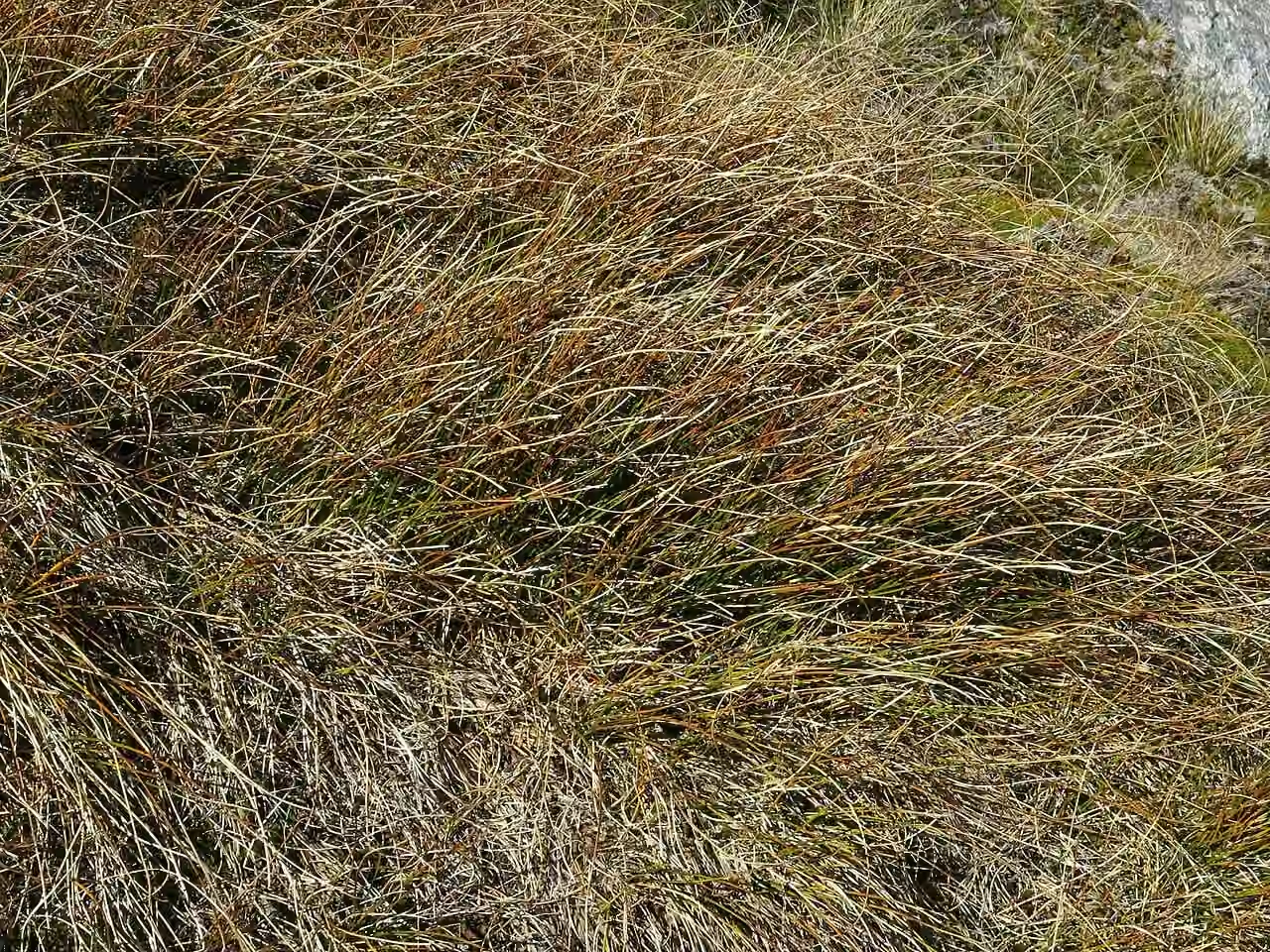
Alpine Rush
Marsippospermum gracile
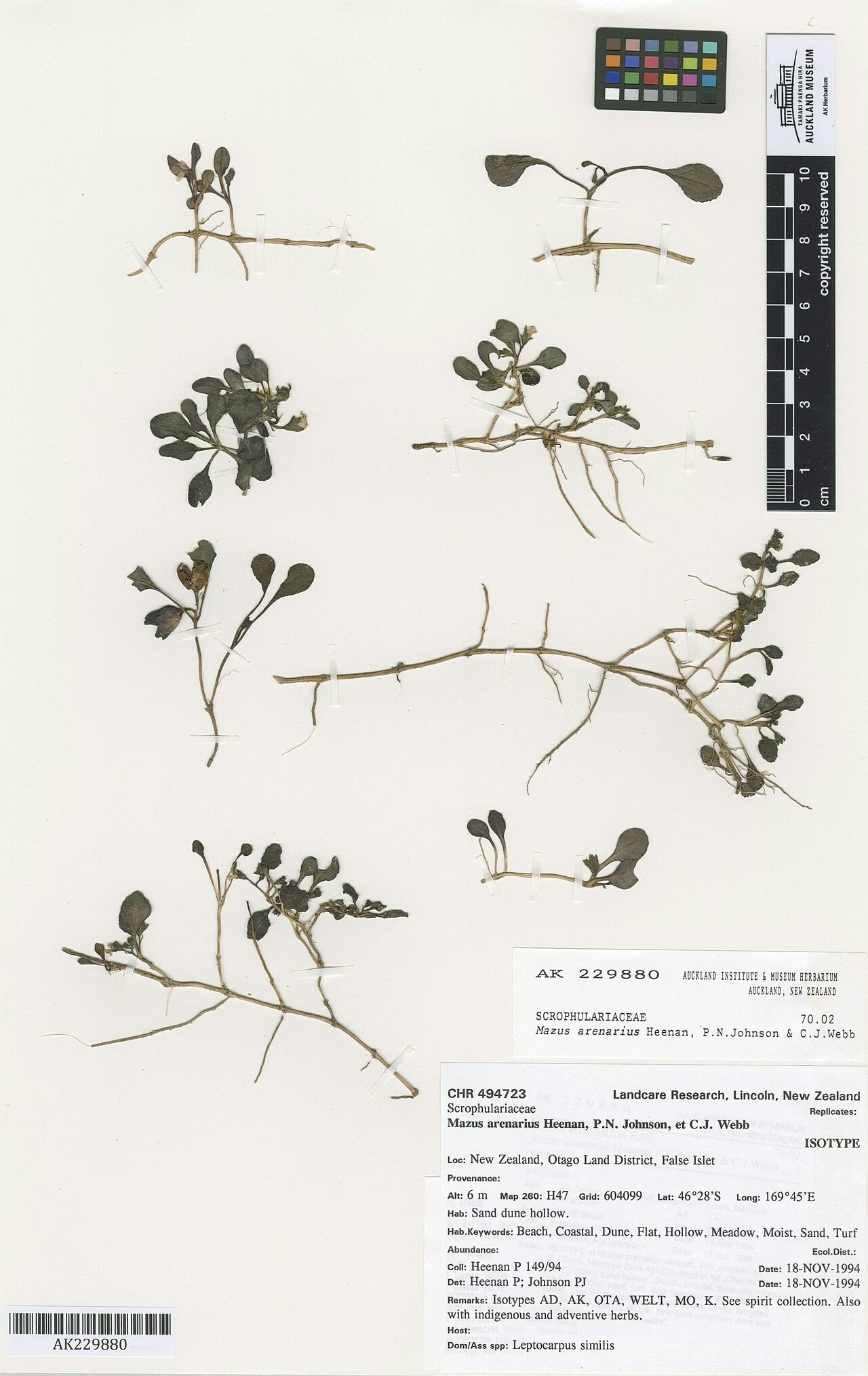
Mazus arenarius
Mazus arenarius
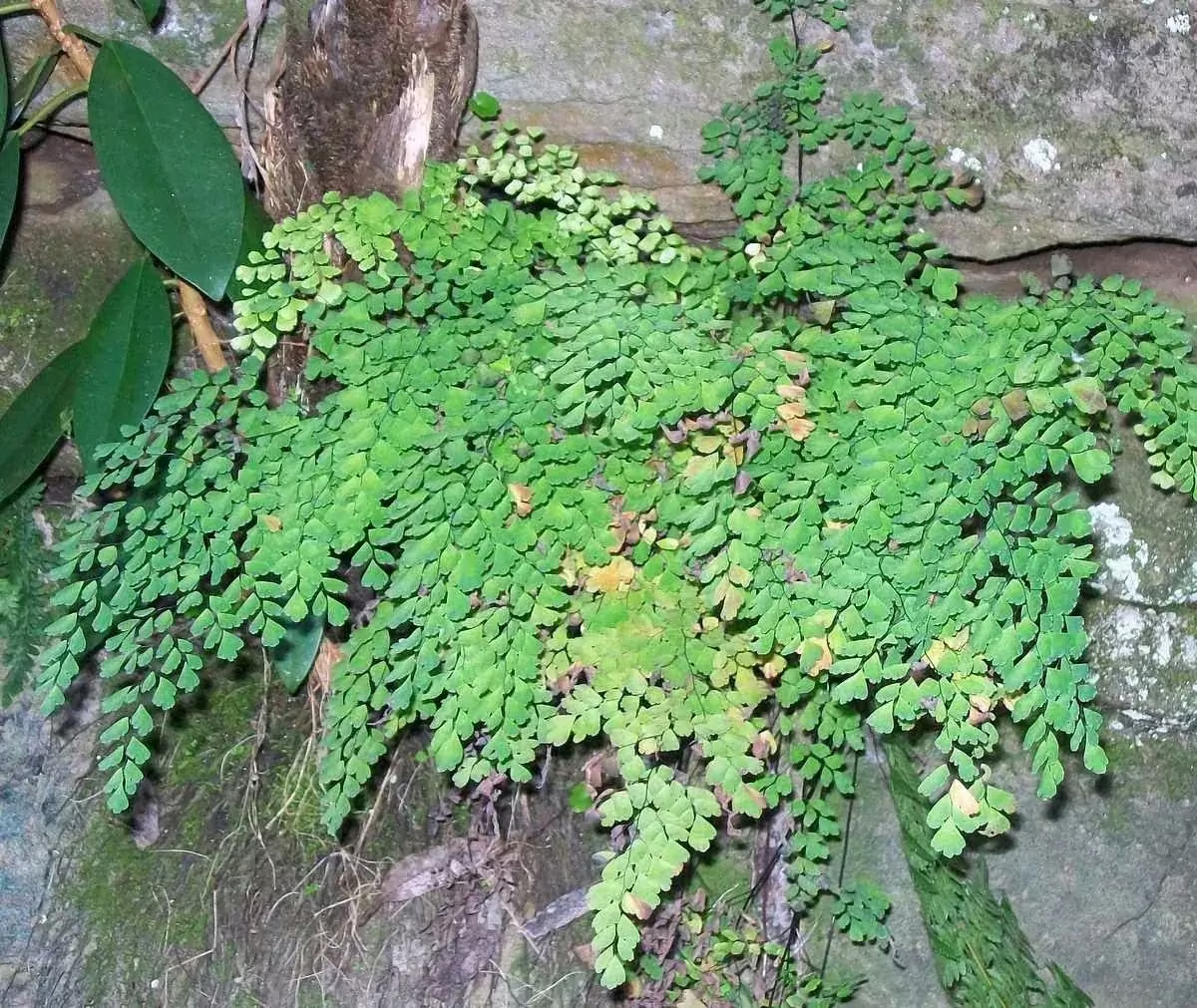
True Maidenhair Fern
True Maidenhair Fern
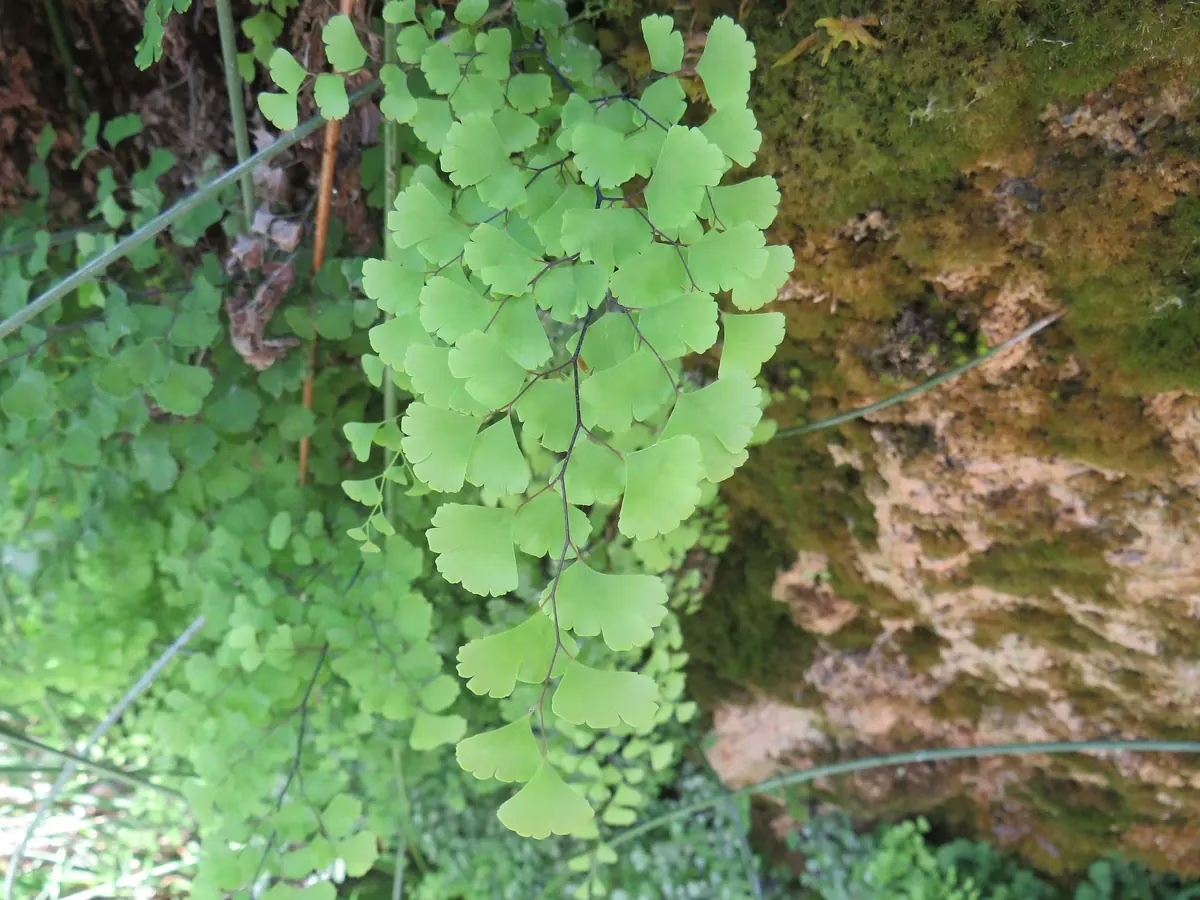
Maidenhair Fern
European Maidenhair Fern
Small Maidenhair Fern
Small Maidenhair Fern
Plant Conservation
Climbing clubmoss is ranked Not Threatened (2023) in New Zealand and is regionally Not Threatened in Northland, Auckland, Wellington and Otago. By contrast, in Australia it is listed as extinct under national legislation and extinct in the wild in Queensland.
Retaining regenerating scrub, forest margins and roadside banks, and not harvesting it for decoration, keeps New Zealand populations secure.
Frequently Asked Questions
What is waewaekoukou used for?
The Landcare Research Māori plant use database records that it was used to make female head-dresses (Colenso, 1868) and mourning wreaths (Te Rangi Hiroa, 1926). In the twentieth century it was also used to decorate dance halls.
How big does climbing clubmoss grow?
Its wiry, much-branched stems can scramble or climb up to 8 m long through shrubs, over banks and along forest margins, forming tangled yellow-green curtains.
Is Pseudodiphasium volubile found outside New Zealand?
Yes. It also grows in south-east Asia, New Guinea, New Caledonia and Australia, although in Australia it is now listed as extinct or extinct in the wild.
Can I grow climbing clubmoss?
NZPCN describes it as difficult to propagate and says it should not be removed from the wild, so it is best appreciated where it grows naturally.
Sources and Further Reading
The botanical, growing, and conservation details for Waewaekoukou (Pseudodiphasium volubile) on this page draw on the New Zealand plant references below. Consult them for full technical records and the latest distribution data.