Pēpepe
Machaerina sinclairii
Last updated:
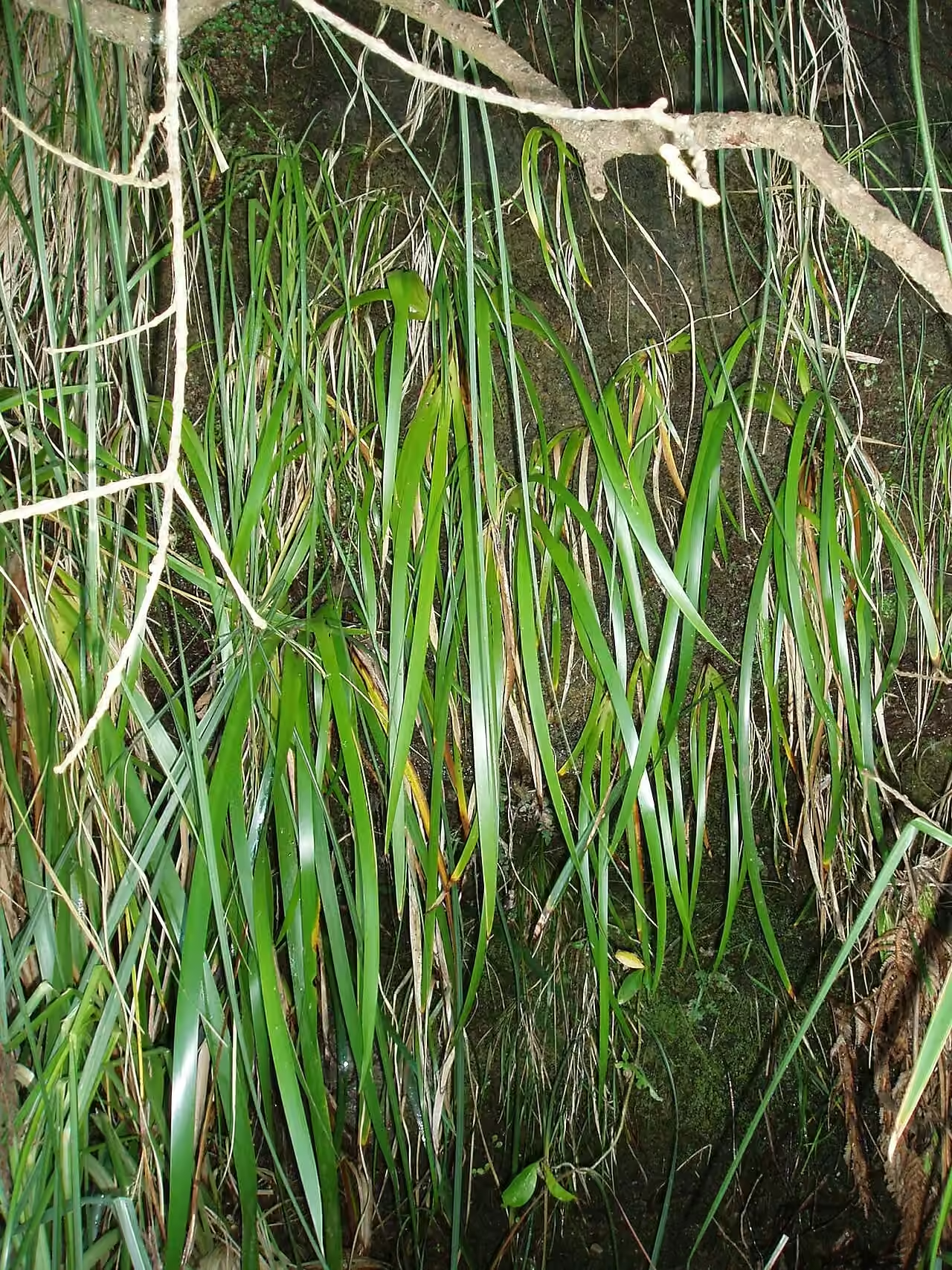
Pēpepe or tūhara (Machaerina sinclairii) is a stout, leafy sedge that forms large clumps of broad, glossy, iris-like leaves up to 2.5 m long, topped by drooping, much-branched plumes of rusty red-brown spikelets. Flowering stems reach 0.5 to 1.2 m. In the wild it grows only in the North Island, from Northland to the northern Remutaka Range, typically dominating seepages on cliff faces, stream banks and gorges from the coast to about 900 m. Easy to grow from seed or division and widely sold by nurseries, it is a handsome plant for pond margins and damp gardens. It is Not Threatened. Explore more native grasses and flaxes in our native plant guide.
Plant Description
Pēpepe is a stout, leafy sedge forming large clumps. Its numerous leaves are suberect and spreading, flat, smooth and lustrous, pale to dark green, 0.3 to 2.5 m long and 10 to 35 mm wide. They arch gracefully from the base and resemble the leaves of an iris more than those of a typical sedge.
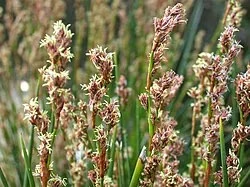
The flowering stems (culms) are 0.5 to 1.2 m tall, laterally compressed and smooth, 3 to 5 mm wide. They carry a pendulous, much-branched panicle 150 to 480 mm long, bearing small red-brown spikelets in clusters. Usually only the lowest flowers of each spikelet are fertile. The glumes are ovate-lanceolate and pointed, and the nut is 2 to 2.5 mm long with a prominent three-angled beak formed from the persistent style base.
The related Machaerina complanata has much narrower leaves 4 to 8 mm wide, less pendulous and fluffy inflorescences and an inconspicuous style base. NZPCN notes the two species have never been found growing together.
Quick Facts
| Scientific Name | Machaerina sinclairii |
|---|---|
| Height | Flowering stems 0.5-1.2 m; leaves 0.3-2.5 m long |
| Spread | Forms large leafy clumps, often 1 m or more across |
| Water Needs | High; permanently damp soil |
| Light | Full sun to shade; flowers best in full sun |
| Frost Tolerance | Moderate; grows to about 900 m in the North Island |
| Salt Tolerance | No information available |
| Growth Rate | Moderate |
| Lifespan | Long-lived perennial |
Climate Best Suited to
Suits mild, humid North Island climates with reliable moisture, from coastal to montane sites. It grows best where the root zone never dries.
Regional Suitability
| City | Climate Suitability |
|---|---|
| Auckland | High |
| Wellington | High |
| Christchurch | Medium |
| Dunedin | Low |
Plant Habitat
Pēpepe is naturally confined to the North Island, from Northland south to the northern Remutaka Range, from the coast up to about 900 m above sea level. NZPCN also records it from Malaysia.
Its characteristic habitat is seepages draining cliff faces, where it is often the dominant plant cover. It also grows in sunny sites at cave entrances, on forest river banks, along stream sides and in gorges, and occasionally colonises damp sites within forest. Road cuttings that seep water are another common place to see it.
Growing Requirements
Soil Requirements
It grows on permanently wet ground, often thin soil over rock in seepages, as well as silty stream banks.
- Permanently damp to wet soil
- Tolerates thin soil over rock in seeps
- Suits pond and stream margins
Light Requirements
NZPCN notes it tolerates full sun or shade but flowers best in full sun.
- Full sun for the best display of plumes
- Tolerates shade along forest streams
Water Requirements
As an obligate wetland plant it almost always grows in wet places and should never be allowed to dry out.
- Keep the root zone constantly moist
- Ideal beside ponds, streams and in rain gardens with permanent moisture
Planting and Establishing
Plant pēpepe where the soil stays damp year-round, such as the edge of a pond, stream bank or a seepy bank. Allow plenty of room, since mature clumps and their long arching leaves spread widely.
Plants are commonly available from mainline and specialist native nurseries. Set them at the same depth as in the pot, water in well, and mulch around but not over the crown until established.
Ecological Role
On wet cliffs and in seepages pēpepe often forms the dominant cover, its dense clumps binding thin soils and providing shelter for invertebrates and other plants. Like other sedges it is wind-pollinated, producing its fluffy brown plumes in spring.
Flowering is from September to December and fruiting from November to April, with old inflorescences persisting on the plant all year. The small nuts fall near the parent or are carried by water along streams. No specific insect host relationships are documented in the sources consulted.
Uses & Significance
Garden Uses
Pēpepe is a bold architectural plant for wet places, valued for its broad glossy foliage and long-lasting drooping plumes.
- Pond and stream margin planting
- Damp, shaded corners where few plants thrive
- Feature clump beside water features
Ecological Value
It stabilises wet banks and seeps and is a key component of North Island cliff and stream-side vegetation.
- Binds soil on wet banks and streamsides
- Provides cover for invertebrates
- Suitable for riparian restoration within its natural range
Landscaping Uses
Use pēpepe as a structural accent on water margins, where its arching leaves soften hard edges and its red-brown plumes hang over the water. It combines well with ferns, kiokio and small sedges in damp shade.
In larger restoration projects within the North Island, it is a good choice for seepy banks and stream edges where it would naturally grow.
Seasonal Care Calendar
Spring
New leaves emerge and flowering begins in September, with drooping red-brown plumes on tall stems.
- Plant out from early spring
- Keep the root zone wet as temperatures rise
Summer
Flowering continues into December and fruiting starts in November.
- Water in dry spells if not beside permanent water
- Plumes are at their most decorative
Autumn
Fruit continues to ripen through to April; seed is ready to collect.
- Collect fresh seed for sowing
- Divide large clumps if needed
Winter
Evergreen clumps persist, with old inflorescences still hanging on the plant.
- Remove tired old flower stems if wished
- Minimal care needed
When to Prune and How Much
Pēpepe needs little pruning. Old flowering stems persist for a long time and can be cut out at the base once they become untidy.
Remove dead or damaged leaves by pulling or cutting them at the base. Wear gloves, as sedge leaf margins can be sharp.
How to Grow Pēpepe
NZPCN describes pēpepe as very easily grown from fresh seed and by division of established plants, which is why it is common in nurseries. Fresh seed gives the most plants and keeps genetic diversity for restoration projects, while division gives a sizeable plant quickly for garden use. For restoration, use seed from the local area within its natural North Island range.
From Seed
Fruiting runs from November to April. Collect the small, beaked nuts when the spikelets are brown and the seed falls readily, and sow them fresh for best results.
- Collect ripe seed heads in late summer or autumn
- Sow fresh seed on the surface of a moist seed-raising mix
- Cover very lightly with fine grit
- Stand the tray in a saucer of water so it never dries out
- Prick out seedlings into individual pots once they have a few leaves
- Grow on in moist conditions for a year before planting out
By Division
Established clumps can be split into smaller pieces, each with leaves and a healthy root system. Divisions establish quickly when kept wet.
Division also suits gardeners wanting to spread an existing clump along a pond edge.
- Lift the clump in early spring or autumn
- Cut it into sections with a sharp spade or knife, each with several leaf fans and roots
- Trim long leaves back by about half to reduce moisture loss
- Replant or pot up immediately into damp soil
- Keep well watered until new growth appears
Pests & Diseases
Pēpepe has few recorded pest or disease problems. The main cause of failure in gardens is planting it in soil that dries out in summer.
In the wild, its seepage and stream-side habitats can be invaded by weeds, and drainage or changes to water flow can reduce suitable habitat locally.
Cultural Significance
The Flora of New Zealand lists the Māori names pēpepe, toetoe tūhara and tūhara for this sedge, whose broad leaves and drooping rusty plumes make it conspicuous on wet cliffs and road banks. No specific traditional use for it was found in the sources consulted.
The species is named after Andrew Sinclair (about 1796 to 1861), Colonial Secretary of New Zealand and a keen naturalist who collected plants for Joseph Hooker.
Bonus Tip
If you have a shady, wet bank where nothing else thrives, pēpepe is one of the best natives to try: it tolerates shade and constant moisture, but give it at least a few hours of sun if you want a good show of its red-brown plumes.
Related Plants
Explore other native plants that share similar characteristics or habitats with Pēpepe (Machaerina sinclairii), offering further insights into New Zealand's diverse flora. These related species provide context and opportunities for complementary planting in your garden.
Waewaekoukou
Pseudodiphasium volubile
Macrothelypteris torresiana
Macrothelypteris torresiana
Alpine Rush
Marsippospermum gracile
Mazus arenarius
Mazus arenarius
Dwarf Musk
Mazus novaezeelandiae subsp. novaezeelandiae
Machaerina arthrophylla
Machaerina arthrophylla
Bare Twig Rush
Bare Twig Rush
Orange Nut Sedge
Orange Nut Sedge
Plant Conservation
Pēpepe is ranked Not Threatened (2023), a status it has held in every assessment since 2004, and is regionally Not Threatened in Northland and Auckland.
Protecting seepages, cliff faces and stream banks from drainage, weeds and earthworks helps keep wild populations healthy. Planting it in riparian restoration projects within its natural range adds to local habitat.
Frequently Asked Questions
What are the Māori names for Machaerina sinclairii?
The Flora of New Zealand lists three Māori names for it: pēpepe, toetoe tūhara and tūhara. No specific traditional use was found in the sources consulted.
Where does pēpepe grow naturally?
It is found only in the North Island, from Northland to the northern Remutaka Range, usually in seepages draining cliff faces, and also on stream sides, river banks in forest, gorges and cave entrances up to 900 m.
Does Machaerina sinclairii need wet soil?
Yes. It is rated an obligate wetland plant and NZPCN says it prefers permanently damp soil. It suits pond and stream plantings and tolerates both full sun and shade.
How is pēpepe different from Machaerina complanata?
Machaerina complanata has narrow leaves only 4 to 8 mm wide, while pēpepe has broad leaves 10 to 35 mm wide, more pendulous and fluffy brown flower heads and a conspicuous style base on the nut.
Sources and Further Reading
The botanical, growing, and conservation details for Pēpepe (Machaerina sinclairii) on this page draw on the New Zealand plant references below. Consult them for full technical records and the latest distribution data.