Maiden Fern
Macrothelypteris torresiana
Last updated:
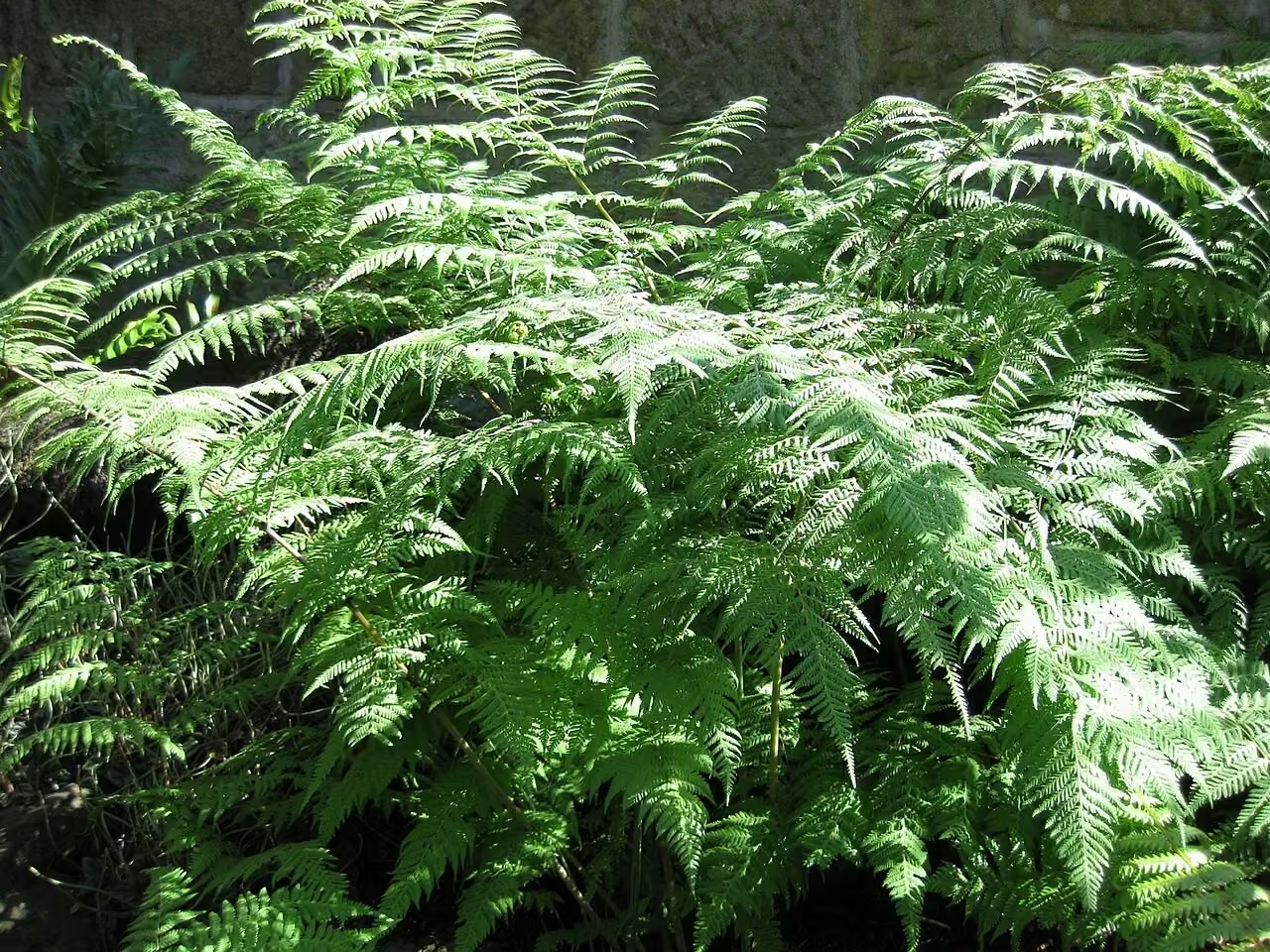
Macrothelypteris torresiana is a large, tufted, short-lived fern that can reach 2 m tall, with soft, finely divided yellow-green to blue-green fronds covered in long hairs. In New Zealand it is indigenous but very restricted: it grows regularly only on Raoul and Macauley Islands in the Kermadecs, with a vagrant record from Surville Cliffs near North Cape, its southern limit in the world. Elsewhere it is widespread through the Old World tropics and naturalised in the Americas, where it is known as Mariana maiden fern. It is an opportunist of fresh slips and bare banks and is ranked At Risk - Naturally Uncommon. Explore more native ferns in our native plant guide.
Plant Description
This is a tufted, often stout fern up to 2 m tall in good conditions, yellow-green to blue-green in colour. The rhizome is short-creeping to erect and scaly. Stipes (frond stalks) reach 0.8 m long, are swollen and scaly at the base, and are noticeably glaucous. The fronds are broadly ovate, up to 1.2 m long and 0.8 m wide when fresh, and deeply two to three times pinnate.
The lower surfaces carry long, needle-like multicellular hairs that are not glandular, giving the fronds a soft, hairy look. Veins are free, and small round sori sit on the ultimate segments. NZPCN describes the species as very distinctive within the Thelypteridaceae because no other New Zealand member has such finely divided, hairy fronds.
The fern most likely to be confused with it is Hypolepis dicksonioides, also found on Raoul Island. Macrothelypteris torresiana has blue-green, never plain green, fronds and lacks the sticky glandular hairs of the Hypolepis. Earlier New Zealand floras wrongly called this plant Macrothelypteris setigera.
Quick Facts
| Scientific Name | Macrothelypteris torresiana |
|---|---|
| Height | Up to 2 m |
| Spread | Fronds up to 1.2 x 0.8 m |
| Water Needs | Moderate to high |
| Light | Open sun to partial shade |
| Frost Tolerance | Very cold sensitive; frost tender |
| Salt Tolerance | Not documented |
| Growth Rate | Fast, opportunistic coloniser |
| Lifespan | Short-lived perennial |
Climate Best Suited to
A tropical and subtropical fern that reaches its southern world limit in New Zealand. It needs warm, frost-free, humid conditions like those of the Kermadec Islands.
Regional Suitability
| City | Climate Suitability |
|---|---|
| Auckland | Low |
| Wellington | Low |
| Christchurch | Low |
| Dunedin | Low |
Plant Habitat
In New Zealand the Flora records it from the Kermadec Islands and Northland, at 30 to 120 m altitude. It occurs regularly only on Raoul and Macauley Islands; the record from Hikurua (Surville Cliffs) near North Cape is treated as a vagrant and is the southernmost Pacific occurrence. Overseas it ranges through the Old World tropics from Madagascar through Asia and Australia to Hawaii, and it is naturalised in parts of North and South America.
NZPCN describes it as a weedy, short-lived, opportunistic species colonising recently disturbed ground such as slip scars, debris flows, landslides, the ground around tree falls and exposed clay banks. On Raoul Island it grows in open sunny areas on banks, slip faces and in swamps, and on Macauley Island on the walls at the base of a canyon, with sparse associated vegetation.
Growing Requirements
Soil Requirements
In the wild it colonises freshly exposed mineral soil, including clay banks and slip debris, rather than deep humus.
- Bare, freshly disturbed mineral soil or clay
- Moist but not stagnant conditions
- In pots, a standard fern mix with added grit
Light Requirements
Unlike many ferns it grows in open, sunny places on slips and banks.
- Open sun to partial shade
- Shelter from cold wind is more important than shade
Water Requirements
Its slip-face, bank and swamp habitats on Raoul Island are reliably moist.
- Keep the root zone consistently moist
- Do not let pots dry out in summer
- Avoid cold, waterlogged soil in winter
Planting and Establishing
On mainland New Zealand this fern is suited only to frost-free, sheltered sites in the far north or to a warm conservatory or glasshouse. Plant in late spring once soils are warm so it can establish before any cool weather.
Because it is short lived and self sows readily in ideal conditions, expect individual plants to be replaced by seedlings rather than to persist for many years.
Ecological Role
Macrothelypteris torresiana is a pioneer of bare ground. It quickly colonises slips, landslides, debris flows and tree-fall gaps, then declines as other vegetation closes over, so it depends on natural disturbance to keep finding new sites. Its abundant, wind-borne spores allow it to reach new openings and explain its arrival on remote islands.
It is a fern and has no flowers, so it is not visited by pollinators. Insect associations with this species in New Zealand are not documented in the sources consulted.
Uses & Significance
Garden Uses
A curiosity for warm-climate fern collectors rather than a general garden plant.
- Glasshouse or conservatory fern collections
- Frost-free subtropical gardens in the far north
- Educational plantings showing Kermadec flora
Ecological Value
On the Kermadec Islands it plays a role in the first stages of revegetation after slips and landslides.
- Rapidly covers bare, eroding ground
- Part of the distinctive Kermadec flora
- Southern world limit of a widespread tropical species
Landscaping Uses
Where it can be grown, its large, soft, blue-green fronds make a bold, airy feature beside water or under high canopy. Pair it with longer-lived ferns so the planting does not leave gaps when it dies out.
In warm overseas climates it has naturalised widely, so avoid letting it spread into natural areas.
Seasonal Care Calendar
Spring
New fronds unfurl as temperatures rise.
- Pot on or plant out in late spring
- Sow fresh spore
Summer
The main growing season, when fronds reach full size.
- Keep well watered
- Collect spore from mature fronds
Autumn
Growth slows as nights cool.
- Move potted plants under cover before cold weather
Winter
Very cold sensitive, so plants outdoors away from frost-free sites are likely to be damaged.
- Keep potted plants frost free
- Water sparingly
When to Prune and How Much
Cut away old, browned fronds at the base to tidy the crown. No other pruning is needed.
Because plants are short lived, remove a declining parent once healthy seedlings are established nearby.
How to Grow Maiden Fern
NZPCN describes Macrothelypteris torresiana as extremely easy to raise from fresh spore, and in ideal conditions it can be rather weedy, often self sowing. The Flora of New Zealand notes that cultivated plants occasionally produce viable spores in New Zealand. Because the plant is short lived, spore is the practical way to keep it going; division is possible on large tufts but is rarely worthwhile. As with any At Risk species, source spore from cultivated plants rather than collecting on the Kermadec Islands, which are a nature reserve.
From Spores
The small round sori sit on the underside of the ultimate segments. Collect a fertile pinna when the sori turn brown and leave it on clean paper for a day or two so the spores drop.
- Sterilise a seed tray of fine, moist fern or seed-raising mix with boiling water and let it cool
- Dust the fresh spores thinly over the surface
- Cover with glass or clear plastic to keep humidity high
- Keep warm and in bright indirect light; green prothalli should appear within weeks
- Mist to keep the surface moist so fertilisation can occur
- Prick out small sporelings into pots once they are large enough to handle
By Division
Larger tufted plants with more than one crown can be separated, but the short-creeping to erect rhizome produces few offsets, so this is a secondary method.
- Lift the plant in warm weather
- Cut the rhizome so each piece keeps fronds and roots
- Replant at the same depth and keep moist and sheltered until new fronds appear
Pests & Diseases
No specific pests or diseases of this fern are recorded in the sources consulted. The main risk in cultivation is cold: NZPCN describes it as very cold sensitive, so frost and chilly, wet winters will kill it.
Under glass, watch for common greenhouse pests such as mealybugs and scale on the frond bases and treat promptly.
Cultural Significance
No Māori name or traditional Māori use is recorded for this fern, which in New Zealand is essentially confined to the remote Kermadec Islands.
Its story in New Zealand is a botanical one: early floras misidentified it as Macrothelypteris setigera, and the Flora of New Zealand now treats the North Cape plants as a vagrant at the species' southern world limit. Wikipedia notes that compounds such as flavonoids from its fronds have been studied overseas for possible medicinal properties.
Bonus Tip
Treat this fern as a self-renewing colony rather than a permanent specimen. Leave a patch of bare, moist potting mix or soil near a mature plant in a frost-free glasshouse and it will often seed itself in from its own spores, replacing the short-lived parent.
Related Plants
Explore other native plants that share similar characteristics or habitats with Maiden Fern (Macrothelypteris torresiana), offering further insights into New Zealand's diverse flora. These related species provide context and opportunities for complementary planting in your garden.
Waewaekoukou
Pseudodiphasium volubile
Pēpepe
Machaerina sinclairii
Alpine Rush
Marsippospermum gracile
Mazus arenarius
Mazus arenarius
Dwarf Musk
Mazus novaezeelandiae subsp. novaezeelandiae
Mazus pumilio
Mazus pumilio
True Maidenhair Fern
True Maidenhair Fern
Maidenhair Fern
European Maidenhair Fern
Plant Conservation
Macrothelypteris torresiana is ranked At Risk - Naturally Uncommon (2023) with the qualifiers EF (extreme fluctuations), SO (secure overseas) and Sp (sparse); it held the same ranking in 2009, 2012 and 2017. It is naturally rare in New Zealand because it sits at the southern edge of its tropical range.
NZPCN notes it is not under direct threat but depends on the continued availability of freshly disturbed ground such as slips and landslides on the Kermadec Islands. Keeping those islands free of introduced weeds that might occupy bare ground first helps it persist.
Frequently Asked Questions
Where does Macrothelypteris torresiana grow in New Zealand?
It grows regularly only on Raoul and Macauley Islands in the Kermadecs, with a single vagrant record from Surville Cliffs near North Cape.
What is Mariana maiden fern?
Mariana maiden fern is the name used in the Americas for Macrothelypteris torresiana, a tropical Old World fern that has naturalised widely there.
How do you tell Macrothelypteris torresiana from Hypolepis dicksonioides?
NZPCN notes its fronds are blue-green rather than green and lack the sticky glandular hairs that cover Hypolepis dicksonioides.
Can Macrothelypteris torresiana be grown outdoors on the mainland?
Only in frost-free spots; NZPCN describes it as very cold sensitive and short lived, though easy to raise from fresh spore.
Sources and Further Reading
The botanical, growing, and conservation details for Maiden Fern (Macrothelypteris torresiana) on this page draw on the New Zealand plant references below. Consult them for full technical records and the latest distribution data.